

10 Best Jobvite Competitors for Recruiting in 2026

10 Best Jobvite Alternatives Shortlist


Whether you are looking for a Jobvite alternative or you are just shopping around for a great recruiting tool, here are some of the best alternatives that will help you meet your hiring needs. By leveraging my HR software experience and vetting these alternatives, I have created a list that details their best use cases, pros and cons, pricing, and more. Whether you are part of a large enterprise or a small team, let’s explore how these Jobvite alternatives can enhance your recruitment efforts and help you find the perfect fit quickly and efficiently.
What Is Jobvite?
Jobvite is a comprehensive recruitment software designed to streamline hiring for companies of all sizes. It is commonly used by HR professionals, recruiters, and hiring managers to attract, engage, and hire top talent efficiently.
Why Look for A Jobvite Alternative
You don’t need a reason to shop around, but if you’re already using Jobvite and looking to switch here are some of the pain points you may have encountered:
- Cost: Jobvite's pricing is too high for your budget or its features are too advanced for the price tag and size of your team’s needs right now.
- User Interface: Jobvite's interface is robust, but that can also be complex and ultimately not user-friendly for simple tasks or small projects.
- Customer Support: Whether you've had a single poor experience, dealt with slow service, or relied heavily on their support for setting up and using the software, you're exhausted and ready to switch.
- Customization: Your team has specific customization needs and you’re craving more options than Jobvite offers.
- Integration: You’ve got other favorites and built-in workflows that Jobvite doesn’t integrate well with. You’re looking for a recruitment tool that has a smoother integration with your other tools and software.
When top-grade recruitment software options are as common as coffee brands, why settle for a blend that doesn’t suit your taste? If Jobvite’s pricing, user interface, customer support, customization limits, or integration hiccups have left you craving something different, it’s time to explore.
Why Trust Our Software Recommendations
Our team has been testing and reviewing software since 2012. As HR experts ourselves, we know how difficult—and important—it is to choose the right software.
For this guide, we evaluated tools using hands-on testing and independent research, scoring tools using our selection criteria. We also draw on insights from industry thought leaders and practicing HR experts.
Our reviews reflect our human editorial judgment, not a sales pitch.
Expert reviewers:
Jobvite Alternatives Comparison Table
This comparison table summarizes pricing details for my top Jobvite alternative selections:
| Tool | Best For | Trial Info | Price | ||
|---|---|---|---|---|---|
| 1 | Best for structured hiring and DEI initiatives | Free demo available | Pricing upon request | Website | |
| 2 | Best for AI-powered ATS and recruitment CRM | 14-day free trial + free demo available | From $15/user/month (billed annually) | Website | |
| 3 | Best for in-house multi-brand hiring workflows | Free demo available | Pricing upon request | Website | |
| 4 | Best for small business recruiting automation | Not available | From $1,000/year (billed annually) | Website | |
| 5 | Best for sourcing hard-to-find and diverse talent | 14-day free trial + demo available | From $179/user/month | Website | |
| 6 | Best for comprehensive talent cloud solutions | Free demo available | Pricing upon request | Website | |
| 7 | Best for campus recruiting and early talent | Free demo available | Pricing upon request | Website | |
| 8 | Best for intelligent candidate scoring | Free plan + 14-day trial + demo available | From $4.99/month (billed annually) | Website | |
| 9 | Best for AI-driven talent intelligence | Free demo available | Pricing upon request | Website | |
| 10 | Best for global agency-sourced hiring | Free demo available | From $14/worker/month | Website |

Best Jobvite Alternatives Reviews
Below is an in-depth analysis and overview of each Jobvite alternative. I’ll walk you through the pros and cons, key features, integrations, and best use cases of each tool.

Best for structured hiring and DEI initiatives
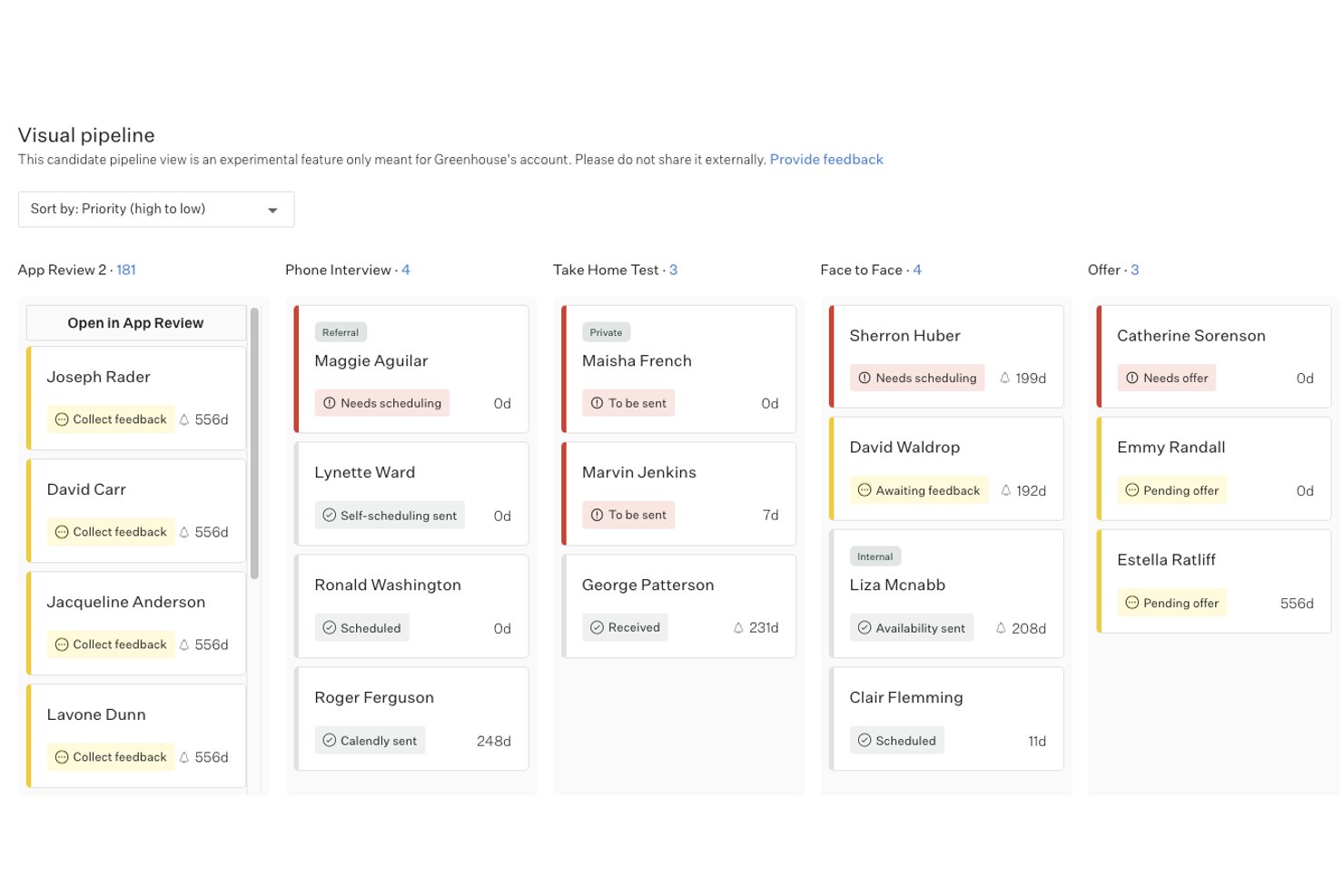
Greenhouse is a recruiting platform built for structured hiring, offering talent acquisition teams tools to manage candidates, coordinate interviews, and build pipelines with consistency and accountability baked into every step.
Who Is Greenhouse Best For?
Greenhouse is a strong fit for mid-market and enterprise talent acquisition teams that need structured, accountable hiring processes with built-in DEI support.
Why I Picked Greenhouse
I picked Greenhouse as one of the best because it treats structured hiring as a system, not just a checklist. Interview kits and scorecards ensure every candidate is evaluated against the same role-specific criteria, which directly reduces bias in ways most ATS platforms only gesture at. I also appreciate the EEOC reporting built into the platform, which gives talent acquisition teams real demographic visibility across the pipeline without needing a separate tool.
Greenhouse Key Features
- Candidate CRM: Build and search a network of prospects and candidates, organized by pool or stage, with full outreach history retained.
- AI Notetaker: Automatically records and transcribes interviews, generates summaries, and transfers notes directly to scorecards.
- Stage transition rules: Trigger automated candidate communications and actions when a candidate moves into a specified pipeline stage.
- Appcast programmatic campaigns: Distribute job ads across multiple job boards using a third-party algorithm that adjusts placement based on budget and performance.
Greenhouse Integrations
Greenhouse offers over 400 pre-built integrations, including Zoom, Google Meet, Microsoft Teams, and Spark Hire. It also provides Harvest and Job Board APIs for custom integrations.
Pros and Cons
Pros:
- Hiring teams praise visible, organized candidate pipelines
- Past-applicant rediscovery builds reusable talent pools
- Structured scorecards support consistent candidate evaluations
Cons:
- Routine workflows sometimes take too many clicks
- Custom reports can require extra work
New Product Updates from Greenhouse

Greenhouse Opens Candidate Insights and Talent Matching Assistants to Beta
Greenhouse opens Candidate Insights and Talent Matching assistants to beta for candidate questions and natural-language search. This helps recruiters review candidates and build searches faster. For more information, visit Greenhouse’s official site.
 .

Manatal
Best for AI-powered ATS and recruitment CRM
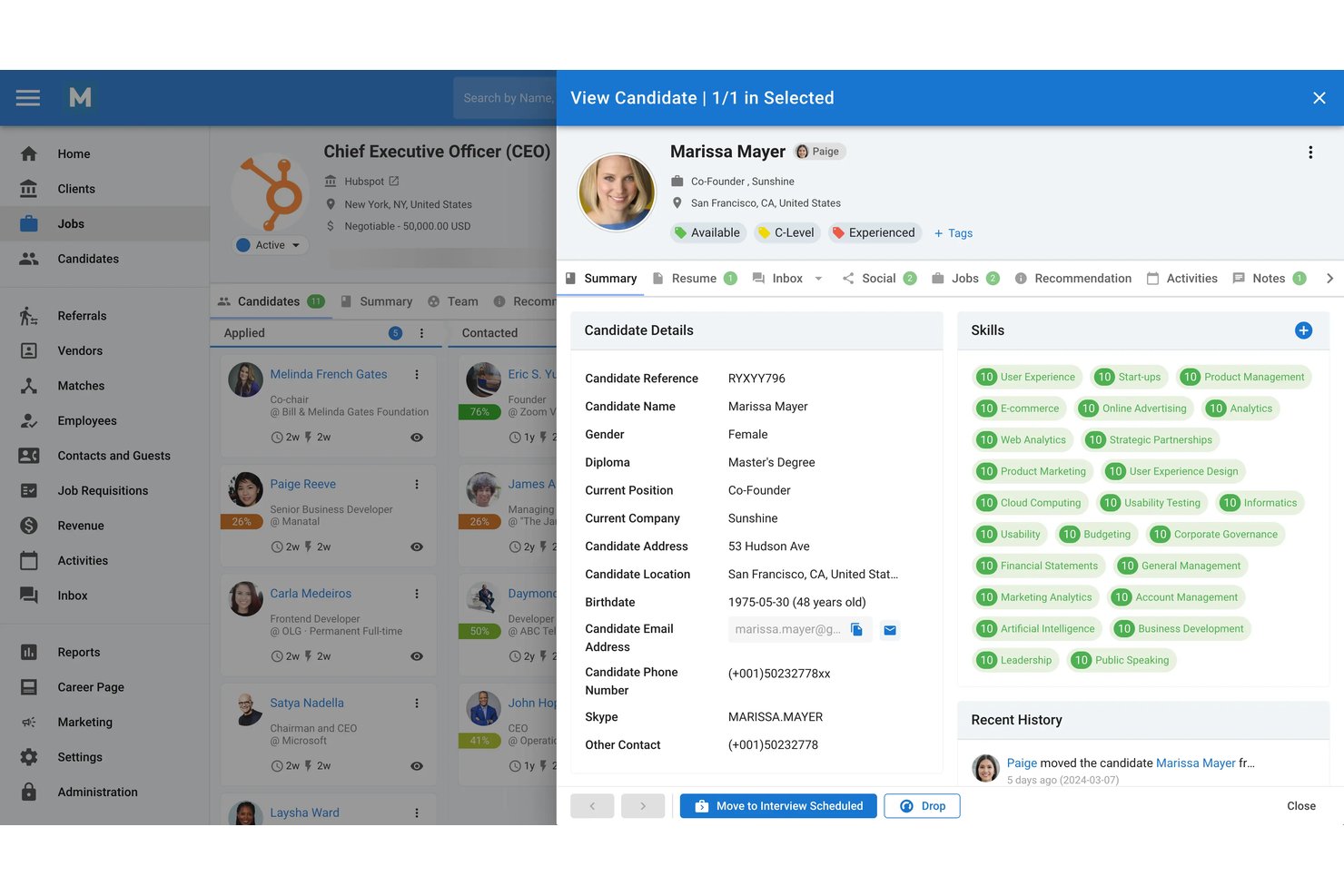
Manatal is an AI-native ATS and recruitment CRM built for corporate HR teams and staffing agencies that need to source candidates, manage hiring pipelines, and post jobs across hundreds of channels from one platform.
Who Is Manatal Best For?
Manatal is a strong fit for corporate HR teams and staffing agencies that want AI-driven candidate sourcing and tracking without the complexity of enterprise-level pricing.
Why I Picked Manatal
I picked Manatal as one of the best because its AI-native approach to recruitment does something I genuinely find impressive: it surfaces ranked candidate matches directly from your existing database, including candidates you sourced months ago, so roles don't start from scratch every time. The Sourcing Hub adds access to 700 million+ external profiles, and the AI Interviewer can screen candidates around the clock with automated video interviews and assessment summaries.
Manatal Key Features
- Multi-board job distribution: Post open roles to 2,500+ organic and premium job channels directly from the platform, including LinkedIn, Monster, and ZipRecruiter.
- Workflow automation: Automatically trigger candidate communications when applicants move between pipeline stages, available on Enterprise and Enterprise Plus plans.
- Candidate scorecards: Request, submit, and review structured interview evaluations from a candidate profile or job, with configurable templates and role-based visibility.
- Recruitment analytics dashboard: Track hiring KPIs including time-to-hire, cost-per-hire, sourcing channels, and recruiter performance through a configurable dashboard.
Manatal Integrations
Manatal supports 2,500+ job channels, including LinkedIn, Indeed, and Monster, plus native integrations with Google Workspace, Microsoft 365, Codility, and Adobe Sign. It offers Zapier connectivity and an Open API for custom integrations on Enterprise Plus.
Pros and Cons
Pros:
- Shared candidate notes support hiring-manager feedback
- Reviewers praise clear candidate pipelines
- AI recommendations surface older database candidates
Cons:
- Reporting depth may fall short for enterprise teams
- No candidate self-scheduling for interviews
New Product Updates from Manatal

Manatal Adds Candidate Login and Employee Portal to Career Pages
Manatal has added Candidate Login, Internal Employee Portal, and internal job visibility controls for Career Pages. These features help teams simplify applications, support employee mobility, and manage internal hiring workflows. For more information, visit Manatal’s official site.
 .
Pinpoint
Best for in-house multi-brand hiring workflows
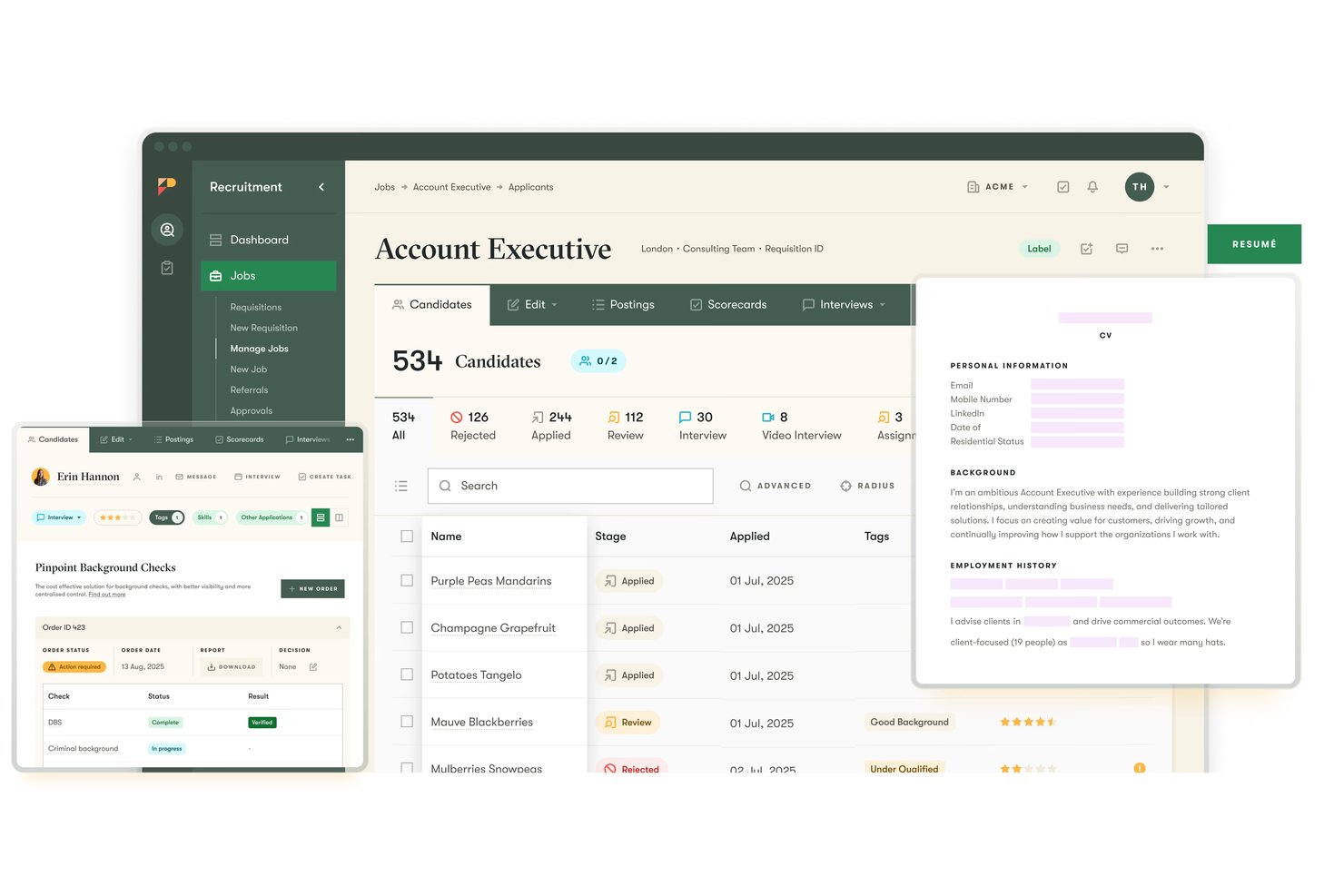
Pinpoint is an ATS built for in-house recruiting teams that need to manage complex, multi-department hiring across multiple brands, locations, or hiring streams without stitching together separate tools.
Who Is Pinpoint Best For?
Pinpoint is a strong fit for in-house recruiting teams managing hiring across multiple brands, locations, or departments under one platform.
Why I Picked Pinpoint
I picked Pinpoint as one of the best because it's purpose-built for in-house teams running hiring across multiple brands or departments simultaneously, each with its own branded careers site, permissions, and pipeline. I love that parallel workflows don't bleed into each other: local managers see only their own hiring, while central recruiting teams get roll-up reporting across every stream. The AI Match Score adds another layer, scoring each candidate 1–10 against role-specific criteria so my team isn't manually triaging applications across a dozen active pipelines.
Pinpoint Key Features
- AI Notetaker: Transcribes interviews automatically so your team can focus on the conversation instead of note-taking.
- Structured scorecards: Reviewers evaluate candidates against weighted, ranked criteria, with panel feedback displayed side by side for easy comparison.
- Recruitment agency portal: A built-in portal lets external agencies submit candidates directly into your pipelines, included on all plans.
- Anonymized screening: Candidate identifying details are hidden during the review stage to reduce unconscious bias in hiring decisions.
Pinpoint Integrations
Pinpoint offers 100+ native integrations, including Workday, UKG, ADP Workforce Now, Indeed, LinkedIn, Google Calendar, Microsoft Teams, Zoom, and Power BI. It also provides an open API, webhooks, and Zapier.
Pros and Cons
Pros:
- Structured scorecards compare panel feedback side by side
- Roll-up reporting gives leaders cross-team visibility
- Parallel branded pipelines separate local hiring access
Cons:
- Stage automations don't trigger after candidate moves
- Open-web sourcing depends on external tools
New Product Updates from Pinpoint

Pinpoint Adds Copilot, Hire Surveys, and LinkedIn Apply Connect
Pinpoint adds Copilot in Teams, Quality of hire surveys, LinkedIn Apply Connect integration, and onboarding updates. These releases expand AI, hiring insights, integrations, and onboarding capabilities. For more information, visit Pinpoint’s official site.

JazzHR
Best for small business recruiting automation
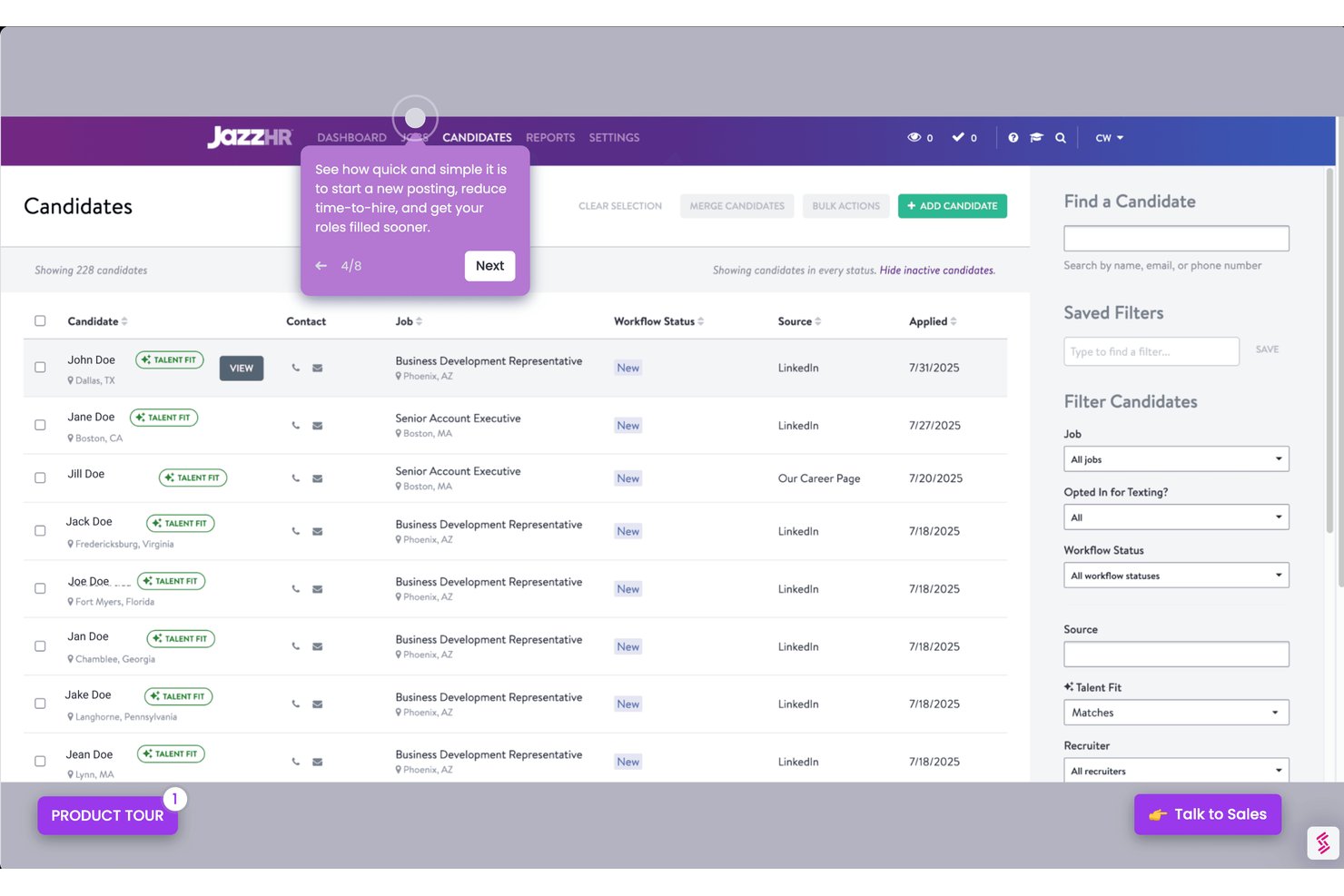
JazzHR is an applicant tracking system built for small businesses that want to move candidates through a structured hiring pipeline without the complexity or cost of enterprise-grade recruiting platforms.
Who Is JazzHR Best For?
JazzHR is a strong fit for small business recruiting teams that want structured hiring workflows without the overhead of an enterprise ATS.
Why I Picked JazzHR
I picked JazzHR as one of the best because it brings genuine recruiting structure to small businesses that don't need Jobvite's enterprise complexity. I particularly like how configurable workflow stages let my team move candidates from screening through offer without manual hand-holding, and job approvals route new requisitions through sequential sign-offs before a single applicant sees them. JazzHR's TalentFit also retroactively scores past applicants against open roles, so I'm surfacing qualified candidates already in the pipeline.
JazzHR Key Features
- Searchable candidate database: Search and filter a centralized database of all past and present applicants across roles.
- Role-based permissions: Assign granular access levels to control what each user can view, edit, or manage within candidate records and jobs.
- Blind evaluation settings: Configure the system to hide other users' candidate evaluations, reducing bias in interview feedback.
- EEO-1, OFCCP, and VEVRAA reporting: Collect and compile required compliance data through built-in application questions and dedicated reports.
JazzHR Integrations
JazzHR has documented native integrations with LinkedIn Recruiter, Google Calendar, and Outlook, plus marketplace integrations such as Calendly, BambooHR, ADP, Gusto, UKG, and Verified First. It also offers an open API for custom integrations.
Pros and Cons
Pros:
- Reusable templates support multi-person hiring
- Sequential requisition approvals formalize hiring decisions
- Intuitive candidate pipelines earn reviewer praise
Cons:
- Advanced reporting may frustrate larger recruiting teams
- Interview scheduling remains a reviewer-reported gap
SeekOut
Best for sourcing hard-to-find and diverse talent
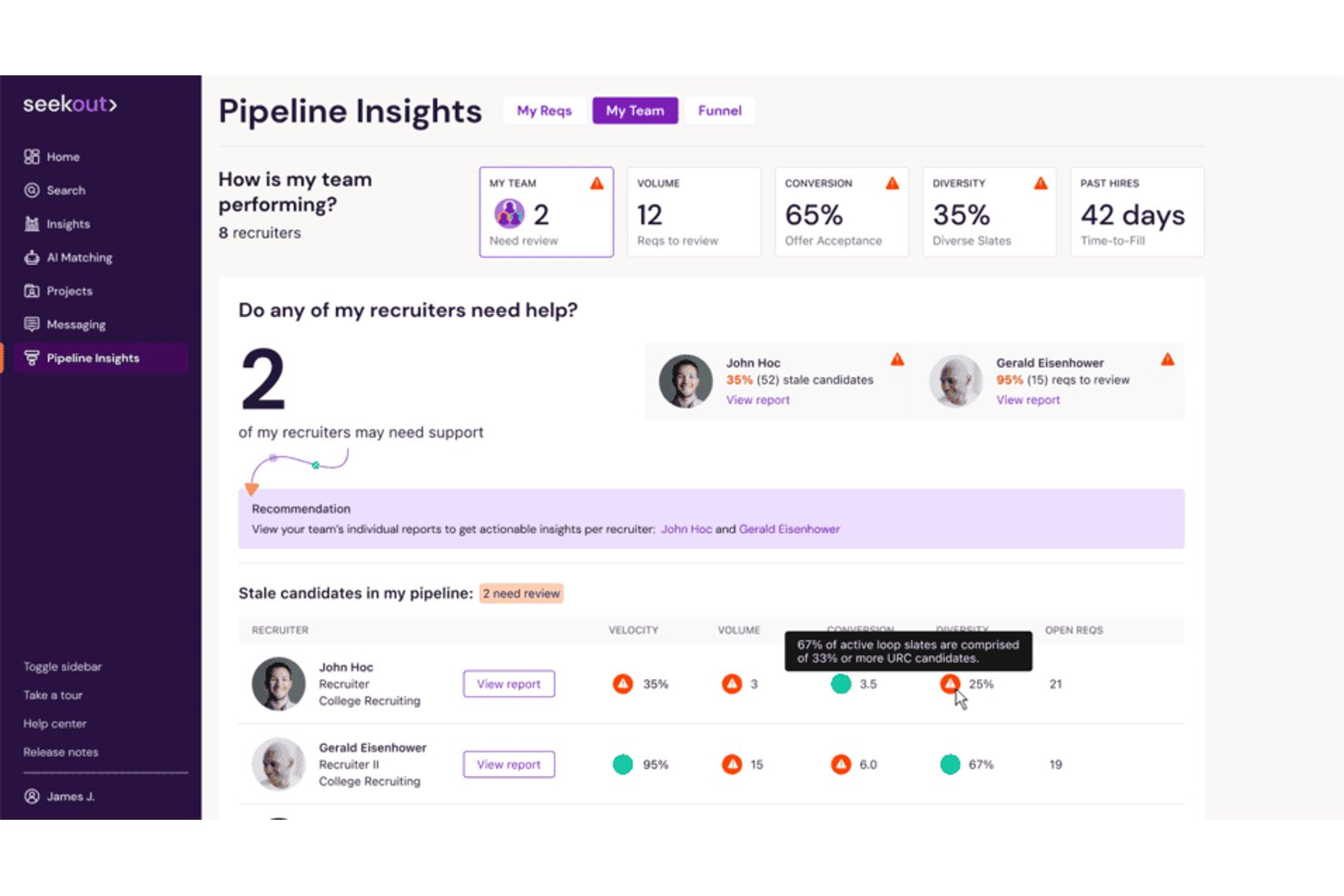
SeekOut is an AI-powered sourcing platform built for recruiters and talent acquisition teams who need to find specialized, hard-to-reach candidates across a database of over one billion profiles.
Who Is SeekOut Best For?
SeekOut is a strong fit for corporate recruiters and talent acquisition teams whose primary challenge is finding specialized, niche, or underrepresented candidates that standard job boards won't surface.
Why I Picked SeekOut
I picked SeekOut as one of the best because it goes places standard job boards simply can't when you need to fill a niche or underrepresented role. I particularly like how it searches over one billion profiles using semantic AI, pulling from public profiles, GitHub, and academic networks in a single pass. Its diversity filters and ATS rediscovery feature let me surface silver-medalist candidates from past pipelines alongside brand-new prospects, so I'm never starting from scratch.
SeekOut Key Features
- AI-generated outreach campaigns: Builds and sends personalized, multi-step email sequences to candidates directly from your sourcing workflow.
- Workspace collaboration: Invites hiring managers and teammates to review candidates, add comments, and contribute to shortlisting decisions in a shared space.
- ATS pipeline search: Searches your connected ATS records by role, stage, application date, and recruiter notes to surface candidates already in your system.
- Labor market analytics: Visualizes talent pool size, compensation benchmarks, and market trends to support sourcing strategy and hiring conversations.
SeekOut Integrations
SeekOut offers 21+ native technology-partner integrations, including Jobvite, Workday, iCIMS, Greenhouse, Lever, SmartRecruiters, and SAP SuccessFactors. It also provides a REST Partner API and MCP server for custom integrations and AI assistant connectivity.
Pros and Cons
Pros:
- Shared workspaces capture hiring-manager shortlist feedback
- AI search turns job descriptions into shortlists
- Surfaces niche and underrepresented talent pools
Cons:
- Candidate tracking depends on an external ATS
- Doesn't replace Jobvite's requisition and job-posting workflows
iCIMS
Best for comprehensive talent cloud solutions
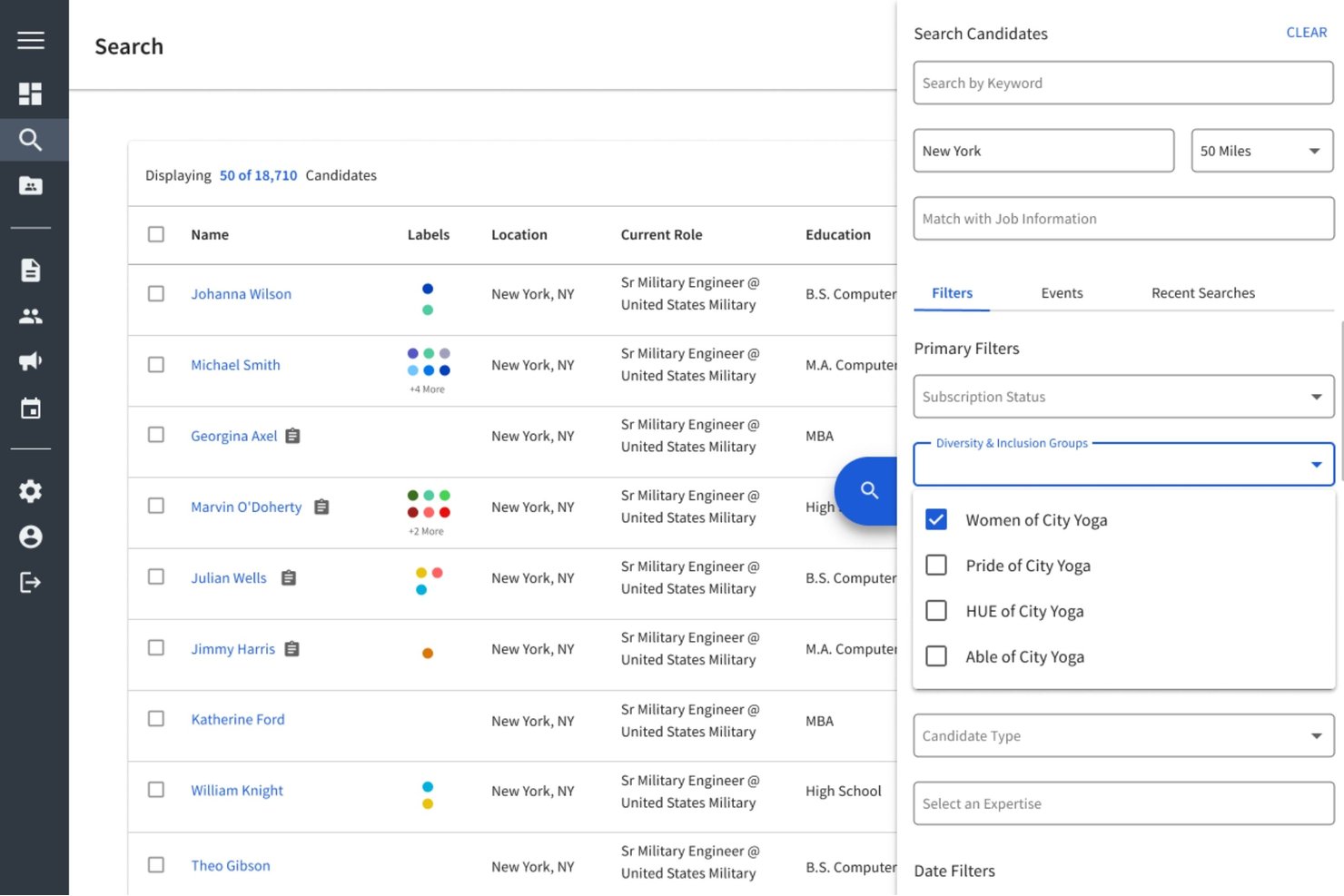
iCIMS is an enterprise talent acquisition platform built for large-scale recruiting teams that need to manage high candidate volumes, automate hiring workflows, and build long-term talent pipelines across corporate, frontline, and seasonal roles.
Who Is iCIMS Best For?
iCIMS is a strong fit for enterprise recruiting teams managing high candidate volumes across corporate, frontline, and seasonal hiring programs.
Why I Picked iCIMS
iCIMS earns its spot on my shortlist because its Talent Cloud spans the full recruiting lifecycle in a way that point solutions simply can't match. I particularly like the AI Sourcing Agent, which surfaces silver medalists and dormant profiles already in your database, so you're not starting from scratch every time a role opens. Pair that with iCIMS Engage's automated talent pools and multichannel campaign tools, and you get a genuinely connected pipeline-building engine built for enterprise-scale hiring.
iCIMS Key Features
- Hiring workflow automation: Configure status-based triggers and automated email sequences to advance candidates through recruiting stages without manual intervention.
- High volume hiring workspace: A mobile-friendly workspace lets recruiters and hiring managers screen, review, and advance candidates for frontline and seasonal roles in one place.
- Customizable report templates: Build reusable report templates with configurable dashboards and schedule recurring reports for stakeholders and hiring leaders.
- Enterprise compliance certifications: iCIMS holds ISO/IEC 27001:2022, SOC 2 Type 2, and GDPR compliance designations, alongside encryption in transit and at rest and role-based access controls.
iCIMS Integrations
iCIMS reports 10K+ active integrations and 800+ partners, including native Microsoft Teams plus marketplace integrations with JobTarget, Recruitology, CoderPad, Socure, Yardstik, and ApplicantX. REST and JSON APIs support custom connections.
Pros and Cons
Pros:
- High-volume workspace supports frontline hiring
- AI rediscovery surfaces dormant candidate profiles
- Connected recruiting, engagement, and onboarding tools
Cons:
- Reviewers find reports difficult to customize
- Reviewers report dated, unintuitive navigation

Yello
Best for campus recruiting and early talent
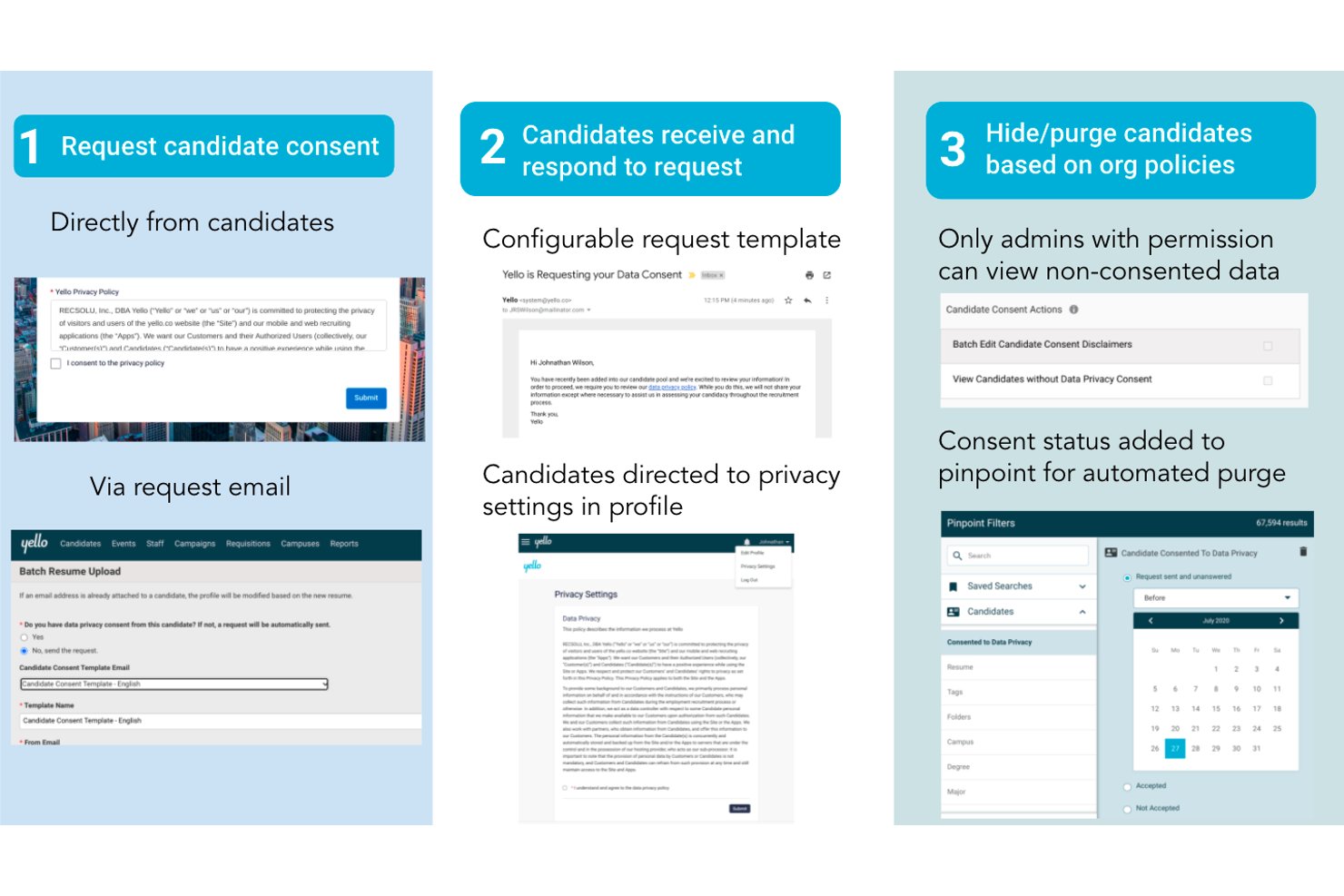
Yello is a campus and early-talent recruiting platform that helps employer recruiting teams source candidates, manage recruiting events, coordinate interviews, and measure program performance—all purpose-built for organizations that hire at scale from universities and early-career pipelines.
Who Is Yello Best For?
Yello is a strong fit for talent acquisition teams at mid-to-large organizations that hire at scale from universities and early-career pipelines.
Why I Picked Yello
I picked Yello as one of the best because it's purpose-built for campus and early-talent recruiting in a way that general ATS platforms simply aren't. I love how the Campus Recruiting Agent searches across 45+ web sources, the WayUp network, and your existing ATS to surface and group candidates by fit, so my team isn't manually sifting through profiles after a career fair. The event management tools are equally impressive: I can coordinate check-in, candidate evaluations, and on-site interview scheduling across dozens of recruiters at a single event.
Yello Key Features
- Talent CRM and pipeline management: Organize candidates into targeted pipelines using recruiting or candidate fields, with segmentation and engagement tools built into the same workflow.
- University profiles and campus insights: Centralize school-specific data, event history, expenses, and recruiting activity to compare campus performance and guide investment decisions.
- Automated email and SMS campaigns: Build and send branded outreach campaigns to passive candidates, with candidates choosing their preferred communication channel.
- OFCCP-supportive search logging: Log recruiter search activity and associate searches with requisitions to support compliance documentation and audit readiness.
Yello Integrations
Yello documents integrations with Workday, Oracle Recruiting Cloud, SAP SuccessFactors, Greenhouse, Taleo, iCIMS, Google Calendar, Outlook 365, Zoom, and Microsoft Teams. A public API and total integration count aren't documented.
Pros and Cons
Pros:
- Compares campus outcomes with recruiting analytics
- Finds early talent across 45+ sources
- Coordinates large campus recruiting events
Cons:
- Smaller teams report limited fit
- Doesn’t replace a full standalone ATS

Best for intelligent candidate scoring
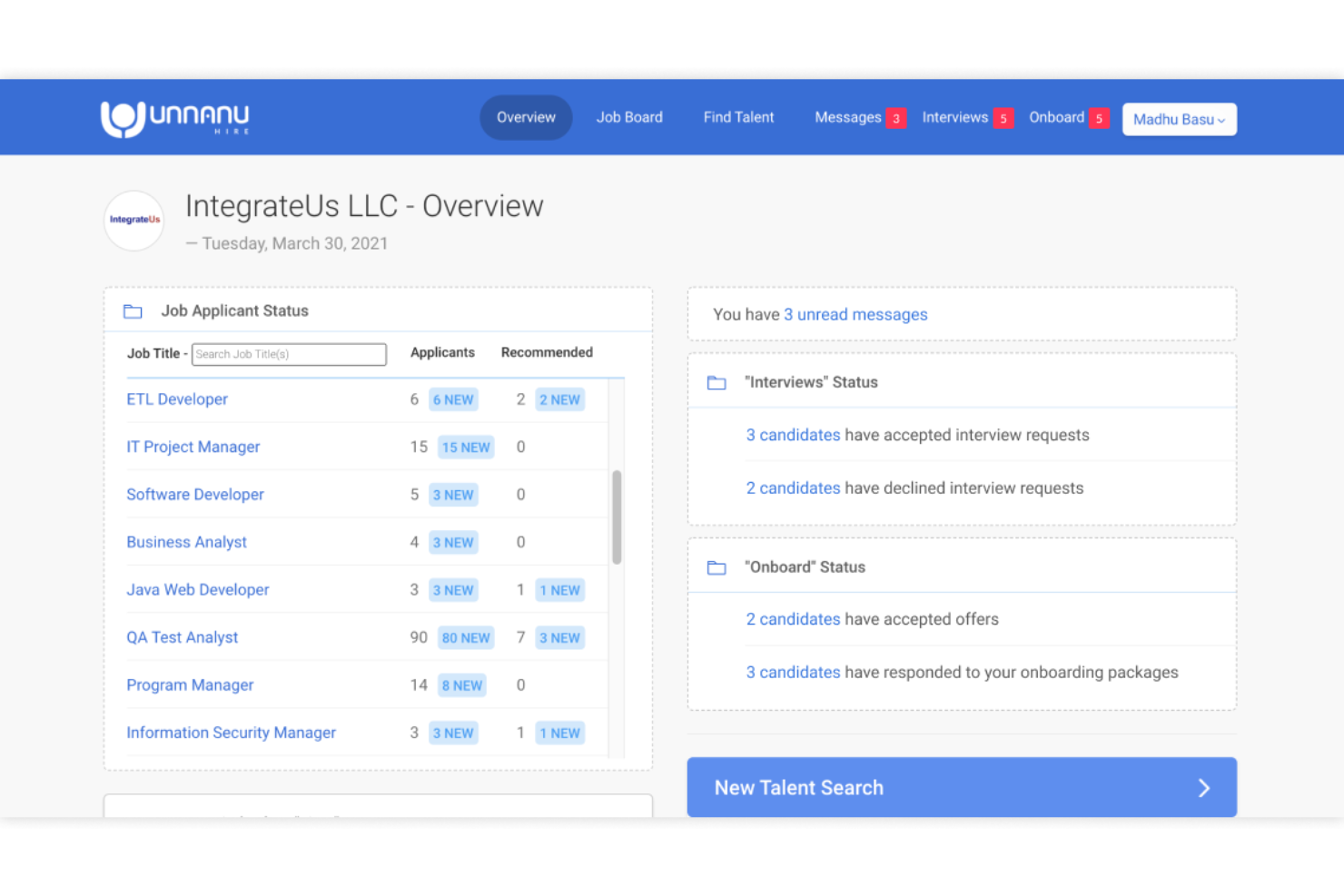
Unnanu Hire is an AI-powered ATS built for recruiters and hiring teams who want to manage sourcing, candidate pipelines, interview coordination, and onboarding in one place.
Who Is Unnanu Hire Best For?
Unnanu Hire is a strong fit for corporate recruiting teams that want AI-driven candidate scoring to cut down on manual resume review without dealing with an overly complex platform.
Why I Picked Unnanu Hire
I picked Unnanu Hire as one of the best because its AI candidate scoring genuinely cuts through resume noise. The platform evaluates resumes against weighted keywords, skills, experience, and qualifications, then ranks candidates by fit so I can shortlist in minutes instead of hours. I also appreciate the combined search across my own database and the Unnanu talent network, which surfaces matches I'd otherwise miss.
Unnanu Hire Key Features
- Visual drag-and-drop pipeline: Manage every stage of your recruiting workflow by moving candidates through customizable pipeline stages on a visual board.
- Omnichannel messaging inbox: Communicate with candidates via SMS, email, and WhatsApp from a single unified inbox connected to candidate profiles.
- Offer and onboarding workflow: Generate offer letters, collect e-signatures, and track compliance status for C2C, 1099, and W2 hires in one place.
- LinkedIn Chrome plugin: Import candidate profiles directly from LinkedIn into your Unnanu Hire database with a single click.
Unnanu Hire Integrations
Unnanu Hire documents integrations with Google Calendar, Gmail, Microsoft Outlook, Zoom, Slack, LinkedIn, and X. It also supports API and webhook integrations for connecting with major HR and ATS platforms.
Pros and Cons
Pros:
- Interview feedback stays tied to candidate records
- Unified pipeline shows applicant status clearly
- AI scoring speeds resume shortlisting
Cons:
- Few documented triggers limit workflow automation
- Candidate pool may limit sourcing reach

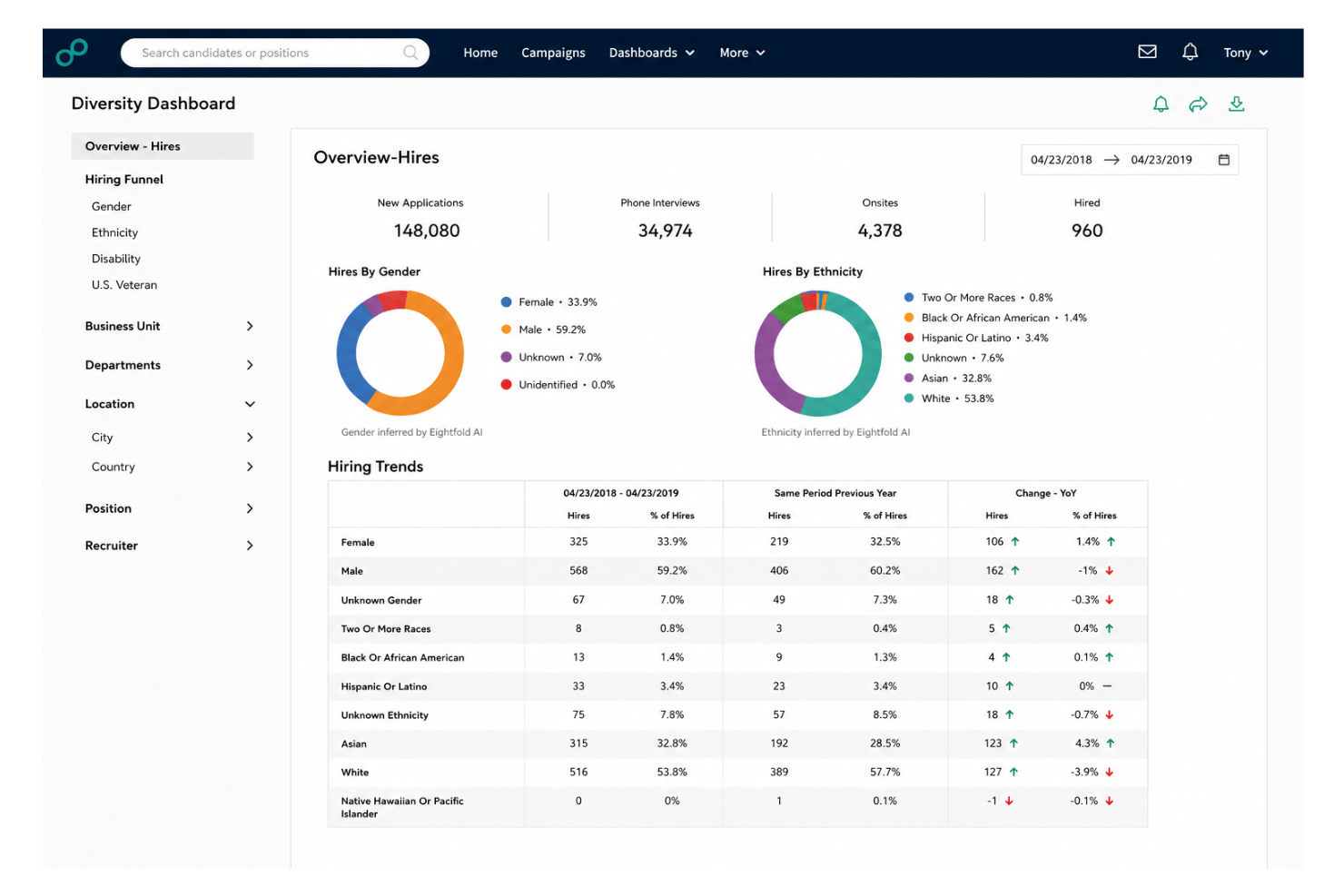
Eightfold.ai is an AI-native recruiting platform built for enterprise talent acquisition teams who need to source, screen, and engage candidates at scale—while also surfacing overlooked applicants already in their pipeline.
Who Is Eightfold.ai Best For?
Eightfold.ai suits enterprise talent acquisition teams that need AI-driven candidate matching, pipeline rediscovery, and large-scale recruiting workflows.
Why I Picked Eightfold.ai
I picked Eightfold.ai as one of the best because its AI-driven talent intelligence goes well beyond keyword matching, surfacing candidates based on actual skills, capabilities, and work context. What I find most compelling is the candidate rediscovery engine: it pulls overlooked applicants already in your pipeline and matches them to new openings, so your existing talent pool becomes a live, searchable asset. The AI Interviewer then conducts structured, multilingual candidate conversations at scale and delivers summaries ready for recruiter review.
Eightfold.ai Key Features
- AI Interview Companion: Joins live recruiter-led interviews to guide skills-based conversations and auto-drafts structured feedback for the interviewer to review afterward.
- Candidate relationship management: Runs targeted email and SMS campaigns to your talent network, with AI selecting audiences based on each candidate's likely interest.
- Multilingual AI Interviewer: Conducts adaptive, conversational candidate interviews in 24+ languages at scale and delivers structured summaries to recruiters for review.
- Skills-based bias controls: Masks candidate information such as names, gender indicators, and ethnicity before recruiter review, and runs annual third-party bias audits on the matching model.
Eightfold.ai Integrations
Eightfold.ai has a documented native integration with SAP SuccessFactors, plus integrations with Workday Recruiting, Oracle Recruiting Cloud, Oracle HCM, and eQuest in documented workflows. Its REST API and MCP tool servers support custom connections.
Pros and Cons
Pros:
- Structured AI interviews support high-volume recruiting
- Past applicants become searchable candidates for new roles
- Skills-based matching surfaces candidates beyond résumé keywords
Cons:
- Analytics exports can diverge from dashboard data
- ATS handoffs can add workflow friction
Deel Hire
Best for global agency-sourced hiring
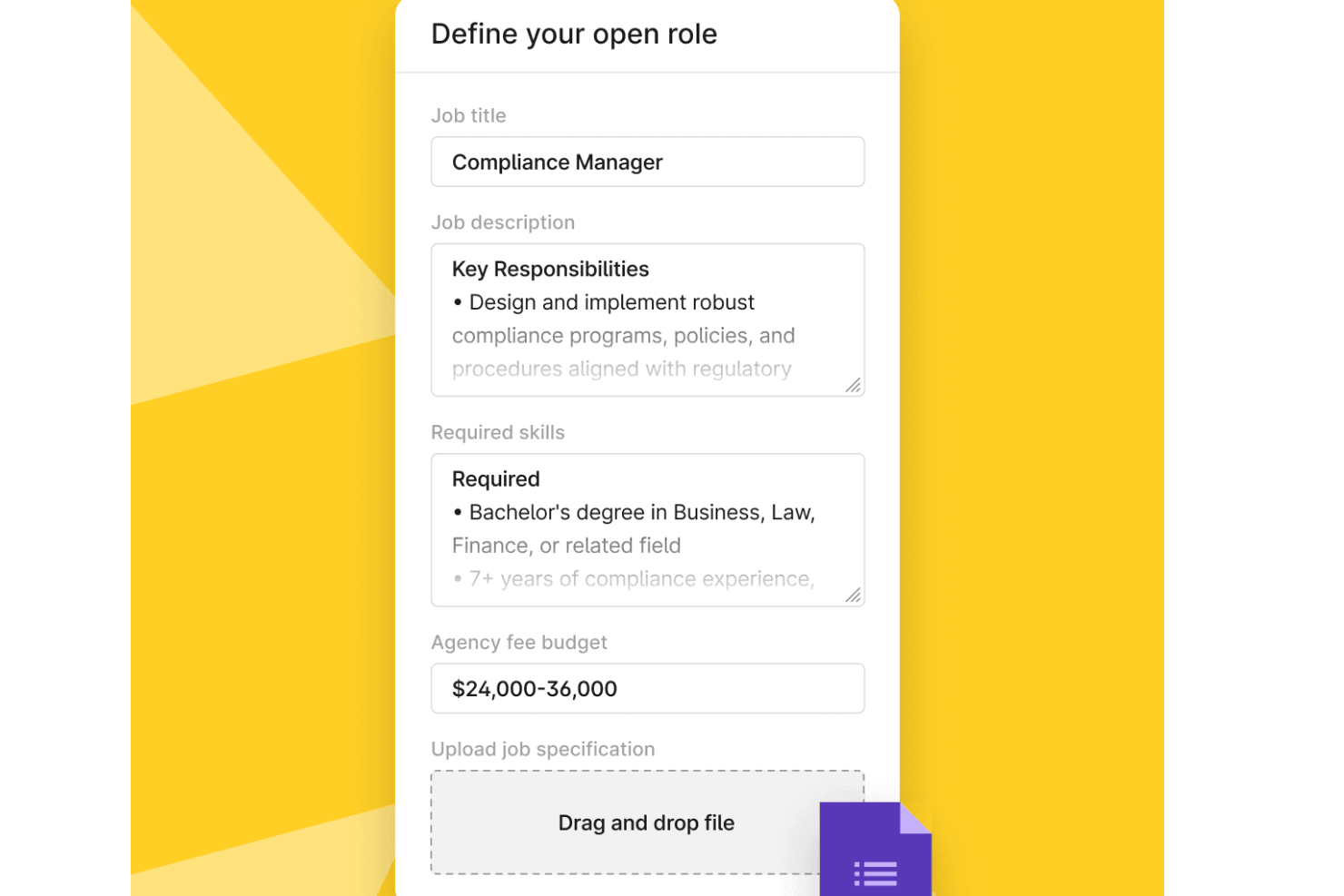
Deel Hire is a global hiring platform that connects recruiting, compliance, and onboarding for teams bringing on employees or contractors across 150+ countries—making it a strong fit for HR leaders managing cross-border hiring at scale.
Who Is Deel Hire Best For?
Deel Hire is a strong fit for HR teams and talent acquisition leaders hiring employees or contractors across multiple countries from a single platform.
Why I Picked Deel Hire
I picked Deel Hire because it's one of the few recruiting platforms that handles sourcing, compliance, and onboarding across 150+ countries in a single connected workflow. Its AI Vetted Marketplace surfaces candidates from a pool of 1.5 million+ vetted professionals, and its smart recruiter matching pairs your open roles with specialized agency partners who know the market. I also appreciate that you can invite your existing recruitment agencies directly into the platform to submit and manage candidates alongside marketplace sourcing.
Deel Hire Key Features
- AI-assisted job creation: AI helps draft job descriptions and suggests compensation ranges based on role requirements and target locations.
- 1,000+ job board distribution: Post open roles to more than 1,000 connected job boards in a single click from within the ATS.
- Interview Assistant: With candidate consent, this tool records, transcribes, and summarizes interviews so hiring teams can review key moments without rewatching recordings.
- Candidate-to-onboarding handoff: Hired candidate data flows directly into onboarding workflows, eliminating manual data re-entry between recruiting and HR systems.
Deel Hire Integrations
Deel Hire has native Google Workspace and Microsoft Teams integrations for interview scheduling. It offers REST, webhooks, MCP, and CLI access for custom integrations, while LinkedIn is documented as a job-posting source.
Pros and Cons
Pros:
- Reviewers praise smooth international worker onboarding
- Agency partners submit candidates alongside marketplace sourcing
- Global hiring connects compliance, contracts, and onboarding
Cons:
- ATS requires Deel HRIS as foundation
- Hiring analytics offer limited documented depth
Other Jobvite Alternatives
Below is a list of additional Jobvite alternatives that we shortlisted. While they didn’t make the top 10, they’re still valuable and worth further research.
- Recruit CRM
For automated resume parsing
- hireEZ
For automating recruiting tasks
- ClearCo
For AI-powered applicant tracking
- Zoho Recruit
For customizable recruitment automation
- Breezy HR
For small business performance management
- BambooHR
For small to medium businesses
- Workable
For AI-powered sourcing and HRIS integration
- SmartRecruiters
For enterprise recruitment effectiveness
- Lever
For candidate relationship management
- Recruiterflow
For modern recruitment workflows


Related HR Software Reviews
If you still haven't found what you're looking for here, check out these other related tools that we've tested and evaluated:
- HR Software
- Payroll Software
- Recruiting Software
- Employer of Record Services
- Applicant Tracking Systems
- Workforce Management Software
How I Evaluate Jobvite Competitors
I look at Jobvite competitors in two layers: whether a tool covers the ATS basics—pipeline management, job distribution, and interview workflows—and what sets it apart beyond those table stakes.
Core Functionality (Table Stakes For This List)
When I'm selecting tools for my list, I rank each one on a scale from 0 (does not offer the functionality) to 5 (excels in this area) for each core functionality listed below. Then, I calculate the tool's total score into a percentage. Each tool needs to achieve a minimum total score of 75% to be considered for inclusion.
- Applicant Tracking & Pipeline Management: I evaluate whether the ATS supports configurable pipeline stages per requisition, so a hiring manager running 20 open roles can move candidates through distinct workflows without losing track.
- Multi-Channel Job Distribution: Each tool should let you push postings to major job boards, social channels, and a branded careers page from one place rather than logging into each site individually.
- Candidate Sourcing & Talent Pools: I look for CRM-style talent pools, referral tools, or sourcing extensions that help recruiters build pipelines proactively instead of waiting for inbound applications to trickle in.
- Interview & Hiring Collaboration: Structured scorecards, interview scheduling, and role-based access for hiring teams are what I check here, since disorganized feedback loops slow down offers.
- Recruiting Analytics & Reporting: Dashboards covering time-to-hire, source effectiveness, and funnel conversion rates give TA leaders the visibility they need to optimize spend and speed.
- Onboarding & HRIS Integration: I check for offer letter workflows, onboarding task management, and native connectors to HRIS and payroll systems so new-hire handoffs don't involve manual data re-entry.
Once I have a list of tools that meet this criteria, I consider what sets each platform apart.
Differentiating Factors (What Sets Vendors Apart)
Here's how I compare and contrast different vendors:
Standout Features
AI candidate matching is a major differentiator. I look for tools that auto-rank applicants and resurface past candidates who fit new reqs. Recruitment marketing also matters when teams need branded career sites and email nurture campaigns to attract passive talent. I evaluate DEI features like anonymized screening and inclusive language checks, which help hiring teams reduce bias before candidates even reach the interview stage.
Beyond Features
I check each vendor's integration ecosystem closely because a recruiting platform that doesn't connect to your HRIS or background check provider creates manual handoff headaches. Compliance capabilities also weigh heavily—tools that support GDPR consent capture, EEOC reporting, and configurable data retention policies save teams real risk exposure. Finally, I evaluate segment fit. A platform built for enterprise hiring at scale works differently than one designed for a 50-person company filling a handful of roles per quarter.
Jobvite Key Features
Here are some key features of Jobvite that your alternative software should be able to replicate or improve upon to be worth considering:
- Career Site: Customizable career sites that reflect your brand and culture
- Job Posting: Manage job postings across multiple job boards and social media platforms
- Applicant Tracking System (ATS): Streamline the hiring process from application to onboarding
- Candidate Relationship Management (CRM): Tools for managing candidate interactions and communications
- Candidate Screening: Automated tools for pre-screening candidates and conducting video interviews
- Scheduling and Interviewing Tools: Automated scheduling and interview management, including video conferencing
- Reporting and Analytics: Comprehensive reporting tools to track hiring metrics and performance
- Onboarding: Tools to facilitate a smooth transition for new hires, including e-signature and customizable workflows
- AI Assistance: AI-powered features for candidate matching, recruitment marketing, and intelligent messaging
- DE&I Features: Tools like Job Description Grader and Bias Blocker to support diversity, equity, and inclusion in hiring