

10 Best Recruiterflow Alternatives in 2026

Best Recruiterflow Alternatives Shortlist


Strong Recruiterflow alternatives give you flexible applicant tracking, easy collaboration, and tools that handle every stage of recruitment. If you’re comparing Recruiterflow with other applicant tracking systems, you’re probably looking for features that fit your workflows, smarter sourcing, and reliable support—without extra complexity or hidden costs.
With so many options available, picking the right tool can transform how your team recruits and how candidates experience your process. This guide will help you quickly size up your leading choices, highlight what sets each one apart, and make your next ATS decision with confidence.
What Is Recruiterflow?
Recruiterflow is a cloud-based applicant tracking system designed to help recruiting teams manage the entire hiring process in one place. It lets you post jobs, track candidates, automate routine tasks, and collaborate with hiring managers. Recruiterflow aims to simplify talent sourcing, engagement, and reporting for agencies and in-house HR teams. The platform is best suited for teams who want recruiting visibility, strong automation, and customizable workflows.
| Tool | Best For | Trial Info | Price | ||
|---|---|---|---|---|---|
| 1 | Best for marketplace and vendor management | Free demo available | Pricing upon request | Website | |
| 2 | Best for front-to-back office staffing solutions | Free demo available | Pricing upon request | Website | |
| 3 | Best for technical recruiting analytics | Free demo available | Pricing upon request | Website | |
| 4 | Best for end-to-end agency workflows | 6 week free trial available | From $88/user/month (billed annually) | Website | |
| 5 | Best for global recruitment agencies | 30-day free trial | Pricing upon request | Website | |
| 6 | Best for outreach automation at scale | 7-day free trial | From $99/user/month (billed annually) | Website | |
| 7 | Best for integrated recruiting and sales pipelines | 14-day free trial | From $85/user/month (billed annually) | Website | |
| 8 | Best for AI-powered candidate sourcing | Free demo available | From $149/user/month (billed annually) | Website | |
| 9 | Best for multi-location agency operations | Free demo available | Pricing upon request | Website | |
| 10 | Best for high-volume staffing automation | Free demo available | From $99/user/month | Website |
Why Trust Our Software Reviews
We’ve been testing and reviewing HR software systems since 2019. As HR experts ourselves, we know how critical and difficult it is to make the right decision when selecting software.
We invest in deep research to help our audience make better software purchasing decisions. We’ve tested more than 2,000 tools for different HR management use cases and written over 1,000 comprehensive software reviews. Learn how we stay transparent & our software review methodology.
-

Paycom
Visit WebsiteThis is an aggregated rating for this tool including ratings from Crozdesk users and ratings from other sites.4.3 -
Justworks
Visit WebsiteThis is an aggregated rating for this tool including ratings from Crozdesk users and ratings from other sites.4.6 -
HiBob
Visit WebsiteThis is an aggregated rating for this tool including ratings from Crozdesk users and ratings from other sites.4.5




Best Recruiterflow Alternatives Reviews
Below are my detailed summaries of the best Recruiterflow alternatives that made it onto my shortlist. My reviews offer a detailed look at the features, best use cases, and integrations of each applicant tracking system to help you find the best one for you.

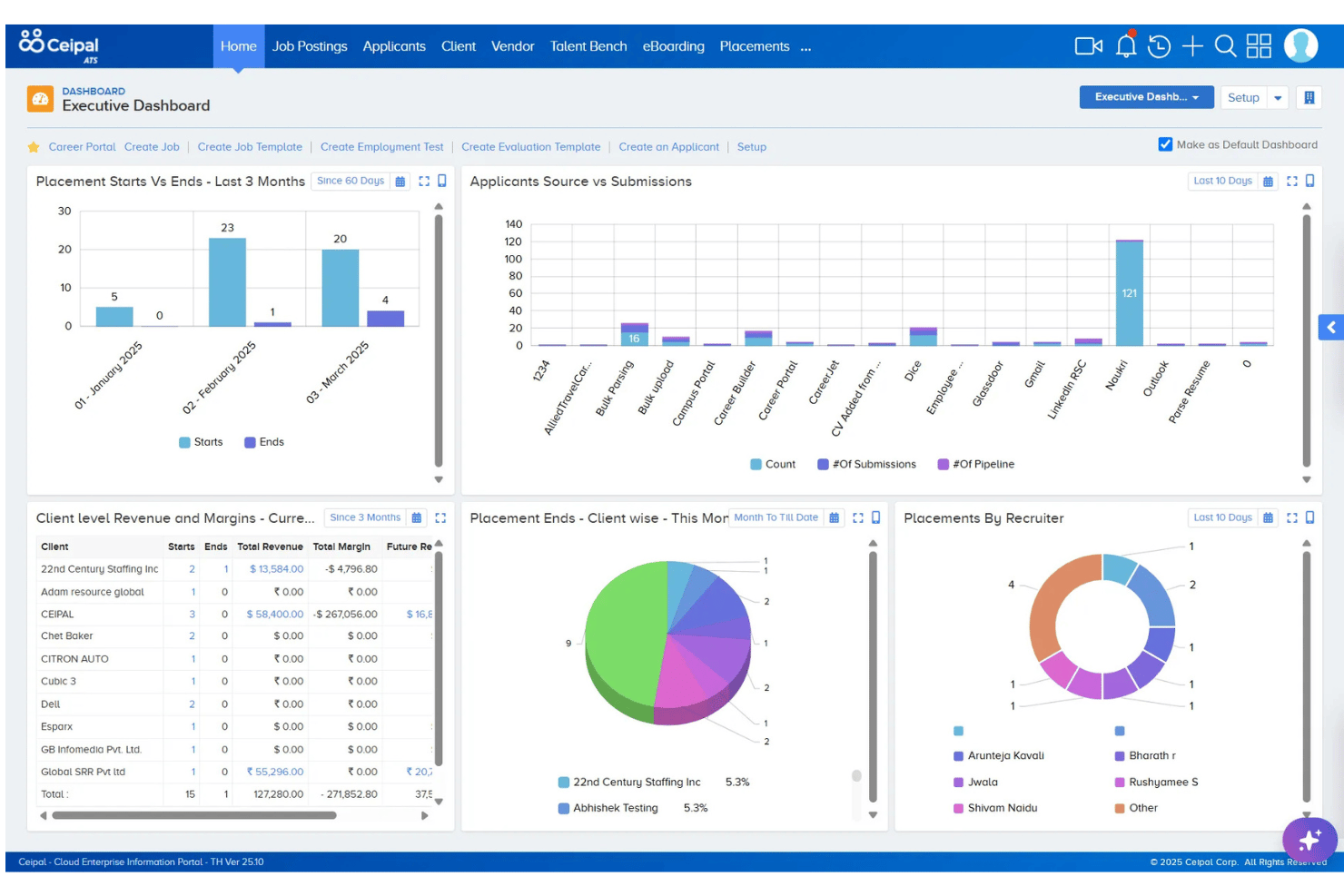
Ceipal is a staffing-focused ATS and vendor management platform built for mid-market and enterprise staffing agencies that need to manage candidates, clients, and VMS portals from a single system.
Who Is Ceipal Best For?
Ceipal is a strong fit for IT and healthcare staffing agencies that operate within VMS-driven environments and need multi-portal vendor management built into their ATS.
Why Ceipal Is a Good Recruiterflow Alternative
Ceipal earns its spot on my shortlist because of its native VMS portal integrations, which connect directly to 25+ vendor management systems like SAP Fieldglass. In practice, that means my team can push job orders and candidate submissions to multiple portals without re-entering data manually. I also appreciate the no-touch automated distribution, which routes submissions to the right VMS based on the job order rules already in the system.
Ceipal Key Features
- Configurable ATS workflows: Customize candidate pipelines and define unique hiring stages for each client or division.
- Centralized resume database: Parse, tag, and search candidate resumes in a searchable database with semantic and Boolean filters.
- Two-way email and calendar sync: Log all recruiting correspondence and schedule interviews directly through Gmail or Outlook without leaving the ATS.
- Recruiter performance dashboards: Monitor recruiter KPIs, placement activity, and pipeline analytics with customizable visual reports.
Ceipal Integrations
Ceipal offers 200+ native integrations, including LinkedIn, Indeed, Dice, Monster, SAP Fieldglass, Beeline, ADP, Outlook, Microsoft 365, and Gmail. An API is available for custom integrations.
Pros and Cons
Pros:
- Strong support for high-volume staffing workflows
- AI candidate matching reduces manual shortlisting
- Native VMS portal connections built in
Cons:
- Setup and onboarding take considerable time
- Lacks native offline data access

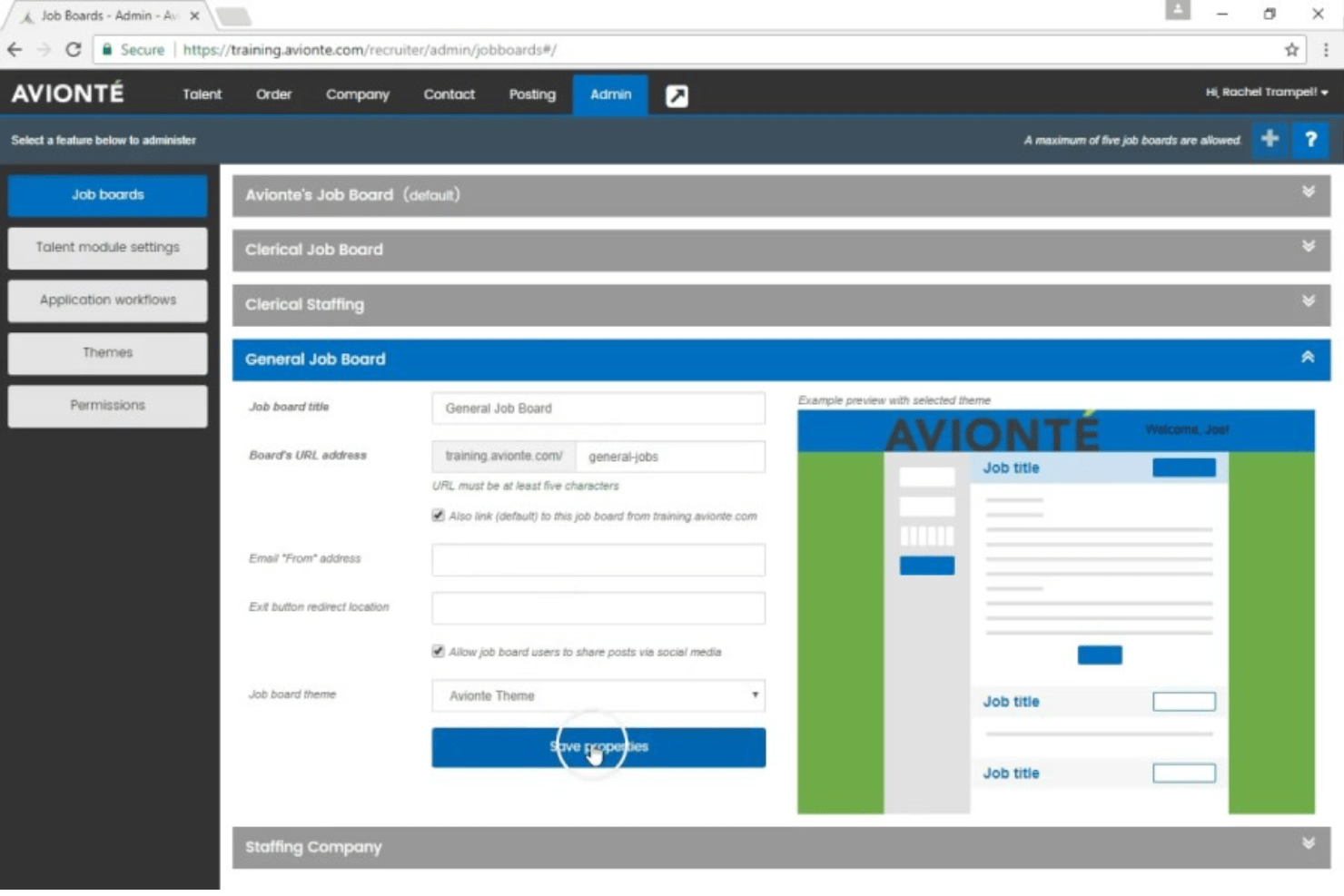
Avionté is an end-to-end staffing platform that combines ATS, CRM, payroll, and billing in one system, making it a strong fit for staffing agencies that need to manage both recruiting operations and back-office financials without juggling separate tools.
Who Is Avionté Best For?
Avionté is a strong fit for mid-market staffing agencies operating in temp, contract, or light industrial sectors that need payroll and billing built into the same system as their ATS.
Why Avionté Is a Good Recruiterflow Alternative
Avionté earns its spot on my shortlist because it's one of the few platforms that genuinely connects front-office recruiting (ATS, CRM, job order management) with back-office operations like payroll and billing in a single system. I particularly like the AI-powered candidate search and match built into AviontéBOLD, which helps my team surface and redeploy talent without switching tools. When a placement converts, billing and payroll workflows trigger from the same candidate record, which Recruiterflow simply can't do.
Avionté Key Features
- Mobile talent application: Candidates can search and apply for jobs, submit timesheets, and receive updates from their smartphones.
- Integrated timekeeping and attendance: Capture candidate hours and attendance directly within the platform, feeding payroll and client billing processes.
- Configurable compliance workflows: Built-in tools help manage background checks and document management for regulated hiring environments.
- Custom report builder: Users can design custom analytics dashboards and export critical data for pipeline, placement, and operational visibility.
Avionté Integrations
Avionté offers native integrations with Indeed, LinkedIn, Sterling, Adobe Sign, and background check providers, and provides an API for custom integrations.
Pros and Cons
Pros:
- Supports temp, contract, and direct hire
- Mobile app supports candidate timesheet submission
- Built-in payroll and billing for staffing
Cons:
- Lacks built-in video interviewing capabilities
- Reporting customization requires significant setup time
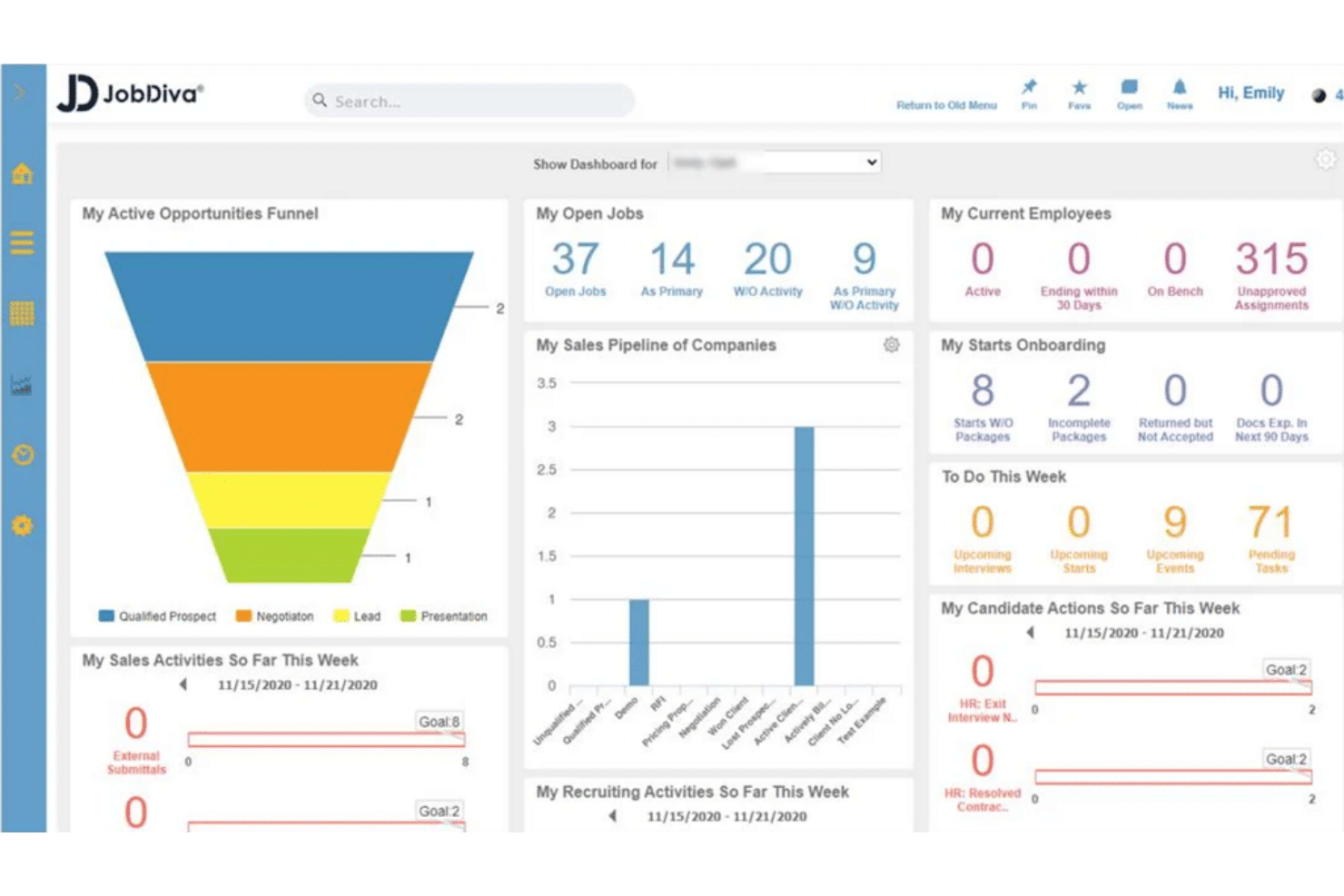
JobDiva is an all-in-one staffing platform built for mid-market and enterprise recruiting agencies that need to manage high-volume candidate pipelines, client relationships, VMS workflows, and back-office operations in a single system.
Who Is JobDiva Best For?
JobDiva is a strong fit for mid-market and enterprise staffing agencies, particularly those operating in IT, technical, or healthcare staffing with high-volume contract placements.
Why JobDiva Is a Good Recruiterflow Alternative
I've included JobDiva in my top picks because its reporting and analytics depth goes well beyond what Recruiterflow offers. I particularly like the dedicated BI dashboards that track recruiter productivity, pipeline velocity, and placement revenue in a single view. The AI-powered resume parsing and Boolean search also let my team surface technical candidates fast, which matters when filling niche IT or engineering roles under tight deadlines.
JobDiva Key Features
- VMS synchronization: Sync job orders and candidate submissions directly with vendor management systems for unified contract staffing workflows.
- Onboarding automation: Manage hiring paperwork, compliance steps, and onboarding tasks within a centralized digital workspace.
- Role-based access controls: Set granular user permissions to protect client and candidate information based on job function.
- White-label mobile apps: Provide branded candidate and recruiter apps for timesheets, job alerts, and applicant tracking on the go.
JobDiva Integrations
JobDiva offers native integrations with LinkedIn, CareerBuilder, Monster, DICE, Indeed, Outlook, and Bullhorn. An API is available for custom integrations.
Pros and Cons
Pros:
- Built-in timesheets and back-office tools
- Deep placement revenue and productivity dashboards
- Strong VMS connectivity for contract staffing
Cons:
- Lacks native video interviewing features
- Dated interface compared to modern ATS tools

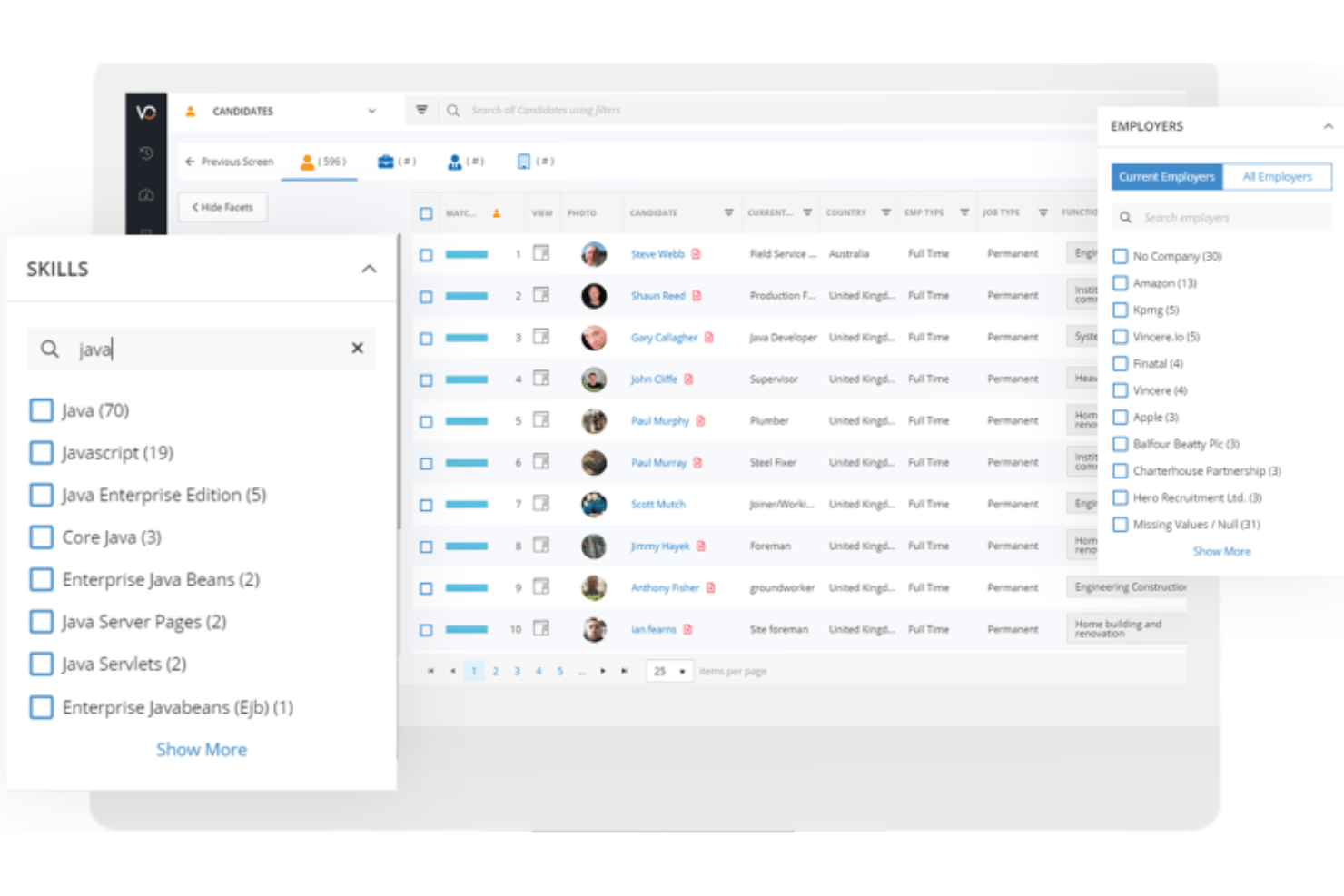
Vincere is a recruitment platform that combines CRM, ATS, and back-office tools in one system, built specifically for staffing agencies, executive search firms, and RPO operators managing complex, multi-client workflows.
Who Is Vincere Best For?
Vincere is a strong fit for mid-sized to enterprise recruitment agencies running permanent, temp, contract, or executive search desks under one roof.
Why Vincere Is a Good Recruiterflow Alternative
I've included Vincere in my top picks because it's one of the few platforms where an agency can manage a job order from first client call through to placement and invoice without leaving the system. I particularly like the TimeTemp module for temp and contract desks, which handles timesheet approvals and scheduling directly alongside the ATS pipeline. The 18+ pre-built analytics dashboards also give consultants and managers real-time visibility across revenue, placements, and individual KPIs in one place.
Vincere Key Features
- Client and candidate portals: Provide branded online access for clients to review candidates and for candidates to manage their application process.
- Compliance tracking: Built-in GDPR compliance and consent management features help agencies meet data privacy obligations.
- SOLR-powered search: Advanced faceted and geo-search functionality surfaces candidates from the database quickly.
- Omnichannel comms hub: Centralizes calls, SMS, and email communication with automatic activity logging for every client and candidate.
Vincere Integrations
Vincere offers native integrations with Broadbean, LogicMelon, Indeed, Gmail, Outlook, Xero, DocuSign, Microsoft 365, and integrates with Zapier. An open API is available for custom integrations.
Pros and Cons
Pros:
- Executive search off-limits tracking included
- Built-in back-office for pay and bill
- Handles temp, contract, and perm desks natively
Cons:
- Mobile app is limited compared to desktop
- Requires significant initial reporting setup time

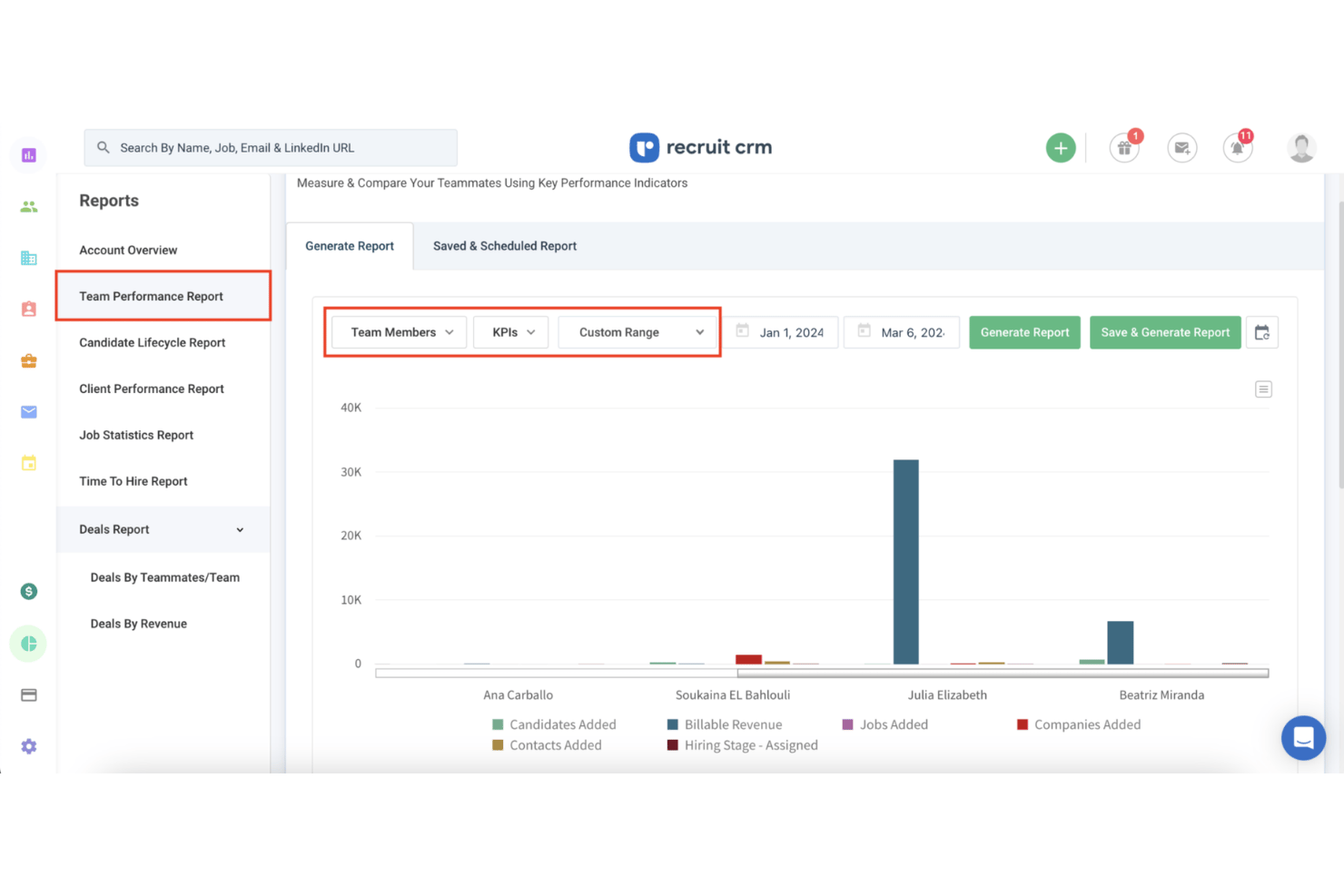
Recruit CRM is a combined ATS and CRM built for recruitment agencies and executive search firms that need to manage candidates, clients, and job orders in a single platform across multiple client relationships.
Who Is Recruit CRM Best For?
It's a strong fit for small to midsize recruitment agencies and executive search firms operating across multiple regions or countries.
Why Recruit CRM Is a Good Recruiterflow Alternative
I picked Recruit CRM as one of the best because it's genuinely built for agencies placing candidates across borders. The Job Multiposting feature pushes openings to 5,000+ channels in a single action, which matters when you're sourcing across different markets simultaneously. I also appreciate the Bill & Pay module, which handles timesheets, invoicing, and payroll for contract placements directly inside the platform, without needing a separate tool.
Recruit CRM Key Features
- Executive search report generator: Create branded client reports directly from your candidate pipeline with customizable analytics.
- Workflow automation: Build no-code automations for repetitive tasks and connect with 1,000+ apps using Zapier.
- Two-way email and calendar sync: Integrate your mailbox and calendar for automatic communication tracking and interview scheduling.
- Integrated Chrome sourcing extension: Capture candidate data from LinkedIn and other sites and add it straight to your database.
Recruit CRM Integrations
Recruit CRM offers native integrations with Gmail, Outlook, Google Calendar, Outlook Calendar, Mailchimp, and RingCentral. It connects with Zapier and provides an open API for custom integrations.
Pros and Cons
Pros:
- Built-in invoicing for contract placements
- Supports multiple languages for global agency use
- Handles automated global posting
Cons:
- Mobile app lacks desktop feature parity
- Reporting dashboard customization is relatively limited
New Product Updates from Recruit CRM

Recruit CRM Adds AI Candidate Matching and Resume Parsing
Recruit CRM Recruit CRM introduces AI candidate matching and enhanced resume parsing. These updates help recruiters identify candidates faster and improve screening accuracy. For more information, visit Recruit CRM's official site.
 .
.
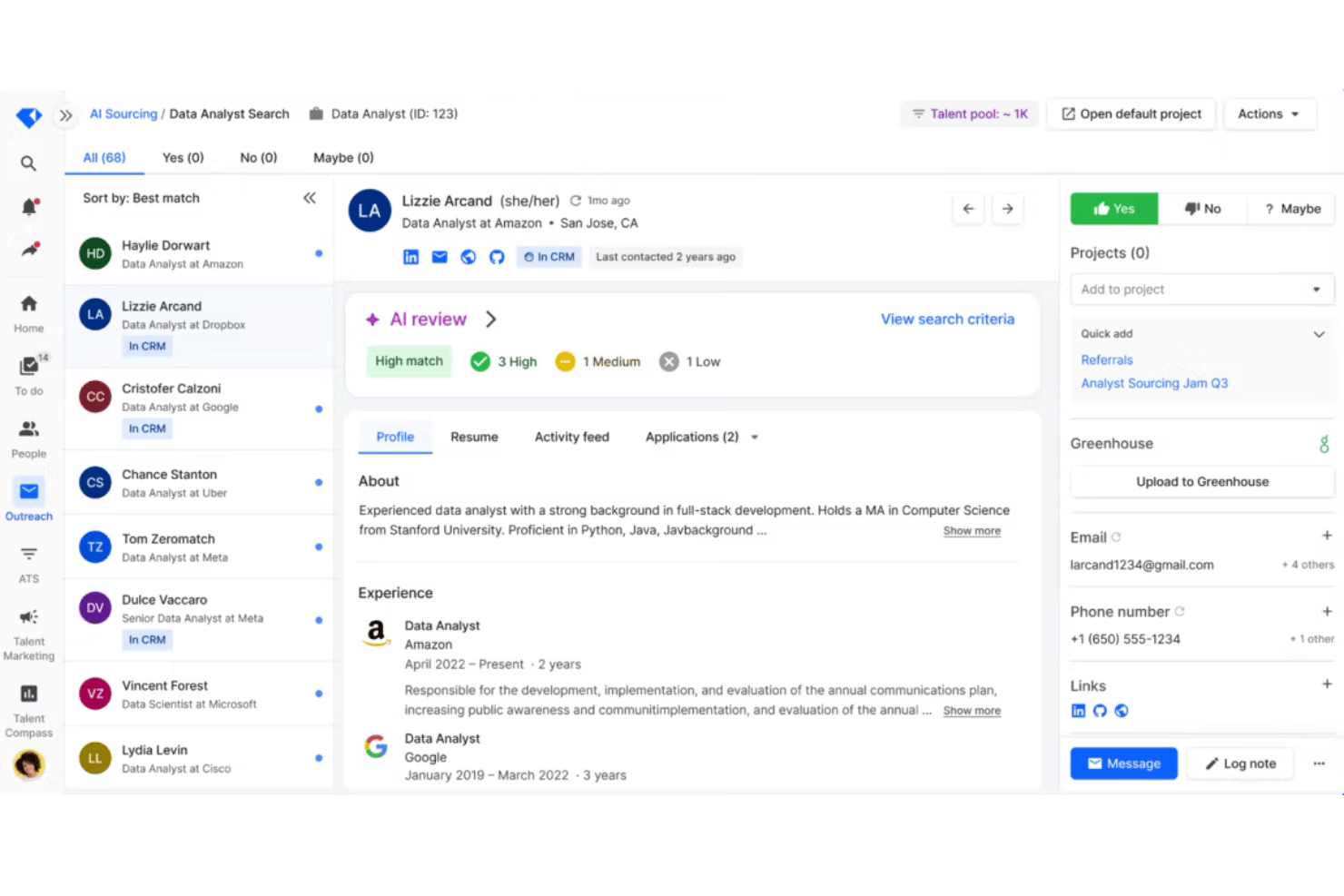
Gem is an all-in-one recruiting platform that combines ATS, CRM, AI sourcing, and outreach automation — built for staffing agencies and talent acquisition teams that need to manage high-volume candidate pipelines across multiple clients.
Who Is Gem Best For?
Gem is a strong fit for staffing agency recruiters and RPO teams that rely heavily on outbound sourcing and need to run personalized candidate outreach across multiple client accounts simultaneously.
Why Gem Is a Good Recruiterflow Alternative
I've included Gem in my top picks because its multi-channel outreach sequencing is genuinely built for volume. I can set up AI-personalized email, SMS, and LinkedIn sequences across dozens of candidates at once, with open and reply rate tracking at the sequence level. The AI Sourcing Agent adds another layer, letting me describe a role in plain language and surface a ranked shortlist from 800M+ profiles, ready to feed straight into a sequence.
Gem Key Features
- Pipeline analytics dashboards: Visualize recruiter productivity, placement stats, and DEI metrics in customizable reports.
- Client-specific talent pools: Organize candidates by specialty or client to manage multiple job orders efficiently.
- Automated resume parsing: Extract structured data from uploaded resumes to build a searchable database.
- ATS and CRM integration: Sync workflows across ATS, CRM, and candidate sourcing modules to centralize your recruiting operations.
Gem Integrations
Gem offers 16+ native integrations, including Greenhouse, Lever, Workday, Bullhorn, Google Workspace, Microsoft 365, Zoom, and DocuSign. An API is available for custom integrations.
Pros and Cons
Pros:
- Deep analytics track DEI and pipeline metrics
- Multi-channel sequences scale across large candidate volumes
- AI sourcing agent ranks candidates automatically
Cons:
- Lacks native back office billing
- CRM depth weaker than dedicated BD platforms

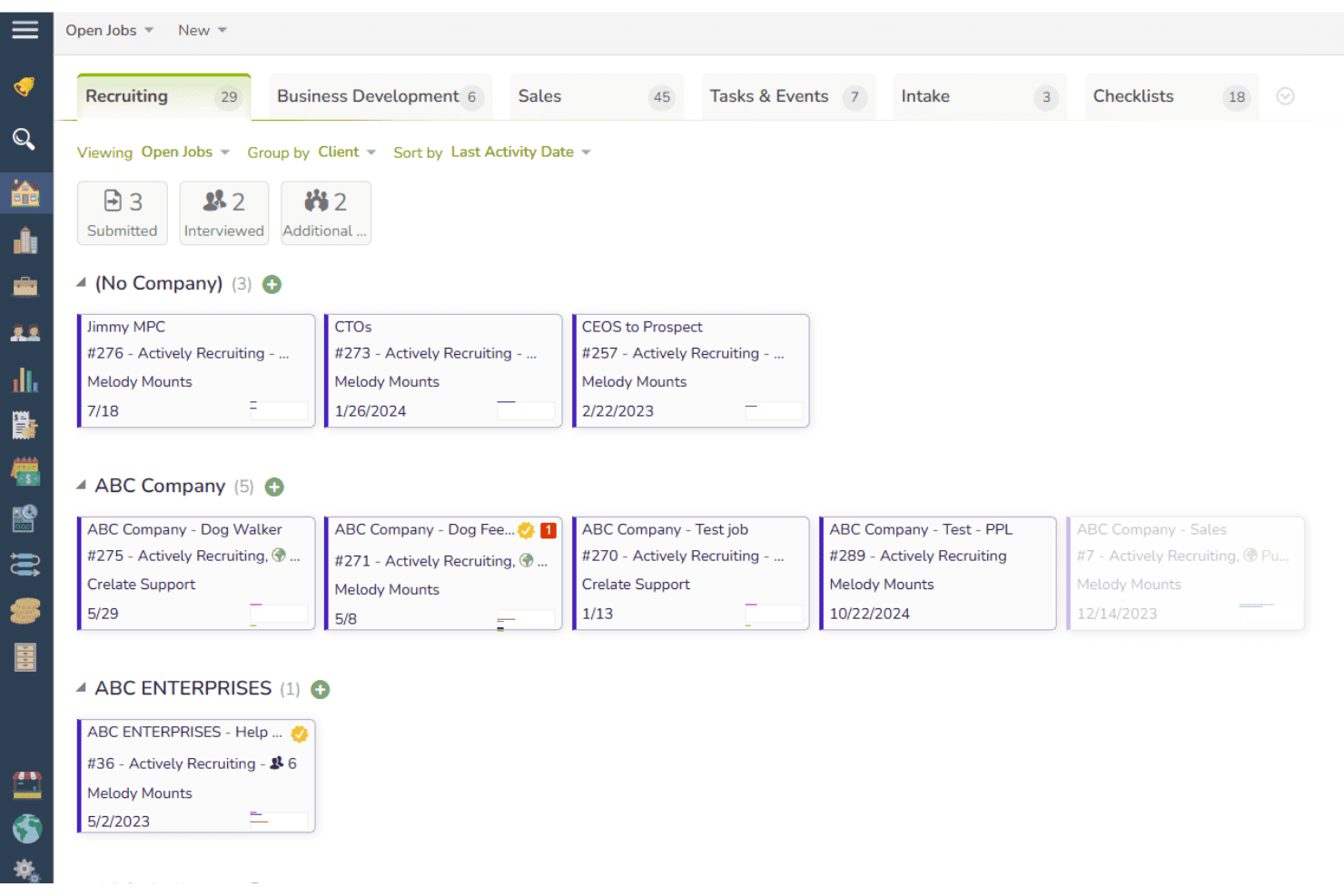
Crelate is an ATS and recruiting CRM built for staffing agencies, executive search firms, and RPO teams that need to manage candidate pipelines and client relationships in a single platform.
Who Is Crelate Best For?
Crelate is a strong fit for small-to-mid-sized staffing agencies and executive search firms managing both candidate pipelines and active client business development.
Why Crelate Is a Good Recruiterflow Alternative
I picked Crelate as one of the best because it genuinely merges recruiting and business development into one workspace. The Business Development Workflows let me track new client pursuits, won requisitions, and active placements without switching tools. The AI Discovery Agent searches a database of up to one billion contacts, so I can source candidates and prospect new clients from the same interface.
Crelate Key Features
- Client and job portals: Share updates and manage collaboration with branded portals for clients and hiring teams.
- Resume parsing and enrichment: Automatically parse resumes and enrich contact data directly in candidate profiles.
- Customizable reporting dashboards: Create recruiter, placement, and revenue dashboards with export options for deeper analytics.
- Back-office and onboarding connectors: Connect payroll, HCM, and onboarding systems to manage compliance, timekeeping, and invoicing.
Crelate Integrations
Crelate offers native integrations with LinkedIn, Indeed, ZipRecruiter, CareerBuilder, Monster, DocuSign, Microsoft 365, Google Workspace, Twilio, and QuickBooks. An API is available for custom integrations.
Pros and Cons
Pros:
- Responsive onboarding and customer success support
- Combined ATS and CRM in one workspace
- Highly customizable drag-and-drop recruiting workflows
Cons:
- Recurring bugs disrupt candidate tracking workflows
- Offers single-table reporting only

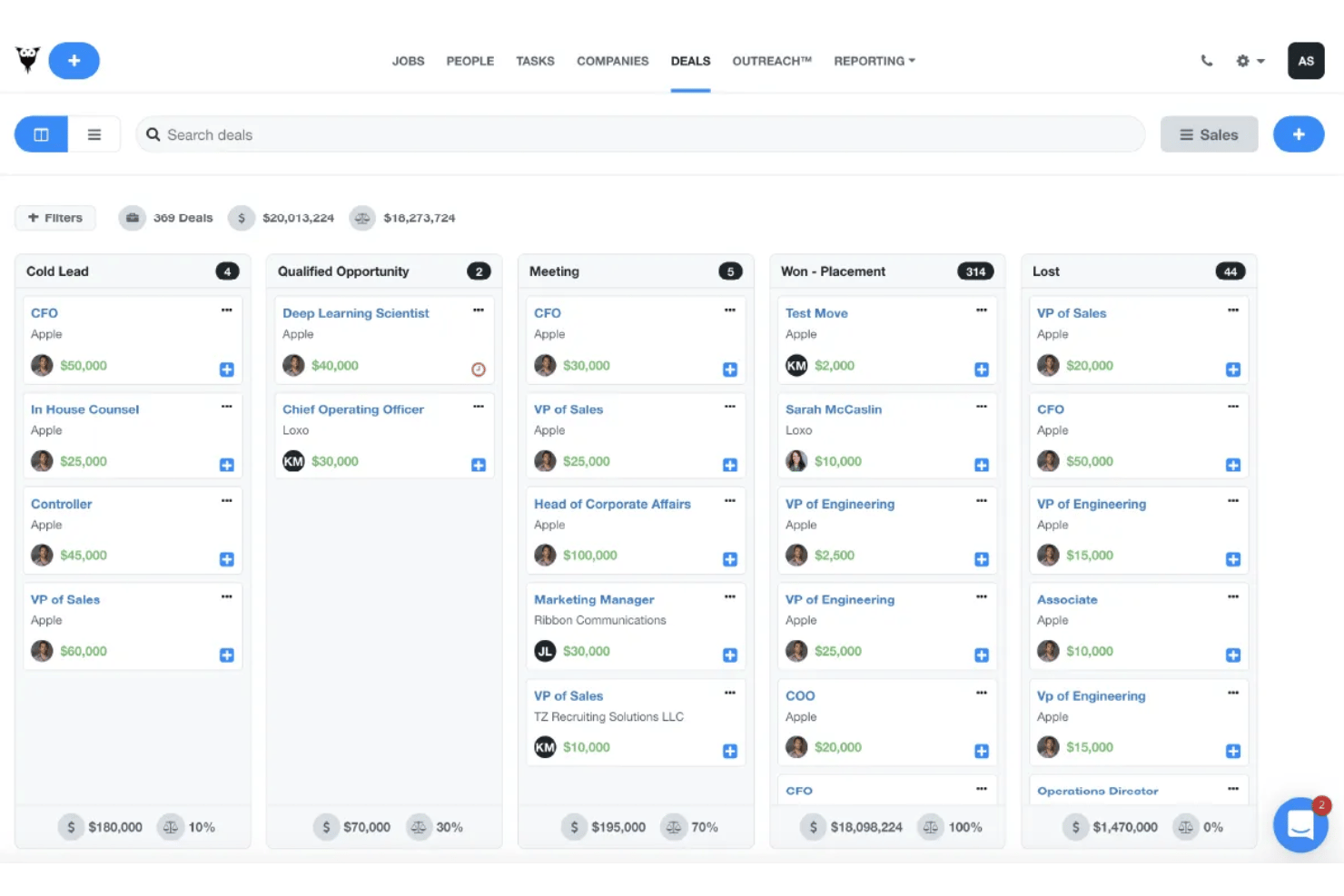
Loxo is an AI-native talent intelligence platform built for staffing agencies and executive search firms that want to consolidate their ATS, CRM, and candidate sourcing into a single system of record.
Who Is Loxo Best For?
Loxo suits recruiters at small-to-mid-sized agencies who run high-volume outbound sourcing and need one platform to manage candidates, clients, and outreach campaigns.
Why Loxo Is a Good Recruiterflow Alternative
Loxo earns its spot on my shortlist because its built-in 850M+ talent graph means I'm not paying separately for a sourcing database on top of my ATS. I particularly like the AI Sourcing Agents, which surface and rank candidates against an open role directly inside the platform, and the Loxo Outreach engine, which lets me run mass multi-channel campaigns (email and SMS) to up to 5,000 candidates at a time. That level of native sourcing depth is something Recruiterflow simply doesn't match on its own.
Loxo Key Features
- Configurable pipeline management: Create and customize multiple candidate pipelines with drag-and-drop stage controls for each open job.
- Built-in sales CRM: Track deals, manage client relationships, and forecast business development activities from inside the platform.
- Job board distribution: Post job openings to leading boards like Indeed, Monster, and CareerBuilder directly from the system.
- Candidate reporting dashboards: Access recruiter productivity metrics, hiring manager reports, and real-time placement tracking for each client.
Loxo Integrations
Loxo offers native integrations with LinkedIn, Gmail, Outlook, Indeed, Monster, CareerBuilder, RingCentral, and has an API for custom integrations.
Pros and Cons
Pros:
- Outreach campaigns scale to 5,000 candidates
- AI scoring ranks candidates against open roles
- Native 850M+ talent database built in
Cons:
- Steeper onboarding than lighter-weight ATS tools
- Lacks native offline data access

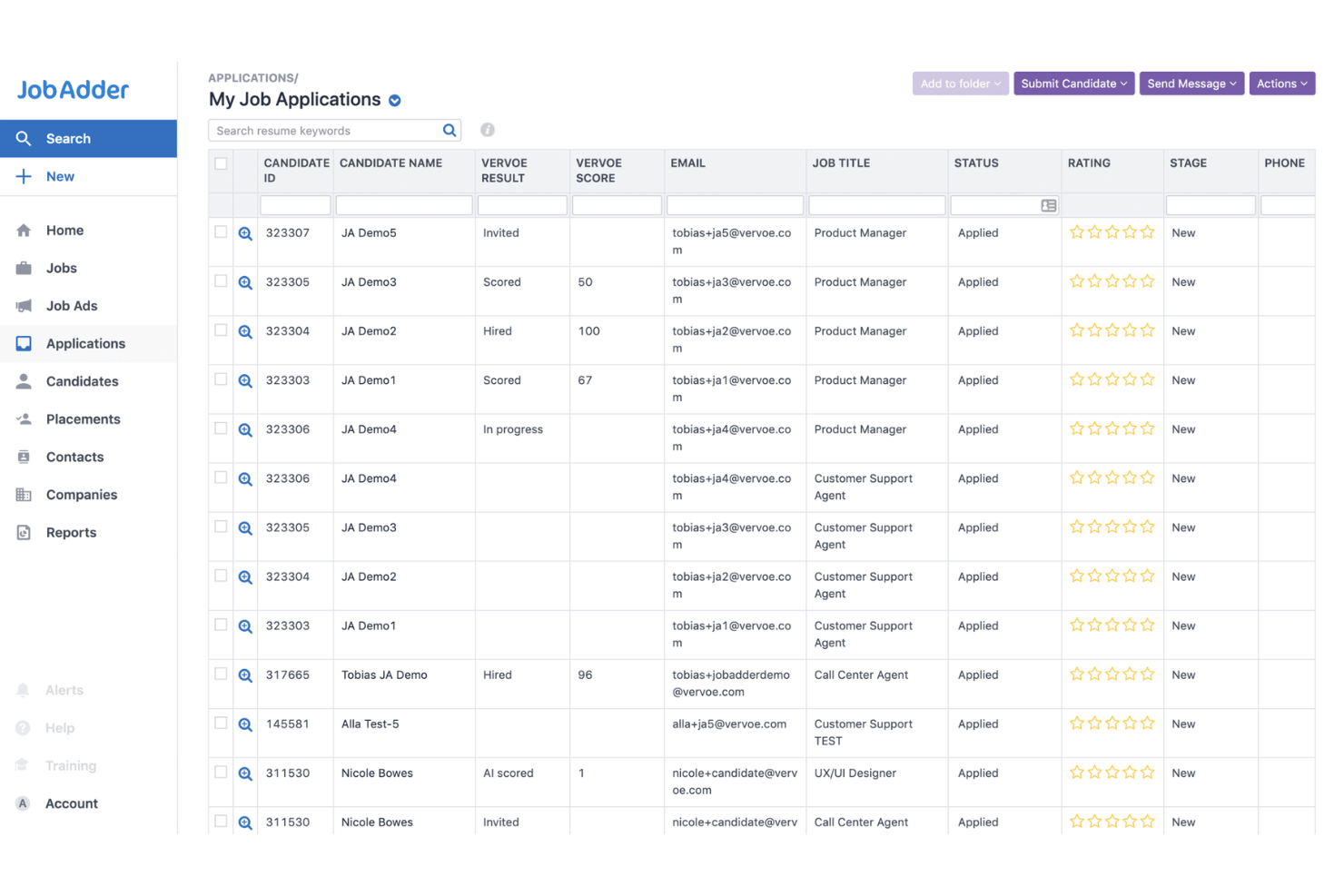
JobAdder is a combined ATS and recruitment CRM built for staffing agencies and multi-location recruitment operations, helping teams manage candidate pipelines, client relationships, and temp or perm placements from a single platform.
Who Is JobAdder Best For?
JobAdder is a strong fit for staffing agency owners and recruiters running perm, temp, or dual-desk operations across multiple locations or regions.
Why JobAdder Is a Good Recruiterflow Alternative
I picked JobAdder as one of the best because it handles the complexity of running recruitment across multiple desks and locations. Unlimited custom workflows mean my team can configure separate pipelines for perm, temp, and contract placements without compromising one desk's process for another. The Pro dashboards deliver Benchmarks and Business Performance reporting across branches. That means I can see exactly how each desk or location is tracking against KPIs.
JobAdder Key Features
- Job board distribution: Distribute job postings to over 200 job boards with one click.
- Resume parsing: Extract structured data from resumes and build a searchable candidate database.
- Recruitment CRM: Manage client, contact, and company records alongside candidates in a single platform.
- Placement management: Track perm, temp, and contract placements with real-time analytics and reporting.
JobAdder Integrations
JobAdder offers native integrations with LinkedIn, Seek, Indeed, Broadbean, DocuSign, Xero, MYOB, Google Calendar, Outlook, and Zapier, and provides an API for custom integrations.
Pros and Cons
Pros:
- Configurable workflows for perm and temp desks
- Multi-board job posting with one-click distribution
- Combined ATS and CRM in one platform
Cons:
- High-volume temp operations need additional setup
- Mobile app has limited functionality vs. desktop

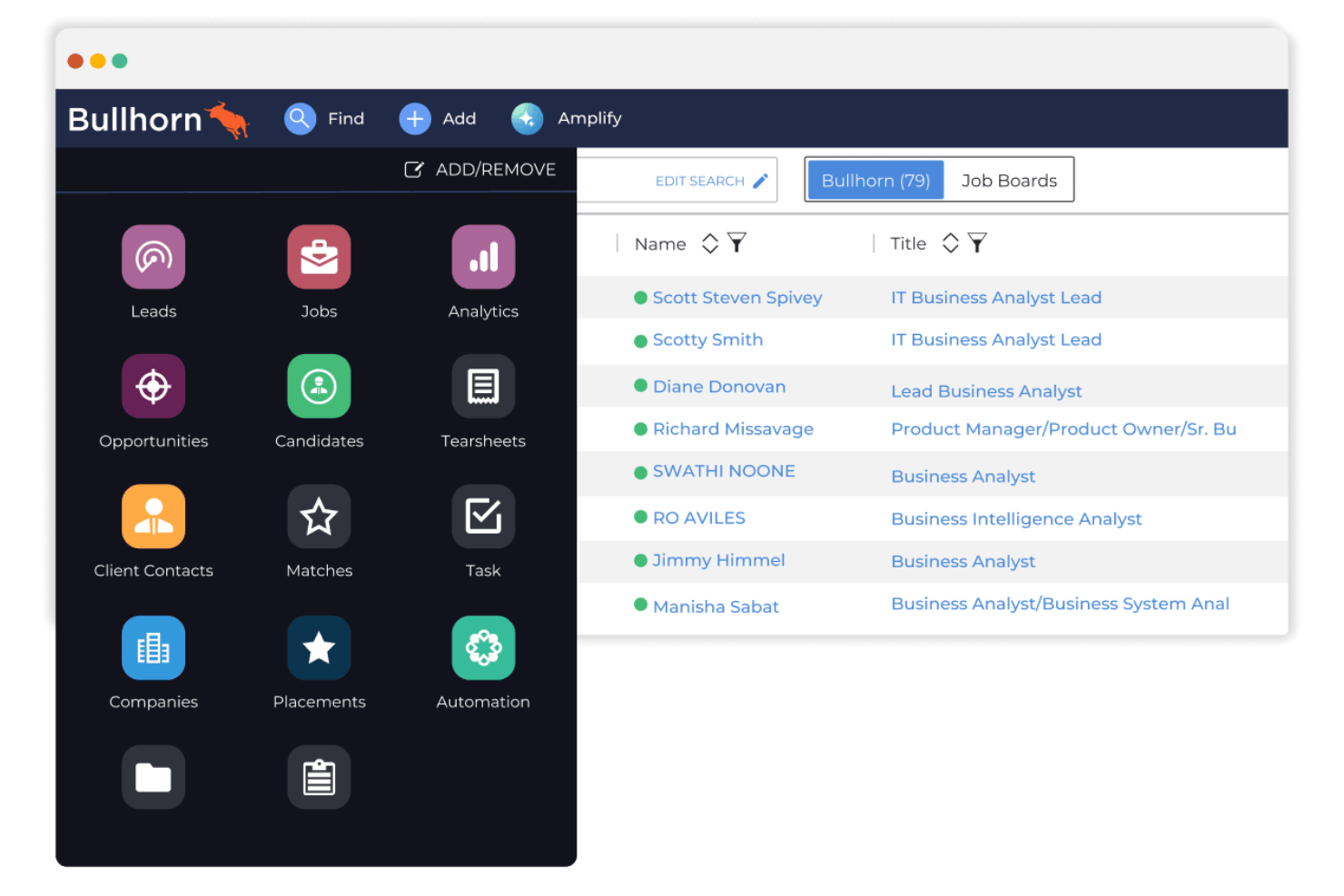
Bullhorn is a staffing-specific ATS and recruitment CRM built for agencies that manage high volumes of candidates, clients, and job orders across temp, contract, and permanent placements.
Who Is Bullhorn Best For?
Bullhorn fits mid-market and enterprise staffing agencies that need a purpose-built platform to manage temp, contract, and permanent hiring at scale.
Why Bullhorn Is a Good Recruiterflow Alternative
I picked Bullhorn as one of the best because its automation depth goes well beyond what Recruiterflow offers at volume. Bullhorn's Amplify Digital Workers handle agentic screening, matching, and multi-step outreach autonomously, so my team isn't manually progressing hundreds of candidates through a pipeline. Its VMS automation layer connects to 110+ vendor management systems, pulling job records and pushing submissions directly from Bullhorn.
Bullhorn Key Features
- Configurable sales CRM pipeline: Track business development, client contact history, and deal forecasting directly within the platform.
- Two-way email and calendar sync: Integrate Bullhorn with Gmail or Outlook for automatic logging, scheduling, and communication tracking.
- Customizable pipeline workflows: Tailor candidate stages and pipeline views to fit different roles, clients, or business units.
- Automated job board posting: Distribute job openings to a wide network of job boards and manage applications from a single dashboard.
Bullhorn Integrations
Bullhorn offers 100+ native integrations through its marketplace, including LinkedIn Recruiter, Indeed, Microsoft 365, Gmail, DocuSign, Broadbean, DaXtra, Textkernel, Cube19, and Xero, with an API available for custom integrations.
Pros and Cons
Pros:
- Extensive VMS connectivity for enterprise staffing workflows
- Deep automation across temp and contract hiring
- Purpose-built for staffing and recruitment agencies
Cons:
- Requires technical help to configure workflows
- Implementation can take months for larger teams
Other Recruiterflow Alternatives
Here are some additional Recruiterflow alternatives that didn’t make it onto my shortlist, but are still worth checking out:
- Manatal
For social media candidate enrichment
- Zoho Recruit
For customizable workflow flexibility
- PCRecruiter
For flexible ATS pipeline configuration
- iSmartRecruit
For multilingual platform support
- hireEZ
For outbound sourcing intelligence
- TargetRecruit
For Salesforce-native integration
- Tracker
For built-in collaboration tools
- Firefish Software
For candidate nurturing campaigns
- Top Echelon
For recruiter split placements network
- Leonar
For visual pipeline management


How I Evaluate Recruiterflow Alternatives
I evaluate in two layers: core ATS+CRM features Recruiterflow already offers, and differentiators that set vendors apart. I look for sourcing automation, pipeline flexibility, and how well each tool handles client and candidate management.
Core Functionality (Table Stakes for This List)
When I'm selecting tools for my list, I rank each one on a scale from 0 (does not offer the functionality) to 5 (excels in this area) for each core functionality listed below. Then, I calculate the tool's total score as a percentage. Each tool needs to achieve a minimum total score of 65% to be considered for inclusion.
- Applicant tracking: I look for customizable pipeline stages that let agencies tailor workflows per job order, like separate pipelines for contract staffing versus retained searches.
- Recruitment CRM: Linked client, contact, and company records matter here, especially how well the tool ties candidate activity back to specific accounts and deals.
- Sourcing & outreach automation: I evaluate multi-step email sequences and browser extension sourcing, checking whether recruiters can build drip campaigns and pull candidates from LinkedIn without leaving the platform.
- Job posting & distribution: Multi-board posting with major platforms like Indeed and ZipRecruiter is what I check for, along with branded career site options for agency clients.
- Resume parsing & database: A searchable candidate database with accurate parsing, Boolean search, and tagging is key. Tools like Bullhorn and Loxo handle this differently, so I compare how each structures and surfaces candidate data.
- Reporting & placement tracking: I look at whether dashboards cover recruiter productivity, pipeline velocity, and placement revenue, giving agency owners clear visibility into team performance.
Once I have a list of tools that meet the criteria, I consider what sets each platform apart.
Differentiating Factors (What Sets Vendors Apart)
Here's how I compare and contrast different vendors:
Standout Features
AI candidate matching is a major differentiator. Tools that score and rank candidates against open roles based on skills and past placement patterns save recruiters hours of manual shortlisting. I also evaluate executive search workflows—features like off-limits tracking and long-list/short-list management matter for retained search firms running confidential mandates. A configurable sales CRM pipeline rounds out the picture, letting agencies track deal stages and client activity alongside recruiting without toggling between separate systems.
Beyond Features
Agency type matters here. A tool built for high-volume staffing with timesheets and pay/bill modules won't suit a boutique executive search firm, so I check whether the vendor's focus aligns with your agency model. Pricing structure is another factor—per-seat costs and add-on fees for AI features or sourcing credits can shift total cost as your team grows. I also evaluate the integration ecosystem, especially native connections to job boards, background check providers, and accounting tools like QuickBooks or Xero that staffing firms rely on for contract placements.
Why Look For A Recruiterflow Alternative?
While Recruiterflow is a good choice of applicant tracking systems, there are a number of reasons why some users seek out alternative solutions. You might be looking for a Recruiterflow alternative because…
- Needing advanced reporting or analytics options to improve your time-to-fill metrics and overall talent acquisition strategy
- Wanting deeper or more flexible integration options with external automation tools and accounting systems
- Managing high-volume staffing or temp placements that require tracking timesheets, invoicing, and VMS connections for staffing agencies
- Requiring features for international compliance, SOC 2 security, or GDPR guidelines
- Preferring a specialized hiring platform tailored for executive search firms and recruitment agencies
- Looking for a different pricing structure for growing teams using modern recruitment software
If any of these sound like you, you’ve come to the right place. My list contains several applicant tracking system options that are better suited for teams facing these challenges with Recruiterflow and looking for alternative solutions.
Recruiterflow Key Features
Here are some of the key features of Recruiterflow to help you contrast and compare what alternative solutions offer:
- Applicant tracking: Lets you create and customize pipelines, manage candidates by recruitment stage, and visualize progress across multiple job orders.
- Recruitment CRM: Manages client, company, and contact records alongside candidate workflows, so you can track relationships, business development, and placements in one system.
- Sourcing automation: Automates outreach with email sequences and a Chrome extension to import candidate data from sites like LinkedIn directly into your database.
- Job board posting: Publishes open positions to multiple job boards from one dashboard and connects to your career site for centralized applicant collection.
- Resume parsing: Extracts candidate information from resumes, populating structured data fields for easy filtering, searching, and matching against job requirements.
- Bulk actions: Allows you to move, reject, or advance candidates in groups to save time—helpful for high-volume recruiting or agencies running simultaneous searches.
- Email and calendar sync: Natively integrates with Gmail and Outlook, automatically logging all communications and interview scheduling to reduce manual tracking.
- Reporting and analytics: Offers recruiters, managers, and owners real-time insights into pipeline velocity, placement revenue, recruiter productivity, and sourcing channel effectiveness.
- Custom workflow automation: Lets teams automate repetitive actions like status changes, email triggers, and reminders, reducing manual tasks and improving consistency.
- Collaboration tools: Enables comment threads, shared notes, and task assignments so recruiters and hiring managers can coordinate without leaving the platform.