
20 Best Compensation Management Software of 2026

10 Best Compensation Management Software List
Here's my pick of the 10 best software from the 20 tools reviewed.


Managing employee compensation is complex. If you're manually tracking salaries and bonuses across spreadsheets, struggling with pay equity issues, or finding it difficult to align compensation with company goals, you're not alone. Many HR professionals face these challenges, making it tough to manage compensation effectively and even harder to choose the right software to help.
That’s where compensation management software comes in. The right tool can help you automate salary adjustments, ensure pay equity, manage bonuses and benefits, and stay compliant with regulations—all while saving time and reducing errors.
With years of experience evaluating HR software, I’ve researched dozens of compensation management tools to find the best options available. In this post, I’ll break down my top picks to help you find the right software for your needs.
What is Compensation Management Software?
Compensation management software is a practical tool designed for businesses to manage and organize employee pay effectively. It automates the process of calculating salaries, bonuses, and other forms of compensation, ensuring accuracy and consistency.
The purpose is to help companies align pay with performance, adhere to budgets, and maintain competitive salary structures. Its use simplifies administrative tasks, supports strategic financial planning, and contributes to fair and transparent compensation practices, enhancing employee satisfaction and retention.
Why Trust Our Software Reviews
We’ve been testing and reviewing HR software systems since 2019. As HR experts ourselves, we know how critical and difficult it is to make the right decision when selecting software.
We invest in deep research to help our audience make better software purchasing decisions. We’ve tested more than 2,000 tools for different HR management use cases and written over 1,000 comprehensive software reviews. Learn how we stay transparent & our software review methodology.
Best Compensation Management Software: Pricing Comparison Chart
This comparison chart summarizes pricing details for my top compensation management software selections to help you find the best software for your budget and business needs.
| Tool | Best For | Trial Info | Price | ||
|---|---|---|---|---|---|
| 1 | Best no-code compensation plan editor | Free demo available | Pricing upon request | Website | |
| 2 | Best for compensation equity & retention | Free demo available | Pricing upon request | Website | |
| 3 | Best for real-time benchmarking in 110+ countries | Free demo available | From $5/employee/month | Website | |
| 4 | Best for fair merit increase plans | Not available | Pricing upon request | Website | |
| 5 | Best for company-wide compensation reviews | Free demo available | Pricing upon request | Website | |
| 6 | Best for AI-driven compensation modeling | Free demo available | Pricing upon request | Website | |
| 7 | Best for evaluating job roles | Free demo available | Pricing upon request | Website | |
| 8 | Best for adaptive enterprise compensation planning | Free demo available | Contact for pricing | Website | |
| 9 | Best for replacing spreadsheets | Free demo available | Pricing upon request | Website | |
| 10 | Best for benchmarking against accurate market data | Free trial available | Pricing upon request | Website |

-

Checkr
Visit WebsiteThis is an aggregated rating for this tool including ratings from Crozdesk users and ratings from other sites.4.5 -
Kudoboard
Visit WebsiteThis is an aggregated rating for this tool including ratings from Crozdesk users and ratings from other sites.4.8 -
Native Teams
Visit WebsiteThis is an aggregated rating for this tool including ratings from Crozdesk users and ratings from other sites.4.6


Best Compensation Management Software Reviews
Here’s a brief description of each top 10 compensation management software that made my shortlist. Keep reading to find additional bonus picks at the bottom of the list.

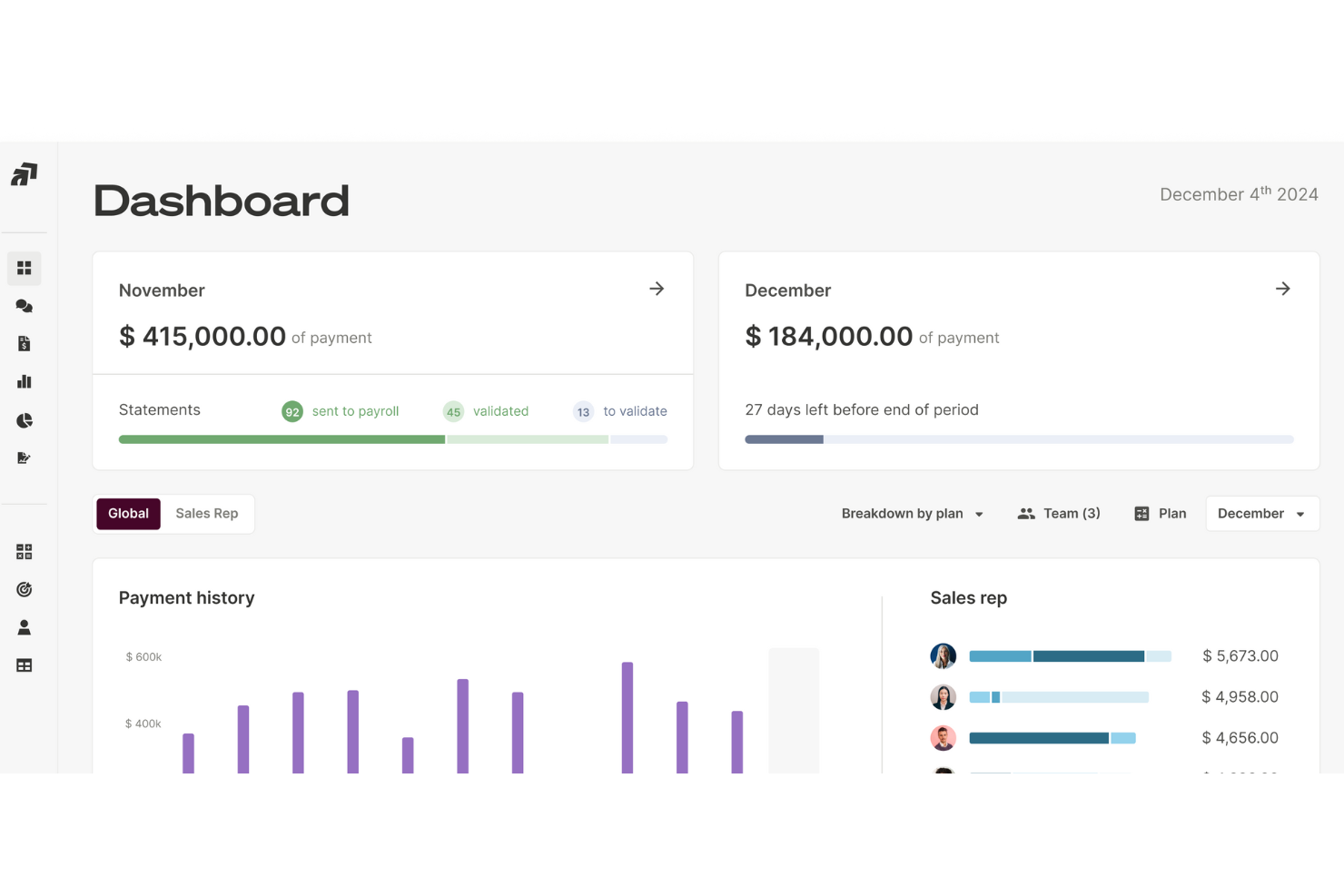
Qobra is a compensation management platform designed for sales and revenue teams who need to automate commission calculations, simplify plan management, and gain real-time visibility into performance and payouts.
Who Is Qobra Best For?
Qobra is a strong fit for sales operations and finance teams at mid-sized to enterprise companies that manage complex, variable commission structures across large sales organizations.
Why I Picked Qobra
Qobra is on my shortlist because its no-code plan editor handles compensation complexity without technical support. It lets you build tiered commissions, SPIFs, draw structures, and conditional logic in the interface using a drag-and-drop builder—no developer or consultant needed. The plan simulation and sandboxing feature is useful: I can test changes in an isolated environment before rolling them out, so they don't affect a live payroll cycle. Version control keeps a full audit trail of every plan change, which helps finance and RevOps stay aligned.
Qobra Key Features
- Real-time commission dashboards: Sales reps and managers can view live earnings, attainment rates, and payout forecasts within the platform.
- CRM data sync: Qobra pulls deal and performance data from your CRM to calculate commissions without manual data entry.
- Multi-currency and multi-entity support: Configure compensation plans across different countries, currencies, and legal entities from a single account.
- Dispute management workflow: Reps can flag commission discrepancies directly in the platform, triggering a structured review and resolution process.
Qobra Integrations
Integrations include Salesforce, HubSpot, Microsoft Dynamics 365, Google BigQuery, Snowflake, Workday, Slack, Google Drive, Microsoft OneDrive, and an API for custom integrations.

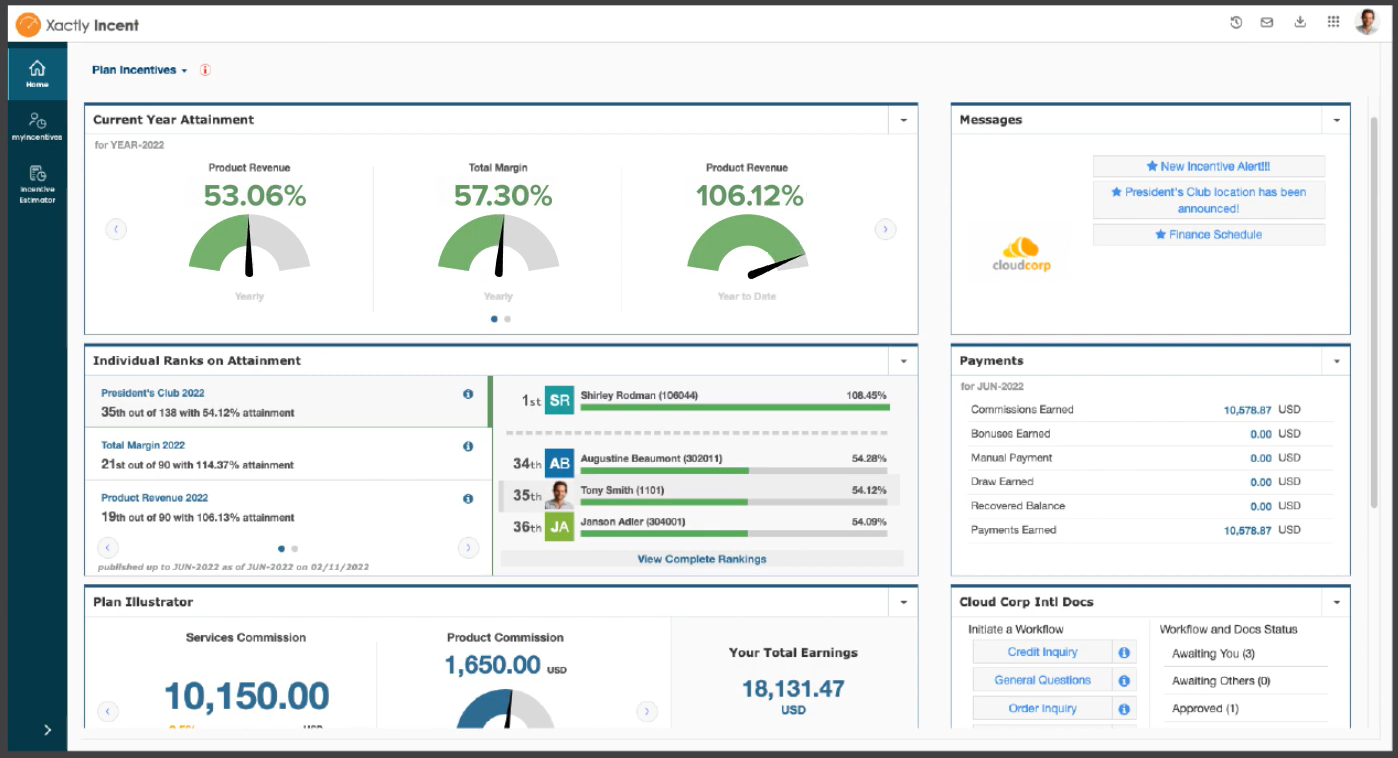
Xactly is a compensation management platform built for HR teams and business leaders who need to automate incentive programs, ensure pay fairness, and use analytics to drive smarter compensation decisions across large or complex organizations.
Who Is Xactly Best For?
Xactly is a strong fit for mid-size to enterprise companies with dedicated compensation or sales operations teams managing complex incentive and pay equity programs.
Why I Picked Xactly
I picked Xactly as one of the best because of how it connects compensation equity directly to retention outcomes. The Xactly Benchmarking tool gives my team access to 19+ years of proprietary pay and performance data, so I can see how our comp plans stack up against industry peers by role, tenure, and company size. That visibility helps identify where we're underpaying and losing talent. Incent's real-time incentive statements give reps on-demand access to their earnings, which builds trust and reduces turnover among high performers.
Xactly Key Features
- Compensation planning workflows: Build, model, and approve compensation plans using configurable workflows that route changes through the right stakeholders.
- Quota management: Set, adjust, and track sales quotas at the individual or team level with territory and role-based assignment tools.
- Attainment dashboards: Monitor individual and team performance against targets in real time using visual dashboards and configurable reporting.
- Audit trail and compliance tracking: Log every compensation change with a timestamped record to support internal audits and regulatory compliance.
Xactly Integrations
Integrations include Salesforce, Microsoft Dynamics 365, Oracle Sales Cloud, NetSuite, SAP, Workday, ADP, Okta, Slack, and Tableau.
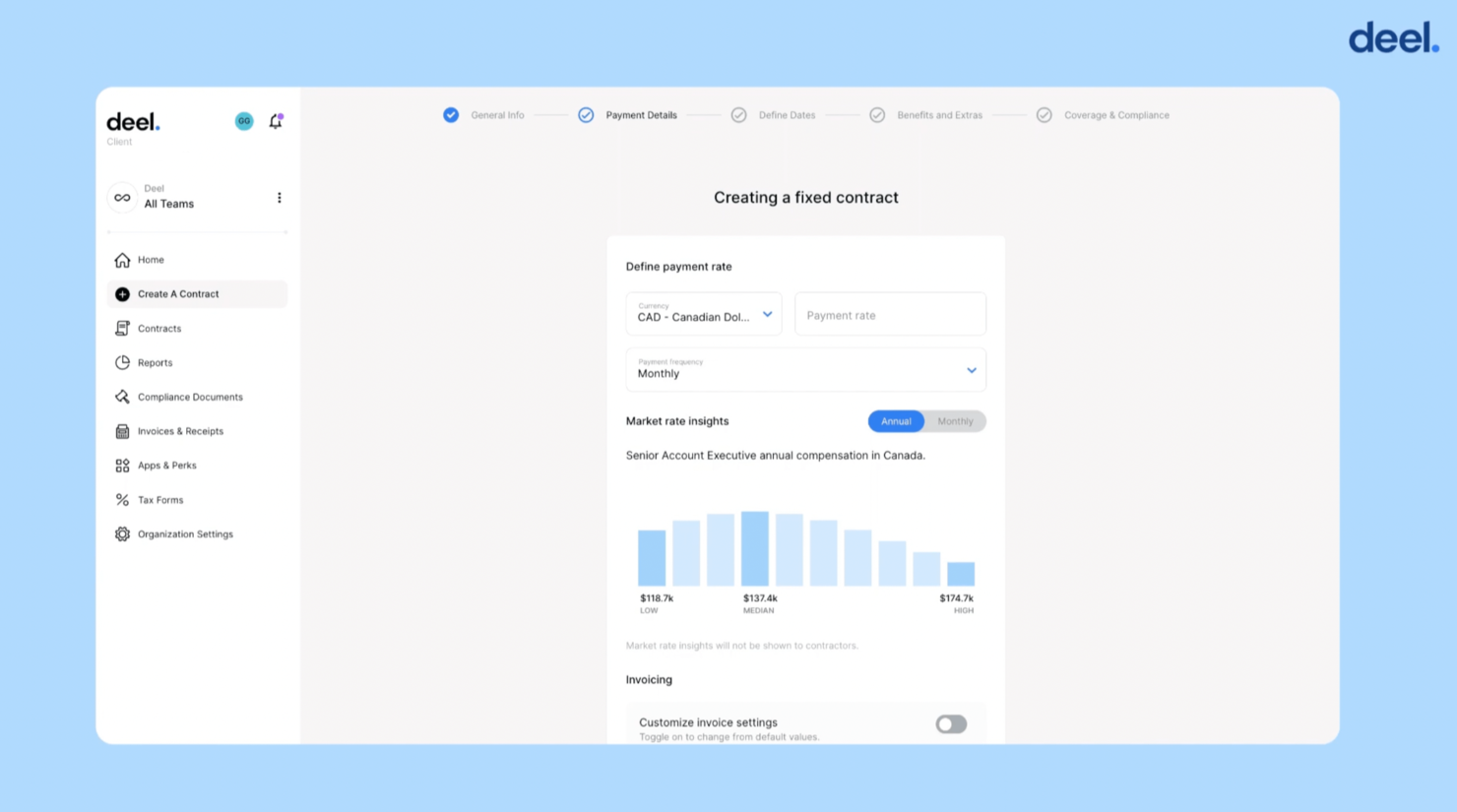
Deel HR gives HR teams and global businesses a way to manage compensation, payroll, and compliance for employees and contractors in multiple countries, helping you handle pay equity, local regulations, and international workforce challenges.
Who Is Deel HR Best For?
Deel HR is a strong fit for HR teams and finance leaders at mid-size to enterprise companies managing distributed or international workforces across multiple regions.
Why I Picked Deel HR
I picked Deel HR as one of the best because I love how its Global Salary Insights feature gives my team access to real compensation data across 150+ countries, pulled directly from workers paid through Deel. When I'm setting pay bands for a new role in, say, Singapore or Brazil, I can validate benchmarks against actual market data rather than guessing. I also use the built-in compa-ratio tracking to spot pay compression or outliers by role, level, and geography before they become retention issues. And because compensation decisions connect directly to Deel's payroll and HRIS, my team can execute salary changes on the same platform we use to run reviews—no exporting to spreadsheets or reconciling data across tools.
Deel HR Key Features
- Compensation bands: Set and manage pay ranges by role, level, and location directly within the platform.
- Equity management: Track and administer employee equity grants, vesting schedules, and ownership details in one place.
- Automated compliance: Apply local labor laws and tax rules to compensation decisions across different countries automatically.
- People analytics: Run reports on headcount, turnover, and workforce costs to support compensation planning decisions.
Deel HR Integrations
Integrations include FaceUp, Snowflake, DefensX, Microsoft Finance, Kintsugi, ReFresh OS, Revo.ai, Keeper, Human Interest, and Acumatica.
New Product Updates from Deel HR

Deel HR Introduces AI-Powered ATS for Hiring
Deel HR introduces an AI-powered ATS built into its platform. This update enhances hiring efficiency by automating sourcing, screening, and workflows across the recruitment process. For more information, visit Deel HR’s official site.
 .
.
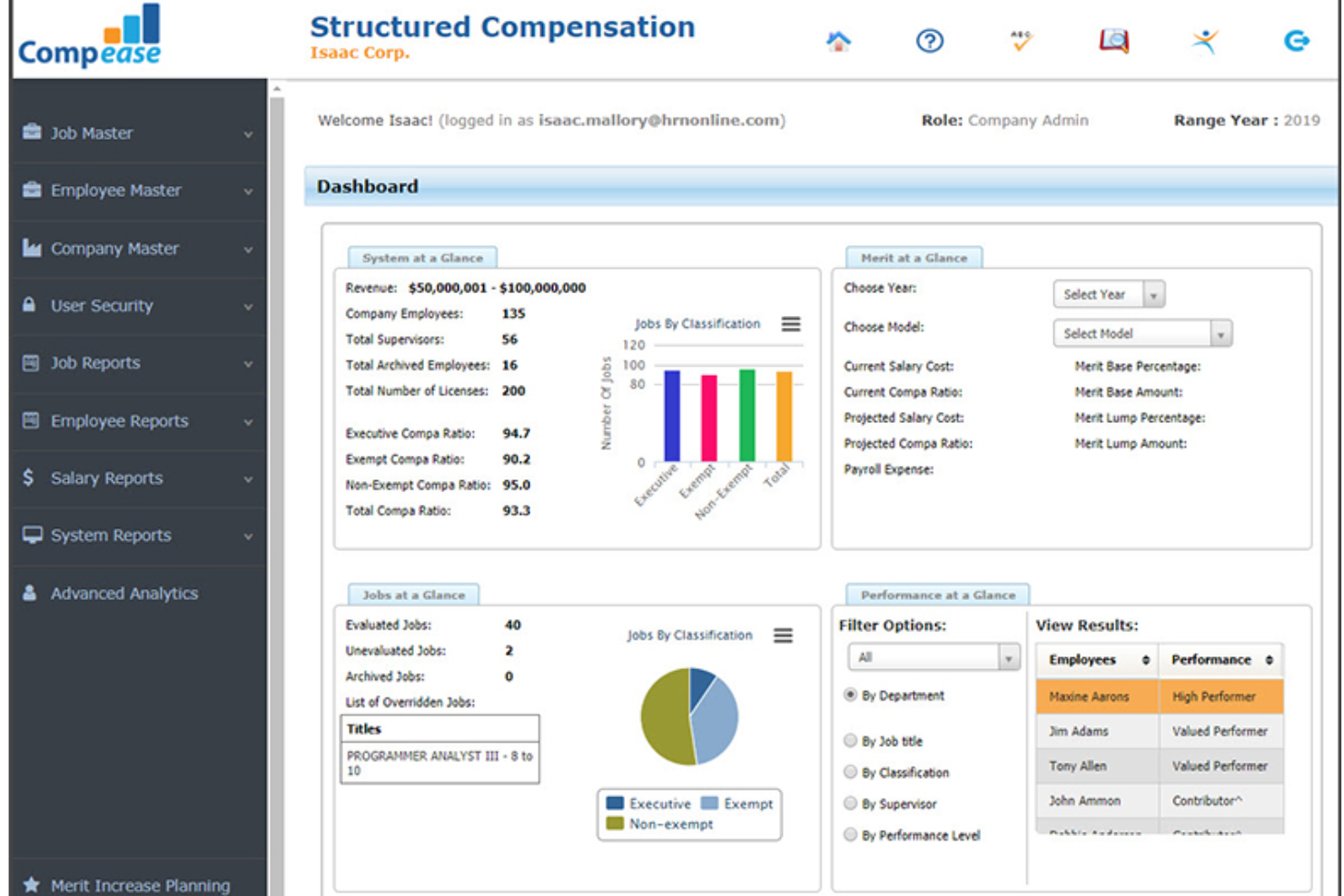
Compease is a compensation management platform designed for HR teams and business leaders who need to build, manage, and benchmark salary structures while ensuring pay practices stay competitive and equitable.
Who Is Compease Best For?
Compease is a strong fit for small to mid-sized organizations where HR teams need structured, data-driven tools to manage pay grades and salary ranges consistently.
Why I Picked Compease
Compease earns its spot as one of the best on my shortlist because of how it handles merit increase planning with real structure and fairness built in. I particularly like the Merit Matrix feature, which lets you build merit increase plans around your own compensation policies and budget while assigning consistent, equitable merit percentages across the organization. Combined with compa-ratio tracking, I'm able to see exactly where employees sit within their salary ranges and use that data to justify every merit decision. That kind of visibility makes it much harder for bias to creep into annual review cycles.
Compease Key Features
- Job evaluation system: Compare and evaluate jobs using eight compensable factors to slot positions into the right salary grade.
- Market pay data: Access aggregated salary data from sources like Willis Towers Watson, Mercer, and PayScale, updated annually to keep ranges competitive.
- Geographic differentials: Adjust compensation structures across multiple locations based on local labor market costs.
- Pay equity analytics: Identify equal pay blind spots and wage compression issues using visual pay equity metrics and internal salary range benchmarking.
Compease Integrations
Native integrations are not currently listed.

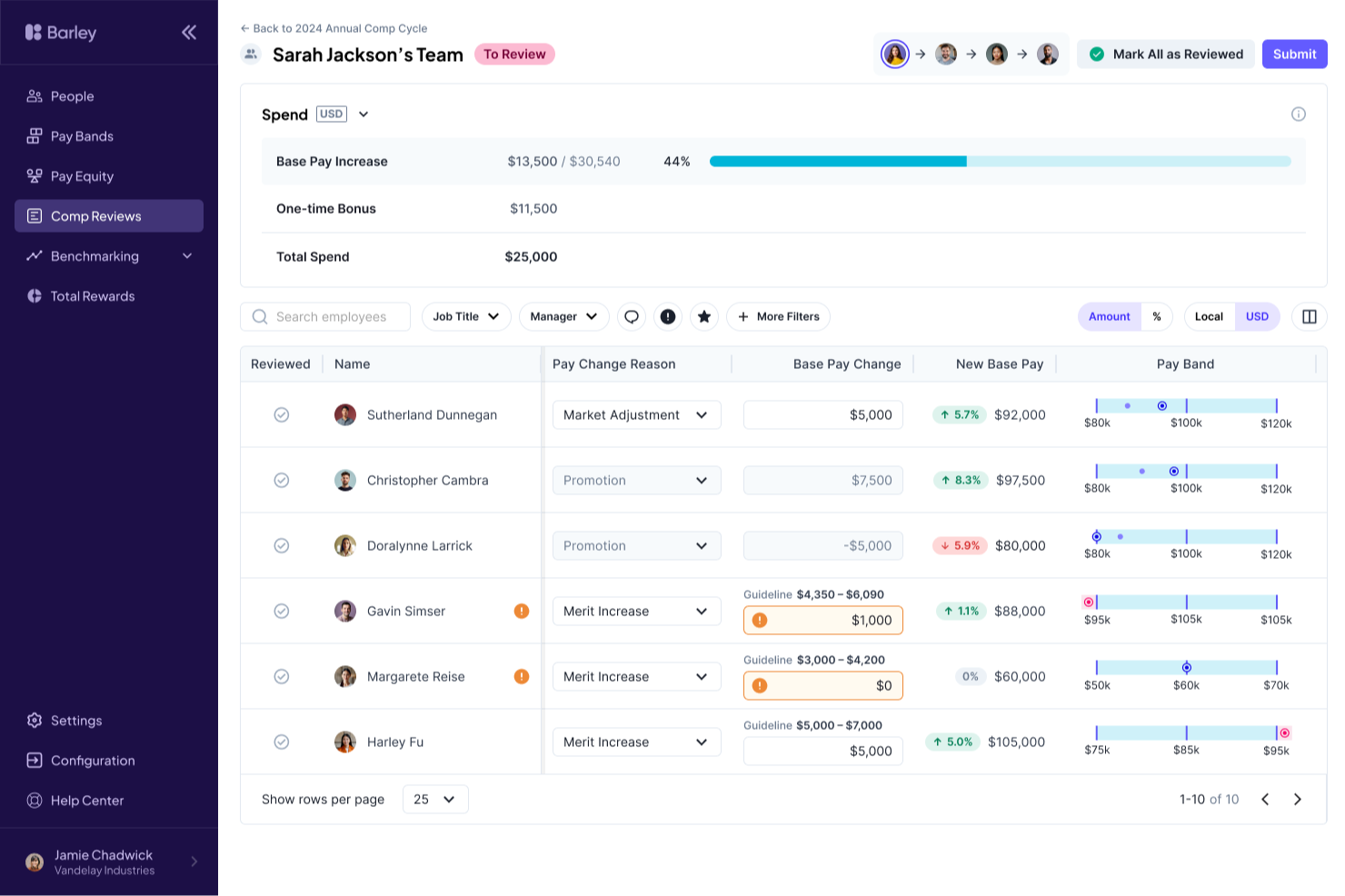
Workleap is a compensation management platform designed for HR teams and business leaders who need to manage pay structures, ensure pay equity, and streamline company-wide compensation processes.
Who Is Workleap Best For?
Workleap is a strong fit for mid-sized to enterprise HR teams that need a structured, scalable approach to managing compensation across the organization.
Why I Picked Workleap
Workleap earns its spot on my shortlist because it handles company-wide compensation reviews end to end. I appreciate that you can configure an entire compensation cycle in minutes—set budget pools, build merit increase guidelines, and manage multi-level approval chains in one place instead of juggling spreadsheets. I find sandbox mode genuinely useful: it lets you model multiple review scenarios before launching a cycle and pressure-test spend decisions with Finance and leadership beforehand. Automated comp letter generation is another feature I rely on—it handles branded, role-specific letters across the whole organization without manual formatting.
Workleap Key Features
- Pay band management: Build and maintain salary ranges by role, level, and job function, with the option to share them securely with managers.
- Global pay support: Set up geographic pay zones and manage location-based compensation across multiple currencies and regions.
- Compensation analytics: Monitor pay band adherence, surface pay gaps, and track the overall health of your compensation program in real time.
- Market benchmarking data: Access embedded salary benchmarks powered by Mercer, or import your own third-party data to compare against your pay bands.
Workleap Integrations
Integrations include Bamboo HR, ADP Workforce Now, Dayforce, HiBob, UKG Pro, Namely, Paylocity, Paycor, and Workday.

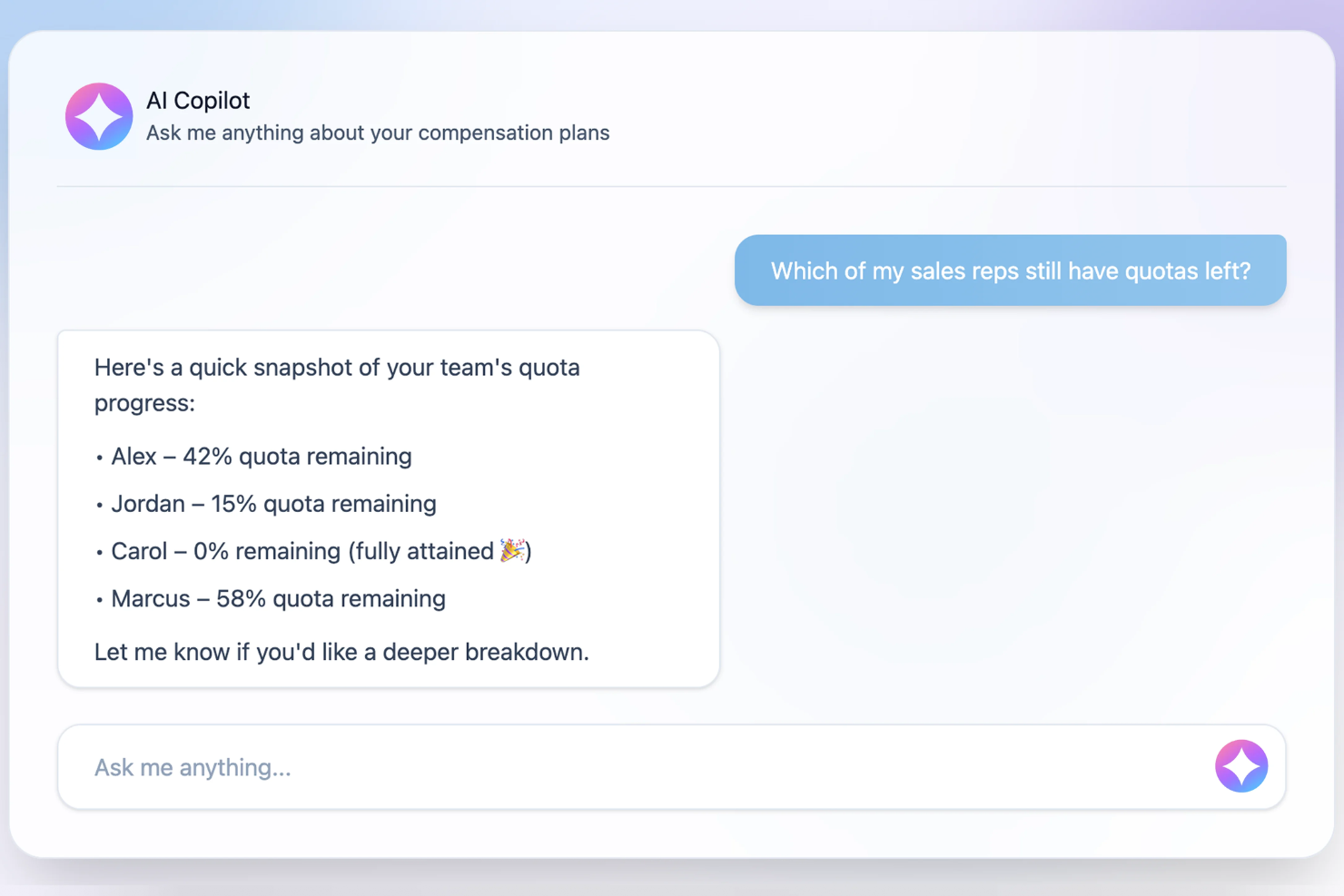
Visdum is a compensation management platform for sales-driven organizations that need to automate complex commission structures and gain real-time insights into incentive plans.
Who Is Visdum Best For?
Visdum suits revenue operations and sales teams at SaaS companies managing complex, variable commission plans at scale.
Why I Picked Visdum
Visdum earns its spot on my shortlist because of how its AI-Adaptive modeling engine handles compensation design. The AI Copilot simulates real-time payout scenarios, allowing my team to test how changes to rates, roles, or rules play out before deploying a plan. This instant scenario modeling removes much of the guesswork from comp planning. The AI-Assisted Plan Builder also learns my team structure and revenue model to generate optimized plans, so I'm not starting from a blank slate every time a new role or territory gets added.
Visdum Key Features
- Commission dispute management: Raise, track, and resolve commission queries through a single-thread system with automated notifications and a complete audit trail.
- SPIFFs and contests: Run short-term incentive programs and sales contests to motivate reps and drive performance during specific periods.
- Payee dashboards: Give sales reps a self-serve view of their earnings, quota progress, and pipeline-based commission estimates in real time.
- No-code plan editing: Adjust commission rules, rates, and structures on the fly without engineering support, using a flexible no-code interface.
Visdum Integrations
Integrations include Salesforce, Microsoft Dynamics, HubSpot, Sage Intacct, QuickBooks, Oracle NetSuite, Workday, HiBob, ADP, and DocuSign.
Pros and Cons
Pros:
- Adaptable to specific business needs and complex commission plans.
- Offers real-time updates for accurate tracking of earnings.
- Automates complex commission calculations, reducing manual errors.
Cons:
- Mobile functionality could be improved for better accessibility.
- Limited customization options for reporting tools.
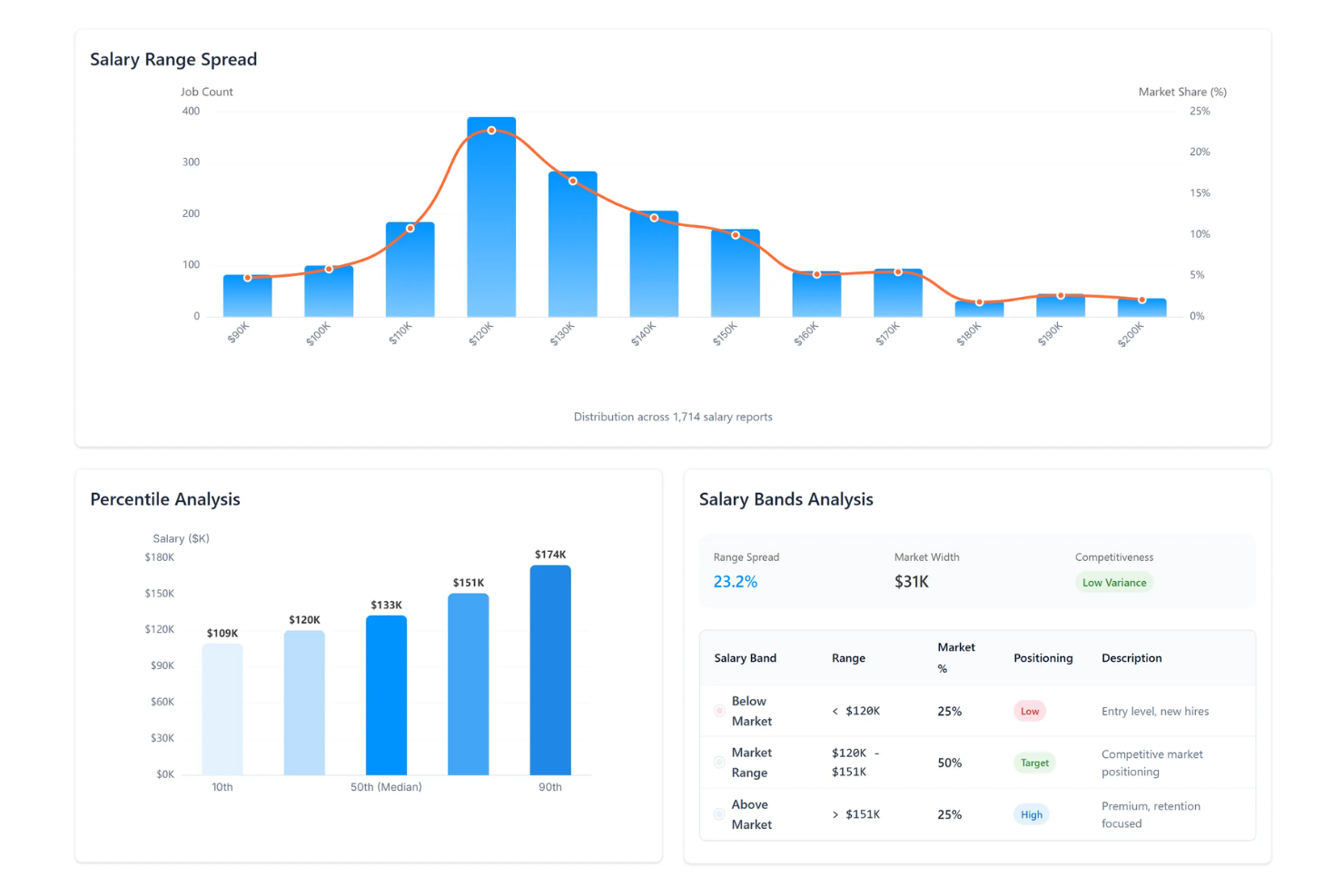
SalaryCube helps HR teams and compensation specialists analyze job roles, benchmark salaries, and design pay structures to support fair and competitive compensation strategies.
Who Is SalaryCube Best For?
SalaryCube is a good fit for compensation analysts and HR professionals who need structured tools for evaluating and grading job roles across an organization.
Why I Picked SalaryCube
SalaryCube earns its spot on my shortlist because of how well it handles job role evaluation, which is often the weakest link in compensation planning. I like that it gives you a structured framework for grading and comparing roles, so pay decisions are grounded in consistent criteria rather than gut feel. My team uses SalaryCube to map roles against market benchmarks and identify where pay gaps exist across job levels. The job architecture tools help define role hierarchies and align salary bands to them.
SalaryCube Key Features
- Range Builder: A pay range management tool that lets you set, adjust, and visualize salary bands tied to market data.
- Comp Planning: A merit cycle management tool with pre-populated manager worksheets, budget tracking by department, and approval workflows.
- FLSA Analyzer: A guided exemption classification tool that walks through each role step by step and generates audit-ready PDF reports.
- SalaryCube+: A salary survey management tool that lets you import third-party survey data, age and blend it with SalaryCube's own data, and keep it private to your organization.
SalaryCube Integrations
Integrations include ADP Workforce Now, BambooHR, Rippling, Workday, UKG, Hibob, Gusto, Paylocity, Greenhouse, and Lever.
Pros and Cons
Pros:
- Unlimited custom compensation reports
- Filters by location and revenue
- Real-time salary data updates
Cons:
- No native HRIS integrations listed
- U.S.-only compensation data

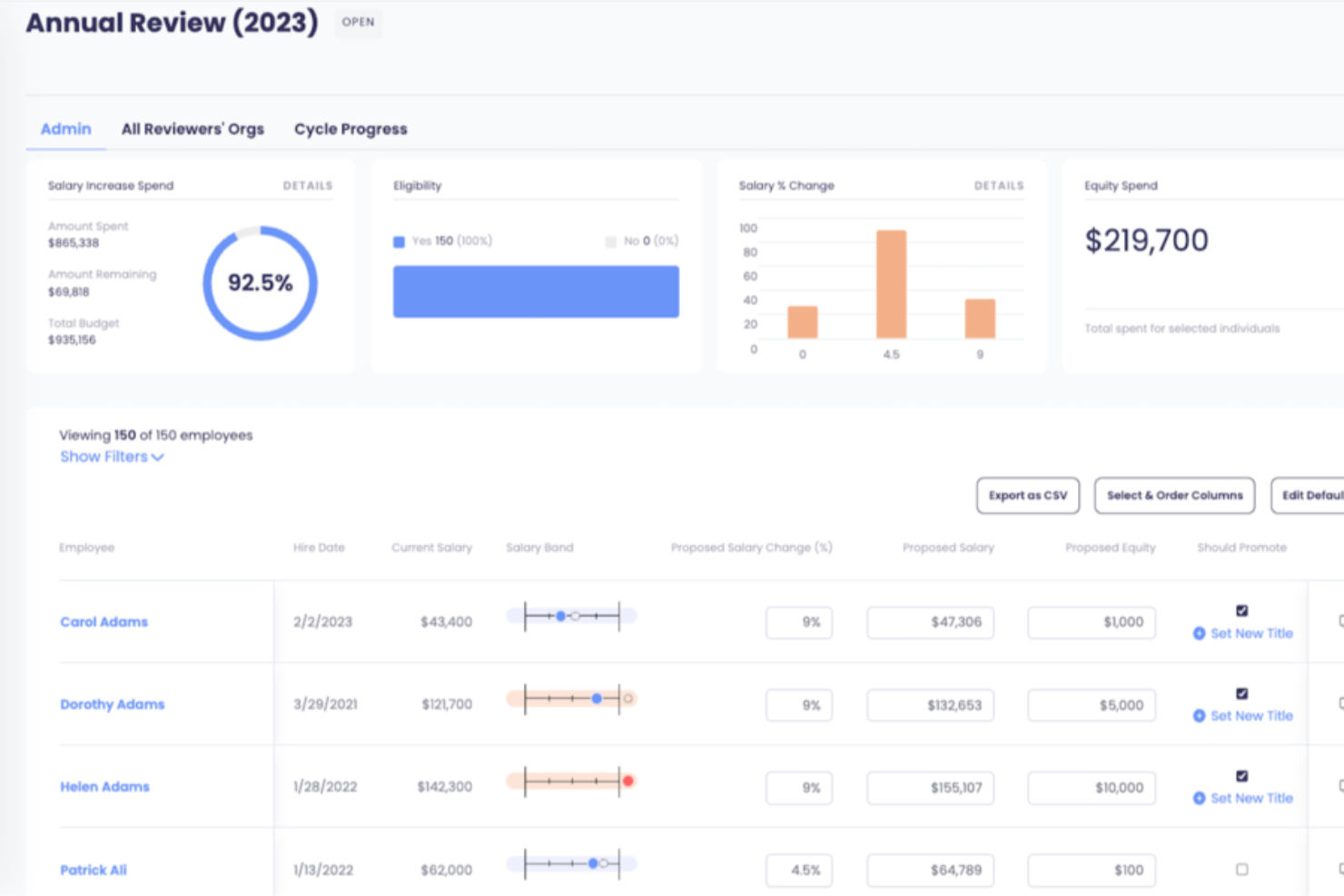
Aeqium is a compensation management platform designed for HR teams and business leaders at growing enterprises who need to manage complex pay structures, streamline compensation cycles, and gain actionable insights into pay equity and workforce costs.
Who Is Aeqium Best For?
Aeqium is a strong fit for mid-size to enterprise HR and total rewards teams that manage multi-layered compensation programs across large or fast-scaling workforces.
Why I Picked Aeqium
I picked Aeqium because it's highly adaptive when compensation strategy changes mid-cycle. Aeqium Assist lets my team describe changes in plain English—updating eligibility rules, reconfiguring approval chains, adjusting budget allocations—and the platform applies those changes in the live environment without tickets or engineering support. Aeqium Analyst generates fully developed compensation reports on demand, so when a VP asks mid-cycle how budget utilization looks across regions, I'm not scrambling in Excel to pull that together.
Aeqium Key Features
- Compensation bands management: Create, customize, and audit salary ranges with role-based access controls and built-in pay band history tracking.
- Employee total rewards portal: Give employees 24/7 access to a personalized view of their salary, equity, bonus, and benefits in one place.
- Interactive offer letters: Build dynamic, visual offer letters that include an equity simulator so candidates can model the value of their equity under different scenarios.
- Pay equity and live calibration reporting: Surface equity gaps and compensation trends automatically using live HRIS data, without manual CSV exports.
Aeqium Integrations
Integrations include Workday, BambooHR, Gusto, Rippling, Justworks, Namely, Greenhouse, Carta, ADP, and UKG.

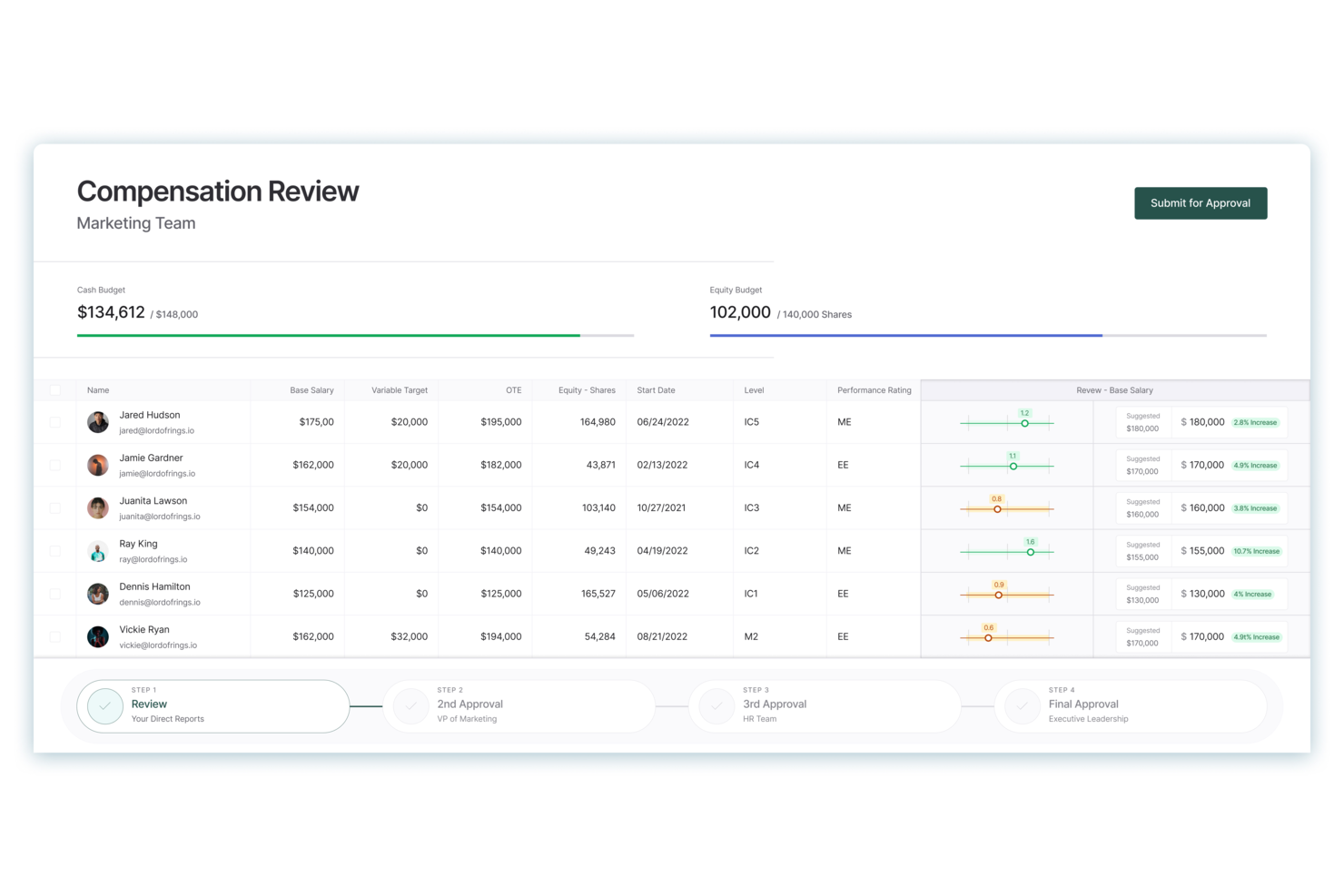
Comprehensive is a compensation management platform for HR teams and business leaders who want to automate pay cycles, ensure pay transparency, and access real-time market data to make informed, equitable compensation decisions.
Who Is Comprehensive Best For?
Comprehensive is a strong fit for mid-sized to enterprise HR teams that need a structured, scalable alternative to managing compensation planning in spreadsheets.
Why I Picked Comprehensive
Comprehensive earns its spot on my shortlist because it's purpose-built to replace the compensation spreadsheets that slow HR teams down during review cycles. I like how it centralizes merit, bonus, and equity planning into a single guided workflow, so my team isn't manually reconciling data across multiple files. The built-in budget tracking updates in real time as managers make decisions, which means I can catch overspend before it becomes a problem. The salary benchmarking data is also baked directly into the platform, so I'm not toggling between a separate tool and a spreadsheet to validate pay ranges.
Comprehensive Key Features
- Total rewards dashboard: Displays each employee's full compensation picture, including salary, equity, bonuses, benefits, and other employer-provided rewards in one view.
- Pay equity reporting: Surfaces pay gaps and flags outliers using demographic segmentation across gender, race, age, and other attributes.
- Role-based access control: Lets admins set field-level permissions so managers, employees, and executives only see the compensation data relevant to their role.
- Personalized award letters: Generates configurable, digitally delivered compensation letters with calculated values and optional PDF downloads.
Comprehensive Integrations
Integrations include Rippling, BambooHR, 15Five, Culture Amp, Carta, and Shareworks.
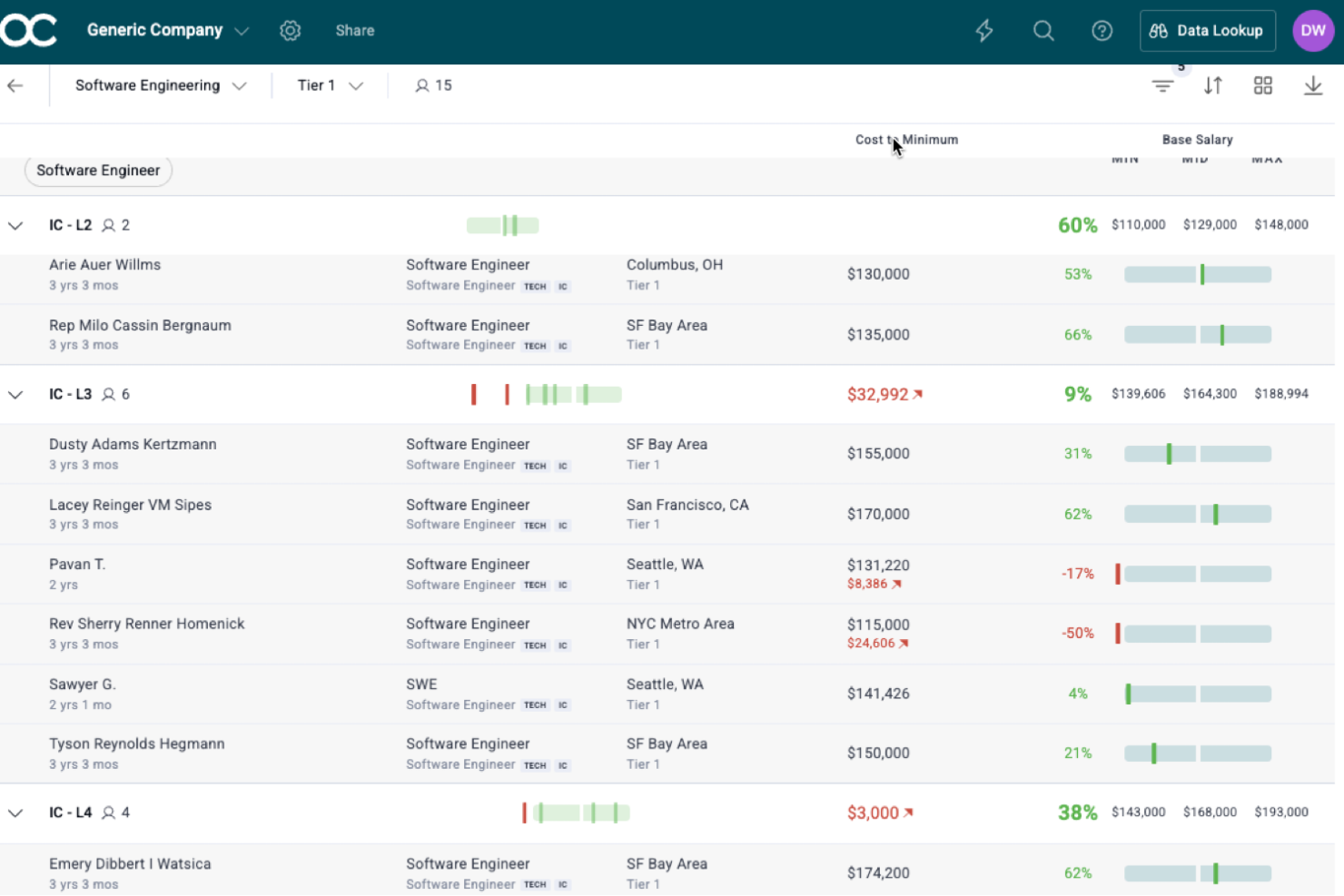
OpenComp gives HR teams and business leaders a platform to manage compensation strategy, analyze pay equity, and create salary bands using real-time market data.
Who Is OpenComp Best For?
OpenComp is a strong fit for HR and total rewards teams at high-growth companies that need structured, data-backed compensation programs.
Why I Picked OpenComp
OpenComp earns its spot on my shortlist because of how it handles compensation benchmarking with real, verified market data. It pulls from a continuously updated dataset, so my team isn't making pay decisions based on stale salary surveys. The platform's benchmarking tools let us compare roles against market rates by level, location, and function, which simplifies building and validating salary bands. I've also found the pay equity analysis features genuinely useful for spotting gaps before they become compliance or retention issues.
OpenComp Key Features
- Merit and bonus cycle management: Run merit and bonus cycles using a step-by-step wizard that assigns budgets, sets eligibility criteria, and configures approval workflows.
- Total rewards statements: Create and send visual total compensation statements that show employees their salary, bonuses, equity, and merit increases over time.
- Headcount planning: Build models to forecast how hiring decisions affect cash burn and expenses over the next month, year, or five years.
- Intelligent offers: Generate interactive offer letters that pull in salary ranges, peer data, and past offers to support data-driven hiring decisions.
OpenComp Integrations
Integrations include ADP Workforce Now, BambooHR, Gusto, UKG Pro, UKG Ready, Justworks, Workday, Rippling, Greenhouse, Lever, and Okta.
Other Compensation Tools
Here are a few other options that didn’t make the best compensation management software list. I didn’t have room for a full review for each of these but they are still worthy of consideration:
- CompUp
For complex compensation programs and TRS
- Xoxoday Compass
For gamified sales incentive programs
- Omnipresent
For global compensation compliance
- Assemble
For transparent total compensation
- Trinet
For competitive salary benchmarking
- Leaptree
For sales-focused teams
- MarketPay by Payscale
For tracking global compensation volatility
- Varicent ICM
For enterprise organizations
- CaptivateIQ
For customer-facing teams
- Spiff
For commission-based sales teams


Related HR Software Reviews
If you still haven't found what you're looking for here, check out these other related tools that we've tested and evaluated:
- HR Software
- Payroll Software
- Recruiting Software
- Employer of Record Services
- Applicant Tracking Systems
- Workforce Management Software
Selection Criteria for Compensation Management Software
Wondering how I selected the best compensation management software for this top 10 list? I'm happy to explain my detailed approach.
I evaluated and compared a wide range of compensation management platforms with positive user ratings using the standardized set of evaluation criteria below.
Here's a short summary of the criteria I used to determine the best compensation management software systems for this list:
Core Functionalities (25% of total score): To be considered for inclusion in this list, each solution had to fulfill these common use cases first:
- Automating payroll and benefits calculations
- Managing bonuses, commissions, and other performance-based pay structures
- Ensuring compliance with tax and labor laws across jurisdictions
- Providing employees with access to pay information and tax documents through self-service tools
- Generating reports and analytics for pay and performance trends
Additional Standout Features (25% of total score): To help me find the best software out of numerous available options, I also kept a keen eye out for unique features, including the following:
- Real-time compensation benchmarking against industry data
- AI-driven recommendations for salary adjustments and bonuses
- Predictive analytics for budgeting future compensation costs
- Enhanced employee portals with compensation history and personalized insights
- Global payroll capabilities with multi-currency and multilingual support
Usability (10% of total score): To evaluate the usability of each system, I considered the following:
- Clean, intuitive dashboards with clear navigation
- Drag-and-drop functionality for setting up pay plans or schedules
- Role-based access that is easy to configure for secure data handling
- Mobile-friendly interfaces for both administrators and employees
Onboarding (10% of total score): To get a sense of each software provider's customer onboarding process, I considered the following factors:
- Interactive product tours and pre-built templates for setup
- Availability of detailed training videos, chatbots, and live webinars
- Comprehensive migration tools for transferring data from existing systems
- Easy-to-access help centers or resource libraries
Customer Support (10% of total score): To evaluate the level of customer support each vendor offered, I considered the following:
- Availability of 24/7 support through multiple channels like chat, email, and phone
- Dedicated onboarding specialists for a smoother transition
- A comprehensive knowledge base or help center with troubleshooting guides
Value for Price (10% of total score): To gauge the value of each software, I considered the following factors:
- Tiered pricing that scales with company size and needs
- Transparent costs without hidden fees for upgrades or integrations
- ROI through time saved, errors reduced, and compliance maintained
Customer Reviews (10% of total score): Evaluating customer reviews is the final element of my selection process, which helps me understand how well a product performs in the hands of real users. Here are the factors I considered:
- User satisfaction with functionality and ease of use
- Reports of reliable system uptime and issue resolution
- Feedback on scalability for growing businesses
Using this assessment framework helped me identify the compensation benchmarking software that goes beyond basic requirements to offer additional value through unique features, intuitive usability, smooth onboarding, effective support, and overall value for price.
Trends in Compensation Management Software
Compensation management solutions continue to evolve with cutting-edge features designed to streamline employee pay, optimize commission structures, and simplifying bonus management.
These following advancements show how technology is addressing the challenges of accuracy, compliance, transparency, and employee satisfaction while adapting to shifting priorities in the workplace.
- AI-Driven Compensation Recommendations: Tools now use AI to analyze market trends, performance metrics, and internal benchmarks, providing real-time salary and bonus recommendations. This improves accuracy and ensures competitive pay.
- Predictive Budgeting Tools: Enhanced automation predicts future compensation costs based on historical data and workforce trends, enabling more strategic planning.
- Global Salary Benchmarks: Tools now include advanced benchmarking against industry standards, helping HR teams make data-informed decisions about pay structures.
- Dynamic Bonus Calculations: Software is now tying bonuses to KPIs and performance metrics in real-time, offering greater alignment with company goals and employee achievements.
- Team-Based Incentive Tracking: Updates have introduced tools to manage incentive programs and calculate and distribute team-based bonuses, fostering collaboration and shared accountability.
- Integrated Pay Equity Tools: There's a growing trend to merge DEI (diversity, equity, and inclusion) monitoring systems with pay equity software so teams can review compensation bands holistically, while updating employee salaries at scale.
These trends highlight the increasing sophistication of compensation management software, reflecting the growing demand for precision, personalization, and global applicability in employee pay systems. As businesses continue to navigate evolving challenges, tools with advanced AI, robust compliance, and data-driven insights are becoming indispensable.
Features of Compensation Management Software
Managing employee compensation involves a lot of moving parts—salaries, commissions, bonuses, and pay adjustments—all of which can quickly become overwhelming without the right tools. Compensation management software can simplify these processes and help ensure that employees are paid fairly, on time, and in line with company policies.
Here's a look at the most important features to consider when choosing a solution:
- Customizable compensation plans that let you create tailored pay structures for different roles, making it easier to manage unique commission and bonus plans
- Dynamic pay policy tools that segregate types of employees across departments, teams, skill sets, geographic locations, and any other relevant variable (i.e., compensation bands)
- Salary benchmarking data sourced globally, so you can ensure your pay rates always remain competitive despite global salary volatility
- Total compensation management and presentation tools (e.g., illustrative or visual offer letters for new hires)
- Data insights that monitor pay equity across your workforce demographics (e.g., DEI metrics tracking)
- Incentivization features that link compensation decisions with performance management, productivity, or goal-based data
- Workflow approval automations that streamline the process of approving salary changes or bonuses, reducing delays and ensuring proper oversight
- Self-service functionalities that et employees access their pay information, tax documents, and compensation breakdowns, improving transparency and reducing administrative queries
- Integration with HR, payroll, and accounting systems to ensure data flows smoothly across your HR tech stack, reducing redundancy and errors
Choosing the right compensation management software is about finding a solution that simplifies processes, ensures accuracy, and helps align pay with performance. With these features, you can optimize how you manage salaries, commissions, and bonuses while focusing on what matters most—your team.
Frequently Asked Questions about Compensation Management Software
Still trying to wrap your head around compensation management software and how it works? Here are some answers to frequently asked questions that should clear things up for you further:
What is compensation management software?
Compensation management software is a type of HR software that simplifies the process of developing and maintaining compensation packages for employees. These systems generally fall into two types of sub-categories: those that are standalone compensation-focused products, and those that are integrated modules within other systems.
Most of the software providers in this list fall into the former category, as standalone HR solutions with robust tools to manage employee salaries across the entire employee lifecycle. These SaaS systems typically offer a deeper set of features than those you would find within an HR management system. They also offer many integrations to help you manage your employee data efficiently.
In contrast, many HR management systems (including HRIS, HCM or HRMS providers) do have compensation planning modules too, sometimes for an added price. These modules work alongside their other core HR modules for talent management, employee engagement, and payroll, and centralize all your pay-related data in one place.
How does compensation management software work?
Compensation management software acts as a central place where compensation planning, policies, strategies, data, and reports are stored all those authorized to access them.
Compensation management programs are built on top of databases of benchmarked salary data. This allows the programs to populate the proper salary range for any given position based on key parameters like the job title, geographic location, years of experience, credentials required, and so on.
The data behind these programs are sourced globally by trusted salary survey providers that request current salary information from employers and employees alike. The data is then aggregated and anonymized into a large pool of salary data, which forms the backbone of these compensation tools.
The software also streamlines common HR processes through automation and reduces the need for HR employees to complete repetitive, low-value tasks.
What is salary benchmarking?
Salary benchmarking is the process of comparing your company’s compensation rates with industry standards to ensure they are competitive and aligned with market trends. This involves gathering data from salary surveys, industry reports, or compensation databases to analyze how your pay scales stack up against similar roles in your region or industry.
By using salary benchmarking, organizations can attract and retain top talent, maintain internal equity, and ensure fairness in their compensation strategies. It also helps HR professionals make informed decisions about pay adjustments and identify any gaps that could impact employee satisfaction or competitiveness in the job market.
If you’re ready to dive into this process, read this article covering tips on how to nail your salary benchmarking process next.
How should you establish salary ranges?
To establish salary ranges, start by analyzing market data through salary benchmarking to understand the typical pay for similar roles in your industry and location. Next, define a pay strategy that aligns with your company’s compensation philosophy, such as whether you aim to pay at, above, or below the market median.
Once you have this data, create a range for each position with a minimum, midpoint, and maximum salary. The range should account for factors like experience, education, and performance. Regularly review and adjust these ranges to reflect changes in the market, organizational goals, or economic conditions. This ensures your salary ranges remain competitive and equitable.
What are the different types of compensation?
The best employee compensation planning software provides HR teams with a way to illustrate their total compensation packages to their employees. The term “total compensation” refers to financial benefits, perks, and incentives in addition to an employee’s base salary.
The most common types of additional compensation (aside from salary) include:
- bonuses (usually performance or merit-based),
- commissions or sales target incentives (see employee incentive systems for examples of this),
- tenure-based, long-term incentives (e.g., a years of service award or bonus)
- profit sharing programs,
- company equity,
- stock options,
- health benefits,
- retirement fund contributions, and
- non-monetary items like gifts and other physical perks.
For more details on how to craft an effective compensation program, read our article on creating an effective compensation philosophy.
How does compensation management software help employers?
The way an organization compensates its employees will directly impact employee satisfaction rates. When a company fails in basic compensation planning, it risks losing talent and scaring away potential hires. Up to 52% of candidates say that competitive compensation is the most attractive element of a job offer.
Compensation management software helps organizations structure and standardize the way they pay employees across different teams and departments. It ensures that no one is underpaid or overpaid and creates an environment of fairness where individuals feel recognized for their efforts. This, in turn, helps organizations retain their existing talent and attract new hires in a competitive talent marketplace.
Compensation management tools can also reduce the costs of managing employee compensation as HR employees are able to spend their time doing high-value tasks while the software takes care of repetitive jobs.
Tools that ensure equity and fairness reduce the risks associated with non-compliance with labor laws, while helping establish a favorable relationship with labor unions and employee representative groups. In addition, when employees feel that they are fairly compensated and the company can provide a rationale for its compensation structure, employees are likely to feel more motivated to do their best at work, increasing productivity and profits.
What are some tips to help teams master the compensation review process?
Here are some tips to help you master the compensation review process:
- Start by setting clear goals and a timeline to ensure all stakeholders are aligned.
- Leverage compensation management software to centralize data, streamline workflows, and automate calculations, reducing the risk of errors.
- Use salary benchmarking to ensure pay decisions align with market standards and your organization’s compensation strategy.
- Engage managers in the process by providing training on how to evaluate performance and apply pay adjustments fairly.
- Communicate transparently with employees about the criteria used for reviews to build trust and ensure alignment
For additional advice, refer to our step-by-step guide managing the compensation review process.
What is a total rewards strategy?
A total rewards strategy is a holistic approach to employee compensation that goes beyond base salary to include all forms of financial and non-financial benefits. It includes both direct compensation (such as salaries, bonuses, and incentives) and indirect compensation (like benefits, retirement plans, wellness programs, and career development opportunities). The goal is to attract, retain, and motivate employees by offering a well-rounded package that aligns with business goals and employee needs.
A strong total rewards strategy considers factors like market competitiveness, internal pay equity, employee preferences, and company culture. By integrating salary structures with benefits, recognition programs, and growth opportunities, organizations can improve employee engagement, reduce turnover, and foster a more productive workforce.
How can you use software to ensure pay equity within your organization?
Compensation management software helps teams manage pay equity by providing data-driven insights into salary structures, identifying discrepancies, and standardizing pay practices. Many tools include pay benchmarking, which compares salaries against industry standards, and internal pay audits, which analyze compensation across job roles, experience levels, and demographics to detect potential biases.
Automated workflows also ensure that salary decisions follow predefined equity guidelines, reducing the risk of inconsistencies. Plus, real-time reporting and compliance tracking helps HR teams stay aligned with fair pay regulations like the Equal Pay Act (US), Pay Equity Act (Canada), or other gender pay gap reporting requirements.
By centralizing compensation data and enforcing structured pay frameworks, software enables organizations to proactively address pay disparities and promote transparency, ultimately fostering a more equitable workplace.
Additional Resources
Looking for some other ways to attract and retain high-quality talent? Here's a collection of our best resources to help you develop top-notch compensation and engagement practices within your organization:
- Best Employee Perks Programs to Automate Rewards
- Best Talent Management Systems
- 10 Novel Employee Wellness Program Ideas to Attract and Retain Top Talent
- Best Employee Engagement Software
- Mind the Pay Gap, a podcast with Robin Turnill from Pivot HR Services
- Best Performance Management Tools Every HR Pro Should Know
- 20 Types of Employee Benefits You Should Know
- Cost of Employee Benefits
What’s Next:
If you're in the process of researching compensation management software, connect with a SoftwareSelect advisor for free recommendations.
You fill out a form and have a quick chat where they get into the specifics of your needs. Then you'll get a shortlist of software to review. They'll even support you through the entire buying process, including price negotiations.