

10 Best Employer of Record Services in Belgium in 2026

Employer of Record Services in Belgium Shortlist


Employer of record services in Belgium let you hire, pay, and manage employees in Belgium without setting up a local entity. If you’re looking to expand your team or compliantly onboard talent in Belgium, choosing the right EOR partner is essential. This guide helps you compare the top employer of record services in Belgium, so you can navigate local regulations, payroll, and HR tasks with confidence. You’ll find practical insights to help you pick a provider that fits your hiring goals, budget, and compliance needs in 2026.
Why Trust Our Software Recommendations
Our team has been testing and reviewing software since 2012. As HR experts ourselves, we know how difficult—and important—it is to choose the right software.
For this guide, we evaluated tools using hands-on testing and independent research, scoring tools using our selection criteria. We also draw on insights from industry thought leaders and practicing HR experts.
Our reviews reflect our human editorial judgment, not a sales pitch.
Expert reviewers:
Employer of Record Services Belgium Comparison Table
This comparison table summarizes pricing details for my top employer of record services Belgium selections:
| Tool | Best For | Trial Info | Price | ||
|---|---|---|---|---|---|
| 1 | Best for automated document management | Free demo available | From $599/employee/month | Website | |
| 2 | Best with country-specific employment templates | Free demo available | From $599/employee/month | Website | |
| 3 | Best for indemnification-backed hiring | Free demo available | From $199/employee/month | Website | |
| 4 | Best for multi-country workforce management | Not available | Pricing upon request | Website | |
| 5 | Best for Belgian labor law expertise | Free demo available | From $199/user/month | Website | |
| 6 | Best for GDPR-compliant data handling | Free demo available | From $599/user/month | Website | |
| 7 | Best for centralized contractor management platform | Free demo available | From $399/user/month | Website | |
| 8 | Best for integrated global payroll solutions | Free demo available | From $199/user/month | Website | |
| 9 | Best for benefits administration support | Free demo available | From $699/user/month | Website | |
| 10 | Best for unified workforce analytics dashboard | Free demo available | From $499/user/month | Website |


Employer of Record Services in Belgium Reviews
Below are my detailed summaries of the best employer of record services in Belgium that made it onto my shortlist. My reviews offer a detailed look at the features, best use cases, and pricing of each platform to help you find the best one for you.

G-P
Best for automated document management
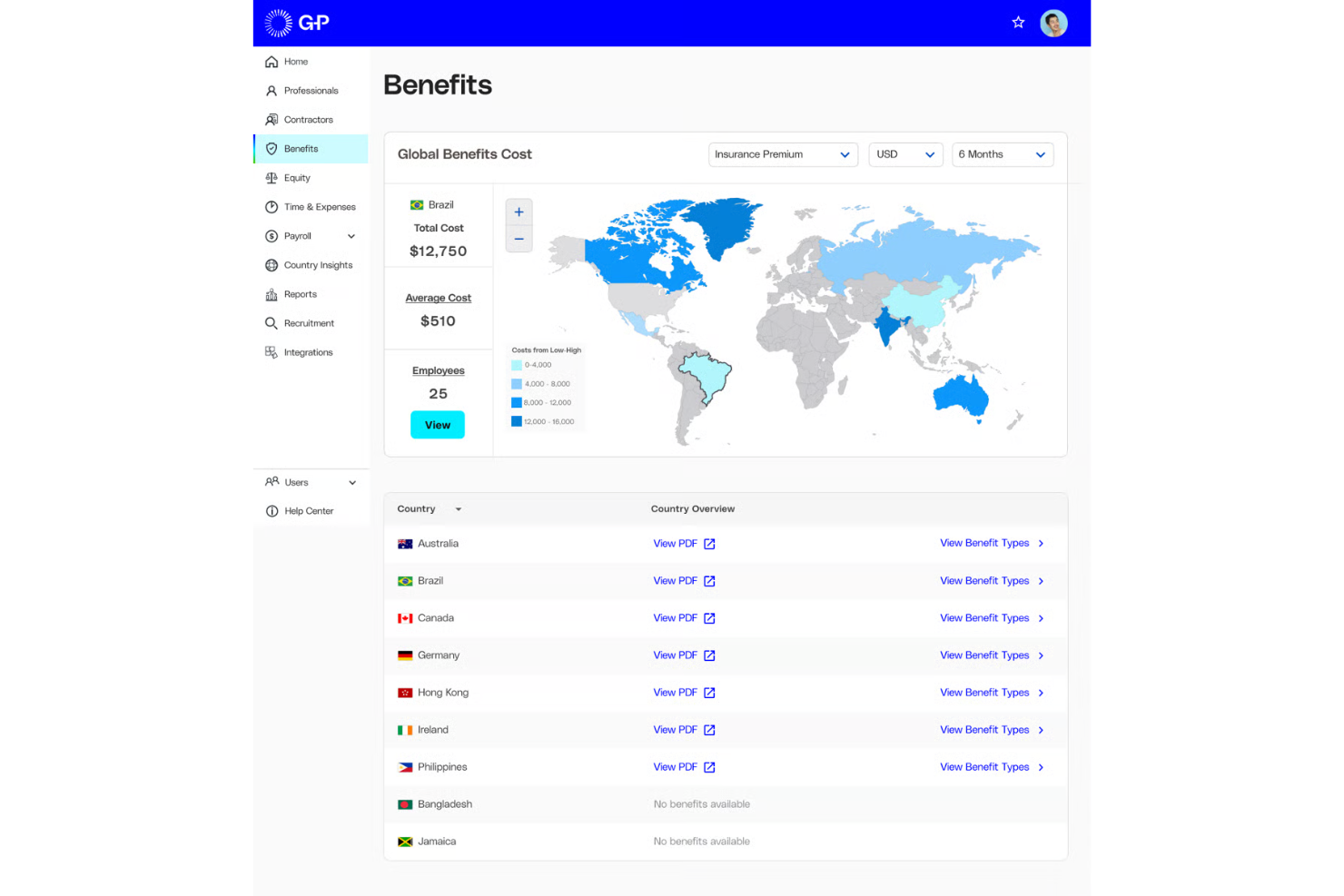
G-P is an employer of record platform for Belgium that centralizes onboarding, payroll, compliance, and document management for hiring and managing international employees.
Who Is G-P Best For?
HR and legal teams at multinational companies hiring or managing Belgian employees.
Why I Picked G-P
I picked G-P as one of the best because I can automate Belgian employment document creation, storage, and e-signature workflows in one place. My team uses G-P to manage contract templates and compliance paperwork for Belgian hires without manual tracking. I like that I can access a full audit trail for every document, which helps us stay organized and audit-ready.
G-P Key Services
- Automated payroll processing: Run Belgian payroll cycles with built-in local compliance.
- Global workforce analytics dashboard: Monitor Belgian and international employee data in real time.
- Integrated expense management: Track, approve, and reimburse Belgian employee expenses in-platform.
- Local statutory benefits administration: Configure and manage Belgian-specific benefits packages for employees.
G-P Integrations
Integrations include ADP Workforce Now, Paylocity, BambooHR, UKG Pro, Workday, and more.
Pros and Cons
Pros:
- Advisor tool Built-in 13th-month salary accrual tracking
- Integrated AI compliance
- Owns legal entities directly in Belgium
Cons:
- Occasional delays in legal support
- Fixed pricing lacks startup flexibility

Best with country-specific employment templates
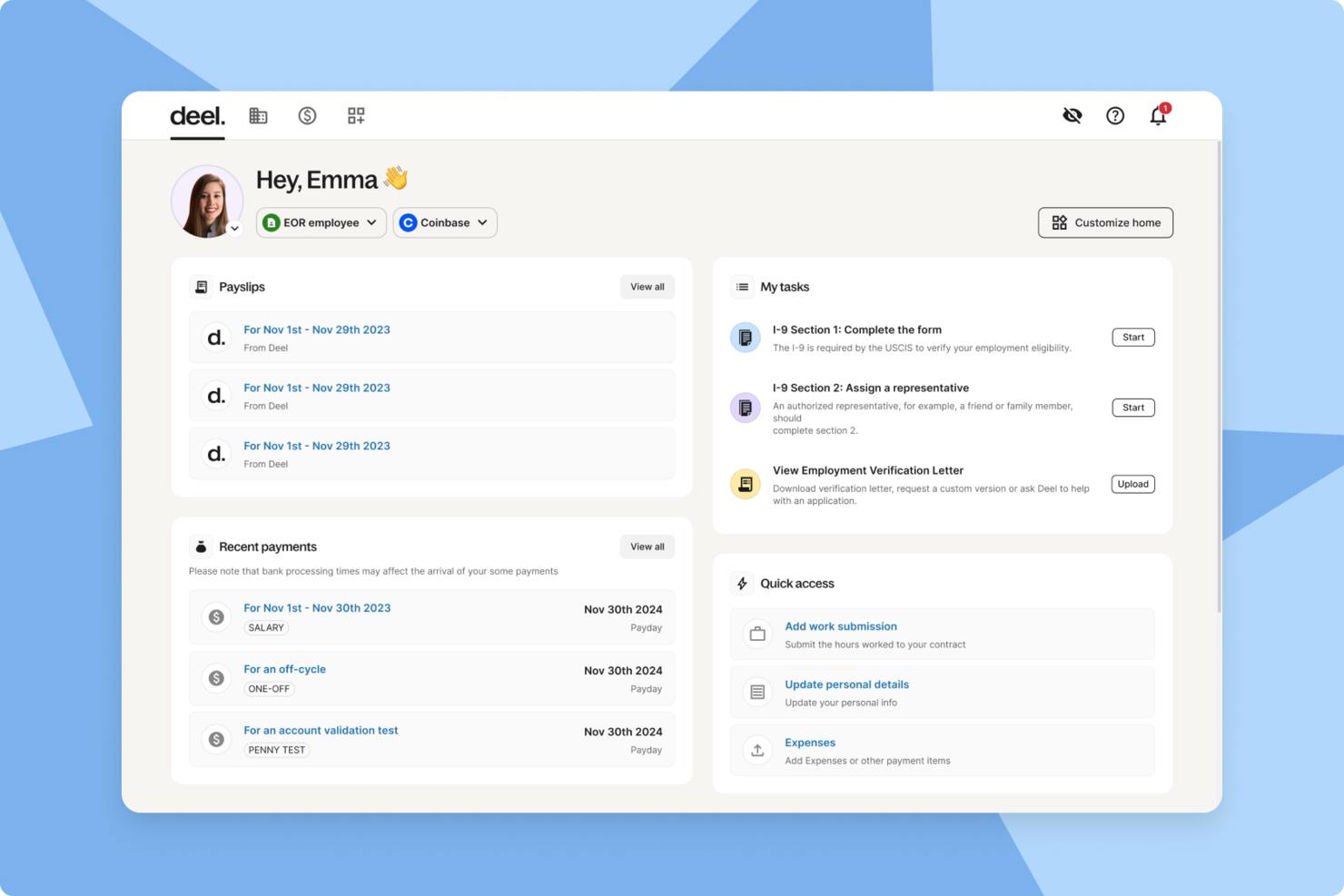
Deel Hire is an employer of record platform for Belgium that offers locally compliant hiring, country-specific contracts, automated payroll, global benefits management, and HR tools for onboarding and managing international employees and contractors.
Who Is Deel Hire Best For?
Deel Hire is a good fit for global-first companies and scaling businesses that need to hire and manage employees in Belgium without setting up a local legal entity.
Why I Picked Deel Hire
I picked Deel Hire as one of the best because of how thoroughly it handles country-specific contracts. When you create an EOR contract for a Belgian employee, the platform auto-fills fields with compliant language based on local labor standards, including Belgium's Joint Committee 200 minimum wage requirements and mandatory benefits like social security and work accident insurance. I also like that Deel lets you preview a draft employment agreement before the quote is finalized, so you can review the localized contract terms, request redlines for things like non-compete clauses, and catch any issues before anything is signed. The platform's job scope tool even flags non-compliant language and can auto-correct it to meet Belgian legal standards.
Deel Hire Key Features
- Global payroll management: Run payroll for Belgian employees in EUR with automated tax deductions, statutory filings, and monthly payslip generation handled by Deel's in-house team.
- Localized benefits enrollment: Administer Belgium-specific benefits including health insurance, pension funds, social security, workers compensation, and private health insurance from a single dashboard.
- Worker misclassification assessment: Use Deel's AI-powered tool to evaluate whether a worker should be classified as an employee or contractor under Belgian labor law before hiring.
- Background checks and remote worker verification: Run identity verification and background screening directly within the platform before finalizing any employment agreement.
Deel Hire Integrations
Deel Hire offers native integrations with Workday, BambooHR, Greenhouse, HiBob, Netsuite, Xero, QuickBooks, Expensify, and Slack. An API is available for custom integrations.
Pros and Cons
Pros:
- Real-time compliance monitoring for Belgian labor laws
- Multi-language onboarding documents for Belgium
- Automated Dimona registration for Belgian hires
Cons:
- Some payroll report exports lack Belgian tax breakdowns
- Limited local HR support beyond compliance questions

Best for indemnification-backed hiring
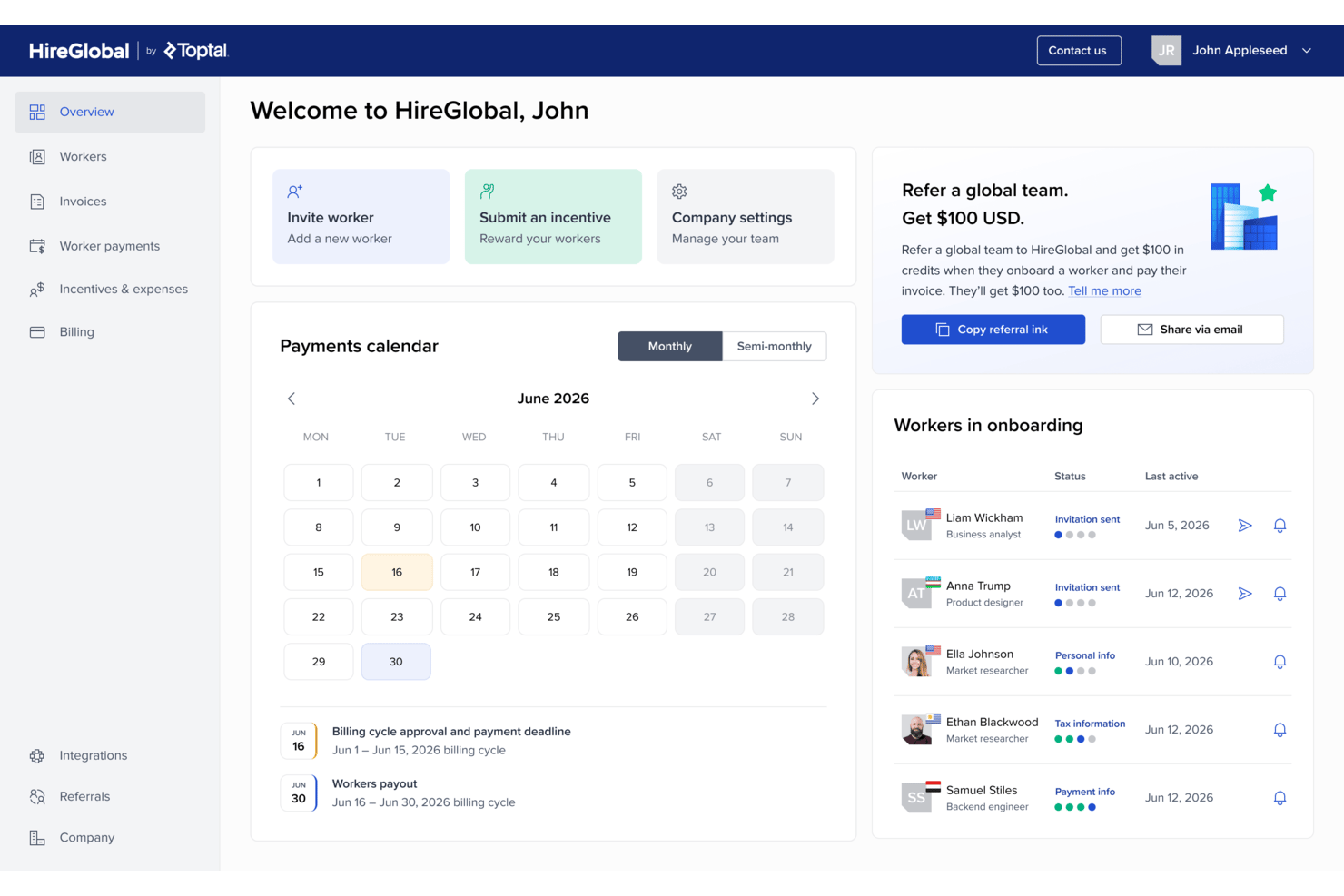
HireGlobal is a multi-model employer of record platform that combines EOR, contractor management, agent of record, and local payroll services across 180+ countries.
Who Is HireGlobal Best For?
HireGlobal suits companies that want to hire international contractors or employees across multiple countries under a single platform with built-in indemnification coverage.
Why I Picked HireGlobal
I've included HireGlobal in my top picks because its indemnification-backed hiring model is something I genuinely haven't seen matched elsewhere. The Virtual EOR plan covers up to $1M per worker in legal defence, which matters when you're hiring across borders and can't always predict where compliance risk will surface. I also like that EOR, contractor management, and agent of record arrangements can all run on one platform, so you're not juggling separate tools as your Belgian headcount grows.
HireGlobal Key Features
- Multi-model hiring platform: Run EOR, agent of record, and contractor management workers side by side on a single platform with one consolidated invoice.
- Flat per-worker pricing: Monthly fees are published upfront with no setup fees, no hidden costs, and no salary-based pricing markups.
- Contractor-to-employee conversion: Manage and convert contractors to full-time employees without switching platforms or renegotiating agreements.
- Built-in background checks: Global background checks and hiring verification are available as part of the onboarding process across supported countries.
HireGlobal Integrations
Native integrations are not clearly documented. Third-party reporting mentions Slack, Jira, Workday, BambooHR, Rippling, Gusto, and TopTracker, but HireGlobal does not verify these connections publicly.
Pros and Cons
Pros:
- Contractor-to-employee conversion supports Belgian growth plans
- Multiple hiring models support changing workforce needs
- Indemnification-backed hiring reduces cross-border legal exposure
Cons:
- Belgian payroll and immigration requirements remain unclear
- No documented Belgian entity or local partner

Best for multi-country workforce management
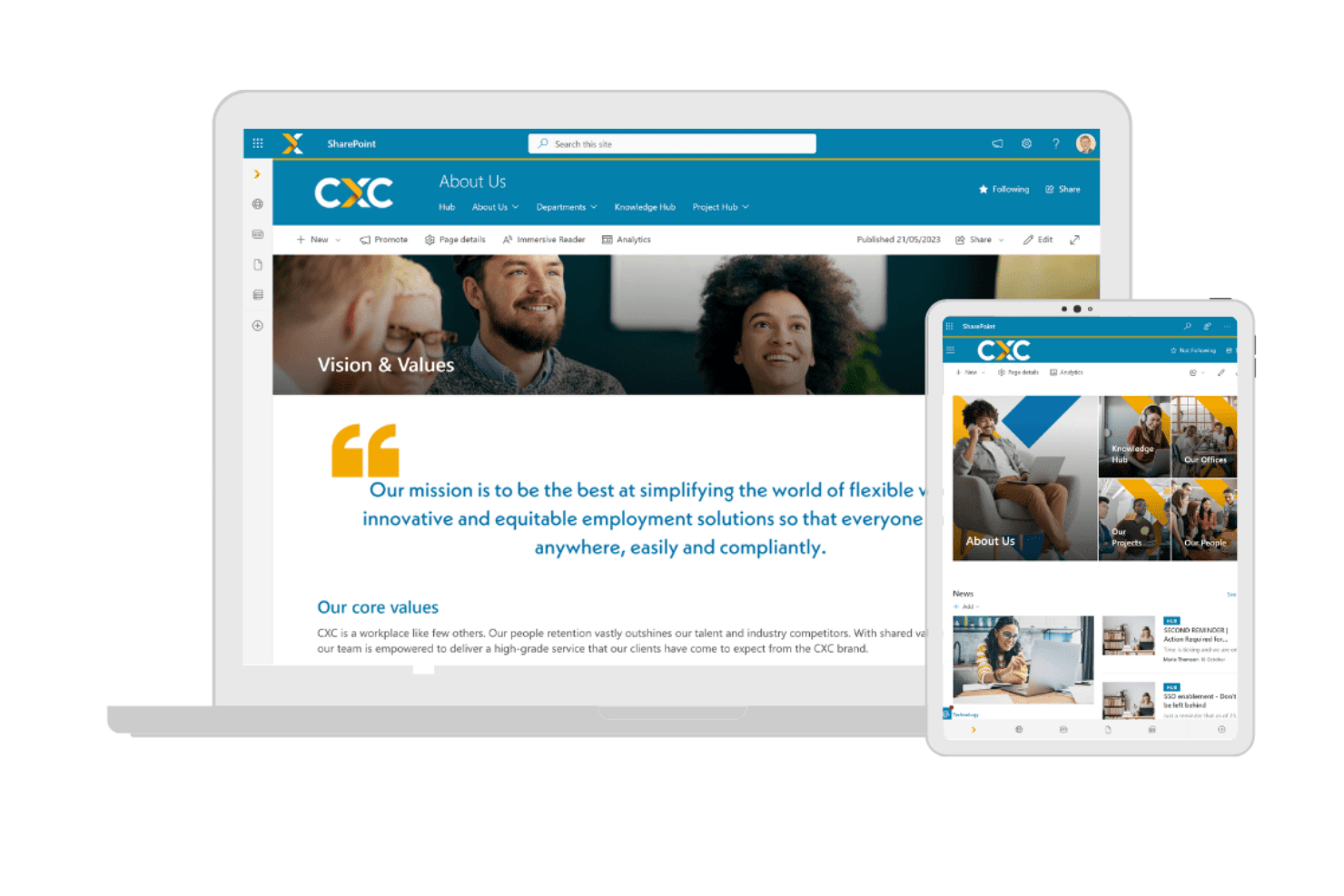
CXC Global is an employer of record and contingent workforce management provider that handles Belgian payroll, tax compliance, multilingual employment contracts, statutory benefits, and immigration support across 100+ countries.
Who Is CXC Global Best For?
CXC Global suits enterprise HR teams managing large or multi-country contingent workforces who need Belgium EoR as part of a broader global workforce program.
Why I Picked CXC Global
I picked CXC Global as one of the best because it combines MSP and EOR services in a way few providers match. When my team needs Belgian EOR alongside contingent workforce programs in other markets, CXC handles both under one program. I also like its contractor classification tool, CXC Comply, which is especially relevant given Belgium's strict misclassification rules, and its ability to draft compliant contracts in Dutch, French, or German with proper joint committee (CP/PC) classification by region.
CXC Global Key Features
- Belgian statutory benefits administration: Handles medical insurance, pension contributions, meal vouchers, and holiday pay for Belgian employees.
- Dimona filing support: Processes Dimona declarations for onboarding and offboarding Belgian workers to ensure compliance with local employment law.
- Multilingual employee documentation: Provides contracts and payslips in Dutch, French, or German, depending on the worker’s Belgian region.
- Dedicated account management: Assigns a named specialist to each client for ongoing support, compliance, and HR process coordination.
CXC Global Integrations
CXC Global offers native integrations with SAP Fieldglass and Beeline, other integrations are not currently listed.
Pros and Cons
Pros:
- Multilingual Belgian contracts across all three regions
- Handles contractor-to-employee conversion compliantly
- Covers Belgium across 100+ countries simultaneously
Cons:
- No transparent self-service onboarding portal
- Less Belgium-specific than dedicated local providers

Best for Belgian labor law expertise
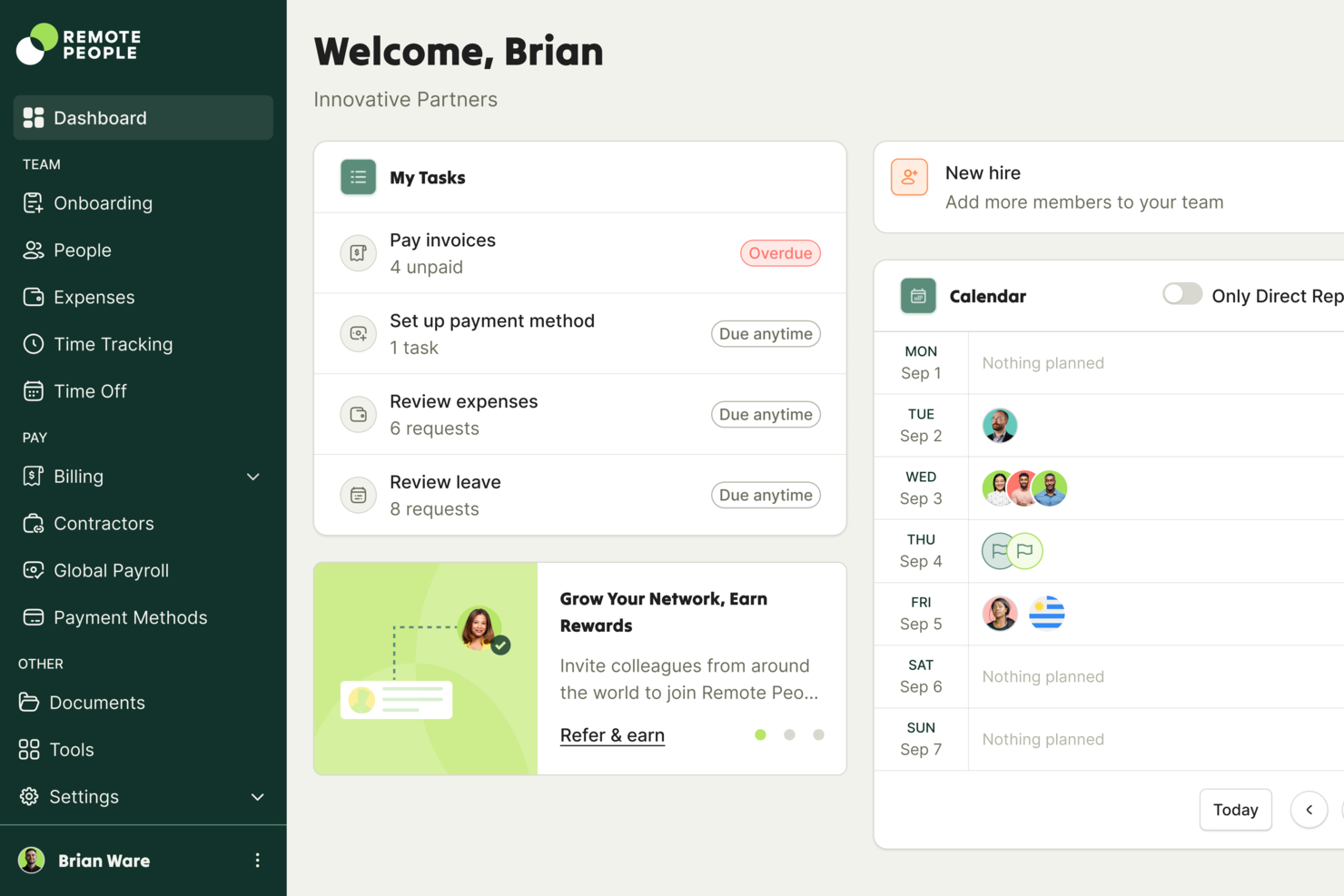
RemotePeople is an employer of record platform for Belgium that offers payroll management, local compliance support, digital contract administration, visa processing, and real-time HR analytics built for global teams managing Belgian hires.
Who Is RemotePeople Best For?
RemotePeople is a good fit for global companies and startups that need to hire and pay employees in Belgium without setting up a local legal entity.
Why I Picked RemotePeople
RemotePeople earns its spot on my shortlist because of how precisely it handles Belgian labor law compliance. I particularly like the way it manages mandatory benefits like the 13th-month pay, meal vouchers, and sector-specific collective bargaining agreements that trip up most companies hiring in Belgium for the first time. RemotePeople also handles contract drafting under Belgian employment law, including the required language provisions for Wallonia, Flanders, and Brussels. In practice, that means my team can onboard Belgian employees without needing a local legal advisor on retainer.
RemotePeople Key Services
- Belgian payroll processing: Runs monthly payroll in euros through an approved social secretariat, with ONSS filings, DmfA declarations, and professional withholding tax handled each cycle.
- Dimona registration: Files the electronic Dimona declaration with the National Social Security Office before each new hire's first working day.
- Statutory benefits administration: Enrolls employees with a mutual health insurance fund and manages meal vouchers, eco-vouchers, double holiday pay, and sector-specific bonuses.
- Termination and offboarding support: Manages notice period calculations, indemnity in lieu of notice, and offboarding under the Single Status Act and CBA 109.
RemotePeople Integrations
Native integrations are not clearly documented. RemotePeople provides an API for custom integrations.
Pros and Cons
Pros:
- Provides single permit and expatriate tax support
- Tracks Belgian-specific employment compliance deadlines
- Supports French, Dutch, and German documentation
Cons:
- Lacks transparent pricing for Belgian SME clients
- Does not offer invoicing in local Belgian formats

Remote
Best for GDPR-compliant data handling
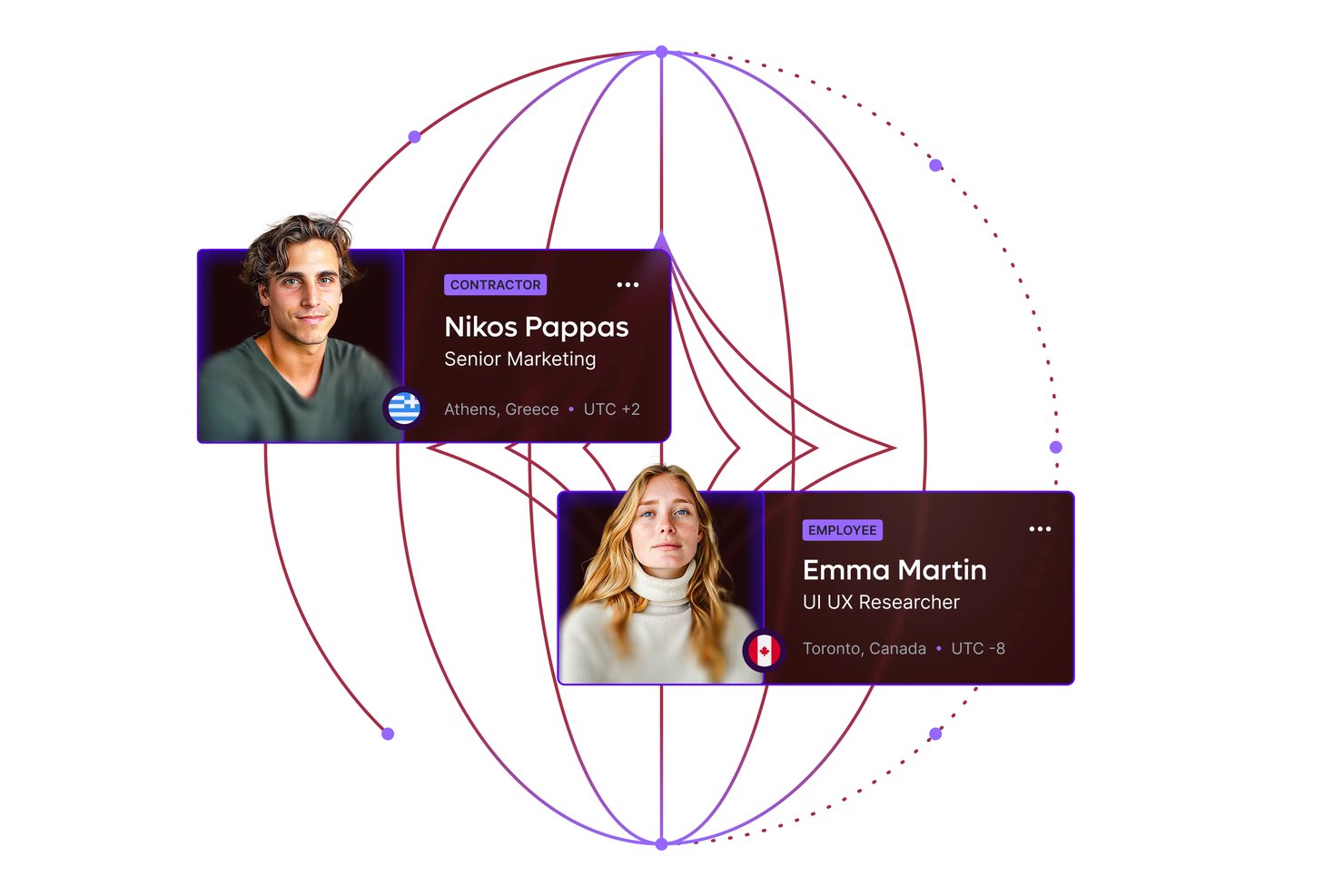
Remote is an employer of record platform that lets you hire, onboard, and pay employees in Belgium through Remote's own locally owned entity, covering payroll, compliance, contract generation, and benefits administration.
Who Is Remote Best For?
Remote is a strong fit for companies hiring in Belgium that need airtight GDPR compliance, with EU-based data hosting, ISO 27001 and SOC 2 Type 2 certifications, and a dedicated DPO backing every hire.
Why I Picked Remote
Remote earns its spot on my shortlist because of how seriously it takes GDPR compliance at every layer. All employee data is hosted in Ireland, backed by a dedicated Data Protection Officer, a client-facing Data Processing Addendum, and certifications including ISO 27001 and SOC 2 Type 2. I also like that Remote owns its Belgian entity outright, so there's no third-party handoff carrying extra data-exposure risk.
Remote Key Features
- Compliance Watchtower: A dashboard that monitors legal changes across wage, leave, benefits, and collective bargaining, then surfaces risk alerts with guidance on next steps.
- Owned Belgian entity: Remote employs your Belgian hires directly through its own locally owned entity, with no third-party partner involved.
- Uncapped indemnity coverage: Remote assumes full legal employer liability on EOR hires, with no cap on indemnity and no hidden disclaimers.
- HRIS integrations: Native connectors for Workday, BambooHR, HiBob, and Personio, plus an open REST API, let you sync employee data across your existing HR stack.
Remote Integrations
Remote offers native integrations with Workday, BambooHR, HiBob, Personio, Greenhouse, Ashby, QuickBooks, Xero, NetSuite, and Okta. Its REST API, webhooks, CLI, and Remote MCP support custom connections, and it also integrates with Zapier.
Pros and Cons
Pros:
- Structured termination support protects compliance
- Directly owned Belgian entity reduces outsourcing risk
- GDPR-focused handling with Irish data hosting
Cons:
- Users report slow support responses
- Belgian indexation handling remains undocumented

Playroll
Best for centralized contractor management platform
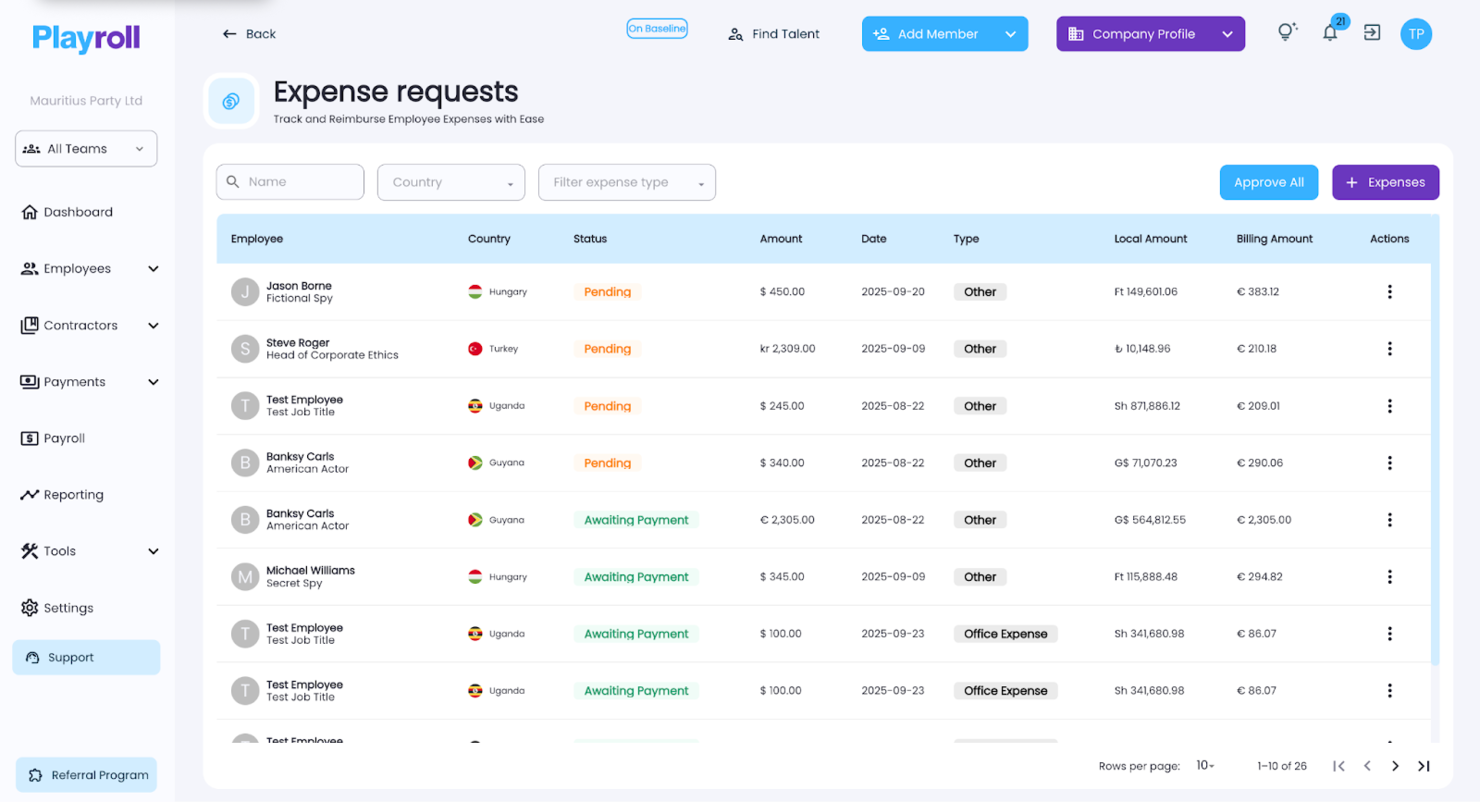
Playroll is an employer of record platform for Belgium that centralizes contractor onboarding, payroll, compliance, and HR document management in one system.
Who Is Playroll Best For?
International HR teams managing Belgian contractors and employees from a single platform.
Why I Picked Playroll
I picked Playroll as one of the best because my team can manage Belgian contractors and employees in one dashboard, tracking onboarding, contracts, and payments together. I like that Playroll lets us automate compliance checks for Belgian labor laws and centralize HR documents for every worker. My team uses Playroll’s unified payroll engine to process payments for both contractors and employees without switching platforms.
Playroll Key Services
- Localized Belgian employment contracts: Generate compliant contracts tailored to Belgian regulations.
- Automated tax withholding: Calculate and withhold Belgian taxes for employees and contractors.
- Time-off tracking: Monitor and manage Belgian statutory leave and absences.
- Centralized HR document storage: Store and access Belgian employment records and compliance documents in one place.
Playroll Integrations
Integrations include BambooHR and HiBob. An API is available for custom integrations.
Pros and Cons
Pros:
- User-friendly interface for monthly payslips
- Transparent flat-fee per employee pricing
- Rapid onboarding for Belgian remote hires
Cons:
- Limited medical package customization options
- Reporting features lack granular detail
Best for integrated global payroll solutions
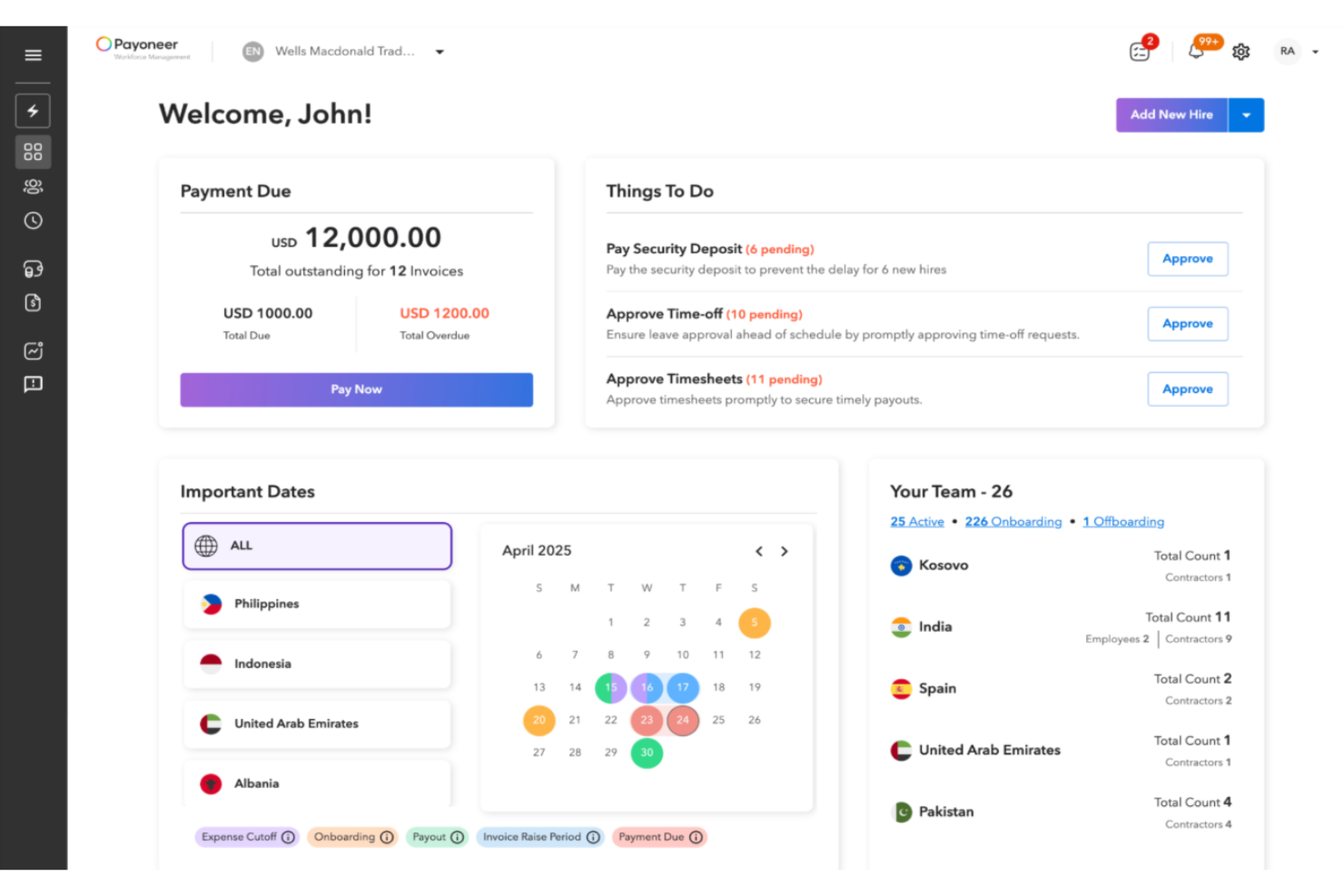
Payoneer Workforce Management is an Employer of Record platform for Belgium that combines global payroll, compliance management, HR administration, and contractor payments in one system.
Who Is Payoneer Workforce Management Best For?
Global HR teams and finance leaders who need to manage payroll and compliance for Belgian employees and contractors.
Why I Picked Payoneer Workforce Management
I picked Payoneer Workforce Management as one of the best because I can manage Belgian payroll and contractor payments in the same platform. I like that my team can generate compliant Belgian payslips and automate tax withholdings for local employees. The platform’s global payroll engine lets me handle multi-currency payments and reporting without switching tools.
Payoneer Workforce Management Key Services
- Employment contract generation: Create compliant Belgian employment contracts directly in the platform.
- Local statutory benefits administration: Manage Belgian social security, pension, and insurance requirements.
- Employee self-service portal: Let Belgian employees access payslips, contracts, and HR documents online.
- Real-time compliance monitoring: Track regulatory changes and update HR processes for Belgian employment law.
Payoneer Workforce Management Integrations
Integrations include QuickBooks and Xero.
Pros and Cons
Pros:
- Supports payouts in 70 local currencies, including Euro
- Unified dashboard for contractors and employees
- Automates mandatory Belgian indexation updates
Cons:
- Limited localized HR consulting services
- No dedicated mobile application

Best for benefits administration support
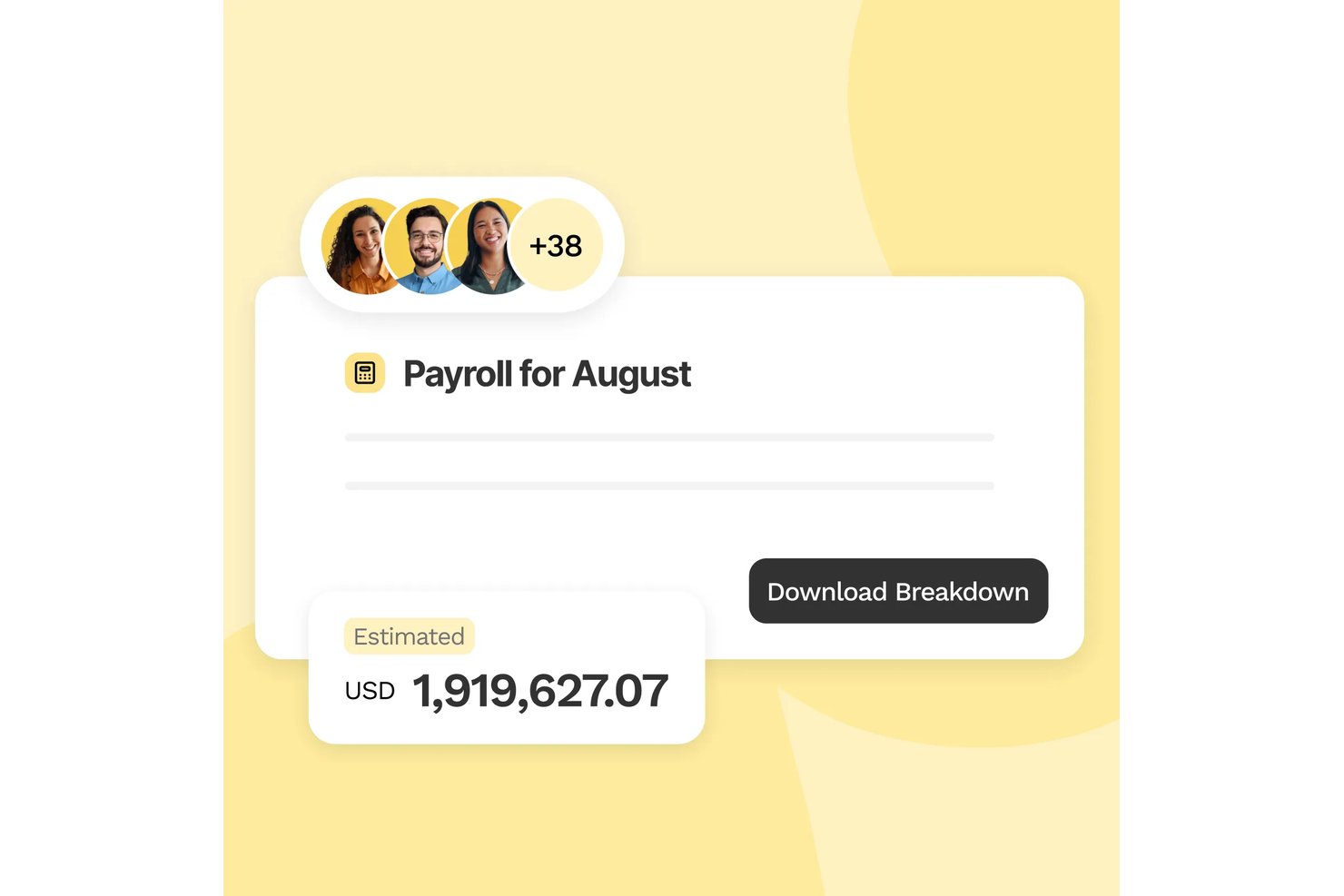
Oyster HR is an employer of record platform with its own Belgian legal entity that handles local payroll, DIMONA filings, contract generation, benefits administration, and offboarding for companies hiring in Belgium without setting up a local entity.
Who Is Oyster HR Best For?
Oyster HR is a strong fit for finance and HR teams that need a clear benefits structure for Belgian hires, including named local providers like Monizze and DKV.
Why I Picked Oyster HR
I've included Oyster HR in my top picks because it's the most benefits-specific EOR I've reviewed for Belgium, with tiered packages that go from statutory baseline to best-in-class, using named local providers like Monizze for eco vouchers and DKV for private hospitalization insurance. When you're hiring in Belgium, those details matter. I also like that Oyster handles the full benefits enrolment process on your behalf, contacting the employee directly after you select a package in the hiring form.
Oyster HR Key Features
- DIMONA and LIMONA filing: Oyster handles Belgium's mandatory pre-hire DIMONA and LIMONA declarations as part of the onboarding process.
- CBA 200 contract generation: Oyster produces Dutch-language employment contracts classified under Joint Committee 200 for white-collar roles.
- Contractor-to-employee conversion: Oyster supports a structured workflow for converting contractors to full-time EOR employees without restarting the hiring process.
- People Partner advisory: For complex terminations or sensitive HR situations, you can access senior HR specialists at $300/hour on a project basis.
Oyster HR Integrations
Oyster HR offers documented integrations with ADP Workforce Now, Factorial, Lucca, Humaans, Personio, HiBob, BambooHR, Greenhouse, Workable, and Teamtailor, plus an API for custom connections and Zapier.
Pros and Cons
Pros:
- Direct employment through Oyster’s Belgian entity
- Named providers include Monizze and DKV
- Tiered benefits support Belgian employee needs
Cons:
- Onboarding can exceed advertised timelines
- Joint committee coverage beyond CBA 200 unclear

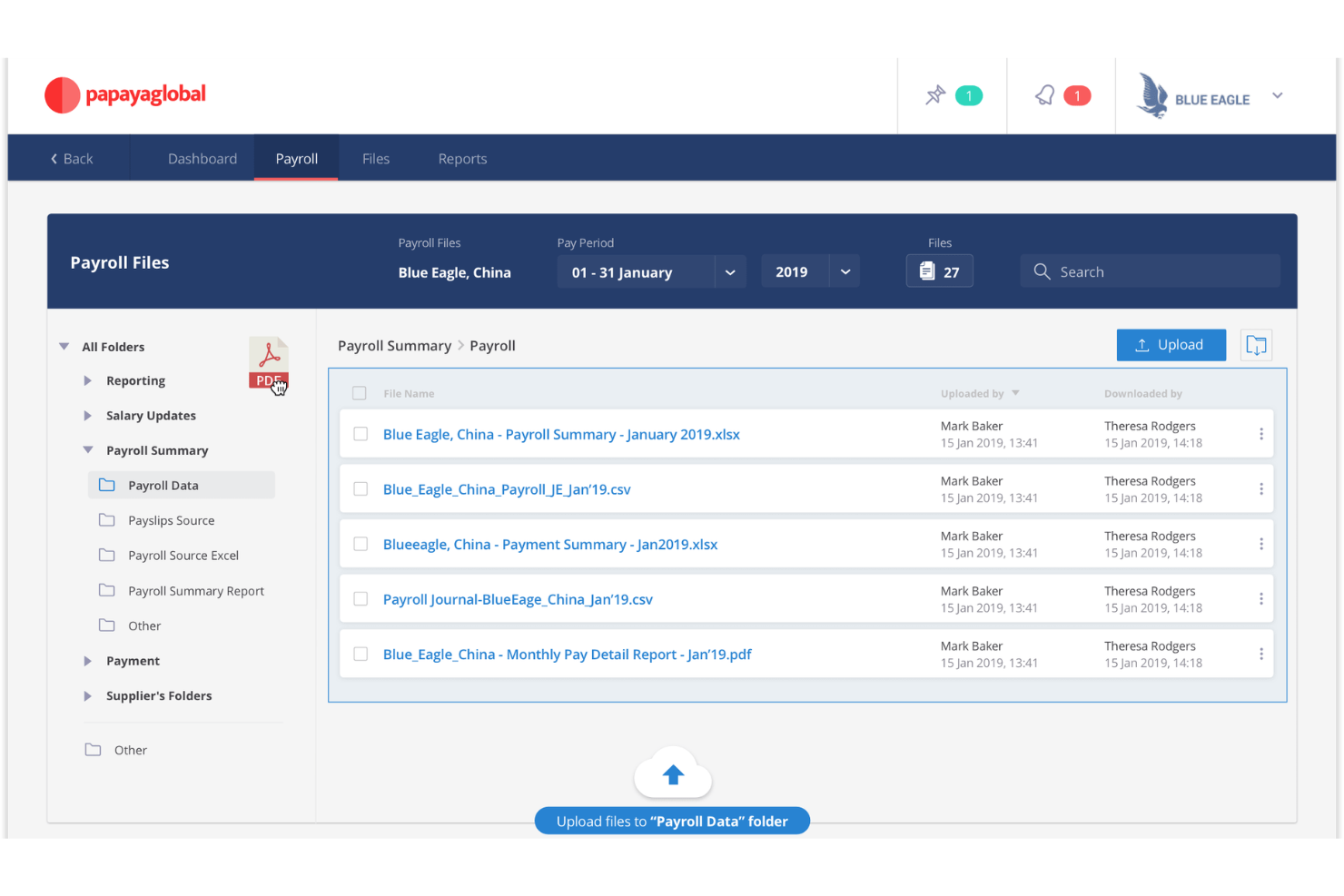
Papaya is a global employer of record platform for Belgium that centralizes payroll, compliance, onboarding, and workforce data management for distributed teams in one system.
Who Is Papaya Best For?
Global HR teams and finance leaders who need unified analytics and compliance for Belgian and international employees.
Why I Picked Papaya
I picked Papaya as one of the best because I can view Belgian payroll, headcount, and compliance data alongside global workforce analytics in a single dashboard. My team uses Papaya to automate Belgian employment contracts and manage local tax filings. I like that I can drill into Belgian workforce costs and trends without switching platforms.
Papaya Key Services
- Automated onboarding workflows: Set up Belgian employees with digital document collection and e-signature.
- Local statutory benefits administration: Configure and manage Belgian-specific benefits packages.
- Expense management tools: Track, approve, and reimburse Belgian employee expenses in-platform.
- Multi-currency payroll processing: Pay Belgian and international employees in their local currencies.
Papaya Integrations
Papaya offers native integrations with NetSuite, BambooHR, Workday, HiBob, and QuickBooks, and provides an API for custom integrations.
Pros and Cons
Pros:
- Deep analytics for Belgian workforce costs
- Proprietary payment rails via J.P. Morgan
- Unified dashboard for global and Belgian payroll
Cons:
- Requires full pre-funding before payroll
- Lengthy implementation for small teams
Other Employer of Record Services in Belgium
Here are some additional employer of record services in Belgium options that didn’t make it onto my shortlist, but are still worth checking out:


How I Evaluate Employer of Record Services in Belgium
I split my evaluation into three parts, giving the most weight to core functionality: legally employ workers in Belgium and process compliant payroll, contracts, and benefits. Next, I look for mobility budgets and joint committee matching, such as applying the right sector wage scale. Finally, I consider local legal support, onboarding speed, transparent pricing, and integrations.
Core Functionality (Table Stakes For This List)
When I'm selecting tools for my list, I score each one on a scale from 0 (does not offer the functionality) to 5 (excels in this area) for each core functionality listed below. I then convert the total into a percentage to help assess each tool’s overall fit, with extra weight on any functionalities I’ve deemed essential.
- Local Entity Employment (Essential): I check whether the provider legally employs Belgian workers without requiring your business to establish a local entity.
- Belgian Compliance (Essential): I look for Belgian labor-law coverage, social security handling, tax withholding, and updates for applicable joint committees.
- Payroll Processing: I assess salary calculations, deductions, statutory contributions, local-currency payments, bonuses, and other Belgian payroll components.
- Contract Generation: I evaluate Belgian employment contracts for accurate terms, worker classifications, notice provisions, and collective agreement requirements.
- Benefits Administration: I check administration of holiday pay, statutory leave, pension arrangements, insurance, and other applicable employee benefits.
- Termination & Offboarding: I assess notice-period guidance, severance calculations, final pay, documentation, and compliant offboarding workflows.
Once I have a list of tools that meet the criteria, I consider what sets each platform apart.
Differentiating Factors (What Sets Vendors Apart)
Here's how I compare and contrast different vendors:
Standout Features
Joint committee matching is a big one. Belgium has hundreds of joint committees (Paritair Comités/Commissions Paritaires), and misclassification means wrong wage scales, incorrect benefits, and potential fines. I check whether a provider automatically identifies the right classification based on business activity. Mobility budget support also matters, since Belgium's mobility budget lets employees swap company car entitlements for cash or greener transport. I look for providers that actually administer this benefit rather than just mentioning it. Finally, I evaluate single permit sponsorship for non-EU hires, where end-to-end handling of Belgium's unified permit process saves weeks of back-and-forth.
Beyond Features
I check onboarding speed, since Belgian hiring requires a Dimona declaration and joint committee determination before work can start. Providers that guarantee specific timelines help you avoid losing candidates during competitive hiring windows. Transparent pricing is equally important—Belgian employer social charges sit on top of gross salary, so I look for clear per-employee breakdowns that include benefits administration and termination costs. I also evaluate local legal support quality, particularly access to Belgian-qualified advisors who can guide you through notice-period calculations and works council obligations.
How to Choose Employer of Record Services in Belgium
It’s easy to get bogged down in long feature lists and complex pricing structures. To help you stay focused as you work through your unique software selection process, here’s a checklist of factors to keep in mind:
| Factor | What to Consider |
|---|---|
| Scalability | Will the platform support your growth in Belgium and other countries, or will you outgrow its capabilities? |
| Integrations | Does it connect natively with your HR, payroll, or accounting systems, or will you need manual workarounds? |
| Customizability | Can you tailor workflows, document templates, and reporting to fit your Belgian HR processes? |
| Ease of use | Will your team and Belgian employees find the interface intuitive, or will it require extensive training? |
| Implementation and onboarding | How long does it take to get up and running, and what support is available during the transition? |
| Cost | Are all Belgian-specific fees, taxes, and service charges transparent and predictable in your budget? |
| Security safeguards | Does the provider meet GDPR and Belgian data protection standards, and how do they handle sensitive HR data? |
| Compliance requirements | How does the tool stay current with Belgian labor laws, and what processes are in place for legal updates? |
What Are Employer of Record Services in Belgium?
Employer of record services in Belgium are third-party providers that legally employ workers in Belgium on your behalf, handling payroll, contracts, tax compliance, and statutory benefits. These services let you hire Belgian employees or contractors without setting up a local legal entity, ensuring your business meets all local labor laws and HR requirements.
Why Use an Employer of Record Service in Belgium?
Using an employer of record (EOR) in Belgium allows you to hire employees without setting up a local entity or navigating one of Europe’s more complex employment systems. To hire directly, you must register with Belgian authorities, including the National Social Security Office (NSSO/RSZ), set up payroll, and comply with strict labor laws and reporting obligations.
Belgium also has highly regulated employment conditions, including sector-based collective bargaining agreements, mandatory benefits, and strong employee protections around termination. An EOR helps you stay compliant with these requirements while reducing administrative burden and avoiding costly mistakes—especially around payroll, benefits, and dismissals.
Deciding Between an EOR and a Legal Entity in Belgium
When deciding between an EOR and setting up a legal entity in Belgium, the key consideration is speed versus long-term operational control.
Setting up a Belgian entity requires company registration, tax setup, social security enrollment (NSSO/RSZ), and ongoing payroll and compliance management. While standard for long-term operations, it involves administrative complexity. An EOR allows you to hire quickly without establishing a legal presence.
| Feature | Employer of Record (EOR) | Legal Entity (Belgium) |
|---|---|---|
| Setup Time | Fast (days to ~2 weeks) | Moderate (4–8+ weeks) |
| Operational Readiness | Immediate hiring | Delayed; requires full setup |
| Compliance Responsibility | Shared; EOR handles payroll and labor compliance | Fully on your company |
| Payroll and Social Security | Managed by EOR | Must register with NSSO/RSZ |
| Administrative Burden | Low | High; ongoing filings and payroll |
| Flexibility | High | Lower; tied to permanent structure |
| Cost Structure | Service fee per employee | Setup + ongoing costs |
| Best For | Market entry, remote teams | Long-term operations |
EOR vs Permanent Establishment in Belgium
When hiring in Belgium, one key consideration is whether your activities could create a permanent establishment (PE) for tax purposes.
Under Belgian and international tax rules, a PE may arise if your company has a fixed place of business in Belgium or operates through employees or agents who can act on your behalf (e.g., negotiating or concluding contracts). If a PE is established, your company may be subject to Belgian corporate income tax on locally generated profits, along with additional compliance obligations.
PE risk increases if you:
- Employ staff directly in Belgium
- Maintain a local office or infrastructure
- Allow employees to represent or bind your company commercially
How EORs Protect From Permanent Establishment Risk
An EOR helps reduce the likelihood of triggering Permanent Establishment by separating your company from the legal employment structure in Belgium.
- Legal employer structure. The EOR is the official employer, not your company
- No local entity required. You avoid establishing a fixed place of business
- Local payroll and compliance handled by the EOR. All filings are done under the EOR’s registrations
- Service-based relationship. Your contract with the EOR is a B2B service agreement
- Reduced authority risk. Employees are less likely to be seen as representatives of your company
While this reduces risk significantly, PE exposure can still arise depending on the nature of activities performed in Belgium.
Hiring in Belgium: Important Details
Here are key details to know if you’re hiring employees in Belgium. Your EOR will manage compliance, but understanding these rules helps you plan effectively.
Hiring in Belgium is governed by national labor law and sector-specific collective bargaining agreements, which play a major role in determining employment conditions.
- Employment contracts are required. While some contracts can be oral, written contracts are mandatory for fixed-term, part-time, and specific roles. In practice, written contracts are standard.
- Indefinite contracts are the default. Fixed-term contracts are allowed but regulated.
- Collective agreements are critical. Sector-level agreements define wages, benefits, working hours, and termination rules in many industries.
- Standard working time is 38 hours per week. This can vary slightly depending on sector agreements.
- Overtime is regulated. Additional pay or compensatory time off is required for overtime work.
- Belgium uses a 13th-month salary system in many sectors. While not universally mandated by law, a 13th salary (end-of-year bonus) is commonly required through collective agreements.
- Annual leave is statutory. Employees are entitled to paid annual leave based on the previous year’s work (typically around 20 days for full-time employees).
- Public holidays are mandatory paid days off. Belgium has 10 national public holidays, including:
- New Year’s Day (January 1)
- Easter Monday (date varies)
- Labour Day (May 1)
- Ascension Day (date varies)
- Whit Monday (date varies)
- National Day (July 21)
- Assumption Day (August 15)
- All Saints’ Day (November 1)
- Armistice Day (November 11)
- Christmas Day (December 25)
- Maternity leave is 15 weeks. Paid through social security, with part taken before and after birth.
- Paternity leave is 20 days. Paid partially by the employer and social security.
- Sick leave is protected. Employers typically pay guaranteed salary for a period before social security benefits apply.
- Probation periods are largely abolished. Belgium removed standard probation periods, though notice periods still apply from day one.
- Termination is highly regulated. Employers must provide notice or pay in lieu of notice, calculated based on seniority.
- Severance is structured as notice pay. Belgium does not use a traditional severance model—termination costs are driven by notice periods, which can be substantial.
Tax Overview for Employers in Belgium
Belgium has one of the more complex payroll systems in Europe, with significant employer contributions and strict reporting requirements.
- Employers act as withholding agents. You must withhold personal income tax (précompte professionnel) from employee salaries.
- Income tax is progressive. Rates increase with income and are managed through payroll withholding.
- Social security contributions (NSSO/RSZ) are mandatory.
- Employer contributions are typically ~25% of gross salary
- Employee contributions are also withheld from salary
- Payroll reporting is required monthly or quarterly. Employers must submit declarations to NSSO/RSZ.
- Holiday pay system is regulated. Blue-collar and white-collar employees follow different systems for holiday pay funding and payment.
- Additional contributions may apply. These can include sector-specific funds, insurance, and benefits required under collective agreements.
- Strict compliance enforcement applies. Belgian authorities closely monitor payroll accuracy, contributions, and labor law compliance.
Total Cost of Employment in Belgium
The total cost of employment in Belgium is significantly higher than base salary due to high employer social security contributions and sector-based benefits.
- 13th-month salary is common (and often required). While not mandated by law universally, most employees receive an end-of-year bonus (13th salary) through collective agreements, making it a standard expectation in Belgium.
- Holiday pay adds additional cost. Belgium has a structured holiday pay system, which can increase total compensation beyond base salary depending on employee classification.
In practice, this means your total employment cost in Belgium is significantly higher than the listed salary, driven primarily by employer contributions and collectively agreed benefits.
Features of Employer of Record Services in Belgium
When selecting employer of record services in Belgium, keep an eye out for the following key features:
- Local payroll processing: Handles Belgian payroll calculations, salary payments, and statutory deductions in compliance with local regulations.
- Employment contract generation: Creates legally compliant Belgian employment contracts tailored to your business needs and worker types.
- Tax withholding and filing: Manages Belgian income tax, social security contributions, and submits required filings to local authorities.
- Benefits administration: Oversees statutory and optional benefits, such as health insurance, pension, and paid leave for Belgian employees.
- Onboarding and offboarding support: Guides new hires through Belgian onboarding requirements and manages compliant offboarding processes.
- HR document management: Centralizes storage and access to contracts, payslips, and compliance documents for Belgian workers.
- Compliance monitoring: Tracks changes in Belgian labor laws and updates processes to ensure ongoing legal compliance.
- Expense and reimbursement management: Processes employee expenses and reimbursements according to Belgian tax and labor rules.
- Time-off and leave tracking: Monitors vacation, sick leave, and other statutory absences for Belgian employees.
- Local support services: Provides access to HR and legal experts familiar with Belgian employment practices and regulations.
Benefits of Employer of Record Services in Belgium
Implementing employer of record services in Belgium provides several benefits for your team and your business. Here are a few you can look forward to:
- Faster market entry: Launch operations in Belgium quickly without setting up a local legal entity, thanks to ready-made compliance and payroll infrastructure.
- Guaranteed legal compliance: Stay up to date with Belgian labor laws, tax regulations, and statutory benefits through expert guidance and automated compliance monitoring.
- Simplified payroll management: Handle Belgian payroll, tax filings, and benefits administration through a single, centralized platform.
- Reduced administrative burden: Offload HR paperwork, contract management, and statutory reporting to a dedicated provider with local expertise.
- Improved employee experience: Offer Belgian employees compliant contracts, timely payments, and access to local benefits and support.
- Lower operational risk: Minimize the risk of fines or penalties by ensuring all employment processes meet Belgian legal requirements.
- Scalable hiring: Easily add or remove Belgian employees and contractors as your business needs change, without complex legal or HR processes.
Costs and Pricing of Employer of Record Services in Belgium
Selecting employer of record services in Belgium requires an understanding of the various pricing models and plans available. Costs vary based on features, team size, add-ons, and more. The table below summarizes common plans, their average prices, and typical features included in employer of record services in Belgium solutions:
Plan Comparison Table for Employer of Record Services in Belgium
| Plan Type | Average Price | Common Features |
|---|---|---|
| Free Plan | $0 | Access to basic HR document templates, limited onboarding support, and email-only customer support. |
| Personal Plan | $200-$400/employee/mo | Local payroll processing, employment contract generation, tax withholding, and basic compliance support. |
| Business Plan | $400-$600/employee/mo | Full payroll and benefits administration, onboarding and offboarding support, HR document management, and standard integrations. |
| Enterprise Plan | $600-$900/employee/mo | Advanced compliance monitoring, custom workflow automation, dedicated account management, and priority support. |
Employer of Record Services in Belgium FAQs
Here are some answers to common questions about Employer of Record services in Belgium:
How does an EOR handle IP transfer upon termination in Belgium?
In Belgium, intellectual property (IP) created by employees is governed by the Belgian Code of Economic Law. As a general rule, economic rights can be transferred to the employer, but this must be explicitly agreed in writing—they do not automatically transfer in all cases. When using an EOR, the EOR is the legal employer, so IP rights would initially vest with them unless properly assigned.
To ensure your company owns the IP, EOR providers use contractual assignment clauses in both the employment agreement and the service agreement. These create a clear transfer path from the employee to the EOR, and then from the EOR to your company. The agreements remain valid after termination, ensuring continued ownership of all work created during employment, while also addressing limitations such as non-transferable moral rights, which remain with the employee under Belgian law.
Can I hire Belgian employees without setting up a local entity?
Yes, EOR services in Belgium let you hire and pay Belgian employees legally without creating a local company or dealing with the complexity of a formal entity setup. The provider acts as the legal employer, managing the hiring process and handling contracts, payroll, and full compliance on your behalf in cities like Brussels and beyond.
How do Employer of Record services in Belgium handle local compliance?
EOR services in Belgium monitor changes in employment regulations and update contracts, payroll, and HR processes to keep your business protected. They manage payroll taxes, statutory filings, and ensure all employment practices meet local requirements throughout the entire employee lifecycle.
What types of workers can I employ through an Employer of Record in Belgium?
You can employ both full-time staff and contractors through most providers. Using an EOR services model helps you choose the right contract type to avoid misclassification risks. This cost-effective approach to outsourcing allows you to build a global team while the provider ensures all legal obligations, including obtaining a work permit for foreign staff, are met.
How long does it take to onboard a new Belgian employee with an Employer of Record?
It typically takes a few days to weeks to onboard employees in Belgium, depending on document collection and background checks. These services guide you and your top talent through each step for a smooth start, making it a vital tool for rapid global expansion.
Are benefits like health insurance and paid leave included?
Yes, most providers administer employee benefits such as health insurance, pension, and paid leave. They ensure payments are made in EUR and adhere to the Belgian minimum wage standards. Some providers, acting similarly to a PEO, also offer optional packages tailored to global talent market expectations.
What happens if I need to terminate an employee in Belgium?
EOR services in Belgium manage the offboarding process, ensuring all legal requirements for termination are met. They handle notice periods, severance calculations, and final payments according to Belgian law, allowing you to maintain a professional global hiring strategy even during difficult transitions.
This content is provided for general informational purposes only and does not constitute legal, tax, or other professional advice. It may not be complete, accurate, or current, and laws and practices may change without notice and vary by jurisdiction. You should not act on this information without obtaining advice from qualified legal or tax counsel in the relevant jurisdiction regarding your specific circumstances.