

10 Best Employer of Record in Turkey: Reviewed in 2026

Best Turkish Employer of Record Service Shortlist


Struggling to figure out how to hire employees in Turkey without running into red tape? You’re not alone. Setting up a legal entity, registering with Turkish authorities, and staying compliant with local labor laws can quickly become overwhelming—especially if you’re expanding from abroad.
That’s why many businesses turn to Employer of Record (EOR) services. These providers make it possible to hire Turkish employees legally, manage payroll, and stay fully compliant, without opening a local branch. They’re your shortcut to hiring internationally, minus the legal headaches.
I research and write extensively about global employment solutions for HR professionals, and I’ve reviewed dozens of EOR services to help businesses like yours expand efficiently. In this article, I’ll share my top picks for the best EOR providers in Turkey, so you can confidently choose the one that fits your needs.
Why Trust Our Software Recommendations
Our team has been testing and reviewing software since 2012. As HR experts ourselves, we know how difficult—and important—it is to choose the right software.
For this guide, we evaluated tools using hands-on testing and independent research, scoring tools using our selection criteria. We also draw on insights from industry thought leaders and practicing HR experts.
Our reviews reflect our human editorial judgment, not a sales pitch.
Expert reviewers:
Employer of Record in Turkey Comparison Table
This comparison table summarizes pricing details for my top employer of record in Turkey selections:
| Tool | Best For | Trial Info | Price | ||
|---|---|---|---|---|---|
| 1 | Best for ease of use | Free demo available | From $199/employee/month | Website | |
| 2 | Best for budget-conscious remote team expansion | Free demo available | From $199/employee/month | Website | |
| 3 | Best for compliant hiring under Turkish labor law | Free demo available | From $599/employee/month | Website | |
| 4 | Best for global hiring and compliance | Not available | From $599/employee/month | Website | |
| 5 | Best for quick employee onboarding | Free demo available | From $459/employee/month (billed annually) | Website | |
| 6 | Best for hands-on support in Turkey | Not available | Pricing upon request | Website | |
| 7 | Best for local compliance management | Not available | Pricing upon request | Website | |
| 8 | Best for an advanced EOR management platform | Free demo available | From $299/user/month | Website | |
| 9 | Best for competitive benefits packages | Free demo available | From $599/employee/month (billed annually) | Website | |
| 10 | Best for flexible global payment options | Free demo available | From $599/employee/month | Website |


Reviews of the Best Employer of Record Services in Turkey
To help you find the best EOR service for hiring employees in Turkey, I’ve described my top 10 selections in detail, including the specific services each provider offers and how HR teams can use them effectively. I’ve also included 10 more EOR service providers for Turkey below in case you’d like more options to consider.

Best for ease of use
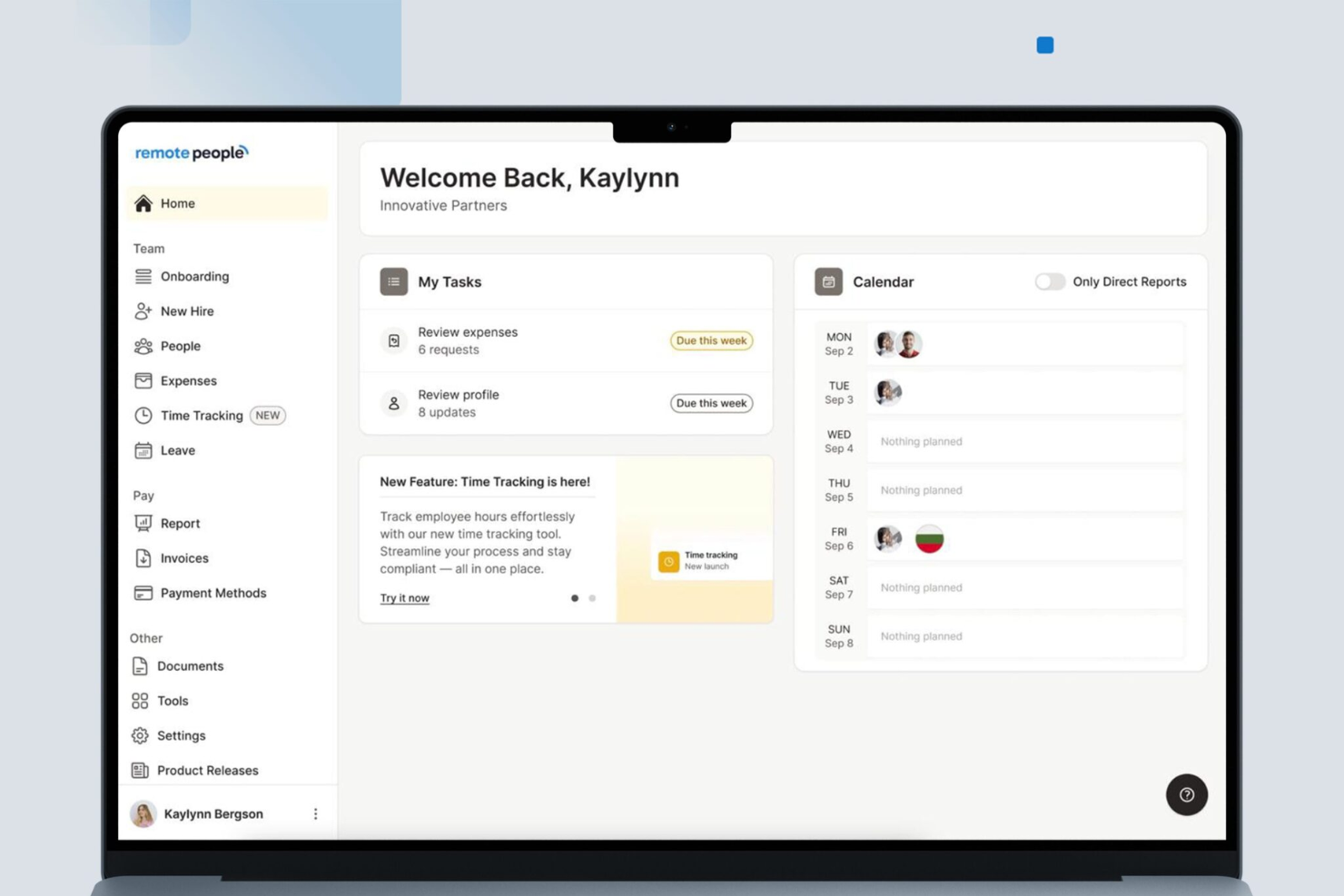
RemotePeople is an EOR platform that handles hiring, onboarding, payroll, and compliance in 150+ countries through its own owned local entities, with built-in recruitment tools for sourcing candidates.
Who Is RemotePeople Best For?
SMEs scaling international headcount on a budget that still need owned-entity compliance and integrated recruitment without managing multiple vendors.
Why I Picked RemotePeople
RemotePeople earns its spot as one of the best on my shortlist because of how it handles payment flexibility without hidden costs. I like that payroll runs in 120+ currencies, with one-click bulk payments and the ability to handle bonuses, adjustments, and last-minute expenses in the same workflow. For Turkey specifically, employees are paid in Turkish lira via local bank transfer, while you fund payroll in your home currency. The capped security deposit model also protects cash flow when you're scaling headcount fast.
RemotePeople Key Features
- Locally compliant employment contracts: Country-specific agreements drafted by in-country counsel and ready for e-signature within 48 hours, including IP and non-compete clauses under local law.
- Global mobility support: Visa sponsorship, work permit processing, and relocation support for eligible countries, managed within the platform.
- Expense management: Submit, approve, and reimburse global expenses in a single workflow, with country-specific tax treatment applied automatically.
- Equity management: Offer compliant stock options and RSUs to international employees, with local tax filings handled on their behalf.
RemotePeople Integrations
RemotePeople offers 70+ native integrations, including Workday, SAP SuccessFactors, Oracle HCM, BambooHR, HiBob, Personio, Rippling, Gusto, Okta, and Microsoft Entra ID, plus additional connectors for tools like Paylocity, Factorial, Lattice, JumpCloud, TriNet, and UKG Pro. An open API is also available for custom integrations.
Pros and Cons
Pros:
- Employment contracts include locally relevant IP and non-compete protections
- Security deposit caps help reduce upfront expansion costs for growing companies
- Recruitment sourcing and EOR management live inside the same platform
Cons:
- Integration ecosystem is smaller than larger enterprise-focused competitors
- Custom reporting views are fairly limited for workforce analysis

Best for budget-conscious remote team expansion
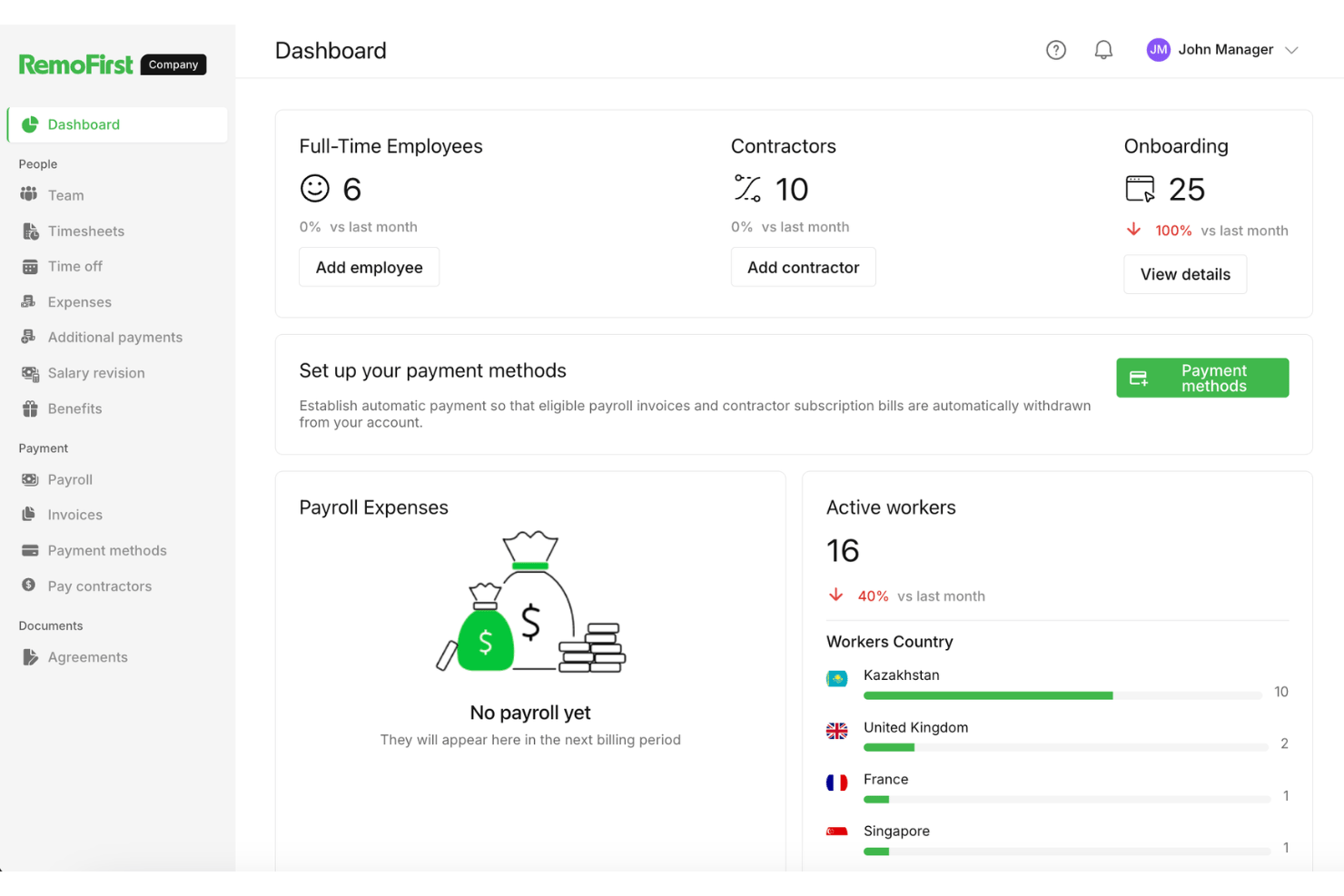
RemoFirst is a global EOR platform that handles employee hiring, payroll, contractor onboarding, and compliance across 180+ countries, including Turkey, without requiring a local entity.
Who Is RemoFirst Best For?
RemoFirst is a natural fit for early-stage startups and small teams hiring their first Turkish employees who need a no-fuss onboarding process without a steep administrative lift.
Why I Picked RemoFirst
I've included RemoFirst in my top picks because it genuinely cuts the complexity out of hiring in Turkey. The platform aggregates your entire global team's payroll into one monthly invoice, so you're not managing separate payments per country. I also like the built-in contractor and full-time employee management in one place, which matters when your Turkish team is a mix of both. The country guide for Turkey lays out every statutory detail, from the 14 public holidays to tiered annual leave, directly in the platform.
RemoFirst Key Features
- Background checks: Run pre-employment background checks on Turkish candidates directly within the platform before finalizing a hire.
- Visa and work permit support: Manages Turkish visa and work permit applications for international employees relocating to Turkey, covering 110+ countries.
- RemoHealth: Provides access to private health insurance for Turkish employees through RemoFirst's built-in health coverage offering.
- Severance and termination management: Calculates statutory severance pay and notice periods based on tenure, in line with Turkish labor law.
RemoFirst Integrations
RemoFirst offers a small set of native integrations, including BambooHR, ADP Workforce Now, and GoCardless for payroll funding. A public API and webhook support are not currently available, so teams using other HRIS or accounting tools should expect manual CSV exports.
Pros and Cons
Pros:
- Payroll funding and invoicing stay simple for small international teams
- Mixed contractor and employee teams can be managed from the same dashboard
- Country guides clearly explain Turkish leave, severance, and termination rules
Cons:
- Reporting and customization options feel basic for larger operations
- Limited native integrations create extra manual HR admin work

Best for compliant hiring under Turkish labor law
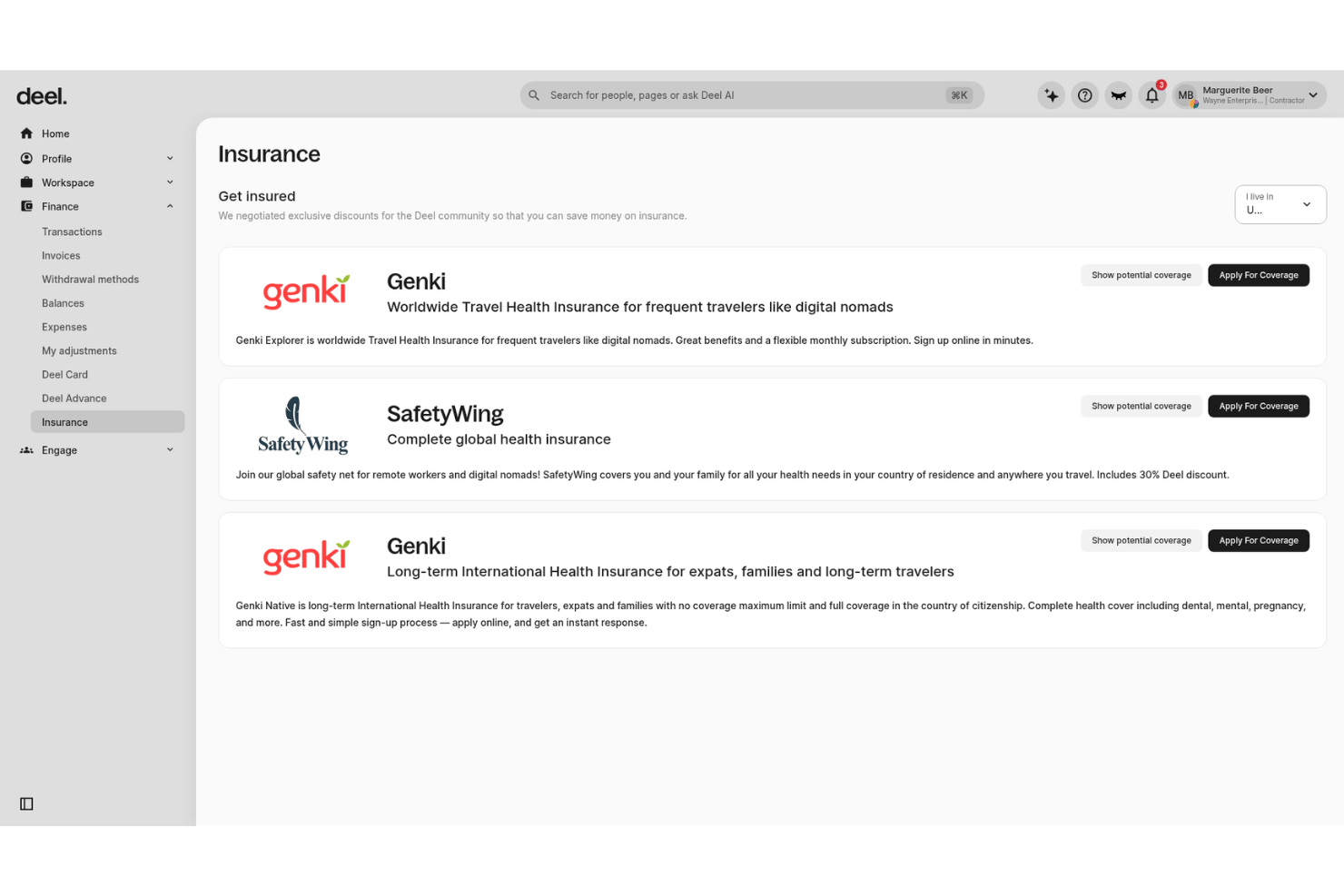
Deel Hire is a global hiring platform that covers EOR (employer of record), contractor management, ATS, talent sourcing, and onboarding—all in one connected system.
Who Is Deel Hire Best For?
Deel Hire is a strong fit for mid-size to enterprise companies hiring across multiple countries who need a single platform to manage global talent end-to-end.
Why I Picked Deel Hire
I've included Deel Hire in my top picks because its built-in compliance layer is what sets it apart for hiring in Turkey. Local contracts auto-generate based on Turkish labor law requirements, and classification checks are embedded at every stage so you're not piecing together legal guidance from separate sources. I also like that Turkey-specific onboarding, payroll, and contracts all live inside the same platform, so there's no handoff between systems when a new hire starts.
Deel Hire Key Features
- Global contractor management: Create compliant contractor contracts in seconds and process payments in 120+ currencies, including crypto.
- Applicant tracking system (ATS): Review applications, manage interviews, and track every candidate through the hiring pipeline in a single system.
- Background screening: Automate new hire background checks and add human-led verification before a candidate starts.
- Equipment provisioning: Order and ship equipment automatically at the point of onboarding so new hires arrive ready to work.
Deel Hire Integrations
Deel offers 68+ integrations through its App Store, including BambooHR, Workday, SAP, NetSuite, Greenhouse, Ashby, Expensify, Xero, QuickBooks, and Slack. It also connects with Zapier and provides an API for custom integrations.
Pros and Cons
Pros:
- Centralized view for EOR, contractors, and recruiting reduces admin switching
- Contractor misclassification checks happen before onboarding is completed
- Turkish employment contracts include probation, notice, and severance clauses by default
Cons:
- Payroll cut-off deadlines are strict and difficult to adjust last minute
- Approval workflows can feel rigid for companies with custom hiring processes

Best for global hiring and compliance
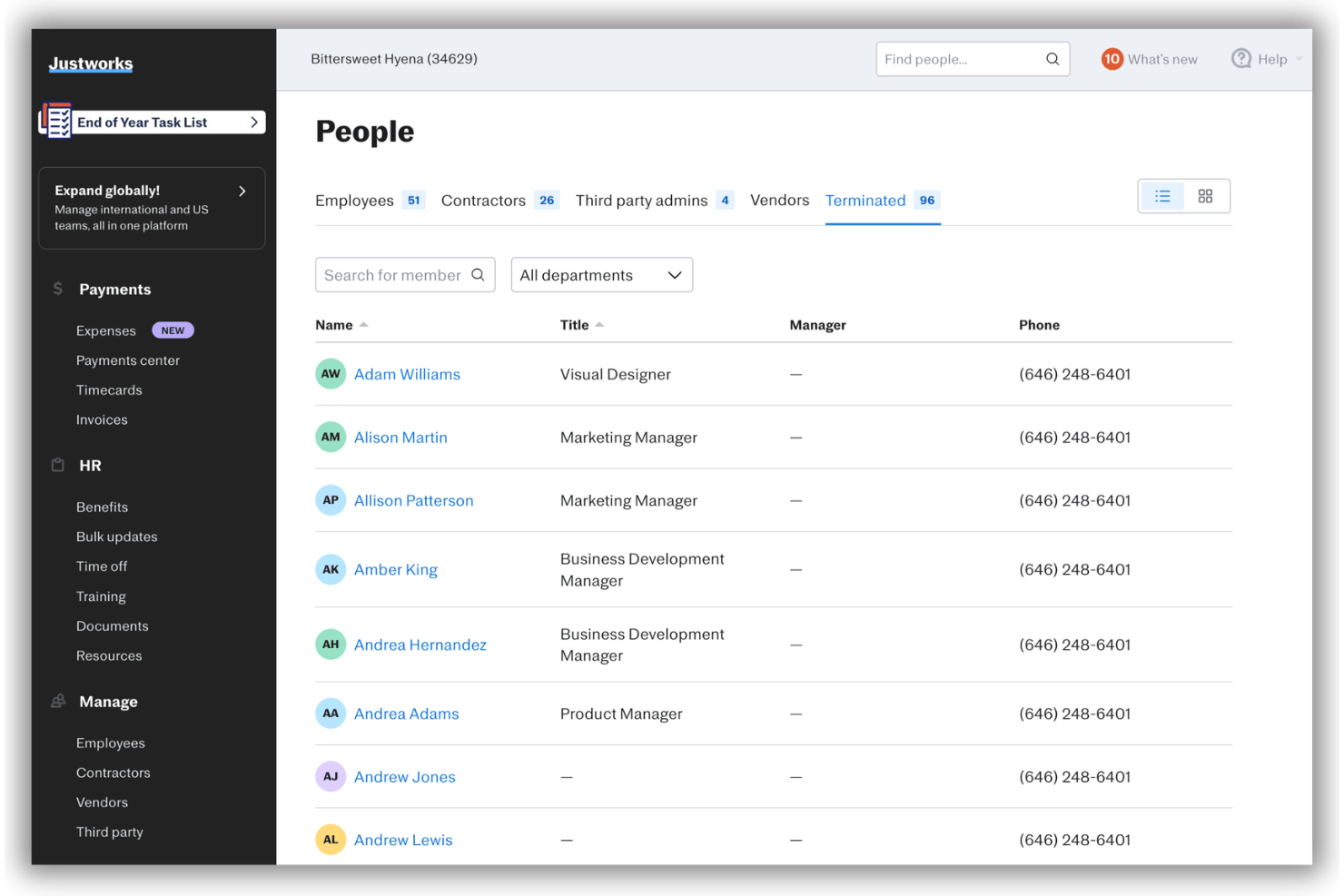
Justworks is an employer of record platform that enables international hiring, payroll, compliance, benefits administration, and time tracking for companies expanding into Turkey.
Who Is Justworks Best For?
Small to midsize companies hiring employees in Turkey who want payroll, benefits, and compliance tools managed in one platform.
Why I Picked Justworks
I picked Justworks as one of the best because I can manage global payroll for Turkish employees while handling benefits enrollment and time tracking as integrated add-ons, all from the same dashboard. The specialized add-ons give me one place to manage HR tasks as my team grows.
Justworks Key Features
- Automated local tax calculations: Calculates and withholds payroll taxes based on Turkish compliance requirements.
- Document storage: Stores employee documents and compliance records securely in the platform.
- Paid time off tracking: Manages and tracks leave for Turkish employees with configurable PTO policies.
- Onboarding workflows: Guides new hires in Turkey through digital agreements and necessary HR forms.
Justworks Integrations
Justworks offers native integrations with QuickBooks, Xero, and Justworks Time. An API is available for custom integrations.
Pros and Cons
Pros:
- 24/7 live customer support
- Payroll and compliance for Turkish employees
- Time tracking and benefits add-ons included
Cons:
- International EOR uses local third-party partners
- Turkish benefits options are limited

Best for quick employee onboarding

Multiplier is a SaaS-based EOR platform that lets you hire, onboard, and pay full-time employees and contractors across 150+ countries, handling employment contracts, multi-currency payroll, and benefits administration without requiring a local entity.
Who Is Multiplier Best For?
Fast-scaling startups and growth-stage companies that need to hire employees in Turkey quickly without getting bogged down in legal entity setup.
Why I Picked Multiplier
I picked Multiplier as one of the best because of how fast it gets a new Turkish hire from offer accepted to fully onboarded. The platform generates locally compliant employment contracts instantly, so there's no waiting on legal teams to draft paperwork. I also like that Multiplier handles SGK (Turkish social security) enrollment and tax registration as part of the onboarding flow, not as a separate manual step. For teams that need someone productive in Turkey within a day, that kind of built-in automation makes a real operational difference.
Multiplier Key Features
- Multi-currency payroll: Run payroll across 120+ currencies, so your Turkish employees can be paid in Turkish lira while you manage costs in your home currency.
- ESOP and benefits administration: Manage equity, health insurance, and local benefits packages for Turkish employees directly within the platform.
- Expense and leave management: Review, approve, and track employee expense claims and leave requests from a single dashboard.
- Contractor management: Onboard and pay freelancers and contractors in Turkey separately from full-time employees, with distinct contracts and payment workflows.
Multiplier Integrations
Multiplier has fewer than 10 native integrations, including popular HRIS and accounting systems like BambooHR, Personio, and QuickBooks. Multiplier also offers native integrations with Workday and HiBob. Additional connections are available through Slack, Xero, NetSuite, Greenhouse, and Expensify, and it connects with Zapier. An API is available for custom integrations.
Pros and Cons
Pros:
- Supports contractors and full-time employees through separate workflows
- Handles SGK registration and tax setup during onboarding automatically
- Turkish hires can move from offer letter to payroll setup very quickly
Cons:
- Some advanced HR workflows still require manual coordination
- Currency rates can sometimes be above average market cost


FMC Group is a Turkey-focused employer of record and market entry consultancy that handles local hiring, payroll, compliance, and HR administration for international companies without a Turkish legal entity.
Who Is FMC Group Best For?
Companies entering the Turkish market for the first time who need localized HR and compliance guidance beyond what a self-serve platform can offer.
Why I Picked FMC Group
I've included FMC Group in my top picks because of how genuinely hands-on their support is in Turkey. Most EOR platforms automate everything and route you through support tickets, but FMC Group assigns a dedicated contact who employees can actually call. They also have physical offices on both the European and Asian sides of Istanbul, which matters when navigating Turkish labor law on the ground. With over 25 years of market experience in Turkey, their team handles everything from SGK compliance to company car arrangements for your employees.
FMC Group Key Features
- Turkish payroll and SGK management: Calculates and processes monthly payroll including income tax deductions and mandatory SGK social security contributions for employers and employees.
- Employment contract preparation: Drafts Turkish-law-compliant employment agreements covering job duties, salary, leave entitlements, and termination terms.
- Leave tracking and reporting: Employees submit leave requests through FMC Group's HR software, with manager approvals tracked and leave balances reported back to the client.
- Expense reimbursement processing: Employees log travel costs and submit receipts through FMC Group's expense management software, with reimbursements processed after client approval.
FMC Group Integrations
FMC Group doesn't have any native integrations. There is no API, and Zapier support is not available. FMC Group operates as a service-based EOR provider rather than a software platform, so connectivity with external HRIS, ATS, or payroll tools is not part of the offering.
Pros and Cons
Pros:
- Istanbul-based presence helps with local documentation and compliance coordination
- Strong understanding of Turkish labor practices beyond payroll administration
- Employees can speak directly with local HR contacts instead of ticket queues
Cons:
- No API or HRIS integrations for syncing workforce data automatically
- Lacks self-service automation found in newer EOR platforms

Best for local compliance management

CXC Global is an EOR service provider that combines in-house local compliance teams with a human-led delivery model to manage payroll, tax filings, employment contracts, and worker classification across 100+ countries.
Who Is CXC Global Best For?
Enterprises and mid-market companies that prioritize compliance precision when hiring in complex or high-risk markets like Turkey.
Why I Picked CXC Global
I've included CXC Global in my top picks because of how seriously it treats compliance as a first principle, not an afterthought. Unlike self-serve EOR platforms that rely on outsourced partners, CXC Global uses in-house local compliance teams and in-country legal experts who track Turkish labor law changes and conduct regular audits of employment practices. I also like that every client gets a dedicated account manager rather than a ticket system, which matters when a compliance question about Turkish social security contributions or termination procedures needs a real answer fast.
CXC Global Key Features
- Worker classification assessment: CXC Global reviews each worker's engagement type to determine whether they should be hired as an employee or independent contractor, reducing misclassification risk under Turkish law.
- Locally tailored employment contracts: Contracts are drafted to align with Turkish legal and cultural standards, covering statutory leave, working hours, and termination procedures.
- Visa and work permit management: CXC Global handles visa applications and work permit filings for workers relocating to or hired within Turkey.
- Customized reporting and insights: Clients get real-time reporting dashboards aligned to their specific workforce metrics, rather than generic out-of-the-box dashboards.
CXC Global Integrations
Native integrations are not clearly documented on CXC Global's website. CXC Global positions itself as compatible with existing HR systems through its partner ecosystem approach, but specific native integration partners and API availability are not publicly listed.
Pros and Cons
Pros:
- Reporting dashboards can be tailored around specific workforce metrics
- Dedicated compliance specialists provide more hands-on support than ticket systems
- In-country legal teams regularly review Turkish labor law and classification risks
Cons:
- Service model is less self-serve than software-first EOR platforms
- Native integrations and API availability are not clearly documented publicly
Mercans
Best for an advanced EOR management platform

Mercans is a global employer of record and payroll platform that manages Turkish employment contracts, SGK contributions, work permits, and multi-country payroll through its proprietary HR Blizz system.
Who Is Mercans Best For?
Mercans is a strong fit for enterprise HR and global mobility teams that need to manage Turkish employment alongside multi-country payroll in a single platform.
Why I Picked Mercans
Mercans earns its spot on my shortlist because its HR Blizz platform consolidates Turkish EOR and multi-country payroll into one database, which means your team manages SGK contributions, income tax filings, and employment contracts across every market without switching systems. I'm particularly drawn to the AI Suite's real-time compliance monitoring, which tracks Turkish statutory changes like the 2026 minimum wage update and alerts you automatically. The G2N Nova payroll engine also runs gross-to-net calculations for Turkey within 72 hours, with built-in anomaly validation to catch errors before payroll closes.
Mercans Key Features
- Work permit and visa sponsorship: Mercans sponsors Turkish work visas and manages permit types, including fixed-term, permanent, and Turquoise Card permits, for foreign nationals.
- SGK incentive management: Mercans handles employer social security discounts and SGK incentives for new graduates, women, disabled employees, and qualifying unemployed workers.
- Employee Self-Serve Portal: Employees complete onboarding digitally through a dedicated portal that includes document validation and criminal record checks under Turkish law.
- HCM integrations: Certified two-way connectors link HR Blizz to Workday, SAP SuccessFactors, Oracle Cloud HCM, UKG, and Dayforce for real-time HR-to-finance data sync.
Mercans Integrations
Mercans offers six certified integrations, including Workday, SAP SuccessFactors, Oracle Cloud HCM, Darwinbox, UKG, and Dayforce. Its two-way API supports custom connections with HR, ERP, and finance systems.
Pros and Cons
Pros:
- SGK incentives and statutory compliance alerts
- Work permit sponsorship and Turquoise Card guidance
- Own Turkish entity and local staff
Cons:
- Platform suits payroll specialists more
- Onboarding often exceeds advertised speed

Remote
Best for competitive benefits packages

Remote is an employer of record platform that owns its legal entity in Turkey and handles local payroll, tax administration, employment contracts, benefits management, and compliance monitoring across 90+ countries.
Who Is Remote Best For?
Remote suits startups and scaling companies that want to hire in Turkey without building local infrastructure, especially when access to competitive, tiered benefits is part of the talent pitch.
Why I Picked Remote
Remote earns its spot on my shortlist because of the depth and flexibility of its benefits packages in Turkey, which stand out in a market where competitive perks genuinely move the needle on hiring. I like that you can layer tiered health plans (Standard through Platinum), life insurance up to $600k, and a mental health platform with therapy in 35+ languages on top of a compliant employment structure. Remote also owns its Turkish legal entity outright, so there's no partner network adding lag or liability between you and local compliance.
Remote Key Features
- Compliance Watchtower: Monitors Turkish labor law changes across wages, leave, contracts, and collective bargaining, then sends alerts with suggested actions.
- Multi-currency salary options: Lets you set and pay Turkish employee salaries in USD, EUR, or GBP for an additional $50/employee/month.
- In-platform contract management: Generates compliant employment contracts for Turkey and supports amendments, employment letters, and resignations directly in the platform.
- Structured termination process: Remote reviews each termination against Turkish labor law and collective bargaining agreements before any action is taken, handling all documentation and final pay.
Remote Integrations
Remote documents integrations with BambooHR, HiBob, Personio, Workday, Greenhouse, Ashby, QuickBooks, Xero, NetSuite, and Okta. It also offers a public API and Zapier connectivity.
Pros and Cons
Pros:
- Reviews terminations against local requirements
- Competitive tiered benefits strengthen talent offers
- Owns Turkey’s legal entity directly
Cons:
- Turkey-specific SGK guidance remains incomplete
- Support responses can take too long

G-P
Best for flexible global payment options
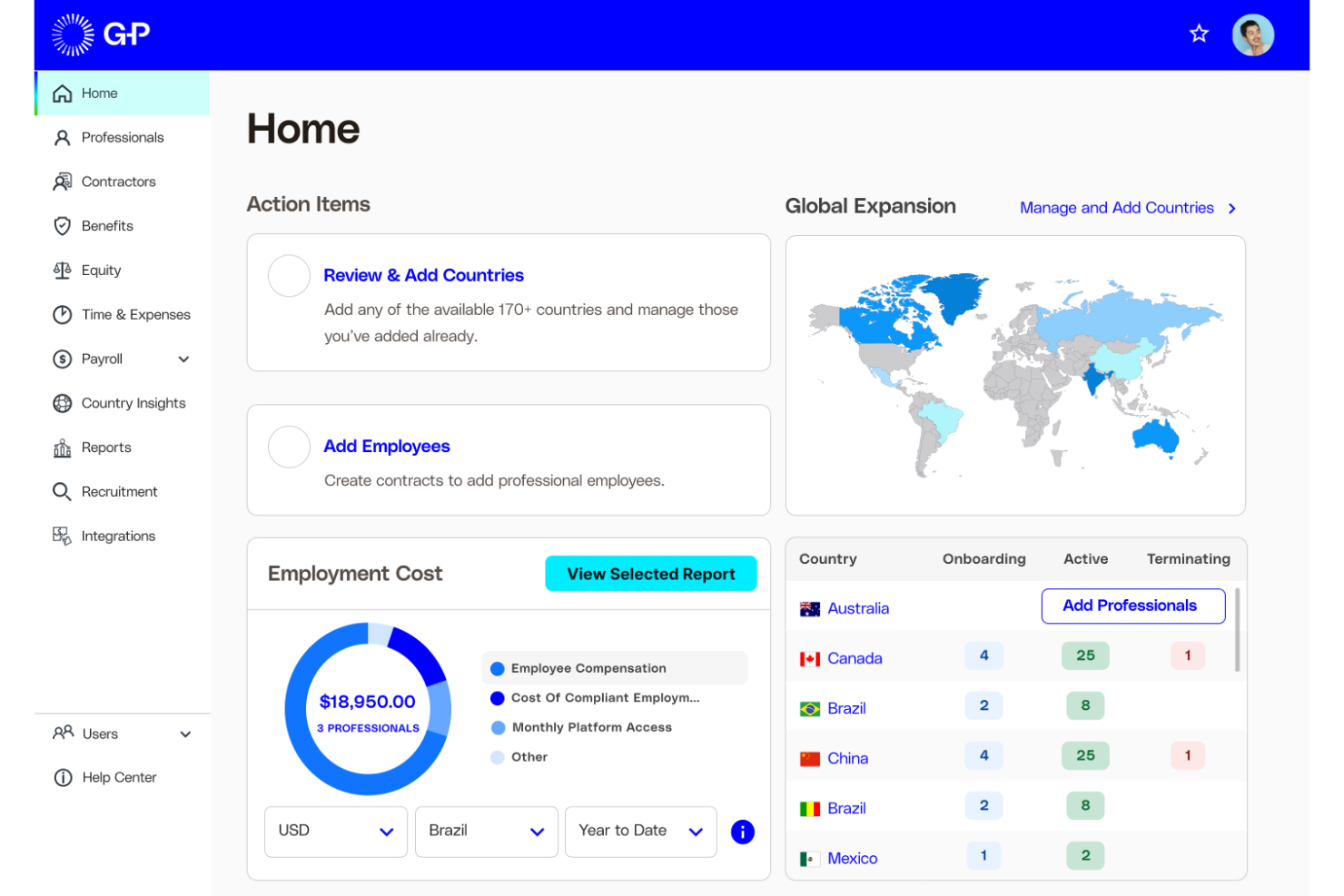
G-P is an AI-powered global EOR platform that lets you hire, onboard, and pay employees in Turkey and 180+ countries without setting up a local legal entity.
Who Is G-P Best For?
Mid-size to enterprise companies that need to hire across multiple countries simultaneously, including Turkey, under a single global EOR platform.
Why I Picked G-P
I picked G-P as one of the best because of how it handles payment flexibility at scale. G-P's EOR platform supports on-time payments in 150 currencies, with self-service access for managing payroll details and handling bonuses, commissions, and exceptions. For companies hiring in Turkey alongside other markets, that currency coverage is a genuine differentiator. The Prime tier also unlocks flexible payment options and bulk payroll changes, which I find especially useful when your Turkish headcount is growing fast. Wise is built directly into G-P Contractor, powering fast global payments with enhanced tracking and visibility into payment status.
G-P Key Features
- G-P Gia™ AI agent: An in-platform AI that generates compliant HR documents, contracts, and offer letters based on 100,000+ vetted articles.
- Employment Contract Generator: Automatically produces locally compliant employment contracts tailored to each country and individual hire in minutes.
- Benefits administration: Manages locally appropriate health insurance and retirement plans for Turkish and global employees directly within the platform.
- G-P Assist: An in-platform AI agent that answers HR and compliance questions on the spot, specific to Turkish and other local labor laws.
G-P Integrations
G-P offers native integrations with ADP TotalSource, ADP Workforce Now, Paylocity, BambooHR, Personio, TriNet, UKG Pro, UKG Ready, Workday, SAP SuccessFactors, HiBob, Microsoft Entra ID, Google Workspace, and Okta/Auth0. A G-P API is also available for custom one-way or bi-directional data syncing with other platforms in your tech stack.
Pros and Cons
Pros:
- Enterprise support teams provide strong guidance on country-specific compliance questions
- AI tools help generate localized HR documentation faster for global teams
- Handles payroll changes, bonuses, and commissions across multiple currencies efficiently
Cons:
- Recruiting and talent sourcing capabilities are limited within the platform
- User interface feels less modern than newer EOR competitors
Other Turkish Employer of Record Services
Here are some other EOR service providers in Turkey that didn’t make it into my top 10 shortlist, but are still worth considering:
- Payoneer Workforce Management
For onboarding and paying Turkish talent
- Native Teams
For localized employee benefits in Turkey
- Papaya Global
For an AI-based payroll engine
- Rivermate
For European companies hiring in Turkey
- Atlas HXM
For direct-entity EOR without a third-party gap
- Rippling
For HR teams scaling globally on one platform
- Oyster
For multi-currency billing with Turkish payroll
- TopSource
For payroll with flat per-employee fees
- Horizons
For flexible contracts with no termination fee
- Gloroots
For small businesses or startups


How I Evaluate Employer of Record in Turkey
I split my evaluation into three parts. First, with the most weight, I look for Turkish-entity employment and compliant contracts, payroll, tax, SGK, and terminations. Second, I consider severance handling and work-permit support; third, I assess local support, onboarding, data security, and pricing value.
Core Functionality (Table Stakes For This List)
When I'm selecting tools for my list, I score each one on a scale from 0 (does not offer the functionality) to 5 (excels in this area) for each core functionality listed below. I then convert the total into a percentage to help assess each tool's overall fit, with extra weight on any functionalities I’ve deemed essential.
- Turkish Entity Employment (Essential): I look for the provider’s Turkish entity to employ workers directly, supporting compliant hiring without the client establishing a local business.
- Turkish Labor Compliance (Essential): I assess contracts, notice periods, severance, and terminations against Turkish employment requirements, including support for changing rules.
- Payroll & Tax Administration: I check payroll calculations, income tax withholding, filings, payment timing, and reporting for employees based in Turkey.
- SGK & Benefits Management: I evaluate SGK registration, contribution handling, and statutory benefits administration from onboarding through termination.
- Contract Generation & Management: I look for customizable Turkish employment contracts, required terms, version control, and updates when local requirements change.
- Multi-Country Platform Support: I assess whether one dashboard manages Turkish employees alongside international teams, with consistent records and country-specific workflows.
Once I have a list of tools that meet the criteria, I consider what sets each platform apart.
Differentiating Factors (What Sets Vendors Apart)
Here's how I compare and contrast different vendors:
Standout Features
Turkish severance obligations accumulate over an employee's entire tenure, so I check whether a provider accurately tracks and calculates those growing liabilities in real time. Getting this wrong can mean surprise costs at termination. I also evaluate work-permit support for foreign nationals, since coordinating visa and residence permit applications through the same provider simplifies expat hiring. Dual e-government filing capability for SGK and tax declarations is another area I look at closely, because missed or late submissions trigger penalties fast.
Beyond Features
I check whether a provider owns its Turkish entity directly or outsources through local partners, since partner models can muddy liability when termination disputes arise. Turkish labor law strongly favors employees in dismissal cases, so I also evaluate how each provider handles termination risk—specifically, whether they offer legal guidance on justified cause documentation and notice period compliance. Data residency matters too; I look for clear KVKK alignment and transparent cross-border transfer practices for sensitive payroll and SGK data.
How to Choose an Employer of Record in Turkey
Here are five key questions to guide your decision:
- What problem are you solving?
Are you struggling to manage compliance with Turkey’s employment laws and tax regulations, or offer competitive health benefits? Whatever the issue, clarifying them upfront is crucial. - Who will manage the EOR relationship?
Think about who on your team will manage the relationship in-house and how will it ease their workload? - What's your budget?
Estimate how many employees you plan to hire in the Turkey. Since most EORs charge a monthly fee per employee, this will help you estimate your costs. - What outcomes matter most?
Are you trying to secure staff strategically located between Europe and Asia to help you tap into new markets? Are you testing the waters before attempting to open a legal entity? Being clear on your desired outcomes upfront is crucial to avoid wasting valuable time. - Will it work with your HR systems?
Make sure the EOR’s platform integrates with your current HR tools and won’t create data silos or extra admin work.
Remember, every business is different, so don’t just go with the most well-known name — go with the service that meets your needs.

What is an Employer of Record in Turkey?
An Employer of Record (EOR) in Turkey is a third-party provider that legally hires and manages employees on your behalf, so you don’t have to set up a local entity. While you direct the day-to-day work, the EOR handles everything else: onboarding, payroll, taxes, benefits, and full compliance with Turkish labor laws.
It’s a smart solution for companies looking to hire talent or expand into Turkey without getting bogged down in legal complexity. By partnering with a Turkish EOR, you can focus on growing your team while they take care of the local requirements.
Key Employer of Record Services
An Employer of Record (EOR) simplifies hiring and compliance in Turkey by managing payroll, tax obligations, and labor laws. Key services include:
- Payroll in TRY: Ensures accurate salary payments in compliance with Turkish labor laws, including the Turkish Labor Law (4857), covering wage rates, overtime, and record-keeping to prevent penalties from labor authorities like the Social Security Institution (SGK).
- Tax Compliance and Social Security Contributions: Handles income tax (Gelir Vergisi) and mandatory social security contributions such as pension, health insurance, and unemployment insurance, ensuring adherence to the Turkish Revenue Administration (Gelir İdaresi Başkanlığı, GIB) and the Social Security system.
- Labor Law Compliance: Provides expertise on Turkish labor regulations, including working hours, overtime, paid leave, and termination procedures as outlined in Turkish labor laws and collective bargaining agreements, reducing legal risks and ensuring employment law compliance. This ensures compliance with regional, national, and international workforce laws and conventions.
- Talent Acquisition and Background Checks: Conducts industry-specific credential verification and background checks to ensure new hires meet Turkish legal standards and professional certification requirements.
- Visa and Work Permits: Assists with securing the necessary work permits and residency for non-Turkish employees, ensuring compliance with the Ministry of Labor and Social Security (Çalışma ve Sosyal Güvenlik Bakanlığı) and Turkish immigration laws.
- Onboarding and Offboarding: Manages compliant onboarding and terminations in line with Turkish labor laws, including notice periods, severance payments, and legal termination processes to reduce the risk of disputes.
- Benefits Administration: Provides competitive benefits packages, including health insurance, pension contributions, meal allowances, and transportation subsidies, tailored to the Turkish labor market.
- HR Support: Offers ongoing consultation on Turkish employment laws, workplace safety regulations, and compliance with mandatory employee-related documentation, including payroll records and Social Security filings.
- Risk Management and Insurance: Oversees workers' compensation and ensures compliance with local insurance requirements, including occupational accident insurance, to mitigate legal and financial risks.
- Multi-Language Support: Facilitates communication with Turkey’s diverse workforce through translation and localization of employment contracts, legal documents, and HR materials.
As you can see, EOR service providers offer a full set of comprehensive services to help businesses expand their operations globally without the burden of navigating international employment laws and practices on their own. By securing an EOR partner to cover these critical services, you'll gain peace of mind, and more time to concentrate on your core business objectives.
AI Features of Employer of Record Services in Turkey
AI is still an emerging layer in EOR platforms and is not yet standard across all providers in Turkey. Most EOR solutions rely on automation, structured workflows, and local expertise to manage Turkish labor law, payroll, and compliance requirements.
That said, AI is beginning to support efficiency in managing Turkey’s administrative and compliance-heavy employment processes. Below are the most relevant capabilities and where they add value:
- Automated contract generation: Uses localized templates aligned with Turkish employment requirements, sometimes enhanced with AI, to create compliant agreements and reduce manual drafting.
- Compliance monitoring support: Tracks updates to labor regulations, tax requirements, and social security obligations, helping HR teams stay informed—typically validated by local experts.
- Payroll anomaly flagging: Identifies inconsistencies in payroll data, including errors in tax calculations, social security deductions, or benefit payments.
- Workflow automation for onboarding: Guides employees through onboarding steps such as document collection, payroll setup, and statutory registration requirements.
- Document organization and tagging: Helps manage employment contracts, payslips, and compliance records with structured storage and smart categorization.
- Workforce reporting and insights: Provides visibility into payroll costs, headcount, and workforce trends in Turkey to support planning and budgeting.
- Chat-based support tools: Offers automated responses to common HR and payroll questions, helping teams navigate Turkey-specific processes more efficiently.
Benefits of an Employer of Record Service
EOR services are a smart option for organizations looking to expand their global footprint without the complexities of managing international employment laws.
Here are several EOR benefits you can expect to gain:
- Quick Market Entry: For organizations aiming to test new markets or hire talent in new countries where they have no legal presence, an EOR offers a swift and efficient solution to initiate operations, saving time and resources.
- Simplified Global Payroll: Using an EOR service simplifies the complex process of managing international payroll, including tax deductions, withholdings, and currency conversions for your employees worldwide.
- Global Compliance & Risk Mitigation: By managing compliance, an EOR service provides expertise in navigating the intricacies of employment laws, tax regulations, and insurance requirements in multiple jurisdictions, helping businesses safeguard their operations against compliance-related risks.
- Enhanced Benefits Negotiation: By leveraging their extensive networks and purchasing power, EORs can negotiate better international insurance rates and secure competitive benefit packages on your behalf, enhancing your ability to attract and retain top talent worldwide.
- Improved Cost Effectiveness: Using an EOR service is a cost-effective way for businesses to enter new markets, compared to the significant costs of establishing a new foreign entity. The latter option involves significant upfront legal fees, plus other costs related to office infrastructure, staffing, and local benefits and insurance coverage.
Understanding the benefits of an EOR service is crucial for strategic planning and operational efficiency. As businesses look towards international markets for growth opportunities, partnering with an EOR provider offers a streamlined, cost-effective, and compliant pathway to global expansion.
Costs & Pricing for Employer of Record Services
Typically, the cost of an EOR service follows a fee per-employee, per-month pricing model, which can vary widely depending on a range of factors. This model allows for scalability and predictability in budgeting for international expansion efforts.
In general, EOR services in Turkey cost between $599 to $1,500 per employee, per month.
Key factors that can influence the pricing of an employer of record service include:
- Geographic Location: Costs can vary significantly based on the country or countries you're hiring in. This is due to local economic conditions, labor laws, and the complexity of compliance requirements.
- Employee Seniority and Role Complexity: The level and nature of the roles being filled can also impact the monthly cost. Senior positions or roles requiring special qualifications may increase the price due to higher benefits and compensation management costs.
- Custom Requirements: Any specific needs beyond the standard service offering may also contribute to the monthly cost. This may include customized solutions for recruitment, specialized employee onboarding, or unique compliance requirements, all of which can affect pricing.
- Number of Employees: The total number of employees being managed can also impact the cost. In some cases, higher volumes may lead to volume discounts, making per-employee costs more economical.

Some EORs also operate under different pricing models, including a percentage of employee salary model, a fixed pricing model, and custom pricing models.
Plan Comparison Table for Employer Of Record In Turkey
| Plan Type | Average Price | Common Features |
|---|---|---|
| Free Plan | $0 | Access to limited educational resources, basic inquiry support, and general market information. |
| Personal Plan | $200-$400/employee/month | Standard payroll processing, employment contract management, statutory benefits administration, and compliance support. |
| Business Plan | $400-$700/employee/month | Custom HR documentation, onboarding assistance, tax filings, advanced reporting, and employee helpdesk services. |
| Enterprise Plan | $700-$1200/employee/month | Dedicated account management, complex compliance monitoring, visa and relocation assistance, and tailored reporting options. |
When considering an EOR service, it is crucial to understand how these factors impact the overall cost to ensure that the service aligns with your business's needs and budget constraints. Anticipating the specific requirements of your international expansion strategy will help you choose the most cost-effective and efficient EOR solution for your needs.
Why Use an Employer of Record Service in Turkey?
Turkey is a "high-compliance" market. The complexity of local labor laws—combined with 2026’s updated tax incentives—makes an EOR the preferred choice for foreign firms.
- Navigating Law No. 7566: This 2026 legislation increased the employer’s share of social security and reduced previous Treasury incentives. An EOR manages these fluctuating rates so your budget stays predictable.
- Currency & Inflation Protection: Turkish Lira (TRY) volatility remains a factor. EORs often help structure "hard-currency pegged" contracts (USD/EUR) to ensure your employees' purchasing power is protected while remaining compliant with local payment laws.
- SGK Complexity: Registering an employee with the SGK is a precise, daily requirement. Mistakes in these filings can lead to "Stop-Loss" penalties that are difficult to reverse for a foreign entity.
Deciding Between an EOR and a Legal Entity in Turkey
Unless you are planning a massive call center or a local manufacturing plant, the Limited Şirket (Ltd. Şti.) or Anonim Şirket (A.Ş.) setup is often more burden than benefit for distributed teams.
| Criteria | Employer of Record (EOR) | Local Legal Entity (Ltd. Şti. / A.Ş.) |
|---|---|---|
| Setup Time | 2–5 Business Days | 6–10 Weeks |
| Upfront Capital | None | TRY 50,000+ (Statutory minimums) |
| Admin Burden | Zero (Managed by EOR) | High (Mandatory local accountant & e-fatura) |
| SGK Compliance | Automated by EOR | Fully Yours (Daily filings required) |
| Work Permits | Handled via EOR (5:1 ratio) | You must hire 5 Turks for every 1 expat |
| Best For | 1–25 employees; Tech/SaaS | Large local operations; High headcount |
EOR vs. Permanent Establishment in Turkey
Turkey’s tax authorities are increasingly aggressive about Permanent Establishment (PE). If your Turkish staff is negotiating contracts or performing core revenue-generating tasks, the government may claim your global company has a "fixed place of business" in Turkey, triggering local corporate tax on global revenue.
How EORs Protect From Permanent Establishment Risk
- Legal Separation: The employee is legally contracted to the EOR’s Turkish entity. The EOR holds the Turkish Trade Registry and the SGK employer file.
- Service-Based Relationship: Your agreement is structured as a service procurement, keeping the foreign parent company’s name off local payroll and tax records.
- Local Tax Remittance: The EOR handles all Corporate Income Tax (25%) and VAT (20%) obligations domestically, satisfying the Turkish Revenue Administration without your entity needing to register.
Hiring in Turkey: Important Details
Here are some key details to note if this is your first time hiring staff located in Turkey. Your EOR provider will manage these compliance details on your behalf. However, proactively informing yourself of these details is always recommended before you invest your resources into sourcing staff based in Turkey.
In Turkey:
- Employment laws in Turkey are set by the Ministry of Labor and Social Security, along with regulations from the Turkish Labor Law (Law No. 4857), which governs employment practices in the country.
- You can hire employees (full-time, part-time, temporary, seasonal, or on-call) or contractors, in certain situations. Your Turkish EOR provider can help you determine the best hiring option depending on your needs while helping you prevent employee misclassification issues.
- Turkey has both mandatory payroll deductions and other employment or social security contributions that must be collected, including the following:
- Social Security Premiums (SGK),
- Income Tax,
- Unemployment Insurance (İşsizlik Sigortası), and
- Stamp Tax.
- Turkish is the official language in Turkey. However, other languages are spoken in different regions, including Kurdish, Arabic, Zaza, and English.
- The standard working week in Turkey is 45 hours per week spread over a 6-day work week (7.5 hours per day), or spread over 5 days (9 hours per day).
- Overtime is allowed under the Turkish Labor Law (Law No. 4857) and is calculated at 1.5 times the regular hourly rate for weekdays and 2 times the regular rate if worked on weekends or public holidays.
- The maximum overtime permitted is 270 hours per year and employees cannot work more than 11 hours in one day.
- In Turkey, employees are paid monthly, typically at the end of each month. There is no legal requirement for a 13th or 14th-month payment system.
- Paid vacation in Turkey starts at 14 days of annual leave per year for employees who have worked between 1 and 5 years. It increases to 20 days for those with 5 to 15 years of service and 26 days for those with over 15 years of service.
- There are 9 national public holidays (spread over 15.5 days) plus several regional holidays that are celebrated in Turkey which employees are paid for. Understanding and complying with employment norms and legal requirements surrounding Turkish public holidays is one area where your EOR service will shine, managing these occurrences hassle-free on your behalf.
- National public holidays in Turkey include:
- New Year's Day (January 1)
- Ramadan Feast (Eid al-Fitr) (variable dates in April, 3.5 days long)
- National Sovereignty and Children's Day (April 23)
- Labor and Solidarity Day (May 1)
- Commemoration of Atatürk, Youth and Sports Day (May 19)
- Feast of Sacrifice (Eid al-Adha) (variable dates in June, 4.5 days long)
- Democracy and National Unity Day (July 15)
- Victory Day (August 30)
- Republic Day (October 28 & 29, 1.5 days long)
- Turkey offers maternity leave and paternity leave.
- The maternity leave entitlement is 16 weeks (8 weeks before the birth and 8 weeks after).
- The paternity leave entitlement for fathers is 5 days.
- During these leaves, employees receive their full salary payments from Turkey’s Social Security Institution.
- Paid sick leave in Turkey is 5 days. After 3 consecutive days of illness, employees can receive salary reimbursement from Turkey’s Social Security Institution.
- The probationary period in Turkey is up to 2 months, but it can be extended to 4 months if specified in a collective bargaining agreement.
- The termination terms in Turkey are mandated by the Turkish Labor Law (Law No. 4857). The required notice period varies between 2 to 8 weeks based on the employee’s length of service. This is another area where a local Turkish EOR can provide assistance to ensure the probation period and related severance are handled correctly.
- Severance pay is offered and typically calculated as one month’s gross salary for each year of service.
Tax Overview for Employers in Turkey (2026)
The employer's statutory load in Turkey is significant, primarily driven by the Law No. 7566 updates which took effect on January 1, 2026.
| Contribution Branch | Rate (%) | Notes |
|---|---|---|
| Social Security (SGK) | 18.75% | Includes the new 12% MYO rate for 2026. |
| Unemployment Fund | 2.0% | Paid by employer. |
| Work Accident Insurance | ~2.0% | Varies by industry risk. |
| Stamp Tax (Damga Vergisi) | 0.759% | Calculated on the gross salary. |
| Total Statutory Load | ~22% – 24% | After applying standard incentives. |
Note: 2026 Incentive Cut: The "Non-Manufacturing" Treasury discount was halved in 2026 from 4 percentage points down to 2 points. This is already reflected in the ~22% total above.
Total Cost of Employment in Turkey: The 2026 Super-Gross
Budgeting in Turkey requires understanding the "Super-Gross" (Total Cost to Employer). In 2026, the SGK Ceiling has been raised to 9x the minimum wage (approx. TRY 297,270), meaning you will pay full social security on much higher salaries than in previous years.
Fully Loaded Cost Illustration
Assuming we are looking at a Senior Software Engineer in 2026 (~$2,800 USD):
| Item | Monthly Amount (TRY) |
|---|---|
| Gross Monthly Salary | 100,000.00 |
| Employer SGK Burden (~20.75%) | 20,750.00 |
| Unemployment Insurance (2%) | 2,000.00 |
| Stamp Tax (0.759%) | 759.00 |
| EOR Management Fee (Typical) | 18,000.00 |
| TOTAL MONTHLY COST | 141,509.00 TRY |
Note: Severance Accrual: In Turkey, you must pay severance (Kıdem Tazminatı) of one month's gross salary per year of service upon termination. Most EORs will include a small monthly "accrual fee" in your invoice to ensure this is funded when the employee eventually leaves.
Market Details for Hiring in Turkey
- Capital City: Ankara
- Currency: Turkish Lira (TRY)
- Payroll Frequency: Monthly
- Official Language: Turkish
- Approx. Population: 85.3 Million
- Public Holidays: 9 holidays spread over 15.5 days
Why Hire Employees in Turkey?
Turkey is strategically located at the crossroads of Europe and Asia, making it a prime location for companies looking to tap into a diverse talent pool.
The country has a strong educational system that produces skilled workers, in fields like engineering, technology, and manufacturing. Additionally, the country has a strong tradition in textiles, automotive, and aerospace industries, making it an attractive location for companies in these sectors seeking specialized skills.
Turkey’s cost of labor is relatively lower than in Western Europe and North America, providing companies with the opportunity to reduce operational costs while still accessing top-tier talent. Moreover, Turkey's young, dynamic, and multilingual workforce adds to its appeal, particularly for companies targeting emerging markets in the Middle East and Europe.
All these factors make Turkey an attractive market for international companies looking to hire remote talent.
FAQs about EOR Services in Turkey
If you’ve got specific questions about the requirements to hire Turkish employees or how EOR services work, these answers to frequently asked questions are a good place to start:
How does an EOR handle IP transfer upon termination?
In Turkey, an Employer of Record (EOR) typically defines intellectual property (IP) ownership at the start of employment to avoid disputes later on. IP created as part of an employee’s role can be assigned to the employer or client company, but clear contractual language is important to confirm ownership. Upon termination, the EOR helps ensure those rights are upheld by completing any required documentation and coordinating the return of work-related materials.
What are the minimum wage requirements in Turkey?
As of 2024, the minimum wage in Turkey is 20,002.50 TRY gross per month, which translates to approximately 17,002.12 TRY net per month after deductions. This minimum wage applies to all workers in the country, regardless of their industry or occupation. The minimum wage is reviewed annually by the government, and adjustments are made based on inflation and the cost of living.
The gross minimum wage includes various mandatory deductions, such as income tax, social security contributions, and unemployment insurance. These deductions account for the difference between the gross and net amounts that employees receive.
For the most accurate and up-to-date information, consult local government sources or work directly with an employer of record in Turkey.
Do EOR providers offer other types of global HR services?
Yes, many EOR service providers also offer professional employer organization services (also known as PEO services), as well as international payroll services.
PEO services, offered by PEO companies, are a popular partner for HR outsourcing. They can help you with international compliance issues, benefits administration, workers’ compensation, and other HR administrative tasks.
What are some of the consequences of non-compliance?
Hiring internationally without following local labor laws can open your business up to serious risks. Depending on the country and severity of the violation, you could face:
-
Fines and penalties for breaching employment or tax laws
-
Legal action, including lawsuits or government investigations
-
Forced corrective measures or compliance orders
-
Revoked licenses or permits to operate in that country
-
Reputational damage—loss of trust from the public and your own team
-
Ongoing scrutiny from government agencies and regulators
Because labor laws vary so much by country, even unintentional missteps can have consequences. That’s why EOR services are so valuable—they help you stay compliant and reduce your legal exposure from day one.
Are there any risks to using an Employer of Record service?
While EOR services simplify international hiring and reduce legal risk, no solution is entirely risk-free. Here are a few things to keep in mind as you evaluate potential partners:
-
Hidden fees for onboarding, offboarding, or extra HR services
-
Mandatory benefit costs that may go beyond base salary
-
Currency fluctuations that can affect payroll expenses
-
Data security concerns if the provider lacks strong safeguards or compliance certifications
-
Less control over day-to-day workforce processes
-
Reputational risk if the EOR mishandles employee relations or compliance
Choosing a reputable, transparent EOR partner can help you mitigate most of these risks while still gaining the flexibility and speed you need to grow globally.
This content is provided for general informational purposes only and does not constitute legal, tax, or other professional advice. It may not be complete, accurate, or current, and laws and practices may change without notice and vary by jurisdiction. You should not act on this information without obtaining advice from qualified legal or tax counsel in the relevant jurisdiction regarding your specific circumstances.