

10 Best PEO in India in 2026

Best PEOs in India Shortlist


A PEO in India is a professional employer organization that helps you hire, pay, and support your Indian team while managing payroll, compliance, and HR administration—no local entity needed. If you’re building or scaling your workforce in India, you know how tangled tax rules, labor laws, and onboarding logistics can get.
This guide compares the best PEO and EOR providers for 2026, focusing on what actually matters to HR teams and business leaders: compliance, payroll accuracy, and practical local support. Use this shortlist to confidently pick a partner who makes hiring in India simpler and less risky—whether you have a local entity or need a true end-to-end employment solution.
Why Trust Our Software Recommendations
Our team has been testing and reviewing software since 2012. As HR experts ourselves, we know how difficult—and important—it is to choose the right software.
For this guide, we evaluated tools using hands-on testing and independent research, scoring tools using our selection criteria. We also draw on insights from industry thought leaders and practicing HR experts.
Our reviews reflect our human editorial judgment, not a sales pitch.
Expert reviewers:
PEOs in India Comparison Table
Compare pricing and specs, side by side, for the PEOs in India that made it onto my shortlist.
| Tool | Best For | Trial Info | Price | ||
|---|---|---|---|---|---|
| 1 | Best for India hiring backed by owned local offices | Free demo available | From $319/user/month | Website | |
| 2 | Best for direct-entity India EOR with white-glove HR | Free demo available | From $599/user/month | Website | |
| 3 | Best for India EOR with misclassification cover | Free demo available | From $699/employee/month | Website | |
| 4 | Best for multi-country teams hiring in India | Free demo available | Pricing upon request | Website | |
| 5 | Best for Workday-connected India hiring | Free demo available | From $599/employee/month | Website | |
| 6 | Best for onboarding India hires without an entity | Free demo available | From $599/user/month | Website | |
| 7 | Best for hiring in India without an entity | Free demo available | From $99/employee/month | Website | |
| 8 | Best for scaling India GCC teams without an entity | Free demo available | From $199/user/month | Website | |
| 9 | Best for India-only hiring with IT setup included | Free demo available | From $99/user/month | Website | |
| 10 | Best for multi-state India payroll via owned entity | Free demo available | From $125/employee/month | Website |


PEOs in India Reviews
Below are my detailed summaries of the best PEOs in India that made it onto my shortlist. My reviews offer a detailed look at the features, capabilities, and best use cases of each platform to help you find the best one for you.

Best for India hiring backed by owned local offices
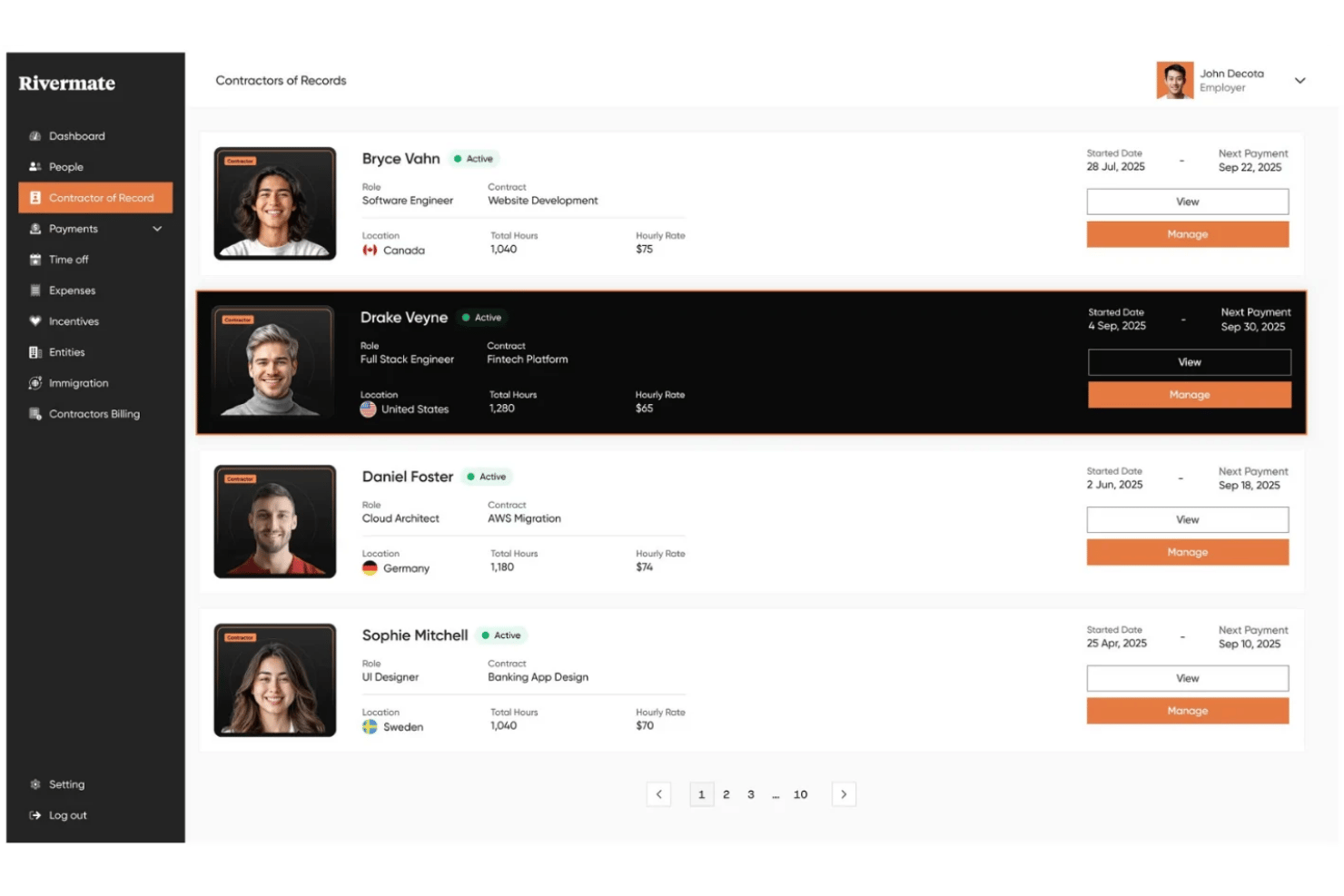
Rivermate is a global employer of record platform that covers 180+ countries and handles India-specific payroll in INR, statutory compliance (PF, ESI, TDS, gratuity), benefits administration, and contractor-to-employee conversion through its own in-country India infrastructure.
Who Is Rivermate Best For?
Rivermate is a strong fit for global companies hiring in India who want the compliance confidence of an EOR with owned, in-country offices rather than a partner-dependent model.
Why I Picked Rivermate
I picked Rivermate as one of the best because its June 2026 acquisition of Remunance gives it something most EOR providers can't claim: eight physical India offices with in-house legal, HR, and finance teams on the ground. That owned-entity model means statutory compliance across PF, ESI, TDS, and gratuity is handled by people embedded in the Indian market, not routed through a third-party partner. I also like that contractor-to-employee conversion is built directly into the platform, which matters when misclassification risk under Indian labor law is a real concern.
Rivermate Key Features
- INR payroll processing: Rivermate runs monthly payroll in INR with full CTC structure support, including basic salary, HRA, DA, variable pay, and automated statutory deductions.
- Visa and immigration support: Rivermate manages work permit eligibility assessments, application preparation, and renewals for expatriate workers relocating to India.
- Contractor of Record (COR) product: A dedicated COR service engages independent contractors in India compliantly, with Rivermate assuming the associated compliance liability.
- Multi-channel client support: Access your dedicated account manager and India-based HR and legal teams via Slack, WhatsApp, email, or phone across time zones.
Rivermate Integrations
Native integrations with HRIS and accounting platforms are not clearly documented. Rivermate provides API access for custom integrations and supports client communication through Slack and WhatsApp.
Pros and Cons
Pros:
- Built-in contractor-to-employee conversion support
- Handles all Indian statutory compliance directly
- Fully owned India offices and in-house team
Cons:
- Reporting and analytics features are basic
- No native HRIS or ERP integrations

Best for direct-entity India EOR with white-glove HR
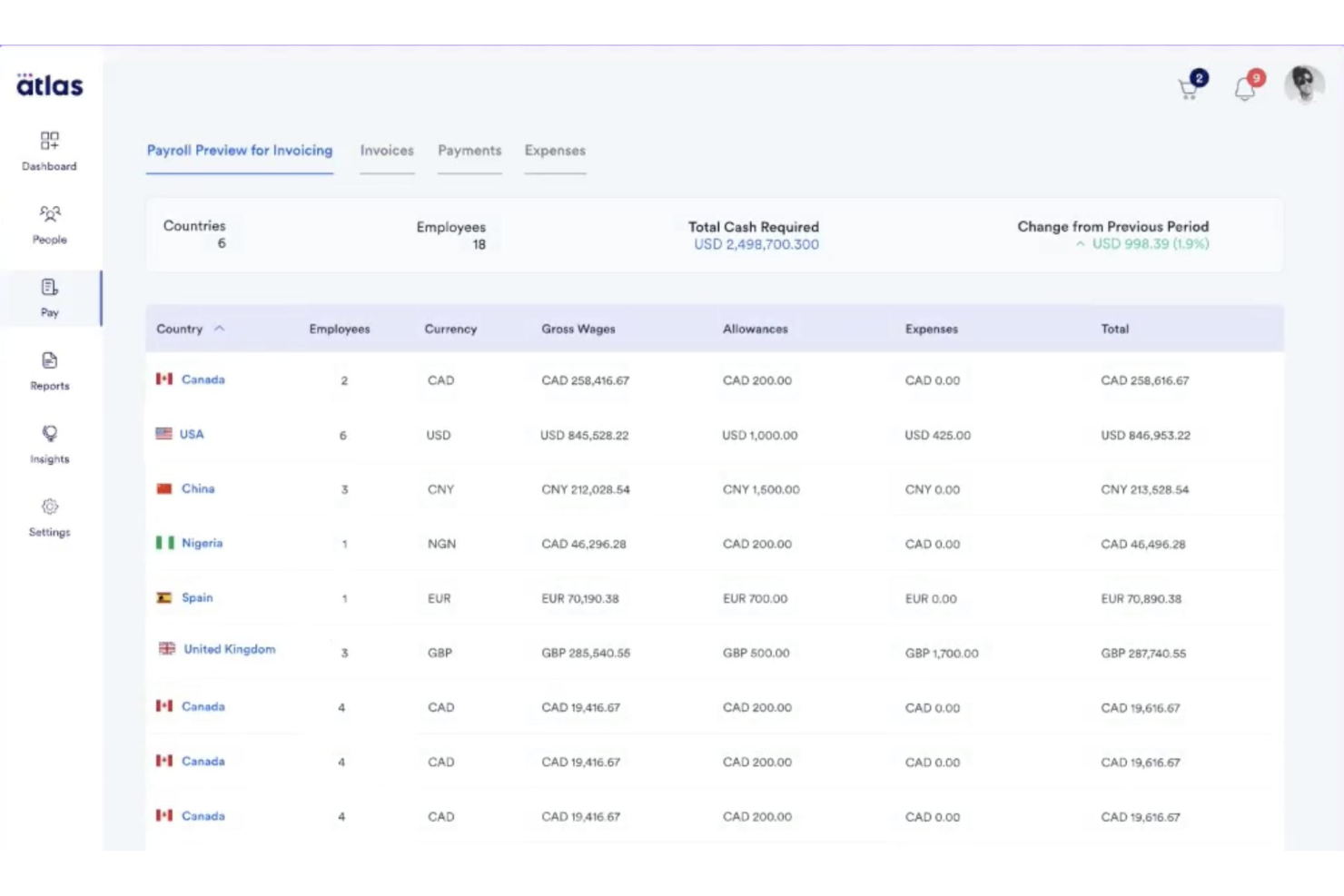
Atlas HXM is a direct employer of record service that uses its own wholly-owned Indian legal entity to hire, pay, and manage employees in India on your behalf, covering payroll, statutory compliance, benefits administration, and contractor management.
Who Is Atlas HXM Best For?
Atlas HXM is a strong fit for enterprise HR teams and global expansion managers who need a fully owned, direct-entity EOR in India with dedicated HR support for each hire.
Why I Picked Atlas HXM
Atlas HXM earns its spot on my shortlist because it operates a wholly-owned legal entity in India, meaning it employs your workers directly rather than routing them through a third-party partner. I particularly like that each hire gets a dedicated HR Employee Relationship Consultant, which gives you a real point of contact for navigating India-specific compliance like EPF, ESI, and TDS filings. That direct-entity model also means onboarding can move in as little as three to five business days.
Atlas HXM Key Features
- Statutory benefits administration: Atlas HXM handles EPF, ESI, gratuity, and statutory bonus calculations and filings for all Indian employees.
- Agent of Record (AOR) service: Engage and manage independent contractors in India with built-in worker classification assessments and quarterly misclassification checks.
- Employee self-service mobile app: Indian employees can access payslips, Form 16, leave requests, and expense claims directly from iOS or Android devices.
- Enterprise HRIS integrations: Connect Atlas HXM with Workday, SAP SuccessFactors, BambooHR, and UKG via native integrations or SSO through Okta, Microsoft, or Google.
Atlas HXM Integrations
Atlas HXM supports integrations with Workday, SAP SuccessFactors, BambooHR, and UKG, plus SSO through Okta, Microsoft, and Google. An API is available for custom integrations.
Pros and Cons
Pros:
- Comprehensive statutory and supplemental benefits
- White-glove HR support for each hire
- Direct entity ownership for Indian compliance
Cons:
- Contractor management features are less advanced
- Interface complexity can slow onboarding tasks

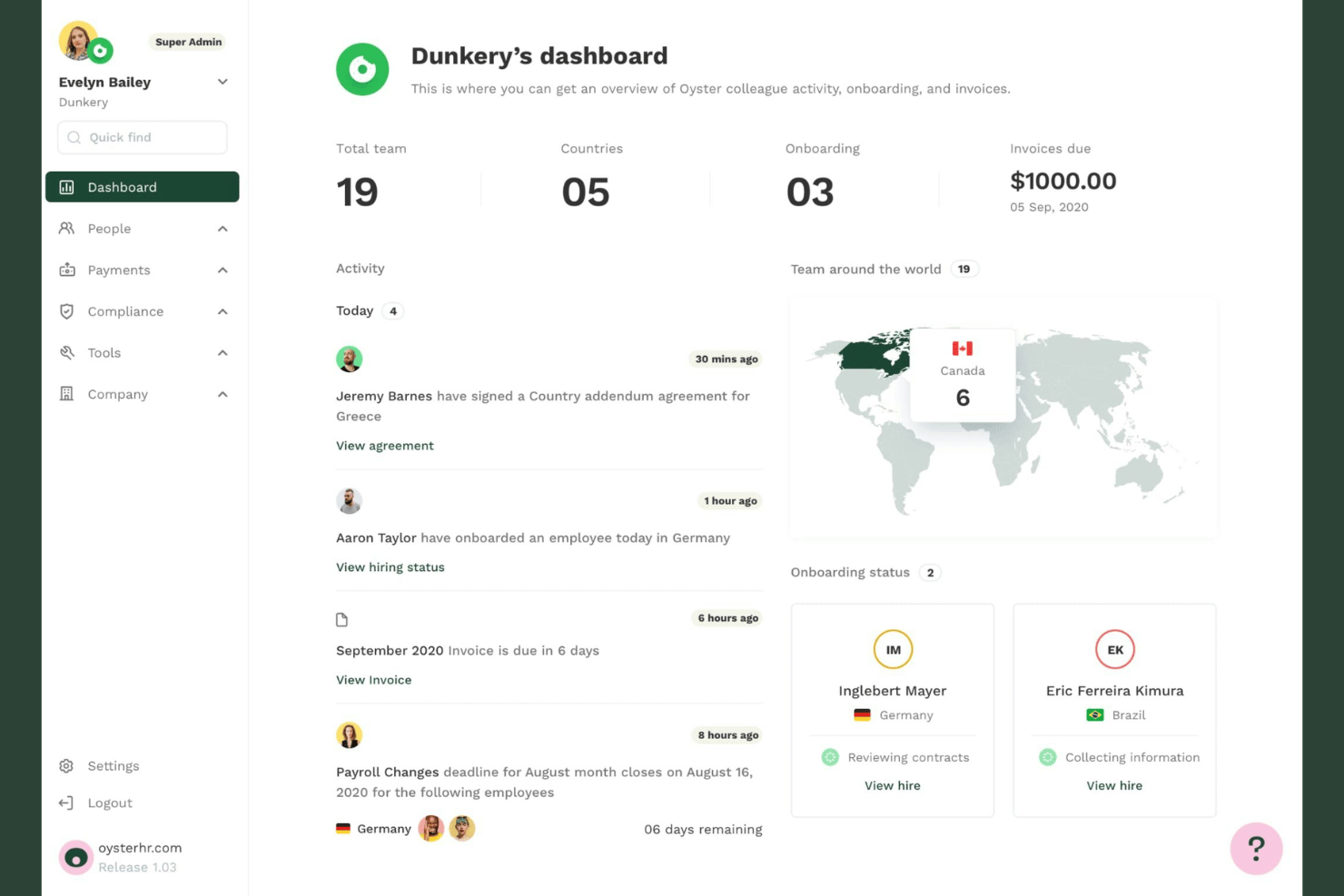
Oyster is a global employer of record platform that lets you hire, pay, and manage full-time employees in India without a local entity, covering INR payroll, statutory filings (EPF, ESI, TDS, gratuity), compliant contracts, and benefits administration.
Who Is Oyster Best For?
Oyster is a strong fit for tech companies and impact-driven organizations that need to hire full-time employees in India and want built-in misclassification protection alongside equity administration.
Why I Picked Oyster
Oyster earns its spot on my shortlist because of Oyster Shell, its built-in misclassification protection that covers up to $500,000 in aggregate liability when you use Oyster's standard contracts. I've found this especially valuable in India, where the four new Labour Codes (effective November 2025) are actively reshaping how contractors and employees are classified. Oyster also handles equity administration, including ESOP grants and multi-jurisdictional tax guidance, as part of the base EOR fee, not as a paid add-on.
Oyster Key Features
- INR payroll automation: Oyster runs monthly payroll in Indian rupees with built-in TDS withholding, EPF and ESI deductions, payslip generation, and downloadable audit reports.
- India-specific employment contracts: Legally reviewed agreements covering CTC structure, IP and confidentiality, probation terms, and Karnataka Shops & Establishments Act requirements, executed via e-signature.
- Tiered benefits administration: Choose from Essential, Competitive, or Best-in-Class benefits tiers that include group health, accident, and disability insurance for employees above the ESI wage threshold.
- Pearl AI hiring assistant: An in-platform AI tool that provides country-specific hiring guidance, including India compliance rules, salary benchmarks, and onboarding requirements.
Oyster Integrations
Oyster offers native integrations with BambooHR, HiBob, Greenhouse, Xero, QuickBooks, Carta, Slack, and Okta. It also provides a Developer API and supports Zapier for custom connections.
Pros and Cons
Pros:
- Equity grants and India tax guidance included
- Includes $500K misclassification risk cover
- Handles new Indian Labour Codes compliance
Cons:
- Uses partner entities, not fully owned subsidiary
- No direct contractor-to-employee conversion

Rippling
Best for multi-country teams hiring in India
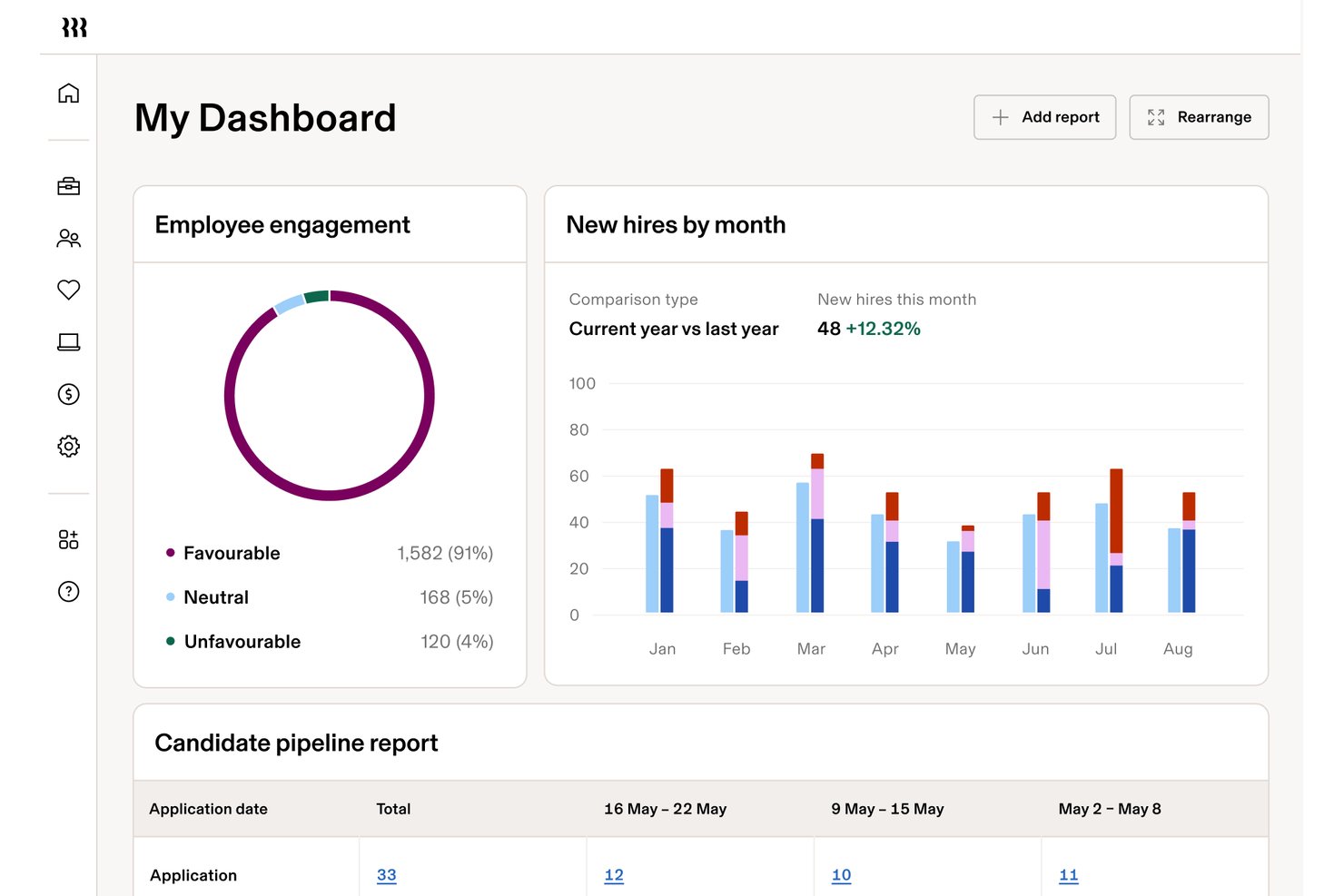
Rippling is a global employer of record and workforce management platform that combines EOR hiring, INR payroll processing, statutory compliance, benefits administration, and IT provisioning in a single unified system.
Who Is Rippling Best For?
Rippling is a strong fit for multi-country teams that need to hire in India as part of a broader global workforce, especially when managing HR, IT, and payroll from a single platform matters.
Why I Picked Rippling
I picked Rippling as one of the best because it's the only platform I've seen that lets you hire in India while simultaneously provisioning laptops, granting app access, and running INR payroll from a single employee record. That Unity Platform architecture matters most when India is one stop on a multi-country hiring roadmap. I also like that Rippling owns its Indian legal entity directly, which keeps PF, ESI, TDS, and 2025 Labour Code compliance in-house rather than passed off to an unvetted local partner.
Rippling Key Features
- Contractor-to-employee conversion: Built-in workflows let you convert Indian contractors to full-time EOR employees without restarting the onboarding process.
- Rippling AI: Query employee data and trigger HR actions across your Indian workforce using plain-English prompts.
- Device provisioning for remote hires: Ship and pre-configure laptops to Indian employees directly through the platform, with IT access granted as part of the onboarding workflow.
- Carta equity integration: Manage RSUs and stock options for Indian employees through a native integration with Carta for ESOP administration.
Rippling Integrations
Rippling offers 650+ integrations, including Workday, BambooHR, SAP SuccessFactors, NetSuite, QuickBooks Online, Xero, Checkr, and Carta. It also provides API access for custom integrations and SCIM provisioning.
Pros and Cons
Pros:
- Automated compliance with 2025 Labour Codes
- Direct employment via owned Indian legal entity
- Unified HR, payroll, and IT in one platform
Cons:
- Higher cost than India-native PEO providers
- Limited depth in supplemental India-specific benefits
New Product Updates from Rippling

Rippling AI Adds Plugins, Skills, and Automations
Rippling AI now supports plugins, skills, and automations so employees can connect approved third-party tools, package repeatable work into reusable AI instructions, and run recurring workflows under existing Rippling policies and permissions. For more information, visit Rippling's official site.

G-P
Best for Workday-connected India hiring
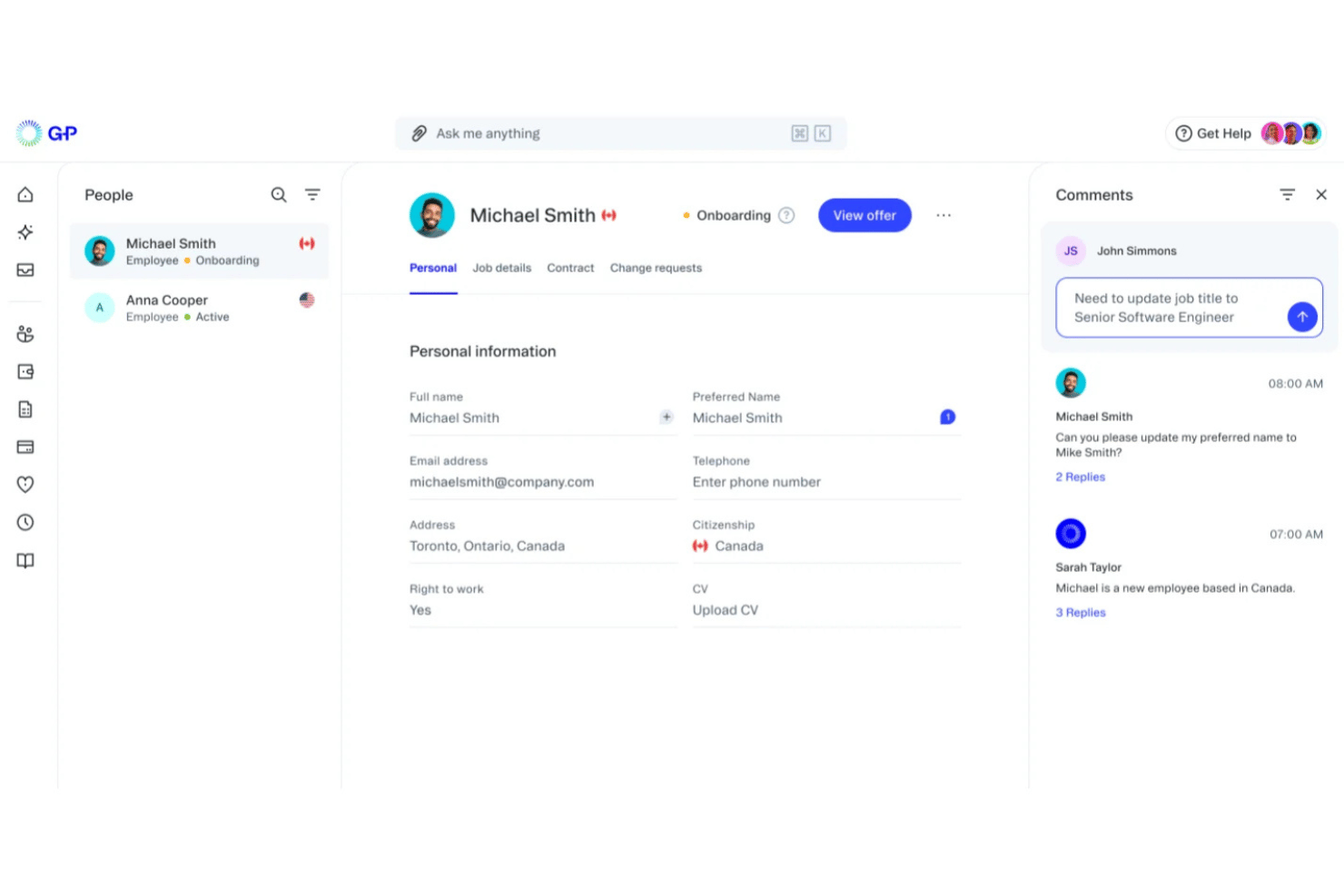
G-P is a global employer of record platform that lets you hire, pay, and manage employees in India through its own wholly-owned legal entity, covering INR payroll, statutory compliance (EPF, ESI, TDS, gratuity), benefits administration, and contractor-to-employee conversion.
Who Is G-P Best For?
G-P is a strong fit for enterprise HR teams that already run Workday or SAP SuccessFactors and need Indian headcount to roll up cleanly into a global people data system.
Why I Picked G-P
G-P earns its spot on my shortlist because of how cleanly it connects Indian headcount into global HR systems. I particularly like its native Workday integration, which keeps your Indian employees' payroll, compliance status, and people data in sync as a single source of truth. The G-P Gia™ AI compliance layer monitors Indian regulatory changes across EPF, ESI, and TDS in real time, so your Workday data stays accurate without manual updates.
G-P Key Features
- Contractor-to-employee conversion: Built-in workflows let you reclassify Indian independent contractors as full-time EOR employees to reduce misclassification risk.
- G-P Gia™ AI compliance agent: Delivers real-time regulatory change alerts and expert-vetted compliance guidance across Indian labor, tax, and statutory requirements.
- INR payroll with CTC structure support: Processes localized payroll covering Basic, HRA, LTA, Special Allowance, bonuses, and all statutory deductions in a single run.
- Equity and ESOP payroll management: Handles stock option and equity perquisite tax administration for Indian employees as an add-on to the core EOR service.
G-P Integrations
G-P offers native integrations with Workday, SAP SuccessFactors, BambooHR, HiBob, Personio, UKG Pro, and UKG Ready. It also supports Microsoft Entra ID, Okta, Auth0, and a developer-first API for custom integrations.
Pros and Cons
Pros:
- AI compliance tool monitors India law changes
- Native Workday and SAP SuccessFactors integrations
- India payroll supports full CTC structure
Cons:
- Lacks granular state-level compliance in India
- Onboarding takes 7–15 business days
Remote
Best for onboarding India hires without an entity
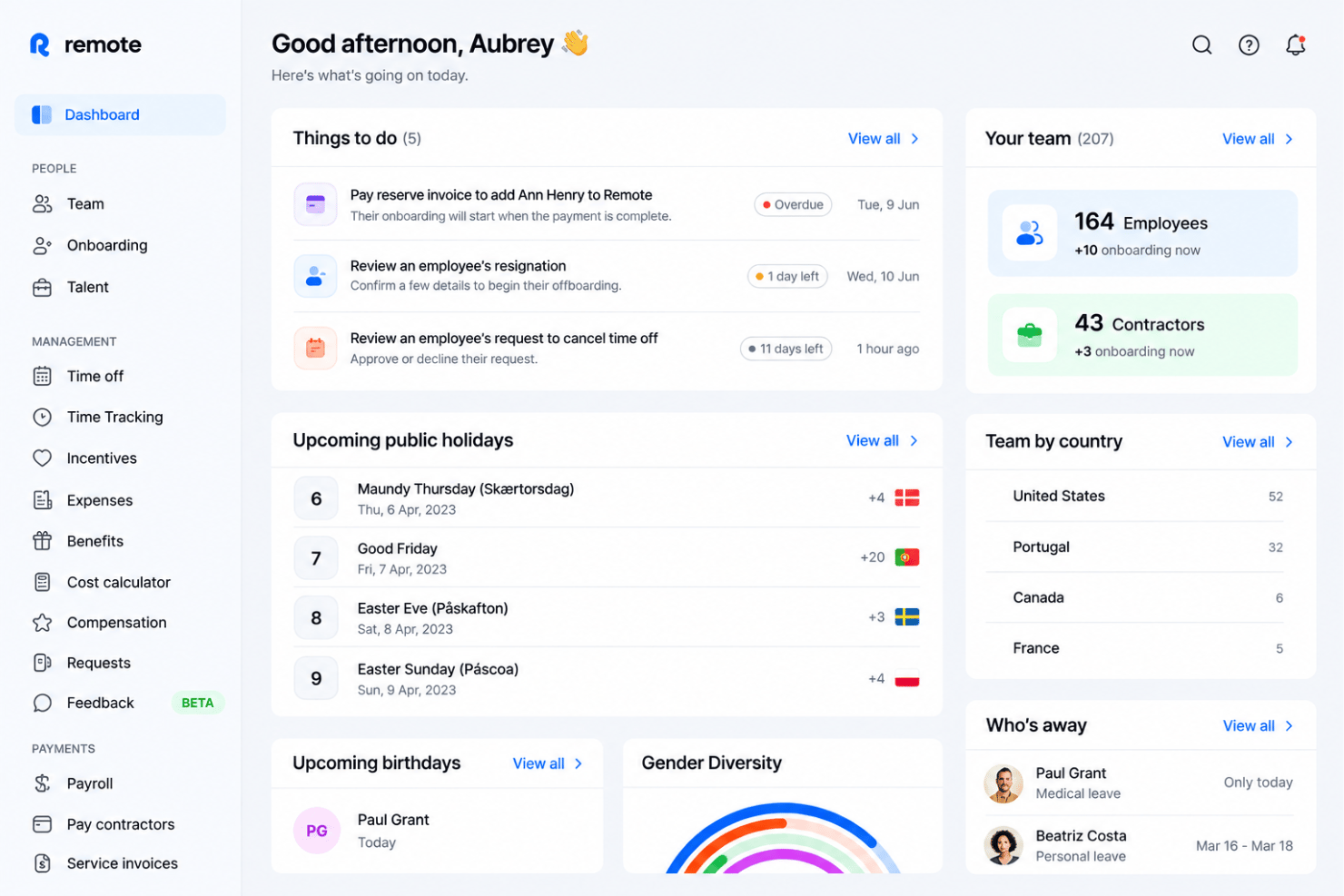
Remote is a global employer of record platform that handles INR payroll, statutory compliance (PF, ESI, PT, gratuity), benefits administration, and tax filings for companies hiring in India through its wholly-owned Indian legal entity.
Who Is Remote Best For?
Remote is a strong fit for companies hiring their first India-based employees and need a legally accountable employer on the ground without setting up a local entity.
Why I Picked Remote
Remote earns its spot on my shortlist because it operates a wholly-owned Indian legal entity, meaning it's the legal employer on record with no third-party handoffs. I've seen this matter most when a company needs to hire its first India-based employee fast: Remote's average onboarding time of 2.3 days gets people working quickly. Its built-in Compliance Watchtower also proactively flags changes to India's evolving labour codes, so your team isn't scrambling after a regulation shifts.
Remote Key Features
- Compliance Watchtower: A regulatory monitoring tool that tracks labour law changes across 90+ countries, including India's evolving labour codes and DPDP Act, and alerts your team proactively.
- Equity administration: Manages stock options (NSOs), RSUs, and phantom shares for Indian EOR employees, including perquisite tax handling and cap table integration.
- Contractor-to-employee conversion: Built-in workflows let you reclassify Indian contractors as EOR employees, supported by an AI-powered misclassification risk tool.
- Tiered India benefits suite: Offers six health insurance tiers, NPS, meal vouchers, mental health support, and business travel insurance beyond statutory minimums.
Remote Integrations
Remote offers native integrations with Workday, BambooHR, HiBob, Greenhouse, NetSuite, QuickBooks, Xero, Okta, and Vanta. It also provides an API for custom integrations and supports Zapier.
Pros and Cons
Pros:
- Offers comprehensive India-specific benefits suite
- Fast onboarding with built-in background checks
- Owns and operates its Indian legal entity
Cons:
- No explicit FEMA/RBI equity compliance documentation
- Customer support lacks regional nuance

Asanify
Best for hiring in India without an entity
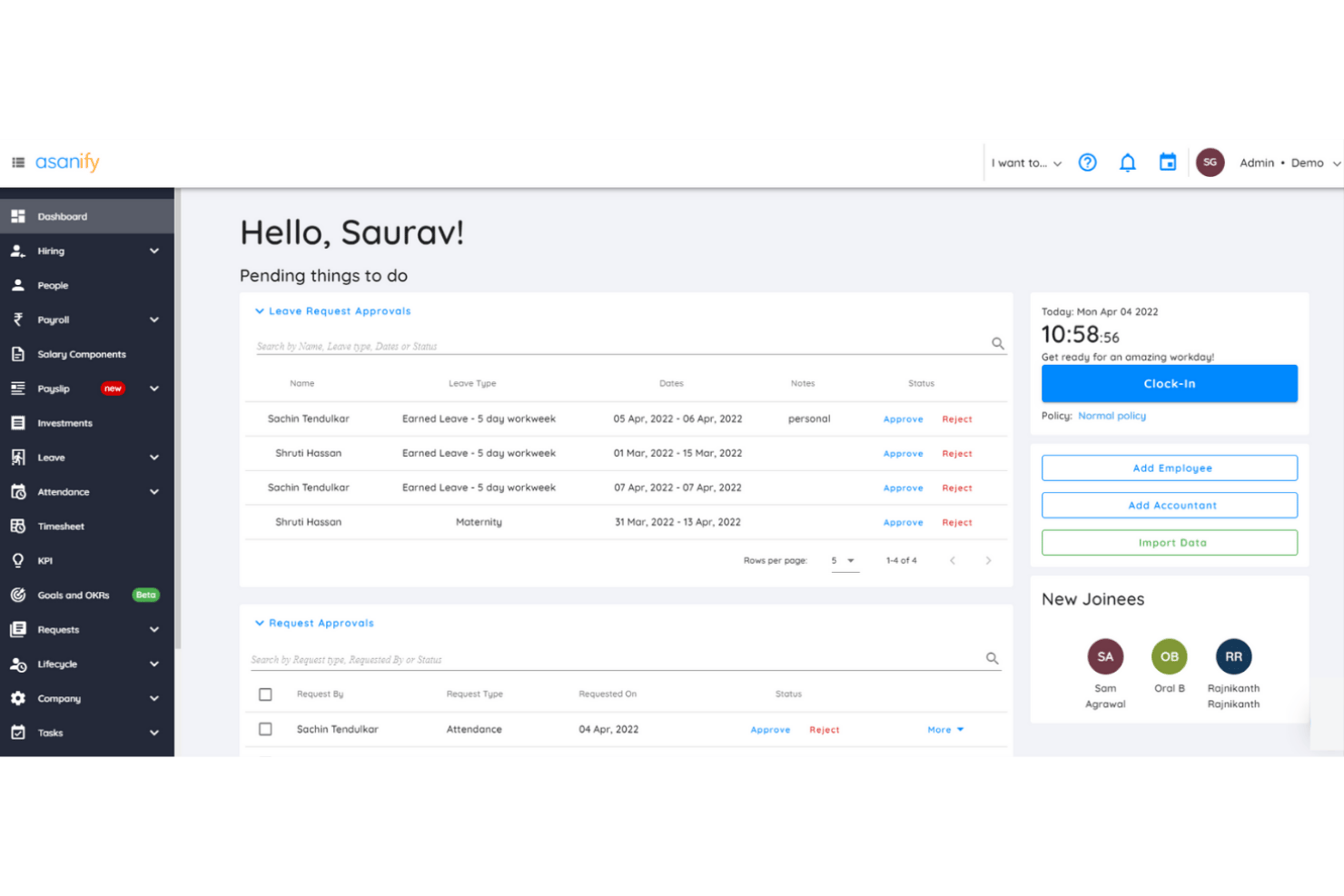
Asanify is an employer of record and HRMS platform built specifically for the Indian market, covering payroll, statutory compliance, benefits administration, and employee onboarding across all 28 Indian states and 8 union territories.
Who Is Asanify Best For?
Asanify is a strong fit for startups and SMBs hiring their first employees in India without a local entity.
Why I Picked Asanify
Asanify earns its spot on my shortlist because it lets you hire in India without touching entity setup, running the entire employment relationship through its own wholly-owned Indian subsidiary, Asanify Technologies Pvt Ltd. I particularly like the 24–48 hour digital onboarding, which runs Aadhaar KYC, PAN verification, and background checks in parallel so your first Indian hire is legally employed in days, not months. The built-in multi-state compliance engine automatically applies the correct Professional Tax slabs, minimum wages, and statutory holiday calendars across all 28 states based on where each employee actually works.
Asanify Key Features
- Contractor-to-employee conversion: Reclassify Indian independent contractors as full-time employees through a structured conversion workflow that handles documentation and statutory enrollment.
- Employee self-service portal: Employees access payslips, Form 16, leave balances, and Form 12BB investment declarations through a dedicated mobile app and web portal.
- AI-powered payroll checks: An AI layer reviews each payroll run for errors before processing, covering TDS, EPF, ESI, and variable pay components.
- Global contractor management: Onboard and pay contractors in 200+ countries with multi-currency payments, automated invoicing, and digital contract signing.
Asanify Integrations
Asanify offers native integrations with Slack, Microsoft Teams, WhatsApp, and Google Calendar for HR workflows. Enterprise API access is referenced for custom integrations, but public API details aren't documented.
Pros and Cons
Pros:
- Owned Indian entity ensures direct legal control
- Multi-state compliance engine covers 28 states
- 24–48 hour digital onboarding across India
Cons:
- Public HRIS integration details not documented
- Limited advanced analytics for large enterprises

Gloroots
Best for scaling India GCC teams without an entity
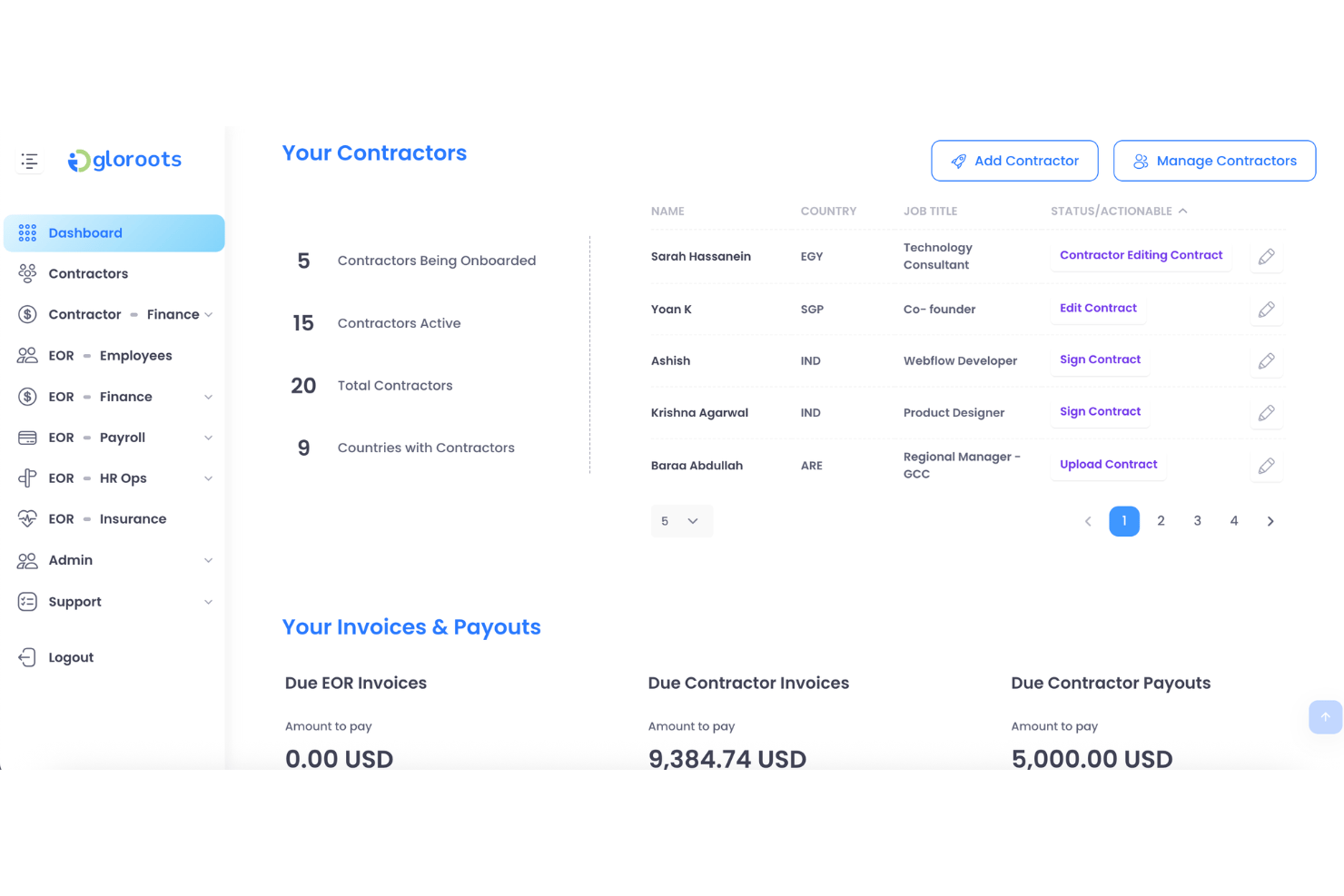
Gloroots is an employer of record platform built around India market hiring, covering INR payroll, multi-state statutory compliance, benefits administration, and contractor-to-employee conversion across all 28 Indian states and 8 union territories.
Who Is Gloroots Best For?
Gloroots is a strong fit for multinationals building India Global Capability Centers (GCCs) without a local entity, particularly tech and VC-backed companies managing multi-state hiring and ESOP compliance.
Why I Picked Gloroots
Gloroots earns its spot on my shortlist because of its dedicated India GCC Enablement product, which is built specifically for multinationals hiring engineering or operations talent across India without setting up a local entity. I particularly like how it handles multi-state statutory compliance across all 28 Indian states and 8 union territories, including PF, ESI, Professional Tax, and Labour Welfare Fund, all in a single plan. Its ESOP and equity advisory service, covering FEMA and RBI reporting plus perquisite tax at vesting, is a real differentiator for tech and VC-backed companies scaling India teams.
Gloroots Key Features
- Contractor-to-employee conversion: Built-in workflows reclassify Indian independent contractors as full-time EOR employees, with a free misclassification risk calculator to assess classification risk under Indian law.
- INR payroll with TDS filing: Automated monthly payroll in INR handles TDS calculation, remittance, quarterly Form 24Q filings, and annual Form 16 issuance each pay cycle.
- AI-powered India recruitment module: The Recruit module sources and screens candidates for India roles using AI matching, with compensation benchmarked to India market bands and direct handoff to EOR onboarding.
- Cryptocurrency pay-ins: The base EOR plan supports crypto salary pay-ins, processed within 2–4 hours, for Web3 and crypto-native companies hiring Indian talent.
Gloroots Integrations
Native integrations are not clearly documented. Gloroots supports API-based custom integrations with Workday, SAP SuccessFactors, Oracle HCM, and BambooHR.
Pros and Cons
Pros:
- Cryptocurrency pay-ins available for payroll
- AI-powered recruitment focused on India
- Multi-state compliance across all Indian states
Cons:
- Owned entity model not explicitly confirmed
- No native plug-and-play HRIS integration
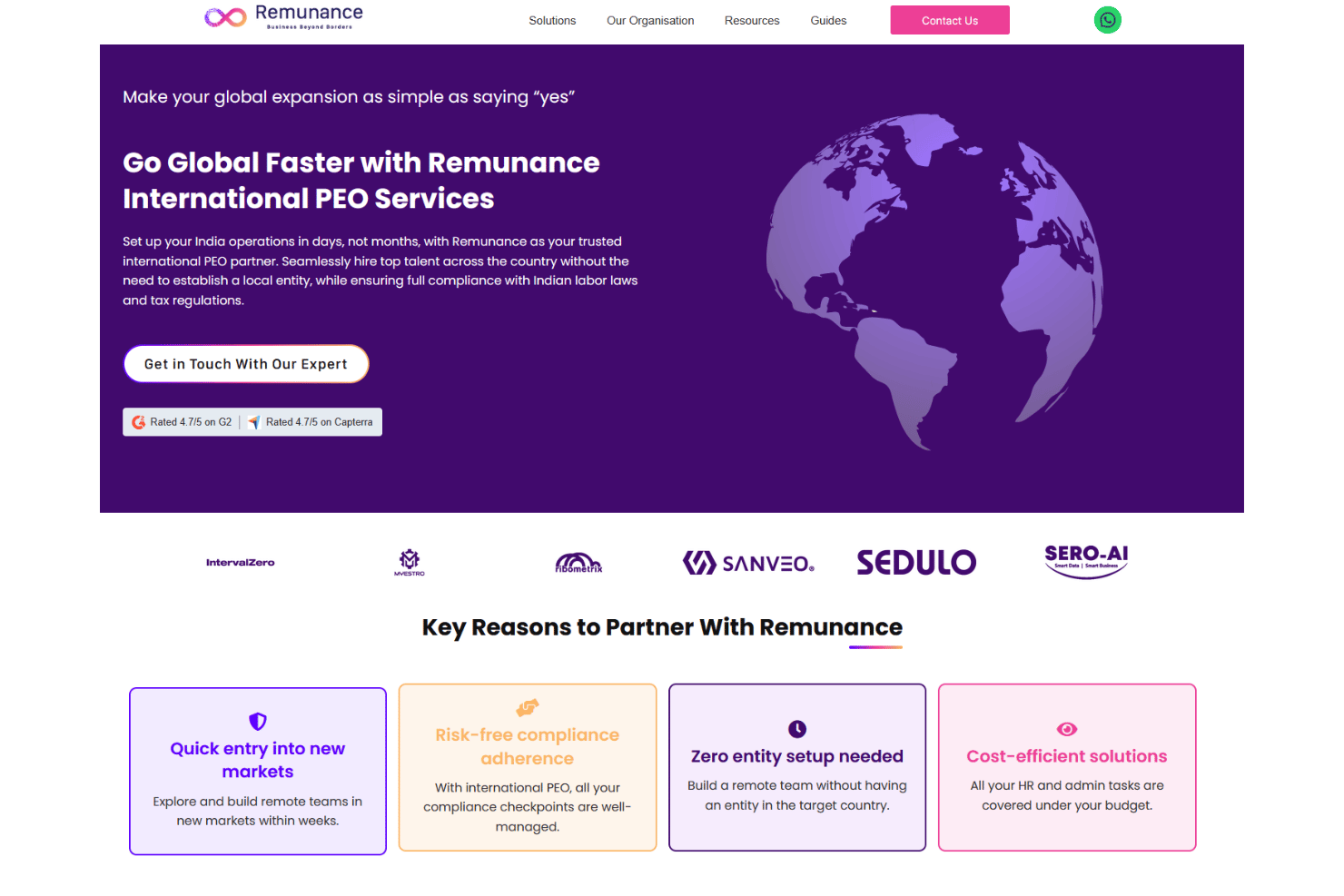
Remunance is an India-only employer of record (EOR) and PEO platform that handles payroll in INR, statutory compliance across 40+ central and state labor laws, benefits administration, and IT infrastructure setup for remote Indian hires.
Who Is Remunance Best For?
Remunance is a strong fit for small and mid-sized companies hiring their first Indian employees and wanting a single vendor to handle compliance, payroll, and IT setup.
Why I Picked Remunance
Remunance earns its spot on my shortlist because it's the only India-focused PEO I've found that pairs statutory compliance with hands-on IT setup, covering laptop procurement, VPN configuration, and co-working access across cities like Pune, Bengaluru, and Hyderabad. I also like that it operates through its own wholly-owned Indian entity rather than a subcontractor network, which means direct legal accountability across 40+ central and state labor laws. That owned-entity model also supports a structured EOR-to-subsidiary pathway for teams planning to deepen their India presence over time.
Remunance Key Features
- Contractor of record (COR) management: Manages independent contractors in India compliantly, with built-in workflows to convert contractors to full-time employees.
- Multi-component INR payroll: Calculates and disburses salaries with variable pay components including HRA, LTA, conveyance allowance, arrears, and performance bonuses.
- Subsidiary formation support: Guides companies through the full EOR-to-subsidiary transition, handling MCA, PAN, GST, EPFO, ESIC, and ROC registrations.
- Employee self-service portal: Gives employees direct access to digital payslips, Form 16, and investment declaration tools through a cloud-based dashboard.
Remunance Integrations
Native integrations are not clearly documented. Remunance offers an API and data export/import for custom connections, but no specific HRIS or accounting integrations are publicly confirmed.
Pros and Cons
Pros:
- Laptop procurement and IT setup included
- Extensive statutory compliance across 40+ laws
- Direct Indian entity employs all workers
Cons:
- No confirmed native HRIS integrations
- Only supports hiring in India

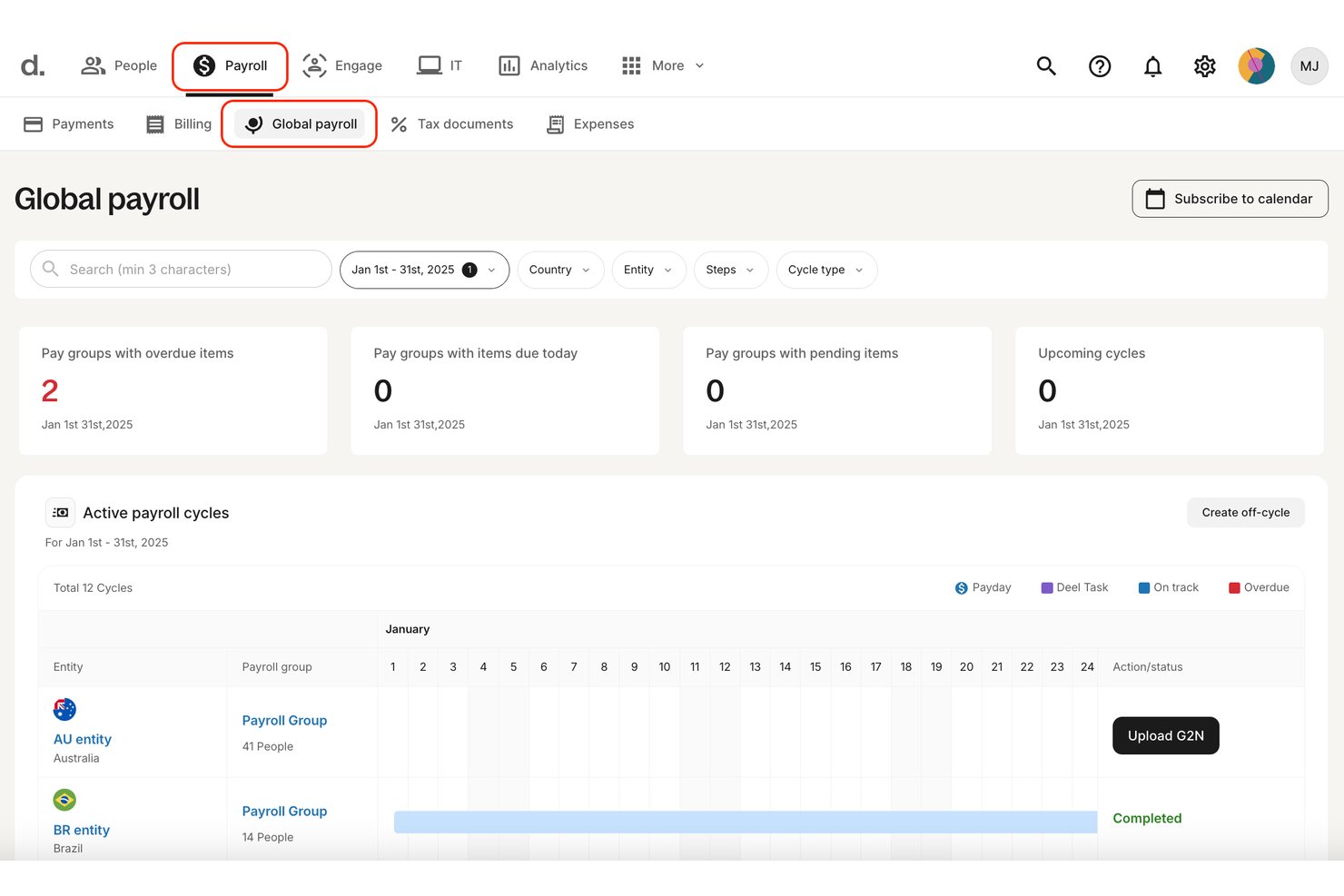
Deel is a global employer of record and PEO platform that handles INR payroll, statutory compliance (PF, ESI, PT, gratuity), benefits administration, and employee onboarding across India through a wholly-owned Bengaluru legal entity.
Who Is Deel PEO Best For?
Deel is a strong fit for global companies that need to hire across multiple Indian states without setting up a local entity.
Why I Picked Deel PEO
I picked Deel PEO as one of the best because it operates through a wholly-owned legal entity in Bengaluru, meaning Deel itself is the employer of record, not a third-party aggregator. That distinction matters when you're hiring across Karnataka, Maharashtra, Tamil Nadu, and other states, since Deel auto-populates state-specific contract clauses and manages Professional Tax registrations across varying slab structures. I also like that it tracks 180+ Indian compliance data points in real time, including the 50% wage rule under the new Labor Codes effective November 2025.
Deel PEO Key Features
- Contractor-to-employee conversion: Reclassify Indian independent contractors as full-time EOR employees directly within the platform to reduce misclassification risk.
- Dual tax regime tracking: The platform tracks each employee's elected income tax regime (old vs. new) and applies the correct monthly TDS withholding automatically.
- IP Guard: A contractual clause feature that automatically assigns all IP and inventions created by employees to your company at the point of contract execution.
- DPDP Act 2023 data residency: Payroll and personal data for Indian employees is stored in-country to meet India's Digital Personal Data Protection Act requirements.
Deel PEO Integrations
Deel offers integrations with Workday, BambooHR, SAP SuccessFactors, QuickBooks, NetSuite, Xero, Okta, Greenhouse, and Expensify. It also supports REST API connections and Zapier.
Pros and Cons
Pros:
- Multi-state payroll and statutory filings managed
- Offer letters and onboarding completed in 48 hours
- Owned Bengaluru entity ensures direct legal compliance
Cons:
- Payroll changes may incur additional manual effort
- User support can be slow or unresponsive
Other PEOs in India
Here are some additional PEOs in India options that didn’t make it onto my shortlist, but are still worth checking out:
- Wisemonk
For India payroll with built-in tax optimization
- TopSource
For India hiring with an owned local entity
- Papaya Global
For AI-driven India statutory compliance
- Multiplier
For hiring in India via owned entity
- Horizons
For hiring in India with ESOP support
- Playroll
For flat-rate hiring via owned India entity
- Neeyamo
For enterprise HRIS-connected India hiring
- Rapid
For hiring in India via owned local entity
- Husys
For India-founded, 23-year PEO expertise
- Kaamwork
For India-only EOR with a BOT exit path


How I Evaluate PEOs in India
I split every evaluation into baseline compliance capabilities—India payroll, statutory filings, EOR legal presence—and the differentiators that separate a reliable partner from a generic one.
Core Functionality (Table Stakes for This List)
When I'm selecting tools for my list, I rank each one on a scale from 0 (does not offer the functionality) to 5 (excels in this area) for each core functionality listed below. I then calculate the tool's total score into a percentage, using 65% as a benchmark to help assess its overall fit for the list.
- Employer of Record India: I check whether the vendor legally employs workers in India through its own entity or a vetted partner, since this determines your liability exposure.
- India Payroll Processing: Each tool gets evaluated on its ability to run automated INR payroll with TDS, PF, ESI deductions, and payslip generation.
- Statutory Compliance Management: I look for active administration of PF, ESI, Professional Tax, Labour Welfare Fund, and gratuity across Indian states.
- Indian Benefits Administration: The benefits package matters—I evaluate health insurance options, leave policy configuration, and India-specific perks like meal cards or NPS.
- Compliant Onboarding & Contracts: I review whether the platform issues India-localized contracts, handles KYC verification, and includes state-specific employment clauses.
- Tax & Regulatory Filings: Proper TDS remittance, Form 16 issuance, quarterly filings, and year-end reconciliation are all areas I evaluate for each provider.
Once I have a list of tools that meet the criteria, I consider what sets each platform apart.
Differentiating Factors (What Sets Vendors Apart)
Here's how I compare and contrast different vendors:
Standout Features
I look for vendors that own their Indian entity outright, since that means direct legal accountability and faster resolution when compliance issues surface. A multi-state compliance engine is equally important—I check whether the platform auto-updates Professional Tax slabs and Labour Welfare Fund rules as states change them, rather than relying on manual intervention. I also evaluate contractor-to-employee conversion workflows, which matter when you need to reclassify Indian contractors as full-time hires without triggering misclassification risk under India's labor codes.
Beyond Features
I evaluate how quickly a vendor can onboard an Indian employee—some offer Aadhaar-linked KYC and e-signatures that get hires working within days, while others take weeks. Integration depth matters too, especially native connectors to platforms like Workday or BambooHR that roll Indian headcount into your global people data. I also check whether the vendor's support model includes India-based labor law experts and chartered accountants you can reach directly during escalations.
How to Choose a PEO in India
How can you be sure you’re picking the right PEO for hiring and payroll in India, given the country’s maze of labor laws, tax codes, and compliance risks?
| If your priority is… | Look for… |
|---|---|
| Reducing compliance risk | India-owned entity and direct EOR legal contracts |
| Multi-state workforce coverage | Automatic state tax/benefit rule updates |
| Fast onboarding | Aadhaar-linked e-sign and KYC workflows |
| Integrating India headcount into global HR data | Native Workday/BambooHR/ADP connectors |
| Scaling India-only teams with IT setup | Bundled device management and local benefits |
How to Vet Your Shortlist
- Request an India entity letter: Ask for documentation confirming ownership or partnership of an active legal entity in India (should include company name, CIN, and GSTIN).
- Run a parallel demo payroll: Submit sample data for at least three Indian states (with at least one location outside Mumbai or Bangalore) and request a preview payslip with local deductions shown.
- File a support ticket in-country: Contact support during IST business hours and request an answer on a state-specific compliance scenario (such as Professional Tax in West Bengal)—look for turnaround within 24 hours.
- Review draft India contract templates: Ask for a real, India-specific employment contract sample, containing KYC, gratuity, and state labor clause language.
- Tradeoff—entity ownership vs. cost or speed: Decide whether you need the risk coverage of a provider with a fully owned Indian entity—even if alternatives with partners or aggregators promise lower rates or faster onboarding.
What Are PEOs in India?
PEOs in India are professional employer organizations that act as the legal employer for your local hires, handling payroll, tax compliance, HR administration, and employee contracts on your behalf. This lets your business hire and support Indian employees without setting up a local entity. Choosing the right PEO helps you navigate India’s unique labor laws, tax requirements, and statutory benefits with confidence and accuracy.
Features of PEO in India
When selecting PEO in India, keep an eye out for the following key features:
Employer of record services: The PEO acts as the legal employer on paper for your Indian team, handling contracts, KYC, and ensuring all local regulations are followed to protect your business from misclassification and compliance risks.
India payroll processing: The platform must automatically calculate and process salaries in Indian rupees, deducting TDS, PF, ESI, and generating compliant payslips for each pay cycle.
Statutory compliance management: Look for automated handling of Indian labor law requirements, including Professional Tax, Labour Welfare Fund, state-specific deductions, and timely regulatory filings with government authorities.
Benefits administration: The PEO should offer access to India-specific benefits like group health insurance, provident fund, gratuity administration, leave encashment, and meal card programs, with options for customization by location.
Compliant onboarding and contracts: Expect localized employment contracts, automated document collection, diligent KYC processes, and workflows for onboarding employees across Indian states with correct legal clauses included.
Tax and regulatory filings: The PEO should remit TDS, issue Form 16, manage quarterly and annual tax filings, and ensure accurate reconciliation with Indian authorities for each employee.
Multi-state workforce coverage: The provider should support hiring in multiple Indian states, automatically applying the correct local policies, tax slabs, and statutory requirements as state laws change.
HR and self-service portals: Employees and HR teams should have access to an online dashboard to manage attendance, leaves, payslips, contracts, and benefits enrollment—all in one place.
Local support and advisory: On-the-ground support from HR, labor law experts, and chartered accountants available during Indian business hours to resolve compliance or payroll issues quickly.
Integration with global HR systems: The ability to sync Indian employee data with platforms like Workday or BambooHR, allowing for unified HR management and reporting at a global level.
Benefits of PEOs in India
Implementing PEOs in India provides several benefits for your team and your business. Here are a few you can look forward to:
- Direct legal employment: Your employees in India are hired through the PEO’s own entity or vetted partner, removing the need for you to create a local subsidiary and ensuring full compliance with Indian labor laws.
- Automated payroll and statutory deductions: The PEO handles payroll in Indian rupees, including TDS, PF, ESI, and other required statutory deductions, so you avoid miscalculations or compliance gaps.
- Localized contracts and compliant onboarding: Expect professionally drafted, India-specific employment agreements and onboarding workflows that include KYC verification and state-based labor clause inclusion.
- Multi-state workforce coverage: The provider can employ and manage people in any Indian state, automatically updating tax slabs and local regulations as laws change.
- Access to India-specific benefits: Your team can enroll in group health insurance, provident fund, gratuity programs, and other perks tailored to the Indian employment market.
- Integrated HR systems: Many solutions support integration with global HR platforms like Workday or BambooHR, making it easier to unify and analyze workforce data across regions.
- Local HR and compliance support: You get access to in-country experts and chartered accountants, ready to answer complex, state-specific questions and address escalation requests quickly.
Costs and Pricing of PEOs in India
Selecting PEOs in India requires an understanding of the various pricing models and plans available. Costs vary based on features, team size, add-ons, and more. The table below summarizes common plans, their average prices, and typical features included in PEOs in India solutions:
Plan Comparison Table for PEOs in India
| Plan Type | Average Price | Common Features |
|---|---|---|
| Free Plan | $0 | Basic HR documentation, limited compliance insights, and access to demo contracts. |
| Personal Plan | $50-$150/employee/month | Standard payroll processing, simple compliance management, and core onboarding tools. |
| Business Plan | $200-$300/employee/month | Multi-state payroll, benefits administration, Indian tax filing, and local contract and KYC management. |
| Enterprise Plan | $350-$500/employee/month | Advanced integrations, India-specific benefits, direct entity employment, custom onboarding, and local legal support. |
PEOs in India FAQs
Here are some answers to common questions about PEOs in India:
How do PEOs in India handle multi-state compliance for payroll and benefits?
PEOs in India use compliance engines and expert teams to update tax slabs, professional tax, and statutory benefits as state laws change. They automate payroll calculations for each Indian state, apply the right deductions, and issue compliant payslips. If your team is spread across different states, choose a provider that auto-updates rules—and verify this by running a demo payroll for several locations.
Can I convert an Indian contractor to a full-time employee with a PEO?
Yes, most Indian PEOs can help convert contractors to full-time employees. Look for platforms with smooth contractor-to-employee conversion workflows that issue new, compliant contracts and onboard the hire in line with Indian labor law. This approach reduces misclassification risks and ensures proper benefits and statutory coverage.
Do PEOs in India support global HR system integrations?
Some PEOs in India do offer integrations with global HR systems like Workday, BambooHR, and ADP. These integrations sync your Indian workforce data with your main HR platform so you can manage headcount, payroll, and compliance centrally. Always ask for integration documentation and demo it before committing.
What should I check when reviewing India-specific employment contracts from a PEO?
When reviewing employment contracts, check for India-localized clauses, professional KYC guidelines, statutory inclusions (like PF, ESI), and state labor rules. Look for mention of gratuity, leave, and benefits entitlements. A good PEO contract will also reference the Indian entity employing your hire and include any state-specific mandatory notices.
How quickly can a PEO in India onboard a new hire?
Onboarding speed varies, but the best PEOs can get new employees set up in a few days using Aadhaar-linked e-sign and KYC workflows. Others may take one to two weeks if document collection or verification is manual. If fast onboarding is important, test the process with a sample candidate before signing up.
Who provides Indian labor law and payroll support: The PEO or a local partner?
This depends on the PEO’s model. Some own and operate their own entities across India, providing in-house experts and direct support. Others rely on local partners or aggregators. Direct entities offer faster, more reliable answers to compliance queries, especially for state-specific issues or escalated labor law questions.
Are health insurance and provident fund always included with PEOs in India?
No, providers differ in how group health insurance and provident fund enrollment are set up. Some bundle them into every plan, while others offer them as add-ons. Always confirm both are included for your team and check how claims, reimbursements, and compliance filings will be handled.