

10 Best PEOs in the Philippines in 2026

Best PEOs in the Philippines Shortlist


Professional Employer Organizations (PEOs) in the Philippines are employment partners that help you hire and manage Philippine employees without establishing your own local entity. They can handle employment contracts, payroll, benefits, 13th-month pay, work permits, and labor-law requirements while your team manages day-to-day work.
This guide compares leading providers by local expertise, pricing transparency, onboarding support, and operational ownership, helping you choose a suitable partner for one hire or a growing distributed team.
Why Trust Our Software Reviews
Our team has been testing and reviewing software since 2012. As HR experts ourselves, we know how difficult—and important—it is to choose the right software.
For this guide, we evaluated tools using hands-on testing and independent research, scoring tools using our selection criteria. We also draw on insights from industry thought leaders and practicing HR experts.
Our reviews reflect our human editorial judgment, not a sales pitch.
Expert reviewers:
Compare the Best PEOs in the Philippines
Compare pricing and specs, side by side, for the top PEOs on my shortlist.
| Tool | Best For | Trial Info | Price | ||
|---|---|---|---|---|---|
| 1 | Best for no-aggregator hiring | Free demo available | Pricing upon request | Website | |
| 2 | Best for hiring via owned local entity | Free demo available | Pricing upon request | Website | |
| 3 | Best for multi-currency benefits | Free demo available | From $599/employee/month | Website | |
| 4 | Best for flat-rate PH hiring with no entity needed | Free demo available | From $699/user/month | Website | |
| 5 | Best for Baker McKenzie-backed PH compliance | Free demo available | From $399/user/month | Website | |
| 6 | Best for payroll cost transparency | Free demo available | From $399/employee/month | Website | |
| 7 | Best for AEP and work permit handling | Free demo available | From $599/user/month | Website | |
| 8 | Best for navigating Philippine termination rules | Free demo available | Pricing upon request | Website | |
| 9 | Best for built-in talent sourcing | Free demo available | From $150/employee/month | Website | |
| 10 | Best for built-in equity and 13th-month pay | Free demo available | From $699/employee/month | Website |


Philippines PEOs Reviews
Below are my summaries of the best PEOs on my shortlist. These reviews examine each provider’s pricing, compliance support, and onboarding to help you choose the right one.
Mercans
Best for no-aggregator hiring
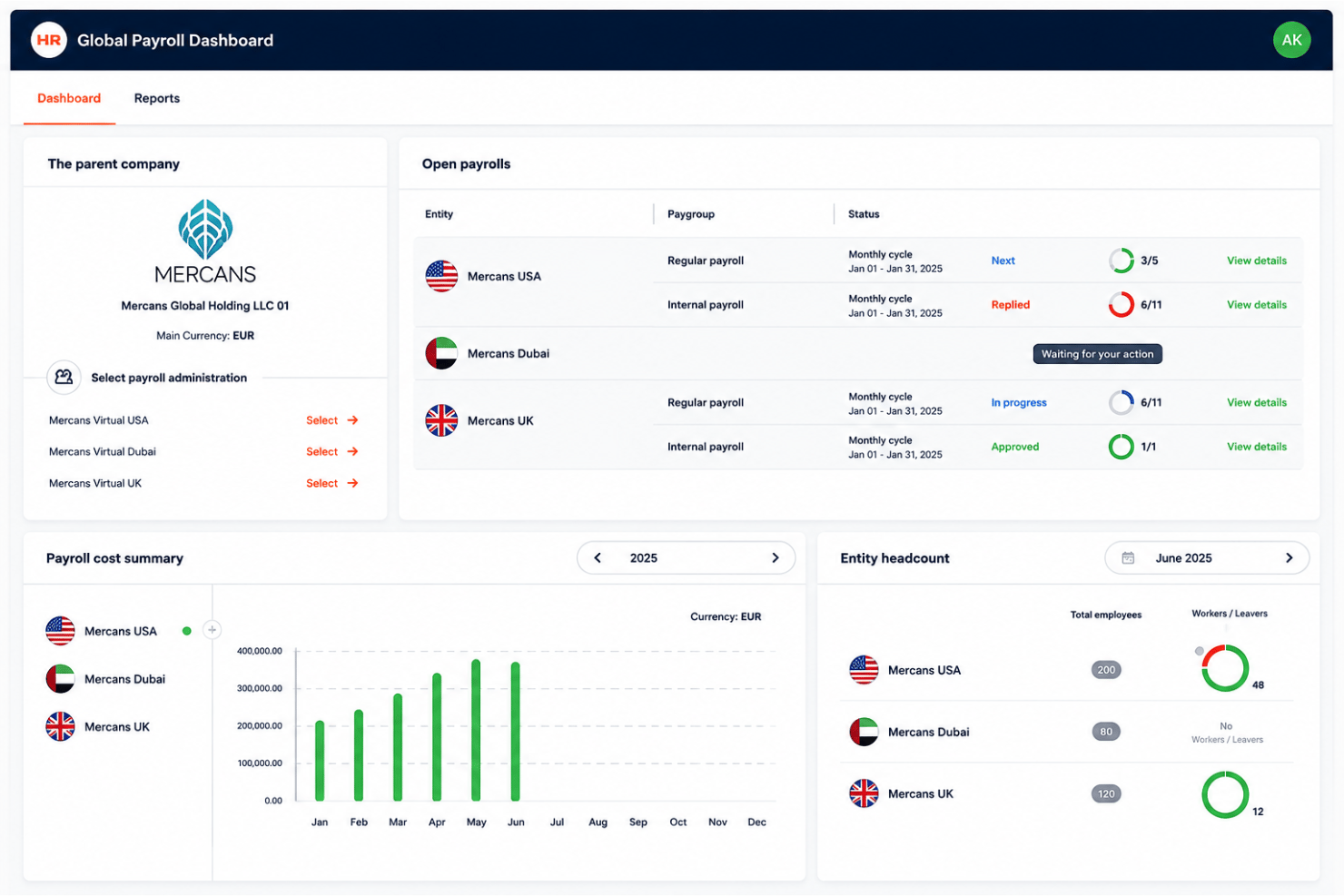
Mercans is an employer of record service covering 160 countries, including the Philippines. It handles local payroll processing, statutory compliance, employment contracts, and HR administration.
Who Is Mercans Best For?
Mercans is a strong fit for companies hiring across multiple countries that want one EOR provider with no subcontracted partners.
Why I Picked Mercans
I picked Mercans as one of the best because it owns its legal entity in the Philippines outright, with no local service providers or aggregator chains in between. That direct structure means your employment contracts, statutory filings (SSS, PhilHealth, Pag-IBIG, BIR), and DOLE compliance are handled by in-country Mercans staff, not subcontracted partners. I also like the Agent of Record option, which lets Mercans absorb compliance risk directly when misclassification exposure is a real concern.
Mercans Key Features
- Predictive Workforce Analytics: Delivers data-driven cost modeling and insights for global workforce spend.
- Agent of Record service: Absorbs compliance risk directly for contractor engagements, offering a formal risk-transfer option beyond standard EOR.
- 48-hour onboarding timeline: Supports moving from offer to active employment contract within 48 hours through its established Philippine entity infrastructure.
- Multi-currency payroll payments: Disburse payrolls in 103 currencies, including cryptocurrency, with client funds held until two days before the pay date.
Mercans Integrations
Mercans offers integrations with Oracle Cloud HCM, Workday, UKG Pro, BambooHR, Dayforce, and SAP SuccessFactors. An API for custom integrations is also available.
Pros and Cons
Pros:
- In-country staff handle statutory filings
- Detailed SSS and DOLE compliance guidance
- No aggregator between you and employees
Cons:
- Limited public detail on health benefits
- UI can feel more outdated and difficult to navigate

Rippling
Best for hiring via owned local entity
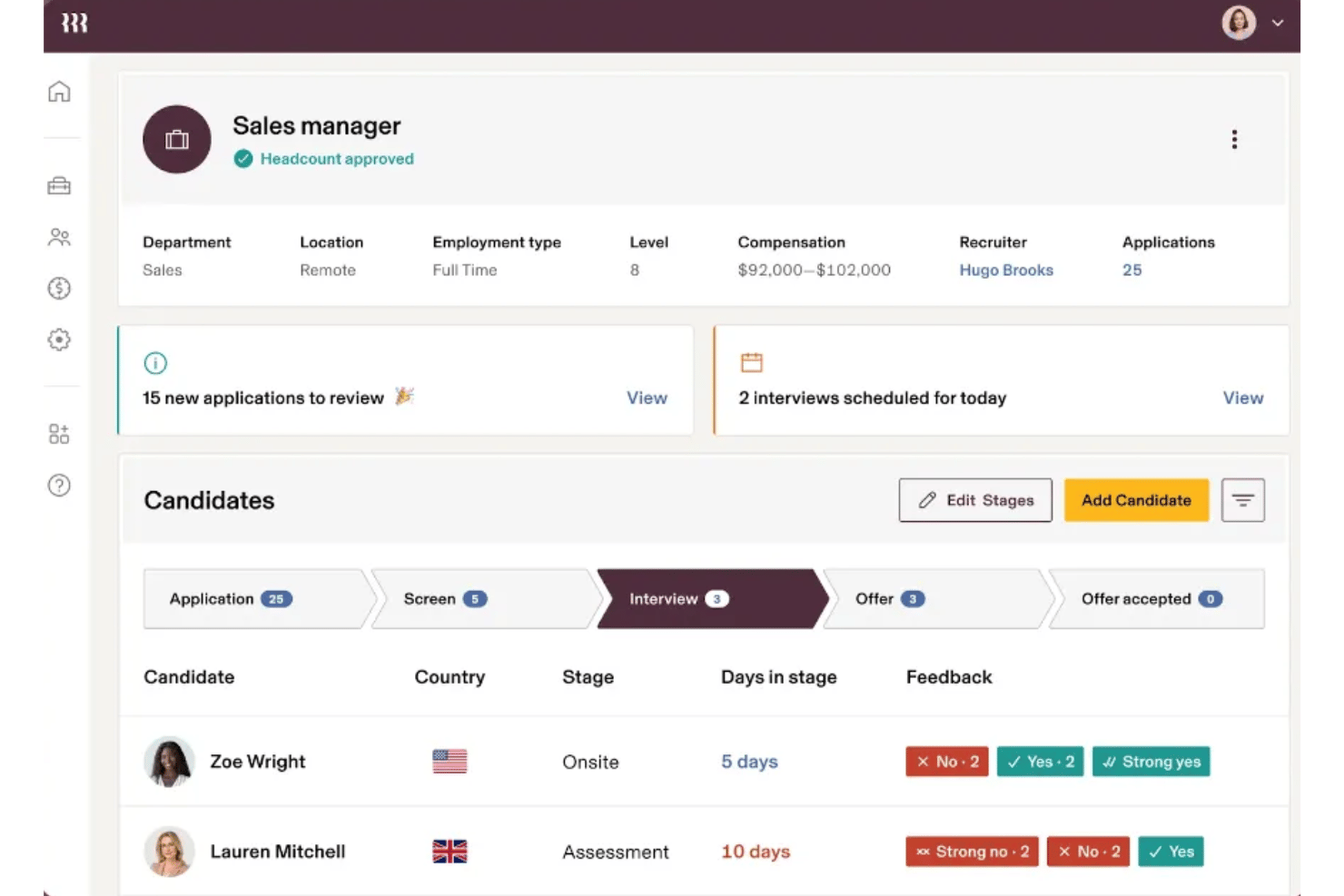
Rippling is a global employer of record (EOR) platform for hiring, onboarding, and paying workers in the Philippines. It covers payroll, statutory benefits administration, and HRIS records.
Who Is Rippling Best For?
Rippling is a strong fit for global expansion teams and HR leaders who want to hire Philippine employees through a single platform.
Why I Picked Rippling
Rippling earns its spot on my shortlist because it employs workers through its own registered Philippine entity, which matters in a country where labor-only contracting is prohibited. I also like that the payroll engine calculates SSS, PhilHealth, Pag-IBIG, BIR withholding, and 13th-month pay automatically, with semi-monthly pay runs processed in as few as five days.
Rippling Key Features
- EOR-to-direct-hire conversion: If you open your own Philippine entity later, Rippling converts EOR employees to direct hires without re-onboarding them.
- In-country HR and legal advisors: Local advisors with 10+ years of Philippine experience handle terminations, policy questions, and DOLE-related support.
- Employee self-service portal: Let employees access payslips, documents for tax filing, and time-off balances through a web and mobile portal.
- Direct PHP payments: Pays employees and freelancers in Philippine pesos (PHP) by direct deposit.
Rippling Integrations
Rippling offers integrations with Datadog, Asana, Microsoft 365, Jira, Carta, Zoom, QuickBooks, Slack, and Salesforce. An API for custom integrations is also available.
Pros and Cons
Pros:
- Payroll runs in as few as five days
- Automated Philippine statutory payroll calculations
- Direct employer with no partner intermediary
Cons:
- Complex support cases may resolve slowly
- Requires Rippling’s core platform purchase
New Product Updates from Rippling

Rippling AI Adds Plugins, Skills, and Automations
Rippling AI now supports plugins, skills, and automations so employees can connect approved third-party tools, package repeatable work into reusable AI instructions, and run recurring workflows under existing Rippling policies and permissions. For more information, visit Rippling's official site.

Best for multi-currency benefits
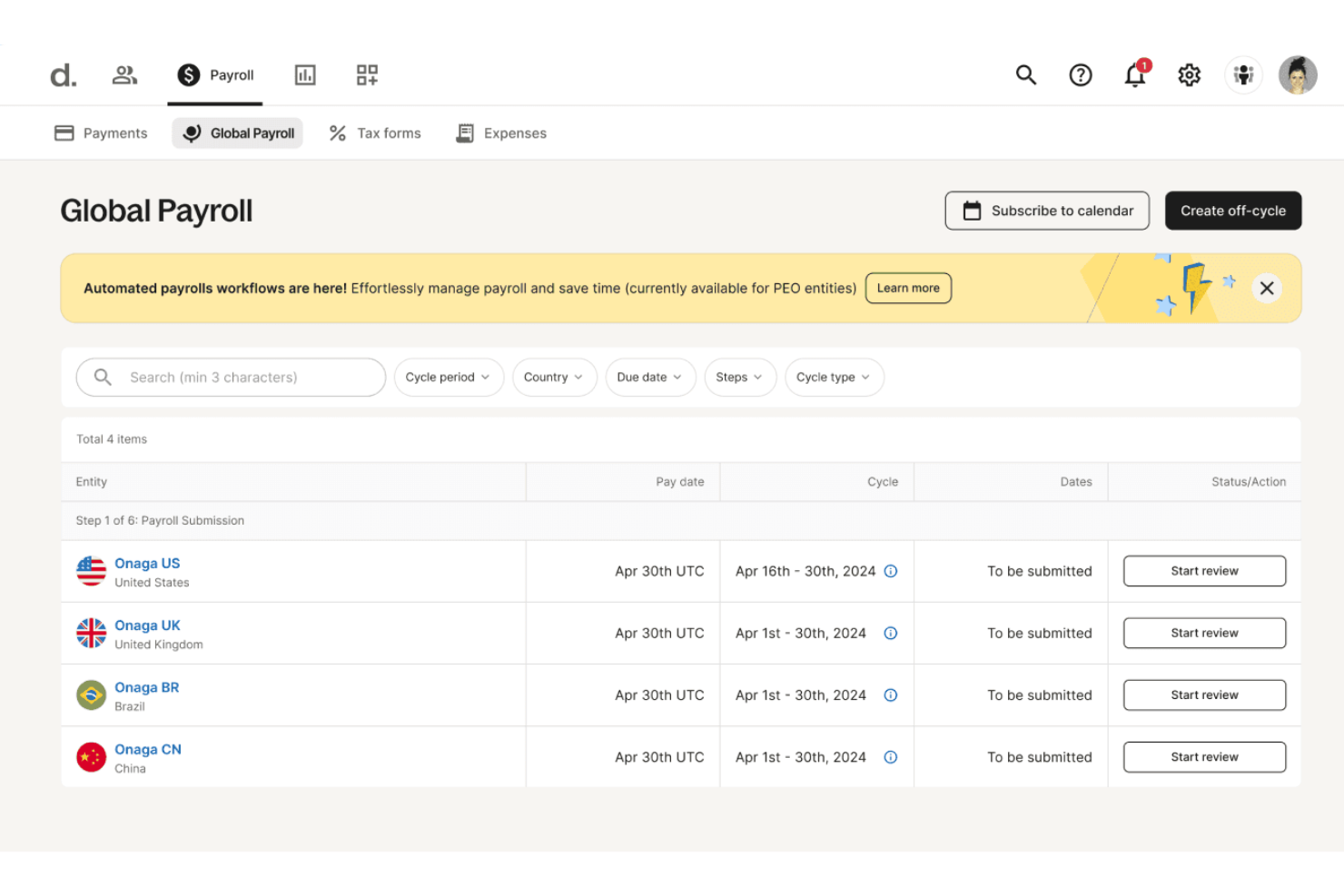
Deel Hire is a global employer of record platform that handles Philippine statutory compliance, semi-monthly payroll, benefits administration, and employment contracts.
Who Is Deel Hire Best For?
Deel Hire works well for global expansion leads and finance teams managing headcount across several countries and currencies.
Why I Picked Deel Hire
I've included Deel Hire in my top picks because it supports payroll disbursement in 120+ currencies, which is genuinely useful when your Philippine team includes workers who prefer to receive pay in currencies other than PHP. I also like that the supplementary benefits menu goes beyond statutory minimums, letting you add Maxicare or PhilCare private health coverage directly through the platform. On top of that, Deel's in-house legal team monitors Philippine labor law changes and updates contracts automatically.
Deel Hire Key Features
- Employment contract localization: Generates Philippine-compliant contracts covering probation periods, IP assignment clauses, and local labor code terms, updated automatically as laws change.
- Automated statutory deductions: Payroll runs handle SSS, PhilHealth, Pag-IBIG, and BIR withholding calculations, including Form 2316 issuance, within each semi-monthly cycle.
- Immigration and visa support: Covers 70+ countries with 48-hour visa eligibility assessments, an in-app tracker, and case support for the Philippine AEP and 9(g) visa process.
- Employee self-service portal: Let employees access payslips, tax documents, and time-off balances through a web and mobile portal.
Deel Hire Integrations
Deel Hire offers integrations with QuickBooks, BambooHR, Acumatica, Slack, and Google Workspace. It also offers an API for custom connections.
Pros and Cons
Pros:
- Employees can choose their withdrawal currency
- Private HMO options alongside statutory cover
- Multi-currency benefits support
Cons:
- Co-employment PEO available only in the US
- Payment delays can affect withdrawal timeline
Remote
Best for flat-rate PH hiring with no entity needed
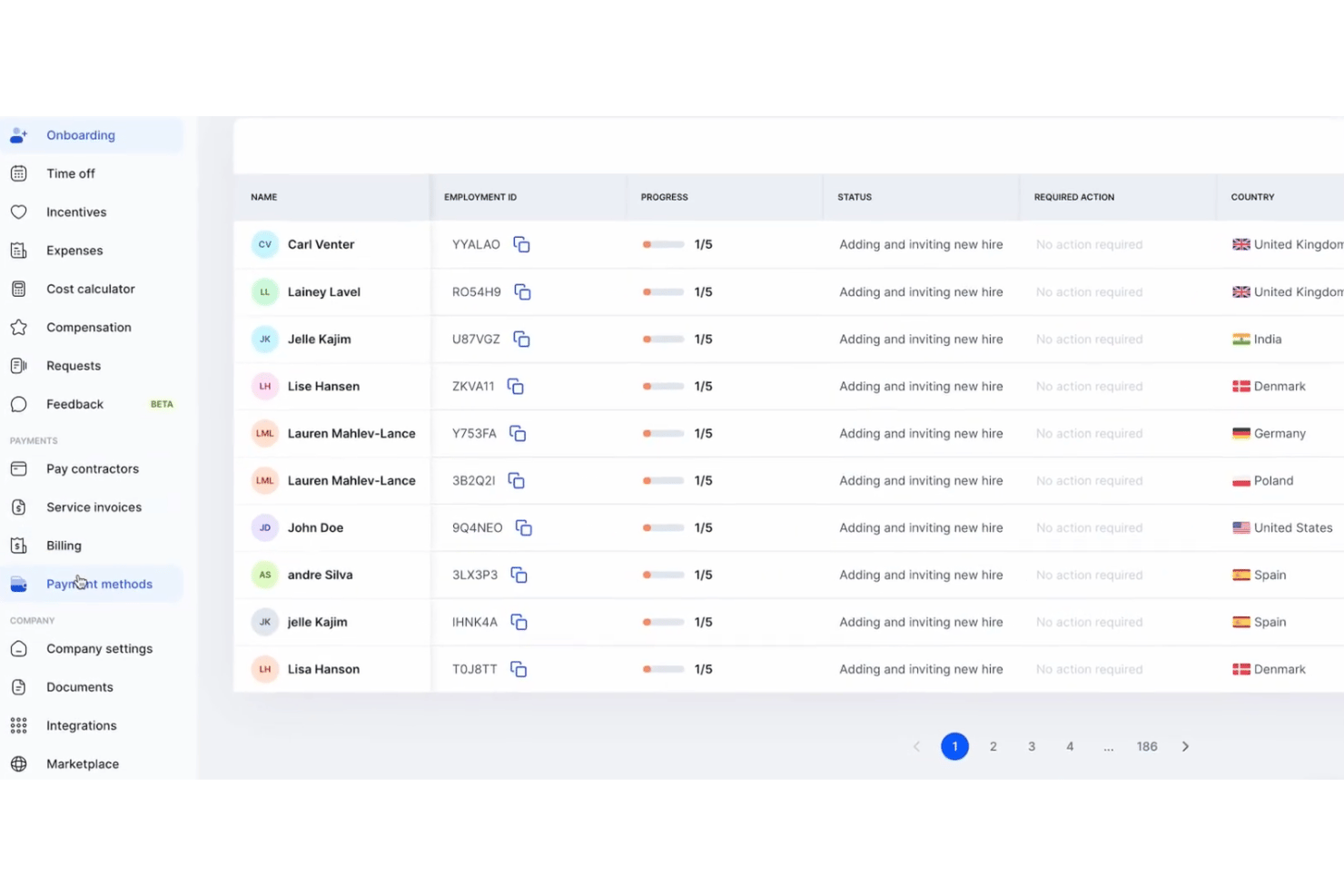
Remote is a global PEO platform that lets you hire, onboard, and pay employees in the Philippines—covering statutory compliance, local payroll, employee benefits administration, and employment contracts.
Who Is Remote Best For?
Remote is a strong fit for growth-stage foreign companies making their first Philippine hires that value speed and payroll compliance certainty.
Why I Picked Remote
I’ve included Remote in my top picks because it charges one flat monthly fee per employee and hires through a Philippine entity it owns, so no third-party partner sits between you and your hire. SSS, PhilHealth, Pag-IBIG, and 13th-month pay are calculated inside its payroll. Its Compliance Watchtower also flags Philippine labor law changes in the platform.
Remote Key Features
- Local HMO and international health plans: Offers PHP-denominated HMO plans alongside international health coverage from $1M to $5M USD, with enrollment and renewals handled directly.
- Employment contract localization: Generates Philippine-specific contracts that set out probation limits, overtime rates, leave entitlements, and termination rules.
- Employee self-service portal: Employees can access payslips, request time off, and update their profiles at no extra cost.
- Global background checks: Offers compliant background screening as an add-on to its EOR service for Philippine hires.
Remote Integrations
Remote offers integrations with BambooHR, Workday, Greenhouse, Okta, QuickBooks, NetSuite, Xero, and Slack. It also offers a REST API, webhooks, CLI, and Zapier for custom connections.
Pros and Cons
Pros:
- Supports Philippine 13th-month pay
- Handles SSS, PhilHealth, and Pag-IBIG
- No third-party partner in the employment chain
Cons:
- Fixed FX rates complicate payroll budgeting
- Higher starting price than most listed

Pebl
Best for Baker McKenzie-backed PH compliance
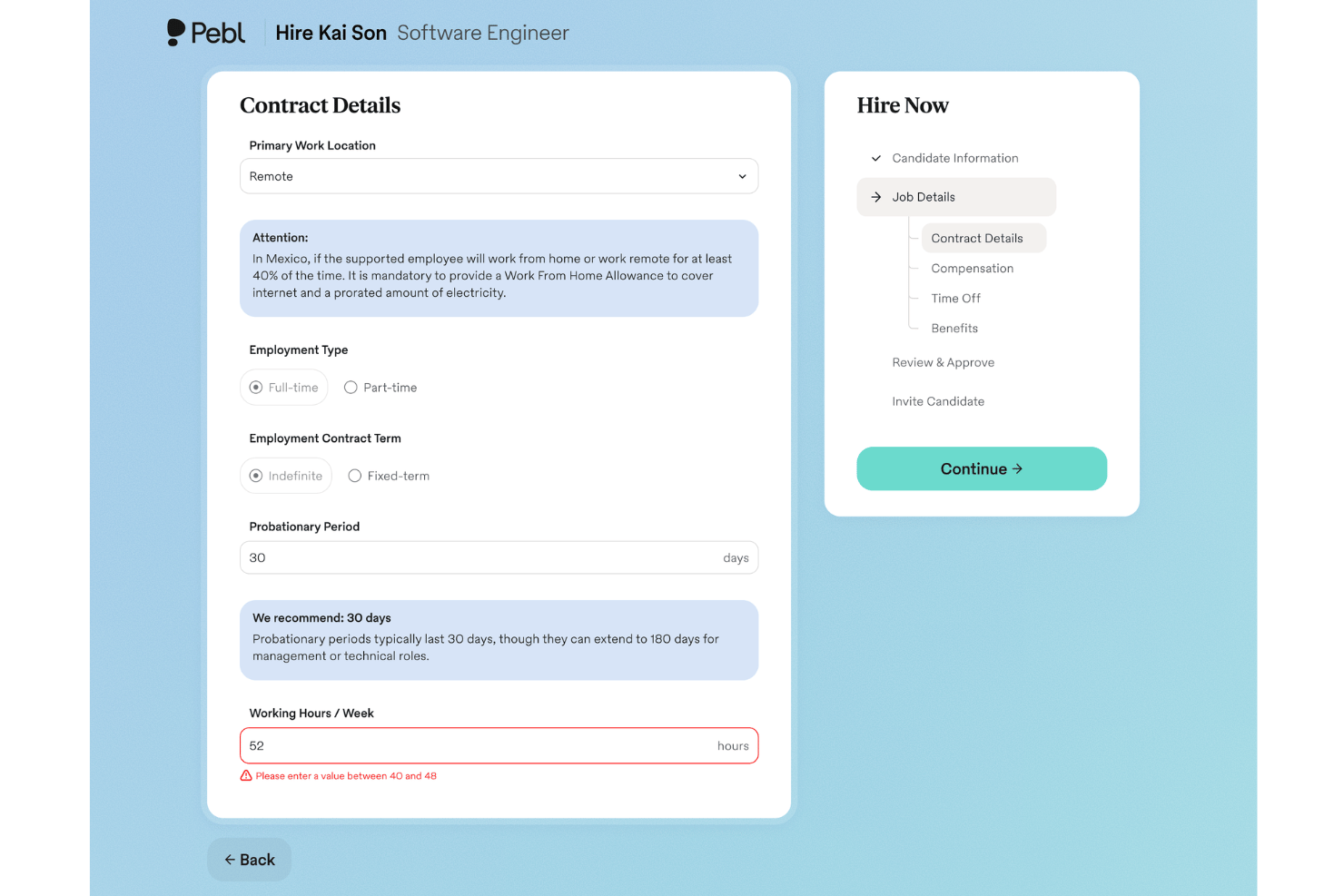
Pebl is an employer of record platform that handles local employment contracts, payroll, statutory contributions, benefits administration, and termination support for companies hiring in the Philippines without a local entity.
Who Is Pebl Best For?
Pebl is a strong fit for global expansion leads and HR teams at mid-sized companies that put legal defensibility first when hiring in the Philippines.
Why I Picked Pebl
Pebl earns its spot on my shortlist because Baker McKenzie, a global employment law firm, vets its compliance framework. In practice, that means Pebl manages authorized-cause termination rules, 13th-month pay, and region-specific minimum wages across 51 daily wage rates without you needing to cross-check a local lawyer. Pebl also reports clearing 100+ audits, a documented track record that matters when DOLE exposure is a risk.
Pebl Key Features
- Employment contract localization: Generates Philippine employment contracts in 25+ languages, reflecting Labor Code rules on probation, notice, and termination.
- Leave tracking: Manages statutory leave on-platform, including 105-day maternity leave, 7-day paternity leave, 13 days of annual leave, and 18 public holidays.
- Employee cost calculator: Estimates total annual hiring costs in the Philippines, factoring in employer-mandated contributions so you can budget before committing.
- Alfie AI assistant: Answers compliance, compensation, and onboarding questions around the clock.
Pebl Integrations
Pebl offers 250+ integrations, including BambooHR, Workday, Greenhouse, NetSuite, QuickBooks, SAP Concur, and Slack. An API for custom integrations is also available.
Pros and Cons
Pros:
- Documents regional wage rates and leave rules
- Compliance framework vetted by Baker McKenzie
- Documented record of hundreds of audits
Cons:
- Complex hires can face onboarding delays
- No built-in HRIS

Playroll
Best for payroll cost transparency
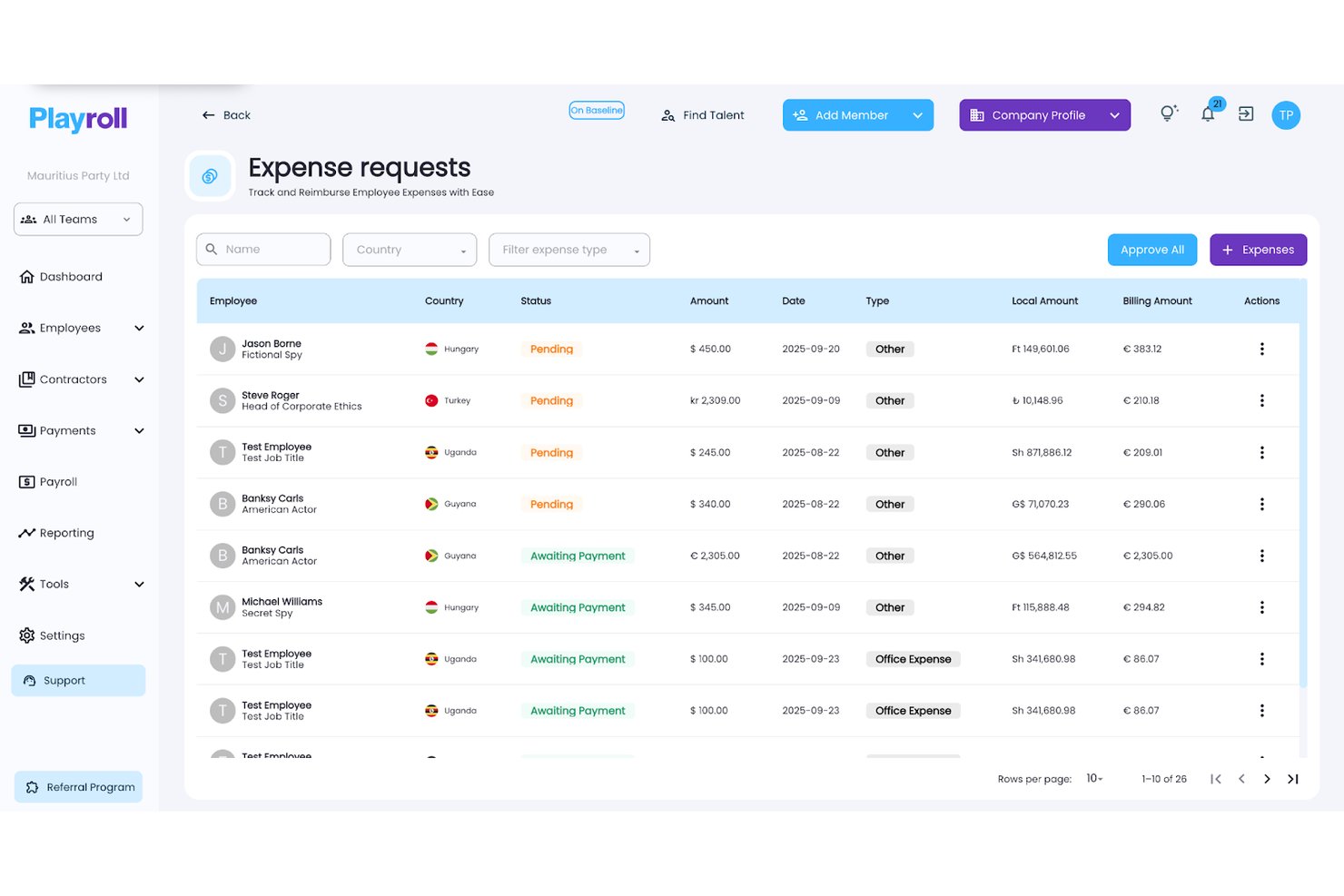
Playroll is an employer of record platform covering 180+ countries, including the Philippines, where it handles local employment contracts, statutory compliance, semi-monthly payroll processing, and benefits administration.
Who Is Playroll Best For?
Playroll is a good fit for HR directors and global expansion leads who need a detailed, itemized view of Philippines employment costs before hiring.
Why I Picked Playroll
Playroll earns its spot on my shortlist for the payroll cost visibility it gives you before you sign. It publishes a worked employer-cost example on a ₱50,000 salary that breaks down each statutory on-cost (SSS, PhilHealth, Pag-IBIG, 13th-month accrual), so you see the full monthly spend alongside the EOR fee. Its free Employee Cost Calculator and Payroll Tax Calculator let you model other roles and salary levels.
Playroll Key Features
- Labor Code-compliant contract drafting: Generates employment contracts in English or Filipino covering probation periods, termination grounds, and fixed-term conditions.
- Stage-by-stage onboarding timeline: Tracks each hire through a defined sequence—contract (2–3 days), government registrations (5–7 days), and payroll setup (2–3 days)—with progress visible in the dashboard.
- Statutory form filing and remittance: Handles SSS (Form R-1A), PhilHealth (PMRF), Pag-IBIG (MDF), and BIR (Form 1902) registrations, plus monthly and annual tax remittances.
- Dedicated employee success manager: Every employee gets a named support contact for payslip queries, leave requests, and documentation at no extra cost.
Playroll Integrations
Playroll offers integrations with BambooHR, HiBob, and Expensify. It also provides an open API for custom integrations.
Pros and Cons
Pros:
- Detailed termination guidance and employee support
- Free cost and tax calculators
- Transparent Philippines payroll cost modeling
Cons:
- Supplementary benefits details remain difficult to assess
- Reporting is not highly customizable

Best for AEP and work permit handling
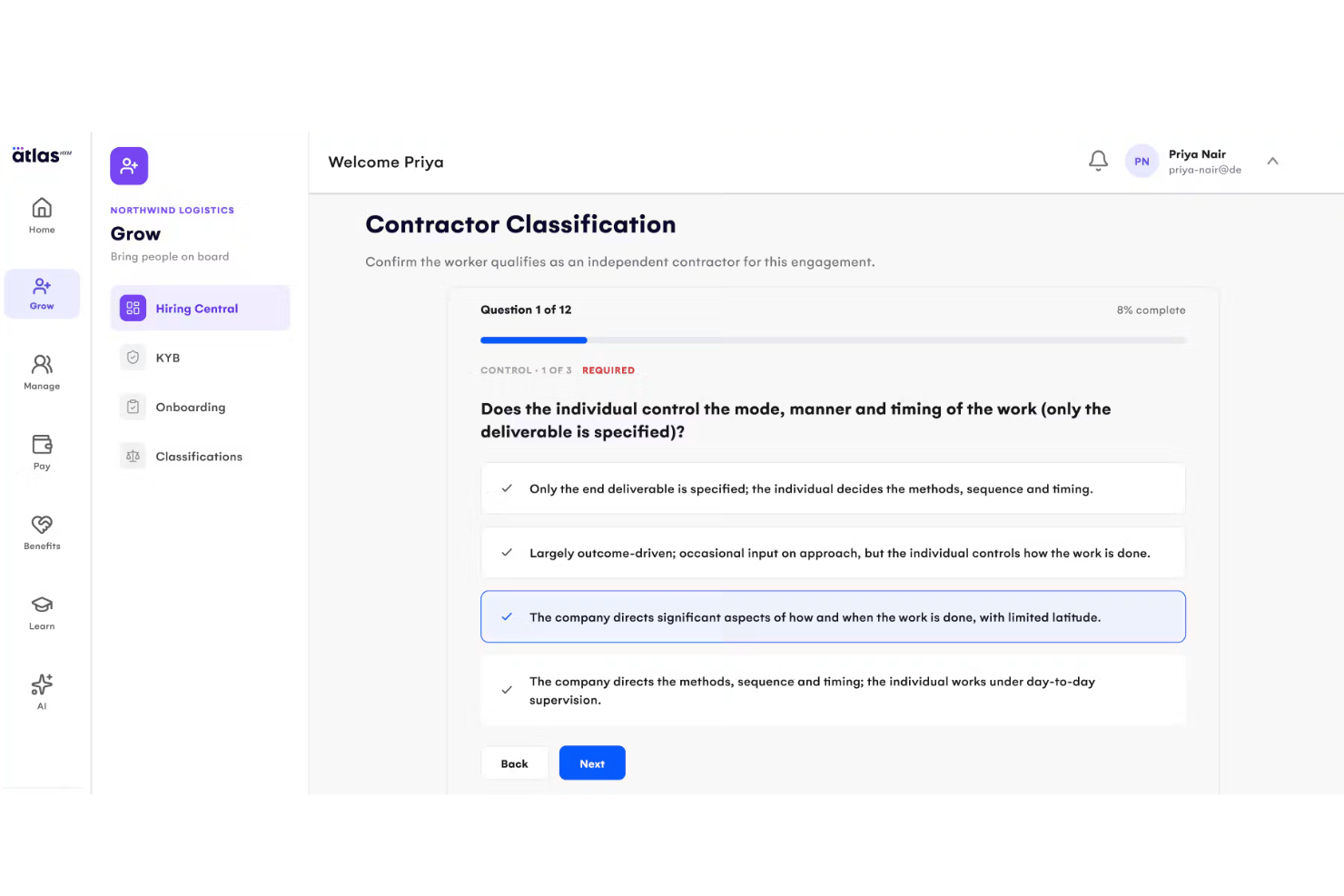
Atlas HXM is a direct employer of record platform for hiring in the Philippines. It handles PHP payroll, statutory contributions, employment contracts, and benefits administration.
Who Is Atlas HXM Best For?
Atlas HXM is a strong fit for global companies placing foreign nationals in the Philippines that want work authorization and employment handled by one provider.
Why I Picked Atlas HXM
Atlas HXM earns its spot on my shortlist because it handles Alien Employment Permit (AEP) and work permit applications in-house. I've found that when a company needs to place a foreign national in the Philippines, the AEP process alone, including eligibility assessment, case management, and quota compliance, can stall a hire by weeks if it's outsourced separately. Atlas bundles that directly into its EOR service, running on its own owned Philippine legal entity rather than a third-party partner network.
Atlas HXM Key Features
- Statutory contributions management: Calculates and remits SSS, PhilHealth, Pag-IBIG, and BIR withholding in every Philippine payroll run.
- Localized employment contracts: Generates Philippine-compliant contracts covering probation periods, leave entitlements, termination terms, and notice requirements during onboarding.
- Agent of Record (AOR) for contractors: Assesses worker classification, runs quarterly reviews, and provides reclassification cost protection up to $100,000 per contractor.
- Upskilling & L&D perks: Includes Atlas HXM Learning, giving local teams access to 9,000+ courses.
Atlas HXM Integrations
Atlas HXM integrates with Workday, BambooHR, Sage, Paycor, UKG, Okta, and Dayforce. It also provides an API for custom connections.
Pros and Cons
Pros:
- Philippine statutory contributions handled locally
- Directly owned Philippine employing entity
- In-house AEP and work permit handling
Cons:
- Steep learning curve
- Payroll coordination can delay payouts
Best for navigating Philippine termination rules
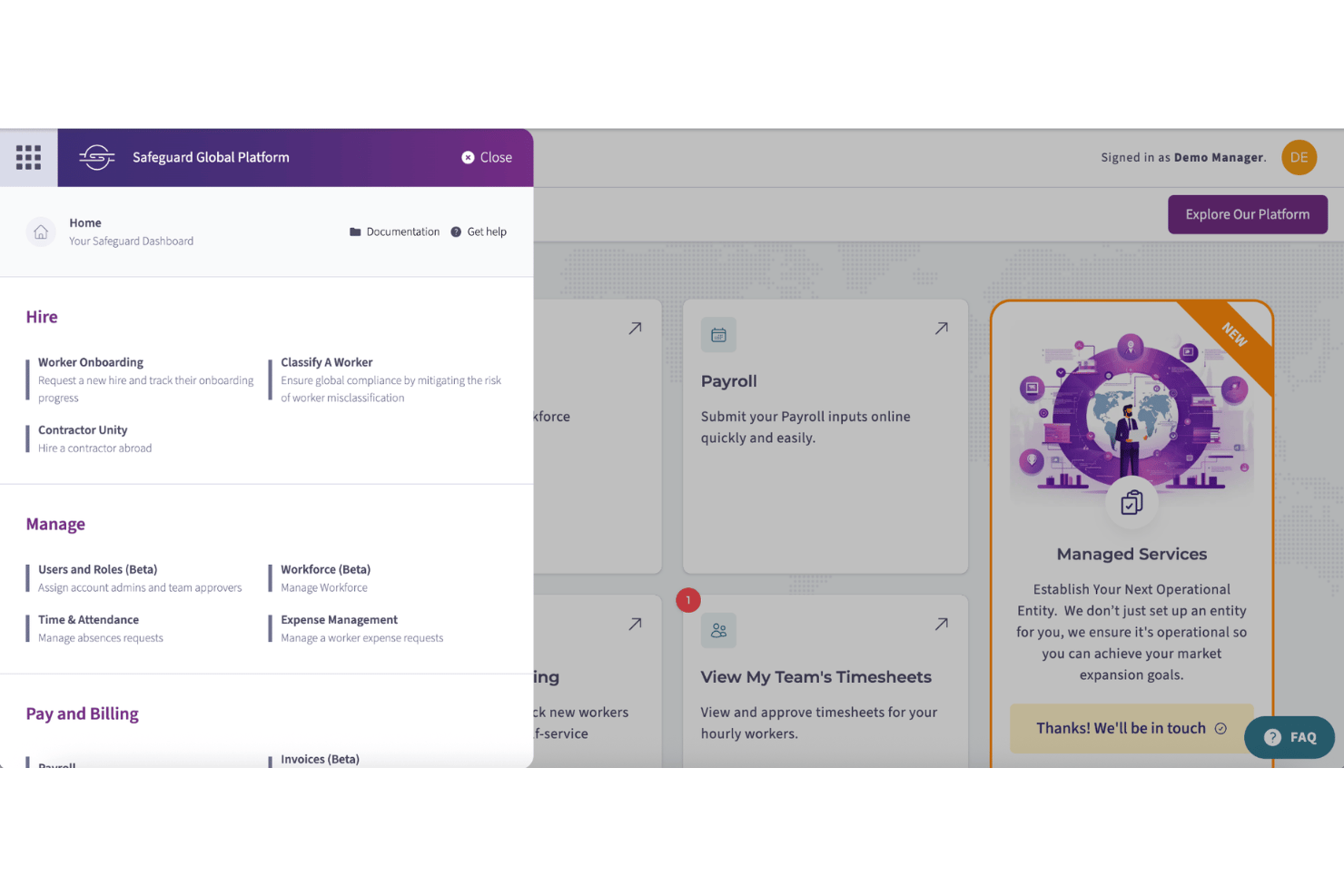
Safeguard Global is an employer of record (EOR) service covering 187 countries. In the Philippines, it handles employment contracts, statutory payroll, labor compliance, and benefits administration.
Who Is Safeguard Global Best For?
Safeguard Global is a strong fit for global expansion leads and HR teams hiring in the Philippines that want termination guidance documented before the first offer goes out.
Why I Picked Safeguard Global
I’ve included Safeguard Global in my top picks because its Philippines guidance addresses the hardest part of local employment: termination. Philippine labor law separates just causes from authorized causes, each with its own DOLE due-process steps and separation pay calculations, and Safeguard documents both in detail. also like that it handles statutory contributions (SSS, PhilHealth, Pag-IBIG, and BIR withholding) and mandatory 13th-month pay as part of its standard EOR scope.
Safeguard Global Key Features
- Worker classification quiz: A self-serve tool that assesses misclassification risk before you hire, helping you decide whether to engage a Philippine worker as an employee or contractor.
- Employee self-service portal: Lets Philippine employees update personal information and upload documents, reducing administrative back-and-forth for your HR team.
- Regulatory Hub: A continuously updated resource tracking Philippine labor law, payroll, and tax changes from DOLE and BIR.
- Workforce spend analytics: Built-in data charts that give finance teams immediate visibility into total employer burdens, including basic salary, employer contributions, and EOR operational fees.
Safeguard Global Integrations
Safeguard Global integrates with Oracle HCM, Workday, SAP SuccessFactors, and ADP. An API is also available for custom integrations.
Pros and Cons
Pros:
- Handles statutory payroll and benefits locally
- Responsive in-country support
- Detailed guidance on Philippine termination rules
Cons:
- User interface can feel outdated
- EOR model isn't Philippine co-employment

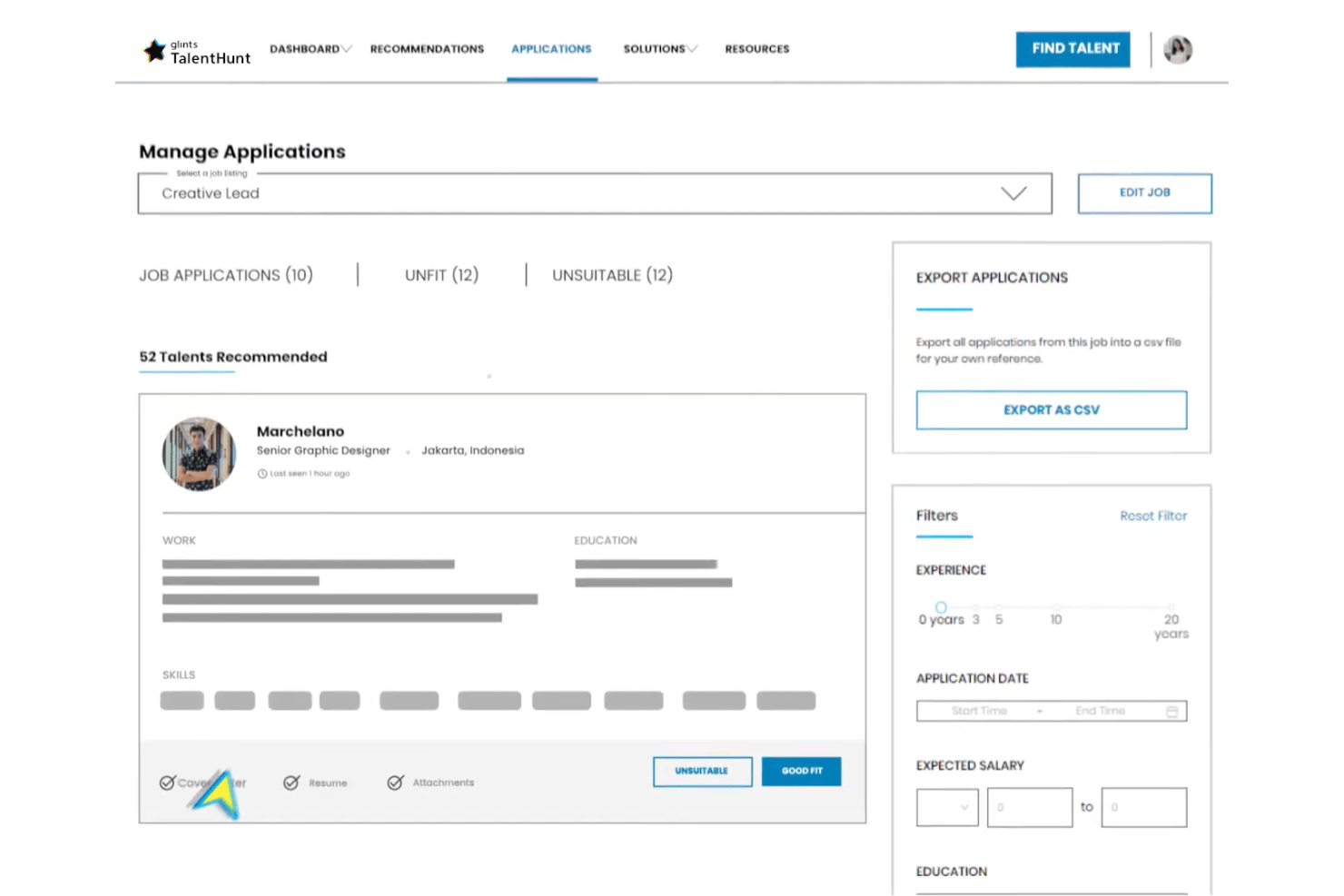
Glints TalentHub is a PEO and employer of record service for the Philippines. It covers payroll administration, statutory compliance, and benefits management.
Who Is Glints TalentHub Best For?
Glints TalentHub is a good fit for companies entering Southeast Asia that want to hire Philippine talent without managing separate recruitment and EOR vendors.
Why I Picked Glints TalentHub
I’ve included Glints TalentHub in my top picks because it pairs talent sourcing with EOR coverage under one vendor. If you don’t have a candidate lined up, it can shortlist from its regional network within a week, then move straight into onboarding and 13th-month pay administration. I also like that the local specialists handle AEP and 9(g) visa applications.
Glints TalentHub Key Features
- Statutory contributions management: Handles SSS, PhilHealth, Pag-IBIG, and BIR withholding registration and remittance on your behalf.
- Termination and offboarding module: Dedicated support for Philippine just-cause termination, DOLE compliance, and severance calculations.
- Employee self-service portal: Staff can access payslips, submit expenses, track leave, and view attendance through the Managed Talent Platform.
- Private health insurance add-on: Local insurance partner packages are available for EOR employees based in the Philippines.
Glints TalentHub Integrations
Glints TalentHub doesn't have any documented native integrations, public API, webhooks, or Zapier connection.
Pros and Cons
Pros:
- Local immigration and visa assistance
- Philippine statutory filing support
- Unified talent sourcing and employment
Cons:
- Focused on Asia-Pacific markets
- Limited platform workflow controls

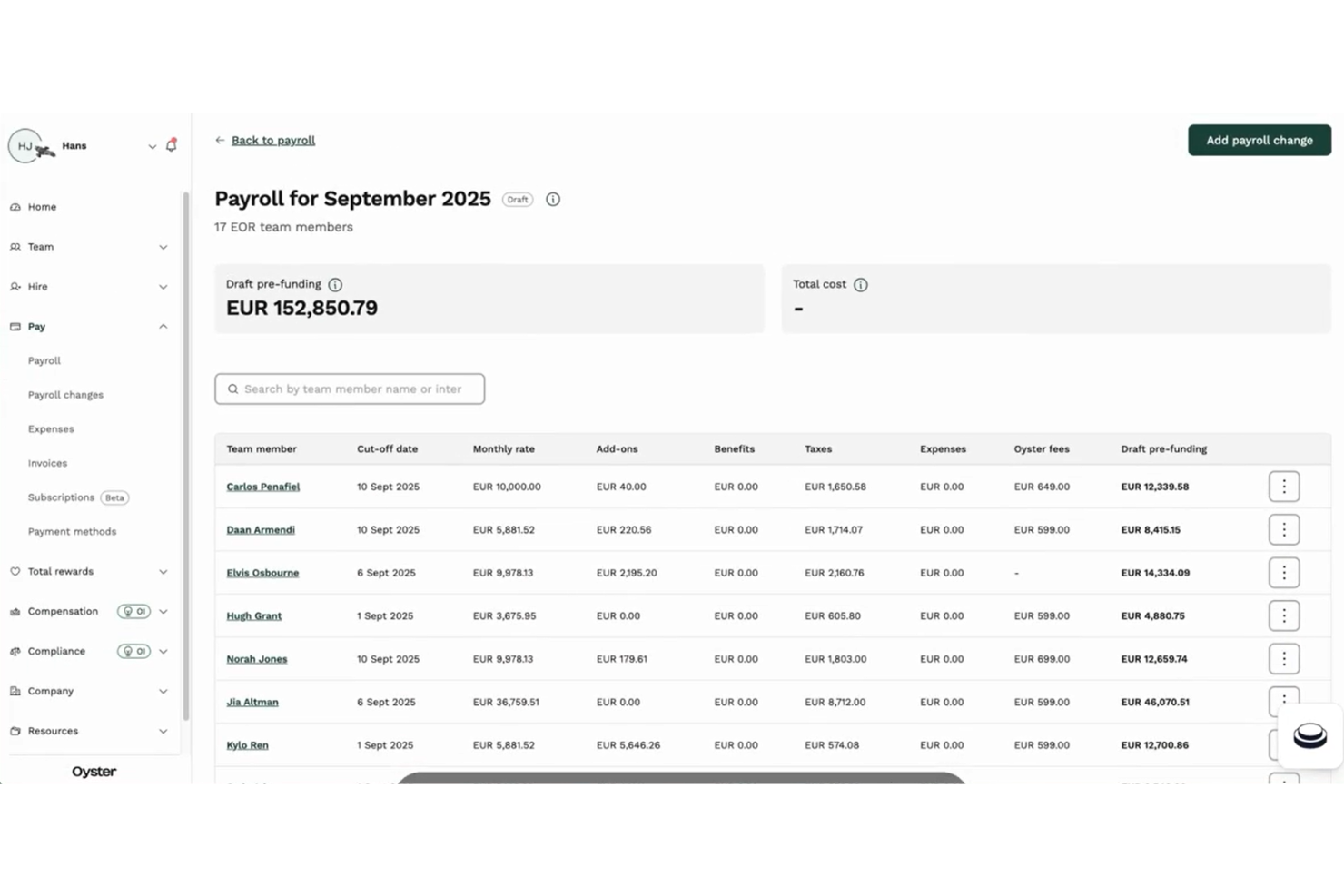
Oyster is an employer of record platform covering the Philippines and 120+ other countries. It handles employment contracts, statutory payroll, and benefits administration.
Who Is Oyster Best For?
Oyster is a strong fit for founders and global expansion teams that include equity in their Philippine offers.
Why I Picked Oyster
Oyster earns its spot on my shortlist because its 13th-month pay is built into payroll calculations with Philippine tax-exempt thresholds (up to ₱90,000) already accounted for, so there's no scrambling every December. Oyster also tracks live regulatory changes like the BIR Revenue Regulations (RR) No. 29-2025, so your Philippine contracts stay current without extra legwork on your end.
Oyster Key Features
- Statutory contribution management: Calculates and remits SSS, PhilHealth, and Pag-IBIG contributions, reflecting rate changes like the 2025 SSS increase to 15%.
- Localized contract generation: Auto-generates Philippine-compliant employment contracts with built-in probation, IP assignment, and non-compete guidance.
- Employee self-service portal: Employees can access payslips, PTO balances, and benefits enrollment through a mobile-friendly, localized app.
- Oyster Shell misclassification assessment: Analyzes contractor misclassification risk and provides aggregate protection up to $500,000 for Philippine contractor engagements.
Oyster Integrations
Oyster offers integrations with BambooHR, Xero, QuickBooks, NetSuite, SAP Concur, and Carta. It also provides an API for custom integrations.
Pros and Cons
Pros:
- Contracts updated for new BIR rules
- Tracks Philippine statutory contribution changes
- Equity grants managed in the platform
Cons:
- Ticket support can delay payroll answers
- Partner-entity model limits local control
Other PEOs in the Philippines
Here are some additional PEO options that didn’t make it onto my shortlist, but are still worth checking out:
- G-P
For AI-guided onboarding at scale
- Papaya Global
For enterprise payroll with liability transfer
- Rivermate
For dedicated account manager support
- Employment Hero
For unified HR and EOR across 180+ markets
- Multiplier
For scaling multi-country hiring
- RemoFirst
For low-cost hiring across 185 countries
- Payoneer Workforce Management
For Payoneer-backed global hiring
- Gloroots
For low-cost hiring with no FX markup


How I Evaluate Philippines PEOs
I split my evaluation into three parts: core functionality (legally employing workers in the Philippines and managing SSS, PhilHealth, Pag-IBIG, and BIR filings) carries the most weight. Then I look for standout features like immigration and visa support. Beyond that, I consider cost transparency and termination risk management.
Core Functionality (Table Stakes For This List)
When I'm selecting tools for my list, I score each one on a scale from 0 (does not offer the functionality) to 5 (excels in this area) for each core functionality listed below. I then convert the total into a percentage to help assess each tool's overall fit, with extra weight on any functionalities I've deemed essential.
- Local Employer of Record (Essential): I check whether the provider employs Philippine workers under its own registered entity or relies on third-party partners, since that affects compliance risk transfer.
- Statutory Compliance (Essential): I evaluate how each provider handles SSS, PhilHealth, Pag-IBIG, and BIR filings, looking for automated tracking and timely remittance rather than manual processes.
- Local Payroll Processing: Accurate pay runs on Philippine cycles matter, so I look at how each tool handles overtime, holiday pay, 13th-month calculations, and multi-currency disbursement.
- Benefits Administration: Beyond statutory coverage, I look for supplementary options like HMO enrollment and whether employees get self-service access to manage their own benefits.
- Contract Localization: Each provider should issue employment contracts that reflect current Philippine labor code requirements without needing your legal team to rewrite them.
- HR Support and Documentation: I evaluate onboarding, offboarding, and recordkeeping support, paying attention to response times, dedicated account management, and termination handling.
Once I have a list of tools that meet the criteria, I consider what sets each platform apart.
Differentiating Factors (What Sets Vendors Apart)
Here's how I compare and contrast different vendors:
Standout Features
I look for immigration and visa support that covers 9(g) work permits and Alien Employment Permit applications, since hiring foreign nationals in the Philippines without that capability creates real delays. Equity and bonus administration also matters—I check whether a provider can handle stock options alongside mandatory 13th-month pay, because mismanaging either creates compliance gaps. Employee self-service portals round out my evaluation; when Philippine-based employees can access payslips, leave balances, and tax documents directly, it reduces the volume of routine requests hitting your HR team.
Beyond Features
I check how quickly a provider can onboard a Philippine hire without waiting on entity setup, since delays cost you candidates in a competitive market. Cost transparency matters just as much—I compare per-employee-per-month pricing against percentage-of-payroll models and look for hidden fees around benefits or termination. Termination risk is the other area I evaluate closely. Philippine labor law requires strict just-cause documentation and DOLE due process, so I look for providers with demonstrated experience handling disputes rather than ones that simply promise compliance.
How to Choose a PEO in the Philippines
Choose the right PEO by testing its local compliance process, payroll accuracy, documentation, and handling of employment risk.
| If your priority is | Look for |
|---|---|
| Correct statutory administration | Written responsibility for SSS, PhilHealth, Pag-IBIG, and BIR filings |
| Predictable payroll | A sample calculation covering overtime, holidays, and 13th-month pay |
| Faster hiring | A documented onboarding timeline from signed offer to first payroll |
| Lower termination exposure | A written process for just cause, notice, documentation, and DOLE due process |
How to Vet Your Shortlist
- Test compliance support: File one detailed question about SSS, PhilHealth, Pag-IBIG, and BIR remittances, then assess the written response within two business days.
- Request payroll evidence: Ask for a redacted Philippine payslip and a sample 13th-month calculation before signing.
- Review employment documents: Request the proposed employment contract and verify salary, working hours, leave, termination, and statutory benefits clauses.
- Run an onboarding trial: Ask the provider to map a hypothetical hire from accepted offer through first payroll using a five-step implementation plan.
- Choose your risk position: Decide whether you prefer an owned local entity with direct control or a partner-based model with potentially broader coverage and different liability boundaries.
What Is a Philippines PEO?
PEO in the Philippines refers to employment services that help businesses hire and manage workers in the Philippines without establishing a local entity. These providers typically handle employment contracts, payroll, statutory contributions, benefits, 13th-month pay, and labor compliance. Your business directs employees’ daily work while the PEO manages essential employment administration and documentation.
Features of PEOs in the Philippines
When looking to hire a PEO in the Philippines, keep an eye out for these key features:
- Local employer of record: The provider employs your Philippine-based workers through its own local entity or an approved partner, so you can hire without a Philippine subsidiary.
- Statutory compliance: Covers SSS, PhilHealth, Pag-IBIG, and BIR registrations, calculations, filings, and remittances, including deadline tracking.
- Local payroll processing: Calculates salaries, overtime, holiday pay, leave deductions, taxes, and 13th-month pay on Philippine pay schedules.
- Benefits administration: Enrolls employees in mandatory government programs and coordinates supplementary benefits such as health coverage.
- Localized employment contracts: Prepares contracts that reflect Philippine labor requirements for compensation, working hours, leave, and termination.
- Onboarding and offboarding: Manages document collection, employee registration, policy acknowledgments, final pay, and exit records.
- Employee self-service: Gives employees portal access to payslips, tax documents, leave balances, and benefits details.
- Immigration and work permits: Supports foreign-national hiring through Alien Employment Permit applications and 9(g) work visas.
- Termination support: Guides your team through notice requirements, just-cause documentation, final pay, and Department of Labor and Employment (DOLE) due process.
- Dedicated HR support: Assigns a named account manager or local HR team for payroll questions, employee concerns, and legal compliance requests.
Benefits of Philippines PEOs
Using a Philippines PEO offers several benefits for your team and your business. Here are a few you can look forward to:
- Faster local hiring: Onboard Philippine employees without requiring your business to establish a local entity first.
- Statutory compliance support: Providers manage SSS, PhilHealth, Pag-IBIG, and BIR registrations, calculations, filings, and remittances.
- Accurate local payroll: Payroll administration can cover overtime, holiday pay, deductions, taxes, salary disbursement, and 13th-month pay.
- Localized employment contracts: Providers prepare contracts that address Philippine labor requirements, working hours, leave, compensation, and termination conditions.
- Managed benefits administration: Employees can receive mandatory government coverage and access to supplementary benefits through a coordinated enrollment process.
- Reduced termination risk: Local HR specialists can guide documentation, notice requirements, final pay, and Department of Labor and Employment due process.
- Employee self-service: Portals give employees access to payslips, tax documents, leave balances, personal information, and benefits details.
Costs and Pricing of PEOs in the Philippines
Selecting a PEO in the Philippines requires understanding the pricing models and plans available. Costs vary based on features, team size, add-ons, and employment requirements. The table below summarizes common plans, average prices, and typical features included.
Plan Comparison Table for Philippines PEOs
| Plan Type | Average Price | Common Features |
|---|---|---|
| Free Plan | $0 | Provider comparisons, compliance resources, and basic hiring guidance. |
| Personal Plan | $500-$800/employee/month | Local employment contracts, payroll processing, statutory contributions, and employee onboarding. |
| Business Plan | $300-$600/employee/month | Everything in the personal plan, benefits administration, employee self-service, and dedicated HR support. |
| Enterprise Plan | $200-$500/employee/month | Everything in the business plan, volume-based pricing, immigration support, custom reporting and termination assistance. |
PEOs in the Philippines FAQs
Here are some answers to common questions about Philippines PEOs:
Can a PEO in the Philippines hire employees without a local entity?
Yes, they can hire local employees without requiring your business to establish a Philippine subsidiary. The provider employs workers through its own local entity or an approved partner. Your business still directs daily work, responsibilities, and performance expectations. Before signing, confirm which entity appears on employment contracts and handles government registrations. Also ask whether the provider uses a partner model. That structure affects communication, liability, payroll control, and how quickly the provider can resolve employee concerns.
How long does it take to onboard a Philippine employee?
Onboarding timelines vary by provider, employee documentation, payroll cutoffs, and whether immigration support is needed. A local hire can usually move faster than a foreign national who needs work authorization. Ask for a written timeline covering the signed offer, contract issuance, employee registration, payroll setup, and first salary payment. You should also confirm the monthly payroll cutoff. Missing that date can delay the first payment. Request a five-step onboarding plan before choosing a provider, then compare timelines across your shortlist.
Can a PEO in the Philippines hire foreign nationals?
Yes, some providers support foreign-national hiring in the Philippines, but HR services differ. Ask whether the provider handles the Alien Employment Permit application and 9(g) work visa process. Confirm which party prepares documents, communicates with government offices, tracks renewals, and pays application fees. Immigration support may also require separate pricing. Do not assume that a provider offering local employment automatically manages work authorization. Get the scope, estimated timeline, employee requirements, and responsibility for renewal delays in writing before extending an offer.
What documents should I request before choosing a provider?
Request a sample employment contract, redacted Philippine payslip, 13th-month calculation, benefits summary, and termination procedure. Review the contract for salary, working hours, leave, statutory benefits, probation, and termination clauses. Check whether the payslip shows required deductions and employer contributions. Ask for written instructions covering SSS, PhilHealth, Pag-IBIG, and BIR responsibilities. You should also request the service agreement, fee schedule, onboarding timeline, and escalation process. These documents reveal how the provider handles daily administration and employment risk.