

10 Best Employer of Record Services in Sweden in 2026

Best Employer of Record Services in Sweden Shortlist


Employer of Record services in Sweden let you hire, pay, and manage employees without setting up a local entity. An EOR solution helps you build a global workforce, attract top talent, and stay compliant with Swedish regulations. These providers handle day-to-day HR tasks, including payroll, contracts, and statutory employee benefits, while ensuring full compliance with laws like the Employment Protection Act. They also manage requirements such as work permits, public holidays, and employee entitlements. By simplifying international hiring, EOR services make it easier to expand into Sweden while focusing on growing your business. In this guide, you’ll find the top Employer of Record services for Sweden, what makes each one unique, and how to pick the best fit for your hiring needs.
Why Trust Our Software Reviews
Our team has been testing and reviewing software since 2012. As HR experts ourselves, we know how difficult—and important—it is to choose the right software.
For this guide, we evaluated tools using hands-on testing and independent research, scoring tools using our selection criteria. We also draw on insights from industry thought leaders and practicing HR experts.
Our reviews reflect our human editorial judgment, not a sales pitch.
Expert reviewers:
Employer of Record Services in Sweden Comparison Table
This comparison table summarizes pricing details for my top employer of record services in Sweden selections.
| Tool | Best For | Trial Info | Price | ||
|---|---|---|---|---|---|
| 1 | Best for compliant hiring in Sweden | Not available | From $599/employee/month | Website | |
| 2 | Best for localized legal compliance | Free demo available | From $599/employee/month | Website | |
| 3 | Best for entity-free expansion | Free demo available | From $599/employee/month | Website | |
| 4 | Best for global teams hiring in Europe | Free demo available | From $19/user/month | Website | |
| 5 | Best for payroll automation | Free demo available | From $499/user/month | Website | |
| 6 | Best for localized payments | Free demo available | From $99/employee/month | Website | |
| 7 | Best for multinational contractor compliance | Not available | Pricing upon request | Website | |
| 8 | Best with dedicated account management support | Free demo available | From $199/employee/month | Website | |
| 9 | Best for multi-country Nordic hiring | Free demo available | From $459/user/month (billed annually) | Website | |
| 10 | Best for EOR-to-entity migration in Sweden | Free demo available | From $49/user/month | Website |


Employer of Record Services in Sweden Reviews
Below are my detailed summaries of the Employer of Record services in Sweden that made it onto my shortlist. My reviews offer a detailed look at the features, best use cases, and pricing of each platform to help you find the best one for you.

Best for compliant hiring in Sweden
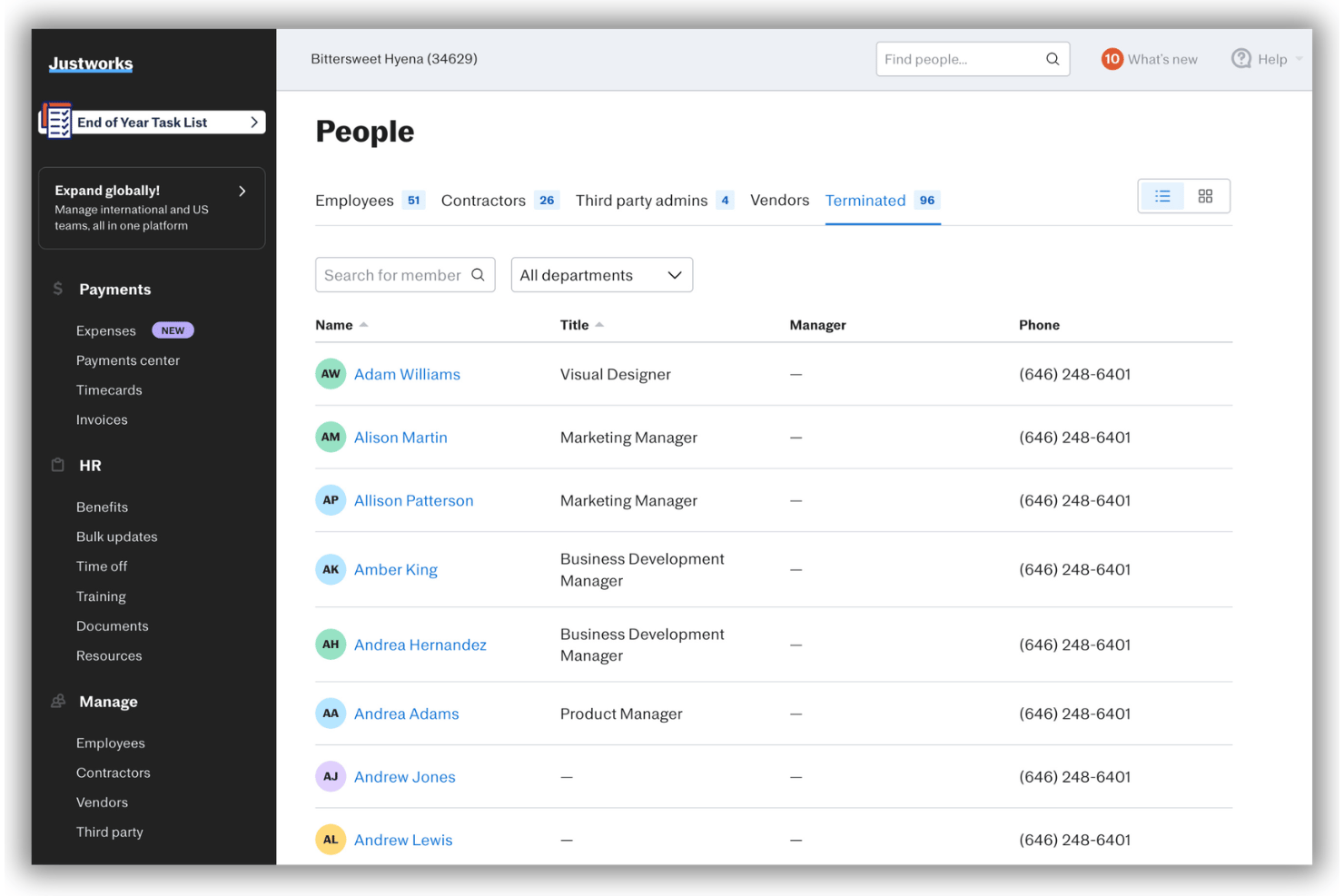
Justworks is an employer of record platform that manages global payroll, HR administration, employee onboarding, compliance, and benefits for businesses expanding or hiring in Sweden.
Who Is Justworks Best For?
Justworks suits small to mid-sized businesses that need to manage international teams or support remote employees in multiple countries, including Sweden.
Why I Picked Justworks
I picked Justworks as one of the best because I can use its built-in time tracking add-ons to capture work hours, manage approvals, and sync payroll for Swedish employees automatically. This saves hassle on timekeeping and compliance.
Justworks Key Features
- Global payroll processing: Run automated payroll for employees in multiple countries, including Sweden.
- Document management: Store, manage, and access employment contracts and HR documents in one secure location.
- Onboarding workflows: Set up streamlined onboarding steps for remote and international hires.
- Compliance monitoring: Stay updated with evolving employment laws and tax regulations in supported countries.
Justworks Integrations
Justworks offers native integrations with QuickBooks, Xero, Greenhouse, and Lever. An API is available for custom integrations.
Pros and Cons
Pros:
- Automated compliance updates for Swedish hires
- 24/7 customer support for global teams
- Built-in time tracking feeds payroll automatically
Cons:
- Limited custom contract options for Sweden
- Benefits coverage favors US employees

Best for localized legal compliance
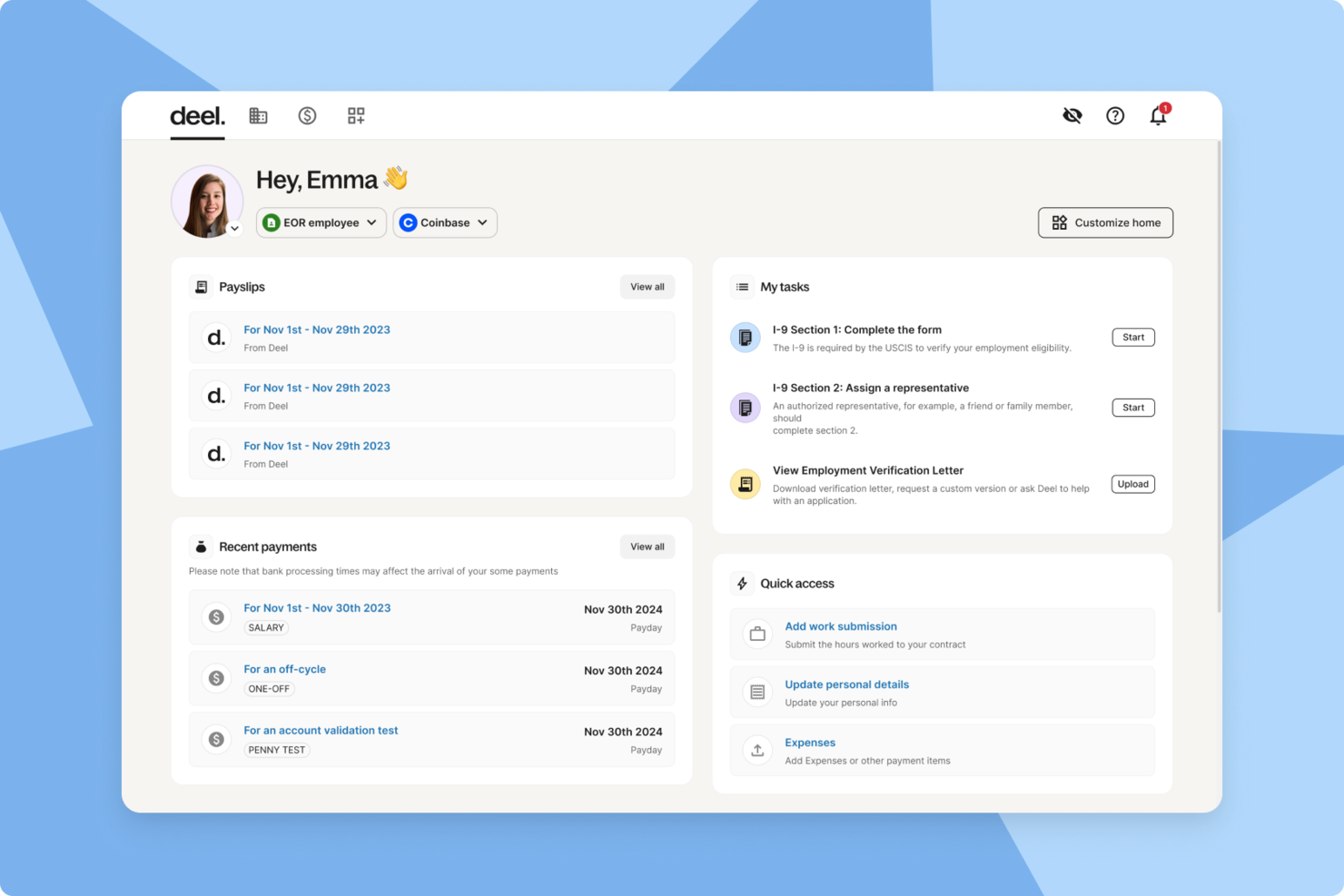
Deel Hire is an employer of record platform for Sweden that delivers localized contracts, integrated onboarding, payroll, and compliance management for teams hiring internationally.
Who Is Deel Hire Best For?
Deel Hire is a strong fit for mid-size to enterprise companies hiring across multiple countries who need a single platform to manage compliance, payroll, and contracts.
Why I Picked Deel Hire
I've included Deel Hire in my top picks because its approach to localized legal compliance goes well beyond generic contract templates. What I particularly like is the Compliance Monitor feature, which actively tracks regulatory changes—things like wage updates, tax rule adjustments, and employment law shifts—and flags them inside your existing workflows before they become a problem. For Sweden specifically, that means Deel is watching changes to Swedish labor law automatically, so your team isn't scrambling to catch up. I also like that Deel uses an AI-powered worker classifier to assess misclassification risk against country-specific rules, which is a real concern when you're hiring employees in Sweden without a local entity.
Deel Hire Key Services
- Localized contract generation: Deel automatically generates employment contracts that meet Swedish and country-specific legal requirements at the time of hire.
- Benefits enrollment management: Manage both mandatory statutory benefits and optional supplemental benefits for employees hired in Sweden, all within the platform.
- Workforce Insights dashboard: Surfaces compliance risks flagged across your workers, payroll, and benefits so your team can act before issues escalate.
- Automated onboarding workflows: Collects documents, assigns tasks, and sets up account access for new hires in a single connected flow, without manual handoffs.
Deel Hire Integrations
Deel Hire offers native integrations with Workday, Greenhouse, BambooHR, Hibob, QuickBooks, NetSuite, and Xero. It also provides an API for custom integrations.
Pros and Cons
Pros:
- Real-time compliance monitoring for Sweden-specific rules
- Benefits administration aligned with Swedish regulations
- Built-in background checks for Swedish hires
Cons:
- Reporting options are less customizable for Sweden
- Payroll cycle scheduling can be rigid

G-P
Best for entity-free expansion
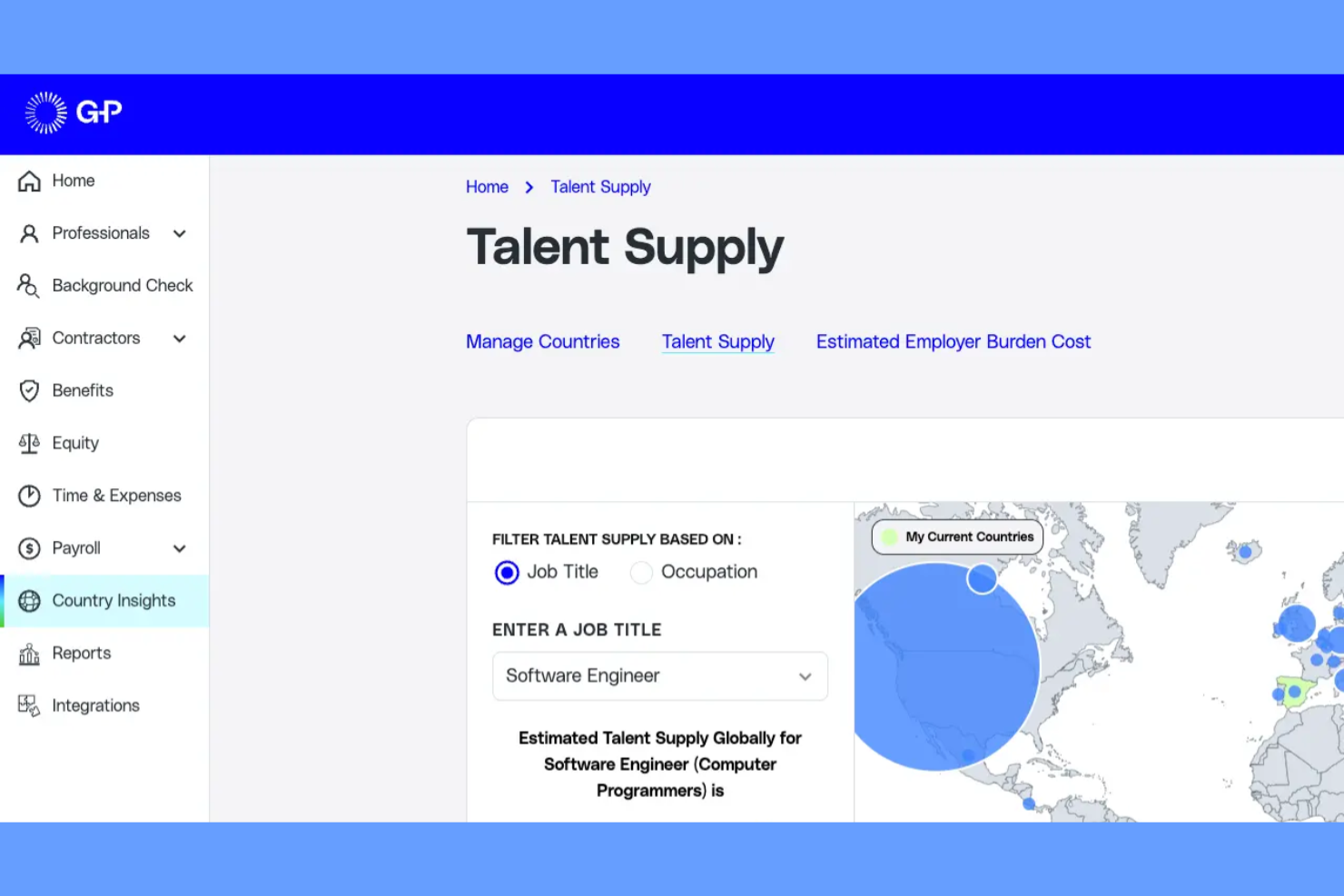
G-P is an Employer of Record platform for Sweden that handles local employment contracts, payroll, compliance, and HR administration through a single global system.
Who Is G-P Best For?
Global companies and HR teams hiring employees in Sweden who need a single platform for compliant onboarding and payroll.
Why I Picked G-P
I picked G-P as one of the best because I trust their global reach and local expertise for managing Swedish compliance. My team uses G-P to generate employment contracts and handle payroll in Swedish krona, while ensuring alignment with authorities like the Swedish Tax Agency and the Swedish Social Insurance Agency. I also like that G-P provides in-country HR support and helps manage requirements related to healthcare, keeping us up to date with changes in Swedish labor laws.
G-P Key Services
- Employee self-service portal: Lets Swedish employees access payslips, contracts, and personal data.
- Automated onboarding workflows: Guides new hires in Sweden through each onboarding step.
- Time-off tracking: Tracks and manages Swedish employee leave requests and balances.
- Document management: Stores and organizes Swedish employment documents securely in the platform.
G-P Integrations
G-P offers native integrations with ADP Workforce Now, Paylocity, TriNet, UKG Pro, Workday, and more. An API is also available for custom integrations.
Pros and Cons
Pros:
- Real-time Swedish payroll calculations provided
- Option for Swedish stock option administration
- Dedicated Swedish onboarding specialists assigned
Cons:
- Swedish platform navigation is only in English
- Swedish statutory updates require manual monitoring

Best for global teams hiring in Europe
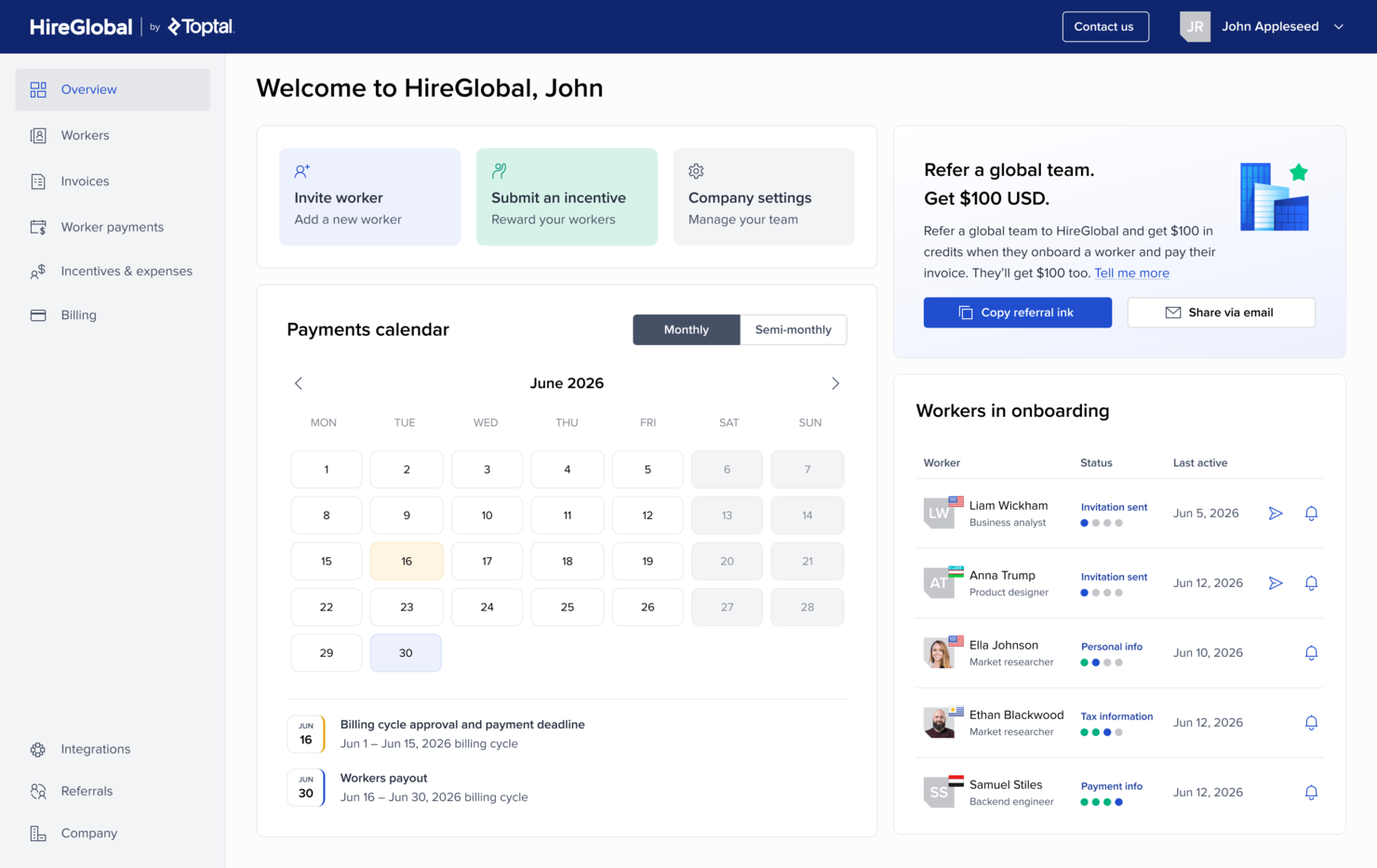
HireGlobal is Toptal's employer of record platform that handles employment contracts, payroll processing, benefits administration, and compliance management for companies hiring workers across 150+ countries, including Sweden.
Who Is HireGlobal Best For?
HireGlobal is a good fit for companies that already use Toptal for freelance talent and want to convert or hire full-time employees in Sweden and other global markets.
Why I Picked HireGlobal
I've included HireGlobal in my top picks because of how it handles HR support across language and regional boundaries. Its team of 40+ lawyers and local compliance experts manages employment documentation, payroll, and labor law requirements in 150+ countries, which means worker communications, contracts, and HR processes aren't getting lost in translation. I also like that its centralized HRIS keeps all worker data, benefits, and payroll in one place, so managing a multilingual, multi-country team doesn't require juggling separate systems for each region.
HireGlobal Key Features
- $1M worker indemnification: Each worker hired through HireGlobal comes with up to $1 million in indemnification coverage per worker.
- IP and invention rights protection: HireGlobal's contracts include clauses that secure your company's intellectual property rights for every hire.
- Multi-currency payroll processing: Run payroll in 120+ currencies to pay Swedish and global workers in their local currency.
- Worker misclassification safeguards: HireGlobal flags classification risks to keep contractor and employee designations compliant with local law.
HireGlobal Integrations
HireGlobal integrates directly with TopTracker, Toptal's time tracking tool, giving you an end-to-end solution to track time, approve invoices, and pay your workforce from one place.
Pros and Cons
Pros:
- Built-in intellectual property safeguards
- In-house team of 40+ lawyers
- $1 million indemnification per V-EOR worker
Cons:
- Local EOR relies on third-party partner entities
- Limited integration and open API support

Best for payroll automation
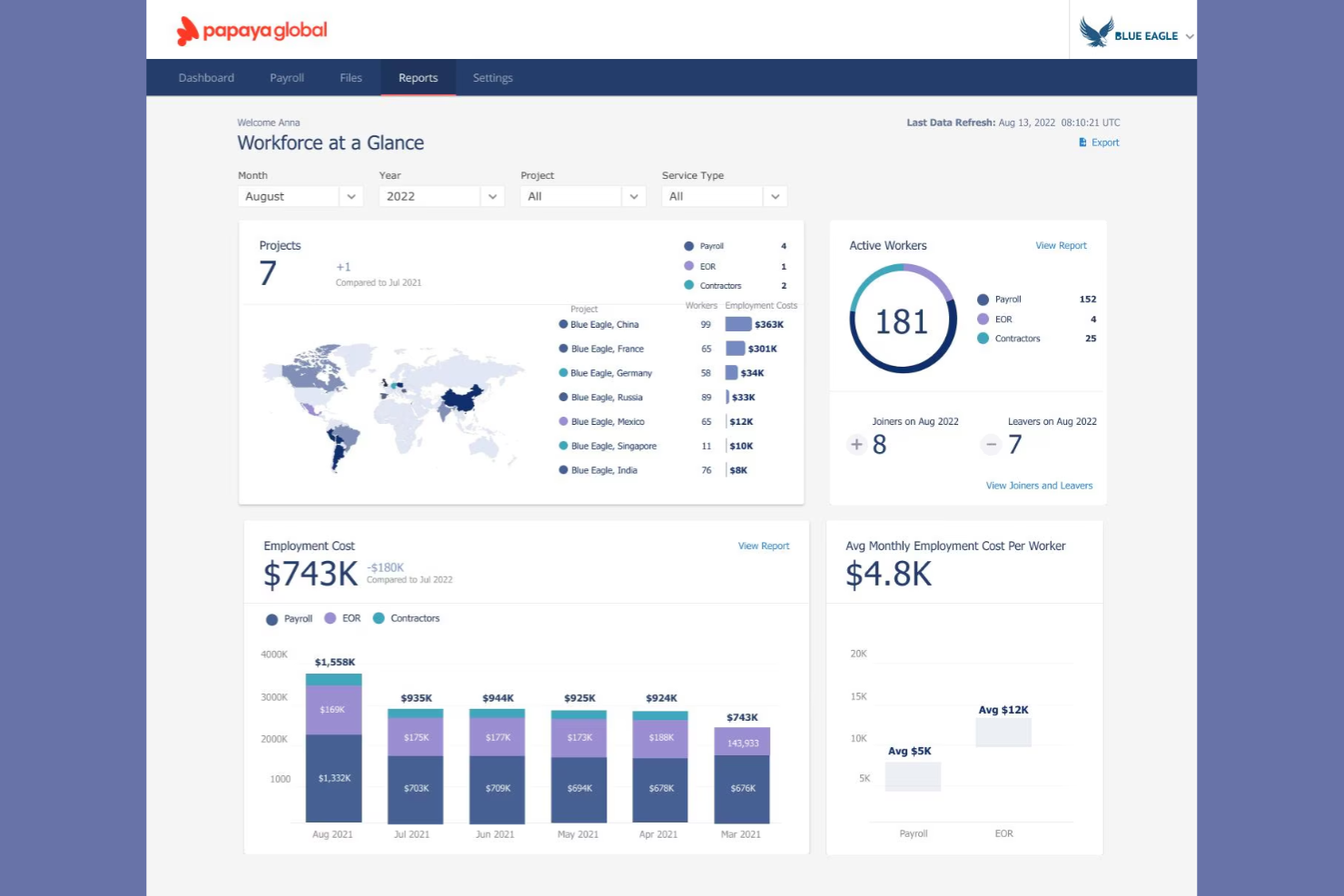
Papaya Global is a global payroll and Employer of Record platform for Sweden that centralizes onboarding, workforce management, payroll processing, and compliance in one system.
Who Is Papaya Global Best For?
Global companies and HR teams managing payroll and compliance for employees in Sweden.
Why I Picked Papaya Global
I picked Papaya Global as one of the best because I can automate Swedish payroll and compliance tasks for my distributed team using their unified platform. I like that Papaya Global handles onboarding, local tax calculations, and statutory reporting for Sweden. My team uses its dashboard to manage employment documents and monitor workforce costs in real time.
Papaya Global Key Services
- Employment contract generation: Create compliant Swedish employment contracts directly in the platform.
- Multi-currency payments: Pay Swedish employees and contractors in SEK or other currencies.
- Document management: Store and organize HR and payroll documents securely online.
- Time-off tracking: Monitor and approve Swedish employee leave requests within the system.
Papaya Global Integrations
Papaya Global offers native integrations with Eqip, SAP SuccessFactors, Oracle HCM, Workday HCM, BambooHR, and more. The tool also supports integrations via API for custom workflows.
Pros and Cons
Pros:
- Multi-currency support covers SEK payroll
- Global analytics include Swedish workforce metrics
- Swedish payroll data updated in real time
Cons:
- Custom Swedish benefits packages may cost extra
- Swedish onboarding timelines can fluctuate seasonally

Best for localized payments
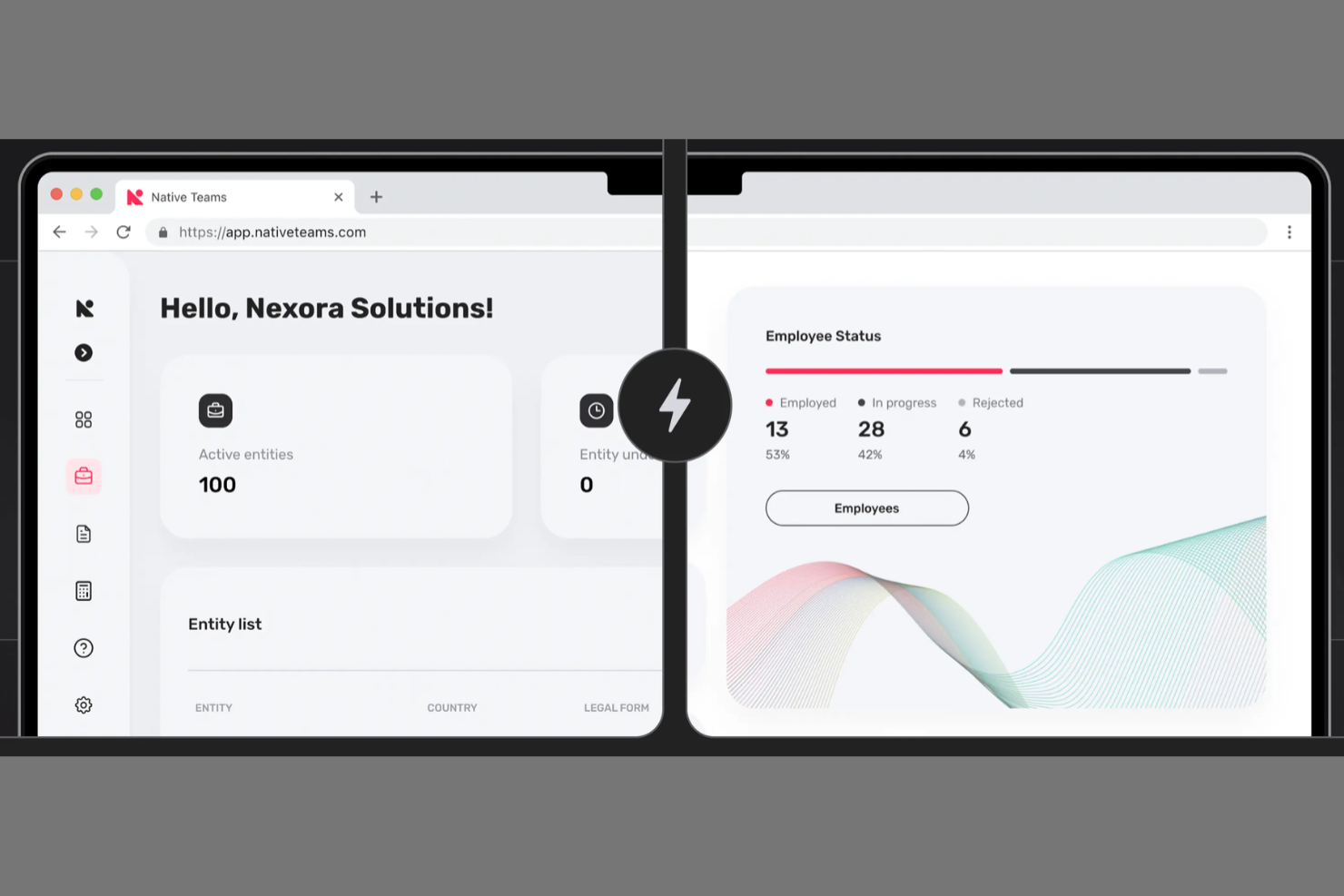
Native Teams is an Employer of Record platform for Sweden that combines local HR support, payroll processing, contract management, and compliance tools in one system.
Who Is Native Teams Best For?
Global companies and HR teams hiring employees or contractors in Sweden who need local HR expertise.
Why I Picked Native Teams
I picked Native Teams as one of the best because I can rely on their local Swedish HR experts to handle employment contracts and compliance for my hires. I like that my team can generate Swedish-compliant contracts and manage payroll directly in the platform. I also use their system to track statutory benefits and ensure all local employment requirements are met.
Native Teams Key Features
- Multi-currency payroll: Process payments to Swedish employees in SEK or other currencies.
- Digital document storage: Store and manage HR and payroll documents securely online.
- Time-off management: Track and approve Swedish employee leave requests within the platform.
- Expense tracking: Submit and review employee expenses for Swedish hires.
Native Teams Integrations
Native integrations are not currently listed. The tool supports integrations via API for custom workflows.
Pros and Cons
Pros:
- Live chat for Swedish HR support queries
- Swedish employees can access digital wallet payouts
- Swedish pay to local bank accounts supported
Cons:
- No Swedish payroll reporting exports available
- No Sweden-specific pension support options

Best for multinational contractor compliance
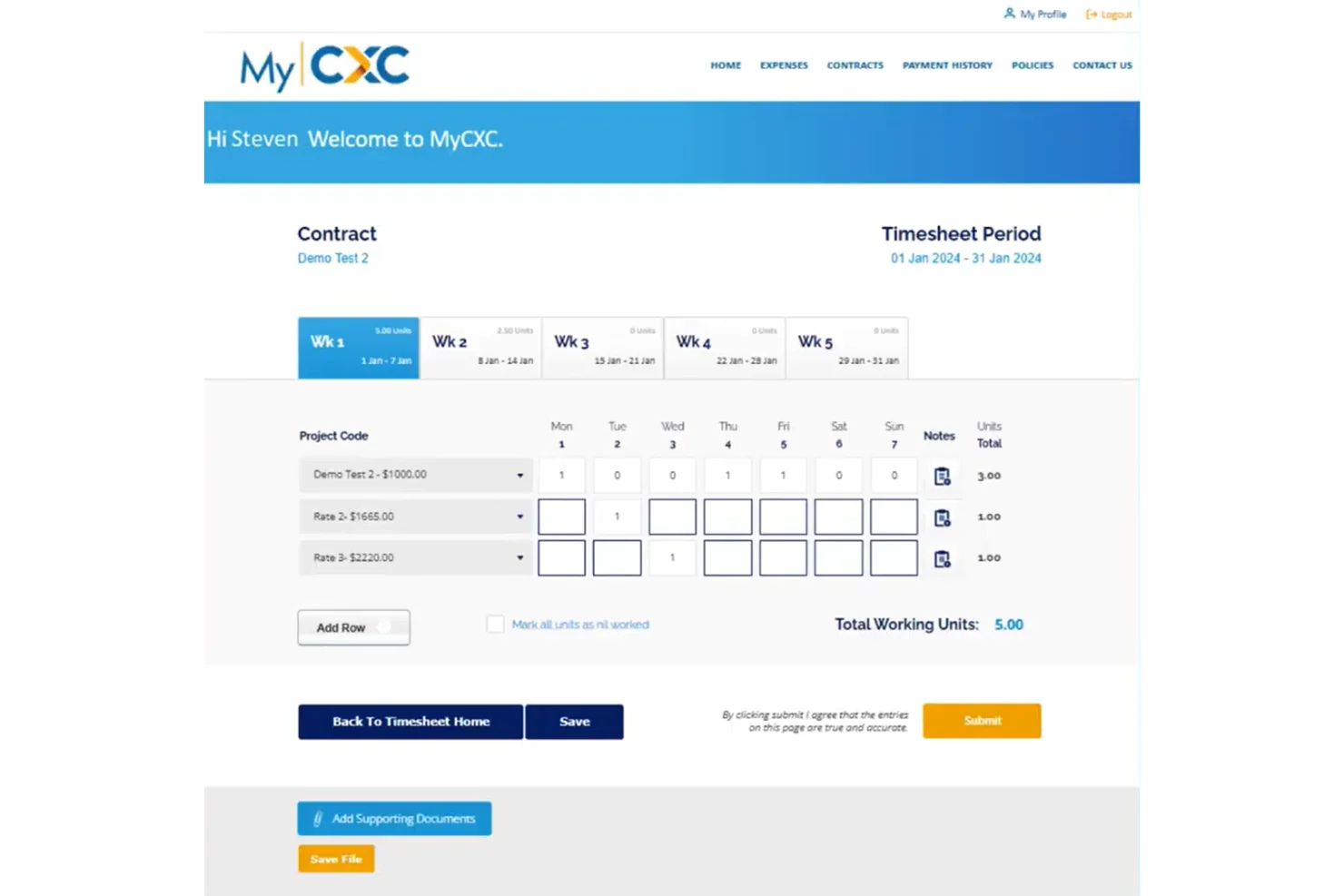
CXC Global is a global employer of record and contingent workforce management provider that handles payroll, employment contracts, tax compliance, statutory benefits, and contractor engagement across 100+ countries, including Sweden.
Who Is CXC Global Best For?
CXC Global is a strong fit for enterprise HR and procurement teams managing large contingent workforces across multiple countries simultaneously.
Why I Picked CXC Global
CXC Global earns its spot on my shortlist because of how it handles contractor compliance across multiple countries simultaneously, including Sweden. I particularly like that it covers Sweden's collective bargaining agreements (kollektivavtal) and LAS requirements within a single managed service. Its owned-entity model means workers are employed directly by CXC's legal entities rather than third-party partners, keeping compliance accountability in one place.
CXC Global Key Features
- Swedish payroll processing: Runs local payroll cycles, including PAYE and employer social security contributions, with Skatteverket filings.
- MyCXC contractor portal: Provides workers and clients with access to payroll status, documents, and contract information.
- Global workforce analytics: Offers reporting dashboards for headcount, spend, and compliance across multiple countries.
- Vendor management system integration: Connects natively with SAP Fieldglass and Beeline to streamline contingent workforce management.
CXC Global Integrations
CXC Global offers native integrations with SAP Fieldglass and Beeline, and provides an API for custom integrations.
Pros and Cons
Pros:
- Deep expertise in collective bargaining agreements
- Owned legal entities across 100+ countries
- Strong Nordic multi-country coverage beyond Sweden
Cons:
- Limited self-serve onboarding without support
- Platform skews toward contractors over employees

Best with dedicated account management support
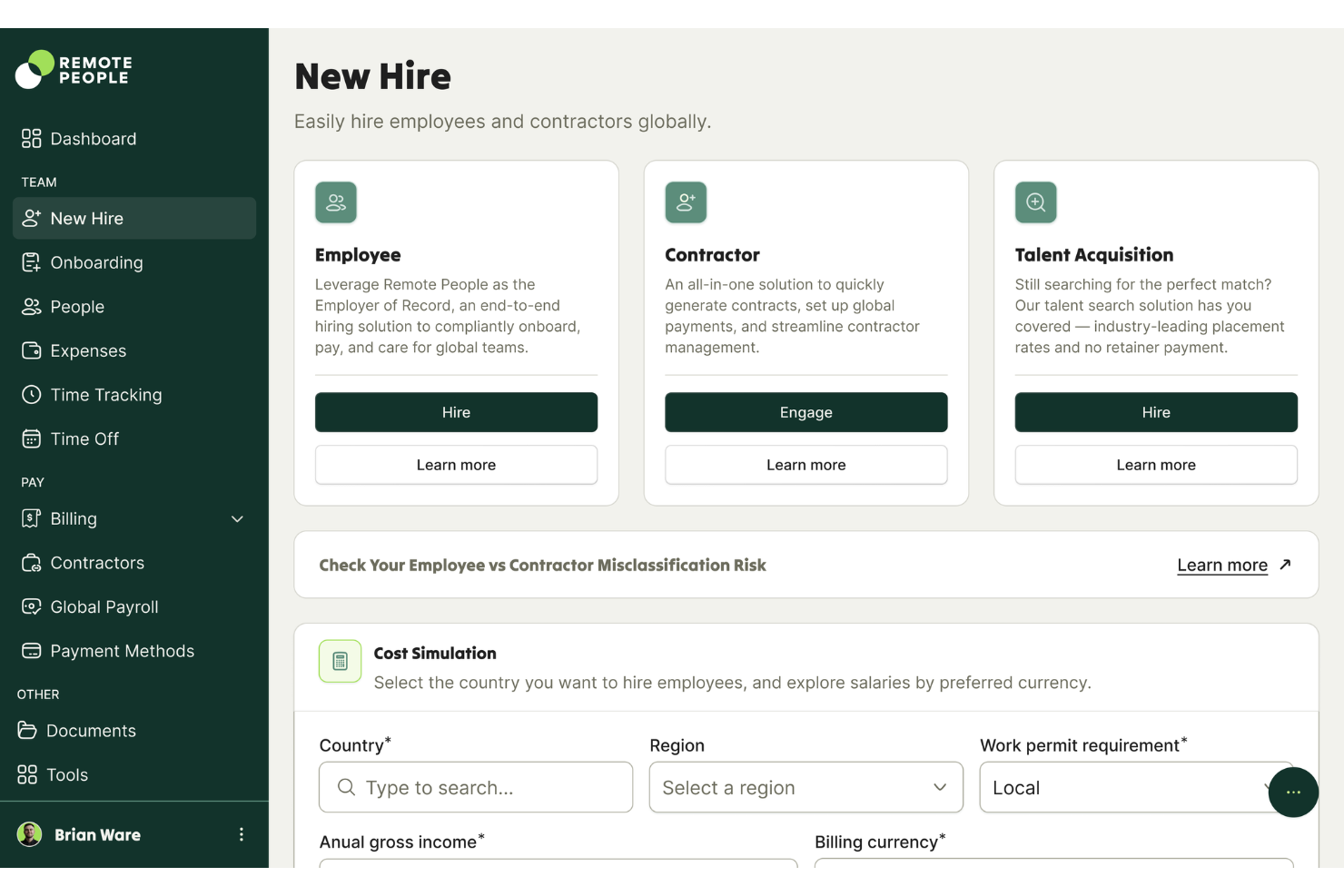
RemotePeople is an employer of record platform offering specialized services in Sweden, including contract management, payroll administration, strict labor compliance, and visa sponsorship tailored to the unique requirements of the Swedish market.
Who Is RemotePeople Best For?
RemotePeople is an ideal fit for international companies that want to hire Swedish employees with "local-level" benefits and pension compliance.
Why I Picked RemotePeople
RemotePeople earns its spot on my shortlist because of its high-touch account management for Swedish EOR clients. Every client gets a dedicated account manager who knows Swedish employment law firsthand, so when a question comes up about collective bargaining agreements or termination notice periods, I'm not waiting on a generic support queue.
I've found this especially useful when onboarding employees quickly, since my account manager coordinates the contract setup, payroll enrollment, and compliance checks directly. This is critical for Sweden, where navigating sector-specific collective bargaining agreements or the nuances of the Employment Protection Act (LAS) is often too complex for a self-service software platform.
RemotePeople Key Services
- Swedish payroll processing: RemotePeople runs monthly payroll in SEK, files the individual-level employer declaration (arbetsgivardeklaration på individnivå) with Skatteverket, and handles all tax withholdings and social contribution remittances.
- Collective agreement compliance: RemotePeople applies the applicable sectoral kollektivavtal to each hire, covering salary scales, ITP or SAF-LO occupational pension enrollment, and ancillary insurances through Fora or Collectum.
- Work permit sponsorship: As a registered Swedish legal employer, RemotePeople files standard work permit and EU Blue Card applications with Migrationsverket, including meeting the 2026 SEK 33,390 salary floor requirements.
- Termination and offboarding management: RemotePeople handles LAS-compliant notice periods, calculates final pay including unused holiday pay (semesterersättning at 12%), and files the offboarding report with Skatteverket.
RemotePeople Integrations
Remote offers integrations with industry-leading HR software tools, including Workday, QuickBooks, NetSuite, Gusto, Remote API, Zapier, BambooHR, Greenhouse, Salesforce, HubSpot, Slack, and Microsoft Teams. In addition, you can connect with over 5,000 external apps via a Zapier integration, or build bespoke connections using their API.
Pros and Cons
Pros:
- Handles Swedish payroll and statutory benefit reporting
- Dedicated in-country account management team support
- Tailored contracts align with specific kollektivavtal
Cons:
- Limited customization options for specific workflows
- Unlike "self-service" platforms, may require some manual configuration

Best for multi-country Nordic hiring
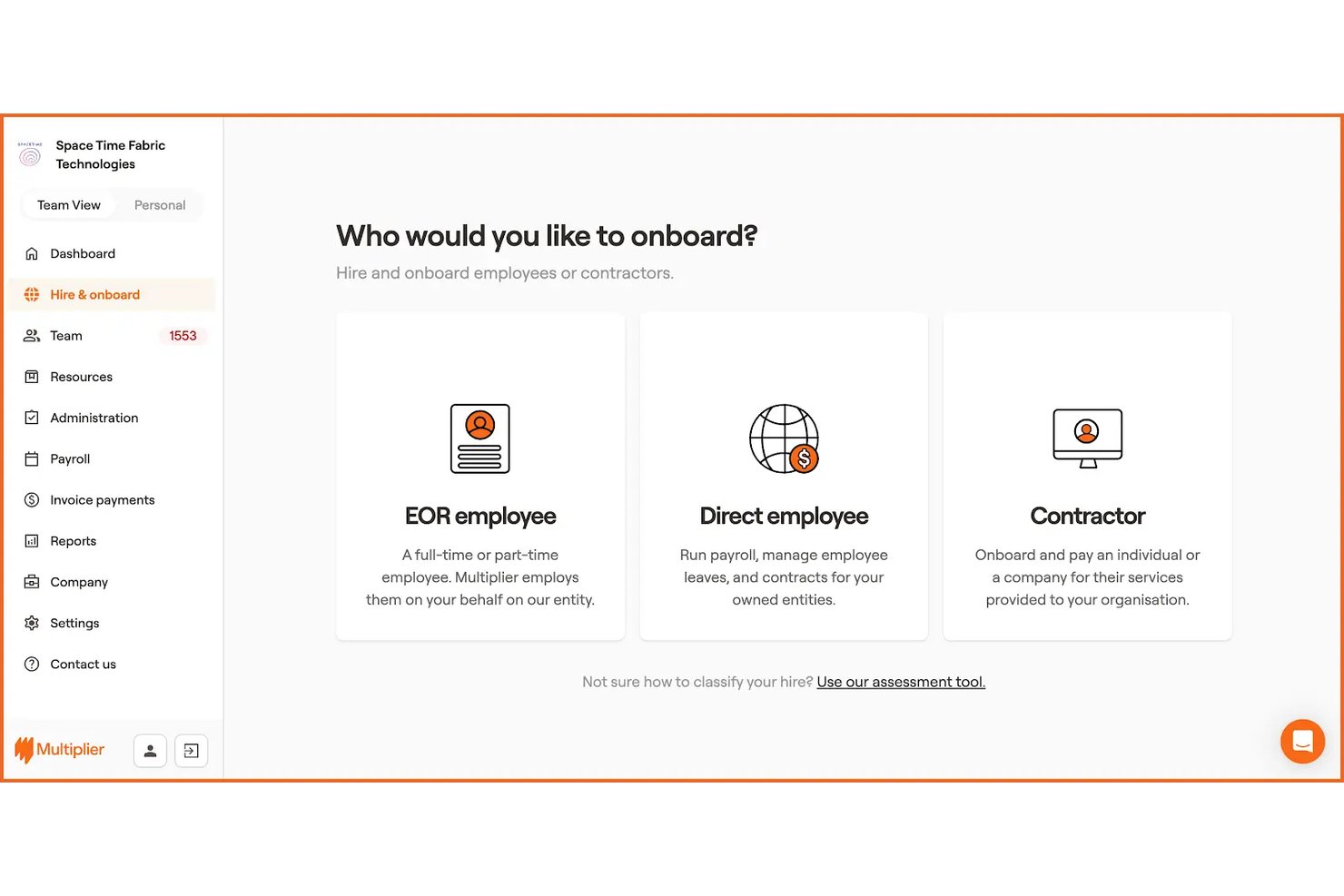
Multiplier is a global employer of record platform that covers 150+ countries, handling EOR hiring, SEK payroll, tax compliance, employment contracts, statutory benefits, and immigration support across Sweden and other Nordic markets.
Who Is Multiplier Best For?
Multiplier works well for HR teams expanding across multiple Nordic or European markets at once, where managing payroll, benefits, and compliance through a single platform matters more than deep Sweden-native specialization.
Why I Picked Multiplier
I picked Multiplier as one of the best because it's the strongest option on this list for teams hiring across Sweden and multiple Nordic or European markets at once. Rather than managing separate EOR vendors per country, you get a single platform covering 150+ countries, with SEK payroll, LAS-compliant contracts, and statutory benefits like occupational pension and 25-day vacation all handled in one place.
Multiplier Key Features
- Employee Cost Calculator: Estimates total employer costs across 120+ countries, including Swedish employer social security contributions (arbetsgivaravgifter), before you commit to a hire.
- Built-in HRMS module: Tracks expenses, timesheets, PTO, sick leave, and parental leave in a single self-service portal for both employees and managers.
- Cross-border equity administration: Supports ESOPs, RSUs, SARs, and ESPPs across multiple countries as part of the standard onboarding workflow.
- Visa and immigration management: Handles work permit applications and sponsorship across 140+ countries, including non-EU hires relocating to Sweden.
Multiplier Integrations
Multiplier offers native integrations with BambooHR, HiBob, Personio, Workday, and Greenhouse, plus marketplace integrations through ADP Marketplace and Paycor. It also provides an API for custom data synchronization and reporting.
Pros and Cons
Pros:
- Manages Swedish pension, vacation, parental benefits
- Transparent flat-fee pricing for EOR services
- Fast 24–72 hour onboarding in Sweden
Cons:
- No public confirmation of Collectum/Alecta coordination
- Uses partner entities instead of owned Swedish entity


Teamed is an employer of record platform that covers Swedish entity employment, payroll and tax remittance, statutory benefits administration, and EOR-to-entity migration through its GEMO service.
Who Is Teamed Best For?
Teamed is a strong fit for companies already using an EOR in Sweden that are growing toward the headcount threshold where setting up their own Swedish entity makes more financial sense.
Why I Picked Teamed
I've included Teamed in my top picks because it's the only EOR on this list built around helping you eventually leave EOR behind. Its GEMO service manages the full transition from Teamed's EOR to your own Swedish AB, with employees keeping their tenure, records, and benefits intact through the move. Teamed even publishes a Sweden-specific crossover calculator to show you exactly when setting up your own entity becomes cheaper than staying on EOR.
Teamed Key Features
- LAS-compliant termination support: Teamed handles notice calculation, MBL union consultation, and collective redundancy filings with Arbetsförmedlingen.
- Flat-fee pricing with zero FX markup: A fixed monthly fee covers EOR employment, with SEK conversions processed at the mid-market rate and statutory costs passed through at cost.
- Named country specialist access: Each account is assigned a dedicated specialist, reachable via email, phone, chat, WhatsApp, and Slack.
- Kollektivavtal benefits administration: Teamed administers ITP occupational pension, sick pay, parental leave, and collective agreement-mandated supplementary benefits.
Teamed Integrations
Teamed lists 19 integrations, including Personio, Workday, BambooHR, HiBob, Greenhouse, Xero, and QuickBooks; only Personio has documented field-level syncing. Custom connections require Teamed’s integration team, with no public self-serve API; Zapier is also listed.
Pros and Cons
Pros:
- Named specialists praised by reviewers
- Direct EOR-to-entity migration support
- Swedish LAS and MBL guidance
Cons:
- Limited self-service platform depth
- Onboarding delays reported by reviewers
Other Employer of Record Services in Sweden
Here are some additional employer of record services in Sweden options that didn’t make it onto my shortlist, but are still worth checking out:
- Gloroots
For ITP pension and expertskatt handling
- Oyster
For remote-first equity and bonus compliance
- Rivermate
For human-led Sweden compliance guidance
- Remote
For global employment management
- Atlas HXM
For owned-entity EOR without third-party partners
- Mercans
For enterprise payroll-led EOR in Sweden
- Borderless AI
For AI-driven workforce automation
- Playroll
For one-dashboard multi-country workforce view
- WorkMotion
For digital contract-to-payroll onboarding


How I Evaluate Employer of Record Services in Sweden
I split my evaluation into three parts, with the most weight on core functionality: legally employ workers in Sweden, manage local compliance, and run payroll and tax remittance. Next, I look for CBA mapping and local legal counsel. Finally, I consider pricing, GDPR safeguards, integrations, and responsive support.
Core Functionality (Table Stakes For This List)
When I'm selecting tools for my list, I score each one on a scale from 0 (does not offer the functionality) to 5 (excels in this area) for each core functionality listed below. I then convert the total into a percentage to help assess each tool's overall fit, with extra weight on any functionalities I’ve deemed essential.
- Local Legal Employment (Essential): I look for a registered Swedish entity that employs workers, assumes employer liability, and clearly defines responsibilities.
- Swedish Compliance (Essential): I assess labor-law coverage, CBA handling, statutory terms, and updates affecting Swedish employees.
- Payroll & Tax Remittance: I check Swedish payroll calculations, income-tax withholding, social contributions, payslips, and remittance records.
- Benefits Administration: I evaluate statutory pensions, sick pay, parental leave, and supplementary benefits available to Swedish workers.
- Contracts & Onboarding: I look for localized contracts, digital signatures, required documents, and onboarding workflows for new hires.
- Termination & Offboarding: I assess notice-period guidance, severance calculations, compliant documentation, and support during Swedish terminations.
Once I have a list of tools that meet the criteria, I consider what sets each platform apart.
Differentiating Factors (What Sets Vendors Apart)
Here's how I compare and contrast different vendors:
Standout Features
CBA mapping is a big differentiator. Sweden's collective bargaining agreements (kollektivavtal) vary by industry and role, so I look for platforms that automatically identify the correct agreement and flag misclassification risks. I also evaluate equity and bonus support, since administering stock options or variable pay in Sweden requires local tax handling that not every provider covers well. Finally, I check whether the vendor supports entity transfer—if you plan to eventually set up your own Swedish entity, a smooth employee migration path saves significant time and legal complexity.
Beyond Features
Pricing transparency matters—I check whether a provider charges a flat per-employee fee or a percentage of payroll, and whether onboarding, offboarding, or SEK currency conversion costs are buried in the fine print. GDPR compliance is equally important, so I confirm where employee data is hosted and look for certifications like ISO 27001 or SOC 2. I also evaluate integration depth with tools like BambooHR or SAP, since shallow connectors often mean duplicate data entry for payroll controllers.
How to Choose Employer of Record Services in Sweden
It’s easy to get bogged down in long feature lists and complex pricing structures. To help you stay focused as you work through your unique software selection process, here’s a checklist of factors to keep in mind:
| Factor | What to Consider |
|---|---|
| Scalability | Will the provider support your growth in Sweden, including adding or reducing headcount quickly? |
| Integrations | Does the solution connect with your HRIS, payroll, or accounting systems used for Swedish hires? |
| Customizability | Can you tailor workflows, document templates, or reporting to fit your Swedish HR processes? |
| Ease of use | Is the platform intuitive for both HR teams and Swedish employees to navigate and use daily? |
| Implementation and onboarding | How long does setup take, and what support is provided for onboarding your first Swedish employees? |
| Cost | Are all Swedish employment costs, taxes, and service fees clearly itemized and predictable? |
| Security safeguards | Does the provider meet Swedish and EU data protection standards, including GDPR compliance? |
| Support availability | Is local Swedish support available during your business hours, and how quickly do they respond? |
What Are Employer of Record Services in Sweden?
Employer of Record services in Sweden are third-party providers that legally employ workers on your behalf, managing payroll, contracts, taxes, and compliance with local laws. They ensure your business follows Swedish employment regulations while protecting employee rights and meeting statutory requirements. These providers handle obligations like employer social contributions, health insurance, and rules around minimum wage and the probationary period. They also help navigate Sweden’s strong trade union environment, ensuring contracts and practices align with collective agreements. By taking on these responsibilities, EOR services simplify hiring in Sweden, reduce compliance risk, and let you focus on growing your business.
Why Use an Employer of Record Service in Sweden?
Sweden is one of those markets that looks simple from the outside, but has a lot going on once you start hiring. If you want to access Swedish talent without setting up a local entity, an Employer of Record is the fastest way to get started.
From a hiring perspective, Sweden is a strong market. You’re dealing with a highly skilled workforce, especially in tech, engineering, and product roles, and a work culture that’s already aligned with international companies. English is widely used in business, so onboarding into global teams is usually smooth.
Where things get more complex is compliance. Sweden has detailed employment rules, strong worker protections, and collective agreements that can influence everything from salaries to working conditions. It’s not just about contracts and payroll. An Employer of Record handles those local requirements, so you can hire in Sweden without needing to navigate the system on your own.
Deciding Between an EOR and a Legal Entity in Sweden
Hiring in Sweden usually comes down to a simple question: do you want to move quickly, or build a long-term local presence from day one?
An Employer of Record is the faster option. It lets you hire in Sweden without setting up a company, which is useful if you are testing the market or building a small team. Setting up a legal entity gives you full control, but it comes with registration, local administration, and ongoing compliance, especially in a country with strong labor protections like Sweden. Here are the key differences between using an Employer of Record and setting up a legal entity in Sweden:
| Features | Employer of Record (EOR) | Legal Entity Setup in Sweden |
|---|---|---|
Setup time | Hiring can begin in a few days once onboarding is complete. | Entity setup can take several weeks, including registration and bank account setup. |
| Upfront Cost | No entity setup costs; pricing is typically per employee. | Higher initial costs for registration, legal support, and administration. |
| Ongoing Costs | Predictable monthly fee per employee. | Lower per-employee cost at scale, but ongoing admin and compliance expenses. |
| Compliance & liability | EOR manages payroll, taxes, and employment compliance. | Full responsibility for compliance, tax filings, and legal risk. |
| Payroll & tax management | Fully managed, including filings and statutory contributions. | Requires internal resources or local providers to manage payroll. |
| Flexibility | Easier to enter or exit the market. | Entity closure can be time-consuming and costly. |
| Control & customization | Limited control over contracts and benefits structures. | Full control over employment terms, policies, and benefits. |
| Best use case | Short-term hiring, market testing, or small teams. | Long-term expansion with a larger, established presence. |
EOR vs Permanent Establishment in Sweden
Permanent establishment risk in Sweden is one of those things that rarely shows up early, but can become a real issue as your team grows. It means your company could be treated as having a taxable presence in Sweden, even if you never set up a local entity.
In practice, it comes down to what your employees are doing. If they are negotiating contracts, representing the company in a binding way, or generating revenue locally, it can signal that your business is operating in Sweden. That’s when corporate tax obligations, registration requirements, and ongoing reporting can come into play. In a country like Sweden, where compliance standards are high, this is not something you want to figure out after the fact.
Using an Employer of Record does not eliminate permanent establishment risk entirely, but it helps reduce it. By placing employees under a local legal employer, companies can build a team in Sweden without creating a direct business presence through their workforce.
How EORs Protect From Permanent Establishment Risk
- Legal employer structure: The EOR employs workers on paper, helping avoid a direct business presence in Sweden.
- Reduced tax exposure: Since payroll, contracts, and employment are managed locally, the risk of being classified as having a permanent establishment is lower.
- Compliance coverage: Swedish labor laws, tax filings, and statutory obligations are handled through the EOR, reducing compliance gaps.
- Role scope control: Helps structure roles so employees are not directly signing contracts or generating revenue locally.
- Flexible market entry: Makes it easier to hire and test the Swedish market without creating a taxable presence too early.
Hiring in Sweden: Important Details
If this is your first time hiring in Sweden, the big thing to know is this: the rules are clear, but the expectations are high. An EOR will handle compliance, but understanding the basics helps you avoid the classic “we thought Sweden was simple” mistake.
- Collective agreements matter a lot: Many Swedish employment terms are shaped by collective bargaining agreements, not just national law. These can affect salary, benefits, pensions, insurance, working hours, and termination rules.
- Written employment terms are a must: Employers need to provide key employment details, including role, salary, start date, workplace, leave, notice period, and whether the role is permanent or fixed-term. Written clarity is not just nice to have here. It is the operating manual.
- Permanent employment is the default: Indefinite employment is the norm in Sweden. Fixed-term and probationary contracts are allowed, but they need to be structured correctly so they do not create avoidable risk.
- Probation can last up to 6 months: Probationary employment must be agreed upon up front. If neither side ends it before the probation period expires, it automatically becomes permanent employment.
- A standard workweek is 40 hours: Sweden’s regular workweek is typically 40 hours over 5 days. Employees are also entitled to breaks, rest periods, and limits on overtime.
- Overtime is not just a few extra hours: Overtime is regulated and often shaped by contract or collective agreement. Employers need to track it properly and compensate it according to the applicable rules.
- Paid vacation is generous: Employees are entitled to at least 25 days of annual leave per year. Vacation pay is also its own thing, so payroll needs to calculate it correctly.
- Parental leave is a big deal: Sweden has one of the most generous parental leave systems in the world. Parents can share long periods of leave, and employers need to plan coverage properly.
- Sick leave starts with the employer: Employers usually cover sick pay for the first part of an employee’s absence before the social insurance system takes over. Medical documentation rules also apply after longer absences.
- Termination requires process: Swedish employment protection rules mean dismissals need valid grounds, proper notice, and documentation. Redundancies can also involve priority rules, so this is not the place to improvise.
- There is no mandatory 13th salary: Sweden does not require a 13th-month salary, but bonuses and extra benefits may be included through contracts, company policy, or collective agreements.
- Payroll is contribution-heavy: Employers pay significant social security contributions on top of salary, so total employment cost is much higher than base pay alone.
Tax Overview for Employers in Sweden
Sweden is one of those markets where salaries are only part of the story. Employer contributions and payroll obligations add a significant layer on top, so it’s important to understand the full cost before hiring.
Here’s a quick view of what employers pay vs what gets deducted from employees:
| Category | Tax Type | Rate |
|---|---|---|
| Employer costs | Social security (Arbetsgivaravgifter) | 31.42% |
| Employee deductions | Social security | 0% (Employer pays 100%) |
| Employee taxes | Municipal Income Tax | ~29%-35% |
| Employee taxes | Additional State Tax | 20% (on higher incomes) |
| Other obligations | Holiday Pay (Semesterlön) | 12% |
Some key payroll and compliance facts for 2026:
- The 12% Holiday Pay Rule: By law, employees are entitled to 12% of their annual gross salary as holiday pay. This is usually accrued monthly. For an EOR, this means your true monthly cost is not just Salary + 31.42%, but also an additional 12% provision.
- Occupational Pensions (ITP/SAF-LO): About 90% of Swedish employees are covered by Collective Agreements. Even without one, most professional EOR hires expect an occupational pension (usually 4.5% to 30% of salary, depending on brackets).
- Youth Reduction (April 2026): A temporary discount is active from April 2026 through 2027, reducing employer contributions to ~20.8% for employees aged 19–23.
- Sick Pay: The employer is responsible for paying 80% of the employee's salary during days 2–14 of an employee's illness.
Features of Employer of Record Services in Sweden
When selecting Employer of Record services in Sweden, keep an eye out for the following key features:
- Swedish payroll processing: Handles salary calculations, tax withholdings, and statutory deductions according to Swedish regulations.
- Employment contract management: Drafts, stores, and updates compliant Swedish employment agreements for all local hires.
- Local tax compliance: Manages registration, reporting, and payment of Swedish taxes and social contributions.
- Benefits administration: Oversees statutory and optional benefits, including pensions, insurance, and paid leave for Swedish employees.
- Onboarding support: Guides new hires through Swedish-specific onboarding steps, document collection, and legal registrations.
- Employee self-service portal: Lets Swedish employees access payslips, contracts, and personal information securely online.
- Time-off and leave tracking: Monitors and manages vacation, sick leave, and other absences in line with Swedish labor laws.
- HR document management: Stores and organizes employment records, contracts, and compliance documents for Swedish staff.
- Termination and offboarding support: Ensures compliant offboarding, notice periods, and final settlements under Swedish law.
- In-country HR support: Provides access to local HR experts for guidance on Swedish employment practices and regulations.
Benefits of Employer of Record Services in Sweden
Implementing Employer of Record services in Sweden provides several benefits for your team and your business. Here are a few you can look forward to:
- Faster market entry: Hire Swedish employees quickly without setting up a local entity, thanks to ready-made legal and payroll infrastructure.
- Local compliance assurance: Stay aligned with Swedish labor laws, tax regulations, and statutory benefits through expert guidance and automated processes.
- Simplified payroll management: Centralize Swedish payroll, tax withholdings, and benefits administration in one platform, reducing manual work and errors.
- Reduced administrative burden: Offload HR paperwork, contract management, and onboarding tasks to a dedicated provider with local expertise.
- Improved employee experience: Offer Swedish employees compliant contracts, timely payroll, and access to local HR support and self-service tools.
- Cost predictability: Gain clear visibility into employment costs and service fees, helping you budget accurately for your Swedish workforce.
- Scalable hiring: Add or reduce headcount in Sweden as needed, with flexible support for changing business needs.
Costs and Pricing of Employer of Record Services in Sweden
Selecting Employer of Record services in Sweden requires an understanding of the various pricing models and plans available. Costs vary based on features, team size, add-ons, and more. The table below summarizes common plans, their average prices, and typical features included in Employer of Record services in Sweden:
Plan Comparison Table
| Plan Type | Average Price | Common Features |
|---|---|---|
| Free Plan | $0 | Access to basic resources, limited HR templates, and email support. |
| Personal Plan | $200-$400/employee/mo | Swedish payroll processing, employment contract management, and basic compliance support. |
| Business Plan | $400-$600/employee/mo | Full payroll and tax compliance, benefits administration, onboarding support, and employee self-service portal. |
| Enterprise Plan | $600-$900/employee/mo | Custom integrations, dedicated account manager, advanced reporting, in-country HR support, and tailored onboarding workflows. |
Employer of Record Services in Sweden FAQs
Here are some answers to common questions about employer of record services in Sweden:
Can I hire employees in Sweden without setting up a local entity?
Yes, Employer of Record services let you hire employees in Sweden without creating a local company. The EOR acts as the legal employer, handling contracts, payroll, and compliance so you can focus on managing your team.
How do Employer of Record services ensure compliance with Swedish labor laws?
Employer of Record services stay updated on Swedish labor laws and regulations, applying them to contracts, payroll, and benefits. They manage statutory requirements like taxes, pensions, and leave, reducing your risk of non-compliance.
What types of businesses use Employer of Record services in Sweden?
Both startups and established companies use EOR services to expand into Sweden, test the market, or hire remote talent. It’s especially useful for businesses without a Swedish legal entity or those needing to scale quickly.
How long does it take to onboard an employee in Sweden using an EOR?
Onboarding with an EOR in Sweden usually takes a few days to a couple of weeks. Timelines depend on document collection, background checks, and contract signing, but EORs streamline the process compared to setting up your own entity.
Are Employer of Record services suitable for hiring contractors in Sweden?
No, EOR services are designed for hiring employees, not independent contractors. If you need to engage contractors, look for contractor management or agent-of-record solutions instead.
How does an EOR handle IP transfer upon termination?
Employer of Record providers include IP ownership clauses in employment contracts to ensure all work created by the employee is assigned to your company. Upon termination, they help ensure any work, documents, or assets are properly transferred in line with Swedish law.
This content is provided for general informational purposes only and does not constitute legal, tax, or other professional advice. It may not be complete, accurate, or current, and laws and practices may change without notice and vary by jurisdiction. You should not act on this information without obtaining advice from qualified legal or tax counsel in the relevant jurisdiction regarding your specific circumstances.