
16 HR Software Solutions in Australia Picked for 2026

HR Software Australia Shortlist
Here's my pick of the 10 best software from the 16 tools reviewed.


Australian HR software refers to digital platforms designed to help Australian businesses manage payroll, compliance, employee records, and workforce processes in line with local regulations. If you’re searching for the right HR software, you’re likely balancing complex award interpretation, evolving compliance requirements, and the need to support a diverse workforce. Choosing the right tool can help your team stay organized, reduce manual admin, and keep up with changing workplace expectations. This list will help you compare leading HR software options in Australia for 2026, so you can find a solution that fits your business and people's needs.
Why Trust Our Software Reviews
We’ve been testing and reviewing HR software systems since 2019. As HR experts ourselves, we know how critical and difficult it is to make the right decision when selecting software.
We invest in deep research to help our audience make better software purchasing decisions. We’ve tested more than 2,000 tools for different HR management use cases and written over 1,000 comprehensive software reviews. Learn how we stay transparent & our software review methodology.
Best HR Software in Australia Summary
This comparison chart summarizes pricing details for my top Australian HR software selections to help you find the best one for your budget and business needs.
| Tool | Best For | Trial Info | Price | ||
|---|---|---|---|---|---|
| 1 | Best with unified workforce management | Free demo available | Pricing upon request | Website | |
| 2 | Best for shift-based staff management | 31-day free trial | From $8/user/month | Website | |
| 3 | Best for AI-driven analytics | 7-day free trial | From $2/user/month (billed annually) | Website | |
| 4 | Best for employee engagement insights | Free demo available | Pricing upon request | Website | |
| 5 | Best for automated payroll compliance | Free demo available | From $8/employee/month (billed annually) | Website | |
| 6 | Best for global team collaboration | Free demo available | Pricing upon request | Website | |
| 7 | Best for intuitive employee records | Free demo available | From $10/employee/month (billed annually) | Website | |
| 8 | Best for integrated workplace safety | Free demo available | Pricing upon request | Website | |
| 9 | Best for reducing underpayment risk with automated award compliance | 30-day free trial | From $5/employee/month | Website | |
| 10 | Best for compliance training tools | Free demo available | Pricing upon request | Website |








-

Checkr
Visit WebsiteThis is an aggregated rating for this tool including ratings from Crozdesk users and ratings from other sites.4.5 -
Kudoboard
Visit WebsiteThis is an aggregated rating for this tool including ratings from Crozdesk users and ratings from other sites.4.8 -
Native Teams
Visit WebsiteThis is an aggregated rating for this tool including ratings from Crozdesk users and ratings from other sites.4.9


Top Australian HR Software
Below are my detailed summaries of HR software in Australia that made it onto my shortlist. My reviews offer a detailed look at the features, best use cases, and integrations of each platform to help you find the best one for you.

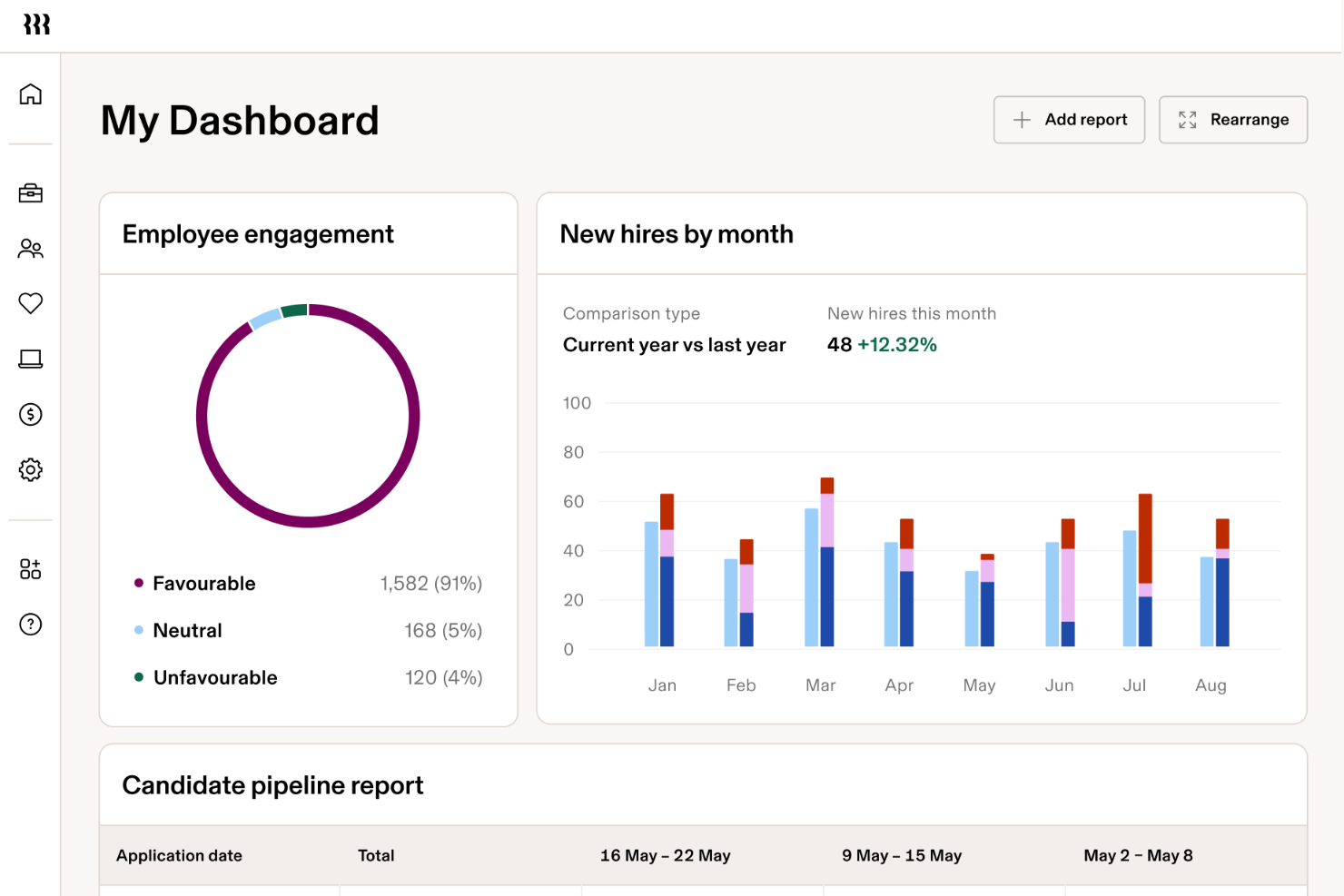
Rippling brings HR, payroll, IT, and workforce management together in one platform for Australian businesses. It’s a strong fit for companies that want to manage employee data, onboarding, and compliance across multiple systems without juggling separate tools. With unified automation and centralized controls, Rippling helps HR teams reduce manual work and maintain consistency as they scale.
Why I Picked Rippling
When you need a single source of truth for all workforce management tasks, Rippling stands out for its unified approach. I picked Rippling because it connects HR, payroll, and IT processes in one platform, so you can manage everything from onboarding to offboarding without switching systems. The platform’s automation engine lets you trigger workflows across departments, such as provisioning software or updating payroll when employee details change. This level of integration is especially valuable for Australian businesses that want to reduce manual admin and keep employee data consistent across the organization.
Rippling Key Features
Some other features in Rippling that are especially useful for Australian HR teams include:
- Custom Policy Builder: Create and manage company policies tailored to your business and local compliance needs.
- Time and Attendance Tracking: Capture employee work hours, manage rosters, and sync data directly with payroll.
- Expense Management: Automate expense approvals, reimbursements, and reporting within the same platform.
- Learning Management System (LMS): Assign, track, and report on employee training and certifications.
Rippling Integrations
Integrations include Xero, QuickBooks, Slack, Google Workspace, Microsoft 365, Zoom, Okta, DocuSign, Greenhouse, and BambooHR.
Pros and Cons
Pros:
- Localized compliance support for Australian laws
- Automated onboarding and offboarding workflows
- Unified HR, payroll, and IT management
Cons:
- Limited Australian-specific HR templates
- Payroll module requires separate activation
New Product Updates from Rippling

Rippling Adds New Device Buyback Feature
Rippling has unveiled Device Buyback in its Inventory Management, allowing IT teams to retire and recycle hardware securely, with proceeds credited to future invoices. For more information, visit Rippling's official site.


Deputy is built for Australian businesses that need to manage hourly or shift-based teams across locations. It’s a strong fit for hospitality, retail, healthcare, and other industries where scheduling, attendance, and last-minute changes are daily challenges. With Deputy, you can handle rostering, time tracking, and shift swaps in one place, helping you keep operations running smoothly.
Why I Picked Deputy
Managing shift-based teams in Australia comes with unique challenges, and Deputy is purpose-built to address them. The platform lets you create and publish rosters, manage last-minute shift swaps, and track attendance with digital time clocks. I appreciate how Deputy includes compliance tools for Australian labor laws, like award interpretation and break management, which help reduce manual admin. These features make it a strong choice for businesses that rely on flexible, accurate scheduling to keep their operations running.
Deputy Key Features
Some other features that make Deputy useful for Australian HR teams include:
- Mobile App for Managers and Staff: Schedule shifts, approve timesheets, and communicate with staff from your phone.
- Payroll Export Tools: Export timesheet data directly to leading Australian payroll providers.
- Task Management: Assign and track completion of daily tasks for individuals or teams.
- Customizable Reporting: Generate reports on attendance, wage costs, and scheduling trends.
Deputy Integrations
Integrations include Xero, QuickBooks, ADP, BambooHR, Gusto, Square, Lightspeed, Paychex, Netsuite, and Dropbox.
Pros and Cons
Pros:
- Mobile clock-in uses GPS location verification
- Shift swapping is managed directly in-app
- Award interpretation supports Australian workplace compliance
Cons:
- Limited performance review and feedback tools
- No built-in HR document management


If you’re looking for HR software in Australia that puts AI-driven analytics at the center, peopleHum is worth considering. It’s designed for HR leaders and business owners who want to turn workforce data into actionable insights for hiring, engagement, and retention. With its predictive analytics and automation features, peopleHum helps you make data-backed decisions and spot trends before they become issues.
Why I Picked peopleHum
What stands out about peopleHum is its focus on AI-driven analytics, which is especially valuable for HR teams in Australia looking to make data-informed decisions. The platform’s predictive analytics help you identify workforce trends, such as potential turnover risks or engagement dips, before they impact your business. I like that peopleHum also offers automated reporting and customizable dashboards, so you can track the metrics that matter most to your organization. These features make it a strong fit for businesses that want to move beyond basic HR data and leverage deeper insights for strategic planning.
peopleHum Key Features
Some other features that set peopleHum apart include:
- Automated Onboarding Workflows: Guide new hires through digital onboarding steps and document collection.
- Performance Management Module: Set goals, run reviews, and track employee progress in one place.
- Employee Pulse Surveys: Launch quick surveys to gather real-time feedback from your team.
- Leave and Attendance Tracking: Monitor leave balances and attendance records with built-in compliance checks.
peopleHum Integrations
Integrations include greytHR, Google Meet, Microsoft Teams, biometric attendance systems, and single sign-on providers.
Pros and Cons
Pros:
- Pulse surveys support ongoing employee feedback
- Automated onboarding reduces manual HR tasks
- AI-driven analytics highlight workforce trends
Cons:
- Native integrations with Australian HR tools are lacking
- Payroll integration options are limited


If you’re looking to understand and improve employee engagement in your Australian workplace, Culture Amp offers a focused platform for gathering and acting on feedback. It’s especially useful for HR teams and leaders who want to measure engagement, pinpoint drivers of satisfaction, and track progress over time. With tools for surveys, analytics, and action planning, Culture Amp helps you turn insights into practical steps for building a stronger culture.
Why I Picked Culture Amp
When it comes to understanding what drives engagement in Australian workplaces, Culture Amp stands out for its depth of insight. The platform offers customizable engagement surveys and analytics that help you identify trends and areas for improvement across your organization. I like that you can benchmark results against industry standards and use built-in action planning tools to address feedback. These features make Culture Amp a strong choice for HR teams that want to move beyond surface-level feedback and create meaningful change.
Culture Amp Key Features
Some other features that make Culture Amp valuable for Australian HR teams include:
- Performance Review Tools: Run structured performance reviews and collect 360-degree feedback.
- Goal Tracking: Set, manage, and monitor progress on individual and team goals.
- Onboarding Surveys: Gather feedback from new hires to improve the onboarding experience.
- Manager Learning Resources: Access curated learning modules and guides for people managers.
Culture Amp Integrations
Integrations include Workday, BambooHR, ADP, Namely, Rippling, HiBob, Gusto, Slack, Microsoft Teams, and Pave.
Pros and Cons
Pros:
- Benchmarking includes Australian industry data
- Anonymous feedback protects employee privacy
- Survey templates reflect Australian workplace standards
Cons:
- Limited support for award interpretation compliance
- No payroll or rostering functionality included


Employment Hero is designed for Australian businesses that need to manage payroll and HR compliance with confidence. It’s especially useful for teams navigating complex award interpretation and local employment regulations. The platform brings together automated payroll, onboarding, and compliance tools to help you reduce manual admin and stay audit-ready.
Why I Picked Employment Hero
For HR teams in Australia, automated payroll compliance is a constant challenge, especially with frequent changes to awards and regulations. I picked Employment Hero because it offers built-in award interpretation and automated updates to payroll calculations, which helps reduce compliance risks. The platform also includes digital recordkeeping and audit trails, making it easier to demonstrate compliance during audits. These features make Employment Hero a strong choice for businesses that want to simplify payroll while staying aligned with Australian employment laws.
Employment Hero Key Features
Some other features in Employment Hero that stand out for Australian HR teams include:
- Employee Self-Service Portal: Staff can update personal details, submit leave requests, and access payslips directly from the platform.
- Onboarding Workflows: Automate document collection, policy acknowledgments, and induction tasks for new hires.
- Performance Management Tools: Set goals, run performance reviews, and track employee progress within the system.
- HR Document Management: Store contracts, policies, and certificates securely with version control and access permissions.
Employment Hero Integrations
Integrations include Xero, QuickBooks, MYOB AccountRight, Deputy, Tanda, JobAdder, Go1, Slack, Google Workspace, and Microsoft 365.
Pros and Cons
Pros:
- Digital onboarding with e-signature support
- Built-in compliance updates for local regulations
- Automated award interpretation for Australian payroll
Cons:
- Payroll features only available on higher plans
- Limited customization for employment contracts


HiBob is designed for Australian businesses managing teams across multiple countries or regions. It’s a strong fit for HR leaders who need to connect, engage, and support distributed workforces while keeping local compliance in check. With features that encourage collaboration and visibility, HiBob helps unify global teams without losing sight of local HR needs.
Why I Picked HiBob
When I looked for a solution that truly supports global team collaboration, HiBob stood out for its focus on connecting distributed workforces. The platform offers customizable workflows and communication tools that help HR teams manage employees across different countries while maintaining a unified culture. Its people directory and organizational charts make it easy to visualize teams and foster connections, even when employees are remote or in different time zones. For Australian organizations with international operations, these features help bridge gaps and keep everyone engaged and informed.
HiBob Key Features
In addition to its collaboration tools, I also found these features worth noting:
- Time Off Management: Configure leave policies and automate approval workflows for different regions.
- Performance Reviews: Set up customizable review cycles and gather feedback from multiple sources.
- Compensation Management: Plan and track salary changes, bonuses, and equity grants in one place.
- HR Document Storage: Store, organize, and share HR documents securely with permission controls.
HiBob Integrations
Integrations include Xero, Deputy, ADP Payforce, Microsoft Teams, Slack, Greenhouse, Go1, Culture Amp, JobAdder, and LinkedIn Learning.
Pros and Cons
Pros:
- Performance review cycles can be tailored by region
- Slack and Teams integrations support remote engagement
- Org charts update automatically with team changes
Cons:
- Reporting exports sometimes require manual formatting
- Payroll features is not built for Australian users


BambooHR is designed for HR teams that want a clear, organized way to manage employee records and core HR data. It’s especially useful for small to midsize Australian businesses looking to centralize employee information, documents, and workflows in one place. With BambooHR, you can simplify onboarding, track changes, and maintain accurate records without the clutter of spreadsheets or paper files.
Why I Picked BambooHR
For HR teams in Australia who need a reliable way to manage employee records, BambooHR stands out for its clear and organized approach. The platform lets you store, update, and access employee data, contracts, and documents in a centralized, searchable system. I like that you can also track changes to employee information and set permissions for who can view or edit sensitive records. These features help you maintain compliance and accuracy, which is essential for any business handling confidential HR data.
BambooHR Key Features
Some other features that make BambooHR appealing include:
- Time-Off Management: Set up leave policies, approve requests, and track balances in one place.
- Employee Self-Service Portal: Let employees update personal details and access their own records securely.
- Onboarding Workflows: Automate onboarding tasks and checklists for new hires.
- Performance Management Tools: Run performance reviews and gather feedback directly within the platform.
BambooHR Integrations
Integrations include Checkr, Greenhouse, Culture Amp, Cronofy, Remote, TalentLMS, Hireflix, Leapsome, Evolia, and Human Interest.
Pros and Cons
Pros:
- Performance management tools support regular reviews
- Onboarding workflows automate new hire processes
- Employee self-service portal reduces HR admin workload
Cons:
- Support hours do not align with AEST
- Payroll is not available for Australia


For Australian businesses that need HR software with a strong focus on workplace safety, Citation Group offers an integrated solution. It’s designed for HR managers and business owners in industries where compliance and risk management are top priorities. With its combination of HR tools and safety management features, Citation Group helps you keep your workforce protected and your business aligned with Australian regulations.
Why I Picked Citation Group
What drew me to Citation Group is its clear emphasis on integrated workplace safety, which is a top concern for many Australian employers. The platform combines HR management with safety compliance tools, so you can manage incidents, track training, and maintain up-to-date safety documentation all in one place. I appreciate that Citation Group also offers risk assessment features tailored to Australian regulations, helping you stay compliant and reduce workplace hazards. For organizations where safety and compliance are non-negotiable, this combination makes Citation Group a strong fit.
Citation Group Key Features
Some other features that make Citation Group useful include:
- Document Management System: Store, organize, and update HR and safety documents in a secure online portal.
- Employee Self-Service Portal: Allow staff to access payslips, policies, and personal information directly.
- HR Advisory Support: Access expert HR advice for complex workplace issues and compliance questions.
- Customizable Policy Templates: Use ready-made templates for contracts, handbooks, and workplace policies tailored to Australian standards.
Citation Group Integrations
Native integrations are not currently listed.
Pros and Cons
Pros:
- Customizable policy templates for local compliance
- Safety management tools meet Australian standards
- HR advisory support is included with plans
Cons:
- Native integrations are not currently listed
- No native payroll processing features

workit
Best for reducing underpayment risk with automated award compliance

Workit is designed for Australian businesses that require navigating complex award interpretation and pay compliance. It’s especially useful for HR teams and payroll managers in industries with shifting rosters or multiple awards. By automating award calculations and providing up-to-date compliance tools, Workit helps reduce manual errors and the risk of underpayment.
Why I Picked Workit
For HR teams dealing with the challenges of Australian award interpretation, Workit offers a focused solution that addresses local compliance head-on. The platform automatically interprets modern awards and enterprise agreements, ensuring payroll calculations align with Fair Work requirements. I appreciate how Workit updates its award library in real time, so you’re always working with the latest rules and rates. This makes it a strong choice for businesses in retail, hospitality, and other sectors where award compliance is complex and high-risk.
Workit Key Features
Some other features that caught my attention include:
- Roster Management: Build and manage employee rosters with built-in compliance checks.
- Timesheet Approvals: Review and approve digital timesheets directly within the platform.
- Payroll Export: Export payroll data in formats compatible with major Australian payroll systems.
- Employee Self-Service Portal: Allow employees to view rosters, submit availability, and access pay information online.
Workit Integrations
Integrations include Xero, MicrOpay, Definitiv, SEEK, Adzuna, and Jora. An open API is also available for custom integrations.
Pros and Cons
Pros:
- Payroll exports match Australian payroll software formats
- Employee portal supports digital timesheet submission
- Award library covers most Australian industries
Cons:
- Limited analytics for workforce planning
- No built-in HR document management


If your organization needs to meet strict compliance and workplace training requirements, Sentrient offers a tailored solution for Australian businesses. It’s especially relevant for HR teams in regulated industries like healthcare, education, and government, where up-to-date compliance training is essential. Sentrient helps you deliver, track, and report on mandatory training so you can manage risk and meet legal obligations with confidence.
Why I Picked Sentrient
What sets Sentrient apart for HR teams in Australia is its dedicated focus on compliance training tools built for local regulations. The platform comes with a library of legally-vetted courses covering topics like workplace health and safety, privacy, and anti-bullying, which are critical for meeting Australian standards. I appreciate that Sentrient also provides automated reminders and tracking, so you can monitor completion rates and demonstrate compliance during audits. These features make it a strong fit for organizations that need to manage risk and keep up with changing legal requirements.
Sentrient Key Features
Some other features that make Sentrient useful include:
- Policy Management: Upload, distribute, and track acknowledgment of workplace policies.
- Incident Reporting: Enable employees to report workplace incidents directly through the platform.
- Custom Course Creation: Build and assign your own training modules tailored to your organization’s needs.
- Automated Certification Management: Track and manage employee certifications and renewal dates automatically.
Sentrient Integrations
Native integrations are not currently listed.
Pros and Cons
Pros:
- Incident reporting is included for all users
- Policy acknowledgment tracking is built in
- Australian compliance courses are regularly updated
Cons:
- Reporting exports are limited to CSV format
- No native payroll or HRIS integration
Other HR Software Australia
Here are some additional HR Software solutions that didn’t make it onto my shortlist, but are still worth checking out:
- ELMO Software
For modular talent solutions
- Connecteam
For mobile workforce scheduling
- Workday
With real-time workforce analytics
- HR Acuity
For employee relations case tracking
- Sage
For small business workforce tools
- Ascender
For multi-country payroll processing


HR Software in Australia Selection Criteria
When selecting the best HR Software for Australian businesses to include in this list, I considered common buyer needs and pain points like compliance with Australian workplace laws and support for local payroll requirements. I also used the following framework to keep my evaluation structured and fair:
Core Functionality (25% of total score)
To be considered for inclusion in this list, each solution had to fulfill these common use cases:
- Manage employee records
- Track leave and absences
- Process payroll
- Support performance reviews
- Generate HR compliance reports
Additional Standout Features (25% of total score)
To help further narrow down the competition, I also looked for unique features, such as:
- Award interpretation for Australian payroll
- Localized onboarding workflows
- Built-in Fair Work compliance tools
- Employee self-service portals
- Integration with Australian superannuation funds
Usability (10% of total score)
To get a sense of the usability of each system, I considered the following:
- Simple and intuitive navigation
- Clean and modern interface design
- Customizable dashboards
- Mobile accessibility
- Clear labeling of Australian-specific features
Onboarding (10% of total score)
To evaluate the onboarding experience for each platform, I considered the following:
- Step-by-step product tours
- Access to training videos and webinars
- Pre-built templates for Australian HR processes
- Availability of live chat or onboarding specialists
- Easy data import from legacy systems
Customer Support (10% of total score)
To assess each software provider’s customer support services, I considered the following:
- Local Australian support hours
- Access to phone, email, and chat support
- Knowledge base with Australian HR content
- Fast response times
- Dedicated account managers
Value For Money (10% of total score)
To evaluate the value for money of each platform, I considered the following:
- Cost-effectiveness and transparent pricing with no hidden fees
- Flexible plans for different business sizes
- Inclusion of core HR features in base plans
- Discounts for annual billing
- Free trial or demo availability
Customer Reviews (10% of total score)
To get a sense of overall customer satisfaction, I considered the following when reading customer reviews:
- Positive feedback on Australian compliance features
- Reports of reliable payroll processing
- Satisfaction with customer support responsiveness
- Ease of implementation for Australian businesses
- Value for money compared to local competitors
How to Choose an Australian HR Software Tool
It’s easy to get bogged down in long feature lists and complex pricing structures. To help you stay focused as you work through your unique software selection process, here’s a checklist of factors to keep in mind:
| Factor | What to Consider |
| Scalability | Will the software support your headcount growth, new locations, or changing HR needs over the next 2-5 years? Check for user limits and upgrade paths. |
| Integrations | Does the tool connect natively with your payroll, accounting, or rostering systems? Confirm compatibility with your existing tech stack. |
| Customizability | Can you tailor workflows, forms, and reporting to match your organization’s policies and compliance needs? Avoid rigid systems that force workarounds. |
| Ease of use | Will your HR team and employees adopt the tool quickly? Look for clear navigation, local terminology, and minimal training requirements. |
| Implementation and onboarding | How long will it take to get up and running? Ask about data migration support, onboarding resources, and typical timeframes for Australian businesses. |
| Cost | Are all core HR functions included in the base price? Watch for extra charges for payroll, compliance, or support. Compare total cost of ownership. |
| Security safeguards | Does the vendor meet Australian data privacy standards? Ask about data hosting location, encryption, and compliance with the Privacy Act. |
| Compliance requirements | Does the software help you meet Fair Work, superannuation, and local reporting obligations? Check for built-in compliance updates and audit trails. |
What is Australian HR Software?
Australian HR software refers to a cloud-based HR solution that helps organizations manage human resource management processes such as payroll, compliance, and employee records. These HR platforms are designed to align with local regulations while supporting the full employee lifecycle, from hiring process to offboarding.
HR professionals use HRMS and human resources information system tools to centralize employee data, improve employee performance, and support performance tracking. Many modern HCM solutions also include AI-powered capabilities to enhance decision-making and workforce planning. These systems are widely used across Australia and New Zealand to improve efficiency and maintain compliance with regional standards, including ISO-aligned practices.
Features of Australian HR Software
When selecting HR Software for Australia, keep an eye out for the following key features:
- Payroll processing: Automates wage calculations, tax withholdings, superannuation contributions, and generates payslips in compliance with Australian regulations.
- Leave management: Tracks employee leave balances, automates leave requests and approvals, and ensures compliance with local leave entitlements.
- Award interpretation: Applies the correct pay rates, overtime, and penalty rates based on Australian Modern Awards and enterprise agreements.
- Employee self-service: Allows staff to update personal details, submit leave requests, and access payslips or employment documents online.
- Compliance reporting: Generates reports required for Fair Work, Single Touch Payroll (STP), and other statutory obligations.
- Performance management: Supports goal setting, performance reviews, and feedback cycles to help manage employee development.
- Document management: Stores contracts, policies, and HR documents securely, with version control and access permissions.
- Onboarding workflows: Automates new hire paperwork, induction checklists, and compliance tasks for a smooth start.
- Time and attendance tracking: Records work hours, manages rosters, and integrates with payroll for accurate wage calculations.
- Integration capabilities: Connects with accounting, rostering, and benefits platforms to centralize HR data and reduce manual entry.
Benefits of HR Software for Australian Businesses
Implementing Australian HR Software provides several benefits for your team and your business. Here are a few you can look forward to:
- Improved compliance: Automated award interpretation and reporting features help you stay up to date with Fair Work and local employment laws.
- Time savings: Payroll processing, leave management, and onboarding workflows reduce manual HR tasks and free up your team’s time.
- Accurate payroll: Integrated time tracking and payroll modules minimize errors and ensure employees are paid correctly and on time.
- Better employee experience: Employee self-service portals and digital onboarding make it easier for staff to access information and complete HR tasks.
- Centralized HR data: Document management and integration capabilities keep all employee records and HR information in one secure location.
- Scalability for growth: Flexible platforms and customizable workflows support your business as it expands or changes.
- Informed decision-making: Built-in analytics and compliance reporting provide insights to guide workforce planning and HR strategy.
Costs and Pricing of HR Software in Australia
Selecting HR Software in Australia requires an understanding of the various pricing models and plans available. Costs vary based on features, team size, add-ons, and more. The table below summarizes common plans, their average prices, and typical features included in HR Software Australia solutions:
Plan Comparison Table of HR software in Australia
| Plan Type | Average Price | Common Features |
| Free Plan | $0 | Basic employee records, limited leave tracking, and simple document storage. |
| Personal Plan | $5-$15/user/month | Employee self-service, payroll processing, leave management, and basic compliance reporting. |
| Business Plan | $15-$30/user/month | Award interpretation, onboarding workflows, performance management, and integration with payroll systems. |
| Enterprise Plan | $30-$50/user/month | Advanced analytics, custom workflows, dedicated support, enhanced security, and multi-entity management. |
HR Software in Australia FAQs
Here are some answers to common questions about HR software Australia:
How does HR software in Australia help with Fair Work compliance?
HR software in Australia helps by automating award interpretation, tracking leave entitlements, and generating reports required by Fair Work. Many solutions update regularly to reflect changes in Australian employment law, reducing the risk of non-compliance and manual errors.
Can HR Software in Australia handle Single Touch Payroll (STP) reporting?
Yes, most HR software solutions in Australia include built-in Single Touch Payroll (STP) reporting. This feature allows you to submit payroll data directly to the Australian Taxation Office, ensuring you meet mandatory reporting requirements.
What should I look for when choosing HR Software for a multi-site business?
Look for software that supports multiple locations, offers flexible user permissions, and allows for consolidated reporting. It’s also important to check if the system can handle different awards or agreements across sites and integrate with your existing payroll and rostering tools.
Is it possible to migrate data from my old HR system to a new one?
Yes, most vendors offer data migration support, including import tools, templates, or onboarding specialists. Before switching, confirm what data formats are accepted and whether there are additional costs or limitations for migrating historical records.
How do Australian data privacy laws affect my choice of HR software?
Australian data privacy laws require that employee data be stored securely and, in some cases, within Australia. When evaluating vendors, ask about data hosting locations, encryption standards, and compliance with the Australian Privacy Act to ensure your obligations are met.
What’s Next:
If you're in the process of researching HR software in Australia, connect with a SoftwareSelect advisor for free recommendations.
You fill out a form and have a quick chat where they get into the specifics of your needs. Then you'll get a shortlist of software to review. They'll even support you through the entire buying process, including price negotiations.