10 Best Employer of Record in the Netherlands in 2026

Best Netherlands Employer of Record Service Shortlist


The best employer of record in the Netherlands helps you legally hire, manage, and pay Dutch employees without opening a local entity or navigating complex Dutch labor laws on your own.
Whether you're expanding into the Netherlands for the first time or already managing remote staff there, the right EOR partner can simplify compliance, streamline onboarding, and handle payroll, benefits, and employment contracts—all while keeping you aligned with the Nederlandse Arbeidsinspectie.
But finding the right provider isn’t easy. Many EOR services appear similar on the surface, making it difficult to compare pricing, capabilities, and local expertise. You might be unsure which solution fits your growth plans, or frustrated by slow, manual processes with your current provider.
That’s why I’ve spent hundreds of hours reviewing and comparing the top EOR services for the Netherlands—so you can confidently choose a solution that’s compliant, reliable, and built to scale with your global team.
Why Trust Our Software Reviews
Our team has been testing and reviewing software since 2012. As HR experts ourselves, we know how difficult—and important—it is to choose the right software.
For this guide, we evaluated tools using hands-on testing and independent research, scoring tools using our selection criteria. We also draw on insights from industry thought leaders and practicing HR experts.
Our reviews reflect our human editorial judgment, not a sales pitch.
Expert reviewers:
Employer of Record in the Netherlands Comparison Table
This comparison table summarizes pricing details for my top employer of record in the Netherlands selections:
| Tool | Best For | Trial Info | Price | ||
|---|---|---|---|---|---|
| 1 | Best for flexible global payment methods | Free demo available | From $599/employee/month | Website | |
| 2 | Best for navigating Dutch employment regulations | Free demo available | From $599/employee/month | Website | |
| 3 | Best for budget-conscious remote team expansion | Free plan available | From $199/user/month | Website | |
| 4 | Best for expert guidance on Dutch dismissal rules | Free demo available | From $699/user/month | Website | |
| 5 | Best for quick global compliance support | Free demo available | From $199/employee/month | Website | |
| 6 | Best for direct hiring in the Netherlands | Free demo available | From $99/employee/month | Website | |
| 7 | Best for quick employee onboarding | Free demo available | From $459/user/month (billed annually) | Website | |
| 8 | Best for 24/5 dedicated support | Free demo available | Pricing upon request | Website | |
| 9 | Best for onboarding and paying Dutch talent | Free demo available | From $199/user/month | Website | |
| 10 | Best for competitive local benefits | Not available | From $79/employee/month | Website |


Reviews of the Best Employer of Record Services in the Netherlands
To help you find the best EOR service for hiring employees in the Netherlands, I’ve described my top 10 selections in detail, including the specific services each provider offers and how HR teams can use them effectively. Additionally, I’ve listed 10 more EOR service providers for the Netherlands below if you’d like more options to consider.

G-P
Best for flexible global payment methods
G-P is a global employer of record platform that handles Dutch payroll processing, statutory benefits administration, compliant contract generation, and employee onboarding across 180+ countries without requiring a local entity.
Who Is G-P Best For?
G-P is a strong fit for HR directors and founders at growth-stage or enterprise companies who need to hire Dutch employees quickly across multiple countries without setting up a local entity.
Why I Picked G-P
I've included G-P in my top picks because its payment flexibility is genuinely hard to replicate: payroll can be processed in 150+ currencies via bank transfer, ACH, wire, digital wallet, or credit card, and Dutch employees receive one consolidated invoice in a single currency. I also like that the G-P Contractor product batches multiple invoices into a single transaction, which simplifies cross-border payment reconciliation significantly. For companies managing Dutch hires alongside teams in several other countries, that payment infrastructure removes a lot of friction.
G-P Key Features
- Dutch statutory benefits administration: G-P manages holiday allowance, ZVW health contributions, pension, and statutory leave entitlements for Dutch employees.
- AI-powered contract generation: G-P Gia generates locally compliant employment contracts in seconds using G-P's Global Compliance Engine.
- Enterprise HR integrations: G-P connects directly with Workday, SAP SuccessFactors, UKG Pro, BambooHR, and HiBob for synced employee data.
- Employee self-service portal: Employees manage their own onboarding, leave requests, and expense submissions directly within the G-P platform.
G-P Integrations
G-P offers documented integrations with Workday, SAP SuccessFactors, UKG Pro, BambooHR, HiBob, Personio, ADP Workforce Now, Paylocity, and Okta/Auth0. Its developer-first API supports custom connections.
Pros and Cons
Pros:
- Reviewers praise responsive customer support
- Dutch benefits administration covers statutory obligations
- Flexible payment methods support global payroll
Cons:
- Users report delayed support and slow interfaces
- No Dutch visa or permit sponsorship

Best for navigating Dutch employment regulations
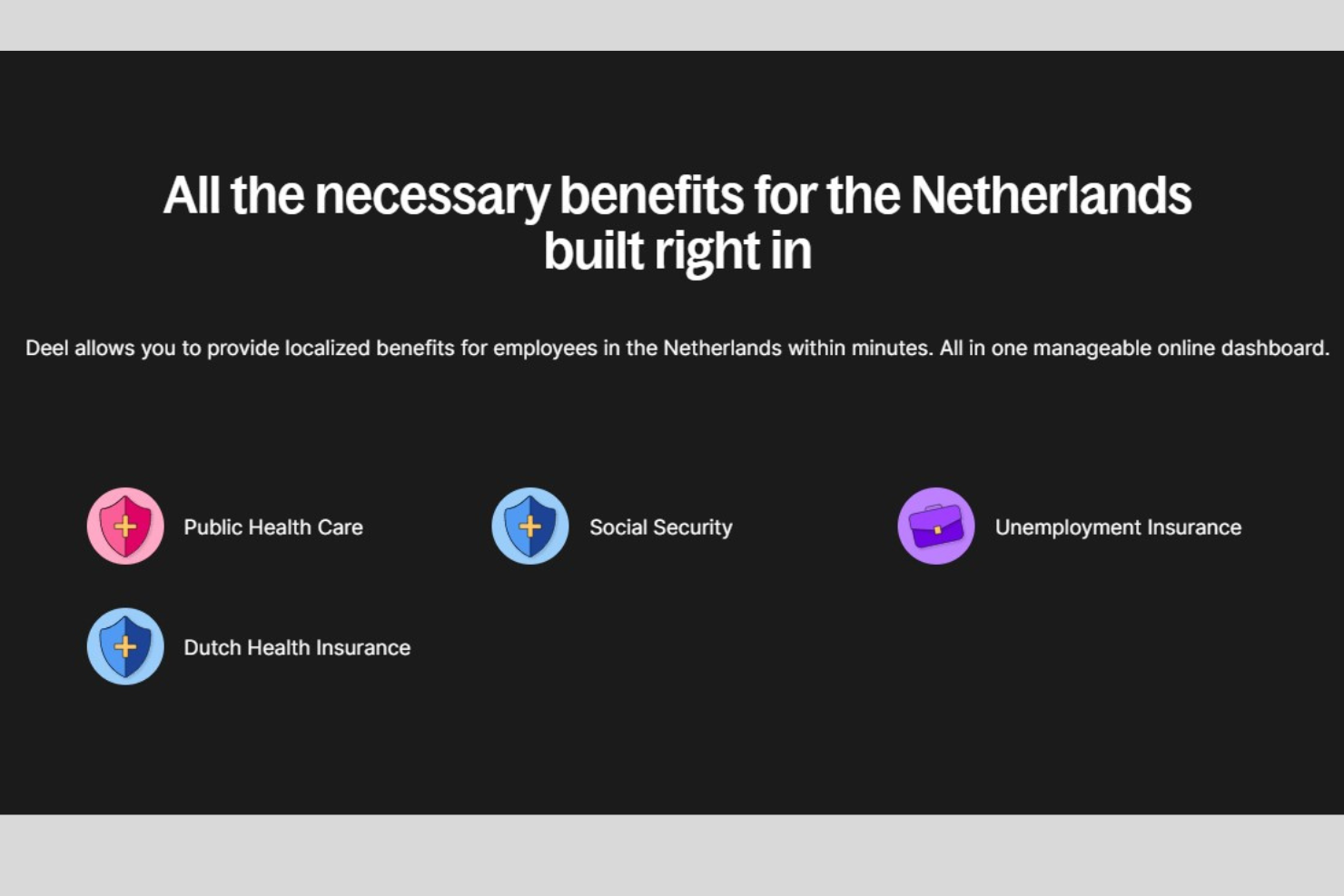
Deel is a global employer of record platform that lets you hire, onboard, and pay employees in the Netherlands through its locally registered Dutch entity, with built-in payroll, benefits administration, immigration sponsorship, and contract management.
Who Is Deel Hire Best For?
Deel Hire is a strong fit for companies expanding into the Netherlands that need in-house immigration sponsorship alongside employment compliance.
Why I Picked Deel Hire
I picked Deel Hire as one of the best because it operates through a wholly-owned Dutch BV, meaning there's no third-party intermediary handling compliance on your behalf. What I find especially valuable is its in-house IND-recognized immigration sponsorship, covering Highly Skilled Migrant, EU Blue Card, and ICT permits with 48-hour eligibility assessments. Deel also publishes detailed Dutch employer-cost breakdowns, including the 30% ruling reflected directly on payslips.
Deel Hire Key Features
- Dutch statutory benefits administration: Deel manages pension enrollment through Nationale Nederlanden, the 8% holiday allowance, and statutory leave—including up to 104 weeks of sick pay—for all Dutch employees.
- Month-to-month contract terms: Deel's EOR plan runs on a flat per-employee fee with no long-term commitment, so you can exit without financial penalties beyond Dutch statutory notice.
- Open API with EOR endpoints: Deel's API covers the full employee lifecycle—hiring, onboarding, changes, and terminations—with real-time webhooks and a sandbox for testing integrations.
- EU-hosted data storage: Employee data is stored on AWS infrastructure in Ireland, with disaster recovery in France, backed by SOC 2, ISO 27001, and GDPR certifications.
Deel Hire Integrations
Deel Hire offers marketplace integrations with Workday, SAP SuccessFactors, BambooHR, HiBob, Personio, Greenhouse, QuickBooks, Xero, NetSuite, and Google Workspace. Its open API supports custom HRIS, ATS, payroll, accounting, and device integrations.
Pros and Cons
Pros:
- Reviews praise responsive support and contract signing
- IND-recognized sponsorship supports key Dutch permits
- Wholly owned Dutch BV reduces intermediary risk
Cons:
- CAO requirements require manual contract adaptation
- Reviewers report occasional payroll accuracy problems

Best for budget-conscious remote team expansion
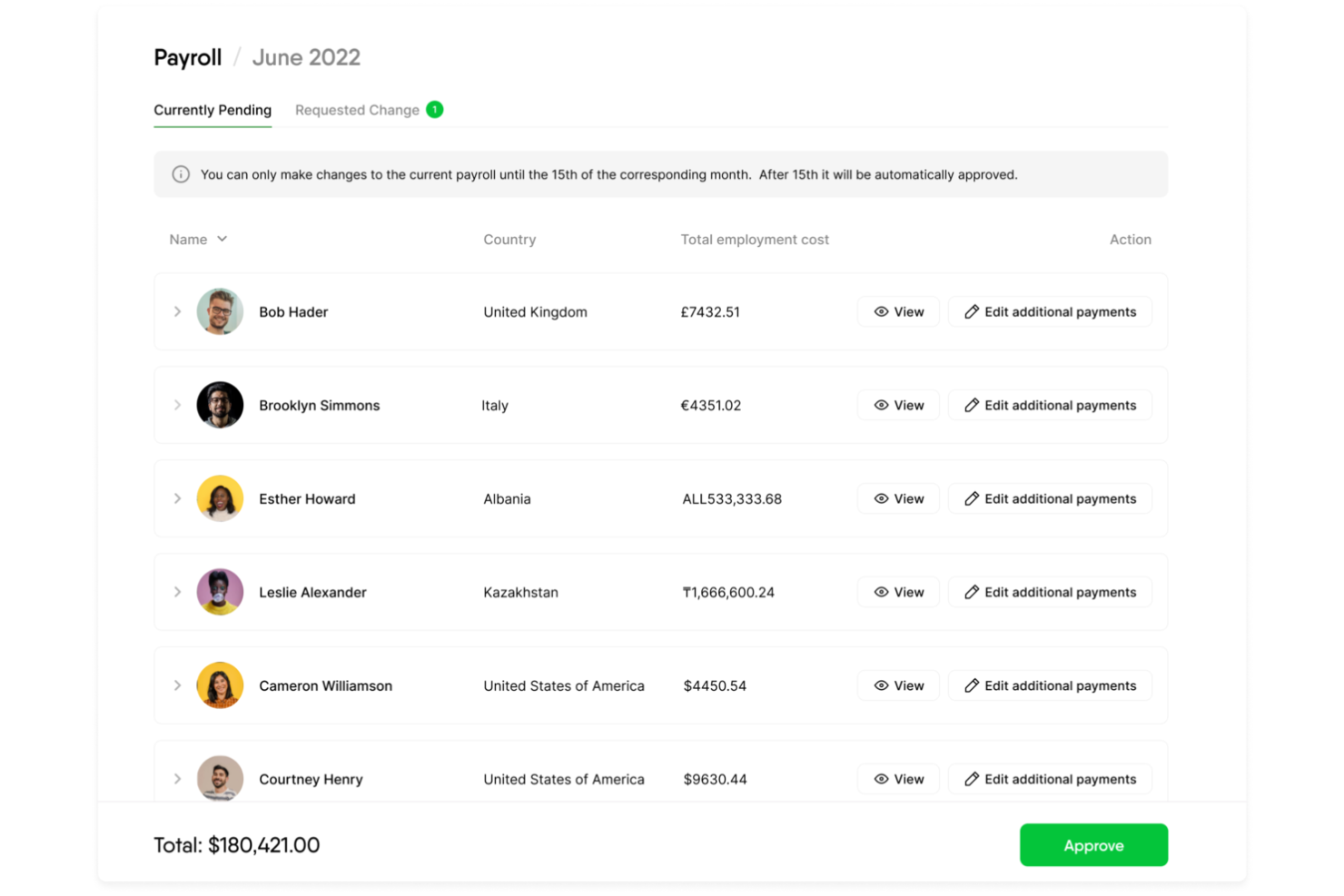
RemoFirst is an employer of record platform that handles Dutch payroll processing, localized contract generation, statutory benefits administration, visa and work permit support, and compliant offboarding across 185+ countries.
Who Is RemoFirst Best For?
RemoFirst is a strong fit for startups and small teams hiring their first Dutch employee without committing to a local entity or long-term contract.
Why I Picked RemoFirst
I picked RemoFirst as one of the best because its $199/month flat rate is the lowest published EOR price I've seen for Dutch hiring, with no setup fees, no minimum headcount, and no long-term contract tying you in. That makes it a genuinely practical option when you're onboarding a single Dutch employee to test the market before committing to a local entity. I also like that it covers the 30% ruling and 2026 HSM salary thresholds directly in the platform, so relocating skilled migrants into the Netherlands doesn't require a separate compliance process.
RemoFirst Key Features
- Dutch statutory benefits administration: RemoFirst manages holiday allowance (vakantiegeld), sick pay, maternity leave, and partner leave entitlements in line with Dutch law.
- RemoVisa work permit support: A dedicated visa service that handles Highly Skilled Migrant permits, EU Blue Card applications, and BSN registration for Dutch hires.
- Multi-currency invoicing: Clients can receive consolidated monthly invoices in EUR, USD, GBP, or five other currencies, with a single payment covering all Dutch and global team members.
- Employee self-service portal: Employees access their contracts, benefits details, and leave balances directly through the platform, with an in-platform chat for HR and visa questions.
RemoFirst Integrations
RemoFirst offers four documented native integrations: Workday, BambooHR, ADP Workforce Now, and GoCardless. Public API documentation and native ATS or accounting integrations aren't clearly documented.
Pros and Cons
Pros:
- Supports single-employee market tests without entities
- Dedicated account managers aid Dutch onboarding
- Current HSM and 30% ruling guidance
Cons:
- Dutch pension and CAO details remain unclear
- Partner-based Dutch employment reduces liability transparency

Best for expert guidance on Dutch dismissal rules
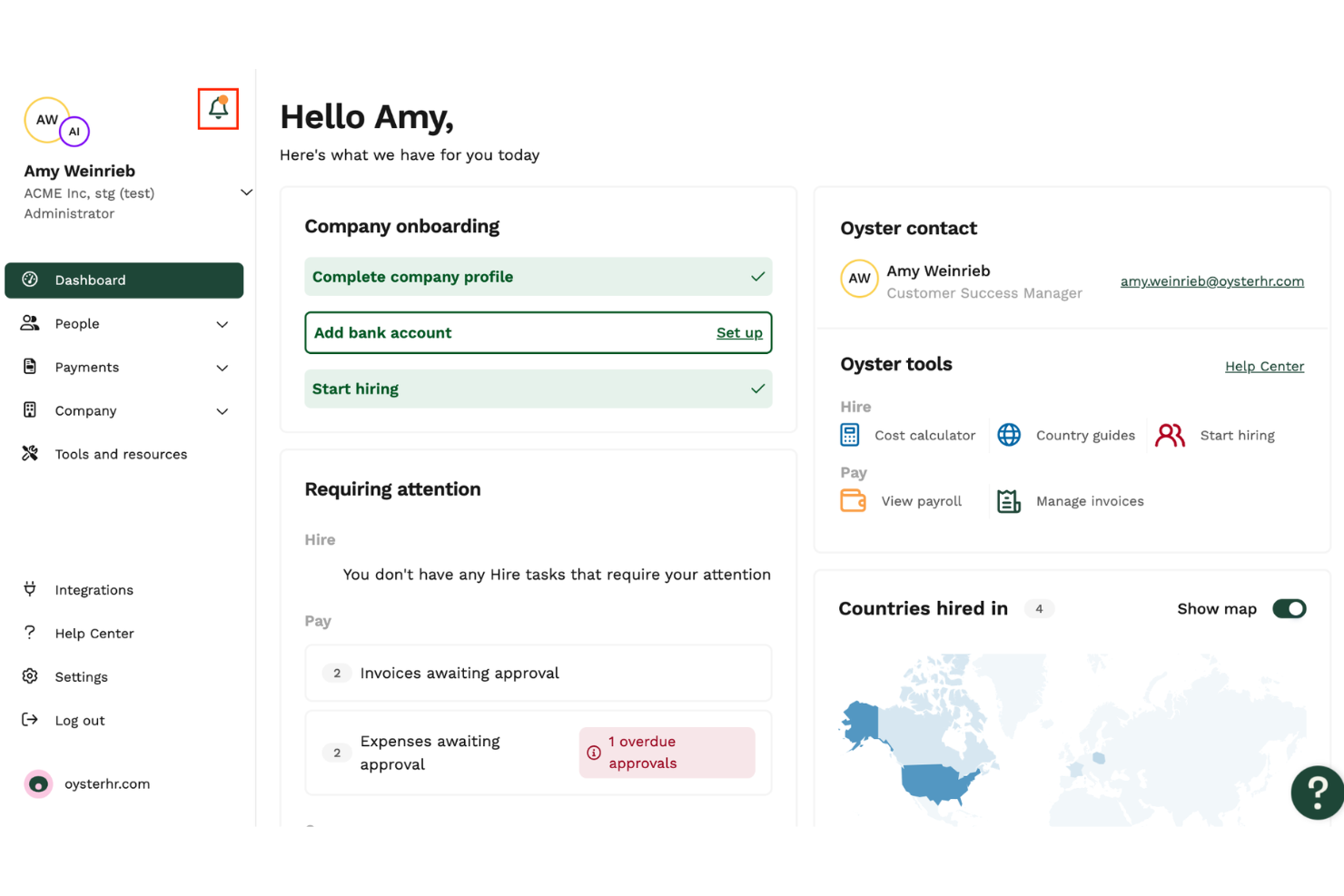
Oyster HR is an employer of record platform with a wholly-owned Dutch legal entity that handles compliant employment contracts, payroll, benefits, and full dismissal management for Netherlands-based hires.
Who Is Oyster HR Best For?
Oyster HR is a strong fit for global HR teams and international expansion leads who need confident, compliance-backed support navigating Dutch dismissal procedures, sick leave obligations, and severance rules.
Why I Picked Oyster HR
I've included Oyster HR in my top picks because its depth on Dutch dismissal law is genuinely hard to replicate. When a termination is contested, Oyster manages the full UWV approval process and calculates the transitievergoeding (1/3 of a gross monthly salary per year of service) directly in the platform. I also like that its Oyster AI tool (Pearl) delivers proactive, Netherlands-specific guidance on obligations like Wet Verbetering Poortwachter, so you're not scrambling to understand a two-year sick leave reintegration requirement mid-process.
Oyster HR Key Features
- Vakantiegeld administration: Oyster automatically accrues and pays the statutory 8% holiday allowance monthly, with full disbursement each May or upon termination.
- Oyster AI (Pearl): A built-in AI assistant that delivers Netherlands-specific hiring guidance, including real-time alerts on CAO requirements and contract compliance gaps.
- Verzuimpakket sickness insurance: An optional add-on that reduces your financial exposure during the Netherlands' mandatory two-year sick pay obligation.
- Native HRIS and ATS integrations: Free connections to tools like HiBob, BambooHR, Greenhouse, and Workable keep your existing HR stack in sync with Oyster's platform.
Oyster HR Integrations
Oyster HR offers native integrations with HiBob, BambooHR, Greenhouse, Workable, Xero, QuickBooks, Concur, Carta, and Slack. It also provides a Developer API for custom integrations and supports Zapier.
Pros and Cons
Pros:
- Fast onboarding for EEA nationals
- Expert guidance on UWV dismissal procedures
- Direct employment through Dutch legal entity
Cons:
- Support is primarily ticket-based
- Kennismigrant visas require partner coordination

Best for quick global compliance support
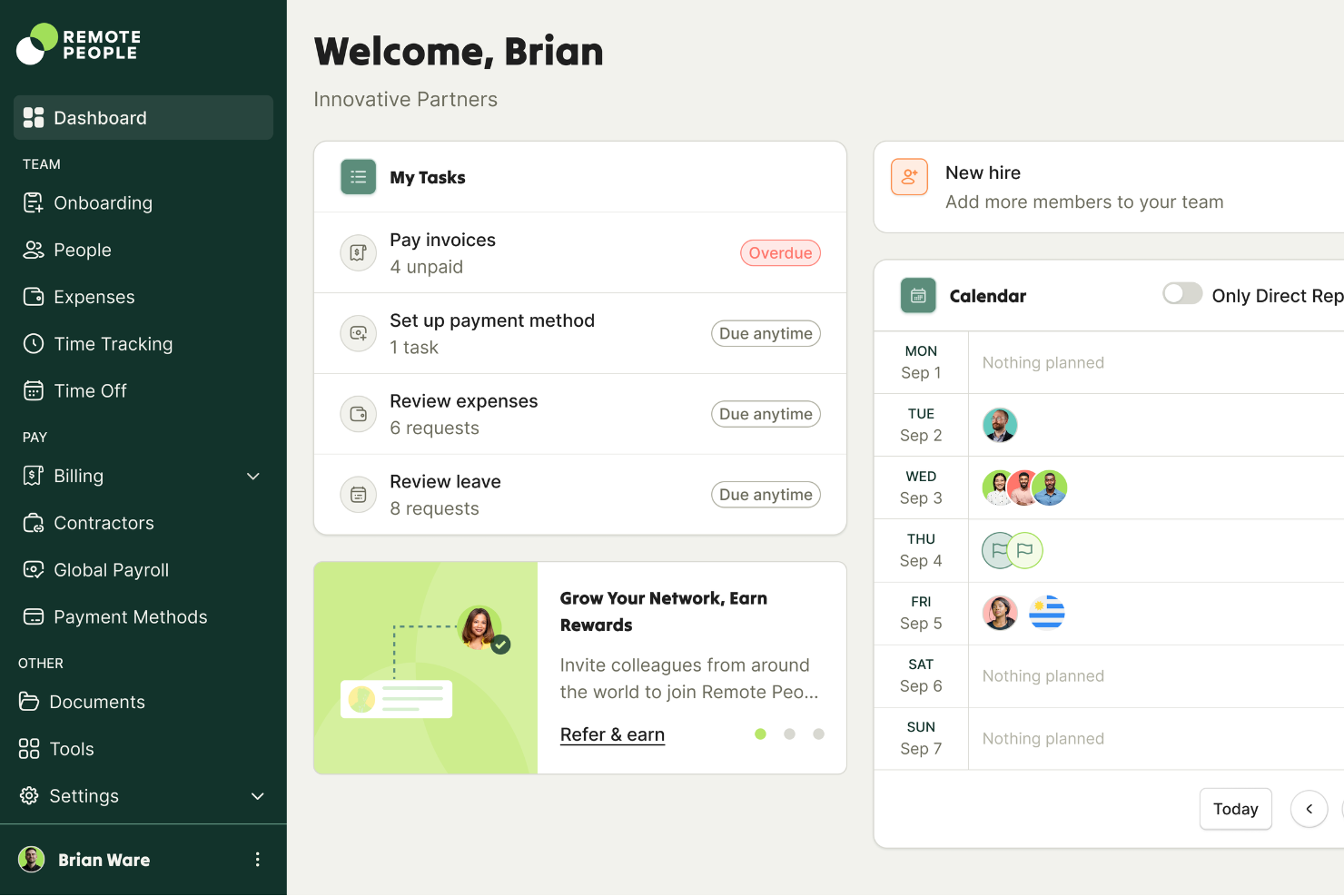
RemotePeople is an employer of record platform that handles Dutch legal employment, payroll processing, contract generation, statutory benefits, termination support, and work permit sponsorship across 150+ countries from a single dashboard.
Who Is RemotePeople Best For?
RemotePeople is a strong fit for startup founders and small HR teams hiring one to fifteen employees in the Netherlands who need permit sponsorship and compliance support without setting up a local entity.
Why I Picked RemotePeople
RemotePeople earns its spot on my shortlist because it acts as a recognised IND sponsor, meaning it can handle Highly Skilled Migrant permits directly without routing your hire through a third-party immigration firm. I also like that it manages the 30% tax ruling end-to-end, from drafting contracts that reflect the ruling to coordinating approval with the Belastingdienst, which is a real time-saver when onboarding relocated talent. Its Netherlands page tracks 2026 contribution rates and transition payment caps, so compliance stays current without manual checking.
RemotePeople Key Features
- Dutch CAO compliance check: RemotePeople reviews which collective labour agreement (CAO) applies to your hire and builds its terms into the employment contract, covering hours, overtime, leave, pension, and allowances.
- Recruit plus EOR bundling: You can source and employ a Dutch hire through one provider, with recruitment priced at 2% of annual salary and a six-month replacement guarantee included.
- Multi-language contract generation: Employment contracts can be issued in Dutch, English, or German, with locally compliant templates that update automatically.
- Employee self-service portal: Employees can access payslips, request time off, submit expenses, and view employment documents directly through the platform.
RemotePeople Integrations
RemotePeople lists 60+ connected tools, including Nmbrs, PayFit, Officient, BambooHR, Personio, Okta, Microsoft Entra ID, and Sage. No public API documentation is available for custom integrations.
Pros and Cons
Pros:
- Current Netherlands compliance guidance
- Handles the Dutch 30% ruling
- Direct Highly Skilled Migrant sponsorship
Cons:
- Dutch entity details remain undisclosed
- Operations can be slow

Best for direct hiring in the Netherlands
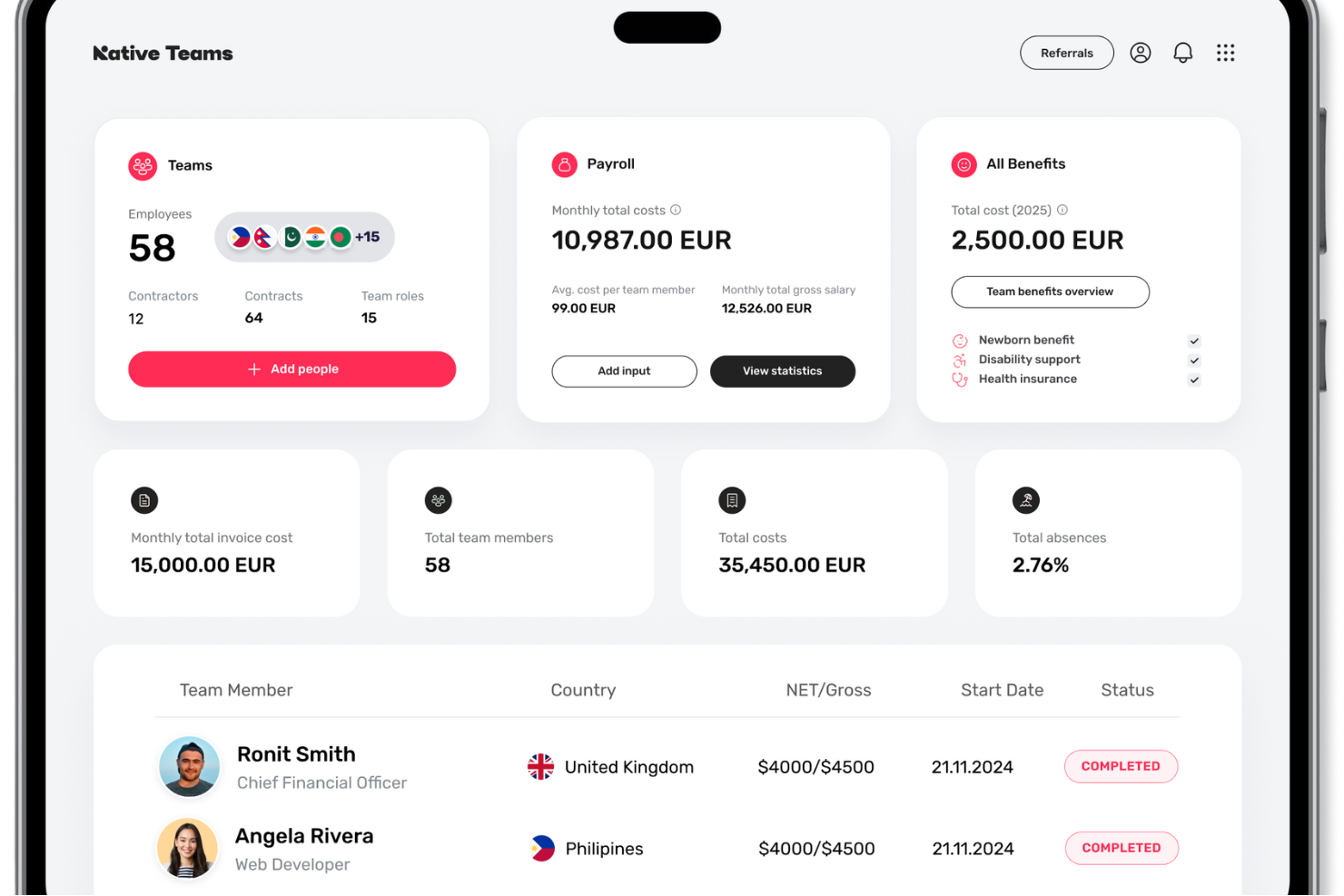
Native Teams is an employer of record platform with an owned Dutch entity that handles payroll, tax filings, statutory benefits, compliant contracts, and work permit support for hiring in the Netherlands.
Who Is Native Teams Best For?
Native Teams suits startup founders and small teams that want to hire in the Netherlands quickly, without committing to a local entity.
Why I Picked Native Teams
Native Teams earns its spot on my shortlist because it owns a Dutch entity directly, meaning your hires are legally employed under Dutch law without a reseller in the middle. I picked it specifically for teams that want to hire in the Netherlands without opening a local office, since the platform handles payroll, tax filings, and statutory benefits like the 8% holiday allowance from day one. It also includes work and residence permit support for non-EEA hires, which is genuinely useful when you're bringing someone into the Dutch market from outside Europe.
Native Teams Key Features
- Dutch payroll calculator: A free gross-to-net calculator estimates employee costs and employer contributions for the Netherlands before you commit to a hire.
- Absence management: A unified leave calendar automatically enforces Dutch statutory leave rules, tracks real-time balances, and syncs approved absences directly with payroll.
- Entity management upgrade path: Clients can transition from EOR to a fully owned Dutch subsidiary within the same platform, without switching providers.
- Employee self-service app: Employees access contracts, payslips, leave balances, and expense cards through iOS and Android apps.
Native Teams Integrations
Native Teams doesn't have any native integrations. No public API, HRIS, ATS, accounting, or SSO integrations are documented.
Pros and Cons
Pros:
- Reviewers praise timely payments and invoicing
- Netherlands payroll guidance aids self-service research
- Direct Dutch entity supports compliant local hiring
Cons:
- Reviews cite payment delays and support gaps
- Dutch termination procedures lack public detail

Best for quick employee onboarding
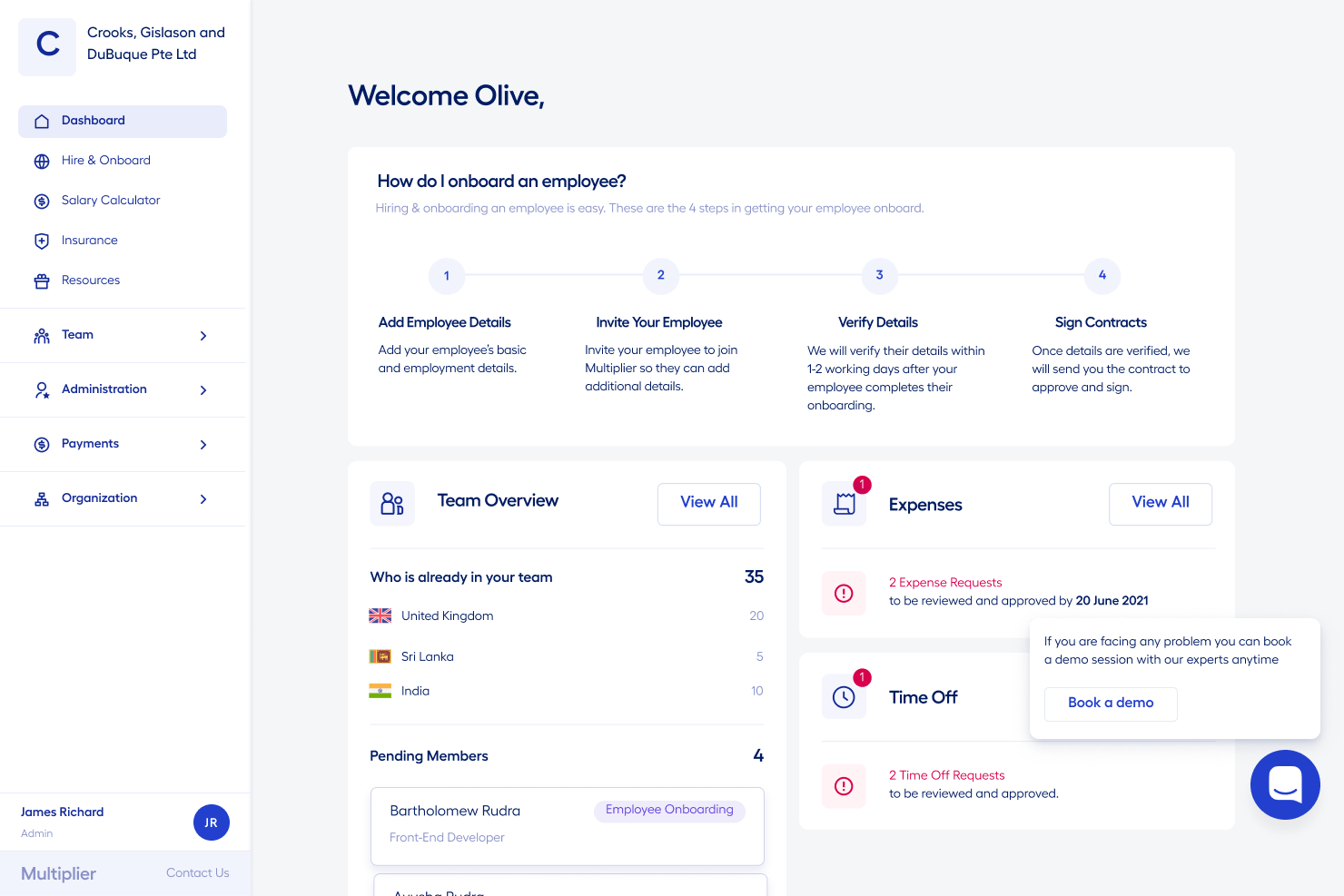
Multiplier is a global employer of record platform that manages Dutch-compliant payroll, employment contracts, statutory benefits, work permits, and employee onboarding across the Netherlands and 150+ other countries.
Who Is Multiplier Best For?
Multiplier is a strong fit for startups and scaling companies that need to hire Dutch employees fast, without the overhead of setting up a local entity.
Why I Picked Multiplier
I've included Multiplier in my top picks because it genuinely delivers on fast Dutch employee onboarding, with most hires going live within 72 hours of document submission. I like that it handles BSN collection, Belastingdienst registration, and payslip generation in one flow, so there's no scrambling across separate systems when you're racing to get someone started. It also manages the 30% ruling automatically, which matters when you're hiring expat talent in the Netherlands and need that tax benefit applied correctly from day one.
Multiplier Key Features
- Dutch work permit and visa support: Multiplier's immigration specialists liaise directly with the IND and manage the full permit application and renewal process on your behalf.
- Multi-country employee dashboard: A single dashboard lets you manage Dutch and global employees, contractors, and payroll across 150+ countries in one place.
- Statutory benefits administration: Multiplier handles the 8% holiday allowance, 20 days of annual leave, sick leave, maternity leave, and pension contributions in line with Dutch law.
- SOC 2 and ISO 27001-certified security: The platform is certified to SOC 2 Type I and II and ISO 27001:2022 standards, with MFA and role-based access controls built in.
Multiplier Integrations
Multiplier lists integrations with Workday, BambooHR, HiBob, and Zoho People. Its Core plan includes API access for custom integrations and single sign-on.
Pros and Cons
Pros:
- Handles BSNs, tax registration, and payslips centrally
- Immigration specialists coordinate directly with Dutch authorities
- Dutch onboarding often completes within 72 hours
Cons:
- Termination support lacks detailed Dutch process guidance
- Reviewers report payroll errors and missed deductions

Best for 24/5 dedicated support
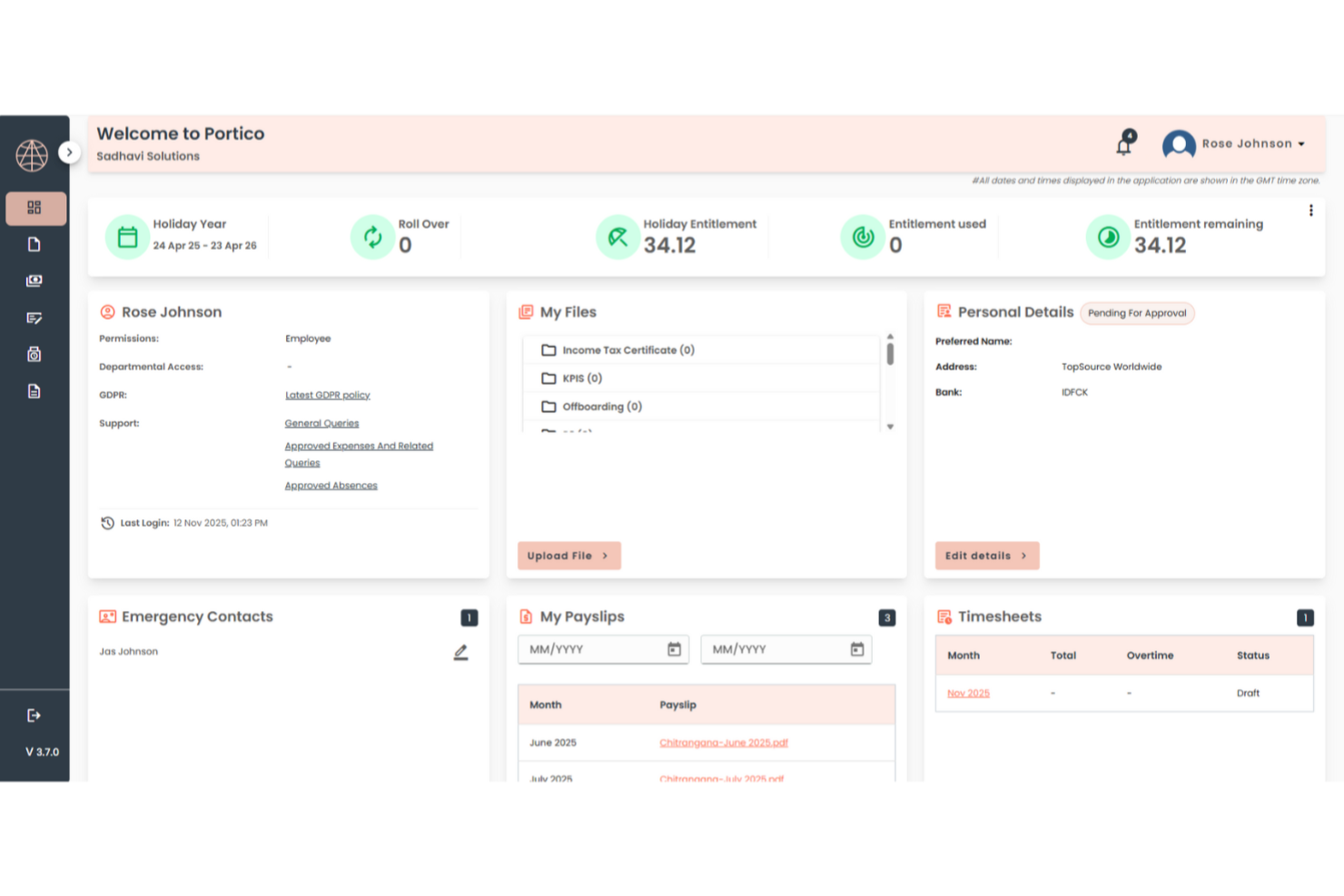
TopSource Worldwide is an employer of record solution that handles Dutch payroll, CAO-compliant contract generation, statutory benefits, and workforce management across 164 countries—all without requiring you to set up a local entity.
Who Is TopSource Best For?
TopSource is a strong fit for HR teams managing multi-country headcount who want a dedicated account manager and round-the-clock human support rather than a self-serve portal.
Why I Picked TopSource
I've included TopSource in my top picks because its 24/5 phone access to in-country experts and a named account manager set it apart from platforms that route every question through a chatbot or ticket queue. When a Dutch hire raises a sick pay dispute or a CAO classification question mid-week, you get a real person who knows Dutch law, not a canned response. I also rate its 30% ruling management highly: TopSource checks eligibility, files with the Belastingdienst within the required four-month window, and structures the tax-free salary portion correctly from day one.
TopSource Key Features
- CAO mapping: TopSource classifies each Dutch hire under the applicable sector collective labour agreement, covering pay scales, pensions, and working conditions.
- Dutch payroll tax filing: TopSource handles monthly loonaangifte submissions to the Belastingdienst, including gross-to-net calculations and premium band assignments.
- Quarterly compliance audits: TopSource conducts regular reviews of your Dutch payroll costs and compliance posture, flagging legislative changes before they affect your headcount.
- Entity transition support: TopSource helps you move employees from its EOR onto your own Dutch entity with no exit fees when you're ready to establish a local presence.
TopSource Integrations
TopSource supports custom integrations through dedicated APIs for HRIS, ATS, payroll, accounting, reporting, time-tracking, and leave tools. Third-party reports name Workday, SAP SuccessFactors, BambooHR, and HiBob, but TopSource doesn’t clearly document these as native integrations.
Pros and Cons
Pros:
- Manages 30% ruling applications
- Strong Dutch CAO expertise
- 24/5 dedicated support
Cons:
- Netherlands immigration support lacks detail
- Dutch entity ownership remains unclear
Best for onboarding and paying Dutch talent
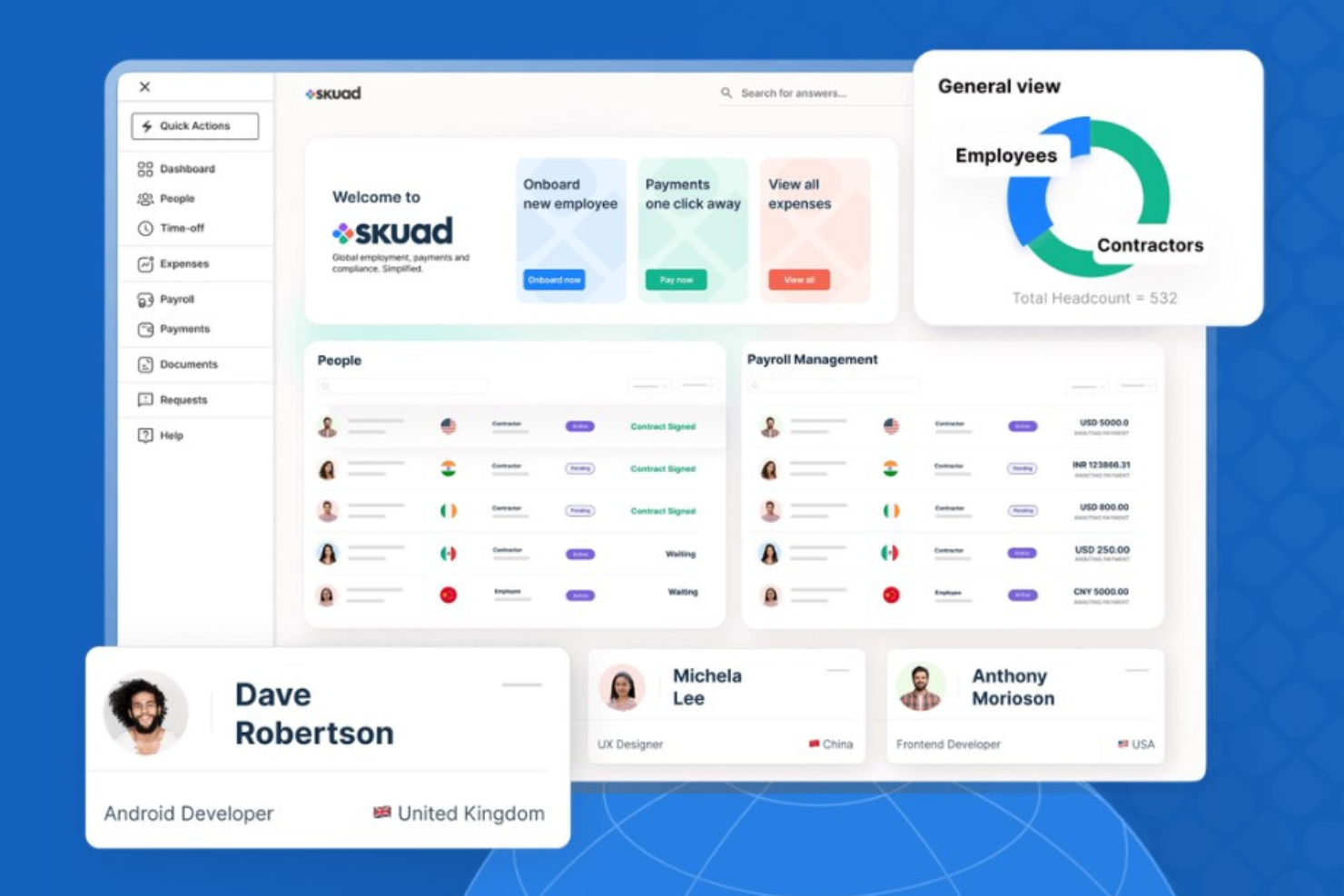
Payoneer Workforce Management is a global employer of record platform that handles local legal employment, payroll processing, compliant contract generation, benefits administration, and contractor management across 160+ countries, including the Netherlands.
Who Is Payoneer Workforce Management Best For?
Payoneer Workforce Management is a strong fit for startups and early-stage companies that want to hire in the Netherlands quickly, without committing to a local entity.
Why I Picked Payoneer Workforce Management
I've included Payoneer Workforce Management in my top picks because it handles both onboarding and paying Dutch talent through a single, structured workflow: compliant offer letter, employment agreement, and payroll run, all within one platform. I particularly like that it automates loonheffing withholding, vakantiegeld accrual, and monthly loonaangifte filings, so you're not manually tracking Dutch payroll obligations. It also covers the 30% ruling in detail, which matters if you're bringing in highly skilled migrants through the Highly Skilled Migrant route.
Payoneer Workforce Management Key Features
- Multi-country contractor and employee management: Manage both employees and contractors across 160+ countries from a single dashboard, covering contracts, payroll, time off, and reimbursements.
- Employee self-service portal: Employees access payslips, documents, offer letters, and reimbursement requests directly through their own login.
- Visa and immigration workflow: The immigration product handles pre-visa assessment, document processing, and permit renewals, covering Dutch permit types including the GVVA and TWV.
- HRIS integrations: Connect with 70+ HR and accounting tools, including BambooHR, ADP Workforce Now, and AlexisHR, with custom API integrations available on request.
Payoneer Workforce Management Integrations
Payoneer Workforce Management supports 70+ integrations, including BambooHR, ADP Workforce Now, ADP Run, and AlexisHR. Custom API integrations are available on request, with requested integrations typically taking 2–4 weeks to add.
Pros and Cons
Pros:
- Self-service payslips reduce employee queries
- Quick onboarding supports Dutch hiring tests
- Dutch payroll covers loonheffing and vakantiegeld
Cons:
- Dutch visa sponsorship status remains unclear
- Salary processing delays affect payroll reliability

Justworks
Best for competitive local benefits
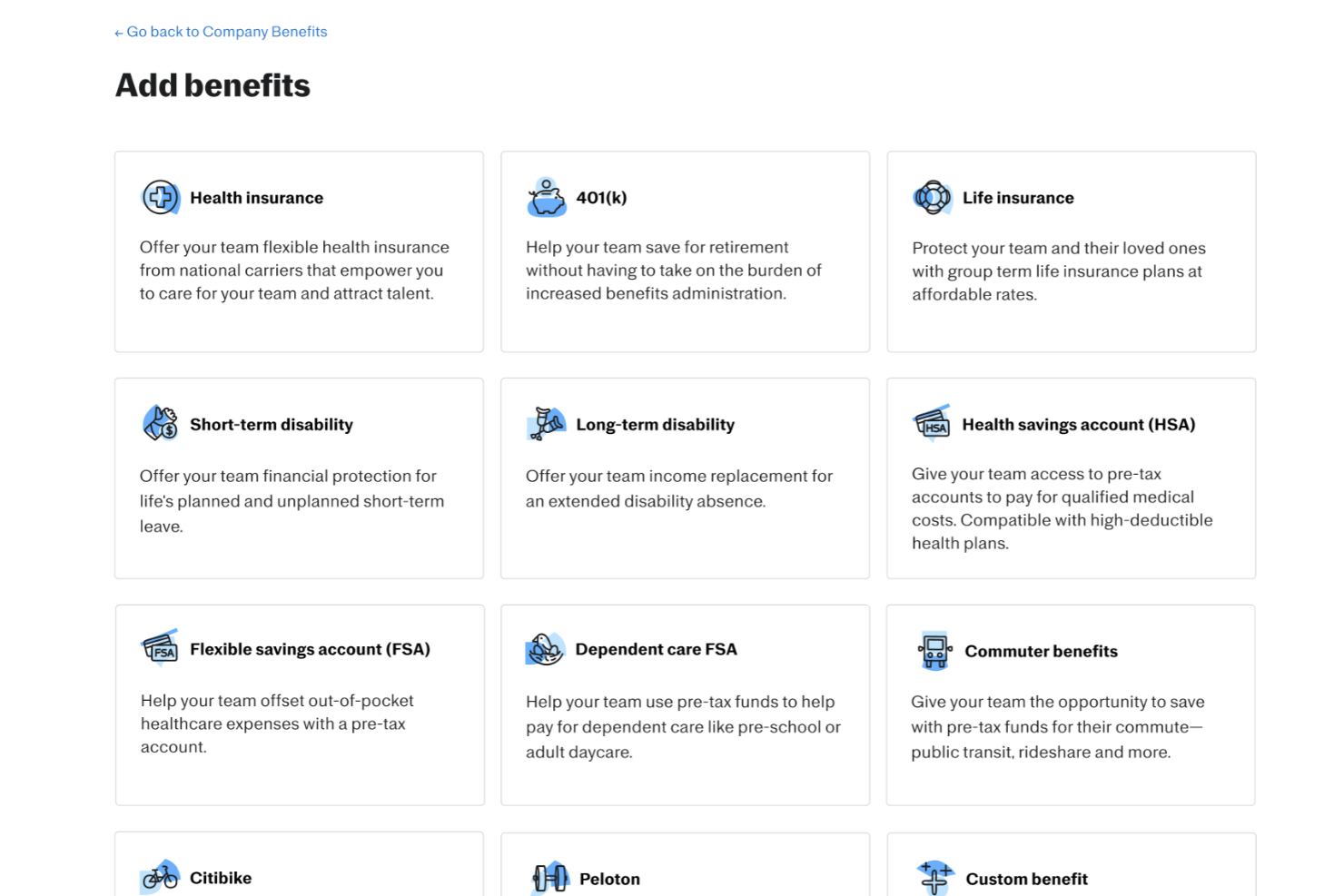
Justworks is an employer of record platform that handles Dutch payroll in EUR, statutory benefits administration, compliant employment contracts, and employee offboarding for companies hiring in the Netherlands without a local entity.
Who Is Justworks Best For?
Justworks suits US-based startups and small businesses making their first Dutch hire, especially those that want transparent flat-fee pricing and strong statutory benefits administration without setting up a local entity.
Why I Picked Justworks
I've included Justworks in my top picks because it covers Dutch statutory benefits thoroughly, from the mandatory 8% holiday allowance (vakantiegeld) to 104-week sick pay with reintegration support and UWV-administered maternity leave. I like that it handles pension enrollment and private health insurance administration as part of the EOR package, so your Dutch hire lands with a complete benefits setup from day one. It acts as the legal employer in the Netherlands, running EUR payroll and managing tax and social insurance compliance without requiring you to open a local entity.
Justworks Key Features
- EUR payroll processing: Justworks runs monthly payroll in euros, handling tax withholdings and employer social insurance contributions under Dutch law.
- International cost calculator: An in-platform tool breaks down the full cost of employment in the Netherlands, including statutory employer contributions.
- Centralized multi-country dashboard: You can manage Dutch EOR employees alongside US PEO or payroll staff from a single platform.
- Document center and reporting: Employees and admins access contracts, filings, and pay records through a built-in document hub with time off and time tracking tools.
Justworks Integrations
Justworks lists integrations with Brex, Carta, Culture Amp, QuickBooks Online, Ramp, and Xero for EOR customers. Its marketplace includes 30 partner integrations and offers, including 15Five, Accurate, and Checkr.
Pros and Cons
Pros:
- Positive support reviews complement local guidance
- Clear EUR payroll compliance coverage
- Strong Dutch statutory benefits administration
Cons:
- No published CAO or ruling support
- No documented Dutch visa sponsorship
Other Employer of Record Services in the Netherlands
Here are some other EOR service providers in the Netherlands that didn’t make it into my top 10 shortlist, but are still worth considering:
- Remote
For competitive benefits packages
- CXC Global
For a vendor-neutral approach
- Rivermate
For European client companies
- Atlas HXM
For enterprise organizations
- Oyster
For hiring Dutch talent via an owned local entity
- Horizons
For switching EOR providers mid-contract
- FMC Group
For local entity transfer options
- Dutch Employer of Record
For IND-sponsored expat hiring in the Netherlands
- Playroll
For flat-fee Dutch hiring at any team size
- ThisWorks
For hands-on Dutch HR and compliance support


Selection Criteria for Employer of Record the Netherlands
To find the best EOR services for hiring in the Netherlands, I focused on how each provider helps solve real challenges—like navigating Dutch labor laws, managing international payroll, offering competitive benefits, and onboarding employees quickly and smoothly.
Here’s what I looked for when comparing each provider’s service offerings:
Core Employer of Record Services (25% of total score): To be considered for inclusion in this list, each EOR provider had to offer the following basic services first:
- The corporate structure to legally and compliantly hire employees in multiple countries without a local entity
- The ability to manage cross-border payroll and taxes in compliance with local regulations
- Assistance with offering competitive and locally compliant benefits packages
- Assistance with navigating visa and work permit processes for expatriate employees
- Robust procedures to ensure data privacy and security that comply with international standards, including GDPR and other requirements
Additional Standout Services (25% of total score): To help me narrow in on the best EOR services out of the numerous options available, I also took note of any unique or less common services, including:
- Advanced technology platforms that streamlined payroll and HR processes while still offering ease of use
- Specialized experience in hiring employees within specific new countries or key industries
- Services that enhance remote work compliance and global mobility needs
- Specialized customer support for complex immigration cases
- Assistance with international IT requirements, including managing computer equipment, software licenses, and other asset-tracking requirements
- A focus on eco-friendly and sustainable employment practices
Industry Experience (10% of total score): To evaluate the industry experience of each EOR service provider, I considered the following:
- How many years their business has operated in the EOR space
- Any industry recognitions or certifications the provider may hold in international HR and payroll
- Their depth of knowledge in local labor laws across multiple jurisdictions
- Their expertise in new markets, including how many different countries they offer local expertise in
- Evidence of a strong track record managing global expansion processes
- The combined experience and credentials of their team members, if available
Customer Onboarding (10% of total score): To get a sense of each provider's customer onboarding process, I considered the following factors:
- The availability of comprehensive onboarding materials, such as fact sheets, guides, FAQ repositories, or other training resources
- Support for integrating the EOR provider's software with existing HR systems
- Direct access to onboarding specialists, customer support, or a dedicated account manager during the setup phase
Customer Support (10% of total score): Since the EOR provider will act as your remote workers' legal employer, it's important to ensure you'll receive timely communications and top-level support. To evaluate the level of customer support each company offered, I considered the following:
- The availability of a multilingual support team that covers different time zones
- Multiple support channels, including phone, email, and live chat
- Evidence of responsiveness and effectiveness in resolving issues, as inferred from customer reviews
- The existence of dedicated account managers to provide assistance as needed
Value for Price (10% of total score): To gauge the overall value of each service, I considered the following factors:
- Transparent pricing models without hidden fees
- Comparative analysis of service offerings versus cost
- Flexibility in service packages to suit different business sizes and needs
Keep in mind that EOR services are complicated, and because of that the price tag can sometimes be high. However, the prices for their services still offer a good ROI considering the complexity of the premium-grade services you're gaining.
Customer Reviews (10% of total score): Evaluating customer reviews is the final element of my selection process, which helps me understand how happy real users are with a service. To determine this, I considered the following factors:
- Consistently high ratings across various consumer review platforms
- Specific feedback on the ease of use of the EOR services
- Testimonials highlighting exceptional customer support and problem resolution
Using this assessment framework helped me identify the employer of record services that go beyond basic requirements to offer additional value through unique services, deep industry experience, smooth onboarding, effective support, and overall value for price.
How to Choose an Employer of Record in the Netherlands
An EOR service can solve many different challenges and simplify the process of hiring and managing staff in the Netherlands. To help you figure out which EOR service best fits your business needs, you need to document your specific challenges first.

As you work through your own unique selection process, keep the following points in mind:
- What problem are you trying to solve? Start by identifying the challenges you're trying to overcome, whether that's sourcing staff in the Netherlands who have specific skills, managing compliance with the Netherlands’s employment laws and tax regulations, paying employees in Euros (EUR), or offering health benefits to your Dutch employees.
- Who will benefit from the service? Consider who will manage the EOR relationship (i.e., who will your main contact people be in-house?) and how having an employer of record will improve their day-to-day work tasks.
- What is your budget? To evaluate cost, estimate how many employees you anticipate hiring in the Netherlands. Since EOR providers typically charge a monthly fee for each new hire, this will help you anticipate your monthly costs.
- What outcomes are important? Review the capabilities you want to gain or improve, and how you will measure success. For example, you may want to hire employees located within a specific province in the Netherlands to allow your staff to collaborate together in person if needed. You could compare service providers until you’re blue in the face but if you aren’t thinking about the outcomes you want to achieve, you could waste a lot of valuable time.
- How it would work within your organization? Consider how the service provider's software ecosystem would work alongside your existing workflows and systems. Would their software framework integrate with your existing HR software, or would you face data management roadblocks?
Remember every business is different — don’t assume that a Netherlands employer of record service will work for your organization just because it's popular.
When to Use an Employer of Record in the Netherlands
An employer of record (EOR) in the Netherlands handles the legal side of employing workers there, so you can hire compliantly without setting up a Dutch entity. It's a practical option for companies that need Dutch talent fast, without the overhead. If any of the scenarios below sound familiar, an EOR could be the right move:
- You're expanding into the Netherlands but can't wait months to get started: Registering a Dutch legal entity typically takes 3-5 months and requires ongoing compliance overhead. An EOR lets you onboard your first hire within days, so your expansion doesn't stall before it begins.
- Your team is misclassifying Dutch contractors: The Netherlands has strict rules around bogus self-employment (the ZZP reforms), and the fines for misclassification are steep. An EOR converts those workers to compliant employees without you needing local legal expertise.
- Managing Dutch payroll and benefits in-house is eating up HR's time: The Netherlands requires mandatory pension contributions, holiday allowances, and sector-specific CAOs. An EOR handles it all, so your HR team stops juggling spreadsheets and stays focused on people, not admin.
- You're testing the Dutch market before committing: Opening an entity makes sense long-term, but not if you're still validating demand or running a 6-month pilot. An EOR gives you a low-risk way to operate compliantly while you decide if a permanent presence is worth it.
- It's taking too long to get new Dutch hires up and running: Navigating 30-day notice periods, works council obligations, and local onboarding norms slows you down. An EOR with in-country expertise gets new hires compliant and productive faster.
EOR vs Legal Entity
If you’re trying to decide between using an EOR or setting up your own legal entity in the Netherlands, it’s important to understand the tradeoffs.
While establishing a Dutch entity gives you more long-term control, it also comes with greater complexity, cost, and legal responsibility. An EOR, on the other hand, provides a faster, lower-risk way to start hiring in the country—without having to navigate registration, tax, and compliance on your own.
Here’s a quick comparison of what each option typically involves:
| Category | Employer of Record (EOR) | Legal Entity Setup |
|---|---|---|
| Setup Time | Days to a few weeks | Several months |
| Registration Needed | None | KvK registration, tax ID, bank account |
| Compliance Management | Handled by EOR | Your responsibility |
| Employment Contracts | Issued by EOR | Drafted and managed by you |
| Payroll & Benefits | Managed by EOR | Requires setup of local payroll systems |
| Costs | Monthly fee per employee | Upfront legal, administrative, and ongoing costs |
| Local Expertise Needed | Provided by EOR | Required in-house or through consultants |
| Ideal For | Fast market entry, testing new markets | Long-term, large-scale investment |
Using an EOR can be a strategic shortcut if you're exploring the Dutch market or scaling fast without legal infrastructure. But if you're planning a permanent presence in the Netherlands and want full operational control, setting up a legal entity may be worth the investment.
Key Services of Employer Of Record Netherlands
When selecting employer of record Netherlands, keep an eye out for the following key services:
- Global payroll management: Your EOR partner manages salary payments in EUR, ensuring full compliance with Dutch payroll regulations, the Dutch Civil Code (Burgerlijk Wetboek), and applicable collective labor agreements (CAOs). This includes wage requirements, overtime rules, and accurate record-keeping to avoid penalties from the Dutch Tax and Customs Administration (Belastingdienst).
- Tax compliance and social contributions: The EOR handles income tax (Loonheffing) and all mandatory social security contributions, including health insurance, state pension (AOW), unemployment insurance (WW), and other statutory schemes. This ensures your employment setup aligns fully with Dutch tax law and the national social security system.
- Employment law compliance: Dutch labor regulations are detailed and employee-centric. The EOR ensures you remain compliant with rules on working hours, paid leave, sick leave, probation periods, and lawful termination procedures under the Dutch Labor Code. This reduces risk and keeps your employment practices aligned with local law.
- Talent acquisition and background checks: EORs can coordinate industry-specific background checks, verify credentials, and ensure new hires meet Dutch regulatory and professional standards before joining your team.
- Visa and work permit support: For non-EU employees, the EOR assists with visa and residence permit applications through the Dutch Immigration and Naturalisation Service (IND). This ensures all foreign talent is hired and employed in line with Dutch immigration laws.
- Onboarding and offboarding: Your EOR manages compliant onboarding and separations. This includes ensuring legally correct employment documentation, following Dutch notice period rules, and calculating the mandatory transition payment (Transitievergoeding) when applicable.
- Benefits administration: Dutch employees expect strong statutory and supplemental benefits. Your EOR administers required health insurance (Zorgverzekering), pension contributions, transportation allowances, paid leave, and additional perks tailored to the Dutch market—without adding admin strain to your team.
- HR support: The EOR offers ongoing guidance on Dutch labor law, workplace safety requirements under the Working Conditions Act (Arbowet), mandatory documentation, and best practices for managing employees in the Netherlands.
- Risk management and insurance: To reduce liability, the EOR manages key insurance obligations such as workers’ compensation coverage and disability insurance, ensuring your employment framework meets Dutch legal requirements.
- Multi-language support: With expertise in Dutch and English documentation, your EOR translates and localizes contracts, policies, and HR materials to support smooth communication within a multilingual workforce.
AI Features of Employer of Record Services in the Netherlands
AI is still an emerging feature in EOR platforms and is not yet standard across all providers in the Netherlands. Most EOR solutions use automation, structured workflows, and local expertise to manage Dutch labor law, payroll, benefits, and compliance requirements.
That said, AI is beginning to support more efficient workforce management in the Netherlands. Below are the most relevant capabilities and where they add value:
- Automated contract generation: Uses localized templates aligned with Dutch employment law, sometimes enhanced with AI, to create compliant agreements and reduce manual drafting.
- Compliance monitoring support: Tracks updates to employment rules, tax requirements, social security obligations, and leave entitlements.
- Payroll anomaly flagging: Identifies payroll inconsistencies, including errors in tax deductions, statutory contributions, or benefits calculations.
- Workflow automation for onboarding: Guides employees through onboarding steps such as document collection, payroll setup, and required employment acknowledgments.
- Document organization and tagging: Helps manage contracts, payslips, tax forms, and compliance records with structured storage and categorization.
- Workforce reporting and insights: Provides visibility into payroll costs, headcount, hiring activity, and workforce distribution in the Netherlands.
- Chat-based support tools: Offers automated responses to common HR and payroll questions, helping teams navigate Netherlands-specific processes more efficiently.
As the market continues to evolve, these trends are likely to shape the future of international employment, making it easier for businesses to navigate the challenges of global expansion. For a closer look at specific EOR providers that are capitalizing on growing AI features, I recommend reading our in-depth reviews of Oyster HR, Payoneer Workforce Management, and Omnipresent.
Leveraging employer of record (EOR) services is critical to ensure compliance with international labor laws.

Benefits of an Employer of Record Service
EOR services are a savvy option for organizations looking to expand their global footprint without the complexities and liabilities associated with international employment laws and practices. For companies contemplating global expansion, understanding the benefits of partnering with an EOR can provide the clarity and confidence you need to move forward.
Here are several benefits you’ll gain by using an EOR service:
- Quick Market Entry: For organizations aiming to test new markets or hire talent in new countries where they have no legal presence, an EOR offers a swift and efficient solution to initiate operations, saving time and resources.
- Simplified Global Payroll: Using an EOR service simplifies the complex process of managing international payroll, including tax deductions, withholdings, and currency conversions for your employees worldwide.
- Global Compliance & Risk Mitigation: By managing compliance, an EOR service provides expertise in navigating the intricacies of employment laws, tax regulations, and insurance requirements in multiple jurisdictions, helping businesses safeguard their operations against compliance-related risks.
- Enhanced Benefits Negotiation: By leveraging their extensive networks and purchasing power, EORs can negotiate better international insurance rates and secure competitive benefit packages on your behalf, enhancing your ability to attract and retain top talent worldwide.
- Improved Cost Effectiveness: Using an EOR service is a cost-effective way for businesses to enter new markets, compared to the significant costs of establishing a new foreign entity. The latter option involves significant upfront legal fees, plus other costs related to office infrastructure, staffing, and local benefits and insurance coverage.
Need a stronger case for upper management to choose an EOR? Point out the costs of hiring foreign workers and how an EOR simplifies the international recruitment process.
Costs & Pricing for Employer of Record Services
Typically, the cost of an EOR service follows a fee per-employee, per-month pricing model, which can vary widely depending on a range of factors. This model allows for scalability and predictability in budgeting for international expansion efforts.
In general, EOR services in the Netherlands cost between $599 to $2,000 per employee, per month.
Alternatively, some EOR services in the Netherlands charge a percentage of the employee’s salary, ranging between 15% to 18%.
Key factors that can influence the pricing of an employer of record service include:
- Geographic Location: Costs can vary significantly based on the country or countries you're hiring in. This is due to local economic conditions, labor laws, and the complexity of compliance requirements.
- Employee Seniority and Role Complexity: The level and nature of the roles being filled can also impact the monthly cost. Senior positions or roles requiring special qualifications may increase the price due to higher benefits and compensation management costs.
- Number of Employees: The total number of employees being managed can also impact the cost. In some cases, higher volumes may lead to volume discounts, making per-employee costs more economical.
- Custom Requirements: Any specific needs beyond the standard service offering may also contribute to the monthly cost. This may include customized solutions for recruitment, specialized employee onboarding, or unique compliance requirements, all of which can affect pricing.
Some EORs also operate under different pricing models, including a percentage of employee salary model, a fixed pricing model, and custom pricing models.
When considering an EOR service, it is crucial to understand how these factors impact the overall cost to ensure that the service aligns with your business's needs and budget constraints. Anticipating the specific requirements of your international expansion strategy will help you choose the most cost-effective and efficient EOR solution for your needs.
Plan Comparison Table for Employer of Record in the Netherlands
| Plan Type | Average Price | Common Features |
|---|---|---|
| Free Plan | $0 | Access to basic info, demo resources, and limited support. |
| Personal Plan | $200-$400/month | Dutch employment for one worker, payroll processing, basic compliance, and standard onboarding tools. |
| Business Plan | $400-$700/month | Multi-employee support, contract management, statutory benefits, tax filings, and local HR assistance. |
| Enterprise Plan | $700-$1000+/month | Custom compliance management, dedicated support, advanced integrations, legal advisory, and global reporting. |
What is an Employer of Record in the Netherlands?
An Employer of Record (EOR) in the Netherlands refers to a third-party service that legally employs workers in the Netherlands on behalf of your company. While your organization retains control over these employees’ daily tasks and workloads, the EOR takes on the full legal responsibility for employment. As the legal employer, the EOR assumes full legal responsibility for any new hires. This includes managing payroll, deducting taxes, ensuring compliance with local employment regulations, administering benefits, and handling any other employee-related requirements specific to the Netherlands.
Partnering with an EOR service is beneficial for companies wanting to hire skilled foreign workers or expand their operations into the Netherlands since it simplifies this process considerably. Instead of requiring your HR team to master the Netherlands’s employment laws and regulations, you can delegate these responsibilities to a local EOR in the Netherlands and gain peace of mind that your global operations will be compliant.
Why Use an Employer of Record Service in the Netherlands?
The Dutch labor market is characterized by "Polder Model" consensus, which results in dense regulations that favor the employee.
- The 30% Ruling Management: This is the #1 tool for attracting international talent to Amsterdam or Eindhoven. An EOR handles the complex application to the Tax Authority (Belastingdienst) to ensure your high-skilled hires receive 30% of their salary tax-free.
- Sickness Liability Insulation: In the Netherlands, employers are legally required to pay at least 70% of an employee’s salary for up to two years if they fall ill. An EOR typically has large-scale insurance "pools" that absorb this risk, which would otherwise be a catastrophic expense for a small business.
The 2026 "Flex-Law" Compliance: New laws in 2026 have increased the mandatory break between temporary contracts from 6 months to 5 years. An EOR ensures you don't accidentally trigger an "automatic permanent contract" by mismanaging contract extensions.
Hiring in the Netherlands: Important Details
Here are some key details to note if this is your first time hiring staff located in the Netherlands. Your EOR provider will manage these compliance details on your behalf. However, proactively informing yourself of these details is always recommended before you invest your resources into sourcing staff based in the Netherlands.
In the Netherlands:
- Employment laws in the Netherlands are set by the Ministry of Social Affairs and Employment (Ministerie van Sociale Zaken en Werkgelegenheid).
- You can hire employees (full-time, part-time, temporary, or seasonal) or independent contractors. Your Dutch EOR provider can help you determine the best hiring option depending on your needs while ensuring you avoid employee misclassification errors.
- You can also hire employees using a fixed-term contract with a maximum duration of three years. Employees can only be offered a maximum of three consecutive fixed-term contracts. If the employment relationship extends beyond that timeframe, it automatically converts into a permanent contract.
- The Netherlands has both mandatory payroll deductions and social security contributions that must be collected, including income tax, National Insurance contributions, Employee Insurance contributions, and Health Insurance contributions.
- Dutch is the official language in the Netherlands. However, many professionals also speak and conduct business in English.
- The standard working week in the Netherlands is 40 hours per week over a 5-day work week.
- Overtime is allowed under the Working Hours Act and is calculated by paying additional wages or granting extra time off, typically 1.25 to 1.5 times the regular pay rate, depending on the collective labor agreement.
- Statutory working hours are limited to a maximum of 12 hours per day, or 60 hours per week.
- Dutch employees also receive a 13th-month payment (called a holiday allowance), which is mandated at 8% of an employee’s annual salary and is paid in May or June.
- Paid vacation in the Netherlands starts at 20 days of annual leave per year.
- There are 11 national public holidays in the Netherlands that employees are paid for. Understanding and complying with employment norms and legal requirements surrounding Dutch public holidays is one area where your EOR service will shine, managing these occurrences hassle-free on your behalf.
- National public holidays in the Netherlands include:
- New Year's Day
- Good Friday
- Easter Sunday
- Easter Monday
- King's Day
- Liberation Day
- Ascension Day
- Whit Sunday
- Whit Monday
- Christmas Day
- Boxing Day
- The Netherlands offers maternity leave and paternity leave.
- The maternity leave entitlement is 16 weeks, starting 4 to 6 weeks before the due date.
- The paternity leave entitlement is 1 week of paid leave, followed by an additional 5 weeks of unpaid leave. Employees can also apply for partial compensation from the Social Security system.
- Paid sick leave in the Netherlands is up to 104 weeks (2 years), with at least 70% of the employee's salary paid by the employer, subject to a minimum of the statutory minimum wage and a maximum cap.
- Other leaves in the Netherlands include: leave for adoption, leave for an emergency, and compassionate leave for a short-term illness or long-term care.
- A probationary period is up to 2 months, depending on the duration and nature of the employment contract.
- The termination terms in the Netherlands are mandated by the Dutch Civil Code. The required notice period is between 1 to 4 months, depending on the employee's length of service.
- Severance pay is required and is calculated based on the length of service, known as transition compensation (transitievergoeding), amounting to one-third of the monthly salary for each year of service.
Why Hire Employees in the Netherlands?
The Netherlands offers a highly educated, multilingual workforce of Dutch professionals, particularly in high-demand sectors such as technology, finance, logistics, and life sciences. Cities like Amsterdam and Eindhoven are renowned for their thriving tech industries, with a strong focus on innovation and research and development.
The Netherlands is also a major hub for financial services, attracting multinational banks and financial institutions. This makes the country a hotspot for industry-specific talent, offering a rich pool of candidates for specialized roles.
FAQs about EOR Services in the Netherlands
If you’ve got specific questions about the requirements to hire Dutch employees or how EOR services work, these answers to frequently asked questions are a good place to start:
How long does it take to hire an employee in the Netherlands using an EOR?
It usually takes one to three weeks to hire an employee through an EOR in the Netherlands. The exact timeframe depends on how quickly you provide candidate details and how fast they complete paperwork. EORs speed up traditional hiring by handling contracts, registrations, and payroll compliance.
Can an EOR help with Dutch work permits and visas?
Yes, many Netherlands EOR providers assist with work permits and visas for non-EU employees. They know local immigration laws and help you process the required documentation for fast and legal onboarding. Check that your chosen provider has this capability if you plan to hire outside the EU.
What types of employment contracts can an EOR issue in the Netherlands?
An EOR can issue both fixed-term and permanent contracts, depending on your needs. They can advise on Dutch rules like the “chain law,” which limits successive temporary contracts. Your EOR will ensure the structure and terms match Dutch labor laws and your business requirements.
How do Dutch payroll taxes and benefits work when using an EOR?
When you use an EOR in the Netherlands, they handle all payroll taxes and mandatory benefits on your behalf. This covers income tax withholding, social security, holiday allowance, and pension contributions. EORs help ensure accuracy and compliance so your team gets paid correctly every month.
What are the minimum wage requirements in the Netherlands?
As of July 1, 2025, the minimum hourly wage for full-time employees aged 21 and over is €14.40.
The minimum wage in the Netherlands is determined by age and is adjusted every six months, on January 1st and July 1st.
As of 2024, the Netherlands no longer has a fixed monthly, weekly, or daily minimum wage. Instead, the pay per week/month depends on the number of hours worked, and whether any vacation or sick days were taken.
For the most current and detailed information, refer to the Government of the Netherlands website.
Who handles social security and unemployment benefits for employees in the Netherlands?
The Dutch Employee Insurance Agency (UWV) manages social security and unemployment benefits in the Netherlands. When you use an EOR, they make required contributions and ensure employees are properly registered with the UWV and other local authorities, so your employees get the benefits they’re entitled to under Dutch law.
For more information on specific social programs within the Netherlands, visit the official UWV website.
How does an EOR handle IP transfer upon termination?
In the Netherlands, an Employer of Record (EOR) typically addresses intellectual property (IP) ownership in the employment agreement to prevent uncertainty after employment ends. IP created within the scope of an employee’s duties may belong to the employer, but clear contractual terms are important to assign those rights to the client company. Upon termination, the EOR helps confirm ownership, complete any required documentation, and ensure work-related materials are returned.
Is it better to use an EOR or set up my own Dutch legal entity?
If you need to hire in the Netherlands quickly without a long-term commitment, an EOR is usually better. Setting up a legal entity takes longer, costs more upfront, and creates ongoing compliance work. An EOR lets you test the market with less risk, but setting up your own entity makes sense for larger, permanent teams.
Are there any risks to using an Employer of Record service?
Yes, there are risks, mainly if you use an inexperienced EOR provider. Financially, you may face extra fees for onboarding or HR support, mandatory benefit costs, and payroll fluctuations due to currency exchange. Operationally, entrusting sensitive employee data to a third party requires strong security standards and certifications like ISO 27001. Strategically, you give up some control over HR processes, and poor service or unethical practices by the EOR can harm both your brand and the employee experience.
What are some of the consequences of non-compliance?
Non-compliance with labor laws can carry serious consequences for businesses, both financially and reputationally. The exact penalties vary by jurisdiction, but common outcomes include:
-
Fines and financial penalties that can become substantial depending on the violation.
-
Back-pay obligations and other corrective measures ordered by authorities.
-
Legal actions such as lawsuits or litigation proceedings.
-
Revocation of licenses or permits, which can halt business operations.
-
Reputational damage, leading to loss of public trust and employee confidence.
-
Increased government scrutiny and ongoing monitoring of your organization.
Ignorance of the law is not a defense—companies are still held accountable even if they were unaware of local regulations. This is why many organizations partner with an EOR, which ensures compliance with local labor laws and reduces the risk of costly violations.