

10 Best Employer of Record in Singapore: Reviewed in 2026

10 Best Singaporean Employer of Record Service Shortlist


The best Employer of Record (EOR) services in Singapore will help you hire, onboard, and manage local employees while offering different strengths in compliance support, pricing, and service quality to match your expansion strategy.
Singapore is an attractive market for global growth, but navigating local employment laws, Ministry of Manpower (MOM) requirements, and ongoing compliance can be complex—especially without a local entity. The right EOR partner takes on the legal employer responsibilities for you, handling payroll, contracts, statutory contributions, and regulatory compliance so you can focus on scaling rather than managing bureaucracy.
Drawing on my experience evaluating hundreds of global HR and compliance providers, I’ve reviewed and compared the top EOR solutions for hiring in Singapore. In this guide, you’ll find standout partners with clear pricing, key features, and real-world use cases—so you can confidently choose the best provider to support compliant, efficient hiring in Singapore.
Why Trust Our Software Reviews
Our team has been testing and reviewing software since 2012. As HR experts ourselves, we know how difficult—and important—it is to choose the right software.
For this guide, we evaluated tools using hands-on testing and independent research, scoring tools using our selection criteria. We also draw on insights from industry thought leaders and practicing HR experts.
Our reviews reflect our human editorial judgment, not a sales pitch.
Expert reviewers:
We've been testing and reviewing HR software + services since 2019. As HR professionals ourselves, we know how critical and difficult it is to make the right decision when selecting a new HR service provider to work with.
We invest in deep research to help our audience make better purchasing decisions. We've tested more than 2,000 tools and 200 service providers for different HR use cases and written over 1,000 comprehensive software reviews. Learn how we stay transparent, and take a look at our review methodology.
Employer of Record in Singapore Comparison Table
This comparison table summarizes pricing details for my top Employer of Record selections for hiring staff in Singapore:
| Tool | Best For | Trial Info | Price | ||
|---|---|---|---|---|---|
| 1 | Best for hiring in Singapore without an entity | Free demo available | From $599/employee/month | Website | |
| 2 | Best for ease of use | Free demo available | From $199/user/month | Website | |
| 3 | Best for real-time compliance support with AI | Free demo available | From $599/employee/month | Website | |
| 4 | Best for budget-conscious remote team expansion | Free demo available | From $199/user/month | Website | |
| 5 | Best for multi-currency payroll management | Free demo available | From $459/user/month (billed annually) | Website | |
| 6 | Best for direct hiring in Singapore | Free demo available | From $99/employee/month | Website | |
| 7 | Best for onboarding and paying talent in Singapore | Free demo available | From $199/user/month | Website | |
| 8 | Best for 24/5 dedicated support | Free demo available | Pricing upon request | Website | |
| 9 | Best with integrated time tracking tools | Not available | From $599/employee/month | Website | |
| 10 | Best for crypto and multi-currency payroll payments | Free demo available | Pricing upon request | Website |


Reviews of the Best Employer of Record Services in Singapore
To help you find the best EOR service for hiring employees in Singapore, I’ve described my top 10 selections in detail, including the specific services each provider offers and how HR teams can use them effectively. Additionally, I’ve listed 10 more EOR service providers for Singapore below if you’d like more options to consider.

Best for hiring in Singapore without an entity
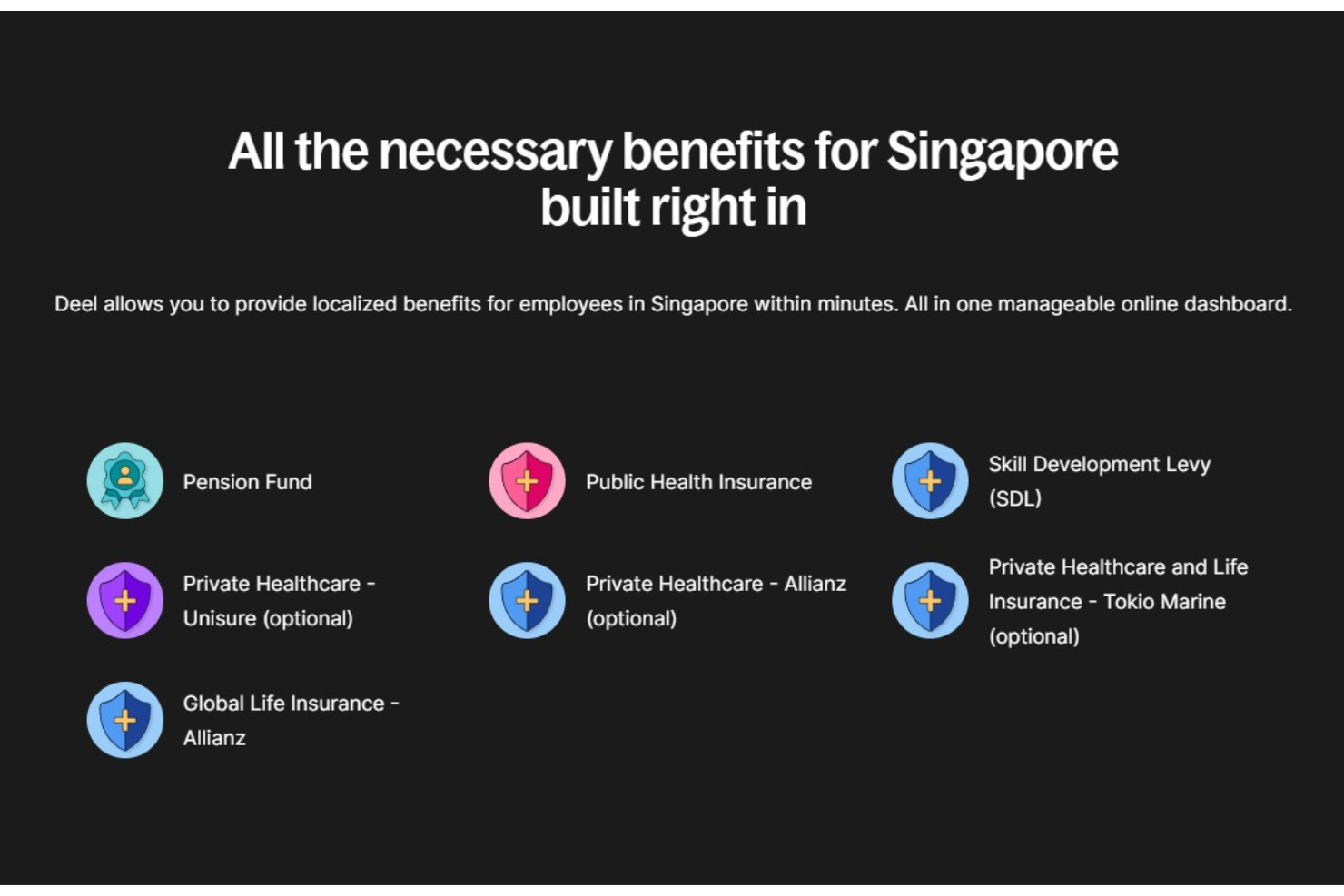
Deel is a global employer of record platform that handles local entity employment, payroll, statutory compliance, benefits administration, and contractor-to-employee conversions across 100+ countries, including Singapore.
Who Is Deel Hire Best For?
Deel Hire is a strong fit for companies that need to hire Singapore citizens or permanent residents quickly and without setting up a local entity.
Why I Picked Deel Hire
I've included Deel Hire in my top picks because it owns its Singapore entity outright, meaning CPF contributions, Employment Act contracts, and IRAS filings (IR8A and IR21) are handled in-house rather than through a third party. I particularly like its contractor-to-EOR conversion flow, which lets you move a Singapore citizen or PR from contractor to employee in as little as two days without re-entering data. One important caveat: following MOM's July 2024 ruling, Deel's EOR can't sponsor work passes for foreign nationals, so this is the right fit only if you're hiring citizens or PRs.
Deel Hire Key Features
- Compliance Hub: A real-time alert system that flags Singapore regulatory changes, deadlines, and rule updates as they happen.
- Deel IP Guard: An automated tool that assigns intellectual property rights to your company at the point of hire, without manual paperwork.
- Optional private health cover: Employees can access supplementary insurance plans through Unisure, Allianz, or Tokio Marine directly on the platform.
- EOR-to-entity migration support: A built-in workflow that moves employees from Deel's EOR service to your own entity, including contract migration and payslip history continuity.
Deel Hire Integrations
Deel Hire offers integrations with Workday, SAP SuccessFactors, BambooHR, HiBob, Greenhouse, NetSuite, QuickBooks, Xero, Slack, and Google Workspace.
Pros and Cons
Pros:
- Converts contractors to employees quickly
- Handles CPF and statutory filings
- Wholly owned Singapore employment entity
Cons:
- Reviewers report occasional payroll issues
- Cannot sponsor Singapore work passes

Best for ease of use
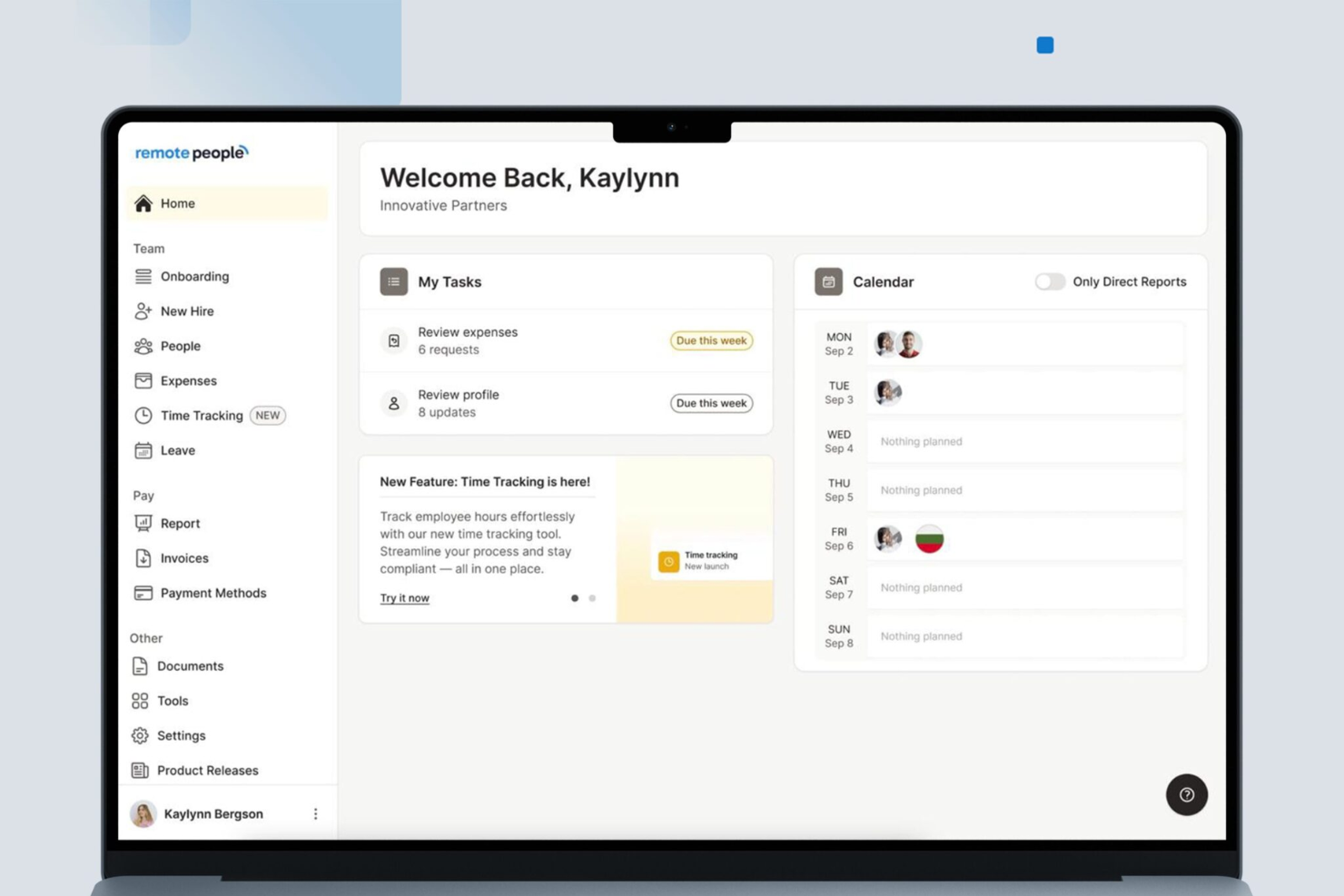
RemotePeople is a global employer of record platform that handles Singapore entity employment, CPF and IRAS compliance, work pass sponsorship, and local payroll processing across a range of pass types including EP, S Pass, and Tech.Pass.
Who Is RemotePeople Best For?
RemotePeople is a strong fit for startups and small teams hiring their first Singapore-based employees without a local entity.
Why I Picked RemotePeople
I picked RemotePeople as one of the best because its platform is genuinely built for teams that need to move fast without getting lost in complexity. The AI Command Center lets you submit payroll runs, leave approvals, and compliance actions in plain English, with local experts checking each one before it's applied. I also like how the Singapore-specific onboarding breaks into clear, timed steps: intake in 2–3 days, contract in 3–5 days, and CPF, IRAS, and MOM registration in 5–10 days.
RemotePeople Key Features
- Work pass sponsorship: RemotePeople manages EP, S Pass, Work Permit, Tech.Pass, ONE Pass, PEP, and EntrePass applications and renewals directly with MOM.
- CPF and SDL administration: The platform calculates and submits monthly CPF contributions and Skills Development Levy payments on your employees' behalf.
- Statutory leave management: Employees can submit and track leave entitlements—including the updated paternity and shared parental leave introduced in 2025—through a self-service portal.
- EOR-to-entity transfer service: When you're ready to set up your own Singapore entity, RemotePeople handles the transition, reissuing local contracts and carrying over employee benefits and tenure.
RemotePeople Integrations
Native integrations are not clearly documented. RemotePeople mentions payroll exports compatible with QuickBooks and Xero, but its API and broader integration catalogue are unavailable.
Pros and Cons
Pros:
- Reviewers praise responsive customer support
- Broad work pass sponsorship coverage
- Singapore CPF and SDL compliance support
Cons:
- Users report occasional operational delays
- Singapore entity details remain undisclosed

G-P
Best for real-time compliance support with AI
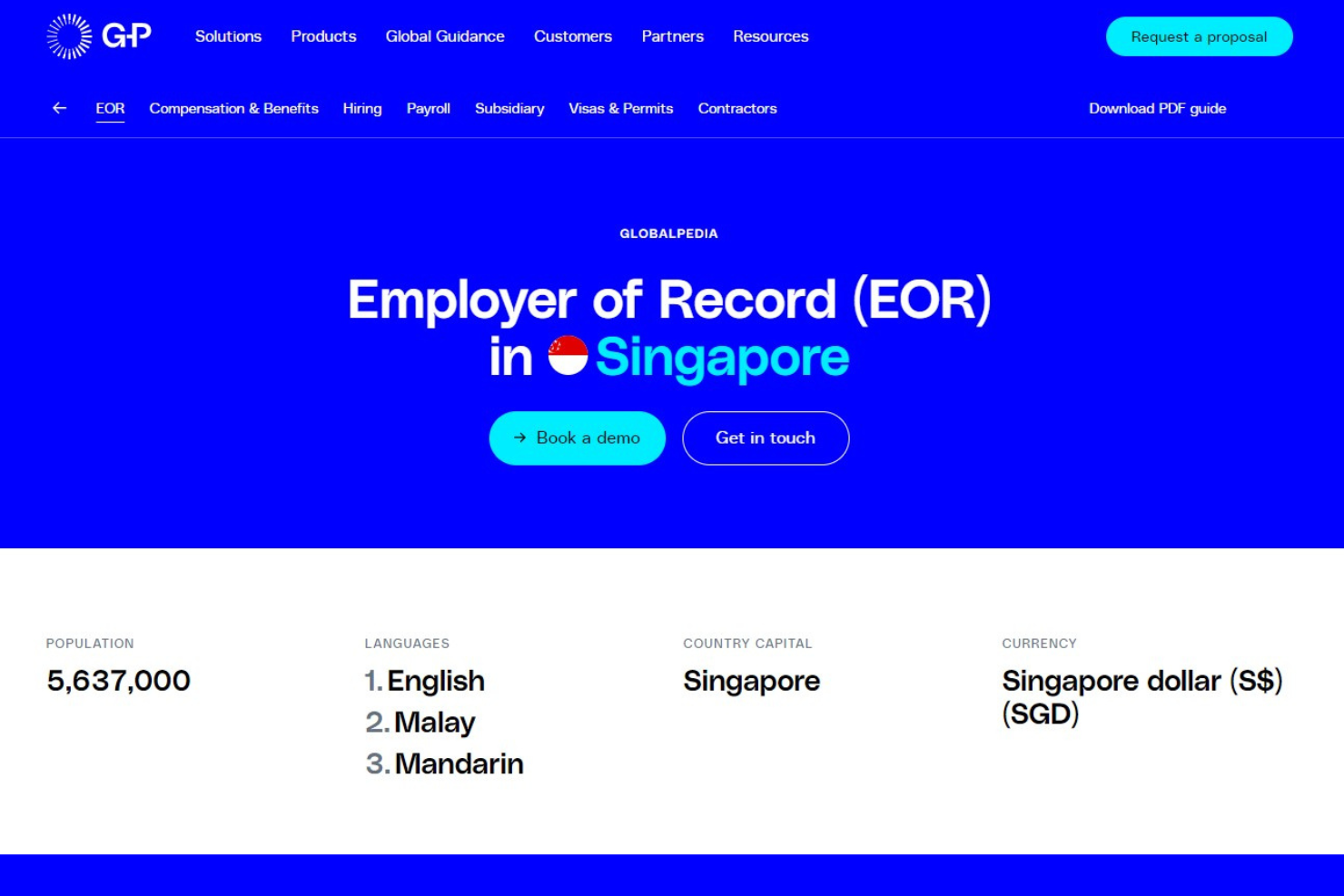
G-P is a global employer of record platform that handles local entity employment, payroll, statutory compliance, and benefits administration across 180+ countries, including Singapore.
Who Is G-P Best For?
G-P is a strong fit for startup founders and HR teams that need to hire in Singapore quickly, without setting up a local entity and without managing compliance manually.
Why I Picked G-P
G-P earns its spot on my shortlist because of how its AI compliance tools handle Singapore's regulatory environment in real time. G-P Gia monitors 1,500+ government sources and sends automated alerts when Singapore regulations change, so your team isn't scrambling to catch updates to CPF rates or Employment Act rules. G-P Assist is built directly into the platform and answers compliance questions around the clock, escalating to human experts when needed.
G-P Key Features
- Contractor-to-EOR conversion: G-P converts contractors to full-time employees in Singapore, generating compliant contracts in minutes and completing onboarding in days.
- CPF and SDL administration: G-P calculates, files, and remits CPF contributions and the Skills Development Levy each payroll cycle on your behalf.
- IR8A and IR21 tax filing: G-P handles annual IR8A submissions to IRAS and IR21 tax clearance filings when non-citizen employees exit.
- HCM integrations: G-P connects directly to platforms like Workday, SAP SuccessFactors, BambooHR, and HiBob, keeping your Singapore headcount synced across systems.
G-P Integrations
G-P offers integrations with Workday, SAP SuccessFactors, BambooHR, HiBob, Personio, UKG Pro, ADP Workforce Now, Paylocity, Google Workspace, and Microsoft Entra ID. Its API supports custom integrations.
Pros and Cons
Pros:
- Converts contractors within days
- Reviewers praise responsive support
- Real-time Singapore compliance alerts
Cons:
- Some reviewers report slow responses
- No Singapore work pass sponsorship

Best for budget-conscious remote team expansion
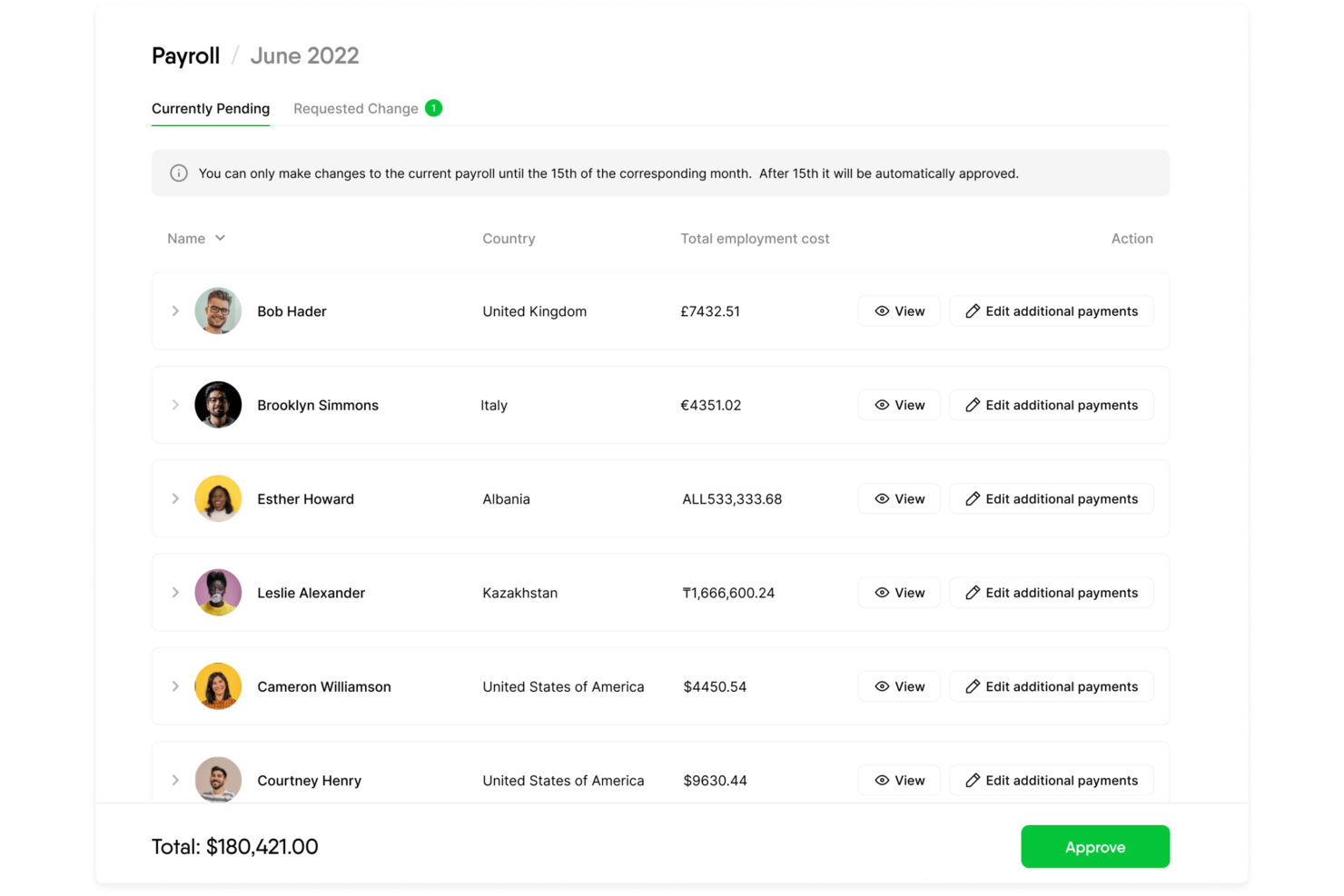
RemoFirst is an employer of record platform that handles cross-border hiring, local payroll, statutory compliance, work pass applications, and contractor management across 185+ countries through a network of local partners.
Who Is RemoFirst Best For?
RemoFirst is a strong fit for startup founders and early-stage teams testing the Singapore market without the budget for a full local entity setup.
Why I Picked RemoFirst
I picked RemoFirst as one of the best because its $199/month starting price and free contractor tier make it genuinely accessible for founders testing Singapore hiring before committing to a local entity. I like that it handles Employment Pass and S Pass applications end to end, covering everything from COMPASS assessments to MOM document gathering, which removes a real administrative burden at the market-entry stage. With no minimum headcount and no annual contract, you can onboard a single Singapore hire and scale from there without overcommitting.
RemoFirst Key Features
- Free contractor management tier: RemoFirst lets you onboard and manage contractors at no cost, including contract generation, identity checks, and expense reimbursement.
- Multi-currency payroll processing: Payroll runs in local currency, with clients able to receive consolidated invoices in SGD and automated calculations for overtime, bonuses, and leave.
- Single-dashboard global management: One platform covers EOR and contractor management across 185+ countries, with a single point of contact for your entire global workforce.
- AI Payroll Agent: An AI-powered tool that reconciles payroll in near real time, reducing manual errors and flagging discrepancies before they reach employees.
RemoFirst Integrations
RemoFirst documents integrations with Workday, BambooHR, ADP Workforce Now, and GoCardless, plus single sign-on support. Its integration set is smaller than many alternatives, so verify compatibility with your existing HR and payroll systems.
Pros and Cons
Pros:
- Detailed CPF and leave guidance
- Fast onboarding for small teams
- End-to-end Singapore work pass support
Cons:
- Payroll errors reported during scaling
- Undisclosed Singapore employment partner

Best for multi-currency payroll management
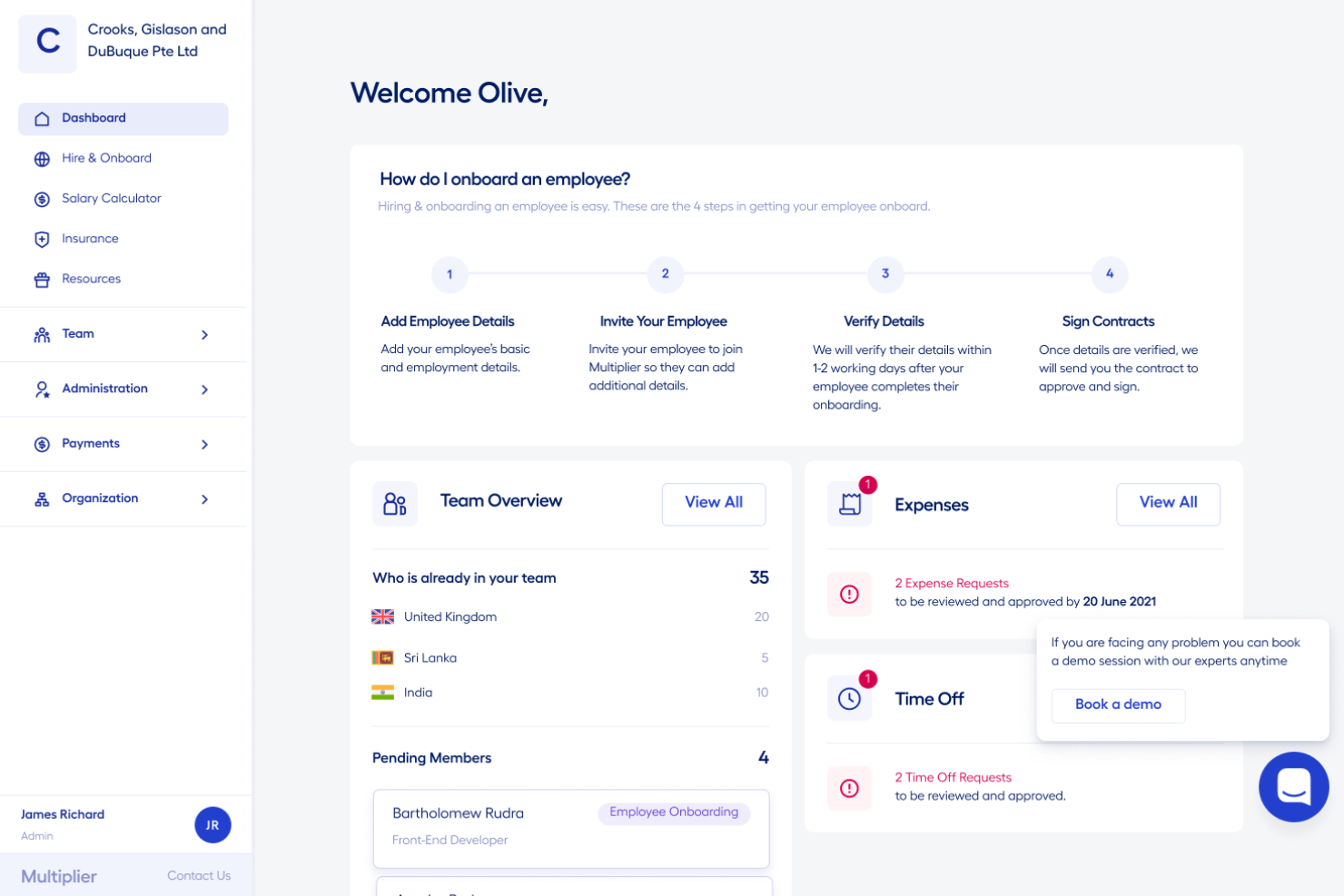
Multiplier is a global employer of record platform that handles employment contracts, payroll, CPF contributions, tax filings, and statutory benefits administration for companies hiring in Singapore without a local entity.
Who Is Multiplier Best For?
Multiplier is a strong fit for companies managing payroll across multiple countries and currencies from a single platform.
Why I Picked Multiplier
I've included Multiplier in my top picks because it handles multi-currency payroll across 120+ countries from a single dashboard, which matters when your Singapore team is just one part of a wider global headcount. I particularly like its Global Payroll Payments infrastructure, powered by Navro, which delivers wholesale FX rates and real-time gross-to-net reporting across currencies without manual conversions. Its Singapore payroll also covers CPF contributions, SDL, and IR8A filings natively, so statutory compliance runs alongside cross-border pay in one place.
Multiplier Key Features
- Contract localization: Generates Singapore-compliant employment contracts with local legal clauses, typically ready within 24 hours of document submission.
- CPF and statutory filing management: Handles CPF contributions, SDL, IR8A, and IR21 filings natively within the platform for Singapore employees.
- Contractor-to-employee conversion: Lets you convert existing contractors to full-time EOR employees directly through the platform without starting a new engagement from scratch.
- Employee cost calculator: Provides an SGD-denominated cost breakdown for Singapore hires, including statutory contributions and benefits, with country comparison built in.
Multiplier Integrations
Multiplier offers 20+ native HRIS integrations, including Workday, BambooHR, and SAP SuccessFactors. It also supports API access and custom integrations.
Pros and Cons
Pros:
- Fast onboarding and contracts support rapid hiring
- Multi-currency payroll supports cross-border teams
- Owned Singapore entity avoids third-party uncertainty
Cons:
- CPF ceiling information conflicts across pages
- Singapore work-pass coverage lacks S Pass detail

Best for direct hiring in Singapore
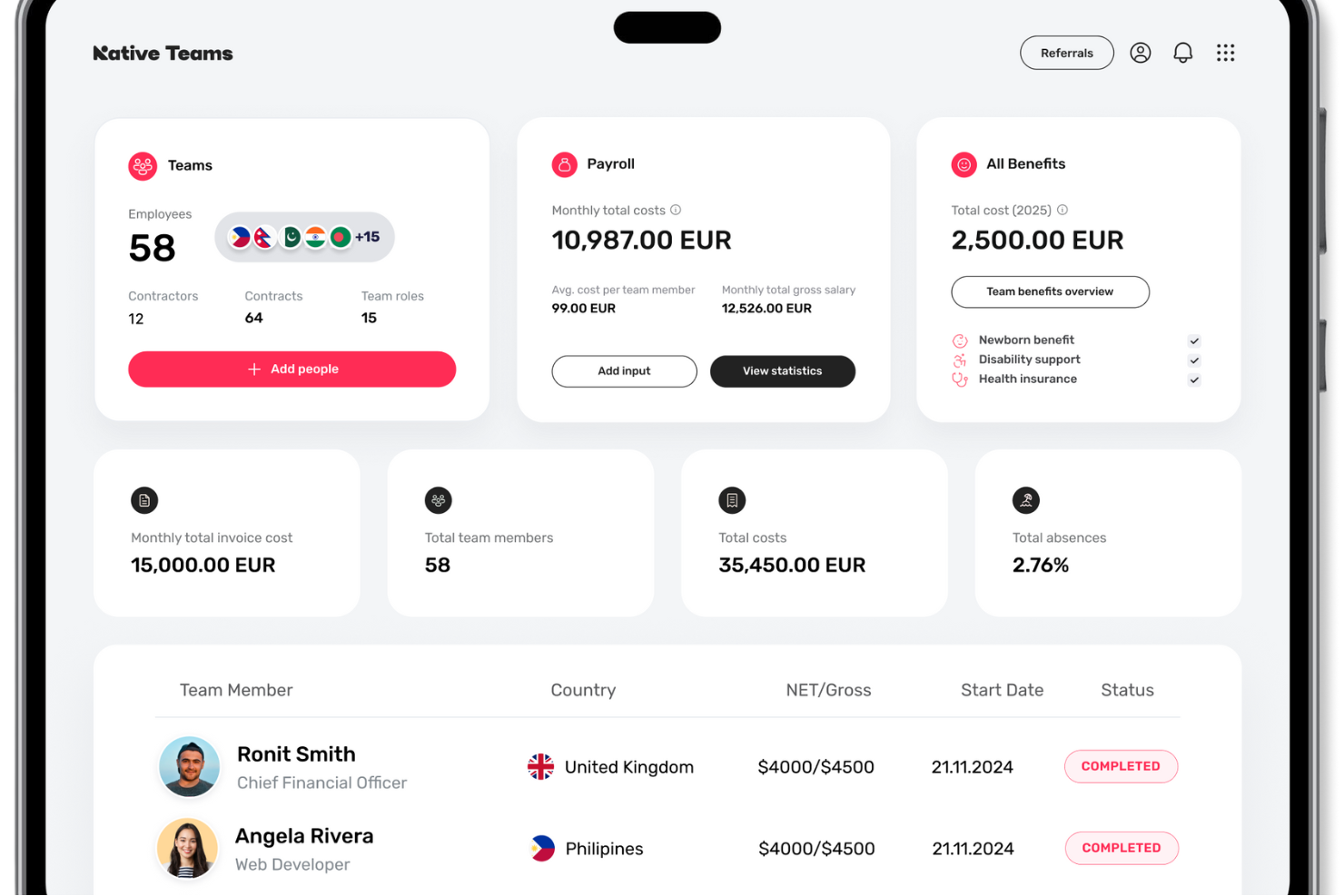
Native Teams is an employer of record platform that covers payroll processing, statutory compliance, benefits administration, and localized employment contracts across 95+ countries, including Singapore.
Who Is Native Teams Best For?
Native Teams is a strong fit for early-stage startups and lean-ops teams that need to hire in Singapore quickly without committing to a full entity setup.
Why I Picked Native Teams
I picked Native Teams as one of the best because it lets you hire in Singapore directly through its own entity, skipping the reseller chains that slow things down and add cost. I like that it handles CPF contributions (including the 2026 ceiling updates), SDL, and Employment Act-compliant contracts in one place, so there's no scrambling across vendors to cover statutory obligations. At $99 per employee per month, it's a practical starting point for founders who need a legal employer in Singapore before committing to their own entity setup.
Native Teams Key Features
- Absence management module: Tracks leave balances, enforces local leave policies, and feeds absence data directly into payroll.
- Multi-currency wallet and payment cards: Gives employees access to local currency payouts, a multi-currency wallet, and linked expense cards.
- Entity management service: Supports clients who want to transition from EOR to their own Singapore entity, available from $149/month.
- Interactive pricing calculator: A step-by-step estimator on the pricing page lets you model total employment costs before committing.
Native Teams Integrations
Native Teams doesn't have any native integrations with HRIS, ATS, or ERP systems, and no public API documentation is available for custom connections.
Pros and Cons
Pros:
- Wallets and cards support local payouts
- Current CPF and SDL guidance
- Direct Singapore hiring through claimed own entity
Cons:
- Reviewers report delayed payments and invoices
- Singapore work-pass support remains unconfirmed
Best for onboarding and paying talent in Singapore
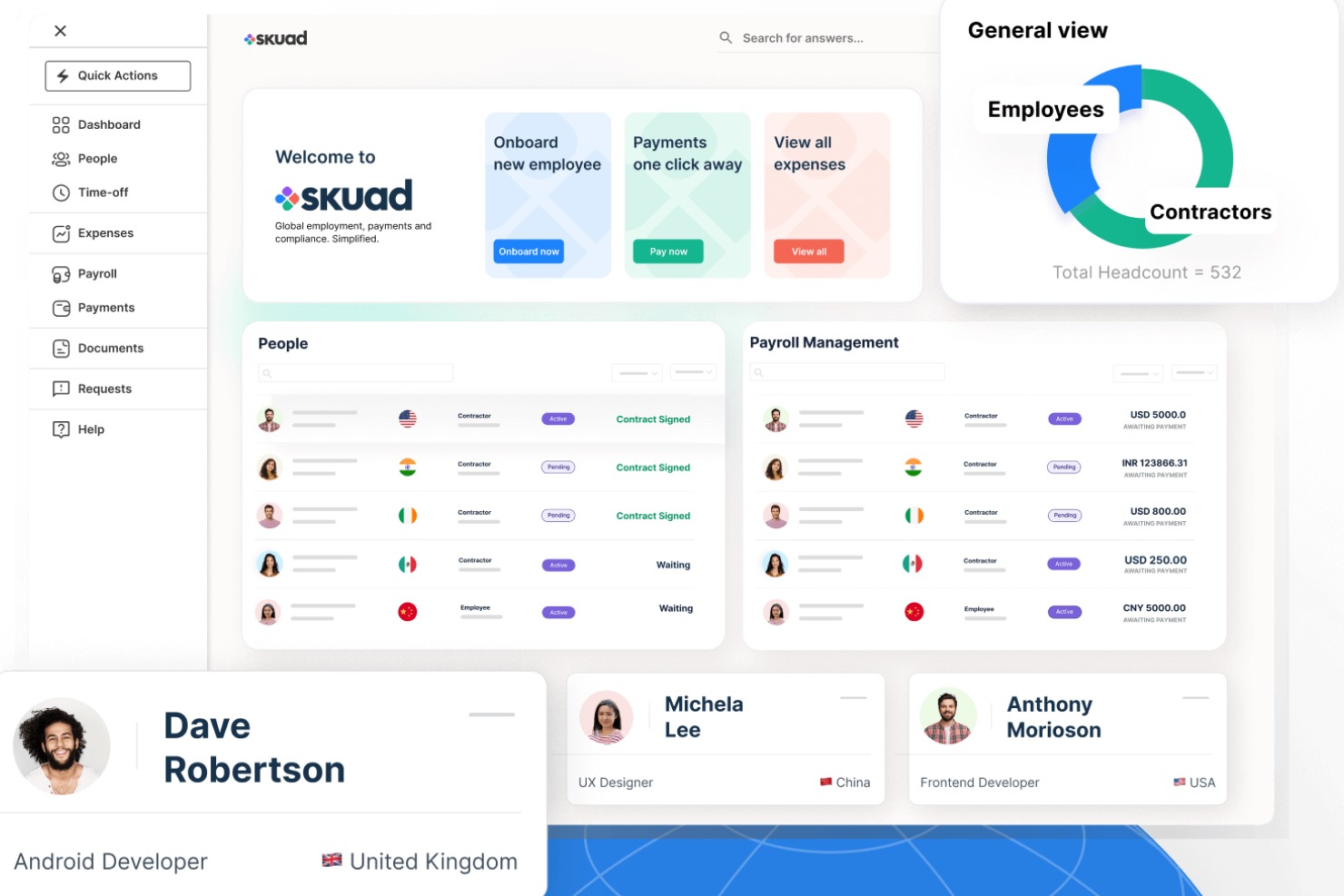
Payoneer Workforce Management is a global employer of record platform that handles local employment contracts, payroll in 70+ currencies, statutory benefits, CPF compliance, and contractor management across 160+ countries from a single dashboard.
Who Is Payoneer Workforce Management Best For?
Payoneer Workforce Management is a strong fit for startups and growing teams that need to hire in Singapore quickly, without the cost or complexity of setting up a local entity.
Why I Picked Payoneer Workforce Management
I've included Payoneer Workforce Management in my top picks because it's one of the few EOR platforms incorporated directly in Singapore, meaning Skuad Pte. Ltd. is the legal employer on the ground. I love that it handles CPF contributions, locally compliant contracts, and statutory leave entitlements like the 16-week maternity leave and 2-week paternity leave right out of the box. Onboarding a new hire takes days, not weeks, which matters when you're moving fast into a new market.
Payoneer Workforce Management Key Features
- Shield compliance module: Reviews contracts, monitors local labor law changes, and handles payroll and tax withholding through an in-house legal team.
- Contractor and employee management: Manages both contractors and full-time employees from a single dashboard, with built-in misclassification safeguards.
- Global immigration add-on: Handles pre-visa assessments, document processing, visa renewals, and sponsorship compliance checks directly in the platform.
- 70+ HRIS and accounting integrations: Connects to tools like BambooHR, ADP, and Expensify via one-click integrations, with custom API options available in 2–4 weeks.
Payoneer Workforce Management Integrations
Payoneer Workforce Management offers 70+ documented one-click integrations, including BambooHR, ADP Workforce Now, and Expensify. Custom API integrations are available on request and typically take 2–4 weeks.
Pros and Cons
Pros:
- CPF and leave administration cover statutory needs
- Reviewers praise responsive account managers
- Singapore-rooted entity supports local hiring
Cons:
- Some reviewers report delayed support responses
- Singapore work-pass guidance remains thin

Best for 24/5 dedicated support
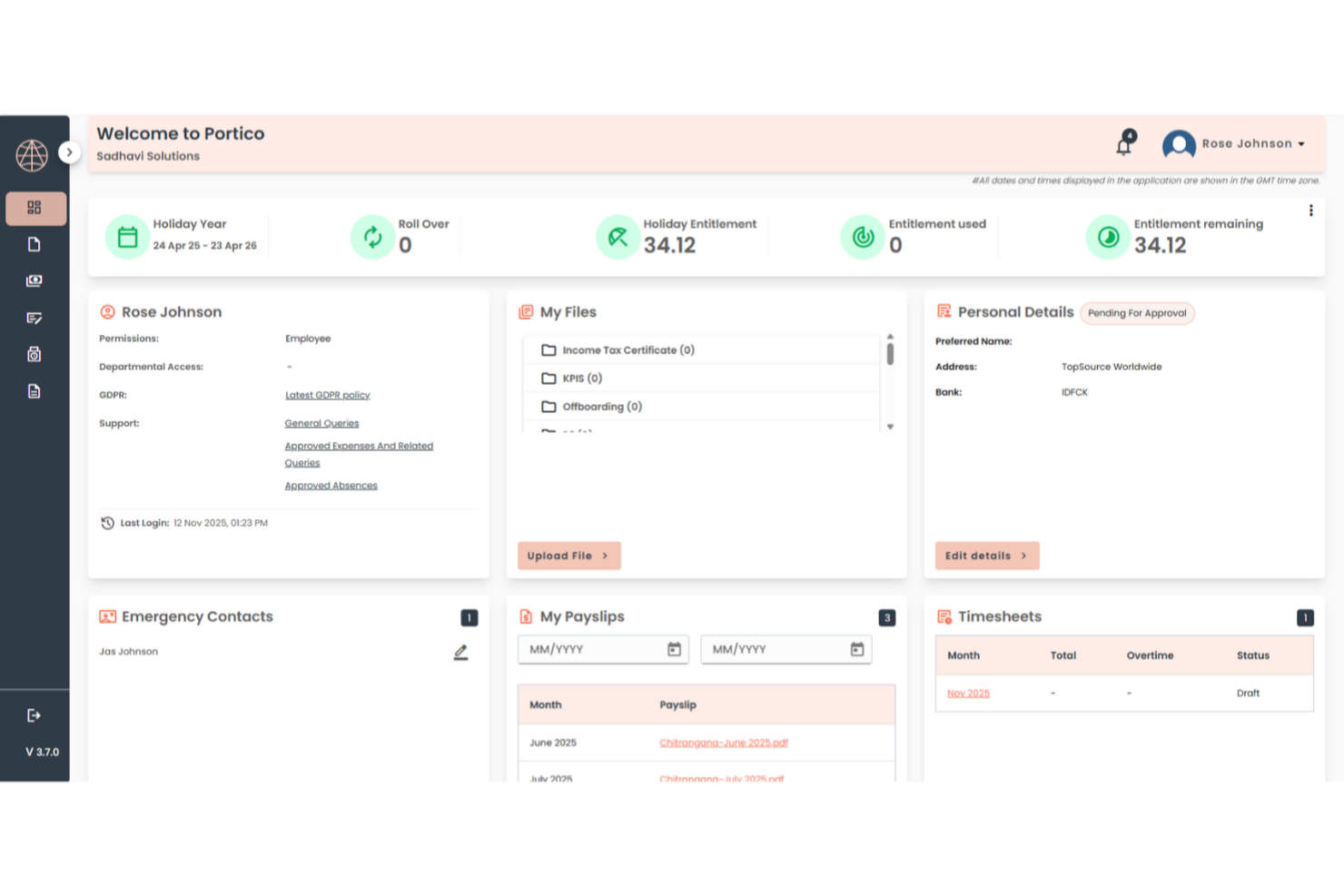
TopSource is an employer of record service covering 164 countries that handles local legal employment, payroll, CPF and statutory benefits administration, work pass sponsorship, and contract localization for companies hiring in Singapore without a local entity.
Who Is TopSource Best For?
TopSource suits startups and small teams hiring in Singapore without a local entity who want a named account manager and phone access to compliance experts.
Why I Picked TopSource
I've included TopSource in my top picks because its 24/5 phone access to named, in-country experts genuinely sets it apart from platform-heavy EOR providers where support often means a ticket queue. When a new hire's CPF contributions need adjusting or an S Pass application hits a snag with MOM, you can call a real person who knows Singapore compliance, not wait days for a response. I also like that TopSource tailors employment contracts to your terms rather than issuing generic templates, which matters when IP assignment and confidentiality clauses are non-negotiable.
TopSource Key Features
- Contractor-to-EOR conversion: Converts existing contractors to EOR employees while preserving tenure and benefits, with a separate misclassification analysis available.
- CPF and statutory leave administration: Manages CPF contributions, SDL, and all statutory leave entitlements including the updated 2026 Shared Parental Leave allowance.
- Work pass sponsorship: Sponsors Employment Passes and S Passes using TopSource's existing MOM employer status, including current 2026 salary threshold guidance.
- Multi-country dashboard: Consolidates employees across 164 countries into one platform with a single invoice, API integrations, and connections to tools like Workday and BambooHR.
TopSource Integrations
TopSource offers integrations with Workday, Oracle, NetSuite, SAP SuccessFactors, BambooHR, and HiBob, plus an API for custom connections.
Pros and Cons
Pros:
- Contractor conversions preserve tenure and benefits
- Detailed CPF and IR21 compliance guidance
- 24/5 named support from local experts
Cons:
- Reviews cite slow support and dated workflows
- Singapore employing entity remains undisclosed

Best with integrated time tracking tools
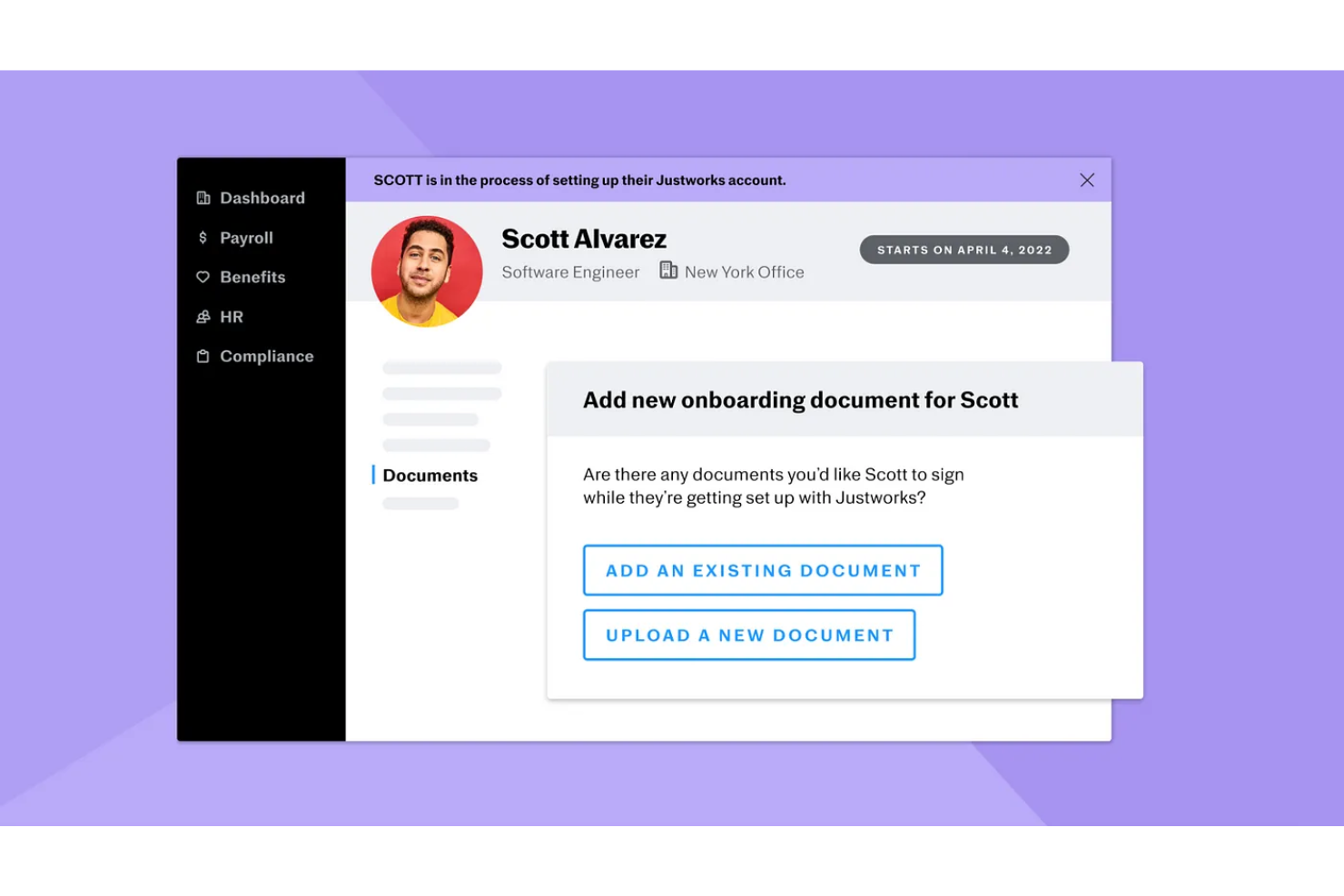
Justworks is an employer of record platform that lets you hire, pay, and manage employees in Singapore and other global markets from a single system, with built-in time tracking, multi-currency payroll, and statutory benefits administration.
Who Is Justworks Best For?
Justworks suits startups and small businesses that want to hire in Singapore without a local entity and value having time tracking, payroll, and contractor management in one flat-fee platform.
Why I Picked Justworks
I've included Justworks in my top picks because its built-in time tracking is genuinely useful for Singapore-based teams, covering clock-in and clock-out via mobile, web, or Slack, shift approvals, geofencing, and overtime alerts that sync directly to payroll. I like that EOR customers get this at no extra cost, which matters when you're managing remote employees across time zones. Paired with multi-currency payroll and statutory leave management aligned to Singapore's Employment Act, it handles the day-to-day operational layer well.
Justworks Key Features
- Multi-currency payroll: Pay employees and contractors across countries from a single platform without switching between systems.
- Statutory leave management: Justworks configures leave policies for annual, sick, maternity, paternity, and National Service leave in line with Singapore's Employment Act.
- International cost calculator: An in-platform tool that breaks down total employment costs by country, including employer-side contributions.
- EOR-to-contractor management: Manage both EOR employees and international contractors from one account, with contractors available across 60+ countries at a separate flat fee.
Justworks Integrations
Justworks lists 30 marketplace integrations, including QuickBooks Online, Xero, Brex, Carta, Ramp, and Culture Amp. This smaller integration set covers accounting, finance, recruiting, and employee experience needs for Singapore EOR teams.
Pros and Cons
Pros:
- Singapore leave guidance covers statutory entitlements
- EOR and contractors share one platform
- Integrated time tracking syncs with payroll
Cons:
- IR8A and SDL handling remain unclear
- Work pass support lacks documented details
Mercans
Best for crypto and multi-currency payroll payments
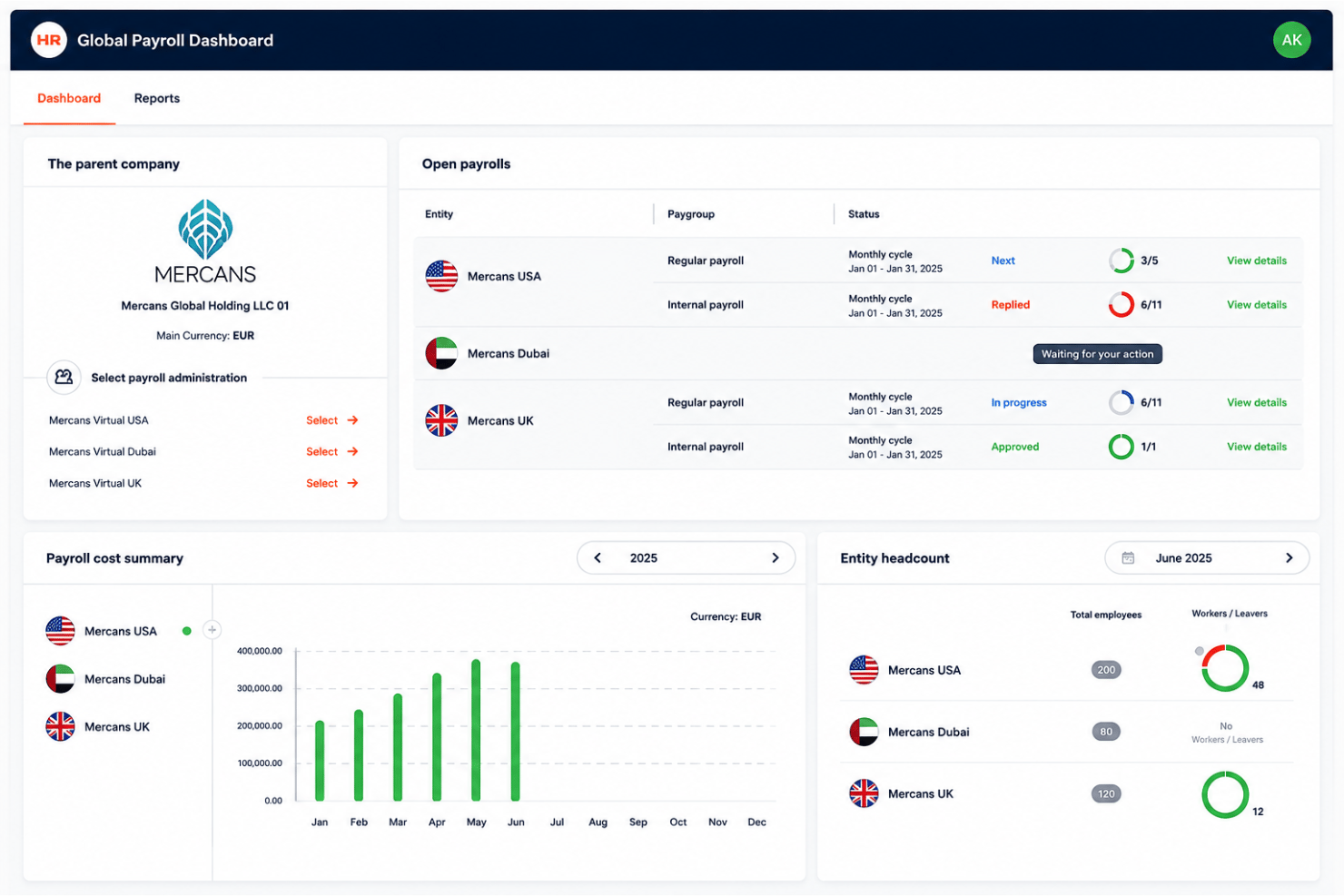
Mercans is a global employer of record and payroll platform that manages local entity employment, statutory compliance, SGD payroll processing, and benefits administration in Singapore—with added support for cryptocurrency and multi-currency invoice payments.
Who Is Mercans Best For?
Mercans is a strong fit for companies managing multi-currency or crypto-based payroll who want to hire in Singapore without setting up a local entity.
Why I Picked Mercans
I've included Mercans in my top picks because it's the only EOR I know of that accepts cryptocurrency payments, which makes it a genuinely useful option for crypto-native companies paying teams in Singapore. Its invoicing setup lets you pay in over 103 currencies or split invoices per employee, and its blockchain-based payroll uses smart contracts to process payments. That flexibility sits on top of solid Singapore compliance coverage, including CPF, SDL, and IRAS-certified payroll processing via HR Blizz.
Mercans Key Features
- IRAS-certified payroll software: HR Blizz is recognized by the Inland Revenue Authority of Singapore, ensuring your payroll meets local reporting standards.
- 72-hour payroll processing cycle: Mercans runs automated SGD payroll cycles in 72 hours or less, with online payslips and same-cycle data change support.
- Statutory leave management: HR Blizz includes a leave management module covering Singapore's full statutory leave entitlements, from maternity and paternity to National Service leave.
- Dedicated account manager: Every client gets a single point of contact who handles onboarding, ongoing changes, and day-to-day support across countries.
Mercans Integrations
Mercans documents over 100 integrations, including Workday, Darwinbox, HiBob, SAP SuccessFactors, SAP ERP, and Rydoo. Its API-first platform supports custom integrations.
Pros and Cons
Pros:
- Owns a Singapore entity and offices
- IRAS-certified payroll supports Singapore reporting
- Accepts cryptocurrency for payroll payments
Cons:
- HR Blizz feels dated for generalists
- Visa application support remains unclear
Other Singaporean Employer of Record Services
Here are some other EOR service providers in Singapore that didn’t make it into my top 10 shortlist, but are still worth considering:
- Links International
For onboarding new hires within 48 hours
- RecruitGo
For salary-based EOR pricing in Southeast Asia
- Papaya Global
For an AI-based payroll engine
- Remote
For tiered health and wellness benefits
- Atlas HXM
For contractor-to-employee conversion
- Borderless AI
Platform for quickly expanding into Singapore
- Omnipresent
For hiring without setting up a local entity
- Gloroots
For flat-fee Singapore statutory compliance
- Horizons
For switching from another EOR provider
- Agile HRO
For compliance with local laws and regulations


Market Details for Hiring in Singapore
- Capital City: Singapore
- Currency: Singapore Dollar (SGD)
- Official Language: English, Tamil, Malay, and Mandarin Chinese
- Payroll Frequency: Monthly
- Approx. Population: 5.9 Million
- Public Holidays: 12 days
Why Hire Employees in Singapore?
Singapore is an ideal location for hiring remote talent due to its strategic location in Southeast Asia, making it easier to access regional markets. The country boasts a highly educated and skilled workforce, especially in technology, finance, and biomedical sciences, thanks to its top-tier universities and research institutions.
Singapore's multicultural society offers a multilingual talent pool proficient in English, Mandarin, Malay, and Tamil, which is beneficial for global business operations. The country's stable economy, excellent infrastructure, and high quality of life also contribute to its appeal for expatriates and international talent, making it a prime location for sourcing the best global talent.
How I Evaluate Employer of Record Services in Singapore
I split my evaluation into three parts. First, core functionality carries the most weight: hire without a local entity, run SGD payroll, and manage CPF and tax filings. Second, I look for standout features such as fast onboarding and work-pass support, then consider local experts, pricing clarity, and responsive support beyond features.
Core Functionality (Table Stakes For This List)
When I'm selecting tools for my list, I score each one on a scale from 0 (does not offer the functionality) to 5 (excels in this area) for each core functionality listed below. I then convert the total into a percentage to help assess each tool's overall fit, with extra weight on any functionalities I’ve deemed essential.
- Local Entity Employment (Essential): I check whether the provider directly employs Singapore staff through a registered local entity, with clear liability and employment terms.
- Statutory Compliance (Essential): I assess active CPF contributions, IR8A filings, and Employment Act compliance, including records and support when rules change.
- Work Pass Support: For foreign hires, I look for application and renewal support for Employment Pass and S Pass cases, with clear ownership of document steps.
- SGD Payroll Processing: I assess SGD payroll calculations and payments, including salary changes, bonuses, deductions, and standard local pay cycles.
- Statutory Benefits: I check tracking for annual leave, sick leave, and public holidays, with correct entitlements and employee access to balances.
- Localized Contracts: I look for Singapore-specific contracts covering statutory terms, role details, leave, notice, and adaptable clauses for different hires.
Once I have a list of tools that meet the criteria, I consider what sets each platform apart.
Differentiating Factors (What Sets Vendors Apart)
Here's how I compare and contrast different vendors:
Standout Features
I look for platforms that can onboard a Singapore hire in days, not weeks, since delayed start dates can stall project timelines. Contractor-to-EOR conversion is another key factor I evaluate, especially for teams reclassifying existing workers to reduce misclassification risk. I also check whether the provider offers access to Singapore-based HR and payroll specialists who understand local norms like CPF submission deadlines and MOM updates firsthand.
Beyond Features
I check whether a provider owns its Singapore entity or subcontracts to a local partner, since partner-based models can create liability gaps when payroll disputes arise. Immigration expertise matters just as much—EP and S Pass criteria shift often, and providers with a strong MOM track record reduce the risk of rejected applications. I also evaluate support responsiveness, looking for time-zone-aligned coverage and dedicated account managers rather than generic ticket queues.
How to Choose an Employer of Record in Singapore
Choosing the right EOR partner in Singapore starts with knowing your own needs. The best fit depends on your hiring goals, internal workflows, and the outcomes you’re trying to achieve — not just price or popularity.
Here are five key questions to guide your decision:
- What problem are you solving?
Whether that's sourcing staff in Singapore who speak specific languages, managing compliance with Singapore’s employment laws and tax regulations, paying employees in Singapore Dollars (S$), or offering competitive health benefits, clarify your biggest pain points first. - Who will benefit the most?
Think about who on your team will manage the EOR relationship and how it will improve their workload, communication, or compliance efforts. - What's your budget?
Estimate how many people you plan to hire in Singapore. EORs charge monthly per employee, so understanding your hiring volume will help you forecast costs. - What outcomes matter most?
Instead of comparing features endlessly, focus on what success looks like. Are you aiming for faster onboarding, smoother payroll, or reaching new customers through multilingual talent? Define your success metrics up front to avoid wasting time on mismatched options. - Will it work with your HR systems?
Make sure the EOR’s platform integrates with your current HR tools and won’t create data silos or extra admin work.
Remember, every business is different — so choose an EOR that aligns with your hiring strategy, not just one that checks the most boxes.
What is an Employer of Record in Singapore?
An Employer of Record (EOR) in Singapore is a third-party service that hires employees on your behalf, managing all the legal, tax, and HR responsibilities, while you retain control over day-to-day work.
From payroll and benefits to compliance with Singapore’s labor laws, your EOR acts as the legal employer, so you don’t need to set up a local entity or navigate complex regulations alone.
An EOR partnership simplifies the process of hiring staff in Singapore considerably. Instead of requiring your HR team to master Singapore’s employment laws and regulations, you can delegate these responsibilities to a local EOR and gain peace of mind that your global operations will be compliant.
Why Use an Employer of Record Service in Singapore?
Using an employer of record (EOR) in Singapore allows you to hire employees without setting up a local entity or managing payroll, CPF, tax reporting, and employment compliance yourself. To hire directly, employers need to follow Singapore’s Employment Act, issue key employment terms, run compliant payroll, and manage statutory obligations through agencies like MOM, IRAS, and CPF Board.
Singapore is business-friendly, but employment compliance is still detailed—especially around CPF contributions, public holiday pay, leave entitlements, foreign work passes, and employee income reporting. An EOR handles these requirements for you, helping you hire quickly while reducing local administrative burden.
EOR vs Legal Entity
If you're hiring in Singapore for the first time, you'll need to decide whether to use an EOR or set up a local legal entity. While both paths can get you to the same destination — legally hiring staff in Singapore — the time, cost, and complexity involved are dramatically different.
Here’s a quick comparison to help clarify what each approach requires:
| Requirement | Using an EOR | Setting Up a Legal Entity |
|---|---|---|
| Legal Registration | Not required | Must register with ACRA and MOM |
| Time to Hire | Days to onboard employees | Several weeks to months for setup |
| Payroll Management | Handled by the EOR | Must manage payroll locally or outsource independently |
| Compliance Responsibility | EOR ensures local compliance | Full legal responsibility is on your company |
| Upfront Costs | Low startup cost | High legal, accounting, and setup costs |
| HR & Admin Burden | EOR manages onboarding, benefits, and taxes | Requires in-house or third-party HR/admin support |
| Flexibility for Testing Market | High → ideal for short-term or low-risk expansion | Low → better suited for long-term commitments |
Using an EOR is a faster, lower-risk way to hire in Singapore without the administrative complexity of creating a legal entity. If your goal is to test the market, scale quickly, or reduce compliance risk, partnering with an EOR makes the process far more efficient.
EOR vs Permanent Establishment in Singapore
When hiring in Singapore, one risk to consider is whether your activities create a Permanent Establishment (PE). Under Singapore’s Income Tax Act, a PE includes a fixed place where business is wholly or partly carried on, such as a place of management, branch, office, factory, warehouse, or workshop. It can also arise where a person in Singapore habitually exercises authority to conclude contracts on behalf of the business.
PE risk increases if you maintain a local office, hire employees directly, or allow Singapore-based staff to negotiate, secure orders, or conclude contracts for your company. If a PE exists, Singapore-sourced income attributable to that presence may create corporate tax and filing obligations.
How EORs Protect From Permanent Establishment Risk
An EOR helps reduce PE risk by creating legal and operational separation between your company and the employee in Singapore.
- Legal employer structure. The EOR is the official employer, not your company.
- No local entity required. You can hire without opening an office, branch, or registered employer presence.
- Payroll and statutory filings are handled locally. CPF, payroll records, and employment administration are managed under the EOR’s setup.
- Service-based relationship. Your company contracts with the EOR through a B2B service agreement rather than directly employing the worker.
- Reduced authority risk. Roles can be structured so Singapore-based employees do not habitually conclude contracts or legally bind your company.
An EOR reduces PE risk, but it does not eliminate it entirely. If employees in Singapore perform revenue-generating activities or have authority to bind your company, you should get local tax advice.
Hiring in Singapore: Important Details
Here are some key details to note if this is your first time hiring staff located in Singapore. Your EOR provider will manage these compliance details on your behalf. However, proactively informing yourself of these details is always recommended before you invest your resources into sourcing staff based in Singapore.
In Singapore:
- Employment laws in Singapore are set by the Ministry of Manpower (MOM).
- You can hire employees (full-time, part-time, temporary, or seasonal) or contractors. Your Singaporean EOR provider can help you determine the best hiring option depending on your needs while helping you mitigate the risk of employee misclassification.
- Singapore has both mandatory payroll deductions and social security contributions that must be collected, including the following:
- Central Provident Fund (CPF) contributions
- Skills Development Levy (SDL)
- Foreign Worker Levy (SDL) if employing foreign workers not native to Singapore.
- Singapore has four official languages: English, Mandarin (simplified Chinese), Tamil and Malay. Most international business is conducted in English.
- The standard working week in Singapore is 44 hours per week for a 5-day work week. The maximum number of consecutive working days per week is 6-days.
- Overtime is allowed under the Singapore Employment Act and is calculated differently depending on whether the employee is classified as a workman or non-workman.
- In Singapore, the 13th-month payment is called the Annual Wage Supplement (AWS). It is a single annual payment that employees receive in addition to their total annual wage.
- Paid vacation in Singapore starts at 7 days of annual leave per year, for employees who have worked for three consecutive months. An additional vacation day is accrued for each additional year of service, up to a maximum of 14 days.
- There are 11 national public holidays in Singapore that employees are paid for. Understanding and complying with employment norms and legal requirements surrounding Singaporean public holidays is one area where your EOR service will shine, managing these occurrences hassle-free on your behalf.
- National public holidays in Singapore include:
- New Year's Day
- Chinese New Year (days 1 and 2)
- Hari Raya Puasa
- Hari Raya Haji
- Good Friday
- Labor Day
- Vesak Day
- National Day
- Deepavali
- Christmas Day
- Singapore offers maternity leave and paternity leave.
- The maternity leave entitlement is 16 weeks if the child is a citizen of Singapore, or 12 weeks if the child is not a citizen.
- The paternity leave entitlement for fathers is 2 weeks.
- The MOM also grants Singaporeans up to 4 weeks of shared parental leave and up to 6 days of childcare leave for parents with children under age 7.
- Paid sick leave is 14 days in Singapore.
- A probationary period is not a statutory requirement in Singapore. However, probationary periods are permitted and often set between 3 to 6 months.
- The termination terms in Singapore are mandated by the Employment Act. The required notice period depends on the employee’s length of service. This is another area where a local Singaporean EOR can provide assistance to ensure the probation period and related severance are handled correctly.
- Severance pay is not a statutory requirement. However, many employment contracts do stipulate an employee’s entitlement to severance payments depending on the terms of the termination.
Tax Overview for Employers in Singapore
Singapore has a relatively straightforward employer tax system, but payroll reporting and CPF compliance need to be handled accurately.
- Employers must report employee earnings. Employers are required by law to prepare employment income forms such as Form IR8A and applicable appendices for employees employed in Singapore by March 1 of the following year.
- AIS may apply. Under IRAS’ Auto-Inclusion Scheme, employers submit employee income information directly to IRAS electronically, and it is auto-included in employees’ tax returns.
- CPF contributions are mandatory for Singapore Citizens and Permanent Residents. From January 1, 2026, the CPF Ordinary Wage ceiling is S$8,000, and for employees aged 55 and below earning above S$750 monthly, total CPF contributions are 37% of wages: 17% employer and 20% employee. Rates vary by age and SPR status.
- CPF is generally not required for foreign employees on work passes. MOM states CPF contributions are not required for foreign workers.
- Employee income tax is generally not withheld through payroll for local employees. Singapore uses annual individual income tax filing, with employer reporting through IR8A/AIS rather than a broad PAYE-style withholding system.
Strict filing and recordkeeping requirements apply. Employers must keep payroll records accurate, submit required income information, and meet CPF payment obligations where applicable.
Trends in Employer of Record Services
As global hiring becomes more common, the demand for smooth, compliant, and tech-enabled solutions is surging. In response, today’s EOR providers are evolving fast, offering smarter tools, broader support, and greater flexibility to simplify cross-border employment.
Here are some of the latest trends shaping the EOR space:
- Immigration Support: There is a growing demand for assistance with immigration services like visa and work permit sponsorships, simplifying global talent acquisition processes for client companies immensely.
- Specialized Services for Diverse Needs: Several EOR providers have begun to offer IP and invention rights protection and equity incentive planning services, to cater to the specific needs of their client companies.
- Enhanced Employee Benefits Packages: There's a growing trend in EOR providers going beyond standard healthcare coverage to offer a full spread of enterprise-level medical and health benefits, stock options, and even one-time benefits like moving bonuses. This trend demonstrates an understanding of the importance of attracting and retaining top talent globally.
- AI-Backed Knowledge Bases: Some EOR providers (including Deel) are beginning to offer legally vetted knowledge bases or information wikis that use artificial intelligence to surface answers to common questions quickly. This helps customers source details on hiring within a specific country fast, without relying on human-run support systems.
As the market continues to evolve, these trends are likely to shape the future of international employment, making it easier for businesses to navigate the challenges of global expansion. For a closer look at specific EOR providers that are capitalizing on these trends, I recommend reading our in-depth reviews of Oyster HR, Payoneer Workforce Management, and Deel.
Key Employer of Record Services And Features
When selecting employer of record Singapore, keep an eye out for the following key features:
- Payroll in SGD: Your EOR partner ensures accurate salary payments in Singapore dollars (SGD), fully compliant with the Employment Act. This includes wage calculations, overtime management, statutory deductions, and meticulous record-keeping to help prevent penalties from the Ministry of Manpower (MOM).
- Tax compliance and CPF contributions: The EOR manages income tax requirements with the Inland Revenue Authority of Singapore (IRAS) and oversees mandatory Central Provident Fund (CPF) contributions. This includes pension, healthcare, and housing fund payments, ensuring your payroll processes meet CPF Board regulations.
- Labor law compliance: Singapore’s labor regulations outline strict rules on working hours, breaks, overtime, paid leave, and termination procedures. Your EOR brings expertise across these regulations—helping you stay compliant and minimizing employment-related risks across regional, national, and international frameworks.
- Talent acquisition and background checks: EOR providers can assist with sourcing talent and conducting credential checks to ensure new hires meet Singapore’s legal standards, professional certifications, and background screening norms.
- Visa and work permits: For foreign hires, the EOR manages Employment Pass (EP), S Pass, and Work Permit applications in accordance with MOM guidelines. This ensures foreign employees work legally and that employers stay fully compliant with immigration requirements.
- Onboarding and offboarding: The EOR delivers compliant onboarding for new hires and manages terminations according to Singapore’s labor laws—covering notice periods, final salary payments, severance entitlements, and documentation to reduce potential disputes.
- Benefits administration: EOR providers curate competitive benefits packages tailored to Singapore’s market, including private health insurance, CPF contributions, transportation allowances, and meal benefits—helping attract and retain high-quality talent.
- HR support: From navigating Singapore’s employment regulations to advising on workplace policies, safety rules, and compliance requirements, your EOR offers ongoing HR consultation to support daily operations and long-term workforce planning.
- Risk management and insurance: The EOR oversees workers’ compensation obligations under the Work Injury Compensation Act (WICA) and manages additional insurance coverage required for employee protection. This reduces legal and financial exposure for your business.
- Multi-language support: With Singapore’s multicultural workforce, EOR partners often provide translation and localization of employment documents, policies, and HR materials to ensure clear, accurate communication.
Common Employer Of Record Singapore AI Features
Many EOR platforms operating in Singapore now incorporate AI to improve accuracy, speed, and compliance, for example:
- Automated payroll anomaly detection: AI scans payroll in SGD to detect errors such as incorrect CPF calculations, overtime discrepancies, or missing statutory contributions before payroll is finalized.
- Automated document verification: AI validates key documents like NRIC/FIN numbers, passports, employment passes, educational certificates, and background checks—reducing manual processing time.
- Smart compliance monitoring: AI tracks Employment Act updates, CPF rules, IRAS tax changes, and MOM regulatory shifts—alerting you to compliance risks and ensuring your employment practices remain up to date.
- Predictive workforce analytics: AI analyzes hiring needs, salary trends in Singapore, expected turnover, and market skill availability to help businesses optimize workforce planning and compensation strategies.
- AI-powered employee support: Chatbots assist employees and managers in real time, providing guidance on payroll, CPF contributions, benefits, leave policies, and onboarding in English, Mandarin, Malay, or Tamil.
- Automated visa and pass tracking: AI tools help track the status of Employment Pass, S Pass, and Work Permit applications and renewals—reducing the risk of missed deadlines or compliance lapses.
- AI-enhanced onboarding workflows: Systems automatically recommend onboarding tasks, training modules, and compliance steps based on job role, seniority, and MOM requirements.
- Risk and fraud detection: AI helps identify suspicious activity such as duplicate employee data, incorrect banking details, or potentially fraudulent documents during hiring and payroll processing.
Benefits of an Employer of Record Service
Expanding globally doesn’t have to mean navigating legal landmines or setting up costly foreign entities. An EOR takes the complexity off your plate so you can hire international talent quickly, stay compliant, and scale with confidence.
Here are the key advantages of using an EOR:
- Quick Market Entry: For organizations aiming to test new markets or hire talent in new countries where they have no legal presence, an EOR offers a swift and efficient solution to initiate operations, saving time and resources.
- Enhanced Benefits Negotiation: By leveraging their extensive networks and purchasing power, EORs can negotiate better international insurance rates and secure competitive benefit packages on your behalf, enhancing your ability to attract and retain top talent worldwide.
- Improved Cost Effectiveness: Using an EOR service is a cost-effective way for businesses to enter new markets, compared to the significant costs of establishing a new foreign entity. The latter option involves significant upfront legal fees, plus other costs related to office infrastructure, staffing, and local benefits and insurance coverage.
- Simplified Global Payroll: Using an EOR service simplifies the complex process of managing international payroll, including tax deductions, withholdings, and currency conversions for your employees worldwide.

- Global Compliance & Risk Mitigation: By managing compliance, an EOR service provides expertise in navigating the intricacies of employment laws, tax regulations, and insurance requirements in multiple jurisdictions, helping businesses safeguard their operations against compliance-related risks.
Understanding the benefits of an EOR service is crucial for strategic planning and operational efficiency. As businesses look towards international markets for growth opportunities, partnering with an EOR provider offers a streamlined, cost-effective, and compliant pathway to global expansion.
Need a stronger argument to get leadership to consider an EOR? Focusing on the costs of hiring foreign workers and EOR efficiency in global recruitment may work in your favor.
Costs & Pricing for Employer of Record Services
Typically, the cost of an EOR service follows a fee per-employee, per-month pricing model, which can vary widely depending on a range of factors. This model allows for scalability and predictability in budgeting for international expansion efforts.
In general, EOR services in Singapore cost between $200 to $2,000 per employee, per month.
Key factors that can influence the pricing of an employer of record service include:
- Geographic Location: Costs can vary significantly based on the country or countries you're hiring in. This is due to local economic conditions, labor laws, and the complexity of compliance requirements.
- Employee Seniority and Role Complexity: The level and nature of the roles being filled can also impact the monthly cost. Senior positions or roles requiring special qualifications may increase the price due to higher benefits and compensation management costs.
- Custom Requirements: Any specific needs beyond the standard service offering may also contribute to the monthly cost. This may include customized solutions for recruitment, specialized employee onboarding, or unique compliance requirements, all of which can affect pricing.
- Number of Employees: The total number of employees being managed can also impact the cost. In some cases, higher volumes may lead to volume discounts, making per-employee costs more economical.
Some EORs also operate under different pricing models, including a percentage of employee salary model, a fixed pricing model, and custom pricing models.

When considering an EOR service, it is crucial to understand how these factors impact the overall cost to ensure that the service aligns with your business's needs and budget constraints. Anticipating the specific requirements of your international expansion strategy will help you choose the most cost-effective and efficient EOR solution for your needs.
FAQs about EOR Services in Singapore
If you’ve got specific questions about the requirements to hire Singaporean employees or how EOR services work, these answers to frequently asked questions are a good place to start:
How Does an EOR Handle IP Transfer Upon Termination in Singapore?
In Singapore, intellectual property (IP) created by employees in the course of employment generally belongs to the employer under the Copyright Act and related IP laws. When using an EOR, however, the EOR is the legal employer, so IP rights would initially vest with them unless the agreements specify otherwise.
To ensure your company retains ownership, EOR providers include contractual IP assignment clauses in both the employment agreement and the service agreement. These agreements create a clear transfer path from the employee to the EOR, and then from the EOR to your company. The provisions remain enforceable after termination, ensuring all IP created during employment continues to belong to your business, alongside confidentiality and post-termination protections where permitted under Singapore law.
What does an Employer of Record do?
An Employer of Record (EOR) legally hires employees on your behalf in countries where you don’t have a local entity. They handle payroll, taxes, onboarding, and compliance—so you can access global talent without taking on the legal risk or administrative burden.
It’s a useful service for businesses that are expanding internationally but don’t have physical offices established yet, or don’t ever plan to establish them. Essentially, an EOR partnership helps organizations access global talent while reducing their legal liabilities and compliance risks.
What are the minimum wage requirements in Singapore?
In Singapore, there is no general minimum wage for all employees. Instead, minimum wage requirements are sector-specific and apply primarily to certain low-wage occupations.
The Progressive Wage Model (PWM) is intended to ensure that workers in these sectors receive fair wages while encouraging skills upgrading and productivity improvements.
For more detailed information, consult a Singapore EOR or refer to the MOM’s Progressive Wage Model.
Do EOR providers offer other types of global HR services?
Yes, most of the time they do. Many service providers in this space also offer professional employer organization services (also known as PEO services), as well as global payroll outsourcing services.
PEO services, offered by PEO companies, are a popular partner for HR outsourcing. They can help you with international compliance issues, benefits administration, workers’ compensation, and other HR administrative tasks.
What are some of the consequences of non-compliance?
Being non-compliant with local employment laws can lead to major issues, ranging from fines and legal action to revoked business licenses and reputational damage. Depending on the severity, you might also face corrective orders, increased government scrutiny, and a loss of trust from employees or the public.
Since claiming ignorance won’t protect you, partnering with an EOR helps you stay compliant and avoid costly risks when hiring internationally.
Are there any risks to using an Employer of Record service?
While EOR services simplify global hiring, they’re not entirely risk-free. Key risks include:
-
Financial: Hidden service fees, charges for mandatory benefits, and currency exchange fluctuations can drive up costs.
-
Operational: You’re trusting the EOR with sensitive employee data, so poor security practices or lack of certifications (like ISO 27001) could pose data risks.
-
Strategic: Using an EOR means giving up some control over workforce processes, which may affect decision-making or your brand if issues arise.
Carefully vetting providers can help you avoid most of these challenges.
What is a nearshore vs offshore employee?
A nearshore employee is based in a country closer to the company’s location, typically within the same or a nearby time zone, making collaboration and communication easier due to the smaller time difference.
For North American companies, nearshore remote workers may reside in Canada, the Caribbean, or Central or South America.
An offshore employee is located in a country far from the hiring company’s home base, often in a different time zone, to capitalize on cost savings and increase access to a broader talent pool.
For North American companies, offshore remote workers may reside in Asia, Africa, or Europe.
This content is provided for general informational purposes only and does not constitute legal, tax, or other professional advice. It may not be complete, accurate, or current, and laws and practices may change without notice and vary by jurisdiction. You should not act on this information without obtaining advice from qualified legal or tax counsel in the relevant jurisdiction regarding your specific circumstances.