
38 Best Contractor Management Software Reviewed for 2026

20 Best Contractor Management Software Solutions
Here's my pick of the 20 best software from the 38 tools reviewed.


The best contractor management software helps you efficiently onboard, pay, and manage compliance for external workers—so you can stay flexible while minimizing risk.
When you rely on contractors for specialized skills or short-term projects, manual processes and disconnected systems can create errors, payment delays, and compliance headaches. The right platform centralizes contractor information, streamlines onboarding, and automates payments—all while ensuring legal and tax requirements are met.
Drawing on my experience as an HR specialist, I’ve evaluated the top contractor management tools that are intuitive, reliable, and built to support a flexible workforce. In this guide, you’ll find solutions that simplify contractor administration and give you the visibility you need to scale confidently.
Why Trust Our Software Reviews
We've been testing and reviewing HR software since 2019. As HR professionals ourselves, we know how critical and difficult it is to make the right decision when selecting software.
We invest in deep research to help our audience make better software purchasing decisions. We've tested more than 2,000 tools for different HR use cases and written over 1,000 comprehensive software reviews. Learn how we stay transparent, and take a look at our software review methodology.
Best Contractor Management Solutions: Quick Comparison Chart
This comparison chart summarizes pricing details for my top contractor management software selections to help you find the best software for your budget and business needs.
| Tool | Best For | Trial Info | Price | ||
|---|---|---|---|---|---|
| 1 | Best for flexible payment + withdrawals | Not available | Pricing upon request | Website | |
| 2 | Best for budget-friendly contractor payments | Free demo available | From $19-$99 per user/month | Website | |
| 3 | Best for contractor onboarding & payments | Free demo available | From $199/employee/month or $19/contractor/month | Website | |
| 4 | Best for liability coverage | Not available | From $199/month | Website | |
| 5 | Best for domestic and international contractors | Free demo available | From $49/month + $6/user/month (billed annually) | Website | |
| 6 | Best for monitoring distributed contractors | Free 7-day trial | From $6.40/seat/month (billed annually) | Website | |
| 7 | Best for GPS-enabled time tracking | Free 14-day trial + free plan + free demo available | From $29/month (billed annually) | Website | |
| 8 | Best for work order management | Free tier available | From $31.25/month (billed annually) | Website | |
| 9 | Best for local currency invoicing and payments | Free plan + free demo available | From $199/person/month | Website | |
| 10 | Best for biometric time tracking | 30-day free trial | From $50/month | Website | |
| 11 | Best for free direct deposit for contractors | 30-day free trial available | From $8.50/month + $2 per employee/month | Website | |
| 12 | Best for international compliance | Free trial available | From $29/user/month | Website | |
| 13 | Best for built-in worker classification | Free demo available | Pricing upon request | Website | |
| 14 | Best for managing global contractors and local regulations in 160 countries | Free demo available | From $15/employee/month | Website | |
| 15 | Best user-friendly CRM system that enables small and medium-sized businesses to track their contacts with ease | 14-day free trial | From $14/user/month (billed annually) | Website | |
| 16 | Best contract management system for B2B companies | Free plan available | From $22.45/month (billed annually) | Website | |
| 17 | Best for compliant contractor conversion | Free demo available | From $29/contractor/month to $499/EOR employee/month | Website | |
| 18 | Best all-in-one solution for freelancer management and faster work allocation | Free demo available | From $50/user/month | Website | |
| 19 | Best for end-to-end contractor management | Free demo available | Pricing upon request | Website | |
| 20 | Best for contractors working in the field | Free demo available | From $9/employee/month + $50/month base fee | Website |


-

Checkr
Visit WebsiteThis is an aggregated rating for this tool including ratings from Crozdesk users and ratings from other sites.4.5 -
Kudoboard
Visit WebsiteThis is an aggregated rating for this tool including ratings from Crozdesk users and ratings from other sites.4.8 -
Native Teams
Visit WebsiteThis is an aggregated rating for this tool including ratings from Crozdesk users and ratings from other sites.4.9


Best Contractor Management Software Reviews
Here’s a brief description of each contractor management software to showcase each system’s best use case and noteworthy features. Keep reading to find additional bonus picks at the bottom of the list.
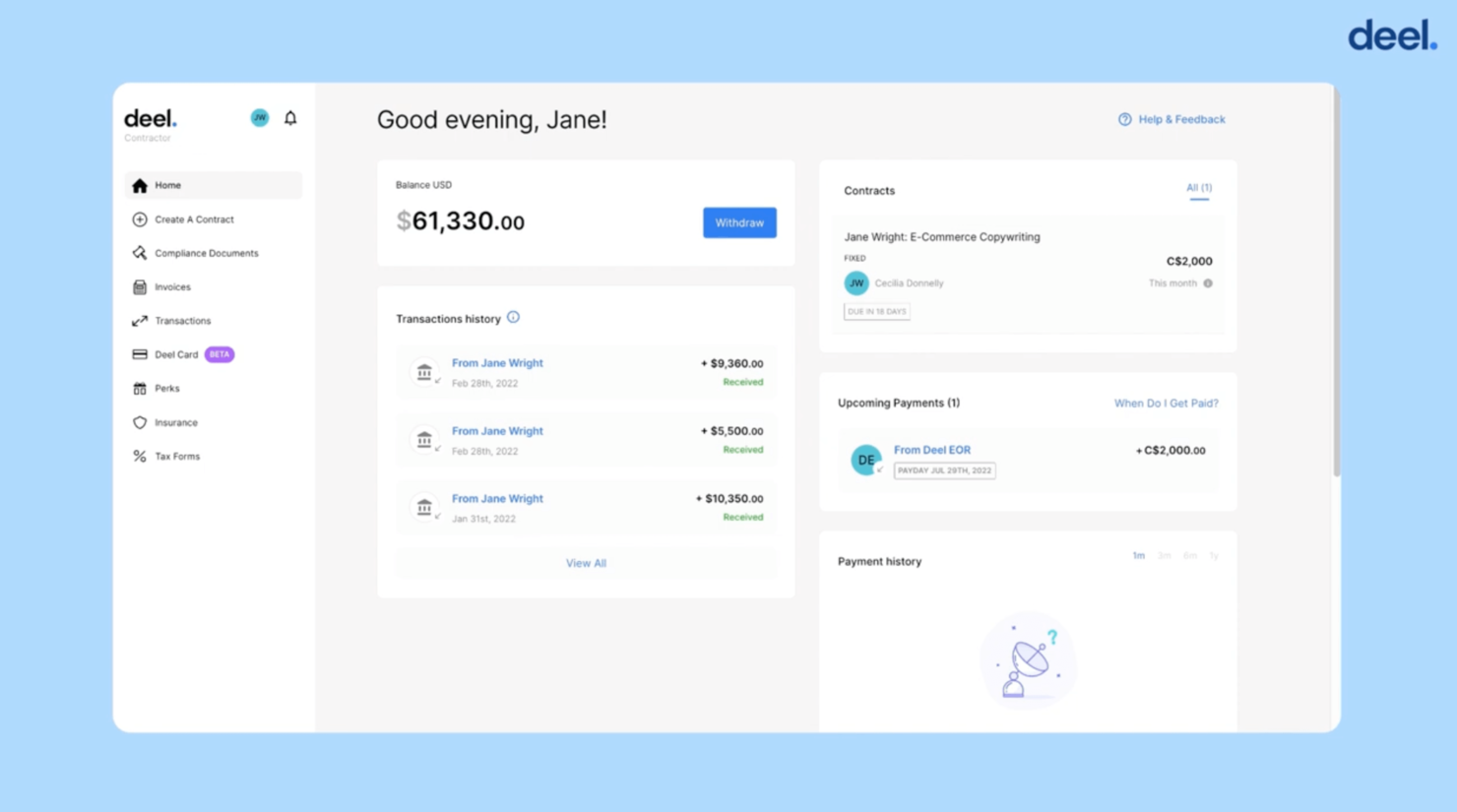
Deel is ideal for companies looking to hire, manage and pay contractors across borders while staying compliant with global laws. If your team is expanding internationally or engaging freelancers in multiple jurisdictions, Deel helps reduce the paperwork and risk involved in international contractor workflows.
Why I Picked Deel
I picked Deel because it gives you one platform to onboard, contract and pay global contractors instead of stitching together multiple tools. It generates localized contracts for each country (so you’re less vulnerable to misclassification) and lets your team pay contractors in over 120 currencies and more than 8 payment methods.
I like that it automates identity verification and document collection (so you don’t chase down tax forms and IDs manually), and if you’re working across many countries, the fact that Deel supports 150+ jurisdictions means you’ll spend more time growing your team than wrestling with local rules.
Deel Key Features
Here are some standout features worth highlighting:
- Localized Contract Templates: Automatically drafts country-specific contracts based on local labour laws.
- Multi-Currency & Multi-Method Payments: Enables payouts in 120+ currencies using bank transfer, PayPal, Wise, cards and more.
- Automated Compliance Document Collection: Verifies contractor identities and collects required tax or permit documents with minimal manual work.
- Contractor Self-Service & Dashboard: Contractors can sign, invoice, and withdraw funds themselves, reducing load on your HR/finance team.
Deel Integrations
Integrations include BambooHR, Workday, QuickBooks, NetSuite, Xero, Slack, Expensify, Zapier.
Pros and Cons
Pros:
- Automates compliance document collection across jurisdictions
- Pays in many currencies and via many payout methods
- Onboards international contractors in minutes
Cons:
- Some countries require use of a local entity via Deel
- Mobile app lacks some full platform admin functionality

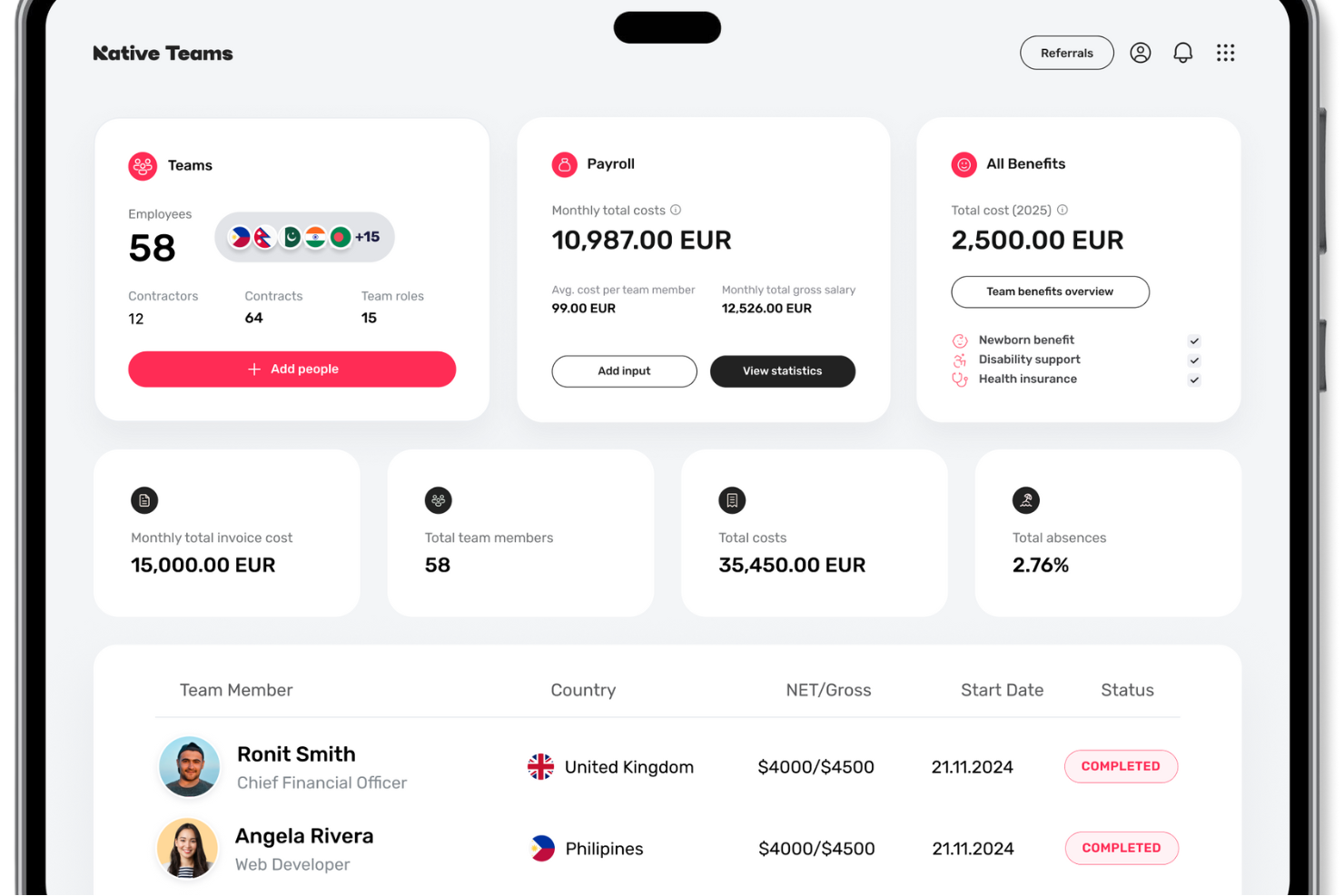
Native Teams is a contractor management platform that simplifies how businesses onboard, manage, and pay international contractors across more than 95 countries. It provides an end-to-end solution covering everything from localized agreements to multi-currency payroll and built-in compliance support—helping companies reduce legal risks while scaling global teams.
The platform enables payments in local currencies and supports invoicing automation, allowing contractors to submit invoices directly through the system for quick approvals and bulk payments. Contractors can withdraw funds to their local bank accounts or use Native Teams’ virtual and physical cards for spending.
Compliance is central to Native Teams’ value as a budget-friendly contractor payment platform. The platform provides pre-vetted, localized contract templates tailored to local labor laws and tax regulations. This helps businesses avoid costly misclassification issues and maintain legal standing when managing cross-border teams. Native Teams also offers Employer of Record (EOR) services for those looking to convert contractors into full-time employees with regulated benefits and status.
While Native Teams doesn’t currently list third-party integrations, its platform includes built-in tools for payroll, compliance, tax optimization, and expense management—covering key contractor management needs without requiring external systems.

Best for contractor onboarding & payments

Payoneer Workforce Management is built for teams that hire contractors around the world and need to stay compliant while keeping payroll tight. If your business engages remote contractors—especially across borders—Payoneer Workforce Management gives you the tools to onboard them fast, pay them in local currency, and avoid misclassification risks.
Why I Picked Payoneer Workforce Management
I picked Payoneer Workforce Management because it puts contractor compliance front and centre—helping you avoid hefty fines for wrong classifications while still scaling quickly. It uses country-specific contract templates and processes to ensure every contractor is onboarded under local labour laws.
You can pay contractors in over 70+ currencies on a single platform, which means you don’t juggle multiple systems just to send one payment, and I also like that you can manage everything from onboarding through to invoicing, time-off and payments in one dashboard.
Payoneer Workforce Management Key Features
Here are some standout features worth highlighting:
- Global compliance contracts: Automatically generate contracts tailored to local laws for 160+ countries.
- Multi-currency payments: Pay contractors in their preferred currency from one bill, simplifying your finance process.
- Automated invoicing & expenses: Contractors submit invoices and expenses, and you approve them through the same platform—reducing back-office work.
- Unified dashboard for contractors and employees: View onboarding status, time-off, expenses, payroll and benefits in one place.
Payoneer Workforce Management Integrations
Integrations include Bamboo HR, ADP Run, ADP Workforce Now, Avionté HR, 7shifts (and many more in the 70+ app catalogue).
Pros and Cons
Pros:
- Integrates with many HR/time/finance tools
- Built-in compliance support for misclassification risk, taxes and labour laws
- Built-in compliance support for misclassification risk, taxes and labour laws
Cons:
- Advanced payroll customisation options seem fewer compared with specialist tools
- Limited time-tracking built-in

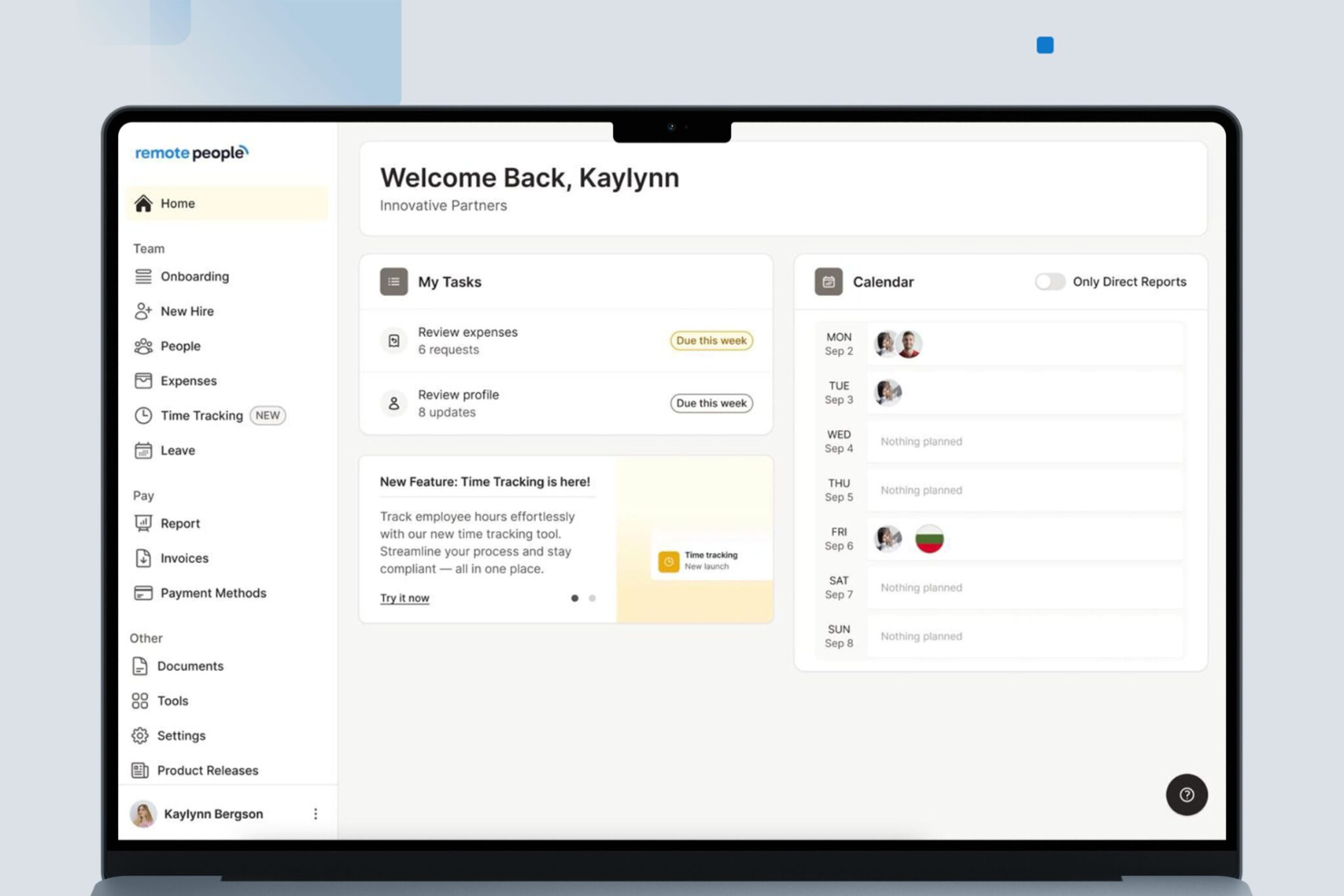
Remote People helps companies hire and manage international contractors while reducing the legal and financial risks that often come with cross-border work. It’s designed for teams operating in multiple countries that need compliant onboarding, correct worker classification, and payment tools that lower exposure to liability.
Why I Picked Remote People
I picked Remote People because it builds compliance and liability protection directly into every step of contractor management. You get country-specific contracts and classification support, so you’re less likely to misclassify workers or violate local labor rules.
Its Employer of Record and Contractor of Record services handle tax filings and legal obligations on your behalf, which is especially useful if you’re hiring in unfamiliar jurisdictions. I also like that it processes payments in local currencies while ensuring documentation meets reporting standards. If your team wants to work globally without increasing legal exposure, this platform gives you guardrails that reduce risk from day one.
Remote People Key Features
Here are some standout features worth highlighting:
- Country-Specific Legal Contracts: Provides compliant agreements tailored to each region’s labor laws.
- Built-In Misclassification Protection: Alerts you when contractor roles may violate local classification rules.
- Multi-Currency Contractor Payments: Sends payments in local currencies with compliant documentation.
- Central Compliance Dashboard: Tracks onboarding status, required documents, and region-specific risks.
Remote People Integrations
Integrations include HRIS systems, global payroll tools, identity verification platforms, document-collection tools, and payment processors.
Pros and Cons
Pros:
- Supports compliant multi-currency payments
- Country-specific contracts reduce risk
- Strong liability protections built into onboarding and classification
Cons:
- Advanced compliance services may add cost
- Native integrations not clearly listed publicly

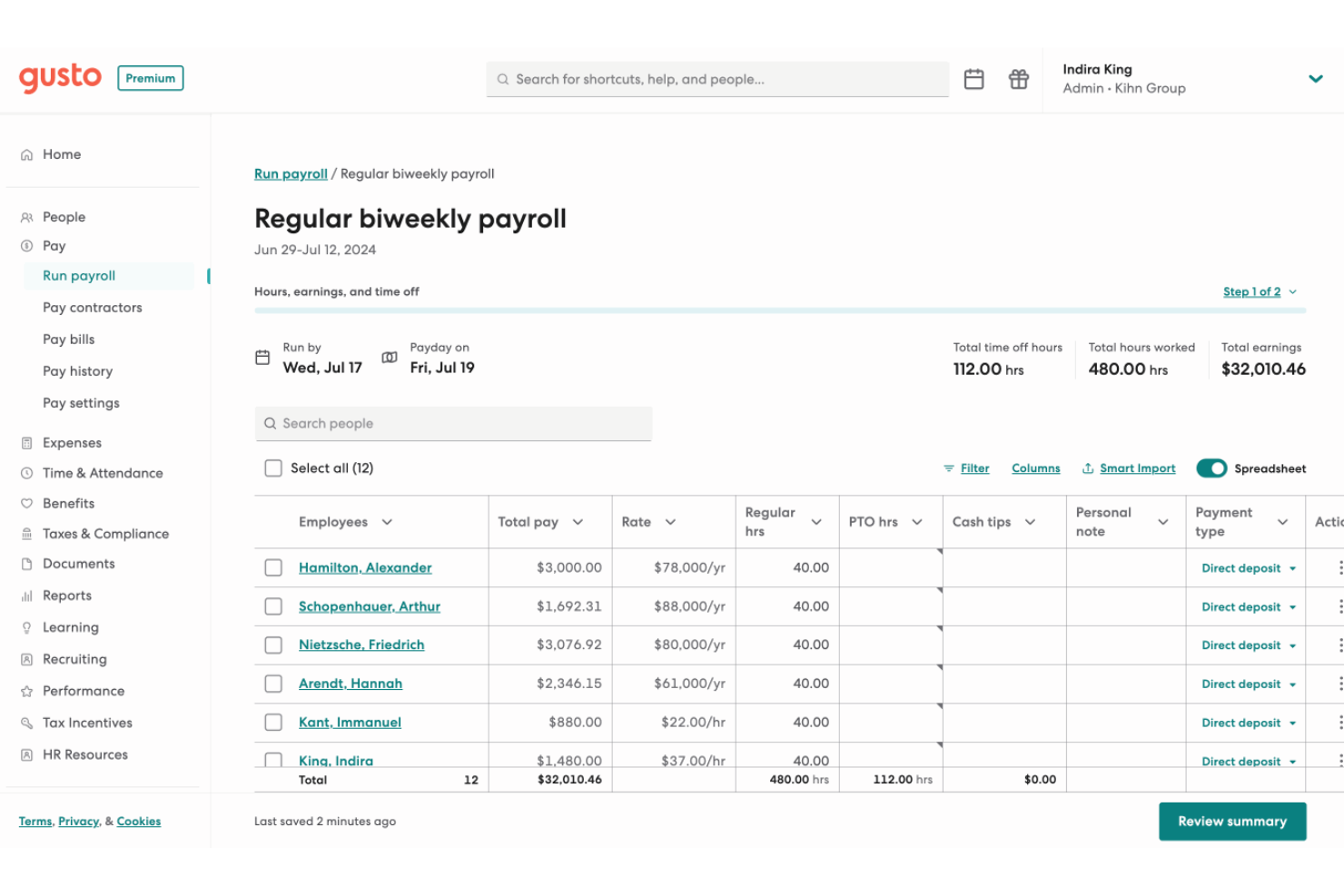
Gusto offers a solution tailored for small to medium-sized businesses that require efficient contractor management. It's particularly appealing for startups and US-based companies aiming for international reach, providing a simple interface and comprehensive payroll services. Gusto helps you manage both W-2 employees and 1099 contractors, addressing the complexities of global hiring strategies with ease.
Why I Picked Gusto
I picked Gusto for its capability to manage both domestic and international contractors alongside traditional employees. Its payroll services include integrated benefits administration and compliance support through local partnerships. The user-friendly interface allows you to onboard contractors and handle their payments, ensuring smooth operations without added complexity.
Gusto Key Features
In addition to its payroll and compliance capabilities, Gusto offers several features that cater specifically to contractor management:
- Self-Service Onboarding: Contractors can onboard themselves, reducing the administrative burden on your team.
- Unlimited Payroll Runs (for contractor + employee plans): You can process as many payroll runs as you need without worrying about hitting limits — useful when you have irregular or frequent contractor payments.
- Direct Deposit: Offer contractors the convenience of direct deposit for their payments, streamlining the payment process.
- Time Tracking & Job Costing (for hourly/contractor-hour work): For teams paying contractors by the hour or across projects, you can track hours and tie payments to actual work, which gives clarity and helps with budgeting.
Gusto Integrations
Integrations include Xero, QuickBooks, FreshBooks, Deputy, TSheets, Clover, Receipt Bank, When I Work, Expensify, and Trainual.
Pros and Cons
Pros:
- Offers self-service onboarding and online storage of tax forms and pay stubs for contractors and employees.
- Handles both contractor and employee payroll, simplifying mixed workforces.
- Payroll, benefits, and HR in one unified platform.
Cons:
- Great for simple pay and HR management but not customizable enough to handle large, complex orgs.
- SMBs that need advanced compliance or niche industry-specific HR modules may find Gusto limiting.
New Product Updates from Gusto

Gusto Enhances Benefits Renewals with Personalized Insights
Gusto introduces a smarter benefits renewal process with personalized insights and benchmarking. This update helps businesses make more informed decisions when renewing coverage. For more information, visit Gusto’s official site.


Insightful is a workforce analytics and productivity software designed to help teams monitor productivity, track time, and manage remote work.
I chose Insightful because of its automated time tracking feature. This function captures every minute worked without manual effort, ensuring precise timekeeping. For teams handling multiple distributed contractors, this means accurate billing and a clear understanding of how time is allocated across various projects.
It also offers productivity management with in-depth productivity reports and metrics, turning your team's use of time into actionable insights. This allows you to analyze work habits, spot hidden trends, and uncover inefficiencies, enabling you to optimize workflows and boost overall productivity.
Other features include location insights, which allow you to view office and remote worker productivity and then create a work style to match. Real-time monitoring lets you instantly see how time and focus are allocated, no matter where your contractors work from. Additionally, the software offers insider threat detection to proactively identify and mitigate potential security risks within your team.
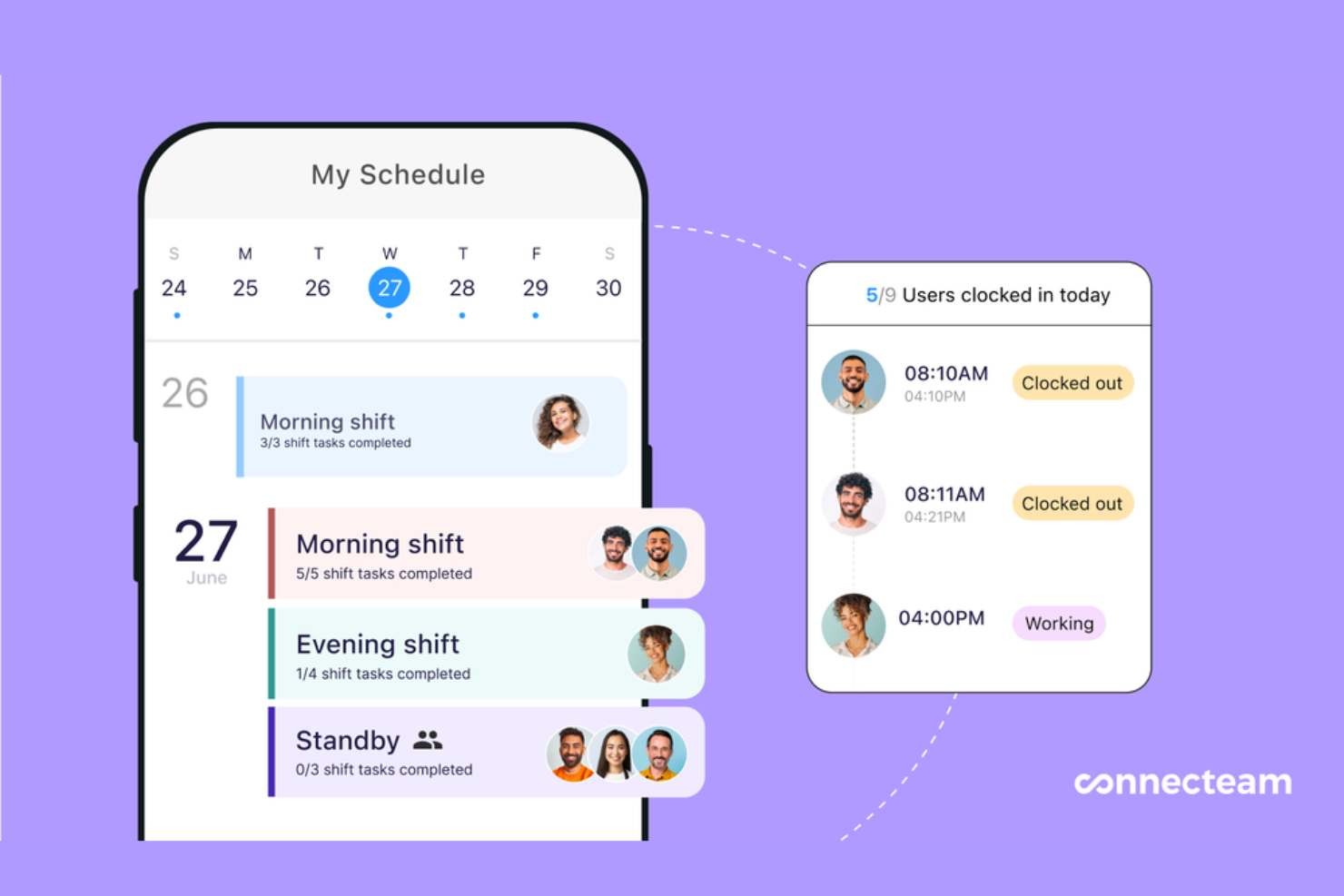
Connecteam is a versatile contractor management platform designed to help businesses schedule, track, and communicate with contractors efficiently. It combines time tracking, task management, and document sharing into one platform, making it easier to oversee deskless and remote contractors from a single dashboard.
Why I Picked Connecteam: I picked Connecteam for its GPS-enabled time tracking and automated scheduling tools, which make it easy to monitor contractor hours and assign shifts across multiple job sites. Its built-in task management feature helps ensure deliverables are completed on time, while real-time progress tracking keeps you informed without micromanaging. Additionally, Connecteam’s in-app chat and updates help maintain clear communication between managers and contractors, reducing confusion and keeping everyone aligned.
Standout Features & Integrations
Features include automated timesheets, document management for storing agreements and certifications, contractor training modules, customizable forms and checklists, health and safety monitoring, and recognition tools to keep contractors engaged and motivated.
Integrations include Gusto, Zapier, Lightspeed, QuickBooks, Paychex, Xero, Square, Facebook Messenger, Make, ADP Run, Google Drive, and Microsoft Teams.

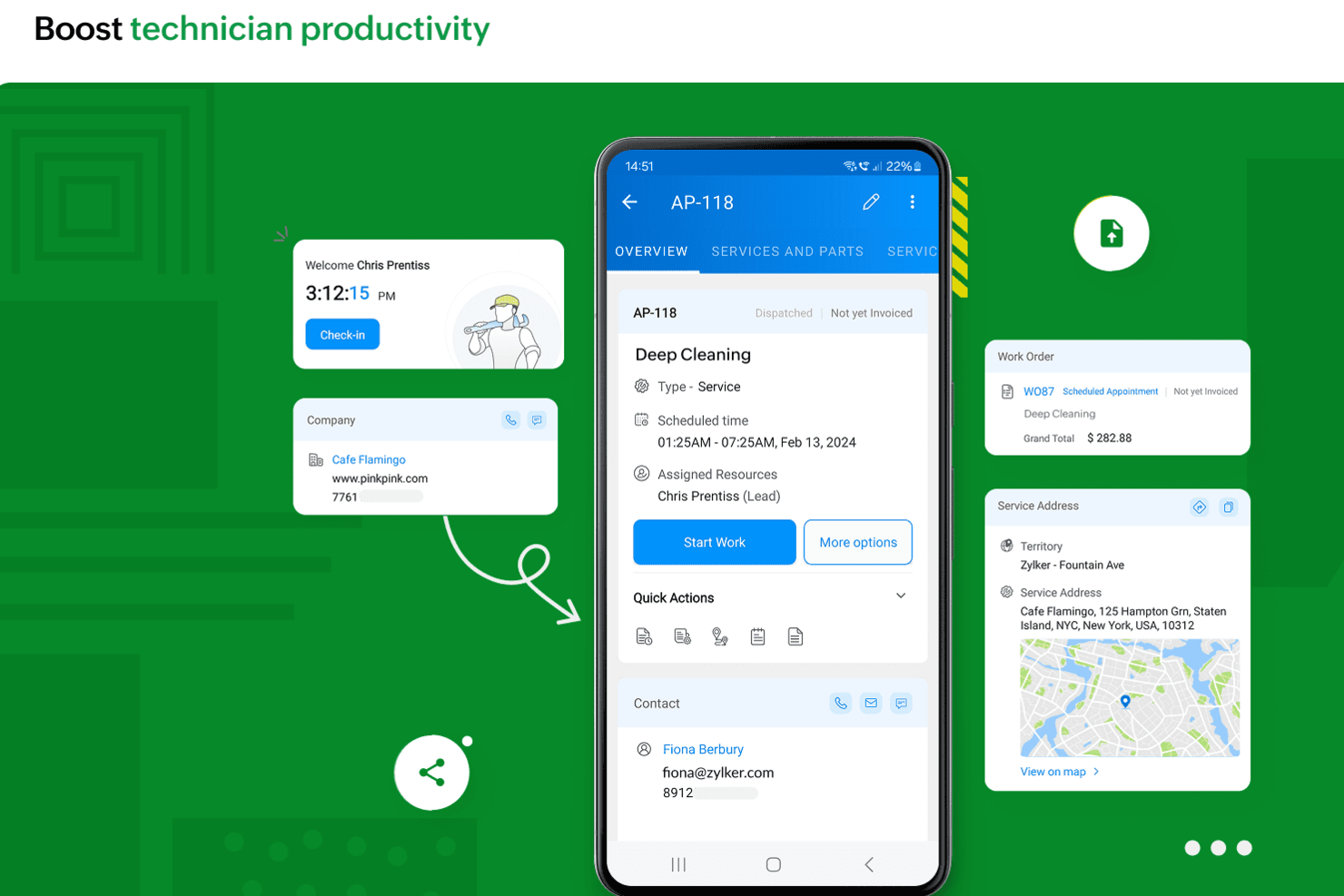
If you're in the business of managing contractors and field services, Zoho FSM might be the tool that aligns with your operational needs. Designed for industries like HVAC, plumbing, and electrical services, Zoho FSM provides an organized approach to managing work orders, customer interactions, and workforce schedules. With features that address common workflow challenges, it aims to enhance your efficiency and accuracy, making it a valuable asset for businesses seeking to optimize field operations.
Why I Picked Zoho FSM
I picked Zoho FSM for its ability to address specific needs in contractor management, particularly in scheduling and workforce management. Its work order management feature allows you to create, assign, and track work orders seamlessly, ensuring that your team is always on the right task. Additionally, the platform's workforce management tools help in scheduling and dispatching your team, which is crucial for maintaining productivity. These features, combined with its invoicing capabilities, make Zoho FSM stand out for businesses that require precise and reliable contractor management.
Zoho FSM Key Features
In addition to its scheduling and workforce management capabilities, some other features you might find beneficial include:
- Mobile App Support: Provides field agents with real-time updates and communication tools to stay connected with the team.
- Customization Options: Allows you to tailor workflows and processes to fit your specific business requirements.
- Reporting Tools: Offers insights into operations, helping you make data-driven decisions.
- Security Measures: Ensures that your business data is protected with robust privacy controls.
Zoho FSM Integrations
Integrations include Zoho CRM, Zoho Books, Zoho Invoice, Zoho Inventory, Zoho Desk, Zoho Projects, Zoho Analytics, Zoho People, and Zoho Sign.
Pros and Cons
Pros:
- Deep Zoho ecosystem integrations
- Built-in invoicing and payments
- Strong work order management
Cons:
- Steep learning curve initially
- Limited non-Zoho integrations


Remofirst is designed for companies hiring and paying contractors across multiple countries who want to keep invoicing, compliance, and payments in one place. It’s especially useful if your team works with global contractors who expect to be paid in their local currency and need proper classification and tax documentation.
Why I Picked Remofirst
I picked Remofirst because it gives you a clear way to manage international contractors without juggling separate tools or risking misclassification. You can create, send, and sign contractor agreements digitally, which keeps onboarding quick and consistent.
The platform also runs automated KYC checks, helping you verify identities and stay compliant with local regulations, and I like that it centralizes tax and compliance documents so your team always knows where to find them. And since it supports payments in local currencies, you avoid conversion issues and your contractors get paid accurately and on time.
Remofirst Key Features
Here are some standout features worth highlighting:
- Digital Contract Creation: Build and send compliant contractor agreements for quick onboarding.
- Global Payment Management: Pay contractors in local currencies through a unified dashboard.
- Automated Compliance Tracking: Store tax forms and region-specific documentation in one place.
- Contractor Identity Verification: Use built-in KYC checks to reduce risk when hiring internationally.
Remofirst Integrations
Integrations include ADP.
Pros and Cons
Pros:
- Digital contracts speed up international onboarding
- Built-in KYC decreases compliance and fraud risks
- Local-currency payouts reduce conversion errors and delays
Cons:
- No built-in project or time-tracking tools
- Limited native integrations beyond ADP
New Product Updates from RemoFirst

RemoFirst Launches BambooHR Integration
RemoFirst has launched a BambooHR integration for enhanced global hiring and HR management. For more details, visit RemoFirst's official site.
 .
.
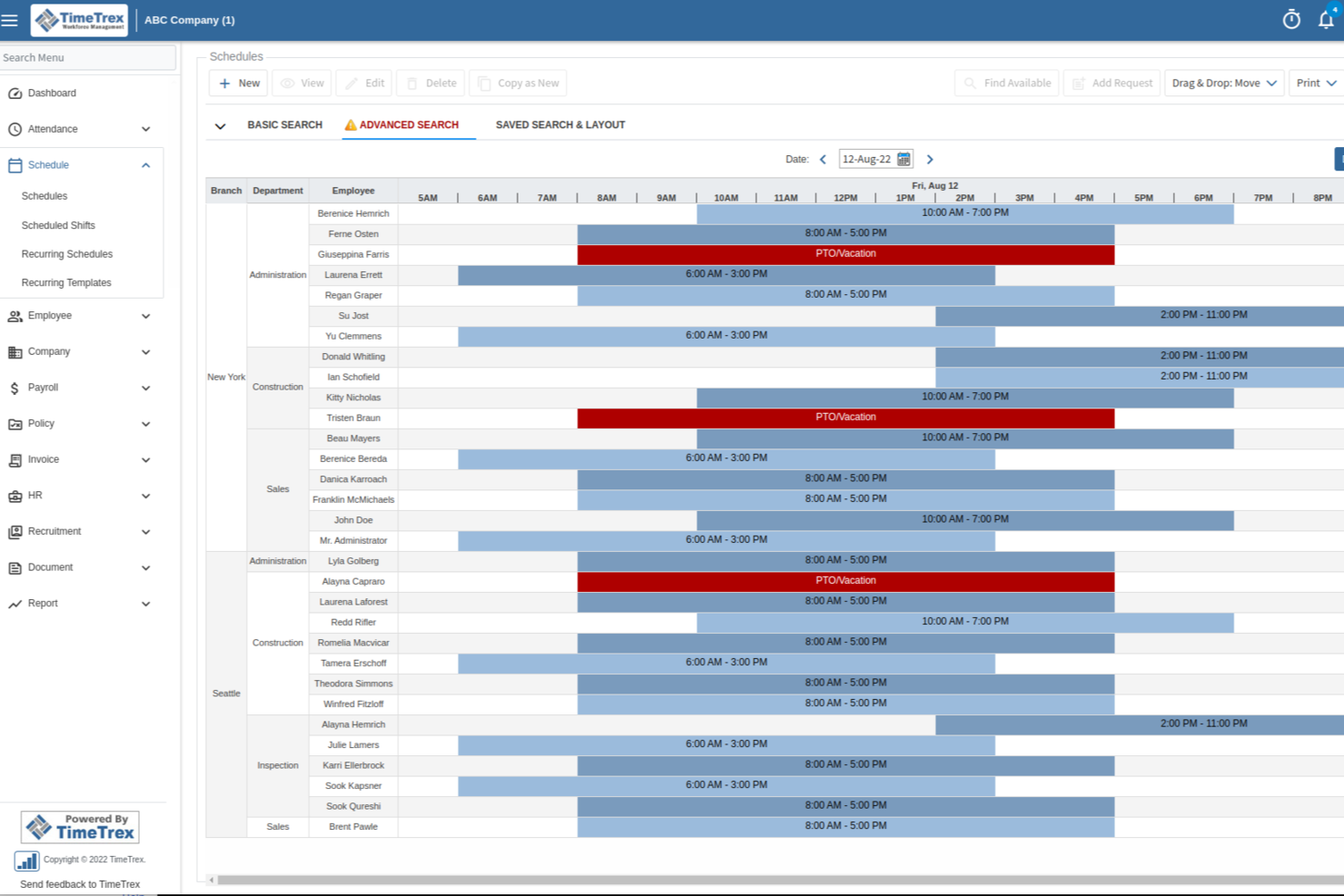
For businesses looking for dependable contractor management software, TimeTrex stands out for its practical, all-in-one approach to workforce management. It’s well-suited to industries where accurate time tracking and payroll are non-negotiable, making it a strong fit for companies that prioritize precision and compliance. TimeTrex supports both remote and on-site teams through biometric time tracking and automated payroll processing, helping ensure that all recorded hours are accurate and paid correctly.
Why I Picked TimeTrex
I chose TimeTrex for its ability to bring essential workforce management tools into a single platform, which is especially useful for managing contractors. Biometric time tracking helps reduce time theft by producing reliable attendance records, while automated payroll processing cuts down on manual work and supports tax compliance. Together, these features directly support businesses that need accurate tracking and timely, compliant payment of contractor hours, making TimeTrex a solid option for contractor management.
TimeTrex Key Features
In addition to its core functionalities, I also found several features that enhance its utility for contractor management:
- Job Costing: Accurately track project expenses and labor costs to maintain budget alignment and enhance project profitability.
- Leave Management: Automate leave requests and approvals, integrating them seamlessly into payroll and scheduling.
- Document Management: Securely store and manage essential contractor documents, ensuring compliance and easy access.
- Self-Service Portal: Empower contractors to manage their own profiles, view pay stubs, and submit requests, reducing administrative burdens.
TimeTrex Integrations
Integrations include QuickBooks, Sage, ADP, Paychex, Microsoft Dynamics, SAP, Oracle, BambooHR, Workday, and Salesforce. TimeTrex also offers an API for custom integrations.
Pros and Cons
Pros:
- Detailed job costing and robust reporting
- Accurate attendance with biometric clocks and remote clocking
- Reduces admin via automated payroll and compliance
Cons:
- Limited customization options available
- Outdated mobile app with limited features


Patriot Payroll is an online payroll software that offers affordable payroll services with free direct deposit, making it a cost-effective option for businesses of all sizes. They provide free 2-day direct deposit for qualified customers, and a range of comprehensive payroll reports and tools to manage payroll efficiently and accurately.
While it's not a traditional contract management software, Patriot Payroll does offer features to make contractor management easier, including a free contractor portal to collect documents and empower your contractors to manage their own information, and the ability to pay contractors in the same payroll run as your employees.
You can also use Patriot Payroll to simplify your 1099 filing process since their system supports e-filing for 1099-NEC and 1099-MISC forms. You can prepare them using the software and send them directly to the IRS on behalf of all your active contractors.
Patriot Software offers two payroll software options, Basic Payroll and Full Service Payroll, with features such as a simple three-step process for running payroll, free payroll setup, and U.S.-based support. The software is accessible anytime, anywhere, and offers customizable time-off accrual rules, free direct deposit, and integration with accounting software.
Integrations include Patriot Accounting, QuickBooks Online, QuickBooks Time, Plaid, and Workforce Time & Attendance.

Remote is a platform for managing payroll, benefits, taxes, and compliance. It helps businesses with their global contractor operations with features like self-serve onboarding and management tools for both employees and contractors. The software also facilitates one-click payments, enabling you to pay contractors in over 100 currencies.
Remote includes Contractor Management capabilities designed to reduce manual work and simplify the process of paying contractors in a compliant manner. It can automate payments in local currencies and it even offers customizable contracts and templates localized in accordance with labor laws in each country. It also includes legal guides that explain local laws in simple language and expert guidance on navigating international contractor onboarding nuances and on-demand visa and immigration support.
For US Companies, the system simplifies tax management with seamless form collection and generation. An additional feature of the platform is Remote's Freelancer Hub, which enables freelancers to manage their business operations, including contract management, invoicing, and client relationships, efficiently and in compliance with international standards.
Overall, its user-friendly interface facilitates end-to-end contractor management, from onboarding to payments, and it is backed by responsive 24/7 customer support, making it ideal for global workforce and contractor management. Pricing starts at $29/contractor/month. A free plan with limited features is also available.


Worksome is a freelance management system designed to help businesses engage and manage their external workforce, including independent contractors, consultants, and freelancers, across the globe.
One reason I like Worksome is its built-in worker classification feature. This tool allows you to classify workers within the platform in minutes, ensuring full compliance with tax and legal regulations. By embedding worker classification into the contracting process, Worksome simplifies compliance, reducing the need for external counsel or third-party support.
Another standout feature is Worksome's automated contract creation. For every hire, the platform generates contracts that can be customized to include your own legal-approved documents. Additional files like NDAs or data policies can be easily attached, and digital signatures are facilitated within the platform, making the contracting process smooth and efficient.
Other features include background checks, which are embedded directly into the workflow, allowing you to verify identity, workers' rights, criminal records, and more without leaving the system. The platform also offers batch invoicing, enabling your finance team to receive a single batch of invoices on a weekly basis, simplifying payment processes. Some integrations include SAP SuccessFactors, Workday, Xero, Netsuite, Intuit Quickbooks, Asana, Monday.com, Trello, Google Docs, and Google Sheets.

Best for managing global contractors and local regulations in 160 countries

Managing global contractors can be risky and time-consuming, but Papaya Global’s automated contractor management service makes it simple. Using their end-to-end global contractor management solution, you can manage invoices, process payments, and master local regulations in 160 countries. Papaya experts handle all the legal paperwork, so you don’t have to, and make sure all contractors are locally compliant.
Their software is also well-suited to dealing with the challenges of managing contractors and outsourced workers. These include misclassifying workers, managing large numbers of invoices, and staying compliant with local laws and regulations everywhere.
You can collect invoices from all your specialty contractors and validate their accuracy, then make payments with the click of a button. In addition to Papaya Global’s comprehensive contractor management, they can also assist with only invoice approvals and cross-border payments, depending on what you need.
Integrations are available with BambooHR, Expensify, Microsoft Dynamics 365, Namely, NetSuite, Priority Software, QuickBooks, SAP Business One, SAP Concur, and SAP SuccessFactors.

Best user-friendly CRM system that enables small and medium-sized businesses to track their contacts with ease
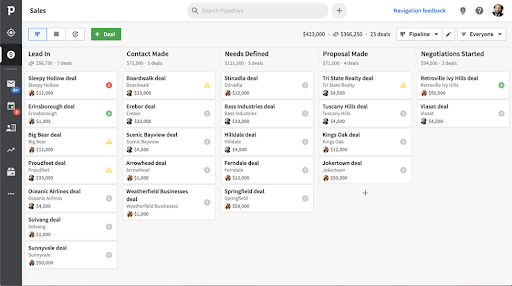
Pipedrive is a CRM and sales management software your team can manage your contacts list and convert them into sales prospects. You can use Pipedrive to track calls, emails, and contact history, ensuring that you have crucial information at your fingertips that you can use to convert sales prospects into actual sales. Pipedrive allows you to automate repetitive administrative tasks so you can have more time to devote to critical matters like closing a sale.
Maintaining an accurate database of contacts is a critical step for businesses because this is their primary source of sales prospects, and Pipedrive can help small and medium businesses track their contacts with ease. You can use Pipedrive to consolidate all your contacts, which can help you save time since you don’t need to open multiple apps to check your list of contacts. Pipedrive lets you add contacts manually or import them in batches from spreadsheets so you can update your contacts list using your preferred method. The software lets you add tags to your contacts so you can filter and segregate them into cold, warm, or hot contacts, depending on your assessment.
Pipedrive integrates with other contact management and sales tools like Pipechat, Microsoft Teams, Trello, Slack, Zapier, and others. Paid plans start at $21.90 per user, per month with a 14-day free trial.


Lusha is a contact management platform you can use to find B2B contact information quickly. Lusha has a prospecting platform you can use for list-building using information from LinkedIn, Gmail, and any other website. It is also easy to use because all you need to do is add Lusha’s contact finder as an extension to your Chrome browser, and it will automatically obtain the contact information you need. Subscribers receive five free leads every month to help them grow their database.
Unlike other consumer sales companies, B2B organizations cannot just pull up contact information from just anywhere because they need to reach CEOs and decision-makers to conduct business. Lusha can help B2B organizations with its prospecting platform to filter contact information according to seniority level to eliminate non-decision makers. You can use Lusha to directly integrate qualified prospects to your CRM and sales software to save you time since you don’t need to input contact information manually.
Integrations are available with Gmail, HubSpot, Microsoft Dynamics, Microsoft Outlook, Outreach, Pipedrive, Salesforce, Zoho, and Zapier.


Omnipresent is a platform designed to help businesses manage and pay contractors worldwide. It offers tools to handle contractor agreements, payments, and compliance, ensuring that your global contractor operations run smoothly.
I chose Omnipresent for its focus on compliant contracts. The platform provides country-specific contract templates, allowing you to hire contractors globally while adhering to local laws. This feature helps you avoid legal pitfalls and ensures that your contractor agreements are legally sound.
Omnipresent also offers misclassification protection through its OmniProtect feature. This tool shields your business from legal liabilities related to contractor misclassification, offering an extra layer of security. By assessing potential risks and providing safeguards, OmniProtect helps you maintain compliance and reduces the chances of costly legal issues.
I also like that Omnipresent has a contractor conversion feature that makes it easy to transition independent contractors into full-time employees while ensuring compliance with local labor laws. It handles everything from contract adjustments to payroll setup, reducing legal risks and administrative burdens for your team.
Some of Omnipresent's integrations include BambooHR, Bob, HR Partner, Gusto, Personio, Dayforce, Justworks, and UKG Ready.

Best all-in-one solution for freelancer management and faster work allocation
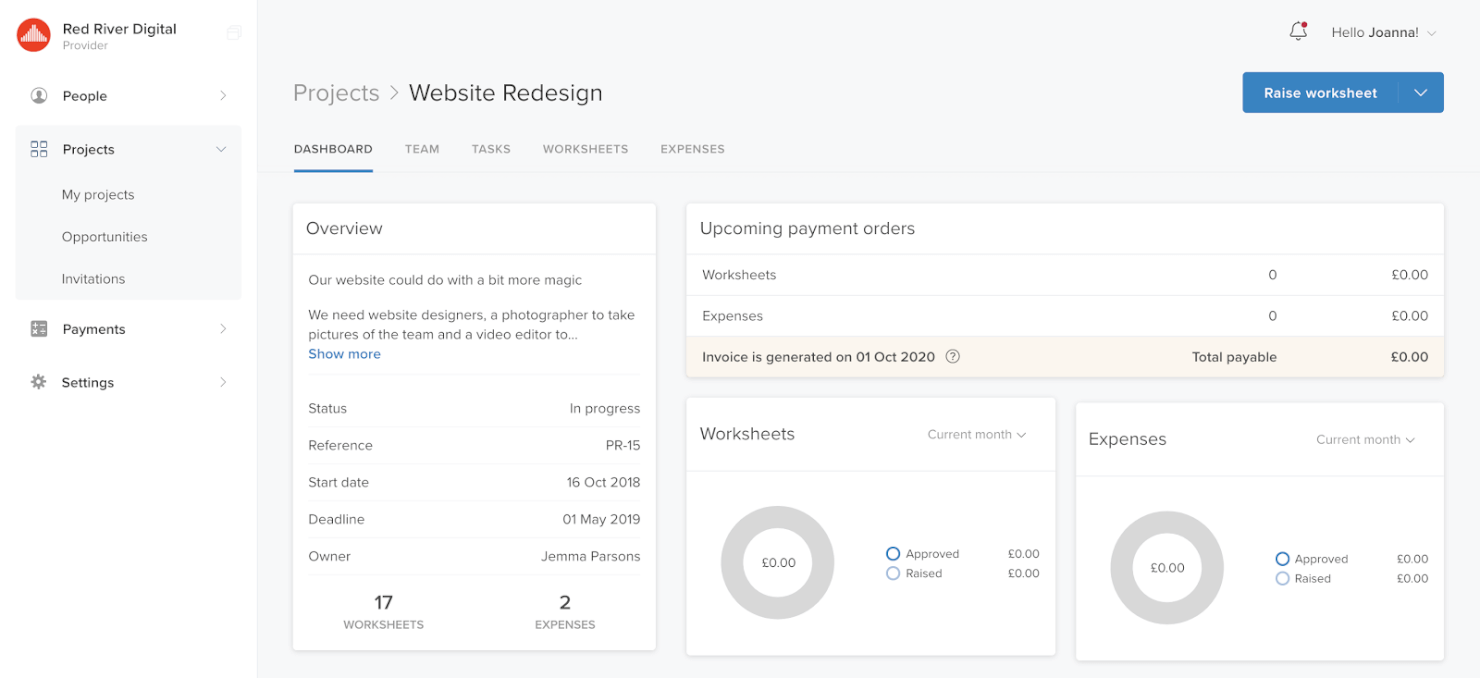
TalentDesk is a cloud-based solution that helps you manage contractors and freelancers effectively. Functionality includes a centralized dashboard where you can organize resources, send bulk invitations, and complete onboarding forms. Managers can create tasks within projects with dedicated teams.
With TalentDesk, you can allocate work to contractors faster. You can streamline the project lifecycle, from initial collaboration to tracking budgets and hitting deadlines.
Integrations are available with Clearbooks, FreshBooks, Oracle Netsuite, PeoplePerHour, Microsoft Dynamics 365, QuickBooks, Xero, Zoho Books, Wave, and Sage Intacct.

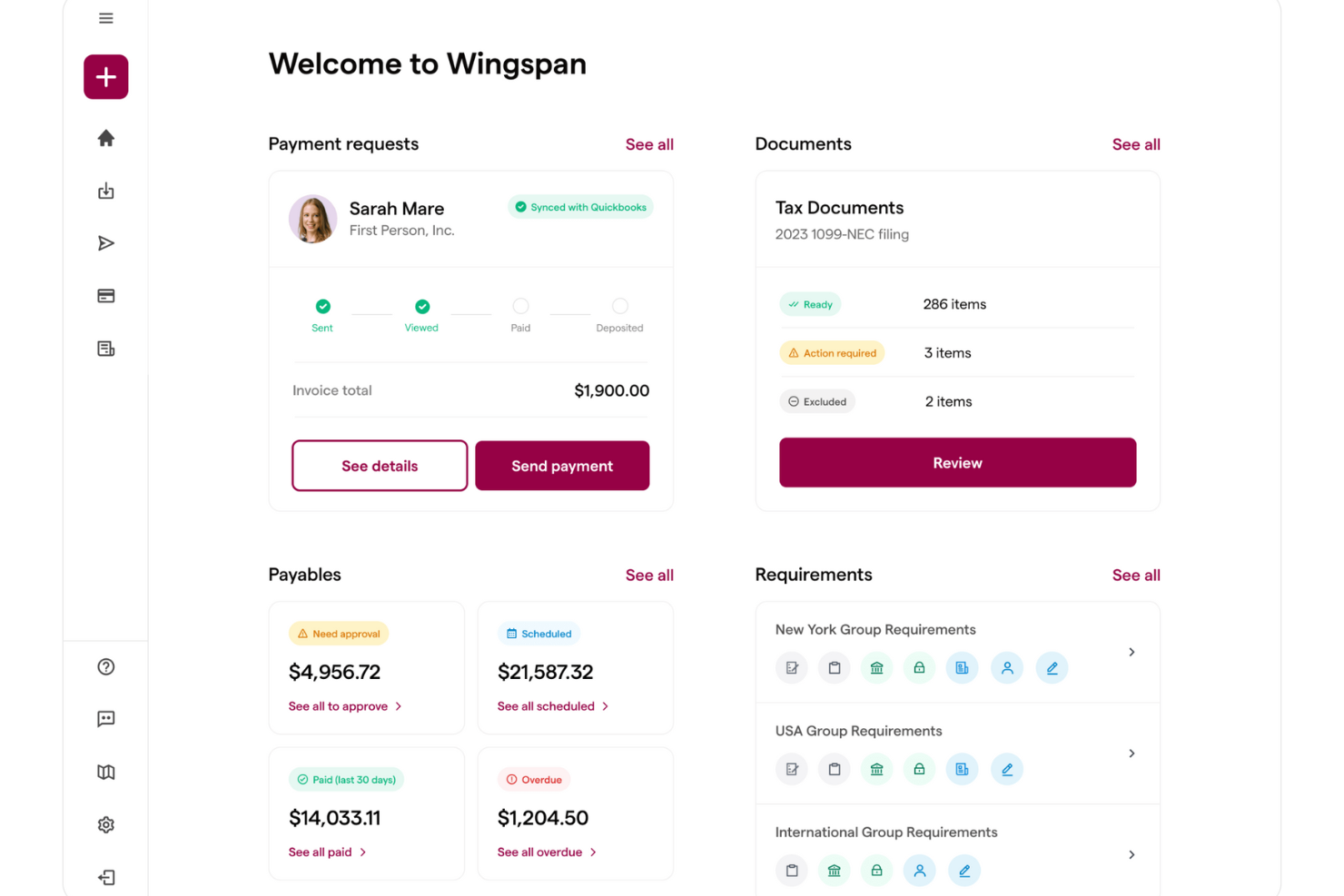
Wingspan is a platform designed to simplify end-to-end management of independent contractors for businesses. It enhances various administrative tasks such as onboarding, payments, and tax compliance, helping companies handle their contractor workforce more efficiently.
Its automated payment feature ensures that businesses can easily set up one-time or recurring payments to contractors without the need for manual tracking, eliminating the risk of delays and administrative overload. Additionally, Wingspan generates 1099 forms and handles other tax-related paperwork, simplifying tax compliance and reducing the risk of costly errors.
Another standout feature is Wingspan's contractor onboarding process and lifecycle management capabilities. Collecting necessary documents and ensuring compliance requirements helps businesses onboard contractors efficiently and manage them throughout the contract lifecycle. Wingspan also offers expense management capabilities, allowing contractors to submit expenses directly through the platform, which businesses can easily review and approve.
Integrations include QuickBooks, Sage, Xero, LinkedIn, Greenhouse, Salesforce, HubSpot, Airtable, Google Workspace, Zoho, Rippling, Gusto, DocuSign, BambooHR, and ADP.

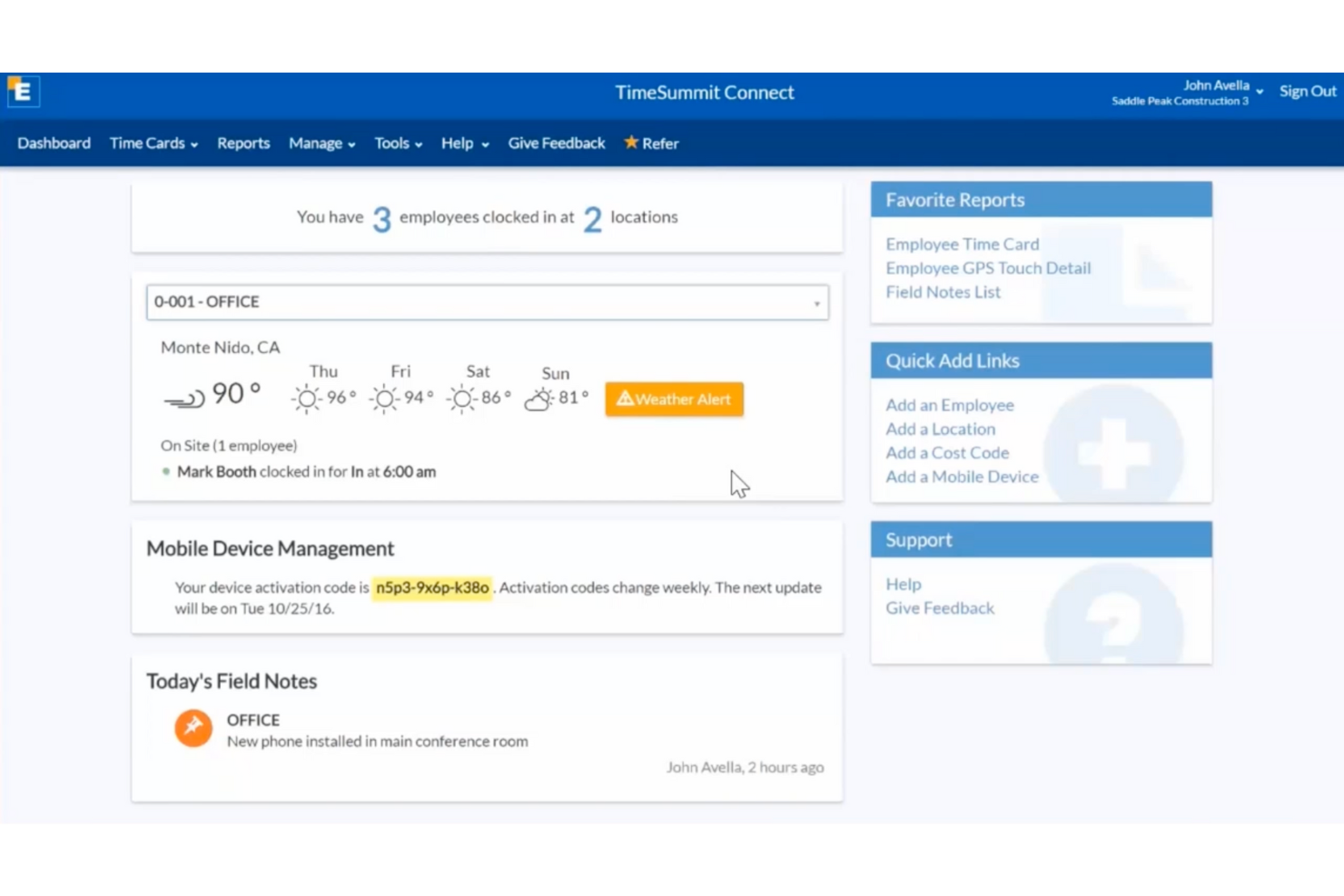
ExakTime Time & Attendance is a cloud-based software solution that helps businesses manage their workforce. It has tools for scheduling, time tracking, and expense and time off management. It's particularly well suited to companies managing contractors that do field-based work.
The time tracking feature allows you to track time by job or by individual, which is helpful when you're dealing with a large number of contractors. Meanwhile, the scheduling tool allows you to schedule jobs and assign contractors with just a few clicks. You can create payroll-ready reports based on the hours logged by your personnel in their timecards.
Speaking of timecards, contractors can clock in and out easily either via the mobile app or using a sturdy and weatherproof device that the company provides. For construction workers and other rugged environments, it's super handy to have a reliable and robust piece of hardware. GPS tracking is also included, helping you track where and when people log in and out of their work.
The software integrates with Sage, QuickBook, Viewpoint, Foundation Software, ADP, Acumatica, ConstructionPayroll.com, MYOB, Paychex, and Workday, among others.
Plans start from $9 per employee per month, with an additional base fee of $50 per month.
Other Contractor Management Software
Here are a few more options that didn’t make the top 10 best contractor management software shortlist. I didn’t have room for a full review for each of these but they are still worthy of consideration:
- Atlas
For consolidating your global contractor data
- ADP Workmarket
Contractor management platform for an advanced mobile app
- Donesafe
Contractor management system with advanced safety management features
- Lano
Contractor management system for creating smart contracts
- Transformify
For automating compliance, billing, and payments to contractors/freelancer
- Hopscotch
For small businesses & freelancers
- Rippling
For project-specific time-tracking, integrated into payroll
- monday.com
For flexible tracking and time-saving automations
- Multiplier
For flexible cryptocurrency payouts
- Oyster HR
For fast, simple contractor payments
- ContractSafe
For AI-powered search capabilities
- QuickBooks Payroll
For integrated tax penalty protection
- ADP Workforce Now
For HR technology & support
- Worksuite
For managing global freelancers at the enterprise level
- QuickBooks Online
For paying contractor expenses and invoices globally
- TimeClock Plus
For its multiple payroll vendor integrations
- Contractor Compliance
For collecting, tracking, and managing third-party contractor and vendor compliance requirements
- Autodesk Construction Cloud
Contractor management system for construction projects


Related HR Software Reviews
If you still haven't found what you're looking for here, check out these other related tools that we've tested and evaluated:
- HR Software
- Payroll Software
- Recruiting Software
- Employer of Record Services
- Applicant Tracking Systems
- Workforce Management Software
Selection Criteria for Contractor Management Software
Selecting the right contractor management software requires a thorough understanding of your organization's specific needs and pain points, and how specific functionalities can solve those challenges.
My approach to selecting the best contractor management software for this list is grounded in extensive research into these tools, combined with my experience using contractor management software in a safety-specific context.
Here's a summary of the selection criteria I used to make my final selections for this list:
Core Contractor Management Software Functionalities (25% of total score): For a software system to land a spot in this list, it needed to offer the following basic functionalities first:
- Efficient onboarding of new contractors
- A central document repository for project managers and contractors
- Easy tracking and updating of compliance documents
- Quick access to key contractor details, such as insurance and training records
- Simplified project assignment and management
- Payment processing abilities, or integrations with external payment systems
Additional Standout Features (25% of total score): To help me select the best contractor management software, I also noted any unique features, including:
- Solutions that offer AI-based skill matching of contractors to project needs
- Solutions with full-feature mobile apps for contractor management on the go
- Platforms that incorporate blockchain for secure, immutable contract management and compliance tracking
- Software that serves specific niche industries, such as construction or engineering
- Platforms offering integrations with external HR and financial systems for seamless data flow
Usability (10% of total score): To evaluate the usability of each contractor management tool, I considered the following:
- A clean, user-friendly, and intuitive design that requires minimal training to master
- Quick access to essential features without overwhelming users
- Key features like drag-and-drop calendars for scheduling, and easy filtering or tagging for document management
- Dedicated mobile apps or a mobile-friendly user interface that supports use on both Android and iOS mobile devices
- Role-based access control that's straightforward to configure
Customer Onboarding (10% of total score): To get a sense of each software provider's customer onboarding process, I considered the following factors:
- Quick setup processes and clear guidance for first-time users, including customizable templates
- The availability of training materials such as videos or interactive tutorials
- Support systems like chatbots and webinars to guide new users through the initial learning curve
- Support for migrating existing contractor data into the new platform
Customer Support (10% of total score): To evaluate the level of customer support each vendor offered, I considered the following:
- The availability of multiple support channels, including email, phone, and chat
- The existence of a self-service knowledge base or other self-help resources to speed up troubleshooting
- Access to a community forum for peer support and sharing best practices
- The overall quality, responsiveness, and helpfulness of the support team during customer onboarding and post-purchase, as inferred from customer reviews
Value for Price (10% of total score): To gauge the value of each software, I considered the following factors:
- The availability of free trials or demos to test the software before purchasing
- Transparent pricing models that clearly explain which features are included at each level, with no additional hidden costs for training or set-up
- Tiered pricing plans that cater to different business sizes, from small to medium-sized businesses (SMBs) up to enterprise-level organizations
Customer Reviews (10% of total score): Evaluating customer reviews is the final element of my selection process, which helps me understand how well a product performs in the hands of real users. Here are the factors I considered:
- Whether a product has consistently high ratings across multiple review platforms, indicating a broad level of user satisfaction
- Specific praises, criticisms, or trends in customer feedback that indicate the software's strengths or areas for improvement
- Whether customer feedback specifically mentions issues with ease of use, customer support responsiveness, or lacking features
- Any testimonials that highlight how a platform solved a particular training challenge or adapted to changing business needs
Using this assessment framework helped me identify the contractor management software that goes beyond basic requirements to offer additional value through unique features, intuitive usability, smooth onboarding, effective support, and overall value for price.
How to Choose Contractor Management Software
To help you figure out which contractor management software best fits your needs, the first step is pinpointing your key users and document their specific challenges.
As you work through your own unique software selection process, keep the following points in mind:
| Factor | What to Consider |
|---|---|
| Who Will Use It? | Who are the primary users—HR, finance, legal, team managers, or contractors themselves? Ensure the tool meets their workflow needs and access expectations. |
| Compliance Management | Does it support local and international labor laws, tax regulations, and classification checks (W-9, 1099, IR35, etc.)? |
| Contractor Onboarding | How efficiently can you onboard new contractors? Look for e-signature tools, template libraries, and automated document collection. |
| Payment & Invoicing | Does it support multi-currency payments, tax deductions, automatic invoicing, and integrations with accounting platforms? |
| Time Tracking | Is there built-in time tracking or integration with external tools (e.g., Toggl, Harvest)? Can it differentiate between hourly and milestone-based work? |
| Document Management | Can it securely store contracts, NDAs, tax forms, and work product submissions? Does it offer version control or expiration alerts? |
| Contractor Portal | Is there a self-service portal for contractors to update info, view payments, submit documents, and track tasks? |
| Integrations | Can it connect with your HRMS, ATS, payroll, and communication tools (e.g., Slack, QuickBooks, Gusto, BambooHR)? |
| Scalability | Will it scale with your contractor headcount? Consider performance under load and admin control granularity. |
| Reporting & Analytics | Are there customizable dashboards or reports for spend tracking, performance, and compliance metrics? |
| Security & Data Privacy | Is it GDPR/CCPA compliant? What data encryption and access control protocols are in place? |
| User Experience | Is the UI intuitive for both admins and contractors? How much training is required for adoption? |
| Customer Support & SLAs | What level of support is offered (chat, phone, dedicated account rep)? Are there guarantees on response/resolution times? |
| Pricing Structure | Is pricing based on the number of contractors, features used, or flat monthly fees? Are there hidden costs (e.g., payment processing fees)? |
Trends in Contractor Management Software for 2025
As of 2025, contractor management software continues to evolve rapidly, driven by the increasing complexity of managing a contingent workforce and the pressing need for businesses to remain agile.
Here are the most prevalent trends affecting the development of contractor management software currently:
- AI and Machine Learning for Contractor Matching: Some platforms are introducing AI-driven features for matching contractors with projects based on skills, experience, and past performance. This new approach aims to optimize project outcomes and reduce the time spent searching for the right contractor for the job.
- Mobile Accessibility and Functionality: The enhancement of mobile apps to offer full platform functionality reflects the growing need for on-the-go access. HR professionals and project managers need the ability to manage contractors, approve documents, and track project progress from anywhere, at any time.
- Blockchain for Secure Contract Management: The use of blockchain technology for creating immutable records of contracts and compliance documents is another emerging trend. This unusual feature addresses the critical need for security and transparency in contractor agreements.
These trends highlight a clear trajectory towards more integrated, intelligent, and secure contractor management solutions. As you search for the best contractor management software for you, keep an eye on systems that tap into these trends, to help you achieve greater operational success.
What Is Contractor Management Software?
Contractor management software is a digital platform that helps organizations efficiently oversee and coordinate their freelance, gig, and independent contractor workforce.
Features include contractor onboarding, document management, task and project tracking, time and expense tracking, compliance management to ensure adherence to regulations, reporting tools for performance and financial analysis, and communication platforms for streamlined interaction.
This software simplifies coordination, improves efficiency, and helps manage contractor-related tasks and projects effectively, and is especially useful for companies managing contractors across multiple locations or jurisdictions.
Key Features of Contractor Management Software
AWhen selecting contractor management software, keep an eye out for the following key features:
- Onboarding management: Streamline the process of bringing contractors into your organization by automating paperwork, credential checks, and orientation tasks so you can get new hires up and running effortlessly.
- Compliance tracking: Automatically monitor contractor certifications, insurance, and legal documents. This helps you stay audit-ready and avoid costly compliance headaches.
- Document management: Store, organize, and retrieve all contractor documents in one secure place, so you never have to scramble to find critical files or chase down missing paperwork.
- Time tracking and attendance: Enable contractors to log hours and attendance digitally, making it simple for you to review, approve, and process work records without hassle.
- Risk assessment tools: Identify and manage potential risks—like expired certifications or missed safety trainings—before they become costly problems for your projects.
- Payment processing: Automate invoicing and payments to contractors so you can pay accurately and on time, keeping your workforce happy and your books clean.
- Performance evaluation: Track and review contractor work quality, deadlines, and deliverables, giving you clear insights when deciding who to rehire or reward.
- Communication hub: Centralize messages, updates, and alerts so everyone stays informed and you avoid the endless email chain chaos.
Common Contractor Management Software AI Features
Beyond the standard contractor management software features listed above, many of these solutions are incorporating AI with features like:
- Natural language chatbots: Offer 24/7 assistance to contractors and managers with AI chatbots that answer questions, guide through onboarding steps, or troubleshoot issues instantly.
- Automated document verification: Use AI-powered tools to quickly verify uploaded contractor documents, reducing manual review time and flagging inconsistencies for your attention.
- Predictive risk analytics: Leverage AI to analyze contractor performance, past incidents, and compliance trends—giving you real-time risk alerts so you can act proactively.
- Smart compliance monitoring: Rely on AI to track regulation changes and automatically update compliance requirements, so your contractors always meet the latest standards.
- Intelligent matching: Match contractors to projects or roles based on skills, performance history, and availability using AI-driven analysis, helping you build the best teams fast.
Benefits of Contractor Management Software
For organizations that rely on contingent workers, contractor management software is a worthwhile investment to help you organize all your related processes in one accessible system. Here are several benefits you can expect to gain by investing in the best contractor management software for your needs:
- Centralized Contractor Data: By offering organizations a unified database for all contractor-related information, your staff will benefit from increased ease of use in accessing the information they need. This makes the process of updating and managing contractor details more efficient, improving decision-making and operational transparency.
- Enhanced Efficiency in Onboarding: Onboarding new contractors onto a project always takes time, but this software can significantly accelerate the process, reducing administrative tasks and enabling faster deployment.
- Improved Compliance Management: By enlisting software to help you ensure all your contractors meet legal and project-specific requirements, you'll significantly reduce the risk of non-compliance penalties and gain peace of mind that all necessary certifications are up to date and in good standing.
- Automated Invoicing and Payment Processing: By automating invoicing and payments, you can improve cash flow management and maintain positive relationships with their contractors, while also ensuring payments are reconciled correctly with actual hours worked.
- Increased Project Visibility: Contractor management software simplifies comprehensive tracking for many different aspects of project management, including contractor contributions. This visibility helps in identifying potential bottlenecks early and ensures timely project delivery.
As you can see, investing in a contractor management system can improve your operations, transforming how you manage your contingent workforce. As such, these platforms are not just focused on managing contractors more effectively; they're designed to enhance your overall organizational performance and agility in the face of evolving work environments.
Costs & Pricing for Contractor Management Software
These platforms offer a range of pricing plans to accommodate different business sizes and needs. To give you a basic understanding, I've outlined the typical plan options and their commonly included features in the table below.
Plan Comparison Table for Contractor Management Software
| Plan Type | Average Price | Common Features |
|---|---|---|
| Free | $0 | Basic contractor management, limited projects, and basic reporting |
| Basic | $10 - $30 per user/month | Enhanced project tracking, compliance management, and limited integration options |
| Professional | $30 - $60 per user/month | Advanced reporting, unlimited projects, custom integrations, and performance analytics |
| Enterprise | Custom pricing | Premium support, dedicated account manager, custom development, and advanced security features |
Choosing the right plan depends on your business size, the complexity of your contractor management needs, and your budget. Ensure you assess your current requirements and consider potential growth when selecting a plan, as scalability is critical for long-term success.
Frequently Asked Questions
Still wondering about contract management software and how it can help your organization? These answers to frequently asked questions should get you all sorted out:
When might I need contractor management software?
You typically need contractor management software when managing contractors becomes too complex, time-consuming, or risky to handle manually. This usually happens when:
-
You’re working with more than a handful of contractors, especially across different locations, currencies, or legal jurisdictions.
-
Your team spends too much time on administrative tasks like chasing tax forms, sending payments, or creating contracts.
-
You’re facing increased compliance risk, such as misclassification concerns, audit preparation, or expanding into international markets.
-
You need better visibility and control over contractor costs, performance, and timelines, but your spreadsheets or ad hoc tools aren’t cutting it.
If any of these signs are familiar, it’s a strong indication you’re ready for a more scalable, secure system.
Can the tool manage both short-term gig workers and long-term contractors?
Yes, but not all platforms do this well. Make sure the software can distinguish between different engagement types—hourly, milestone-based, project-based—and support different payment structures and timelines accordingly.
How does contractor management software handle international compliance?
Most platforms offer region-specific compliance tools like tax form collection (e.g., W-9, W-8BEN), classification checks (e.g., IR35), and contract templates tailored to local labor laws. However, the depth of compliance support varies—some only flag issues, while others provide in-platform legal guidance or access to legal partners.
Other Types of Resourcing Software
Looking for other types of software to ease your administrative load? Take a look at these other specialty lists for some other solutions that may help:
- Workforce Management Software
- Safety Management Software
- Employee Scheduling Software
- Workforce Planning Software
- Integrated Risk Management Software
- Online Project Management Tools
- Enterprise Resource Planning (ERP) Software
- ERP Systems for Small Businesses
- Enterprise Performance Management (EPM) Software
Next Steps
If you found this list helpful, you might also like to check out our article on the 10 best employee scheduling software tools. And to stay up to date with the latest developments in employee management, sign up for our free newsletter.
For even more help choosing the best HR software, this list of the best HR companies is a good place to start.