11 Applicant Tracking System Features for Smarter Hiring

The applicant tracking system (ATS) features that matter most are the ones that actually move hiring forward. Things like automated job posting, resume parsing, and interview scheduling make a real difference in how smooth your recruitment process is. Without them, you spend more time managing logistics than evaluating candidates.
Choosing the right ATS means knowing which features solve your real hiring challenges. This guide breaks down the key features to look for so you can make a confident, informed decision.
11 Key Applicant Tracking System Features
Here's a closer look at the applicant tracking system features that separate an ATS that works well from one that'll slow your team down:

1. Job Posting Distribution to Multiple Job Boards
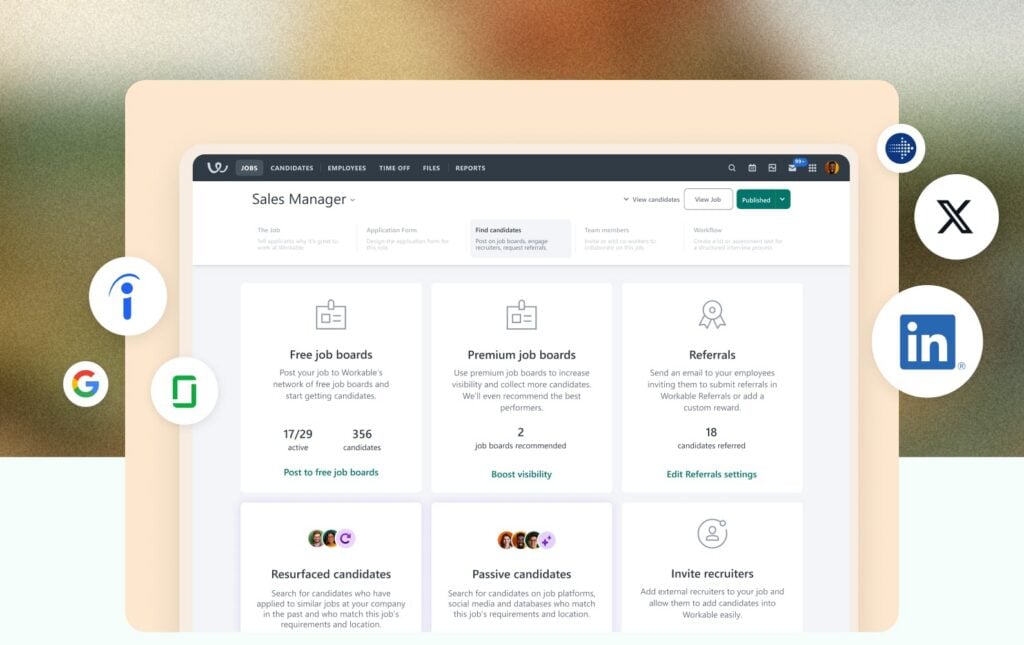
Instead of logging into each job board software separately, a good ATS software lets you write one job posting and push it to multiple boards at once. I've found this feature alone saves hours per open role. Most platforms connect to boards and social media platforms like Indeed, LinkedIn, and Glassdoor, and some include niche boards for specialized roles. You control where each posting goes, and job applications funnel back into one place. It keeps your candidate sourcing broad without multiplying your workload.
Here's how job board distribution typically works across different ATS platforms:
| Function | What It Does | Real-World Impact |
|---|---|---|
| One-click multi-board posting | Publishes a single job listing to multiple boards simultaneously | Workable, for example, distributes to 200+ boards in one click |
| Board selection control | Lets you choose which boards receive each posting | Useful for targeting niche boards for specialized or technical roles |
| Centralized application intake | Pulls all applications into one ATS pipeline regardless of source | No more checking five inboxes or manually merging candidate lists |
| Source tracking | Tags each applicant with the board they applied from | Helps you see which boards actually deliver quality candidates |
| Sponsored posting management | Supports paid job promotion directly from the ATS | Lets you boost visibility on high-priority roles without leaving the platform |
2. Resume Parsing and Candidate Profile Creation
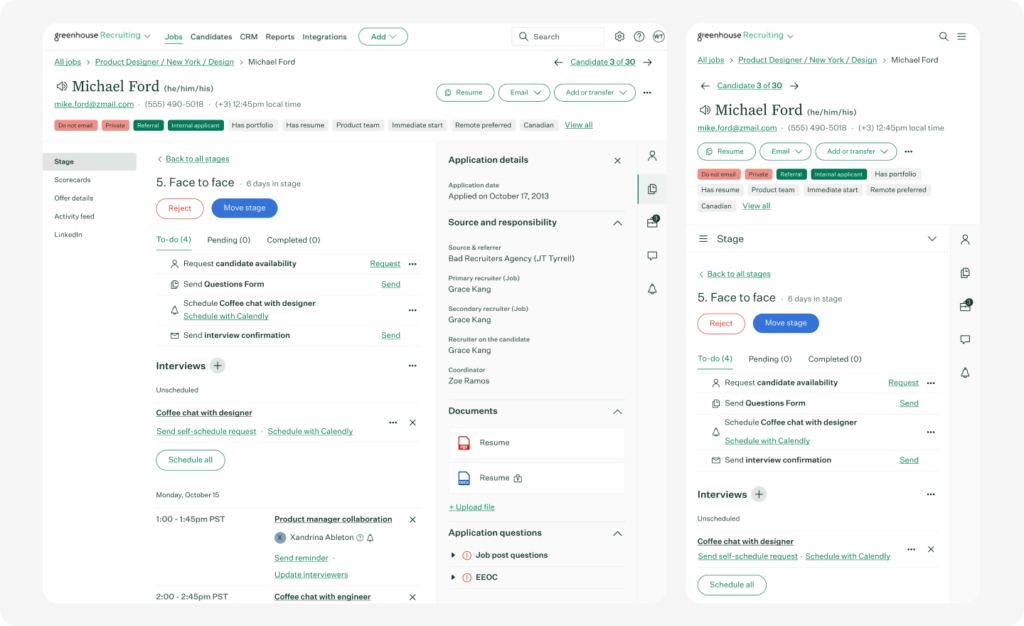
Resume parsing is one of those features you don't fully appreciate until you've manually screened candidate data in a spreadsheet. The ATS reads each resume—whether it's a PDF, Word doc, or LinkedIn import—and automatically extracts key candidate information like work history, skills, and education. That data populates a structured candidate profile instantly. From there, your team can search, filter, and compare potential candidates without digging through attachments. The quality of parsing varies between platforms, so it's worth testing this feature before committing to a tool if this is one of the key ATS benefits you're after.
Here's what resume parsing and profile creation looks like before and after an ATS handles it:
| Without ATS Parsing | With ATS Parsing | |
|---|---|---|
| Data entry | Manual copy-paste from each resume | Auto-extracted and structured on receipt |
| File handling | Attachments scattered across email threads | Centralized candidate profiles with attached source documents |
| Searchability | Ctrl+F through individual files | Filter top candidates by skill, title, or experience instantly |
| Profile completeness | Inconsistent—depends on who entered the data | Standardized fields populated from every resume |
| LinkedIn imports | Manual transcription or separate tracking | Direct import creates a full profile automatically (e.g., Greenhouse, Lever) |
3. Automated Candidate Screening and Ranking
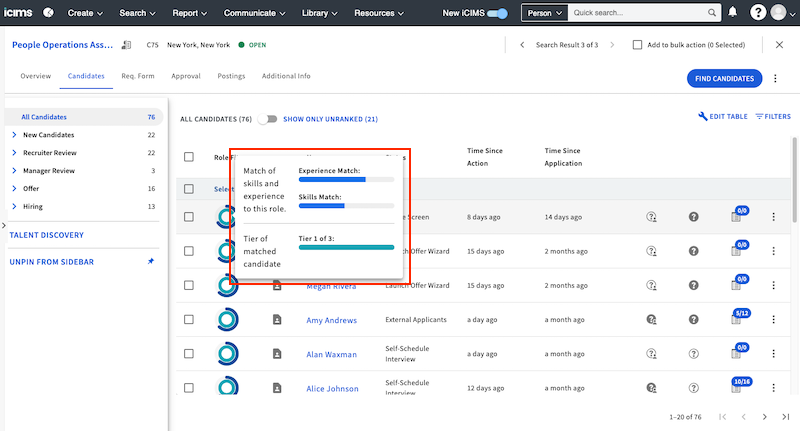
When you're dealing with hundreds of applicants for a single role, manual resume screening isn't realistic. Automated screening lets you set criteria upfront—required skills, years of experience, location, certifications—and the ATS filters or ranks the best candidates against those parameters as applications come in. Some ATS platforms use AI-powered scoring to surface the strongest matches at the top of your pipeline. I think this feature is most valuable for high-volume roles where the real challenge isn't finding candidates, it's identifying the right candidates quickly without letting strong applicants slip through the cracks.
These are the screening and ranking functions you'll typically find inside an ATS:
- Knockout questions: Pre-screening questions added to the application form that automatically disqualify candidates who don't meet non-negotiable requirements, like work authorization or required certifications.
- Criteria-based filtering: Lets you filter your pipeline by specific parameters—skills, education level, years of experience—so you're only reviewing relevant profiles.
- AI-powered ranking: Platforms like iCIMS and Jobvite use artificial intelligence to rank candidates by how closely they match the job description, helping recruiting teams shortlist the strongest profiles.
- Minimum score thresholds: Some platforms let you set a cutoff score, automatically moving candidates below the threshold to a rejected or hold stage.
- Bulk disposition: Once screening runs, you can move or reject large groups of unqualified job seekers at once rather than handling them one by one.
4. Interview Scheduling and Calendar Integration
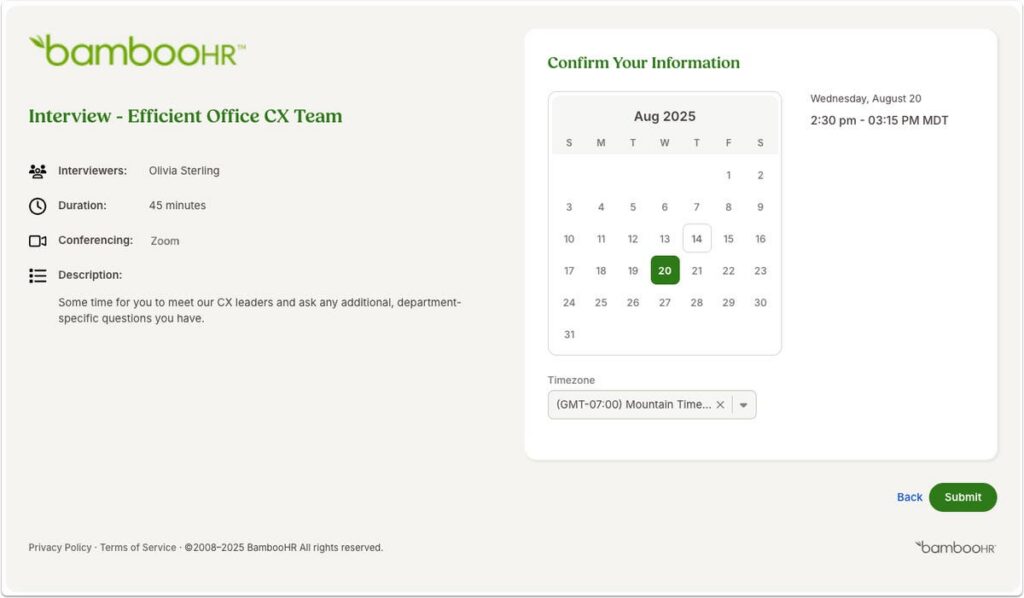
Coordinating interviews is one of the most time-consuming parts of the recruitment process, and it's where a lot of candidate experience breaks down. A good ATS connects directly to your team's calendars—Google Calendar, Outlook, or both—and lets candidates self-schedule from available time slots.
No more back-and-forth email chains to find a time that works. I've seen this cut scheduling time from days to hours, especially for multi-stage interviews involving several interviewers. Some ATS platforms also automate candidate communications by sending reminders and video interviewing links, so candidates arrive prepared and interviewers show up on time.
Here's how interview scheduling and calendar integration typically breaks down across ATS systems:
| Function | What It Does | Real-World Impact |
|---|---|---|
| Calendar sync | Connects to Google Calendar or Outlook to reflect real-time availability | Eliminates double-bookings and manual availability checks |
| Candidate self-scheduling | Sends candidates a link to pick from available time slots | Removes recruiter back-and-forth and speeds up time-to-interview |
| Panel interview coordination | Finds overlapping availability across multiple interviewers at once | GreenHouse handles this well for complex, multi-interviewer panels |
| Automated reminders | Sends confirmation and reminder emails to candidates and interviewers | Reduces no-shows without any manual follow-up |
| Video conferencing integration | Auto-generates Zoom or Teams links and includes them in calendar invites | Candidates get everything they need in one place, with no extra steps |
5. Collaboration Tools for Hiring Teams
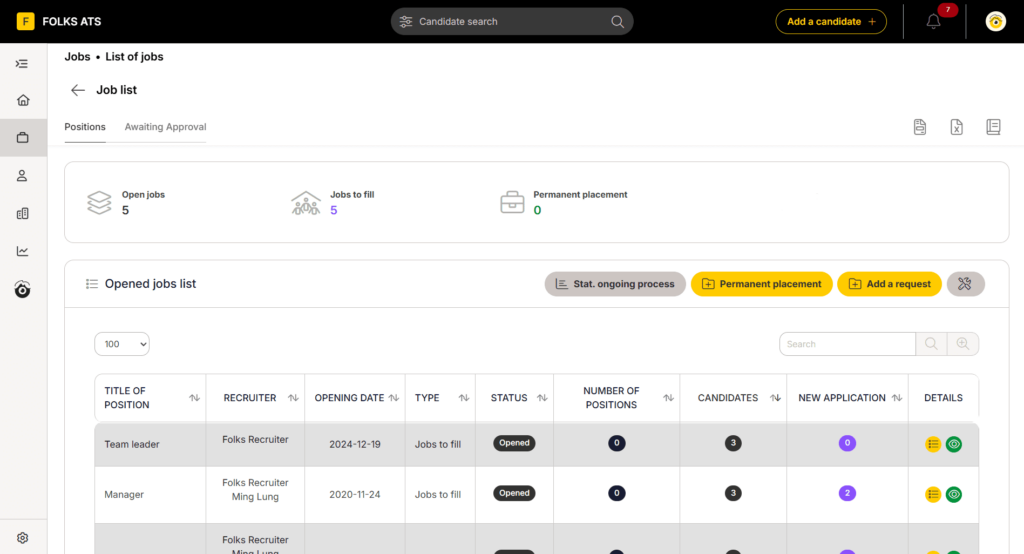
Hiring rarely happens in isolation. Recruiters, hiring managers, and department leads all need visibility into the same pipeline for collaborative hiring processes. Collaboration tools inside an ATS give everyone a shared workspace with structured scorecards, candidate feedback forms, and internal notes. This helps replace scattered email threads and Slack messages.
I find this especially valuable when hiring managers aren't HR professionals, because it gives them a clear, guided way to submit feedback without going off-process. When everyone's input lives in one place, decisions move faster and you're less likely to lose a strong candidate to a slow internal review.
These are the collaboration features that make a real difference when multiple people are involved in a hire:
- Structured scorecards: Interviewers rate candidates against predefined criteria rather than submitting freeform notes, which makes comparing candidates and decision-making more straightforward and fair.
- Internal candidate notes: Team members can leave comments directly on a candidate profile, keeping all context in one place instead of buried in an email thread.
- Role-based permissions: Controls what hiring managers, recruiters, and executives can see or edit—useful when you don't want interviewers accessing salary details or other sensitive information.
- Feedback request notifications: Automatically prompts interviewers to submit their scorecard after an interview, reducing the need for recruiter follow-up.
- Shared candidate visibility: Platforms like Ashby and Greenhouse let hiring teams view the full candidate timeline, including past interviews and feedback, so no one walks into a conversation without context.
- Approval workflows: Routes offer letters or job requisitions through the right stakeholders before anything moves forward, which I find particularly valuable in organizations with multiple sign-off requirements.
6. Customizable Workflow and Pipeline Management
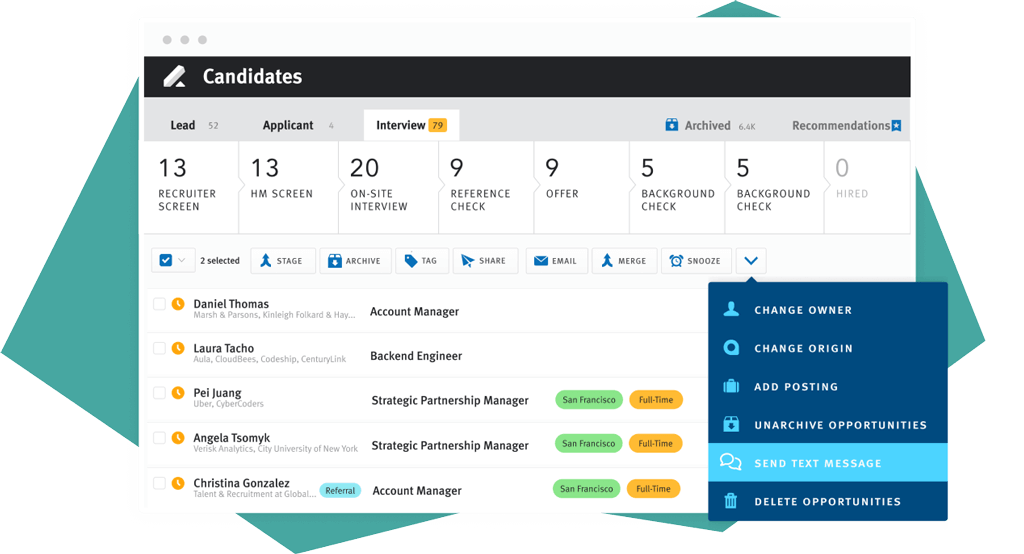
No two hiring processes look exactly alike. A pipeline for an entry-level customer service role is going to look very different from one for a senior engineering hire. And the ability to manage applicants through the recruitment pipeline is at the core of what an ATS is.
Customizable workflows let you build stage sequences that match how your team actually hires—from the application process to a phone screening, technical assessment, panel interview, and offer—rather than forcing every role into a generic template. Most platforms let you create multiple pipeline templates, automate parts of your recruitment process, and assign them by department or role type. I think this is where an ATS starts to feel like it was built for your team’s hiring strategies, rather than just any team.
Use this breakdown to understand how customizable workflows and pipeline management function across different hiring scenarios:
| Function | What It Does | Example Use Case |
|---|---|---|
| Pipeline stage builder | Create and name custom stages that reflect your actual hiring process | Build separate pipelines for technical roles vs. non-technical roles |
| Department-level templates | Assign different pipeline templates to specific teams or role types | Engineering uses a coding assessment stage; sales uses a mock pitch stage |
| Stage-triggered automations | Automatically send emails, assign tasks, or move candidates when a stage changes | Candidate moves to "offer" stage and an offer letter template is triggered automatically |
| Drag-and-drop candidate management | Move candidates between stages manually with a visual kanban-style board | Lever and Ashby both handle this well for teams that want a clear visual pipeline |
| Disqualification reason tracking | Log why candidates were rejected at each stage | Helps identify patterns, like a high drop-off at the take-home assessment stage |
| Pipeline reporting by stage | See how many candidates are sitting in each stage across all open roles | Useful for spotting bottlenecks, like a backlog of candidates waiting for hiring manager review |
7. Communication Tools for Candidate Outreach
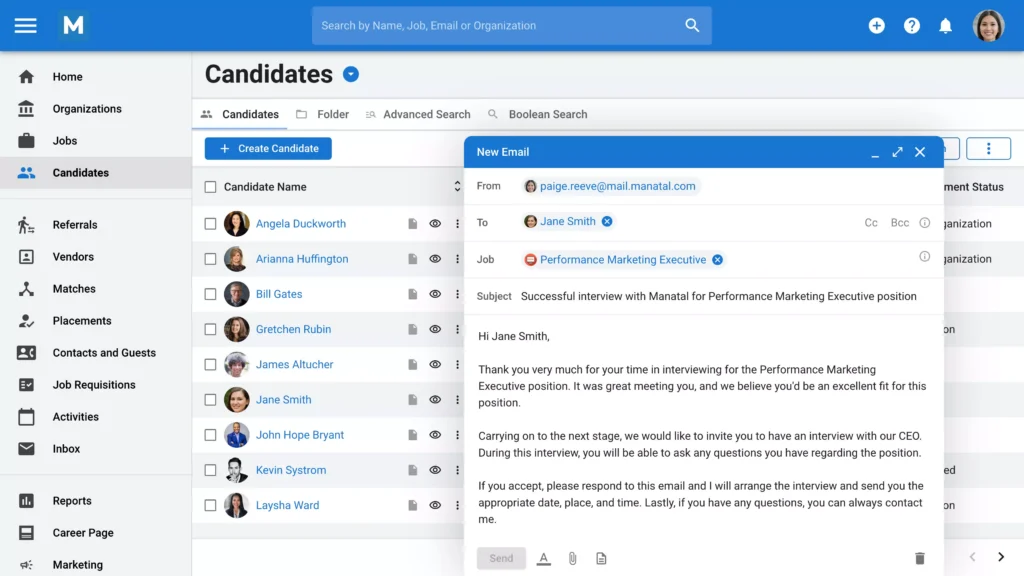
Candidate engagement lives and dies by communication. An ATS with built-in outreach tools lets you send templated emails, automate status updates, and manage all candidate communications from inside the platform—no switching between your inbox and your pipeline. I think the biggest value here is consistency. Every candidate gets a timely response at every stage, not just the ones a recruiter remembered to follow up with. Platforms like Greenhouse and Lever take this further with personalized email sequences, so proactive outreach to passive candidates doesn't require manual effort every time.
These are the communication features worth paying close attention to when evaluating an ATS:
- Email templates: Pre-built or custom templates for every stage of the process—application confirmations, interview invites, rejections—so recruiters aren't writing the same email from scratch repeatedly.
- Automated status updates: Triggered emails that go out when a candidate moves to a new stage, keeping candidates informed on their application status without any manual effort from your team.
- Bulk messaging: Send a single message to a filtered group of candidates at once, which I find especially useful when closing out a high-volume role or notifying a large applicant pool of a position change.
- Two-way email sync: Connects your work inbox so replies from candidates appear directly on their profile, keeping the full conversation history in one place rather than split between your ATS and email client.
- SMS outreach: Some platforms, including iCIMS and Jobvite, support text messaging for interview reminders or quick status updates, which tends to get faster responses than email.
- Candidate-facing communication history: A full log of every message sent to a candidate, visible to the whole hiring team, so no one sends a duplicate or contradictory message.
- Nurture sequences: Automated multi-step outreach campaigns for passive candidates in your talent pool, useful for keeping warm leads engaged until the right role opens up.
8. Compliance Tracking and Reporting
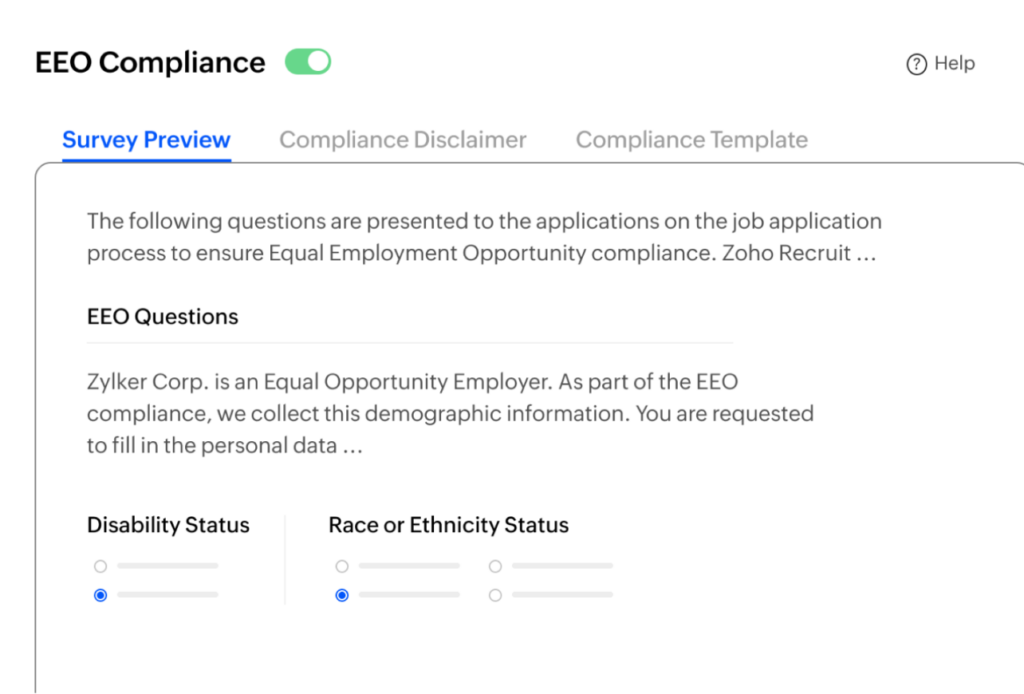
Recruiting carries real legal exposure, and compliance features in an ATS help you manage that risk without building manual processes around it. This covers everything from EEO data collection and GDPR candidate consent to OFCCP audit trails for federal contractors. The platform captures and stores the data you're required to track, and surfaces it in reports when you need it. I've found this particularly valuable during audits—having a clean, timestamped record of every hiring decision and communication means you're not scrambling to reconstruct a paper trail after the fact.
Use this table to see how compliance tracking features map to specific regulatory and reporting needs:
| Feature | What It Covers | Why It Matters |
|---|---|---|
| EEO data collection | Captures voluntary self-identification data from applicants | Required for federal reporting and helps identify demographic gaps in your pipeline |
| OFCCP audit trails | Logs every hiring action with timestamps for federal contractor compliance | Gives you a defensible, documented record if your process is ever audited |
| GDPR consent management | Collects and stores candidate consent for data processing and retention | Greenhouse and Workable both handle this well for teams hiring across EU regions |
| Data retention policies | Automatically archives or deletes candidate records after a set period | Reduces legal exposure from holding personal data longer than necessary |
| Adverse impact reporting | Analyzes selection rates across demographic groups at each pipeline stage | Helps surface potential bias in screening or interview decisions before it becomes a legal issue |
| Requisition approval tracking | Documents who approved each job opening and when | Creates an internal paper trail for headcount decisions, useful during workforce planning reviews |
| Anonymized screening options | Hides candidate name, photo, or other identifying details during early review stages | Supports structured, bias-reduced screening—iCIMS and Lever offer variations of this feature |
9. Offer Letter Generation and Management
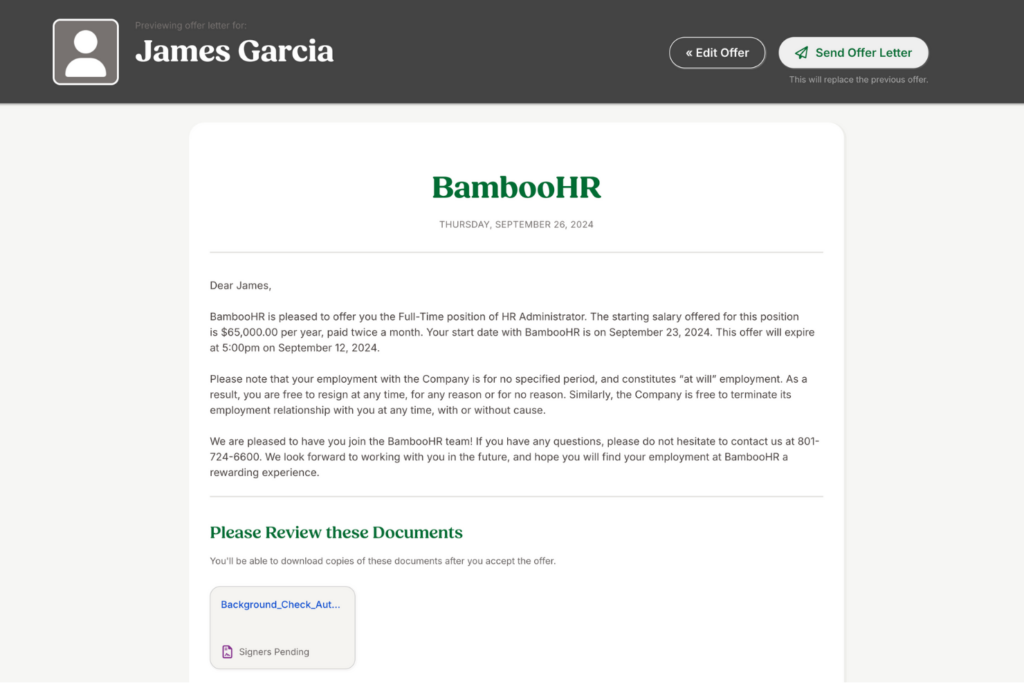
The offer stage is where a slow or disorganized process can cost you a top candidate. Offer letter generation inside an ATS pulls candidate and role data directly into a pre-approved template, so recruiters aren't manually drafting documents or copying compensation details from a spreadsheet. From there, most platforms route the letter through an internal approval workflow before it ever reaches the candidate.
I think the real value is speed combined with accuracy—you're getting a clean, consistent document out the door faster, with less risk of errors that create awkward conversations or legal complications down the line.
Use this breakdown to see how offer letter features work together across the final stages of hiring:
| Feature | What It Does | Example Use Case |
|---|---|---|
| Template library | Store pre-approved offer letter templates by role type, level, or location | Use a different template for exempt vs. non-exempt roles to ensure correct language |
| Auto-populated fields | Pull candidate name, title, compensation, and start date directly from the candidate record | Eliminates manual data entry and reduces the risk of mismatched offer details |
| Approval routing | Routes the offer through designated approvers before it's sent to the candidate | A compensation offer above a set threshold automatically requires CFO sign-off |
| E-signature integration | Sends the offer digitally and captures a legally binding signature | Ashby and Greenhouse both integrate with DocuSign for a fully digital offer and acceptance flow |
| Offer versioning | Tracks changes made to an offer after the initial draft | Useful when compensation is negotiated—keeps a clear record of what changed and when |
| Candidate-facing offer portal | Gives candidates a dedicated page to review, ask questions, and sign their offer | Creates a cleaner experience than sending a PDF attachment over email |
| Offer status tracking | Shows whether an offer has been sent, viewed, or accepted in real time | Lets recruiters follow up at the right moment without guessing where a candidate stands |
10. Analytics and Recruitment Reporting
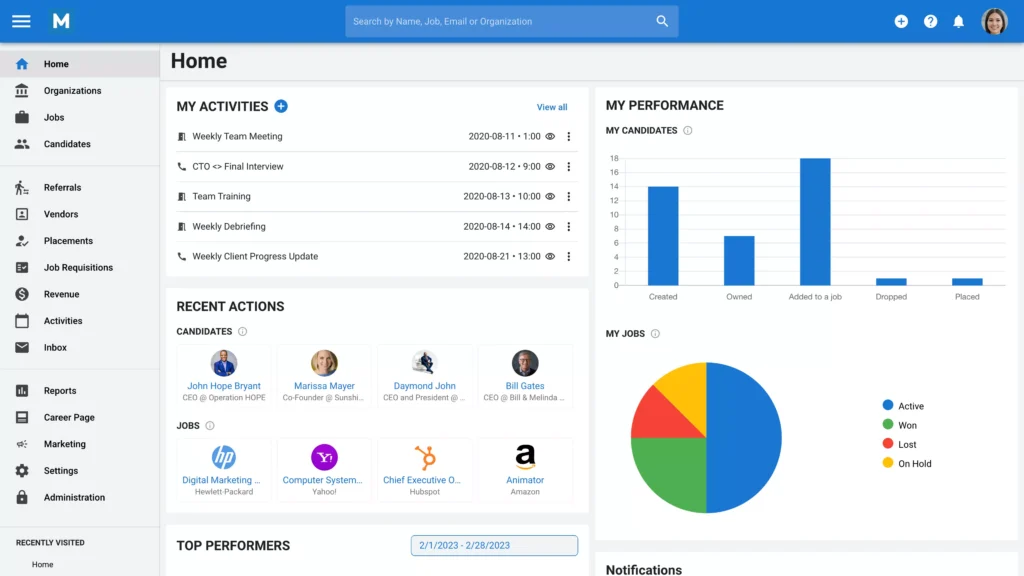
Good recruiting decisions need data behind them. Recruitment analytics and reporting features in an ATS track recruitment metrics across your entire hiring process, like time to fill, source effectiveness, pipeline conversion rates, and offer acceptance rates. This data is surfaced in dashboards your team can actually use to optimize your pipeline.
I find this most valuable when you're making the case to leadership for more headcount or a bigger sourcing budget. Platforms like Greenhouse and Ashby are particularly strong in the recruitment analytics software space, with customizable dashboards that go well beyond basic out-of-the-box reporting.
These are the reporting and analytics capabilities that separate a useful ATS from one that just stores data:
- Time-to-fill tracking: Measures how long each role takes to close from open requisition to accepted offer, broken down by department, role type, or hiring manager.
- Source effectiveness reporting: Shows which channels—job boards, referrals, LinkedIn, sourcing campaigns—are producing the most qualified candidates, not just the most applicants. I think this is one of the most underused reports in recruiting.
- Pipeline conversion rates: Tracks how many candidates move from one stage to the next, which makes it easy to spot where you're losing people and why.
- Interviewer scorecards and feedback trends: Aggregates structured interview feedback over time so you can identify interviewers who are consistently misaligned with the rest of the panel.
- Offer acceptance rate reporting: Breaks down accepted vs. declined offers by role, team, or compensation band, which is useful for spotting patterns in where your offers are falling short.
- Diversity and inclusion metrics: Tracks demographic representation at each pipeline stage—Greenhouse and Lever both offer dedicated DEI dashboards for teams with formal inclusion goals.
- Custom report builder: Lets you define your own metrics and filters rather than relying on pre-built reports. Ashby is particularly strong here, with a flexible report builder that most mid-market ATS platforms don't match.
- Scheduled report delivery: Automatically sends reports to stakeholders on a set cadence, so hiring managers and leadership get updates without having to log into the platform.
11. Integration With HR and Onboarding Systems
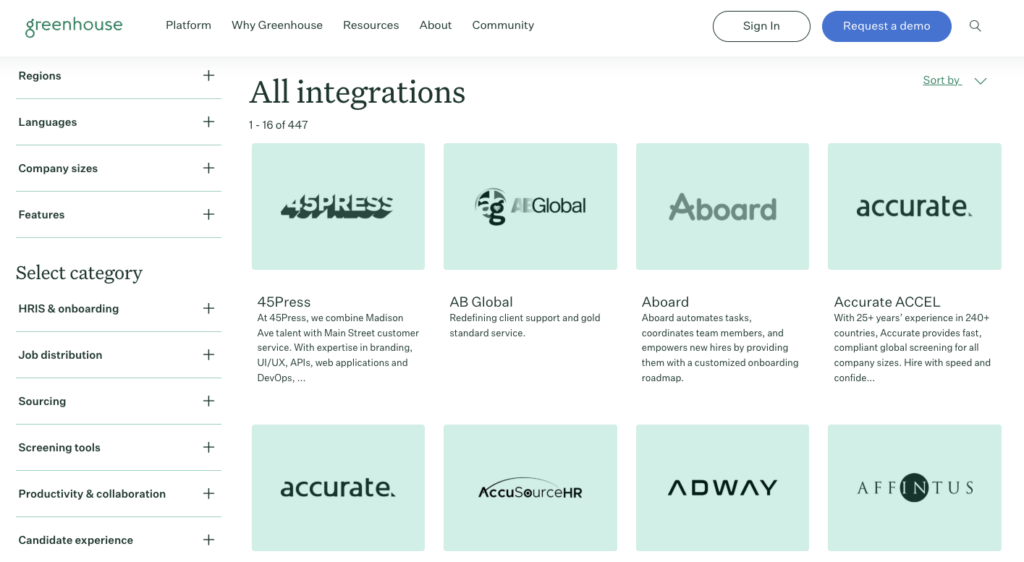
An ATS doesn't operate in isolation—it sits at the front of a much longer employee lifecycle. Integration capabilities connect your ATS to your HR tech stack (HRIS, recruiting software, payroll systems, and onboarding tools your team already uses), so a accepted offer triggers a new hire record in your HRIS without anyone re-entering data manually.
I've seen this break down badly when it's missing. A new hire shows up on day one and their system access isn't provisioned because the handoff between recruiting and HR was still happening over email. Native integrations or a well-documented API close that gap reliably.
Use this table to see how ATS integrations support the handoff from recruiting to HR and onboarding:
| Integration Type | What It Connects | Practical Impact |
|---|---|---|
| HRIS sync | Pushes accepted offer data—name, role, compensation, start date—directly into your HRIS | Workday, BambooHR, and Rippling all offer native or pre-built ATS connections that eliminate duplicate data entry |
| Payroll system connection | Transfers new hire compensation and tax details to payroll before day one | Reduces the risk of a new employee missing their first paycheck due to a late or incomplete setup |
| Onboarding platform handoff | Triggers a new hire onboarding workflow the moment an offer is accepted | Platforms like Greenhouse connect directly with Workato or onboarding tools like Sapling to kick off preboarding automatically |
| Background check integration | Sends candidate details to a background screening provider without leaving the ATS | Checkr and Sterling are commonly integrated across mid-market and enterprise ATS platforms |
| SSO and identity management | Connects to your identity provider so new users are provisioned access automatically | Reduces IT dependency during onboarding and ensures access is ready on day one |
| Calendar and scheduling sync | Keeps interview scheduling connected to Google Calendar or Outlook across both systems | Prevents double-booking and keeps hiring team availability accurate without manual updates |
| Open API access | Allows your team to build custom connections to internal tools or less common platforms | Important for larger orgs with complex tech stacks that don't fit a standard integration library |
10 Top 10 Applicant Tracking Systems
Here's my pick of the 10 best software from the 10 tools reviewed.
Clicks on the links below may earn a commission, which supports our independent testing and review of software and services. Learn more about how we stay transparent.


Find the Right ATS Features—And the Right Price
Once you know which features matter most to your team, the next step is understanding what you'll pay for them—so check out our guide to applicant tracking system pricing to budget wisely and avoid hidden costs.