
10 Best Employee Recognition Platforms of 2026: Compared

10 Best Employee Recognition Platform Shortlist
Here's my pick of the 10 best software from the 30 tools reviewed.


The best employee recognition platforms help HR professionals replace scattered, manual efforts with automated systems that make employees feel genuinely valued.
Whether you're using spreadsheets to track anniversaries, juggling ad hoc shoutouts, or stuck with a clunky tool no one wants to use, the right software transforms recognition into a strategic driver of morale, retention, and performance.
These platforms help you send timely peer-to-peer kudos, celebrate milestones, reward achievements, and track engagement impact—all from one centralized dashboard. But with so many tools out there, it’s tough to know which ones are intuitive, scalable, and actually get used.
As someone who’s spent years 3+ evaluating HR software for People Managing People and 9 years as an HR specialist, I’ve reviewed hundreds of tools and know what separates a good recognition platform from a great one.
In this guide, I’ll share the top employee recognition platforms that deliver real results—so you can stop chasing engagement and start building a culture where people truly feel seen.
Why Trust Our Software Reviews
We've been testing and reviewing HR software since 2019. As HR professionals ourselves, we know how critical and difficult it is to make the right decision when selecting software.
We invest in deep research to help our audience make better software purchasing decisions. We've tested more than 2,000 tools for different HR use cases and written over 1,000 comprehensive software reviews. Learn how we stay transparent, and take a look at our software review methodology.
Table of Contents
Best Employee Recognition Platforms: Comparison Chart
This comparison chart summarizes pricing, trial, and demo details for my top employee recognition platform selections to help you find the best platform for your budget and business needs.
| Tool | Best For | Trial Info | Price | ||
|---|---|---|---|---|---|
| 1 | Best for tracking ROI with recognition data | Free demo available | Pricing upon request | Website | |
| 2 | Best for program ROI | Free demo available | Pricing upon request | Website | |
| 3 | Best for employee engagement and measuring impact | Free demo available | From $2 to $5/user/month ($3,000/year minimum) | Website | |
| 4 | Best for productivity, engagement, and recognition | 14-day free trial + free demo available | From $39/month (billed annually) | Website | |
| 5 | Best for embedding recognition into everyday work | Free demo available | Pricing upon request | Website | |
| 6 | Best for its SHRM partnership | Free demo available | From $3/user/month | Website | |
| 7 | Best for building culture and behavior | Free demo available | Pricing upon request | Website | |
| 8 | Best for automated recognition and retention | Free customized pilot available | Pricing upon request | Website | |
| 9 | Best for connecting praise, performance, and goals | Free demo available | From $11/seat/month | Website | |
| 10 | Best for frontline worker recognition | Free plan + demo available | From $40/month | Website |


-

Checkr
Visit WebsiteThis is an aggregated rating for this tool including ratings from Crozdesk users and ratings from other sites.4.5 -
Kudoboard
Visit WebsiteThis is an aggregated rating for this tool including ratings from Crozdesk users and ratings from other sites.4.8 -
Native Teams
Visit WebsiteThis is an aggregated rating for this tool including ratings from Crozdesk users and ratings from other sites.4.9


Best Employee Recognition Platform Reviews
Here’s my breakdown of the top employee recognition platforms that can help you build a stronger, more connected workplace culture—without the manual hassle. For each tool, I’ve called out what makes it stand out, what it integrates with, and why it earned a spot on this list.

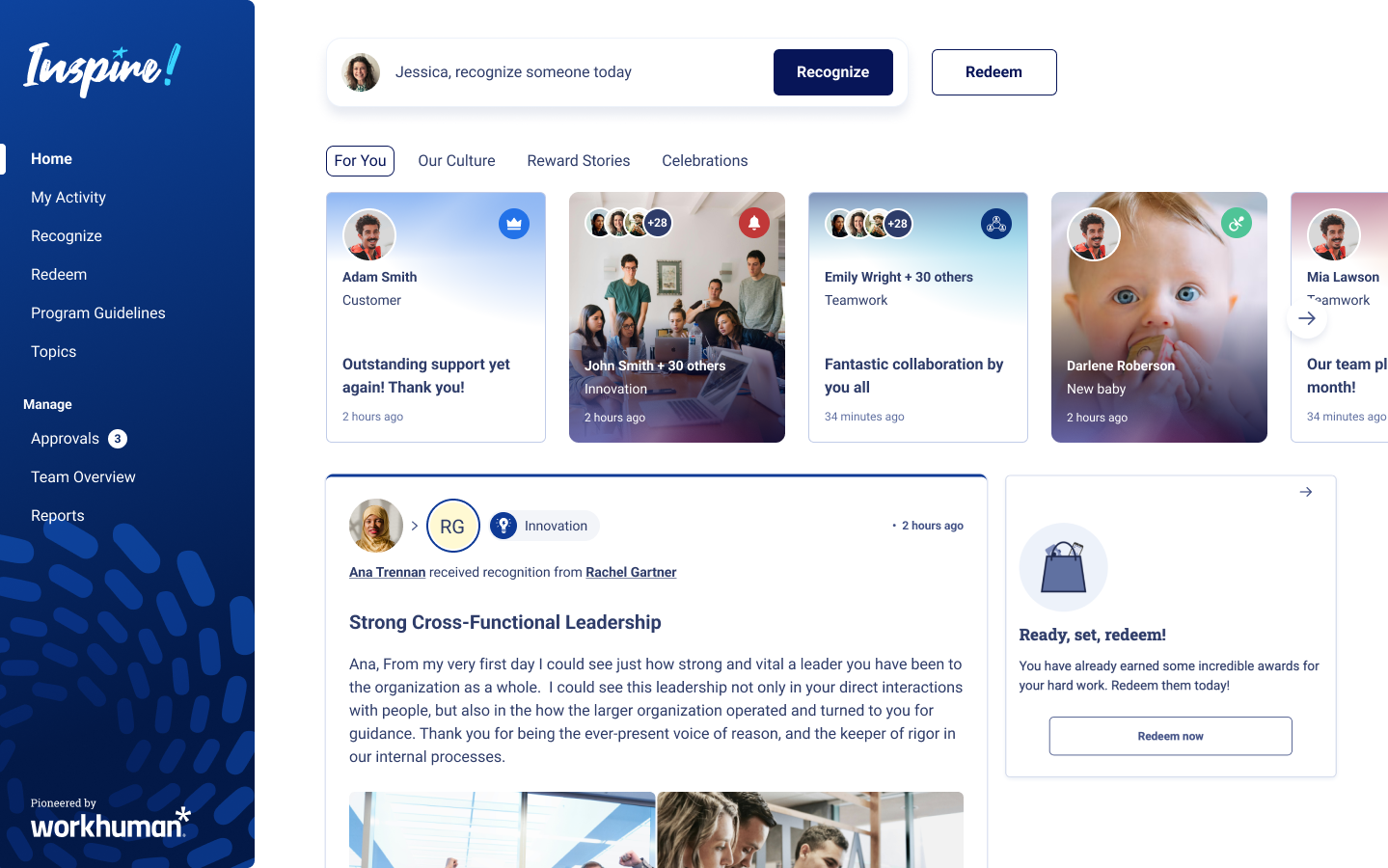
Workhuman is an employee recognition platform designed for HR teams and business leaders who want to build a culture of appreciation, boost engagement, and connect recognition efforts to measurable business outcomes.
Who Is Workhuman Best For?
Workhuman is a strong fit for mid-to-large enterprises where HR leaders need a scalable recognition program that connects people data to workforce strategy.
Why I Picked Workhuman
Workhuman earns its spot as one of the best on my shortlist because of how seriously it takes the question every HR leader eventually faces: "Can we prove this recognition program is actually working?" I love that Workhuman iQ turns recognition activity into real-time dashboards that track program adoption, budget use, and engagement trends—without requiring a data analyst to interpret them. The Topics feature goes even further, mapping where behaviors tied to specific business goals are showing up across teams and geographies, so I can see whether a strategic initiative is actually taking hold.
Workhuman Key Features
- Social recognition feed: Employees and managers can post public recognition moments that the whole organization can see, react to, and comment on.
- Milestone celebrations: Automate service anniversaries and life events with personalized award experiences and manager prompts.
- Reward catalog: Employees redeem recognition points from a global catalog of gift cards, merchandise, experiences, and charitable donations.
- Continuous performance development: Managers and peers can exchange real-time feedback tied to recognition moments and company values.
Workhuman Integrations
Integrations include Microsoft Teams, Workday, Slack, Yammer, and Microsoft Outlook, and an open API is available for custom integrations.
Pros and Cons
Pros:
- Facilitates peer-to-peer recognition
- Supports diverse reward options
- Aligns recognition with company values
Cons:
- Text clarity in the interface needs improvement
- Awards feed lacks proper highlighting for visibility


WorkTango gives HR teams and business leaders a platform to recognize employees, reward achievements, and track engagement, helping organizations build a culture of appreciation and measurable impact.
Who Is WorkTango Best For?
WorkTango suits mid-size to enterprise HR teams looking for a structured recognition program with built-in analytics to demonstrate business impact.
Why I Picked WorkTango
I included WorkTango because it gives HR teams clear visibility into whether their recognition programs are working. It includes recognition analytics that track participation rates, budget utilization, and recognition frequency across teams and departments. Those analytics show leadership where engagement is strong and where it's weak. The program ROI reporting ties recognition activity directly to business outcomes, which I find useful when making the case for continued investment in employee appreciation initiatives.
WorkTango Key Features
- Nominations & awards management: Create and schedule custom award programs, collect peer nominations in one place, and select winners directly within the platform.
- Automated service awards & milestone celebrations: Connect your HRIS to trigger automatic recognition for work anniversaries, birthdays, and new hire onboarding moments.
- Incentives with budget controls: Build incentive programs from 50+ preconfigured templates and set claim caps to manage and forecast budget impact before launching.
- Global rewards marketplace: Give employees access to 10M+ reward options across 85 countries, with zero markup pricing and integrated shipping and fulfillment.
WorkTango Integrations
Integrations include Workday, UKG, ADP, BambooHR, Okta, Microsoft Teams, Slack, Google Workspace, Azure Active Directory, and an API for custom integrations.
Pros and Cons
Pros:
- Recognition tied to company values helps reinforce desired behaviours
- Rewards marketplace works well internationally
- Lets peers and managers recognise employees with ease
Cons:
- Smaller organisations may find pricing less transparent
- Requires thoughtful setup to align programs

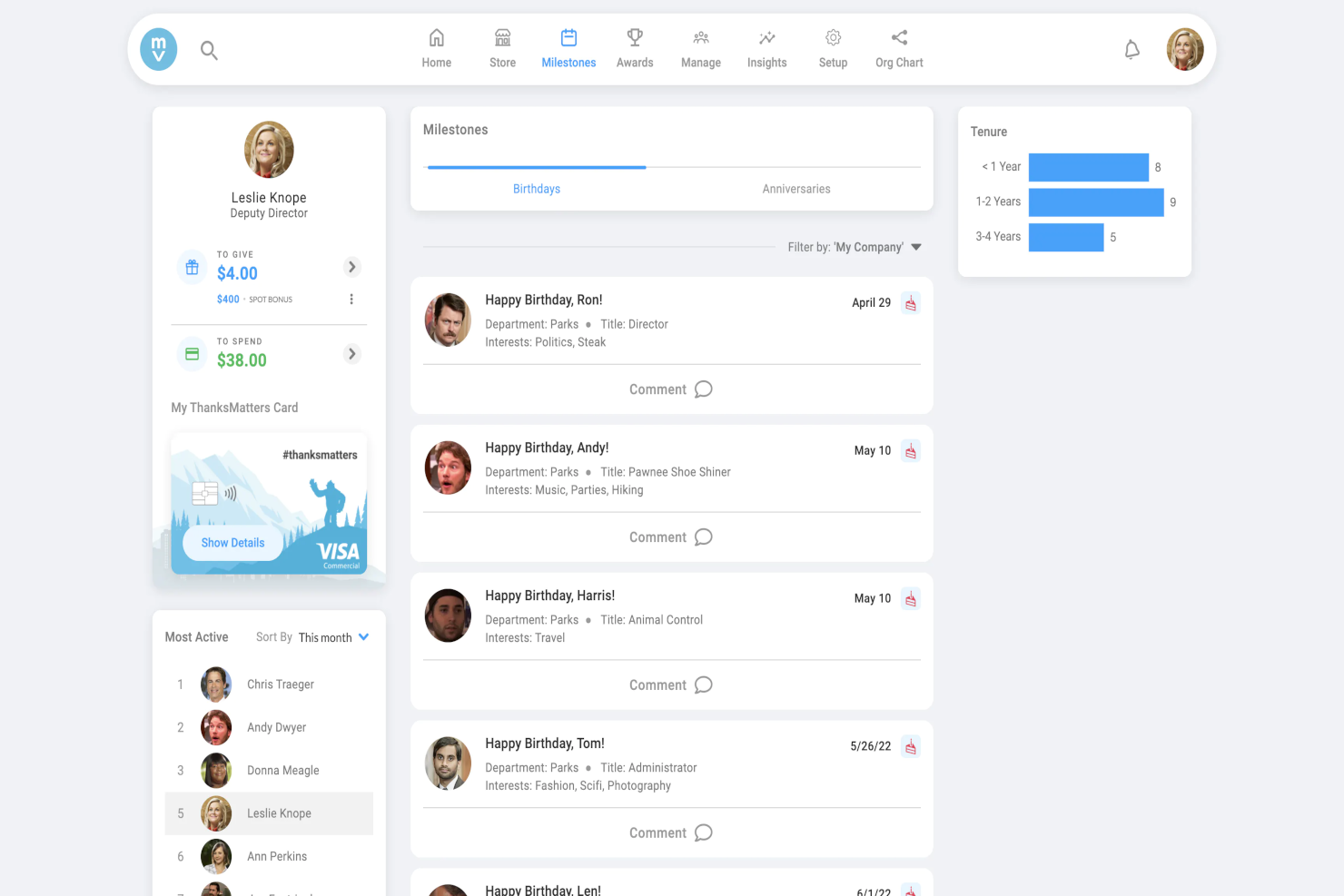
Motivosity gives HR teams and people leaders a platform to foster peer-to-peer recognition, boost morale, and track engagement trends across organizations of any size.
Who Is Motivosity Best For?
Motivosity is a good fit for mid-sized to large companies that want to build a culture of recognition and give managers visibility into how engagement is trending across their teams.
Why I Picked Motivosity
I've included Motivosity in my top picks because I love how it closes the loop between recognition activity and measurable engagement outcomes. Most recognition tools tell you how many shoutouts were sent—Motivosity goes further with its MV6 survey, a proprietary six-question pulse that benchmarks eNPS, trust, and morale on a recurring basis. I use the reporting dashboards to track how sentiment shifts as recognition programs roll out, which makes it much easier to show leadership a direct connection between culture investment and employee behavior. The custom survey builder also lets my team target specific initiatives—like onboarding or DEI—so we're not just collecting data, we're tying it back to programs we can actually adjust.
Motivosity Key Features
- Peer-to-peer recognition: Send public shoutouts and appreciation posts to colleagues directly within the platform's social recognition feed.
- Rewards catalog: Redeem recognition points for gift cards, company-branded swag, or charitable donations through a built-in rewards marketplace.
- Manager tools: Set one-on-one meeting agendas, track action items, and log talking points to support regular employee check-ins.
- Automated recognition triggers: Schedule milestone-based recognition for events like work anniversaries and birthdays so no moment goes unacknowledged.
Motivosity Integrations
Integrations include BambooHR, Workday, ADP, Paylocity, Slack, Microsoft Teams, Okta, and Rippling.
Pros and Cons
Pros:
- Engagement analytics
- Real-value rewards
- Peer-to-peer recognition feed
Cons:
- Pricing model not ideal for smaller orgs
- Potential notification overload
New Product Updates from Motivosity
Motivosity Introduces Streamlined Notification Controls
Motivosity introduces company-level notification controls for system alerts. This update helps admins reduce noise and improve communication flow. For more information, visit Motivosity's official site.
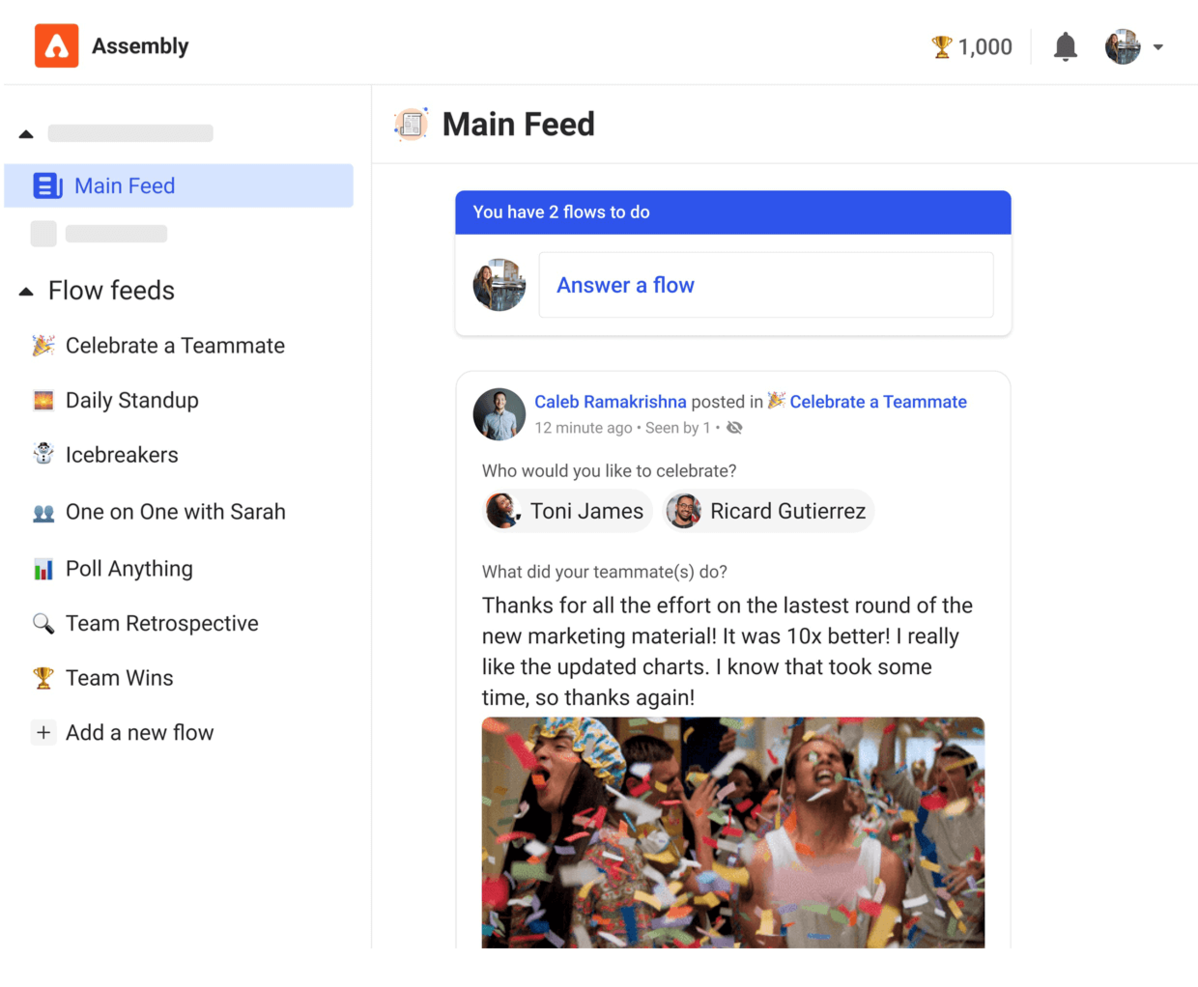
Assembly brings together recognition, rewards, and engagement tools for HR teams and business leaders who want to boost morale, encourage collaboration, and create a culture of appreciation across their organization.
Who Is Assembly Best For?
Assembly is a good fit for mid-sized companies looking to build a more connected workplace through recognition, engagement, and internal communication tools.
Why I Picked Assembly
Assembly earns its spot on my shortlist because it ties recognition directly to company values—every peer shoutout can be tagged to a specific value, so appreciation isn't mere feel-good noise; it's reinforcing the culture you're actually trying to build. I also like the points and boosts system, where recognized employees earn redeemable points they can exchange for gift cards, charity donations, or custom culture rewards. Assembly's Dora AI and real-time recognition dashboards give HR teams visibility into participation rates, top contributors, and recognition trends across the org.
Assembly Key Features
- Automated milestone celebrations: Assembly automatically sends recognition messages for birthdays, work anniversaries, and new hire onboarding without manual input from HR.
- Awards and challenges: Create custom award programs and team challenges that tie directly to company values and drive participation across departments.
- Global reward catalog: Employees can redeem points from a catalog that includes gift cards, charity donations, and custom culture rewards available across regions.
- Manager AI nudges: Dora Hub surfaces AI-generated prompts and insights to help managers recognize team members consistently and intentionally.
Assembly Integrations
Integrations include Slack, Microsoft Teams, BambooHR, Workday, ADP Workforce Now, Gusto, Google Workspace, Okta, Oracle Cloud HCM, and SAP SuccessFactors.
Pros and Cons
Pros:
- Large and varied rewards library appeals to diverse employee preferences
- Analytics surface engagement and recognition trends to measure ROI
- Recognition available directly within tools your team already uses
Cons:
- Custom reward types may require extensive setup and maintenance
- Reporting options may still feel limited for larger, global organisations
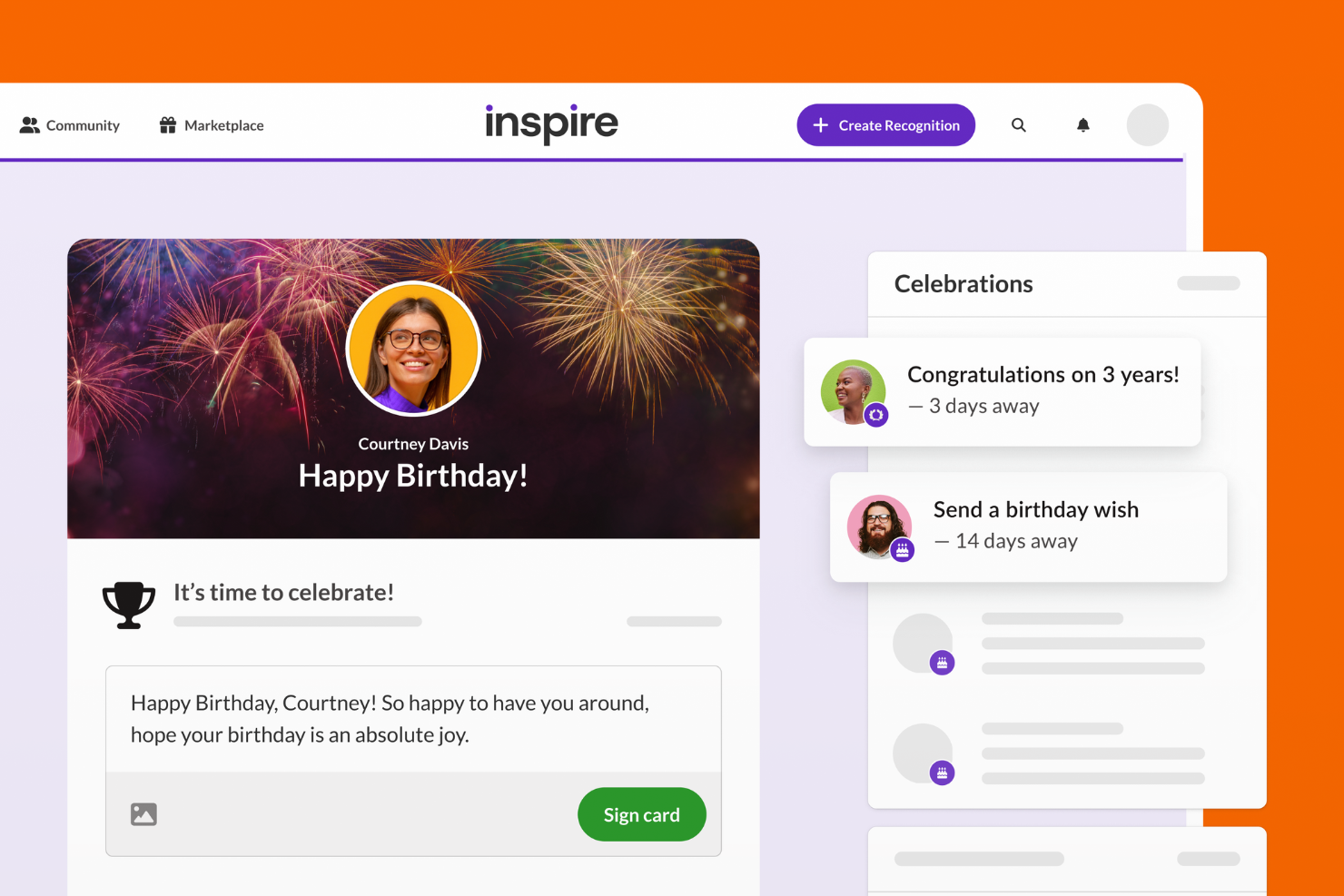
Achievers is an employee recognition platform designed for HR teams and business leaders who want to foster a culture of appreciation, boost engagement, and make recognition a visible part of daily work life.
Who Is Achievers Best For?
Achievers is a strong fit for mid-size to enterprise HR teams looking to build a consistent, company-wide recognition culture across distributed or large workforces.
Why I Picked Achievers
Achievers earns its spot on my shortlist because it's built around the idea that recognition should happen in the moment, not as an afterthought. What I love most is how it plugs directly into tools like Microsoft Teams, Slack, and Zoom, so employees can send recognition without ever leaving the app they're already working in. The social newsfeed also keeps recognition visible across the organization, driving a real ripple effect—one shoutout often sparks several more. The points-based recognition system ties directly to company values, so every acknowledgment reinforces the behaviors your culture is built on.
Achievers Key Features
- Global rewards marketplace: Browse and redeem from 3M+ merchandise items, 345K+ experiences, and 11K+ gift card options across ~190 countries.
- Milestone and service award celebrations: Mark years of service and employee achievements with custom digital cards, swag, keepsakes, and reward tokens.
- Pulse surveys: Run research-backed surveys with HRIS and platform data integration to track employee sentiment over time.
- Self-serve reporting: Create, schedule, and customize reports to monitor recognition program performance with near real-time data access.
Achievers Integrations
Integrations include Microsoft Teams, Slack, Zoom, Outlook, SharePoint, Viva, Google Meet, Gmail, Workday, and SAP SuccessFactors.
Pros and Cons
Pros:
- Offers flexible reporting and AI-powered insights for better management
- Provides real-time recognition to improve employee engagement
- Offers a comprehensive global rewards marketplace with diverse options
Cons:
- Implementation complexity might be challenging for some organizations
- Complexity of reporting features can be cumbersome for users

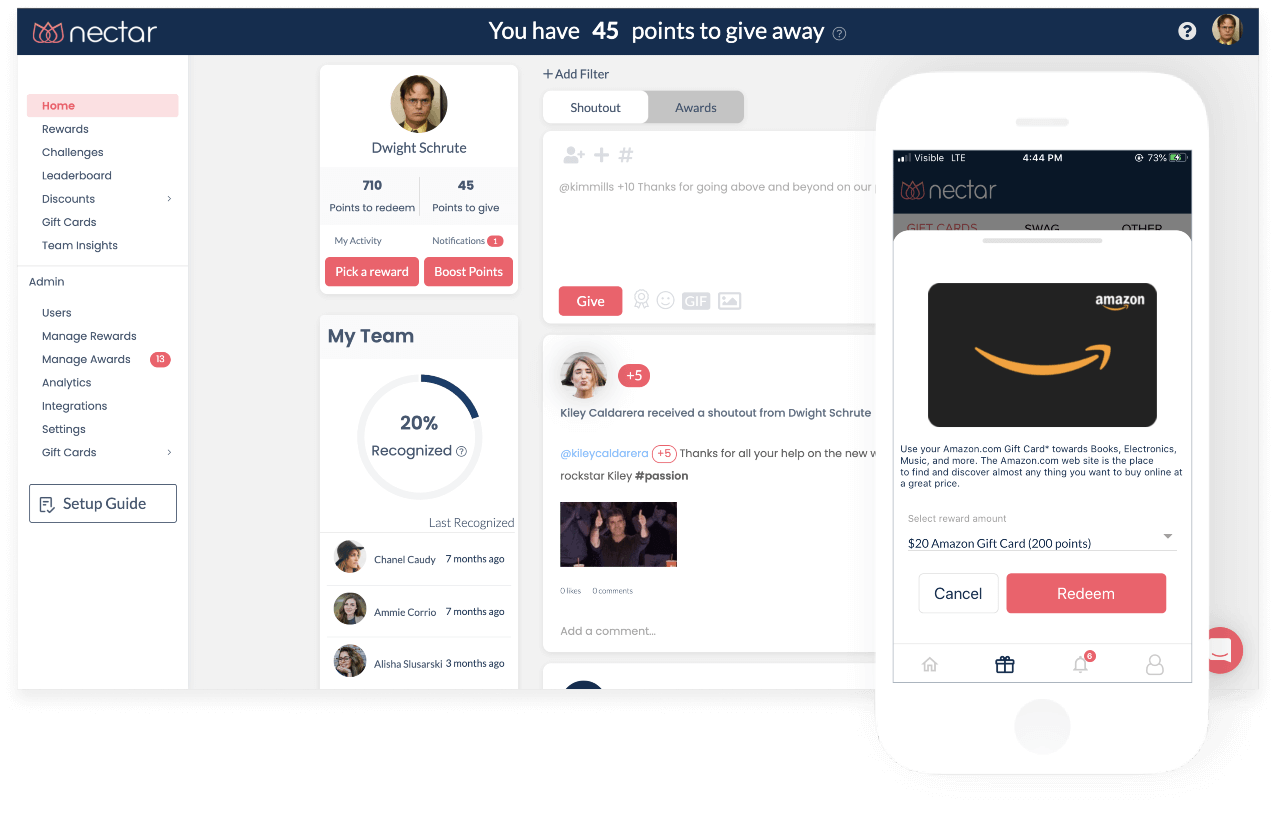
Nectar is an employee recognition platform designed for HR teams and business leaders who want to build a culture of appreciation, boost engagement, and make recognition easy and meaningful across their organization.
Who Is Nectar Best For?
Nectar is a strong fit for mid-sized companies looking to formalize their employee recognition programs without building complex infrastructure from scratch.
Why I Picked Nectar
I picked Nectar as one of the best because of its official partnership with SHRM—the largest HR professional organization in the world. SHRM's CHRO, Jim Link, has noted that SHRM used Nectar internally before formalizing the partnership, which tells me this isn't just a co-marketing arrangement. It's a platform that HR practitioners at the highest level have vetted. I also like that Nectar ties every shoutout directly to a company core value, so recognition isn't just a feel-good moment—it reinforces the behaviors your organization actually wants to see. The nomination program helps employees surface peer contributions that managers otherwise miss.
Nectar Key Features
- Rewards catalog: Access a built-in catalog of gift cards, Amazon products, company swag, charitable donations, and custom rewards that employees can redeem with earned points.
- Custom challenges: Create company-specific challenges around wellness initiatives, learning programs, or other goals to drive participation and team alignment.
- Automated milestone recognition: Sync with your HRIS to automatically trigger birthday and work anniversary celebrations without any manual input.
- Recognition analytics: Track recognition activity and engagement trends across your organization to give HR teams visibility into participation and culture health.
Nectar Integrations
Integrations include Slack, Microsoft Teams, and more.
Pros and Cons
Pros:
- Strong rewards catalogue & customization
- Intuitive, user-friendly interface
- Easy peer-to-peer recognition & engagement
Cons:
- Scaling and advanced integrations for large enterprises might be weaker
- Rewards catalogue may be limited in some region
New Product Updates from Nectar

Nectar Releases Culture Suite And Engage
Nectar launched two major updates this week to help you build a stronger culture and capture employee insights more effectively. The Culture Suite brings recognition, feedback, and communications together, while Nectar Engage adds AI-powered listening, surveys, and dashboards. For more information, visit Nectar's official site.

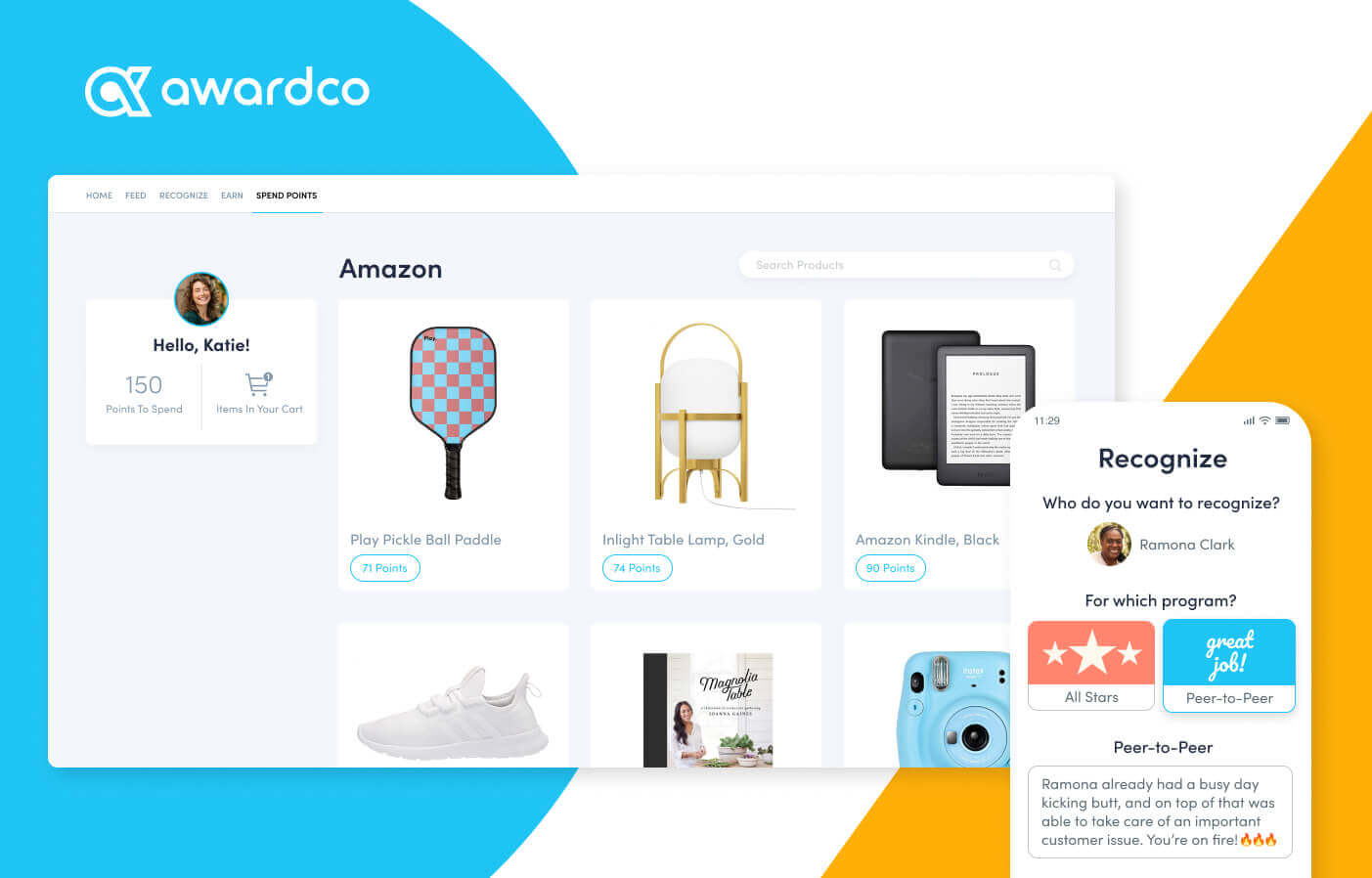
Awardco helps HR teams and business leaders recognize employees with customizable rewards, peer-to-peer recognition, and automated milestone programs, making it easier to foster engagement and reinforce positive behaviors across organizations of any size.
Who Is Awardco Best For?
Awardco is a strong fit for mid-size to enterprise companies that want a structured, scalable approach to employee recognition across distributed or large teams.
Why I Picked Awardco
Awardco earns its spot on my shortlist because I love how deliberately it connects recognition to specific behaviors and company values. You can build incentive programs that reward safety compliance, wellness habits, learning milestones, or sales performance—not just general "good work" moments. I also like the social feed, where peers can comment and react to recognition posts, which turns individual shoutouts into shared cultural moments across the whole organization. The AwardCodes feature is another one I find useful—it lets you hand out physical recognition cards that employees can redeem without needing to log in, which means even frontline and deskless workers stay connected to the culture you're building.
Awardco Key Features
- Automated milestone awards: Set up automatic recognition for work anniversaries, birthdays, and onboarding milestones without manual admin work.
- Amazon Business rewards catalog: Give employees access to millions of real products as rewards, with no markup on redemptions.
- Manager budgeting tools: Allocate recognition budgets to individual managers so they can reward their teams directly within set spending limits.
- Recognition reporting and analytics: Track recognition frequency, budget usage, and participation rates across teams and departments.
Awardco Integrations
Integrations include Slack, Teams, ADP, Salesforce, Outlook, and more.
Pros and Cons
Pros:
- Transparent, dollar-for-dollar reward spending
- Official Amazon Business partnership
- Provides global reward options in 163+ countries
Cons:
- Analytics dashboard lacks deep sentiment tracking
- Initial setup and customization may require IT involvement

Bucketlist Rewards helps HR teams and business leaders create a culture of appreciation with automated recognition and customizable rewards that drive engagement and retention across organizations of all sizes.
Who Is Bucketlist Rewards Best For?
Bucketlist Rewards is a strong fit for mid-sized to enterprise companies that want to reduce turnover by embedding recognition into everyday workflows.
Why I Picked Bucketlist Rewards
Bucketlist Rewards earns its spot on my shortlist because of how well it handles automated recognition at scale. I like that milestone celebrations—work anniversaries, birthdays, and goal completions—are auto-triggered, so nothing slips through the cracks even when HR teams are stretched thin. The goal-based incentive builder is a feature I find particularly useful: you can tie recognition directly to specific business outcomes, not just general good behavior. That link between recognition and measurable KPIs distinguishes Bucketlist from platforms that treat rewards as a standalone perk.
Bucketlist Rewards Key Features
- Points-based recognition: Employees earn points for recognized contributions and redeem them for gift cards, experiences, or other rewards from a catalog of 4,000+ options.
- Peer nominations: Team members can nominate colleagues for awards directly within the platform, supporting recognition across all levels of the organization.
- Mobile recognition app: A dedicated mobile app lets deskless and frontline workers send and receive recognition from anywhere, without needing desktop access.
- Real-time analytics dashboard: Track recognition program usage, engagement rates, and reward redemption to measure impact on business outcomes like turnover and participation.
Bucketlist Rewards Integrations
Integrations include Slack, Microsoft Teams, Amazon Business, and HRIS systems.
Pros and Cons
Pros:
- Good integration options and support
- Strong peer-to-peer and manager recognition features
- Custom automation rules for events and behaviors
Cons:
- Reward options can feel limited or region-dependent
- Mobile app / user experience gaps in some regions

Lattice gives HR teams and people leaders a platform to recognize employees, align feedback with performance, and connect recognition to company goals in one place.
Who Is Lattice Best For?
Lattice is a strong fit for mid-sized to enterprise HR teams that want to tie employee recognition directly into performance reviews and goal-setting.
Why I Picked Lattice
I picked Lattice as one of the best because of how tightly it connects employee praise to the rest of the performance cycle. When a manager gives a shout-out in Lattice, that recognition doesn't disappear into a feed—it can be referenced directly in performance reviews and 1:1s. I like that praise becomes part of the documented record, so it informs talent decisions rather than just boosting morale in the moment. The Goals and OKRs feature takes this further by letting teams see how individual contributions ladder up to company-wide objectives, which gives recognition real context.
Lattice Key Features
- Engagement surveys: Run pulse and full engagement surveys to collect employee feedback regularly.
- Compensation management: Review and manage employee compensation data alongside performance ratings in one workflow.
- Career growth tracking: Set and track employee development goals and growth areas directly within employee profiles.
- Analytics dashboard: View recognition trends, engagement scores, and performance data in a centralized report.
Lattice Integrations
Integrations include ADP, BambooHR, Greenhouse, Gusto, HiBob, Jira, Lever, Microsoft Teams, Slack, and Workday.
Pros and Cons
Pros:
- Easy Slack and Teams integration for in-context praise
- Useful analytics on engagement and recognition trends
- Easily tie recognition to goals and performance metrics
Cons:
- No rewards or points-based recognition built in
- Reporting customization can feel rigid
New Product Updates from Lattice

Lattice Enables Custom Naming Across the Platform
Lattice enables custom naming flexibility, allowing admins to rename key platform terms to match internal language and workflows. This update helps organizations improve adoption and align the platform with company terminology. For more information, visit Lattice’s official site.
 .
.
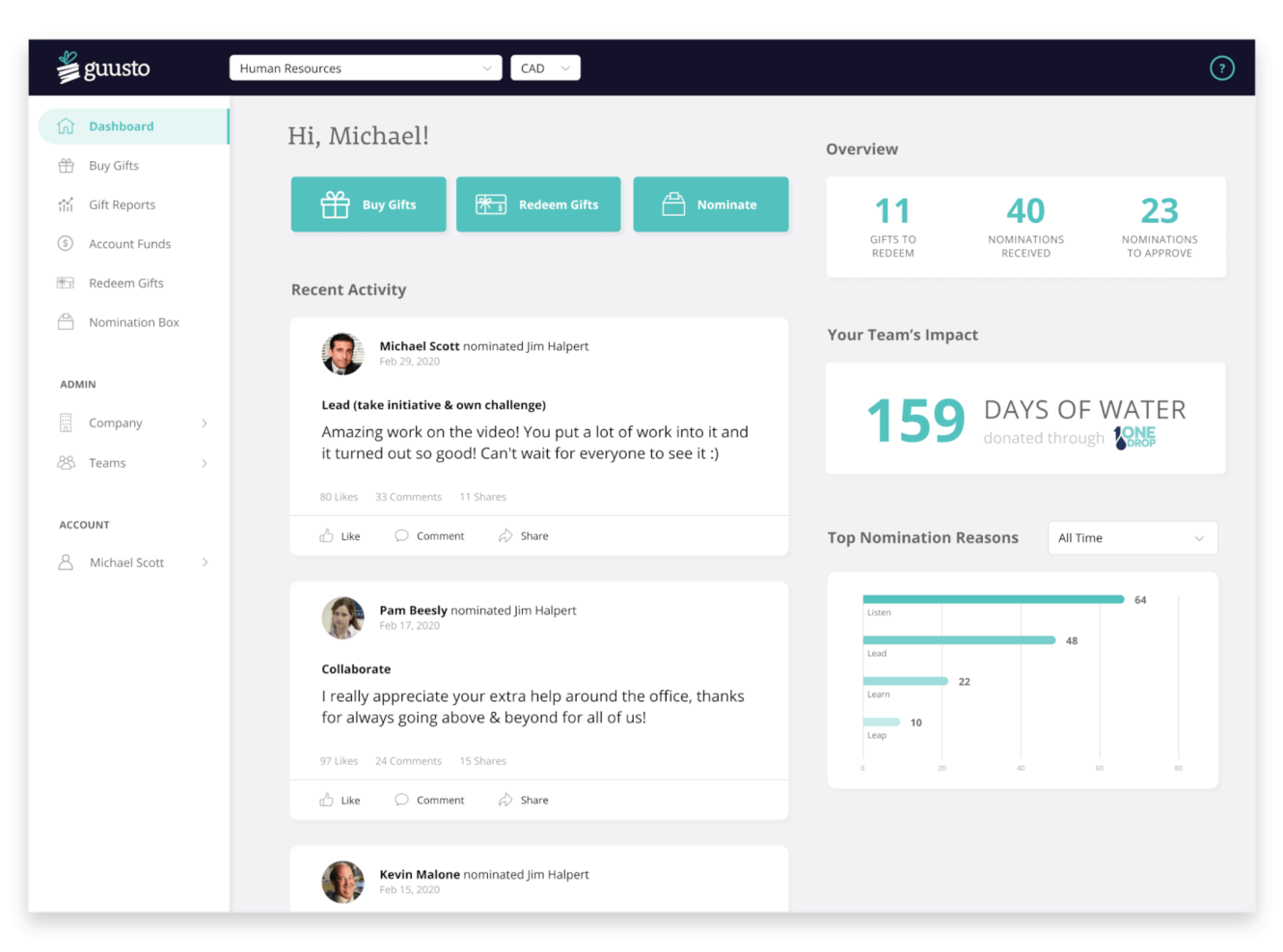
Guusto is a digital employee recognition platform designed for organizations that want to make it easy for managers and peers to send meaningful, flexible rewards to team members, helping HR teams boost engagement and foster a culture of appreciation across all levels.
Who Is Guusto Best For?
Guusto is a strong fit for mid-sized to large organizations in retail, healthcare, hospitality, and other industries with large frontline or deskless workforces.
Why I Picked Guusto
Guusto earns its spot on my shortlist because it's one of the few recognition platforms built with frontline workers genuinely in mind. I like that employees don't need a corporate email address or a smartphone app to receive a reward—Guusto can deliver recognition via SMS or a printed code, which matters when your workforce is on a shop floor or hospital ward. I also use the one-to-many sending feature to recognize entire shifts or teams at once, which saves real time when managing large hourly workforces.
Guusto Key Features
- Peer-to-peer recognition: Employees can send recognition moments to colleagues directly within the platform, not just top-down from managers.
- Milestone and birthday automation: Set up automated reward sends for work anniversaries, birthdays, and other recurring employee milestones.
- Reporting and analytics dashboard: Track recognition activity, budget spend, and participation rates across teams and departments.
- Gift card catalog: Employees redeem rewards from a curated selection of major retail, dining, and lifestyle brands with no markups on gift card values.
Guusto Integrations
Integrations include Workday, BambooHR, ADP, Okta, Microsoft Azure Active Directory, Slack, Microsoft Teams, Google Workspace, OneLogin, and an API for custom integrations.
Pros and Cons
Pros:
- Works for frontline teams
- Rewards redeemable at 60,000+ merchants
- Pay only for senders reduces cost burden
Cons:
- Reporting/analytics are basic compared to some competitors
- Custom branding options are limited on lower tiers
Other Employee Recognition Platforms
Here are a few more worthwhile options that didn’t make the best employee recognition platforms list but are still worth taking a look at:
- Juno
For integrating with Slack
- Cooleaf (ITA Group)
For developing a recognition strategy
- ThriveSparrow
For high-performing teams
- Kudoboard
For remote employee appreciation boards
- Workleap
For linking to company OKRs
- Confetti
For tailored team celebrations
- Workvivo
For nurturing global connections
- Kudos
For meaningful recognition with automation
- Profit.co
For personalized appreciation messages
- Vantage Circle
For automated corporate gifting
- Xoxoday Compass
For sales incentives and rewards programs
- Empuls
For a centralized social intranet with recognition
- Terryberry
For included surveys and insights
- Recognize
For employee challenges
- Mo
For promoting engagement
- Workmates
For gathering engagement feedback
- SnackNation
For personalized prize boxes
- Fond
For offering corporate discounts
- Know Your Team
For encouraging employee feedback
- Espresa
For gamified public recognition


Related HR Software Reviews
If you still haven't found what you're looking for here, check out these other related tools that we've tested and evaluated:
- HR Software
- Payroll Software
- Recruiting Software
- Employer of Record Services
- Applicant Tracking Systems
- Workforce Management Software
Selection Criteria for Employee Recognition Platforms
Choosing the right employee recognition software starts with understanding what truly drives engagement and culture. I focused on platforms that help employees feel seen, strengthen team connection, and take the burden off HR with smart, scalable tools.
Here's a summary of the selection criteria I used to curate this top 10 list:
Core Employee Recognition Platform Functionalities (25% of total score): To be considered for inclusion in this list, each solution had to offer the following basic functionalities first:
- Employee profiles that cover the basics (e.g., role, department, location, and contact info) with the ability to add custom details according to user preferences
- Peer recognition tools that allow your staff to praise their peers frequently and openly, for all other employees to see (a great way to boost employee morale)
- Notification features that ensure key stakeholders will see a recognized milestone as soon as it pops up in an activity feed (including @mentions)
- Analytics that track the impact of recognition programs on employee engagement and satisfaction
- Integrations with existing HR and communication tools for ease of use and to reduce manual data entry for administrative staff
Additional Standout Features (25% of total score): To help me narrow in on the best employee recognition platforms out of the numerous options available, I also took note of any unique features, including:
- Advanced customization options that allow businesses to align the platform with their unique company values and culture
- Innovative reward systems that offer a variety of redemption options, catering to diverse employee preferences
- Automatic prompts that remind managers to recognize their employees regularly or for special achievements and occasions
- Comprehensive analytics and reporting features that provide deep insights into the effectiveness of recognition programs, including actionable insights
- Exceptional security features that protect sensitive employee data
Usability (10% of total score): To evaluate the usability of each employee recognition tool, I considered the following:
- An intuitive design and user-friendly interface that requires minimal training to master
- A good balance between powerful features and ease of use to accommodate all skill levels and create a positive user experience
- Dedicated mobile apps or a mobile-friendly user interface that supports use on both Android and iOS mobile devices
- Role-based access controls that are straightforward to configure
Onboarding (10% of total score): To get a sense of each software provider's customer onboarding process, I considered the following factors:
- A streamlined setup process and clear configuration guidelines
- The availability of training materials such as videos or interactive tutorials
- Customizable templates to speed up the onboarding process
- Support for migrating employee data into the new platform
Customer Support (10% of total score): To evaluate the level of customer support each vendor offered, I considered the following:
- The availability of multiple support channels, including email, phone, and chat
- The existence of a self-service knowledge base or other self-help resources to speed up troubleshooting
- The overall quality, responsiveness, and helpfulness of the support team during customer onboarding and post-purchase, as inferred from customer reviews
Value for Price (10% of total score): To gauge the value of each software, I considered the following factors:
- The availability of free trials or demos to test the software before purchasing
- Competitive and transparent pricing models that reflect the software's feature depth and explain which features are included at each level
- Tiered pricing plans that cater to different business sizes, from small to medium-sized businesses (SMBs) up to enterprise-level organizations
Customer Reviews (10% of total score): Evaluating customer reviews is the final element of my selection process, which helps me understand how well a product performs in the hands of real users. Here are the factors I considered:
- Whether a product has consistently high ratings across multiple review platforms, indicating a broad level of user satisfaction
- Specific praises, criticisms, or trends in customer feedback that indicate the software's strengths or areas for improvement
- Whether customer feedback specifically mentions issues with ease of use, customer support responsiveness, or lacking features
Using this assessment framework helped me identify the employee recognition platforms that go beyond basic requirements to offer additional value through unique features, intuitive usability, smooth onboarding, effective support, and overall value for price.
How to Choose an Employee Recognition Platform
Employee recognition platforms can help you celebrate your internal achievements, boost morale and retention, and strengthen your company culture. To help you figure out which employee recognition platform best fits your needs, keep the following points in mind:
What employee recognition problems are you trying to solve? Identifying your current challenges will help guide your selection process by highlighting the specific features and functionalities you need. These challenges may include:
- Low employee engagement and morale due to inconsistent recognition,
- Difficulty recognizing achievements regularly and visibly across large or remote teams,
- Inconsistent feedback across teams due to a lacking or nonexistent recognition program structure, or
- Insufficient data regarding key engagement metrics like employee retention and the impact of recognition on employee performance.
By identifying these challenges and aligning them with specific platform features, you'll set a strong foundation for defining your engagement KPIs (e.g., eNPS levels, turnover rates, etc.), making it easier to track the long-term success of your recognition program.
What outcomes are important and how will you measure success? Being clear on your desired outcomes upfront is crucial to avoid wasting valuable time. Key outcomes you may want to measure include:
- A reduced turnover rate and other improved retention statistics,
- Indications of an improved employee experience (such as a better quarterly eNPS score (employee net promoter score), or
- Increased productivity and morale following the introduction of physical employee incentives based on performance.
Who are your main users? Consider your different user groups — power users, administrators, managers, employees, etc. — and their unique needs, to ensure they're all met.
- For an employee recognition platform, you'll need access for your entire workforce, with special role-based access for your HR administrators and managers.
What is your budget? Determining a realistic budget for your new employee recognition software up-front is crucial, so you don't waste time considering software that's too expensive.
- To evaluate cost, do a headcount of your existing workforce, plus your projections for the next few years. Since most employee recognition software charges a monthly fee per employee, this will help you proactively estimate your monthly costs.
Do you require specific software integrations? Clarify whether your new recognition software will replace existing tools or need to integrate with them. Can you reduce your monthly SaaS costs by replacing multiple tools with an all-in-one employee experience platform?
- Key systems to integrate with include HR management systems, performance management systems, and communication tools like Slack and Microsoft Teams.
- Are all the integrations you need available, or can they be custom-configured using an API?
Does the recognition platform satisfy your technical requirements? Consider the software selection alongside your existing workflows and systems.
- Does the software allow users to connect with other employees via mobile devices or through a dedicated mobile app?
- Does the new system offer security features that meet your needs (e.g., two-factor authentication (2FA), etc.)?
- Does the new system integrate with your corporate workspace (Microsoft SharePoint, Google Workspace, etc.)?
Remember, every business is different — don’t assume that an employee recognition platform will work for your organization just because it's popular.
In addition, our podcast with Tom Short, Chief Customer Officer at Kudos, is also full of advice on how to pull off employee recognition, including advice like this:
A lot of folks concentrate too much on why people leave, what they should be concentrating on is why would someone stay.
How to Implement an Employee Recognition Platform
Once you've chosen the winning employee recognition system for your needs, you'll need to develop an implementation plan to integrate the software into your employee recognition program.
To do this right, I recommend using the following approach:
- Develop an implementation strategy and timeline that defines the who, what, when, where, and why related to the new software implementation.
- Gather feedback from managers on their current challenges with employee recognition and how it could be improved.
- Gather feedback from employees regarding their experience of employee morale and motivation and how these could be improved.
- Form an internal implementation team that includes key stakeholders from all your user groups (i.e., your HR team, managers, employees, IT dept., etc.).
- Review your existing employee recognition and engagement data and decide whether you need to migrate this information into the new system or not.
- If you do decide to migrate a lot of data, reach out to your software provider for assistance with this portion. They can often upload historical data in bulk as part of the customer onboarding process.
- Note: You will need to import employee start dates and birthdates at a bare minimum (or integrate with your HR management software to access these details).
- Run some tests to help you understand how all the features work. This includes building workflow automations and setting up software integrations to pull data from other sources.
- This step is very important, and shouldn't be rushed. Run as many test scenarios as you can think of using different feedback structures, milestones, and rewards. This will help you ensure the software covers all your needs once it's fully launched.
- Train your users on how to use the software. This should include role-specific training for managers and team leads who will start posting shout-outs for their staff and separate training for employees who will give and receive feedback.
- I recommend creating an internal wiki or repository for frequently asked questions. Doing so will proactively reduce the volume of administrative requests your HR staff will receive going forward as everyone adjusts to using the new system.
- Launch the software and celebrate! This may sound a little cheesy, but it's actually really important. Celebrating the benefits of the new software can positively impact user adoption rates. If people are excited about the new software, they will be more likely to use it and have a positive association with it.
By following this plan, you'll overcome the most common challenges faced when implementing new software internally.
Trends in Employee Recognition Platforms
As businesses seek innovative ways to honor employee achievements and foster a culture of staff appreciation, employee recognition platforms are introducing new features and functionalities to match those demands.
Here are some key trends impacting the employee recognition software currently:
- Advanced Automation for Recognition Activities: Platforms are increasingly automating the recognition process, from awarding badges for specific achievements to scheduling regular recognition events. This automation ensures consistent recognition and saves time for managers and HR professionals.
- Customizable Recognition Programs: There's a growing trend toward allowing companies to fully customize their recognition programs, including personalized messages, employee awards, and recognition criteria that reflect the company's values and the individual's contributions.
- Enhanced Employee Engagement through Gamification: Gamification features, such as points, leaderboards, and challenges, are also rapidly evolving. These elements make recognition fun and engaging, increasing participation across the organization.
- Predictive Analytics for Employee Recognition: The use of advanced analytics to predict when employees might need a boost in recognition is a new and novel approach, helping to proactively prevent disengagement and burnout.
By leveraging automation, analytics, and enhanced gamification features, these platforms are making recognition more efficient and impactful.
The most successful platforms are those that can adapt to the evolving needs of both businesses and their employees, creating a culture of recognition that resonates across the modern workplace.
What is an Employee Recognition Platform?
An employee recognition platform is a digital tool that helps organizations celebrate employee achievements through automated shoutouts, rewards, and milestone tracking.
HR teams and managers use this software to boost morale, reduce turnover, and streamline recognition workflows. It replaces manual processes with scalable systems that make employees feel seen, valued, and connected—especially in remote or hybrid environments.
Features of Employee Recognition Software
When selecting employee recognition software, keep an eye out for the following key features:
- Customizable recognition programs: Set up recognition initiatives that reflect your company’s values, from peer-to-peer shoutouts to manager-driven awards. You get the flexibility to tailor programs for different teams or departments, making the recognition more meaningful.
- Real-time feedback tools: Let employees give and receive recognition instantly. This helps keep morale high because everyone gets acknowledged when their actions matter most—not weeks later in a meeting.
- Integration with existing systems: Easily connect with your HR platforms, communication tools, or workflows. You save time and avoid double data entry by keeping everything in sync.
- Reward options: Offer a variety of rewards, like gift cards, custom merchandise, or experiences. Employees are more likely to feel valued when they can choose something that truly resonates with them.
- Analytics and reporting: Track participation, measure engagement, and see which recognition programs deliver the best results. You can spot trends, improve programs, and even make a stronger case for investment to leadership.
- Mobile accessibility: Let employees give and receive recognition on the go, whether they're in the office or working remotely. This helps everyone stay engaged, regardless of location.
- Budget management: Set parameters for recognition spending and automate approvals so you always stay within your budget and avoid last-minute surprises.
- Automated reminders and notifications: Keep recognition top-of-mind with nudges and alerts, ensuring that busy schedules don’t let a deserving moment go unnoticed.
- User-friendly interface: Make it easy for the entire team to participate without extra training or tech headaches. If people enjoy using the software, you’ll see higher adoption rates and better results.
Common Employee Recognition Software AI Features
Beyond the standard employee recognition software features listed above, many of these solutions are incorporating AI with features like:
- Automated nomination assistance: Offer managers suggestions for recognition candidates or award categories based on employee project contributions and feedback, reducing admin workload and bias.
- Smart recognition suggestions: Automatically highlight employees or teams performing above average by analyzing activity data, so no achievement slips through the cracks.
- Sentiment analysis: Use AI to read the tone and positivity of recognition messages, helping you understand workplace culture and employee morale in real time.
- Personalized reward recommendations: Suggest rewards each employee would appreciate based on their preferences and past selections, making every reward feel personal.
- Predictive engagement insights: Anticipate potential dips in motivation or team morale by spotting patterns and alerting managers before issues escalate.

Benefits of Employee Recognition Platforms
Employee recognition platforms can play a critical role in creating a positive workplace culture, giving teams the tools they need to recognize achievements and improve job satisfaction and morale.
Here are several benefits of investing in an employee recognition platform:
- Streamlined Recognition Processes: Automating the recognition process eliminates manual tracking and administration, making it easier and more efficient to reward and acknowledge employees. This saves time and resources, allowing HR teams to focus on more strategic initiatives, and also ensures that no key milestones or anniversaries are accidentally skipped.
- Increased Employee Engagement: These platforms make recognizing effort and achievements an easy, regular part of the workday, directly boosting morale and engagement. Also, it's well-known that when employees feel valued, organizations see a significant uptick in overall job satisfaction and retention.
- Improved Company Culture: Recognition software fosters a culture of appreciation and respect, strengthens team bonds, and reinforces positive behaviors and values. This creates a more cohesive and positive work environment, attracting and retaining top talent.
- Enhanced Feedback and Communication: These platforms facilitate instant feedback and acknowledgment, bridging communication gaps between teams and management. This real-time interaction helps to quickly address concerns and celebrate successes, promoting a more agile and responsive company culture.
- Better Data-Driven Insights: Recognition platforms offer valuable analytics and insights into employee performance and engagement. This data aids leaders in making informed decisions, recognizing trends, and identifying areas for future improvement or additional support.
Integrating an employee recognition platform into your company can transform your work environment, driving engagement, productivity, and satisfaction.
By acknowledging and appreciating each team member's contributions, these platforms can help you boost morale and reinforce your corporate values and behaviors that lead to success.
Costs & Pricing for Employee Recognition Platforms
Often, it all comes down to cost. That's why it's important to get a realistic understanding of your budget before you spend too much time researching employee recognition platforms.
Also, many platforms in this list offer a free trial period so you can test it out before committing. This will give you a first-hand experience of how well the platform will satisfy your needs before you introduce it to the rest of your staff.
To give you basic understanding of the pricing landscape for employee recognition platforms, I've compiled the average price ranges for each plan into the comparison table below.
Plan Comparison Table for Employee Recognition Platforms
| Plan Type | Average Price | Common Features |
|---|---|---|
| Free | $0 | Basic recognition features, peer-to-peer kudos, limited reporting and analytics, and access to a community forum |
| Basic | $2 - $5 per user/month | Customizable recognition badges, enhanced reporting, mobile app access, and email support |
| Professional | $5 - $10 per user/month | Integration with other HR systems, advanced analytics and reporting, employee award nomination capabilities, and priority support |
| Enterprise | $10 - $20+ per user/month | Full customization of your engagement strategy to maximize your ROI, a dedicated account manager, advanced security features, and tailored implementation support |
As you evaluate the best plan for your organization, consider both your immediate and long-term needs. It's important to balance the total cost against the benefits the software offers to ensure it will satisfy your business objectives.
If you're running a small business with only a handful of employees, a freemium plan might work for your needs. However, paid plans will always give you a better return on your investment, if you can afford one.
While it's understandable that you may want to start with a free or basic plan initially, there are several reasons why you may want to opt for a more advanced plan, including:
- Integration with Other Systems: The most common reason to upgrade your existing plan is to access integrations with other tools in your HR tech stack, such as your HR management system. By pulling your employee data directly from your HR software, you can easily automate milestone announcements like staff birthdays and work anniversary dates, letting the system do the work for you.
- Customizable Engagement Strategies: Free and Basic plans often limit customization options whereas advanced plans allow you to tailor engagement initiatives to fit your unique company culture, making your recognition program more meaningful to staff.
- Advanced Communication Tools: If your company requires more sophisticated communication channels, such as custom newsletters or targeted messaging, an upgrade may be necessary to unlock these advanced features.
- Employee Feedback and Surveys: To access more detailed and frequent employee feedback, many advanced plans offer integrated employee survey tools to conduct surveys or eNPS check-ins, including sentiment analysis. These features, though a little more costly, will help you gather comprehensive insights and respond more effectively to employee concerns.
- Enhanced Analytics and Reporting: If you want more in-depth insights into your employee engagement trends, upgrading your plan may be necessary. Advanced plans typically offer more robust analytics to help you make data-driven decisions to improve workplace satisfaction.
Ultimately, it's important to secure a plan that offers the features you require to satisfy your current needs and solve your challenges without exceeding your budget.
Employee Recognition Platforms: Frequently Asked Questions
Here are some answers to frequently asked questions you may have about employee recognition programs and platforms and how they work:
Can employee recognition platforms integrate with HR or communication tools?
Yes, most employee recognition platforms integrate with popular HR systems and communication tools like Slack, Microsoft Teams, or Workday. Integration makes it easy for your team to give and receive recognition within daily workflows. It also helps you track data, automate reporting, and ensure recognition programs complement your existing HR processes.
How do recognition platforms support remote or hybrid teams?
Recognition platforms help remote and hybrid teams by making appreciation visible, timely, and accessible from anywhere. You can set up automated celebrations for milestones, encourage peer-to-peer recognition, and use social feeds or leaderboards to keep distributed employees engaged. Look for platforms offering mobile apps or integrations with the collaboration tools your team already uses.
Can employee recognition platforms help with employee retention?
Yes, employee recognition platforms can improve retention by making employees feel valued and seen for their contributions. Recognition fosters a positive culture, increasing engagement and loyalty. Many companies report higher retention and reduced turnover after launching recognition programs, especially when these are tied to company values and goals.
Are there different types of employee recognition platforms?
Yes, there are several types. Some focus on monetary rewards, while others prioritize social acknowledgment. Consider your team’s size, structure, and culture needs when evaluating platform options. The right platform for your organization depends on what you want to prioritize. Here’s a breakdown of the main types:
-
Social Recognition Platforms
These tools focus on peer-to-peer praise through public shoutouts, comment threads, and emoji reactions.
Examples: Nectar, Awardco, Motivosity -
Performance-Based Platforms
These tools link recognition to goals, OKRs, and performance reviews—often with private 360-degree feedback tied to formal evaluations.
Examples: Lattice, Bonusly, Cooleaf -
Blended Platforms with Rewards Systems
These offer the best of both worlds: social recognition plus point-based incentives. Employees can earn rewards for giving or receiving recognition, which they can redeem for perks or gifts.
Also known as: employee incentive software or reward gateways
Ultimately, the best platform is the one that aligns with your goals—whether that’s strengthening team camaraderie, rewarding performance, or combining both into one unified experience.
Do employee recognition programs work?
Yes, recognition programs are proven to boost motivation, morale, and overall engagement. When programs are authentic and consistent, they lead to measurably better performance and lower attrition rates. Using data from the platform can help you refine your approach for even better results.
Here’s what the research shows:
-
Recognized employees are 63% more likely to stay in their jobs for the next 3–6 months.
-
44% of employees have cited lack of recognition as the reason they quit or disengaged (quiet quitting).
-
80% of employees say they’d work harder if they felt more appreciated.
-
92% would repeat a positive action if it was properly recognized.
Whether it’s a bonus, a thank-you card, or public praise, recognition reinforces good behavior, boosts job satisfaction, and helps keep top performers engaged.
Sources: Apollo Technical Engineered Talent Solutions and Zippia
How do employee recognition platforms support team recognition?
Recognition platforms make it easy to acknowledge teams or departments for achieving goals or milestones. Many tools let you send group shout-outs, highlight collaborative projects, or tie rewards to team achievements. This encourages collaboration and builds a stronger team culture. For example:
-
Peer-to-peer shoutouts and team awards let employees publicly praise each other for great work and collaboration.
-
Recognition feeds or digital boards spotlight achievements across the organization, boosting visibility and reinforcing shared values.
-
Integrated rewards systems align team recognition with company goals, turning appreciation into lasting motivation.
By making recognition more consistent and transparent, these platforms help create a culture where everyone feels seen, and teams thrive together.
Are there other ways to reward and recognize employees?
Yes! Beyond traditional points or gift cards, you can use platforms for experiential rewards, charitable giving, extra time off, or custom perks. Modern software often lets you create tailored reward options that align with your company culture and budget.
There are also other ways to recognize employees that won’t cost you anything, such as adding all your staff to your company website’s About Us page, mentioning their achievements in a company newsletter, or giving them a special shout-out in a group staff meeting.
On the other end of the spectrum, you could offer top performers financial incentives, such as profit-sharing incentives, stock options, or an ownership stake in the business.
What are experiential rewards?
Experiential rewards are non-monetary incentives like event tickets, training, travel experiences, or special outings that employees can choose. Many platforms partner with providers to offer a wide range of experiences. These rewards create lasting memories and have a bigger emotional impact than standard gifts.
Here are some examples of experiential rewards you could consider offering your employees:
- Special event tickets
- A weekend trip or hotel voucher
- A spa day or wellness retreat
- A gourmet dining experience (e.g., a cooking class or private chef tasting)
- Outdoor adventure activities
- Exclusive access to a company event
- A chance to meet a celebrity or influencer (if your company has connections to one)
As you can see, any one of these items would create more positive memories than a gift card or some free company swag. Definitely some food for thought!
Other Software Reviews
Looking for other ways to develop a culture of recognition at work? Here are some other types of software that'll point you in the right direction:
- Employee Engagement Software
- Employee Perks Programs
- Employee Evaluation Software
- 360-Degree Feedback Software
- Employee Survey Tools
- Employee Wellness Platforms
Improve Your Company’s Culture With Employee Recognition Platforms
Consistent recognition is key to boosting employee morale and keeping your staff engaged. Employee recognition platforms make the recognition process easy and transparent, ensuring your employees feel appreciated regularly. They bring your employee recognition program to life and motivate your team to provide feedback, praise co-workers, and respect company values.
By implementing an employee recognition platform that automates processes and increases visibility across teams, you'll reduce your turnover and foster a better company culture.
The best employee recognition system for your needs is one that addresses your current pain points, uses automation to simplify the process, makes recognition more visible, and ultimately, works within your budget. By aligning your software selection with your needs and challenges, your new software will help you create a thriving, motivated, and loyal team.
Stay in Touch
I hope this article got you one step closer to finding the best employee recognition platform for you. If you found it helpful, don't forget to subscribe to our weekly People Managing People newsletter. We'll keep you in the loop regarding industry trends in human resources best practices.