

10 Best Payroll Software for 2026

10 Best Payroll Software Shortlist


Few moments in HR match the stress of a failed payroll run—whether it’s a missed direct deposit, an incorrect tax calculation, or a spreadsheet error that throws off your monthly reconciliations. Choosing the right payroll software is the fastest way to protect you from costly compliance fines and give your team hours of admin time back each week.
Drawing on my 9+ years in HR administration, I analyzed this year's top platforms through a strict, process-oriented lens to see which ones actually make payday easier. Whether you're running payroll for a small local team or managing a complex hybrid workforce, here are the best payroll software options for 2026.
Why Trust Our Software Reviews
Our team has been testing and reviewing software since 2012. As HR experts ourselves, we know how difficult—and important—it is to choose the right software.
For this guide, we evaluated tools using hands-on testing and independent research, scoring tools using our selection criteria. We also draw on insights from industry thought leaders and practicing HR experts.
Our reviews reflect our human editorial judgment, not a sales pitch.
Expert reviewers:
Best Payroll Software: Comparison Chart
This comparison chart summarizes pricing, trial, and demo details for my top payroll software selections to help you find the best software for your budget and business needs.
| Tool | Best For | Trial Info | Price | ||
|---|---|---|---|---|---|
| 1 | Best for employee‑driven error prevention | Not available | Pricing upon request | Website | |
| 2 | Best for compliant payroll in 150+ countries | Free demo available | From $29/employee/month | Website | |
| 3 | Best for global payroll with tons of integrations | Free demo available | Pricing upon request | Website | |
| 4 | Best for global teams in 170+ countries | Free plan available | From $199/user/month | Website | |
| 5 | Best for automating payroll tasks | Free demo available | Pricing upon request | Website | |
| 6 | Best for global payroll management | Free demo available | From $199/employee/month | Website | |
| 7 | Best for Canadian SMBs | Free demo available | Pricing upon request | Website | |
| 8 | Best for automated complex pay calculations | Free demo available | From $5/user/month (billed annually) | Website | |
| 9 | Best for HR, payroll, and integrations in one | Free demo available | Pricing upon request | Website | |
| 10 | Best for mixed workforce payroll | Not available | From $79/employee/month | Website |


Best Payroll Software Reviews
Here you’ll find my detailed overviews of the 20 best payroll solutions I’ve featured. Each overview has information about the platform’s best use case, standout features, and integrations. Plus, there are additional options included below if you’d like even more choices to consider.

Paycom
Best for employee‑driven error prevention
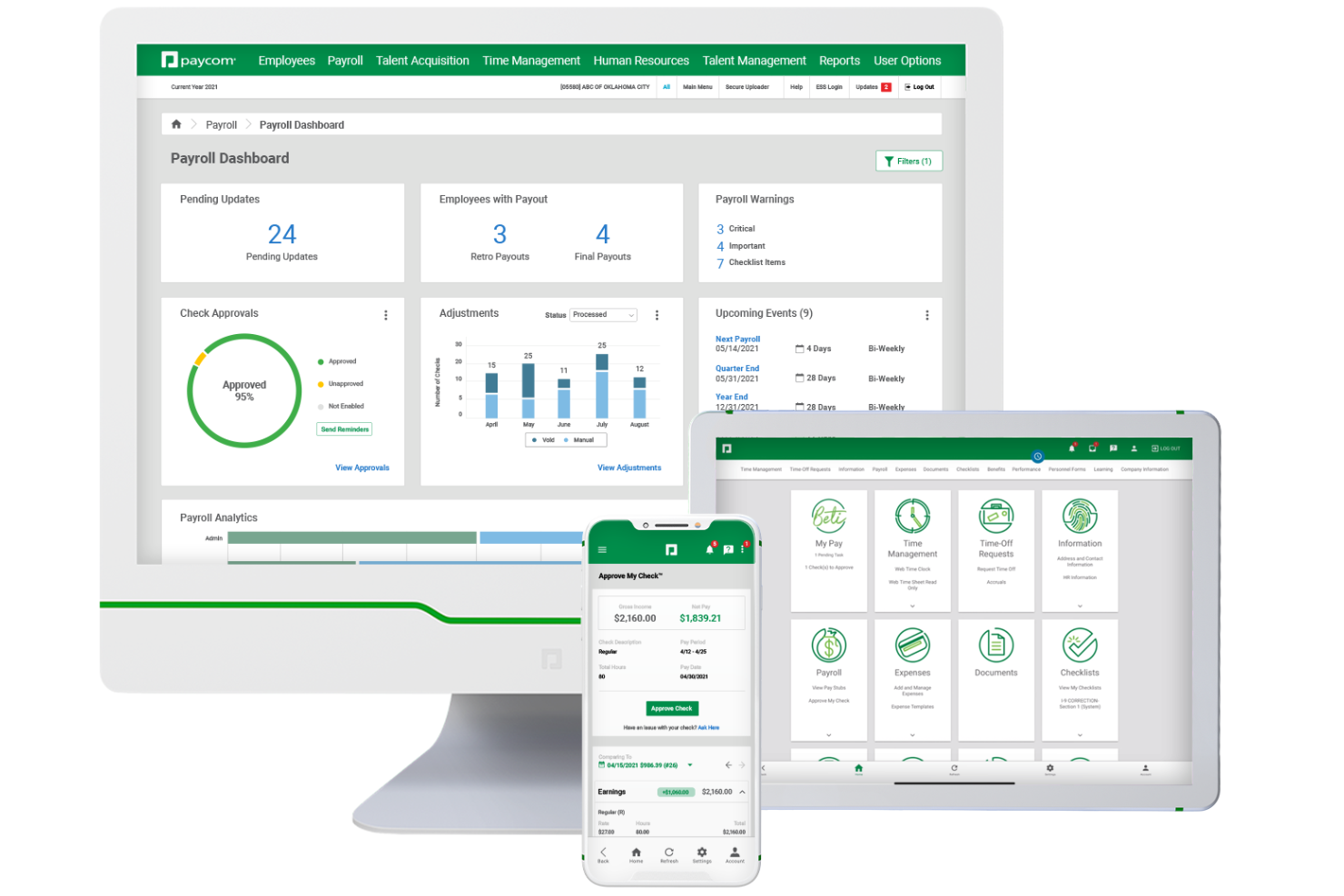
If you’re looking for payroll software that puts employees in control of their own data, Paycom is worth considering. The platform’s employee-driven payroll model helps reduce errors and manual work for HR teams. Paycom is a strong choice for organizations that want to improve payroll accuracy and empower staff to manage their own information.
Who is Paycom Best For?
HR leaders, payroll administrators, and finance teams at mid-sized to enterprise organizations that want employees to participate directly in payroll data accuracy and updates. It suits companies managing complex payroll environments that require centralized oversight while reducing administrative correction workflows.
Why I Picked Paycom
Paycom stands out for its employee-driven payroll, which shifts payroll data entry and verification to the people who know it best—your employees. I picked Paycom because this model helps reduce payroll errors and gives staff more ownership over their pay information. Employees can review and approve their own paychecks before payroll runs, which helps catch mistakes early. This approach is especially useful for organizations that want to improve payroll accuracy and accountability without adding extra steps for HR.
Paycom Key Features
In addition to employee-driven payroll, Paycom offers several other features for payroll management:
- Tax Management: Automates payroll tax calculations, filings, and payments for federal, state, and local jurisdictions.
- Garnishment Administration: Manages wage garnishments and deductions directly within the payroll process.
- Expense Management: Lets employees submit expenses for approval and reimbursement through the same platform.
- Custom Reporting: Provides configurable payroll and HR reports to support audits, compliance, and business analysis.
Paycom Integrations
Integrations are not available.
Pros and Cons
Pros:
- Strong payroll compliance support
- Customizable payroll and HR reporting options
- Single system means time cards, benefits, payroll share same data
Cons:
- Occasional issues in regions outside the U.S.
- Some features are locked behind expensive add‑ons
Best for compliant payroll in 150+ countries

Deel Payroll serves businesses and HR teams managing international workforces, offering a platform that simplifies global payroll, compliance, and payments for employees and contractors across multiple countries.
Who Is Deel Payroll Best For?
Deel Payroll is a strong fit for mid-size to enterprise companies hiring across borders who need localized payroll compliance without building in-house expertise in every country.
Why I Picked Deel Payroll
I picked Deel Payroll as one of the best because it handles something most payroll tools can't: running compliant payroll across 150+ countries without requiring your team to become local tax experts in every market. The built-in compliance engine automatically applies local tax rules, statutory requirements, and filings before each payroll run. AI flags anomalies and missing data before approval, catching issues early. I also like the Payroll Connect feature, which lets you view Deel-managed payroll and third-party payrolls side by side in one dashboard—useful when you're mid-transition and still running payroll through multiple vendors.
Deel Payroll Key Features
- Employer of record (EOR) services: Deel acts as the legal employer in countries where you don't have an entity, so you can hire and pay workers without setting up a local subsidiary.
- Contractor payments: Pay independent contractors in their local currency across 150+ countries, with built-in contract generation and localized payment methods.
- Payroll reporting and analytics: Access detailed payroll reports broken down by country, department, or employee to support audits, budgeting, and workforce planning.
- HRIS integration: Sync employee data between Deel and your existing HR systems to keep headcount, compensation, and role changes consistent across platforms.
Deel Payroll Integrations
Integrations include FaceUp, Snowflake, DefensX, Microsoft Finance, Kintsugi, ReFresh OS, Revo.ai, Keeper, Human Interest, and Everyminute.
Pros and Cons
Pros:
- Allows off-cycle payments and flexibility for global payroll scenarios
- Built-in compliance monitoring
- Supports payroll in 130 + countries
Cons:
- Limited invoice customization
- Contract templates could be simplified

Rippling
Best for global payroll with tons of integrations
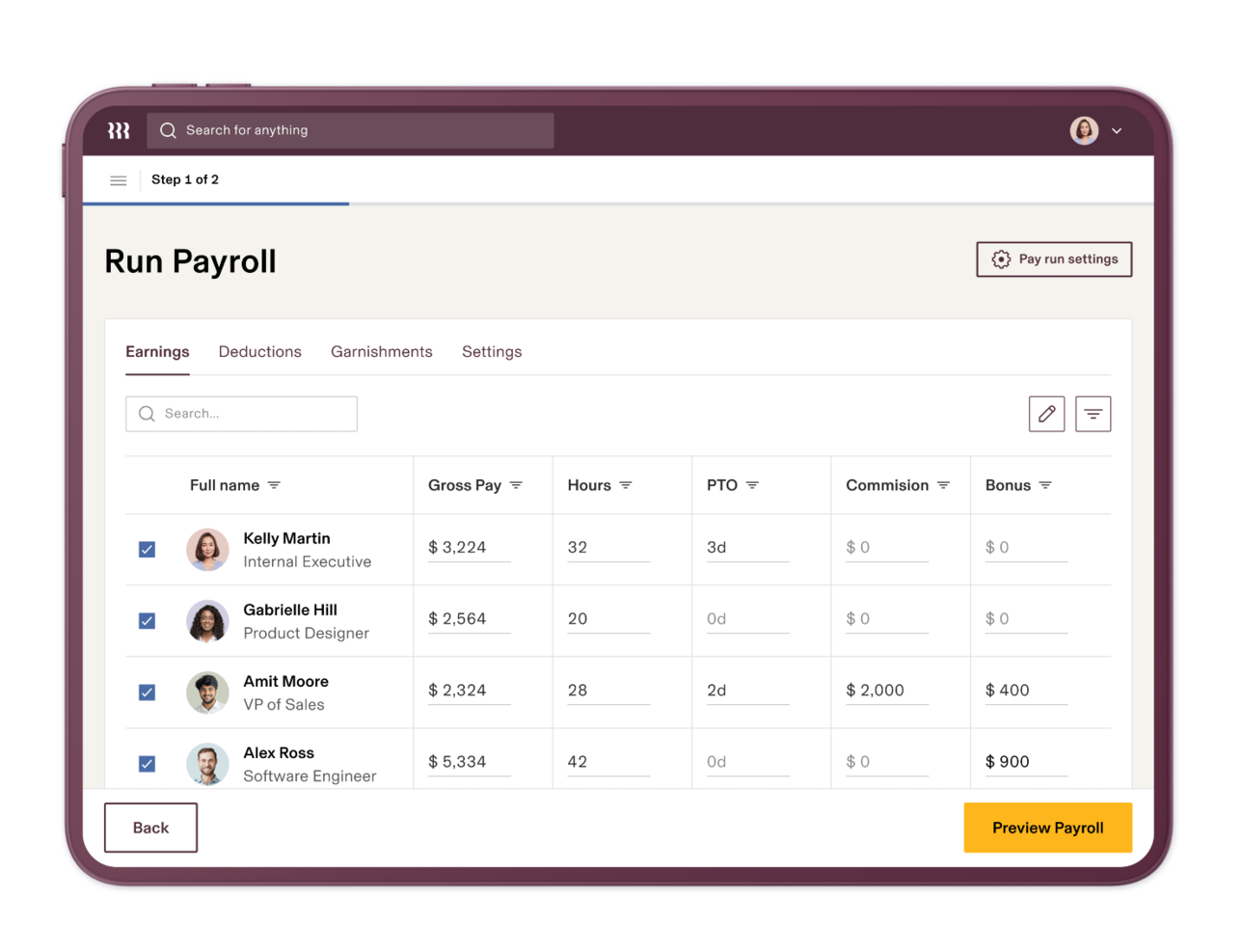
Rippling is a payroll platform designed for businesses that need to manage payroll across multiple countries, automate compliance, and connect payroll with HR, IT, and finance systems in one place.
Who Is Rippling Best For?
Rippling is a strong fit for mid-sized to enterprise businesses managing distributed or international workforces across multiple countries and systems.
Why I Picked Rippling
Rippling stands out for how it handles global payroll in a single, unified system. Many platforms require stitching together separate tools for domestic and international payroll, but Rippling runs payroll across multiple countries, pays workers in their local currency, and automatically calculates and files taxes worldwide—all from one place. Rippling also scales with your entity structure: you can pay global contractors with no entity required, run payroll through Rippling's own entities, or use your own. The country-specific compliance automation is useful, since it flags infractions across every jurisdiction without manual monitoring.
Rippling Key Features
- Benefits administration: Manage health insurance, retirement plans, and other benefits in one integrated system that syncs directly with payroll.
- Time and attendance tracking: Track hours for hourly employees with automatic compliance checks that sync time card data straight into payroll.
- Pay run comparison: Compare your current pay run against previous ones to catch discrepancies in gross pay, taxes, and deductions before final approval.
- Rippling AI for payroll: Use AI prompts to add bonuses, fix discrepancies, and schedule pay runs without manually navigating the platform.
Rippling Integrations
Integrations include Slack, Google Workspace, Microsoft 365, Salesforce, Zoom, Asana, Jira, GitHub, PayPal, and Checkr.
Pros and Cons
Pros:
- Multi-state and international payroll in one workflow
- Workflow automation reduces repeat admin tasks
- Tight integration of payroll with benefits and HR data
Cons:
- Limited customer support options
- Complex initial setup
New Product Updates from Rippling

Rippling AI Adds Plugins, Skills, and Automations
Rippling AI now supports plugins, skills, and automations so employees can connect approved third-party tools, package repeatable work into reusable AI instructions, and run recurring workflows under existing Rippling policies and permissions. For more information, visit Rippling's official site.

Best for global teams in 170+ countries

RemoFirst is a payroll platform built for companies managing employees and contractors across multiple countries, helping HR teams handle global payroll, compliance, and onboarding from a single dashboard.
Who Is RemoFirst Best For?
RemoFirst is a strong fit for HR teams at small to mid-sized companies that are hiring or scaling internationally and need a single platform to manage payroll and compliance across borders.
Why I Picked RemoFirst
RemoFirst earns its spot on my shortlist because it covers global payroll and compliance in 185+ countries at a flat, predictable rate with no hidden fees. It handles multi-country payroll in a single aggregated payment—instead of managing dozens of individual transactions, my team can consolidate the entire global payroll into one. The localized employment contracts feature automatically generates contracts that align with each country's labor laws, removing a significant legal burden when onboarding someone in a new market.
RemoFirst Key Features
- Contractor management: Pay and manage international contractors across 150+ countries, including identity checks, contract generation, and expense reimbursements.
- Compliant offboarding: Manage employee terminations in line with each country's notice periods, severance rules, and legal documentation requirements.
- Visa and immigration support: Handle work permit and visa applications in 85+ countries directly through the platform.
- Background checks: Run global background screening on international hires to verify identity and support compliant hiring decisions.
RemoFirst Integrations
Integrations include BambooHR, GoCardless, and ADP Workforce Now.
Pros and Cons
Pros:
- Dedicated account managers
- Customizable dashboards
- Multi-currency abilities within a single payroll run
Cons:
- Lacks extensive integrations
- No mobile app available
Paycor
Best for automating payroll tasks

Paycor is a payroll software platform built for HR teams and business leaders who want to simplify payroll processing, manage compliance, and give employees easy access to pay and tax information.
Who Is Paycor Best For?
Paycor is a good fit for small to mid-sized businesses that need a unified platform to handle payroll, HR, and compliance without relying on multiple disconnected tools.
Why I Picked Paycor
Paycor earns its spot on my shortlist because of how far it takes payroll automation. The AutoRun feature is what I keep coming back to—it lets you schedule payroll to process on a specific day and time without anyone needing to log in, which is a real difference-maker for teams running lean. I also like the real-time calculations, which means any last-minute changes to hours or deductions update instantly instead of waiting on batch processing. The compliance dashboard also surfaces proactive alerts for things like missing tax IDs and invalid direct deposit info right on the homepage, so issues get caught before they become problems.
Paycor Key Features
- Paystub preview: Employees can view their paystub up to three days before payday to catch errors before they become issues.
- OnDemand Pay (EWA): Gives employees access to wages they've already earned before their scheduled payday.
- Wage garnishment management: Paycor automatically deducts employee garnishments from paychecks on your behalf.
- Payroll reporting: Run reports covering tax liability, cash requirements, labor distribution, deduction registers, and more.
Paycor Integrations
Integrations include QuickBooks, NetSuite, JazzHR, DailyPay, 15Five, Timeero, Spark Hire, Procurify, HR Geckos, and OrgChart.
Pros and Cons
Pros:
- Direct deposit setup for multiple employee accounts
- Payroll analytics with customizable reporting options
- Automated new hire reporting for compliance
Cons:
- Time cards are a bit simplistic
- UX can be a little clunky at times

Best for global payroll management
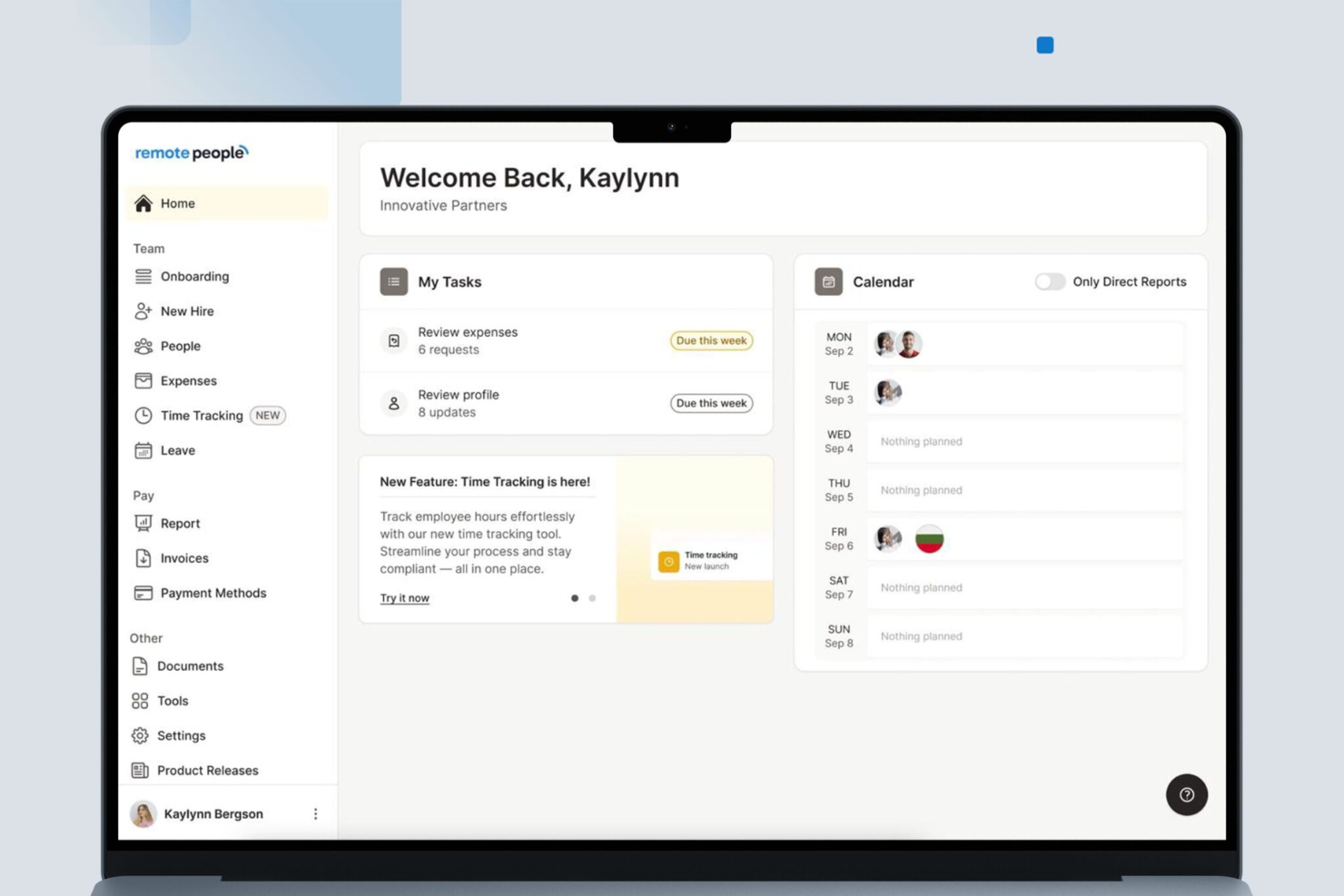
RemotePeople is a payroll platform built for businesses with distributed teams, helping HR professionals and finance leads manage payroll, compliance, and payments across multiple countries and currencies.
Who Is RemotePeople Best For?
RemotePeople is a strong fit for companies hiring internationally who need a single platform to handle payroll across multiple countries without setting up local entities.
Why I Picked RemotePeople
RemotePeople earns its spot on my shortlist because of how well it handles the complexity of paying employees and contractors across different countries. I like that it manages local tax compliance, in-country payroll calculations, and multi-currency payments without requiring your business to set up legal entities abroad. In practice, that means my team can onboard international hires and run payroll in countries like Brazil, India, or Germany without needing a local HR or legal team on the ground. Built-in compliance coverage provides a clear advantage for global payroll management.
RemotePeople Key Features
- Contractor of record: RemotePeople takes on the legal and compliance risk for contractor engagements, covering misclassification liability across 150+ countries.
- Expense approval workflow: Team members submit expenses directly in the platform, you approve them in one click, and RemotePeople processes the payment.
- Leave management tracking: Annual leave, sick days, and local public holidays are tracked and approved in a single dashboard, with rules applied per country.
- Locally drafted employment contracts: Each contract is written by in-country legal experts rather than generated from templates, reflecting local labor law requirements.
RemotePeople Integrations
Integrations include Workday, SAP SuccessFactors, BambooHR, HiBob, NetSuite, QuickBooks, and more.
Pros and Cons
Pros:
- Dedicated client support contact
- Provides global payroll, contractor, and relocation support
- Includes Employer of Record and PEO services
Cons:
- Some services available only in certain regions
- No publicly listed integrations

Best for Canadian SMBs

Employment Hero brings together HR, payroll, and employee benefits in a single platform designed for growing businesses. It’s especially useful for organizations that want to automate payroll while also managing onboarding, contracts, and compliance from one place. If you’re looking to reduce manual admin and keep HR and payroll tightly connected, this tool offers a unified approach.
Who is Employment Hero Best For?
HR leaders, payroll administrators, and business owners at small to mid-sized organizations that want an integrated platform for managing people operations. It suits Canadian SMBs that need localized HR, payroll, and compliance workflows aligned to regional employment requirements.
Why I Picked Employment Hero
What sets Employment Hero apart is its all-in-one approach to HR and payroll, which is especially valuable for growing businesses that want to keep everything connected. The platform lets you automate payroll runs, manage employee records, and handle leave requests without switching between different systems. I appreciate how Employment Hero links payroll directly to onboarding and contract management, so you can keep employee data consistent from day one. This unified setup helps reduce errors and saves time for teams managing both HR and payroll tasks.
Employment Hero Key Features
Some other features that make Employment Hero useful for payroll management include:
- Automated Tax Filing: The platform automatically calculates and files payroll taxes based on current regulations.
- Employee Self-Service App: Employees can view payslips, submit leave requests, and update personal details from their mobile devices.
- Timesheet Management: Track employee hours and approve timesheets directly within the system.
- Customizable Pay Run Schedules: Set up pay runs to match your business’s preferred payroll frequency and timing.
Employment Hero Integrations
Integrations include QuickBooks, Ameego, Go1, Slack, Google Workspace, and Microsoft 365.
Pros and Cons
Pros:
- Supports single touch payroll submissions
- Integrated timesheets sync with payroll runs
- Automated award interpretation for compliance
Cons:
- Some payroll reports lack export options
- Limited global payroll coverage outside Australia

Best for automated complex pay calculations
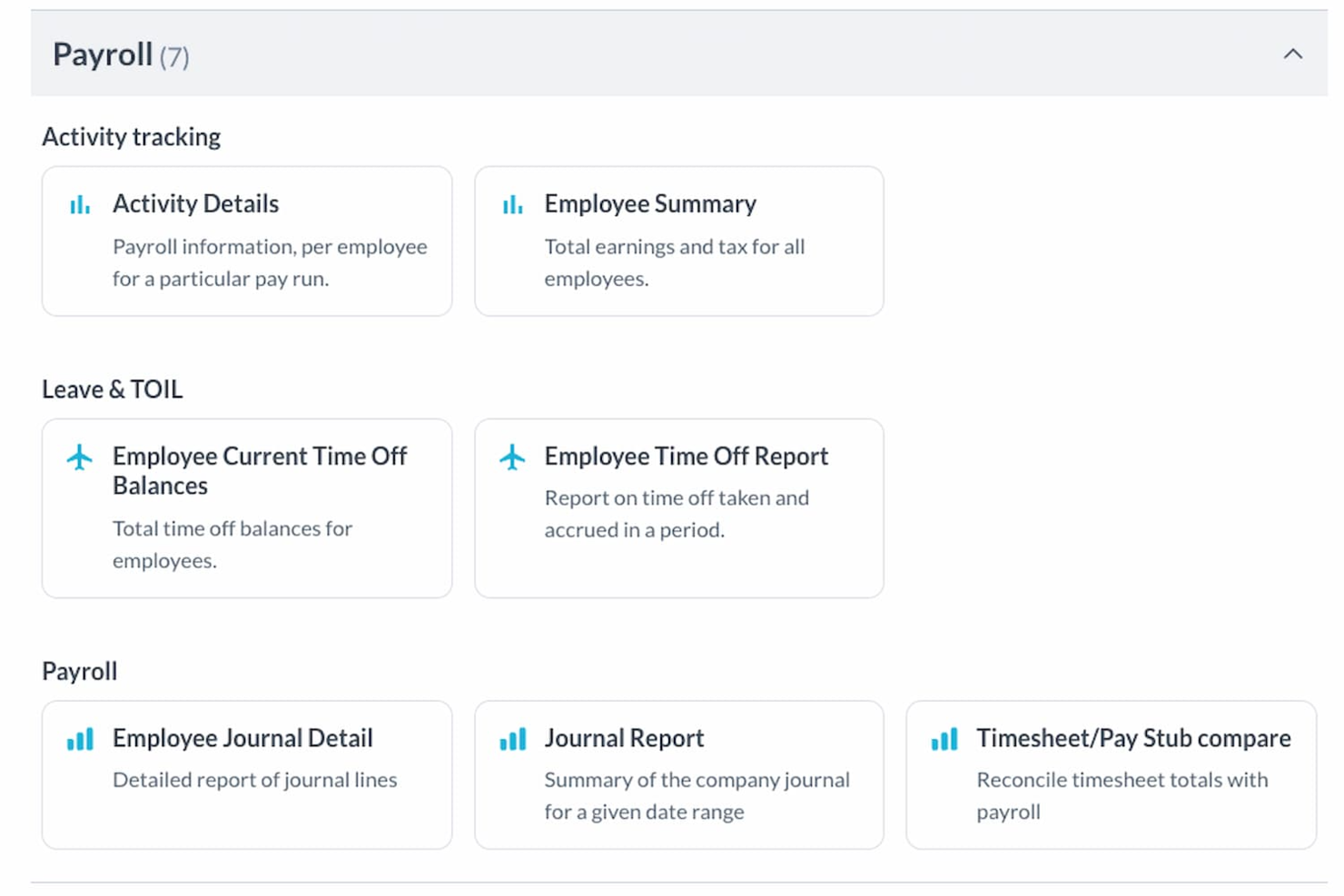
Workforce.com is a payroll and workforce management platform designed for businesses that need to handle complex pay rules, automate compliance, and streamline scheduling for hourly teams in industries like call centers, healthcare, and retail.
Who Is Workforce.com Best For?
Workforce.com is a strong fit for operations and HR teams in shift-based industries like call centers, retail, and healthcare that need to manage large hourly workforces.
Why I Picked Workforce.com
I chose Workforce.com because it handles pay complexity that trips up most payroll tools. Its wage-and-hour automation engine automatically calculates daily and weekly overtime, weighted average overtime, and location- or role-based pay-rate changes directly on the timesheet—before payroll runs. I also like that tip splitting is built in, so teams in hospitality or food service can automatically divide tip pools based on hours worked without running extra payruns. Because this occurs upstream of payroll, my team isn't scrambling to make manual adjustments at the end of a pay period.
Workforce.com Key Features
- Multi-payrun support: Run multiple, separate payruns in the same pay period to handle different employee groups, pay schedules, or off-cycle corrections.
- Employee self-service onboarding: New hires complete W-4s, add bank details, and fill in personal information directly through a mobile app, keeping employee data current in the payroll system.
- GPS-based time clock: Employees clock in and out via a mobile app that captures their GPS location at each punch, helping verify that hours are tied to the correct worksite.
- Attendance points system: Automatically assigns attendance points based on scheduled vs. clocked hours, giving managers a trackable record of tardiness, no-shows, and call-outs.
Workforce.com Integrations
Integrations include ADP, Gusto, Paychex, QuickBooks, Xero, Oracle, Workday, UKG, Square, and Shopify.
Pros and Cons
Pros:
- Daily manager approvals improve payroll accuracy throughout each pay cycle
- Automated weighted overtime eliminates manual rate calculations and adjustments
- Accurate payroll driven by synced schedules, attendance, and employee records
Cons:
- Not ideal for companies without hourly or shift-based payroll needs
- Some industries may require integrations not listed

Best for HR, payroll, and integrations in one

Paylocity gives HR teams and business leaders a unified platform to manage payroll, HR, and compliance, helping organizations handle complex workforce needs and streamline people operations.
Who Is Paylocity Best For?
Paylocity is a strong fit for mid-sized businesses that need HR, payroll, and benefits managed in one connected platform.
Why I Picked Paylocity
Paylocity earns its spot on my shortlist because it brings payroll, HR, and benefits into a single connected system without forcing you to stitch together separate tools. I like how the payroll engine handles multi-state tax compliance automatically, which is a real time-saver when my team is managing employees across different jurisdictions. The built-in HR features—like onboarding workflows and performance tracking—mean payroll data and people data stay in sync. I also rely on the benefits administration module to manage open enrollment directly alongside payroll, so there's no manual data transfer between systems.
Paylocity Key Features
- Payroll readiness dashboard: Highlights outstanding tasks and flags potential errors—like unexpected pay spikes—before you run payroll.
- On demand pay: Lets employees access earned wages before payday, giving you a recruiting and retention tool without disrupting your payroll cycle.
- Tax geolocation: Audits each employee's location to ensure the correct taxes are applied, with Paylocity filing in all 50 states, Puerto Rico, the Virgin Islands, and Guam.
- General ledger mapping: Lets you configure and update GL settings and journal entries without needing to contact Paylocity support.
Paylocity Integrations
Integrations include Microsoft Entra, Google Workspace, Okta, ERP systems, applicant tracking systems, job boards, benefits providers, 401(k) providers, point of sale systems, and background check services. An API is also available for custom integrations.
Pros and Cons
Pros:
- Talent-management tools included
- Time and labor module ties directly into payroll to reduce errors
- Automates payroll and tax filings for multi-state businesses
Cons:
- Setup can be time consuming
- Lacks support for independent contractor payments
New Product Updates from Paylocity

Paylocity Expands Expense and Purchase Request Tools
Paylocity adds connected personal cards, smarter expense categorization, and a streamlined purchase request experience. This reduces manual entry and helps finance teams manage expenses and approvals more efficiently. For more information, visit Paylocity’s official site.
 .
.
Justworks
Best for mixed workforce payroll
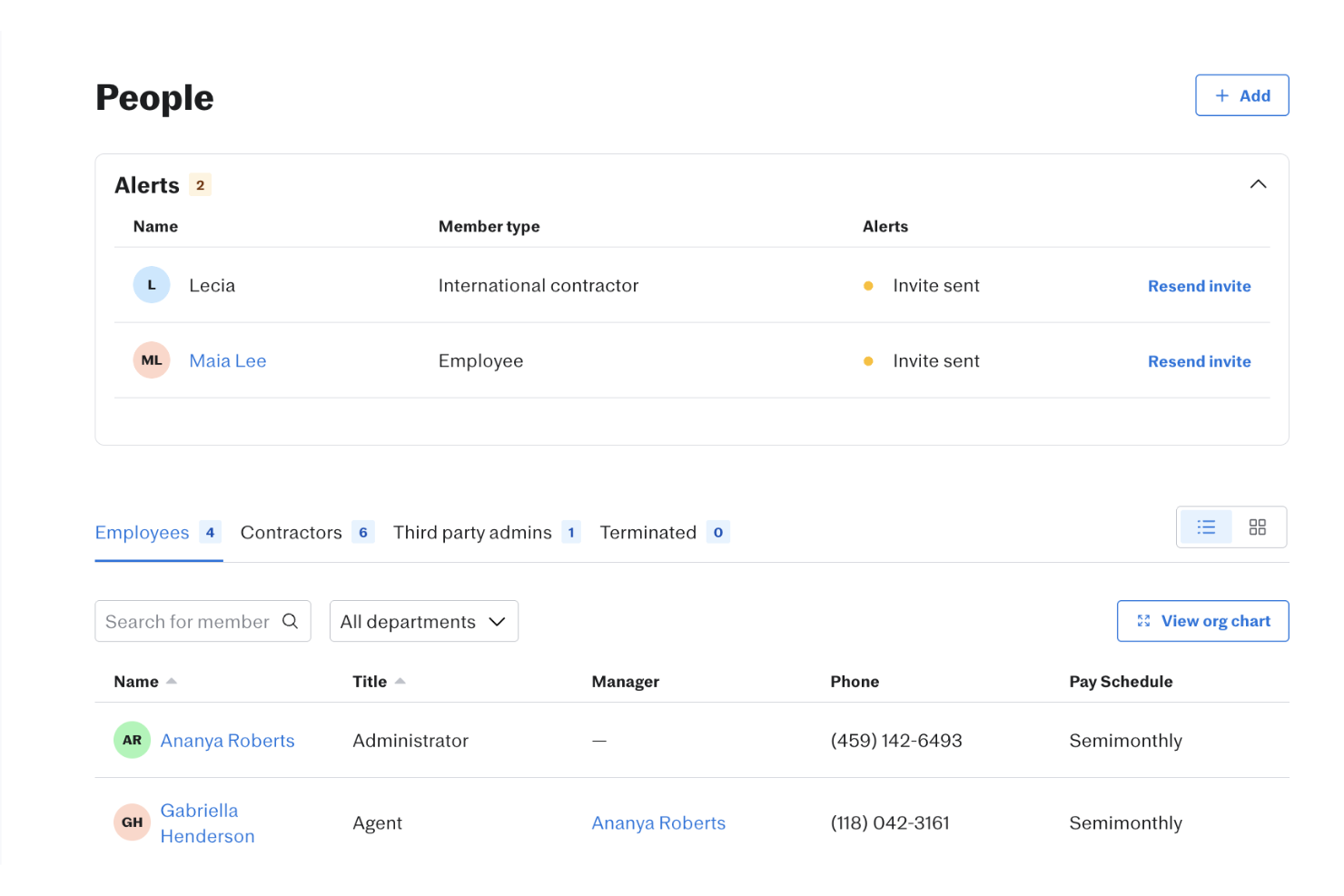
Justworks is a payroll and HR platform built for small and midsize businesses that need to manage payroll, benefits, and compliance for both employees and contractors in one place.
Who Is Justworks Best For?
Justworks is a good fit for small and midsize businesses that employ a mix of full-time staff and contractors and want a single platform to handle payroll and compliance.
Why I Picked Justworks
I picked Justworks as one of the best because it handles payroll for both W-2 employees and contractors without requiring two separate systems. When your team includes a mix of full-time hires and 1099 contractors, Justworks lets you run both through the same platform, including international contractor payments. W-2 and 1099 filings are handled automatically, so when tax season hits, there's no scramble to reconcile records across different tools. The multi-state payroll support is especially helpful for teams with contractors and employees spread across multiple states with varying compliance requirements.
Justworks Key Features
- Benefits administration: Access and manage health insurance, 401(k), HSA/FSA, and other benefits directly within the platform for W-2 employees.
- Automated expense reimbursements: Set up automated approval workflows and pay out employee expenses directly through payroll in the same platform.
- PTO tracking and policy management: Set up vacation and sick leave policies, track accruals, and approve PTO requests from a single dashboard.
- Justworks Analytics: View headcount trends, payroll changes, and workforce data through pre-built and custom reports with interactive visualizations.
Justworks Integrations
Integrations include Greenhouse, Lever, and JazzHR.
Pros and Cons
Pros:
- Centralizes payroll, HR, and health insurance administration
- Straightforward onboarding workflow for new hires
- Clear employee dashboard for benefits and pay information
Cons:
- Reporting tools offer limited in-depth business insights
- Fewer advanced HR features than larger enterprise platforms
Other Payroll Software
Here are a few more options that didn’t make the best online payroll software shortlist. If you need additional suggestions for software to help you process payroll, check these out:
- BambooHR®
For employee self-service
- HiBob
For real-time payroll data access
- Gusto
For hands-off tax filing
- RUN Powered by ADP®
For small businesses
- TopSource
For 24/5 dedicated support
- Homebase
For managing hourly teams
- OnPay
For niche industries
- Paychex Flex
For accurate payroll processing
- Bambee
For expert guidance
- Patriot Payroll
For US companies
- GoCo
For flexible payroll systems
- QuickBooks
For syncing with the QuickBooks ecosystem
- UZIO
For integrated benefits
- Dayforce
For continuous pay calculation
- Namely
For SMBs
- PrimePay
For early wage access through paycards
- Trinet
For integrated compensation benchmarking
- Insperity
For combined software and services
- Wagepoint
For Canadian-based small businesses
- FinancePal
For payroll outsourcing


Related HR Software Reviews
If you still haven't found what you're looking for here, check out these other related tools that we've tested and evaluated:
- HR Software
- Recruiting Software
- Employer of Record Services
- Applicant Tracking Systems
- Workforce Management Software
- Learning Management Systems
How I Evaluate Payroll Software
I split my evaluation into two layers: the baseline a tool must clear—think automated tax remittance and direct deposit—and the differentiators that separate good platforms from great ones.
Core Functionality (Table Stakes For This List)
When I'm selecting tools for my list, I rank each one on a scale from 0 (does not offer the functionality) to 5 (excels in this area) for each core functionality listed below. Then, I calculate the tool's total score into a percentage. Each tool needs to achieve a minimum total score of 75% to be considered for inclusion.
- Automated Payroll Processing: I look for platforms that handle gross-to-net calculations, scheduled pay runs, and direct deposit without manual intervention across multiple pay schedules.
- Tax Filing & Compliance: Each tool should calculate, withhold, and remit payroll taxes, then generate year-end forms like W-2s and 1099s with minimal manual input.
- Multi-Worker Type Support: I evaluate how well a platform handles salaried employees, hourly workers, and independent contractors—all within the same system.
- Employee Self-Service Portal: Workers should be able to pull up pay stubs, download tax documents, and update their own banking details without submitting a request to HR.
- Time & Benefits Integration: I check whether the platform connects to or natively includes time tracking and benefits deductions, since disconnected data leads to payroll errors.
- Accounting System Integration: Syncing payroll entries to tools like QuickBooks, Xero, or NetSuite matters, so I evaluate the depth of GL mapping and journal entry customization.
Once I have a list of tools that meet the criteria, I consider what sets each platform apart.
Differentiating Factors (What Sets Vendors Apart)
Here's how I compare and contrast different vendors:
Standout Features
Global payroll capabilities matter if your team spans multiple countries—I evaluate whether a platform handles local tax rules and multi-currency payments natively or through third-party partners. On-demand pay is another feature I look for, since it gives employees access to earned wages before payday and can meaningfully improve retention. I also consider whether a vendor bundles payroll into a full HRIS suite with onboarding, PTO, and performance tools, which reduces the number of systems your team juggles daily.
Beyond Features
Pricing transparency is one of the first things I check—some vendors charge per payroll run or tack on fees for multi-state filing, so I look at total cost beyond the base rate. Implementation support also weighs heavily, especially for teams migrating mid-year with historical data that needs to transfer cleanly. I evaluate compliance and security certifications like SOC 1 and SOC 2 Type II, along with whether the vendor offers a tax accuracy guarantee that covers penalty costs if a filing error is on their end.
How to Choose Payroll Software
To choose the right payroll software, you need to map your exact operational requirements, filter out wrong-fit vendors during sales demos, calculate the total cost of ownership, and test your specific pay rules in a proof-of-concept.
Here’s the step-by-step process I recommend to evaluate your options and find the right fit:
- Audit your current workflow and integrations: Map out every tool your payroll data touches—your HRIS, time-tracking apps, accounting software, and PEO software (if any). Decide whether you want an all-in-one system or a standalone payroll tool that syncs via API.
- Identify your worker types and locations: Detail your exact setup—including worker categories (FTEs vs. contractors), operating states, and international tax jurisdictions. A tool built strictly for single-state, full-time employees will quickly fall apart if you need multi-state tax withholdings or global contractor support.
- Demo your actual payroll scenarios: Bring a list of your most complex payroll scenarios, such as processing mid-cycle promotions or calculating multi-rate overtime, and have the rep walk you through those exact screens step-by-step.
- Review user permissions and approval workflows: Evaluate how the system handles role-based access for different users. Make sure the software lets you customize approval chains so sensitive salary data remains restricted to the right people.
- Calculate the total cost of ownership: Request an itemized breakdown that includes base platform fees, per-employee per-month (PEPM) charges, tax filing services, year-end tax forms, setup fees, and off-cycle run costs. This ensures you evaluate tools on their true operational cost rather than an incomplete headline price.
- Run a parallel pay run before committing: Before fully switching platforms or signing a long-term contract, run a parallel test run alongside your current system.
Keep in mind: When you sit down for a sales demo, vendors are trained to show off their most eye-catching, flashy payroll software features—like fancy AI dashboards, advance pay options, or complex organizational charts. If you don't have concrete criteria mapped out, it's remarkably easy to get swayed by a great sales presentation and buy a tool that looks impressive, but doesn't actually solve your day-to-day headaches.
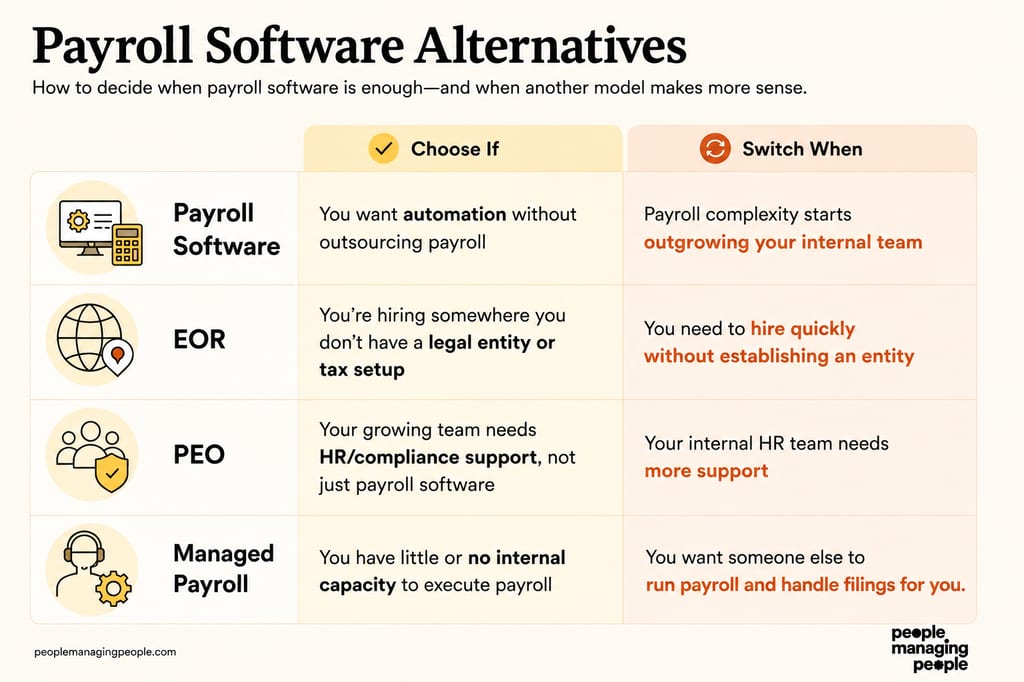
Payroll Software Alternatives
Depending on your hiring model and internal HR capacity, standalone payroll software might not be the right fit. Here is how the primary alternatives compare:
| Payroll Software Alternative | Best For | Key Tradeoff |
|---|---|---|
| Managed Payroll Services | Teams with zero internal payroll capacity that want a third party to run calculations and tax filings for them | Less direct control over day-to-day payroll operations |
| All-in-One HRIS with Payroll | Teams wanting a single database for employee records, onboarding, benefits, and pay runs | Payroll calculation logic and custom reporting can be less specialized than dedicated payroll engines |
| Employer of Record (EOR) | Companies hiring full-time international workers in countries where they lack local legal entities | Higher cost than payroll software if you already have local entities |
| Professional Employer Organization (PEO) | Small and mid-sized businesses that want to outsource payroll, HR, benefits, and compliance through a co-employment model | Higher per-employee monthly fees and shared administrative control due to co-employment structure |
| Manual Payroll | Very small businesses with only a few employees and simple payroll requirements. | Time-consuming, difficult to scale, and more prone to payroll and compliance errors |
| Accountants | Small businesses that process payroll infrequently or want personalized payroll support without investing in payroll software | May become less efficient and more expensive as your workforce grows |
Use the following decision points to determine when standalone payroll software is enough—and when it may be time to consider an EOR, PEO, or managed payroll service.
Trends in Payroll Software for 2026
The latest trends are reshaping how HR teams manage payroll, address legal complexities, and deliver a better employee experience. Here are five key developments to watch:
- AI-powered automation: Modern payroll tools use artificial intelligence (AI) to automate repetitive tasks, catch anomalies, flag compliance issues, and minimize costly errors. These smart systems streamline workflows and handle increasingly complex payroll regulations with greater accuracy.
- Global payroll management capabilities: As companies expand internationally, tools like Deel and Papaya Global offer seamless multi-country payroll, currency conversion, and compliance management in one platform.
- Stronger data security: With rising cybersecurity threats, payroll systems are reinforcing protections with features like two-factor authentication, encryption, and biometric login options to safeguard sensitive data.
- Mobile access: With remote and hybrid work here to stay, mobile-optimized payroll software ensures that both employees and HR teams can access key payroll features anytime, anywhere.
- Financial wellness integrations: Many platforms now offer features that help employees track income, plan finances, and access real-time pay insights, supporting both retention and financial well-being.
What is Payroll Software?
Payroll software is a digital tool that automates employee wage calculations, tax deductions, and direct deposits. It helps HR and finance teams pay employees accurately and on time while staying compliant with tax laws.
Used by businesses of all sizes, payroll software reduces manual work, prevents costly errors, and simplifies complex payroll processes, saving time and ensuring peace of mind.
How Payroll Software Works
Payroll software works by collecting employee pay data, automatically calculating wages and deductions, processing payments, generating payroll reports, and securely storing payroll records. Most platforms use the following core workflow, with your team reviewing and approving payroll before it's finalized.
Step 1: Import employee data. The software pulls employee information, hours worked, time off, bonuses, commissions, and deductions from your HR, time tracking, and accounting systems, reducing manual data entry.
Step 2: Calculate payroll. Gross pay, taxes, benefit deductions, retirement contributions, overtime, and other payroll calculations are completed automatically based on current payroll rules.
Step 3: Review payroll. Before payroll is finalized, the system flags issues like missing timesheets, unusual pay changes, duplicate entries, or potential compliance risks for your team to review.
Step 4: Approve and pay employees. After reviewing the payroll, you approve the pay run and the software processes payments by direct deposit, paper check, or other supported payment methods.
Step 5: Complete payroll reporting. The platform generates payroll reports, tax forms, and accounting records. Many providers also calculate, file, and remit payroll taxes on your behalf.
Step 6: Maintain payroll records. Pay stubs, tax documents, and payroll history are stored securely, making it easier to respond to employee requests, support audits, and prepare year-end reporting.
Features of Payroll Software
The right payroll software handles your taxes, calculates worker pay, manages multi-state rules, and sends pay data straight to your accounting and time-tracking tools. When reviewing platforms, focus on the following core features:
- Automated pay calculations: Calculates regular pay, overtime, tax deductions, and wage garnishments automatically without manual spreadsheets.
- Full-service tax filing: Calculates, pays, and files your local, state, and federal payroll taxes directly with government agencies across every state where you operate.
- Direct deposit and digital payouts: Sends scheduled direct deposits to employee and contractor bank accounts, including split deposits.
- Employee self-service portals: Lets staff log in 24/7 to grab paystubs, download tax forms, and update their own bank details.
- Time-tracking and accounting connections: Pulls approved hours straight into pay runs and sends payroll records directly to your accounting software (like QuickBooks or NetSuite).
- Integration capabilities: Connects with your accounting, HR, or benefits systems.
Common Payroll Software AI Features
Beyond the standard payroll software features listed above, many of these solutions are incorporating AI with features like:
- Automatic error alerts: Flags unusual pay changes, missing hours, or duplicate entries so you can fix them before sending out pay.
- Smart document scanning: Scans uploaded tax forms and bank slips, automatically populating employee profiles.
- Payroll forecasting: Uses past pay trends to help you predict future labor costs and overtime expenses.
- Compliance monitoring: Leverages AI to alert you when compliance risks are detected, such as evolving wage laws or reporting requirements.
Benefits of Payroll Software
Payroll software reduces manual entry, keeps tax filings compliant across jurisdictions, and gives your finance team real-time reporting on labor costs. Based on my experience managing pay runs and HR systems, it gives your organization these key advantages:
- Saves administrative time: Automates routine pay calculations, tax withholdings, and direct deposits so your team spends less time on manual data entry every pay period.
- Secures employee records: Protects payroll data, bank details, and social security numbers using role-based permissions and encrypted storage instead of unprotected spreadsheets.

- Prevents compliance penalties: Keeps up with changing local, state, and federal tax laws automatically, lowering the risk of expensive tax filing errors.
- Improves labor cost visibility: Connects pay data directly with your accounting software so finance leaders can track actual labor spend, overtime costs, and headcount budgets.
- Cuts down on routine HR requests: Lets employees access paystubs, pull year-end tax forms, and update their bank info directly through self-service portals.
Costs & Pricing for Payroll Software
Payroll software pricing typically follows a per-employee per-month (PEPM) model, combining a flat monthly base fee with an additional charge for each active employee or contractor.
When budgeting for a platform, expect tiers to break down as follows:
Plan Comparison Table for Payroll Software
| Plan Type | Average Monthly Fee | Average Price per Employee | Common Features |
| Basic | $10 - $25 per month | $2 - 4 per employee, per month | Payroll processing for a limited number of employees, basic tax filing, standard reports, employee self-service portal |
| Professional | $25 - $40 per month | $4 - $6 per employee, per month | Multi-state or province payroll, additional reports, HR features, compliance report + all the features in Basic. |
| Advanced | $40 - $60 per month | $5 - $8 per employee, per month | Customizable reports, advanced HR tools, integrations, enhanced security + all the features in Professional. |
| Enterprise | Custom pricing | Custom pricing | Scalable for a large number of employees, dedicated support, advanced analytics, custom integrations + all features in Advanced. |
| Global Payroll | Usually priced per employee | $199 - $500 per employee, per month | Multi-currency payouts and local tax compliance in countries where you own legal entities. |
In addition to the prices above, some payroll vendors may also charge a one-time set-up fee for complex software implementations.
Payroll Software Frequently Asked Questions
Do you have general questions about how payroll software works or how to choose the right system for you? Take a look through these answers to frequently asked questions to get yourself oriented.
What is same-day payroll?
Same-day payroll lets employees access their earned wages the same day you process them, rather than waiting until the traditional payday. This feature is especially popular with hourly workers or contractors who value immediate payment for completed work. To implement this, your payroll platform must partner with banks or third-party providers that support instant transfers and allow you to run off-cycle payrolls quickly.
What is multi-state payroll?
Multi-state payroll refers to processing payroll for employees who work in more than one U.S. state. Payroll software with multi-state support automatically applies the correct state and local tax rules, calculates withholdings, and helps ensure payroll complies with each jurisdiction’s requirements.
What data security features are included in payroll software?
Top-tier payroll solutions encrypt data both in transit and at rest, use multi-factor authentication (MFA), have granular role-based access control (RBAC) and permissions, and perform regular vulnerability scans. You’ll want audit logs to see who accessed or changed payroll details. Good vendors also comply with standards like GDPR, SOC 2, or ISO 27001.
For best results, review permissions on a regular schedule and require strong password policies. Ask your provider if they offer single sign-on (SSO) integration and how they handle security breaches or attempted logins from unknown IP addresses.
Payroll software houses a lot of personal identifying information (PII), including your employees’ names, addresses, contact information, social security or SIN numbers, and personal bank accounts so robust security features are essential.
What compliance monitoring features are built into payroll software?
Payroll software often includes automatic tax table updates, flagging of errors in wage or tax calculation, and alerts for approaching filing deadlines. Many platforms can identify missing employee data, track required documentation (like I-9s or W-4s), and help monitor overtime compliance. Some offer built-in checks for minimum wage, benefits eligibility, or automatically generate government reports (e.g., 941s, W-2s).
For HR professionals, especially in enterprises, these features reduce audit risks and make it easier to onboard employees or expand into new regions without missing compliance steps. They also work together to automate compliance requirements, saving you time and stress.
Can payroll software handle multiple currencies for global teams?
Yes, many payroll platforms now support multi-currency payroll, letting you pay employees and contractors in different countries in their local currency. The software should calculate currency conversions, track exchange rates, and handle differing local tax regulations automatically.
For example, you might pay a UK employee in GBP and a Canadian one in CAD, with the platform handling tax calculations and deadlines for each country. Be sure to check if the software covers all your target countries, and whether it can generate country-specific reports and filings.
Global payroll features are essential for businesses wanting to expand globally as they help companies ensure their payroll operations are compliant and efficient across various jurisdictions.
What is the best payroll software for startups?
The best payroll software for startups depends on your hiring needs, budget, and growth plans. When comparing payroll software for small businesses, startups often prioritize automated payroll, tax filing, employee self-service, and integrations with accounting or HR software. If you’re starting out really small, payroll software for one employee can help narrow your options to tools suited to a very small team. If you plan to hire internationally, consider a platform that also supports global payroll or Employer of Record (EOR) services.
Do I need payroll software if I only have contractors?
Not necessarily. If you only pay contractors, you may be able to manage payments manually or use contractor payment software. However, payroll software can simplify contractor payments, automate tax forms such as 1099s, and provide a single system if you later hire employees.
Can I do my own payroll for free?
Yes, you can do your own payroll completely for free, but it requires doing the manual heavy lifting yourself rather than relying on an automated, paid platform. You can use free government tax calculators (like the IRS tax tables) alongside Excel templates to calculate gross-to-net pay and issue manual bank transfers or paper checks.
However, doing it yourself means you must track tax rule changes manually, submit quarterly and annual tax filings on time, and handle all remittance deadlines yourself. While it saves on software costs, even small calculation or filing errors can lead to expensive tax penalties.
Can payroll software handle international employees?
Some payroll software supports international employees through global payroll services, while others only process domestic payroll. If you employ workers in multiple countries, look for software that supports local tax compliance, multiple currencies, country-specific payroll rules, or integrates with Employer of Record (EOR) services where needed.
What integrations are the most important for payroll software?
Key integrations for payroll software include your HRIS (for employee data sync), time and attendance tracking (to automate wage calculations), accounting software (for simplified reconciliation), and benefits management platforms. If your workflow involves expense reimbursement, shift scheduling, or compliance management, make sure those systems connect as well.
Modernize Your Payroll Process
There are plenty of payroll software options available, and each one is a bit different from the next. That's why understanding the core functionality of these platforms equips you to pick the right one for your business needs.
Invest in advanced payroll software that satisfies all your business needs, including compensation and salary benchmarking features.
Before you go, stay in touch by subscribing to our People Managing People newsletter. We cover everything from how to master your payroll challenges to how to develop modern compensation packages to retain your top talent. Plus, it's delivered to your inbox for free each week.