

10 Best Employer of Record (EOR) Services in 2026: Reviewed & Compared

Best Employer of Record Services (EOR Services) Shortlist


The best Employer of Record (EOR) services help HR teams hire and manage international employees without setting up foreign legal entities—saving time, reducing risk, and making global expansion possible even for small or midsize companies.
Whether you're already managing remote staff abroad or just starting to explore global hiring, EOR providers simplify everything from onboarding and payroll to local labor law compliance and benefits administration.
If you’re struggling to get to grips with complex international tax regulations, unsure how to avoid permanent establishment risks, or frustrated by how long it takes to legally hire abroad, an EOR can step in as the legal employer on your behalf—helping you scale faster while staying compliant.
After years spent evaluating global HR and payroll solutions, I wrote this guide to help HR professionals like you navigate the crowded EOR market with clarity. I’ve reviewed and compared the top EOR services to help you find the right partner to support your goals, avoid common pitfalls, and focus on growing your team—not navigating bureaucracy.
Why Trust Our Software Recommendations
Our team has been testing and reviewing software since 2012. As HR experts ourselves, we know how difficult—and important—it is to choose the right software.
For this guide, we evaluated tools using hands-on testing and independent research, scoring tools using our selection criteria. We also draw on insights from industry thought leaders and practicing HR experts.
Our reviews reflect our human editorial judgment, not a sales pitch.
Expert reviewers:
Employer of Record Services Comparison Table
This comparison table summarizes pricing, trial, and demo details for my top EOR service providers.
| Tool | Best For | Trial Info | Price | ||
|---|---|---|---|---|---|
| 1 | Best for compliant hiring without local entities | Free demo available | From $599/employee/month | Website | |
| 2 | Best for budget-conscious remote team expansion | Free demo available | From $199/employee/month | Website | |
| 3 | Best for global expansion support | Free demo available | From $399/employee/month | Website | |
| 4 | Best for end-to-end hiring compliance | Free demo available | From $199/user/month | Website | |
| 5 | Best for 24/5 dedicated support | Not available | Pricing upon request | Website | |
| 6 | Best for global onboarding | Free demo available | From $459/employee/month (billed annually) | Website | |
| 7 | Best for compliance with European labor laws | Free demo available | From $549/employee/month | Website | |
| 8 | Best for co-employment model | Free demo available | Pricing upon request | Website | |
| 9 | Best for U.S.-based companies hiring globally | Free demo available | From $49/month + $6/month/user | Website | |
| 10 | Best for compliance and risk management | Not available | Pricing upon request | Website |


Reviews of the Best Employer of Record Services
To make your search easier, I’ve highlighted my top EOR providers—complete with details on what each one offers and how they can support your HR team. You’ll also find additional providers listed below if you’re looking to explore even more options.

Best for compliant hiring without local entities
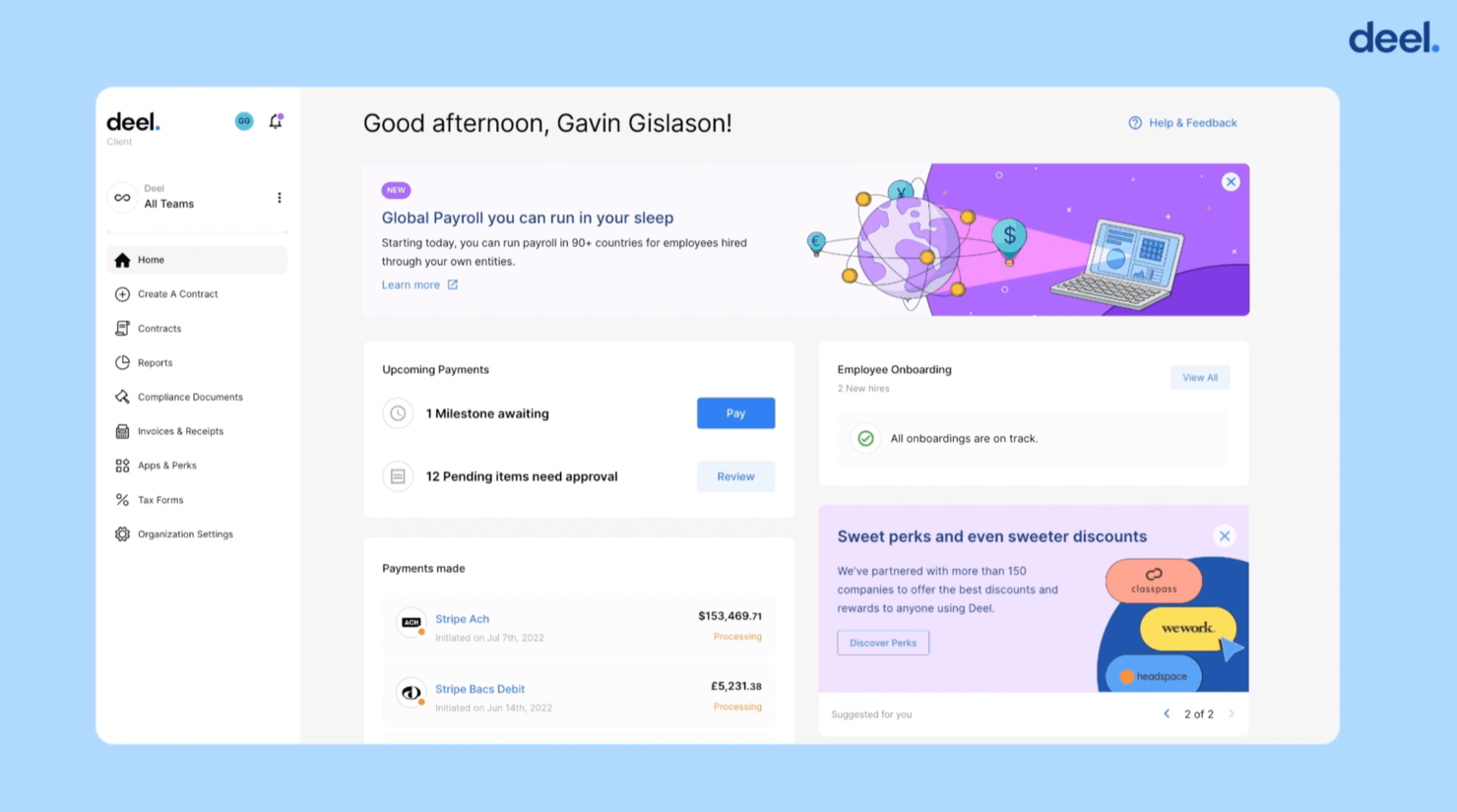
Deel is ideal for companies looking to rapidly hire and pay workers across borders without the hassle of setting up local entities. It takes on the legal employment, payroll, benefits and compliance burdens so you can focus on growing your team globally. Whether you’re sourcing talent in Latin America, Europe or Asia, the platform helps you move faster and stay compliant.
For business owners like Cara Barnes, Founder at Good Carma Consulting, Deel makes the process seamless: “Deel is the best solution for people who are hiring overseas, whether it’s independent contractors or full-time employees. If I want to hire somebody in Germany, Deel guarantees we are properly classifying and paying the right taxes.”
Who is Deel Best For?
People Ops, Payroll, and Legal teams at mid-market and enterprise tech companies hiring at scale across many countries and managing large volumes of employees and contractors.
Why I Picked Deel
I picked Deel because it truly simplifies global hiring by letting you bring on employees in 150+ countries while it handles local employment laws, tax filings and payroll.
You retain control of the role, while Deel becomes the legal employer of record, which means you avoid the time and cost of establishing a foreign company.
I also like that you can pay employees in their local currency and access features like “Anytime Pay” so workers can access part of their salary early, helping keep your global talent happy and engaged.
From onboarding to termination, you manage everything through one dashboard, so your HR team isn’t juggling spreadsheets, multiple vendors or scattered systems.
Deel Key Services
Here are some key services worth highlighting:
- Global Employer of Record (EOR): Hire full-time employees abroad under Deel’s legal entities, avoiding the need to open a local entity.
- Multi-country payroll: Process payroll across many countries in multiple currencies, with tax, social contributions and local regulation handled. Includes "Anytime Pay" so EE can access salaries early.
- Localized contracts & benefits: Automatically generate employment agreements and benefits packages that comply with country‐specific labor laws.
- Unified HRIS for global teams: Store employee records, track time and attendance, and integrate onboarding/offboarding for employees and contractors in one system.
Deel Integrations
Integrations include SAP SuccessFactors, time and attendance systems, accounting tools, HRIS platforms, payment processors, payroll systems, and Celigo for workflow automation.
Pros and Cons
Pros:
- Generates compliant contracts and benefits by country
- Handles multi-currency payroll and local tax compliance
- Enables hiring in 150+ countries without local legal entities
Cons:
- Some advanced HR features (e.g., performance management) need add-ons
- Integration ecosystem is more limited than some niche global HR platforms

Best for budget-conscious remote team expansion
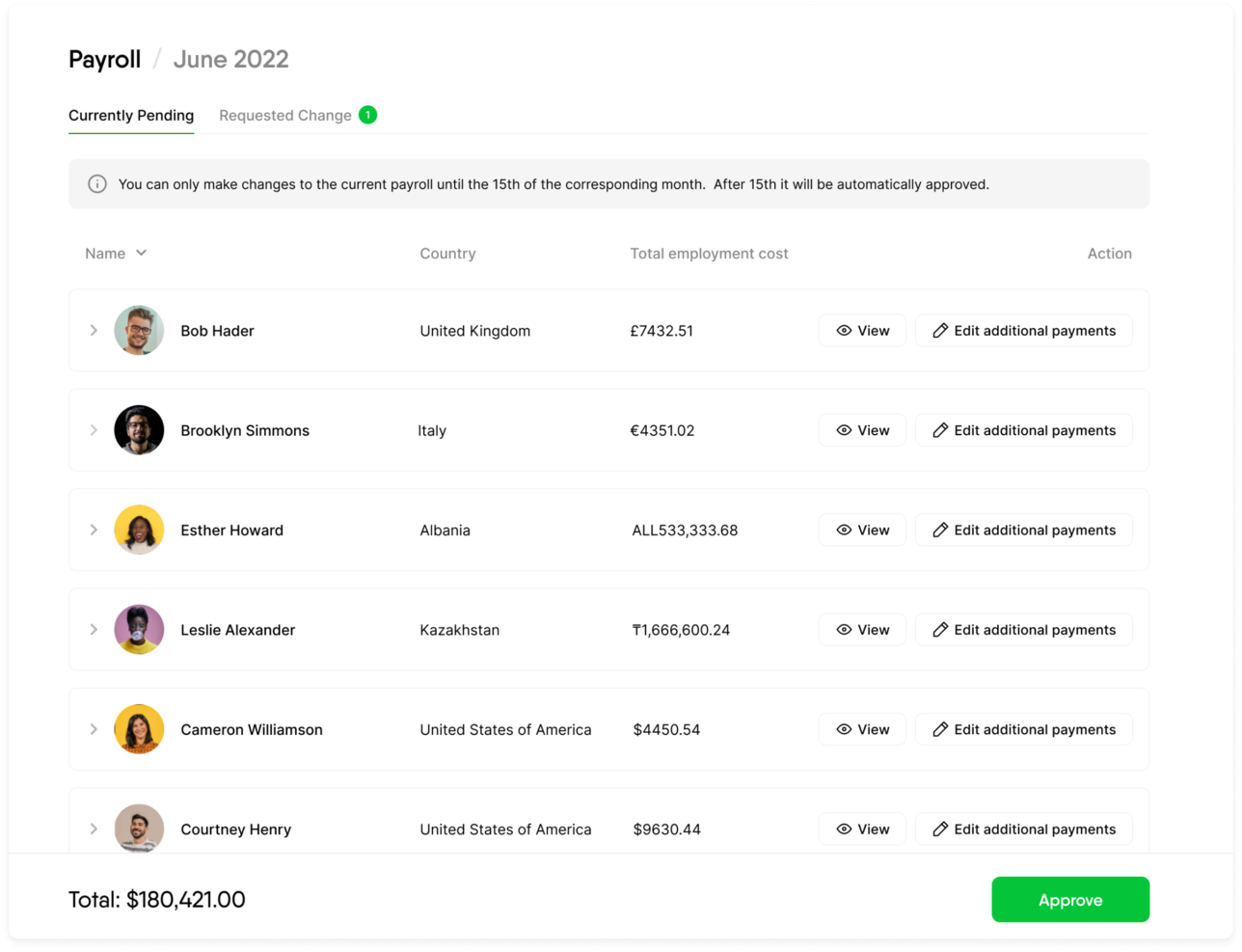
RemoFirst is a practical choice for small to mid-sized companies looking to hire globally without setting up local entities. If your hiring team is sourcing talent abroad but dreads the legal, payroll, and compliance headaches, this tool lets you onboard employees and contractors in 180+ countries with one single partner handling contracts, payroll, and risk.
For international businesses, this can be a game-changer. Wendy Makinson, HR Manager at Joloda Hydraroll, shared her experience: “As a global business, with offices on four continents and a network of over 35 local sales and support partners worldwide, we needed a platform that would enable smooth and secure international payments. RemoFirst has proven to be an affordable software that allows us to easily onboard members remotely and make payments globally. The fact that RemoFirst is already set up in the countries we need means that we don’t have to invest in official entities, which is a significant cost saving.”
Who is RemoFirst Best For?
HR and People Ops teams at early-stage and growth companies expanding remote teams internationally, particularly when budget constraints are a key consideration.
Why I Picked RemoFirst
I picked RemoFirst for budget-conscious organizations to get full global hiring coverage quickly and efficiently. Its onboarding workflow actively handles legal compliance, payroll, taxes and benefits for you, so you’re not left deciphering foreign-labor law spreadsheets.
I particularly like that their pricing is transparent (no setup or termination fees) and you always know exactly what you'll pay upfront. The dedicated account manager model means someone is directly available when local employment or regulatory issues pop up, rather than dealing with generic support.
Lastly, you can manage both full-time employees and international contractors through the same platform, making it efficient if you’re scaling globally and flexibly.
RemoFirst Key Services
Here are some key services worth highlighting:
- Global country coverage: Hire employees in 185 + countries with RemoFirst acting as the legal employer.
- Payroll & tax management: They handle local payroll, tax filings, pension contributions and currency payments so your team just approves an invoice.
- Contractor support: Onboard and pay international contractors (150 + countries) through compliant agreements and unified admin.
- Equipment provisioning & immigration support: RemoFirst sends gear like laptops to remote hires and assists with visas/work permits in dozens of countries.
RemoFirst Integrations
Integrations include HRIS platforms, global payroll systems, contractor payment tools, background-check providers, benefits & health- insurance systems, single-sign-on (SSO) systems, expense management tools and visa/work-permit management systems.
Pros and Cons
Pros:
- Transparent pricing with no hidden setup or termination fees
- Dedicated account manager for your company and employees
- Cost-effective global expansion
Cons:
- Integrations beyond core HR/payroll tools could be less mature
- Reporting and advanced analytics are fairly basic

Pebl
Best for global expansion support

Pebl helps global teams hire and manage employees in over 185 countries without setting up local entities. It’s built for companies expanding internationally that need a reliable Employer of Record (EOR) to manage compliance, payroll, and benefits while keeping the employee experience front and center.
Who is Pebl Best For?
HR leaders at companies entering new international markets who want hands-on guidance alongside global employment infrastructure.
Why I Picked Pebl
I picked Pebl because it simplifies global hiring by combining legal compliance, payroll, and HR operations into one intuitive platform. Unlike many EORs that rely on third-party intermediaries, Pebl runs its own in-country teams, so you retain greater control over contracts, benefits, and payroll accuracy.
You can onboard employees in minutes, send localized offers, and manage ongoing compliance with built-in checks for tax, labor, and benefits regulations. I also like how Pebl emphasizes the employee experience, offering relocation support, equity options, and region-specific benefits that help attract and retain top international talent.
Pebl Key Services
Here are some notable services worth highlighting:
- Localized onboarding: Hire employees in 185+ countries with compliant contracts and automated setup.
- Built-in compliance tools: Automatically apply local tax, benefits, and employment law requirements.
- Equity and benefits management: Offer stock options and tailored benefits by region to stay competitive.
- In-country HR and legal experts: Access dedicated local teams who handle complex employment, visa, and benefits regulations.
- Global payroll dashboard: Track payments, headcount, and costs across countries in real time.
Pebl Integrations
Integrations include Workday, BambooHR, Deel, Greenhouse, Rippling, Lever, HiBob, ADP, and QuickBooks.
Pros and Cons
Pros:
- Intuitive onboarding and offer-generation tools
- Supports equity and international benefits programs
- Direct in-country teams ensure faster, more accurate payroll compliance
Cons:
- Fewer prebuilt analytics than some competitors
- Limited self-service resources for smaller companies

Best for end-to-end hiring compliance
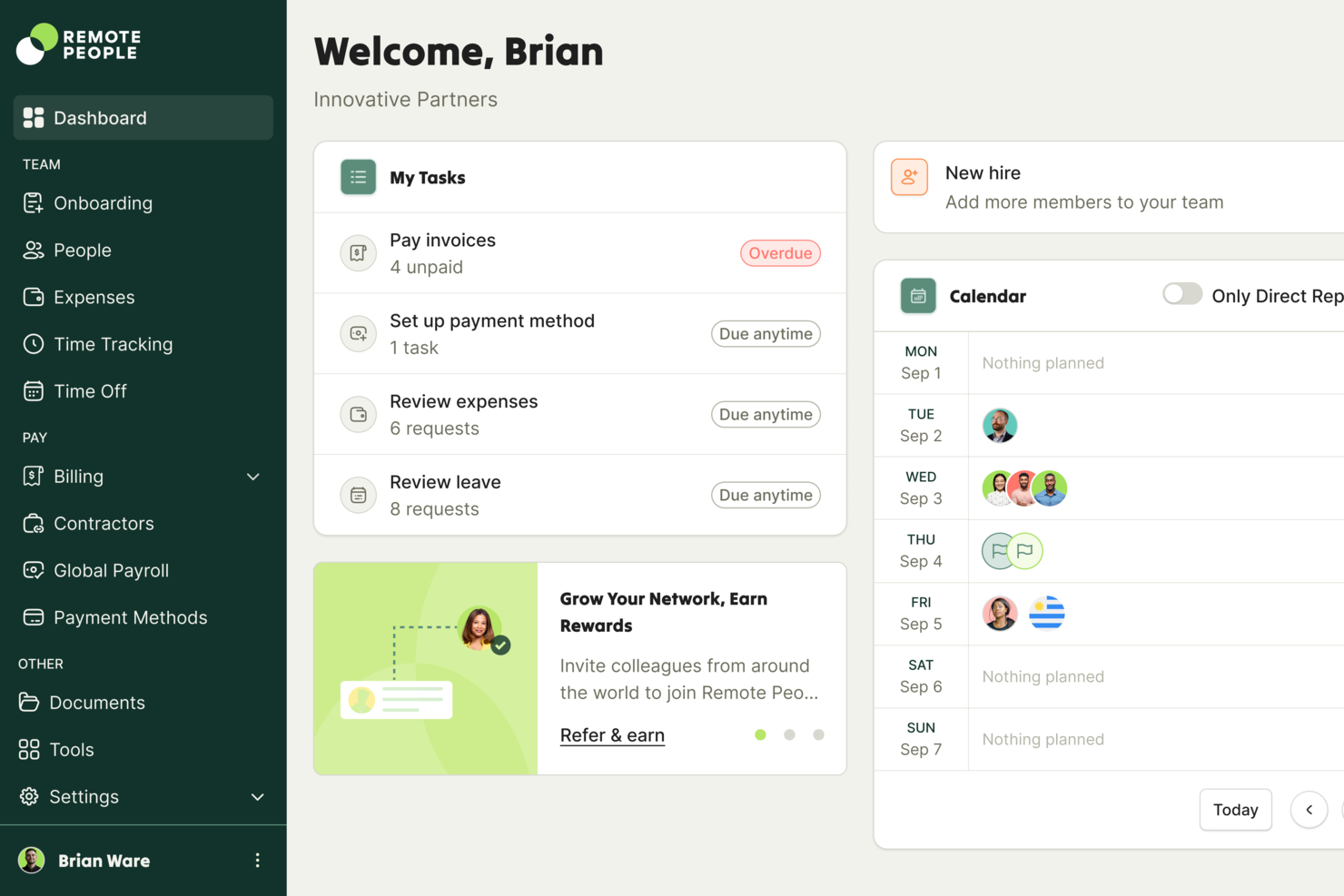
RemotePeople is an Employer of Record (EOR) service that helps businesses hire, manage, and pay employees in over 150 countries. Its platform simplifies onboarding, payroll, and compliance, making it a practical solution for companies expanding their global workforce.
Who is RemotePeople Best For?
HR teams, founders, and operations leaders at companies of all sizes hiring internationally. RemotePeople supports the full employee lifecycle, including international recruitment, Employer of Record services, contractor management, US PEO, global mobility, and entity incorporation.
Why I Picked RemotePeople
I picked RemotePeople for its comprehensive global payroll capabilities, ensuring employees are paid accurately and on time across 150+ countries. I also like how it manages legal compliance, helping you stay aligned with local tax regulations and employment laws without setting up foreign entities.
Additionally, RemotePeople stands out for its employee benefits administration, offering options like health insurance and retirement plans so your team feels supported worldwide. Its contractor management tools are another plus, making it easier to hire and pay freelancers while avoiding misclassification risks.
RemotePeople Key Services
Here are some key RemotePeople offers:
- Contractor of Record, COR: Compliant contractor engagement with classification protection.
- International recruitment: In house recruiters source three to five pre vetted candidates per role and provide a 90 day replacement guarantee.
- US PEO: Support for domestic hiring in the United States without setting up a legal entity.
- Global Mobility: Visa sponsorship, work permits, and relocation logistics handled in house.
- Entity incorporation: Support for companies transitioning from EOR to establishing their own subsidiary.
- Background checks: Cross jurisdiction background screening services.
- IT equipment provisioning: Equipment sourcing, shipping, and lifecycle management for global teams.
RemotePeople Integrations
RemotePeople currently does not list any native integrations.
Pros and Cons
Pros:
- Enables global hiring across 150+ countries
- Transparent pricing with competitive EOR rates
- User-friendly platform with strong customer support
Cons:
- Fewer integrations than larger HR platforms
- Reporting and analytics features somewhat limited

Best for 24/5 dedicated support

TopSource Worldwide gives your team a ready-made lifeline for hiring and paying people across borders — even if you don’t have a legal entity in the countries where you want to expand. If you’re building a globally distributed team, working across time zones, or simply want support for payroll, compliance, and HR administration, TopSource might save you a lot of headaches.
Who is TopSource Worldwide Best For?
HR and payroll teams at mid-size companies that value dedicated, extended-hour support for global payroll and HR operations.
Why I Picked TopSource Worldwide
I picked TopSource Worldwide because it offers dedicated 24/5 support with in-country and regional experts — meaning you can get timely answers for international payroll or compliance questions regardless of location or time zone. Its global-reach Employer of Record service covers 180+ countries, so you can legally hire staff without needing a local entity. And the platform enables customizable, locally compliant employment contracts and benefits packages, which help you tailor employment to local regulations while retaining control over how your distributed teams work.
TopSource Worldwide Key Services
Here are some key services worth highlighting:
- Global payroll processing: TopSource handles payroll, taxes, deductions, and pays out net salaries across multiple countries, relieving you of multi-jurisdiction payroll complexity.
- Dedicated Onboarding Support: Localised contracts, payroll setup and compliance support ensure employees are properly onboarded in line with local laws.
- Single Point Account Management: One named manager handles your global deployments, avoiding fragmentation across countries and services.
- Integration-Ready Platform: Central dashboard (called Portico in some sources) plus API connections let your existing HR/finance systems sync with TopSource data.
TopSource Worldwide Integrations
Integrations include major HR and payroll systems, single-sign-on platforms (SSO), and finance/ERP connectors (via API) — though specific native integrations are not exhaustively listed on their website.
Pros and Cons
Pros:
- Central dashboard plus API enables integration with existing tools
- Onboarding service tailored for region-specific employment contracts
- Named account manager offers personalised support
Cons:
- Some users report fewer self-service automation features.
- Implementation can be longer for multi-country setups

Best for global onboarding
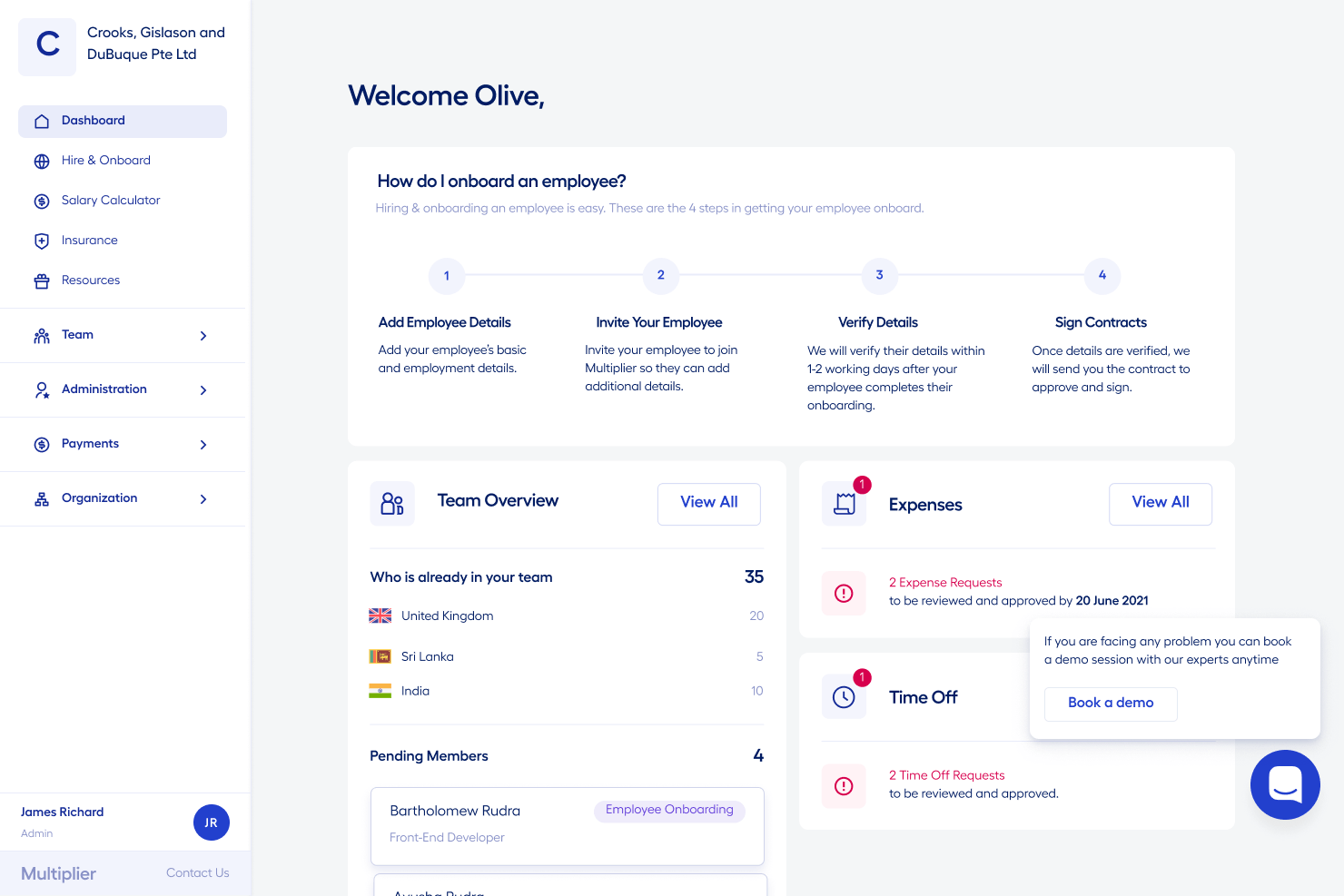
Multiplier’s Employer of Record service helps you hire international employees and contractors without needing to set up a legal entity abroad. You’ll avoid the legal and payroll complexities that come with global expansion, while gaining access to local-compliant contracts, payroll in dozens of currencies and a unified platform made for teams working across borders.
Who is Multiplier Best For?
HR teams at small to mid-size companies that need to onboard international employees quickly and consistently across multiple countries.
Why I Picked Multiplier
I picked Multiplier because it lets your team hire globally without you having to form entities in every country and its coverage spans 150+ jurisdictions. It's especially useful that you can create legally-compliant contracts in minutes and onboard new hires in days, not weeks.
It also supports paying your people in their local currency or preferred method, which means your global workforce gets paid as comfortably as your local team. On top of that, you get benefits packages and compliance managed via one dashboard, so you’re not juggling multiple vendors. All of this means you stay focused on your business while Multiplier handles the paperwork and payroll.
Multiplier Key Services
Here are some key services worth highlighting:
- Global entity network: Lets you legally employ talent in 150+ countries without setting up local companies.
- Rapid onboarding: Generate contracts quickly and onboard new team members often within 24-72 hours.
- Multi-currency payroll: Supports paying employees in 120+ currencies (including contractors and crypto options in some cases).
- Benefits & ESOP support: Allows you to offer local benefits and manage employee stock-ownership plans across borders.
Multiplier Integrations
Integrations include: Workday, SAP SuccessFactors, Netsuite, Expensify, single-sign-on systems (SSO), ADP payroll, BambooHR, and Slack.
Pros and Cons
Pros:
- Supports ESOPs and benefits globally, helping your team feel valued
- Pays in local currencies and supports global contractors
- Onboarding process often completed within days
Cons:
- Support coverage 24/5 instead of full 24/7 in some regions
- Limited deep customization of workflows compared to enterprise-only EORs

Best for compliance with European labor laws

Workmotion is ideal for companies looking to hire and manage international employees without setting up local entities. It acts as the legal employer in over 160 countries, handling global payroll, compliance, and HR processes so you can focus on expanding your business. Whether you’re hiring in Europe, Asia, or South America, Workmotion helps you onboard new team members quickly while ensuring adherence to local labor laws.
For HR leaders managing distributed teams, Workmotion offers peace of mind with its transparent pricing, automated compliance checks, and quick onboarding process, getting new hires set up in as little as 10 minutes. Businesses can confidently scale their teams globally without the usual delays or regulatory hurdles.
Who is Workmotion Best For?
HR teams hiring in Germany and nearby European markets where alignment with German labor laws is a key requirement.
Why I Picked Workmotion
I picked Workmotion because it makes international hiring remarkably fast and compliant. You can onboard employees within minutes while the platform manages payroll accuracy, benefits, and local employment laws in the background.
You keep control over your team’s day-to-day work while Workmotion becomes the legal employer, taking on the administrative and compliance burden of global employment. I also like that its intuitive dashboard centralizes every step of the employee lifecycle, from onboarding to offboarding, making it easy to manage a global workforce efficiently.
Workmotion Key Services
Here are some key services worth highlighting:
- Global Employer of Record (EOR): Hire employees in 160+ countries under Workmotion’s local entities, eliminating the need for your own legal presence.
- Automated compliance management: Ensures adherence to country-specific labor, payroll, and benefits regulations.
- Global payroll and HR automation: Processes multi-currency payroll with 99% accuracy and manages onboarding/offboarding tasks in one platform.
- Expense and document management: Handles expense reporting and tax compliance through a secure, user-friendly dashboard.
Workmotion Integrations
Integrations include BambooHR, Workday, HiBob, SafetyWing, and Personio.
Pros and Cons
Pros:
- Strong compliance automation tools
- Multi-country payroll processing
- Easy global onboarding and setup
Cons:
- There may be onboarding complexity in new markets
- Pricing may be steep for smaller businesses
TriNet
Best for co-employment model
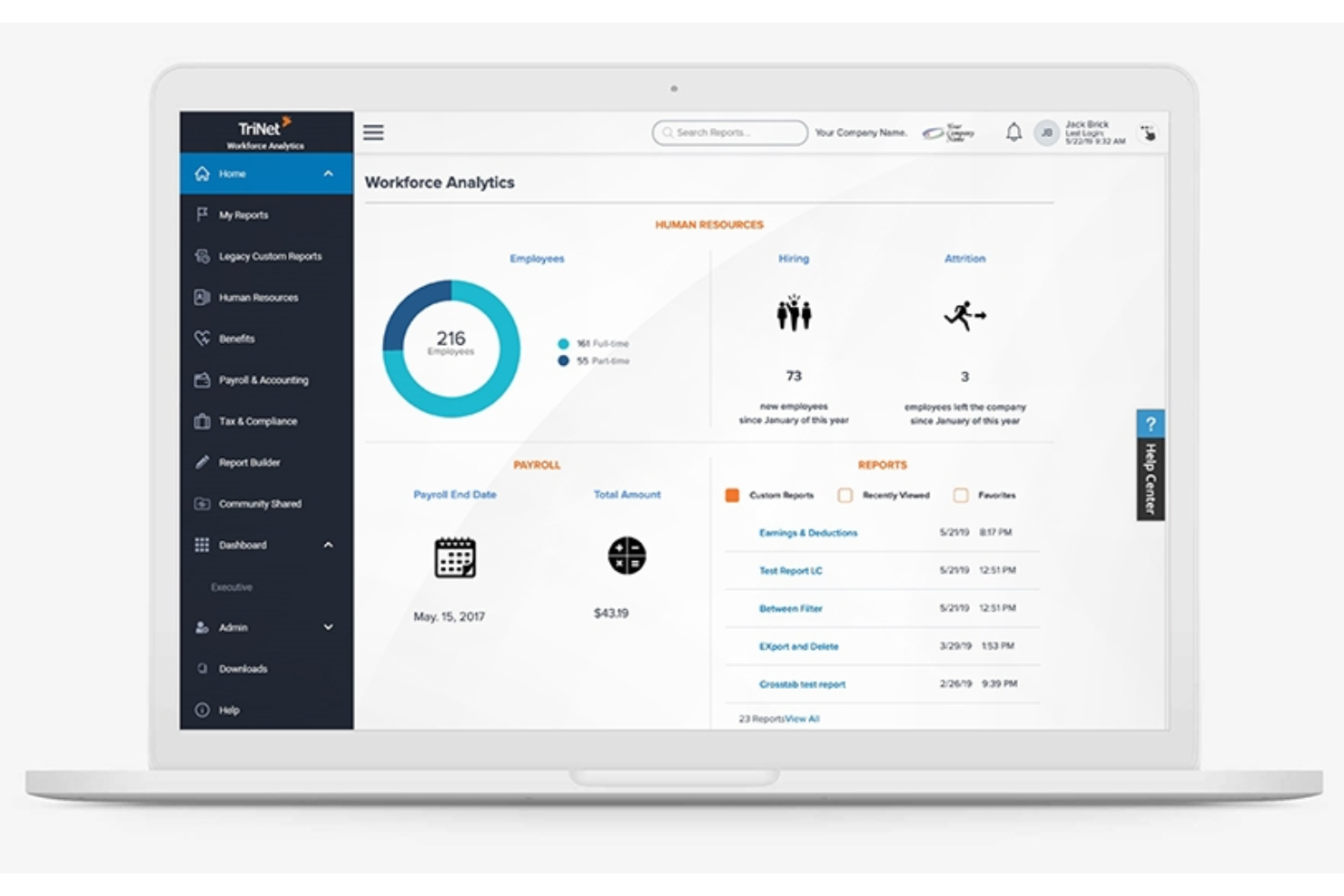
TriNet caters to small and medium-sized businesses seeking a reliable employer of record solution that simplifies HR complexities. With its focus on payroll, benefits administration, and compliance, TriNet addresses the challenges of managing HR functions, allowing you to concentrate on growing your business. Its tailored approach appeals to industries ranging from technology to healthcare, offering personalized support to meet diverse needs.
Who is TriNet Best For?
HR and operations leaders at U.S.-based small and mid-size businesses looking for a co-employment model covering payroll, benefits, and compliance.
Why I Picked TriNet
I picked TriNet for its unique co-employment model, which establishes a shared responsibility for HR tasks, allowing you to focus on core business activities. TriNet's payroll processing capabilities ensure accurate and timely employee payments, while its benefits management provides access to competitive packages. Compliance support is another standout feature, as TriNet helps you navigate complex employment laws with ease.
TriNet Key Features
In addition to its co-employment model, TriNet offers several other features that enhance its employer of record services:
- HR Consulting: Provides expert guidance on HR best practices and compliance.
- Risk Mitigation: Helps you manage and reduce employment-related risks.
- Employee Self-Service: Allows employees to access their information and manage benefits online.
- Global Workforce Management: Supports businesses with international operations.
TriNet Integrations
Integrations include Xero, Intuit QuickBooks, Oracle NetSuite, Sage Intacct, and additional APIs for custom integrations.
Pros and Cons
Pros:
- Access to competitive employee benefits
- Strong multi-state compliance support
- Comprehensive payroll and benefits management
Cons:
- Customer support responsiveness varies
- Pricing is upon request

Gusto
Best for U.S.-based companies hiring globally

Gusto Global (EOR) lets you hire and manage international employees from within the same platform you use for U.S. payroll and HR — a useful option if your business is based in the U.S. (or already uses Gusto) and you’re looking to grow abroad. It can appeal to HR leads, founders, or operations managers at small to medium businesses who want to expand globally without setting up local entities in every country.
Who is Gusto Best For?
HR and finance teams at U.S.-based small businesses beginning to hire internationally while keeping U.S. payroll as their primary setup.
Why I Picked Gusto
I picked Gusto because its Global offering — powered by Remote — brings global employment, payroll, and compliance under the familiar Gusto roof you may already use for U.S. operations. You get built-in compliance management for international hires, automatic global payroll and tax filings, and local-country benefits and pay support through Remote’s infrastructure. For a U.S.-based business expanding abroad, that combination reduces legal complexity and lets your HR team scale hiring worldwide without juggling separate vendors or entities.
Gusto Key Services
In addition to the core EOR functionality, Gusto includes useful tools that support global team management:
- Automated global tax filing and payroll processing: Once you add an international employee, payroll and taxes are handled for you — including direct deposit in local currency.
- Benefits administration for global employees: You can offer localized benefits packages (e.g. health, retirement, local compliance benefits) to international hires under the EOR arrangement.
- HR Management Support: Facilitate talent management and performance reviews with ease.
- Onboarding and offboarding workflows: Gusto supports creating offer letters, managing contracts, and handling exits for international hires through the same interface.
Gusto Integrations
Integrations include Amalgam, Syft, Aplos, ApplicantPro, QuickBooks, Xero, Clover, FreshBooks, Expensify, and When I Work.
Pros and Cons
Pros:
- Handles benefits administration for global staff via EOR model
- Lets you manage both U.S. and global employees in a single platform
- Simplifies global payroll and tax compliance for international hires
Cons:
- SMBs that need advanced compliance or niche industry-specific HR modules may find Gusto limiting.
- Less suitable for large enterprises needing deep reporting or complex workforce analytics
New Product Updates from Gusto
Gusto Adds Solo Advisory Tools and Mobile Money Features
Gusto adds Solo S-Corp Advisory Tools and Gusto Money on Mobile for tax guidance, invoicing, and bill payments. These updates help accountants advise solopreneurs and let users manage business finances from their phones. For more information, visit Gusto’s official site.

CXC Global
Best for compliance and risk management

CXCGlobal offers a strategic solution for businesses seeking an Employer of Record, particularly those navigating the complexities of global workforce management. With over 30 years of experience, CXCGlobal's services are tailored to industries like aviation, healthcare, and finance, where compliance and efficient management are critical. Their approach not only simplifies hiring processes but also reduces costs and enhances workforce engagement by ensuring compliance with local labour laws.
Why I Picked CXCGlobal
I picked CXCGlobal for its unique blend of advanced technology and human expertise that ensures efficient workforce management and compliance. Their Employer of Record services are particularly beneficial for businesses operating in over 100 countries, providing a reliable solution for managing local labor law compliance and reducing misclassification risks. Additionally, CXCGlobal's global payroll management feature supports seamless financial operations, making it an invaluable asset for companies with international reach.
CXCGlobal Key Features
In addition to their standout compliance solutions, CXCGlobal offers several key features that enhance its Employer of Record services:
- Global Payroll Management: CXCGlobal provides payroll processing across multiple countries, ensuring timely and accurate payments.
- Centralized Onboarding: This feature simplifies the onboarding process for contractors, enhancing their initial experience with your company.
- Scalability: CXCGlobal can manage workforce programs ranging from 30 to 3,000 workers, allowing businesses to scale operations as needed.
- Risk Management: Their services include extensive risk management to mitigate issues related to contractor misclassification and compliance.
CXCGlobal Integrations
Native integrations are not currently listed by CXCGlobal.
Pros and Cons
Pros:
- Regional regulatory expertise
- Scalable workforce program support
- Strong compliance risk mitigation
Cons:
- Pricing not publicly available
- Limited listed native integrations
Other Employer of Record Companies
Here are some other EOR service providers that didn't make the top list, in case you'd like a few more suggestions:
- Smart Outsourcing Solution
For compliant employment contracts
- Agility EOR
For tailored onboarding
- Borderless AI
Platform for modern global teams
- Atlas HXM
For scaling internationally
- Omnipresent
For hiring without local entities
- FoxHire
For technical and healthcare workers
- Safeguard Global
For multi-country payroll
- Lano
For compliant hiring across Europe
- Airswift
For energy and technology industries
- Agile HRO
For global mobility support
- Shield GEO
For simplifying international hiring
- Remunance
For compliance management in India
- Headway Workforce Solutions
For hospitality-focused roles
- Rippling
For dedicated local HR experts
- Remote
For fast and compliant global hires
- G-P
For flexible global payment options
- Worksome
For the UK and US
- Justworks
For hiring abroad without entities
- Papaya Global
For enterprises
- Oyster HR
For hiring visibility & cost transparency


Related HR Software Reviews
If you're looking for better HR tools in addition to services, check out these other core HR offerings, that we've tested and evaluated:
- HR Software
- Payroll Software
- Recruiting Software
- Applicant Tracking Systems
- Workforce Management Software
- Learning Management Systems
When to Use an EOR Service
An Employer of Record (EOR) helps you hire and manage employees internationally without the headache of setting up legal entities in every country. Here's when it makes the most sense:
- You're expanding into a new country: Say you need to bring on talent in Germany or Brazil, but you don't have a local office. Traditional entity setup can take 4–6 months. With an EOR platform, you can hire compliantly within days, keeping your expansion timeline on track.
- You're going through a cross-border M&A: If you're merging with or acquiring a company that operates internationally, an EOR handles the compliance and administrative burden across different employment regulations while you focus on integration.
- You're managing remote employees across multiple countries: When you have employees working in different countries, an EOR service simplifies payroll, contracts, benefits and compliance across multiple jurisdictions from one platform, so you're not juggling spreadsheets, multiple vendors, or scattered systems.
- Local employment laws feel overwhelming: Rather than building in-house expertise for every region's regulations around taxes, termination, benefits and workers' compensation, an EOR shoulders these legal responsibilities and compliance risks for you.
How I Evaluate Employer of Record
I split evaluation into three parts, weighting core functionality most: hire without a local entity and manage compliant contracts, payroll, tax, and benefits. Next, I look for contractor-to-EOR conversion and visa support, such as converting a contractor compliantly. Finally, I consider pricing, local expertise, and responsive support.
Core Functionality (Table Stakes For This List)
When I'm selecting tools for my list, I score each one on a scale from 0 (does not offer the functionality) to 5 (excels in this area) for each core functionality listed below. I then convert the total into a percentage to help assess each tool's overall fit, with extra weight on any functionalities I’ve deemed essential.
- Local Legal Entities (Essential): I check whether the provider can legally employ workers through owned entities or vetted in-country partners.
- Compliant Contracts (Essential): I look for localized agreements covering statutory terms, worker protections, leave, and required updates.
- Global Payroll: I assess accurate local-currency payroll across supported countries, cycles, deductions, approvals, and reporting.
- Benefits Administration: I check administration of statutory benefits, leave entitlements, pensions, insurance, and optional local benefits.
- Tax Withholding: I evaluate calculations, remittances, filings, social contributions, and accessible records for audits.
- Country Coverage: I consider whether one platform supports hiring across the markets your workforce may enter.
Once I have a list of tools that meet the criteria, I consider what sets each platform apart.
Differentiating Factors (What Sets Vendors Apart)
Here's how I compare and contrast different vendors:
Standout Features
I look for contractor-to-EOR conversion because misclassification risk grows fast when you're ready to bring a contractor on full-time. The best platforms handle reclassification without gaps in pay or benefits. I also evaluate immigration and visa sponsorship support, especially whether the vendor manages work permits in-house rather than outsourcing to local firms. Equity compensation is another factor I check, since issuing stock options across jurisdictions requires country-specific tax treatment and reporting.
Beyond Features
I look at whether a vendor owns its local entities or relies on third-party partners, since partner-heavy models can mean slower issue resolution and uneven compliance quality across regions. Pricing model matters too—flat per-employee fees are easier to forecast than percentage-of-salary structures, especially when hidden termination or currency conversion charges appear later. I also evaluate termination support, checking whether the vendor offers severance guidance and indemnification for high-risk offboarding scenarios.
It is advisable to select an EOR who has been successfully employing people in the country of interest for at least 3 years. By doing this you are more likely to engage an EOR that “has seen it all” and has had a chance to go through several cycles of employment in that country.
How to Choose an EOR Service
An EOR service can simplify the process of hiring and managing international staff. To help you figure out which EOR service best fits your needs, you need to document your specific challenges first.
As you work through your own unique selection process, try to answer the following questions thoroughly:
- What problem are you trying to solve? Start by identifying the challenges you're trying to overcome. This will help you clarify where you need the most help. These challenges may include:
- sourcing international talent within a specific geographic country,
- sourcing talent with unique knowledge regardless of the country they live in,
- managing compliance with laws and regulations in unfamiliar countries,
- paying existing or future employees in multiple currencies,
- offering international benefit plans to stay competitive in your industry, or
- navigating complex visa or work permit requirements for future new hires.
- Who will benefit from the service? Consider who will manage the EOR relationship (i.e., who will be your main contact person in-house?) and how having an EOR service would improve their day-to-day work. Next, identify their key priorities to ensure all their needs will be met. Your main EOR users will likely include the following, depending on the structure of your org:
- Chief of HR Operations (CHRO),
- Payroll processing specialists or Chief Financial Officer (CFO),
- Internal legal staff or legal department, and
- Talent acquisition staff.
- What is your budget? To evaluate cost, estimate how many foreign employees you anticipate hiring. Since EOR companies typically charge a monthly fee for each new hire, this will allow you to estimate your monthly costs proactively.
- If you need help convincing your executives to partner with an EOR, here's a useful tip. Outline the cost per employee under an EOR arrangement versus the total cost of establishing a new entity abroad. The latter option is almost always more expensive in the long term.
- What outcomes are important? Review the capabilities you want to gain or improve, and how you will measure success. Being clear on your desired outcomes upfront is crucial to avoid wasting valuable time. Key outcomes you may want to measure include:
- Reduced time to hire and onboard foreign employees,
- Decreased compliance-related legal issues or an improved compliance rate,
- Increased employee satisfaction among international staff, or
- Less time spent on international HR issues by your internal HR staff.
- Would the EOR platform work with your technical requirements? Consider how the service provider's software ecosystem would work alongside your existing workflows and systems. Does their software framework integrate with your existing HR software, or would you face data management roadblocks? Key integrations to review include:
- Your existing HR management system (HRIS, HCM, or HRMS),
- Your corporate workspace (Microsoft SharePoint, Google Workspace, etc.), or
- Your performance management system.
Remember every business is different — don’t assume that a global employer of record service will work for your organization just because it's popular.
During discovery calls, try to understand how their values align with yours and ask them to share success stories but also how they handle client concerns. Share key practices and expectations of your internal team and see how that compares with their HR practices, like payroll timelines and onboarding processes. In my experience the wins and frustrations of using EORs often came down to misalignment on the above.

Trends in Employer of Record Services
As global expansion becomes a strategic priority for many companies, the demand for streamlined, compliant, and scalable solutions to manage international hiring has surged. In response, EOR providers are altering their services to meet the needs of modern HR teams tasked with managing global workforces.
Today’s top EOR providers are increasingly offering the following services:
- Immigration Support: There is a growing demand for assistance with immigration services like visa and work permit sponsorships, simplifying global talent acquisition processes for client companies immensely.
- Specialized Services for Diverse Needs: Several EOR companies have begun to offer IP and invention rights protection and equity incentive planning services, to cater to the specific needs of their client companies.
- Enhanced Employee Benefits Packages: There's a growing trend in global EOR services going beyond standard healthcare coverage to offer a full spread of enterprise-level medical and health benefits, stock options, and even one-time benefits like moving bonuses. This trend demonstrates an understanding of the importance of attracting and retaining top talent globally.
- AI-Backed Knowledge Bases: Some global EOR services (including Deel EOR) are beginning to offer legally vetted knowledge bases or information wikis that use artificial intelligence to surface answers to common questions quickly. This helps customers source details on hiring within a specific country fast, without relying on human-run support systems.
As the market continues to evolve, these trends are likely to shape the future of international employment, making it easier for businesses to navigate the challenges of global expansion. For a closer look at specific EOR companies that are capitalizing on these trends, I recommend reading our in-depth reviews of Atlas HXM, and RemoFirst EOR.
What is an Employer of Record (EOR)?
An Employer of Record (EOR) is a third-party organization that becomes the legal employer for your workforce in countries where you don't have a legal entity.
While the EOR handles the employment paperwork (payroll, taxes, benefits, and compliance with local labor laws), you maintain complete control over your employees' day-to-day work, performance, and responsibilities. The EOR acts as the employer on paper while you remain the employer in practice.
This arrangement lets you hire internationally without the time, cost, complexity, and compliance risks of setting up subsidiaries or navigating unfamiliar employment regulations on your own.
EOR services are typically used by fast-growing startups expanding into new markets, remote-first companies building distributed teams, and enterprises testing markets before committing to full entity setups.
EORs are also popular with companies going through cross-border M&A or managing seasonal international hiring that doesn't justify permanent infrastructure.
An employer of record processes invoicing and salaries but reduces complexity by handling simpler payroll types, often focusing on salaried employees.

Key Employer Of Record Services
When selecting employer of record services, keep an eye out for the following key services:
- International payroll management: Effortlessly handle payments to employees across different countries, ensuring they’re paid on time and in the right currency. This helps you avoid banking headaches and pay slip confusion, especially if your team dabbles in multiple time zones.
- Compliance with local labor laws: Navigate complex employment regulations with confidence. Employer of record services stay up to date on ever-changing labor laws, so you can hire globally without risking penalties or unexpected legal surprises.
- Benefit administration: Offer competitive benefits packages, like health insurance and retirement plans, that meet local standards. This not only helps you attract top talent but also keeps your global teams happy.
- Onboarding support: Streamline the onboarding process for new hires, no matter where they are located. You get support with contracts, documentation, and background checks, making sure your team feels welcomed from day one.
- Employment contracts and documentation: Get help drafting, managing, and storing employment contracts that are both thorough and compliant. This saves you late-night legal research and potential language barriers.
- Tax and statutory filing: Ensure all payroll taxes, social security contributions, and government filings are managed accurately and on time. You won’t need to become an expert in cross-border taxes—leave that to your EOR provider.
- Risk mitigation: Rely on proactive risk assessments and compliance checks to identify issues before they become costly mistakes. You reduce exposure to fines and disputes while focusing on your business’ bigger picture.
- Termination and offboarding assistance: Handle separations and terminations respectfully and legally. The service manages final payments, paperwork, and compliance, supporting a smooth and professional offboarding experience.
Common Employer Of Record Services AI Features
Increasingly, EOR services are using AI features to improve their offering. Examples include:
- Chatbot support for queries: AI chatbots answer employee questions about payroll, benefits, and contracts instantly, reducing wait times and improving support around the clock.
- Automated compliance monitoring: AI continuously scans global legislation changes and updates processes, helping you dodge regulatory slip-ups even as rules shift.
- Intelligent document management: Smart systems organize, review, and flag required employment documents. You can spot missing signatures or incomplete forms without sifting through endless files.
- Payroll optimization algorithms: AI analyzes payroll data trends to identify errors or suggest more cost-effective solutions, all so your payment process stays accurate and efficient.
- Predictive hiring analytics: AI identifies hiring needs and talent trends across regions, so you can plan future workforce expansions with data-backed confidence.
- Personalized onboarding experiences: Machine learning tailors onboarding steps and resources for each employee, boosting engagement and making every new hire’s first days more memorable.
Leveraging employer of record (EOR) services is critical to ensure compliance with international labor laws.

Benefits of an EOR Service
EOR services are a smart solution for companies expanding globally since they remove the complexities of local labor laws, payroll systems, and compliance requirements. Whether you’re hiring your first international employee or scaling across multiple regions, EORs make it faster and safer to build a global team.
Here are several benefits you can expect when using an EOR service:
- Quick Market Entry: For organizations aiming to test new markets or hire talent in new countries where they have no legal presence, an EOR offers a swift and efficient solution to initiate operations, saving time and resources.
- Simplified Global Payroll: Using an EOR service simplifies the complex process of managing international payroll, including tax deductions, withholdings, and currency conversions for your employees worldwide.
- Global Compliance & Risk Mitigation: By managing compliance, an EOR service provides expertise in navigating the intricacies of employment laws, tax regulations, and insurance requirements in multiple jurisdictions, helping businesses safeguard their operations against compliance-related risks.
- Enhanced Benefits Negotiation: By leveraging their extensive networks and purchasing power, EORs can negotiate better international insurance rates and secure competitive benefit packages on your behalf, enhancing your ability to attract and retain top talent worldwide.
- Improved Cost Effectiveness: Using an EOR service is a cost-effective way for businesses to enter new markets, compared to the significant costs of establishing a new foreign entity. The latter option involves significant upfront legal fees, plus other costs related to office infrastructure, staffing, and local benefits and insurance coverage.
Understanding the benefits of an EOR service is crucial for strategic planning and operational efficiency. As businesses look towards international markets for growth opportunities, partnering with an EOR provider offers a streamlined, cost-effective, and compliant pathway to global expansion.
Need a bit more firepower to convince your upper management to partner with an EOR service? Focusing on the costs of hiring a foreign employee and how an EOR can simplify the hiring process might just be the winning strategy you need.
Costs & Pricing for EOR Services
Typically, the cost of an EOR service follows a fee per-employee, per-month pricing model, which can vary widely depending on a range of factors. This model allows for scalability and predictability in budgeting for international expansion efforts.
In general, EOR services cost between $199 to $650/employee/month. However, key factors that can influence the pricing of an employer of record service include:
- Geographic Location: Costs can vary significantly based on the EOR country or countries you're hiring in. This is due to local economic conditions, labor laws, and the complexity of compliance requirements.
- Employee Seniority and Role Complexity: The level and nature of the roles being filled can also impact the monthly cost. Senior positions or roles requiring special qualifications may increase the price due to higher benefits and compensation management costs.
- Number of Employees: The total number of employees being managed can also impact the cost. In some cases, higher volumes may lead to volume discounts, making per-employee costs more economical.
- Custom Requirements: Any specific needs beyond the standard service offering may also contribute to the monthly cost. This may include customized employer of record solutions for recruitment, specialized employee onboarding, or unique compliance requirements, all of which can affect pricing.
If you want a deeper breakdown of how pricing works, check out my full guide to EOR pricing models.
When evaluating providers, make sure to consider how these pricing structures align with your business goals and budget. Anticipating the scale and complexity of your global hiring plans will also help you choose an EOR that offers both value and flexibility.
New & Noteworthy Product Updates
Below, I've summarized the most recent release notes and product updates for my top EOR service recommendations. Discover what’s now possible through new service improvements, software features, and other company updates, and why it matters for EOR services.
2025 Q4: EOR Software Updates
Deel Update Notes

Deel’s November 2025 update introduces key improvements across onboarding, payroll, finance, and IT, all aimed at making global HR operations more seamless. The redesigned onboarding experience now includes a home-screen Product Activation Tracker for clients and a unified guided flow for new hires—contractors and employees alike—resulting in smoother launches and fewer drop-offs during setup.
Hiring and offer management are faster and cleaner with the ability to generate offer letters directly from EOR quotes, reducing friction and delay when closing candidates. For contractors, recurring items like bonuses or reimbursements can now be scheduled, and expense workflows have been unified across worker types, making it easier to process claims and run off-cycle payroll when needed.
Finance teams benefit from new features like real-time control over EOR card spending and live accounting entries via integration with Puzzle—offering instant insight into payroll costs without manual reconciliation. On the IT side, role-based policy assignment, 2FA status tracking, and granular SSO controls help companies stay compliant while scaling securely.
Verdict: Hot! This update is a well-executed step forward for companies managing distributed teams. By automating previously manual steps across HR, finance, and IT, Deel makes it easier to onboard, pay, and secure a global workforce—all without adding headcount.
Borderless AI Update Notes
In their recent update, Borderless AI added a new connector for ADP that lets you choose an ADP hiring template when creating a new hire. They also improved invoice handling: invoices will now show a “Returned Payment” status when a payment fails or is returned — giving immediate visibility into payment problems.
Under the hood, several bug‑fixes and reliability improvements were rolled out: invoice PDFs now include all line items, the invoice creation flow is more robust (preventing errors when “Next” is clicked multiple times), and the contractor invoice detail page now loads correctly even when “Approved By” information is missing.
Payment‑method management and timesheet file–uploads were stabilized (unsupported file types now produce clear error messages, max filename lengths increased), and overall payout reliability was enhanced.
Verdict: Warm! While none of the changes are revolutionary on their own, collectively they meaningfully increase reliability, flexibility, and operational clarity — solid enhancements for companies managing global or mixed‑workforce payrolls.
Pebl Update Notes
Pebl’s October 2025 announcement introduces a major new tool — Alfie — aimed at dramatically simplifying global hiring and compliance for companies.
Alfie is an AI assistant built on Pebl’s compliance database covering 185+ countries. It transforms complex local employment regulations into clear, actionable guidance; provides upfront cost estimates; helps verify documents and contracts; and enables companies to go from quote to compliant hire in minutes.
It removes the usual friction and risk associated with entering new markets: no more waiting weeks to get compliance answers, fewer surprises on costs, and much faster time‑to‑hire. It also gives transparency and confidence when comparing different countries before expanding.
Verdict: Hot! Alfie feels like a genuine leap forward for global workforce management — especially for companies like yours looking to grow across borders.
FAQ: Employer of Record Services
Here are some answers to frequently asked questions people often have about EOR services and how they work:
How do I choose the right EOR provider for my country or region?
Start by checking if the EOR supports local compliance, payroll, and benefits in your target country. Look for in-country expertise, service scope, platform integrations, data security standards, and positive client reviews. Ask for references in your region and check how they handle support questions or urgent issues.
Interested in hiring within a specific country? We’ve created specialty lists covering the best EOR services in Canada, the best UK EOR services, and the best service providers for EOR in Australia, EOR in India, EOR in Italy, EOR in France, EOR in Spain, EOR in Portugal, EOR in Germany, EOR in Denmark, EOR in Switzerland, EOR in the Netherlands, EOR in Turkey, EOR in Brazil, EOR in Chile, EOR in Colombia, EOR in Singapore, EOR in Indonesia, EOR in the Philippines, EOR in China, EOR in Hong Kong, EOR in Japan, and EOR in the UAE as well.
Can EOR services help with employee relocation?
Yes, EOR services can assist with employee relocation, especially when it involves international moves. EORs are adept at managing the complexities of hiring across borders, including immigration and visa processes, ensuring compliance with local employment laws, and facilitating the smooth transition of employees.
By leveraging their global expertise and infrastructure, EORs can help businesses expand their operations into new markets without needing to establish local entities. This support extends to handling all the administrative and legal aspects of employment, making it easier for companies to relocate employees globally.
Does an EOR service include access to software?
Yes, most EOR providers include access to their software through a client portal. These platforms help manage payroll, time tracking, and compliance while giving you visibility into employee data and streamlined communication.
Some EORs offer full access at no extra cost, while others may charge for advanced features—so it’s worth clarifying during the selection process.
Look for systems that integrate with your existing HR tools or offer API connections to avoid data silos and manual updates. If you need detailed time tracking for invoicing, ensure the platform supports it and syncs with your internal systems in real time.
What's the process of terminating an employment contract through an EOR?
To terminate an EOR employee, you’ll notify your EOR provider, who’ll guide you through the necessary steps based on local laws, notice periods, and severance rules. The EOR will handle compliance, final pay, and documentation to protect you and your company from legal risk.
The EOR’s expertise ensures that the termination process is conducted fairly and in line with the specific regulations of the EOR country where the employee is based. Businesses benefit from this arrangement by minimizing their legal risks and administrative burden during the termination process.
Do EOR providers offer other types of global HR services?
Yes, many EOR service providers also offer professional employer organization services (also known as PEO services), as well as global payroll services.
PEO services are a way of outsourcing portions of your HR function to support your international teams. They can help you with international compliance issues, benefits administration, workers’ compensation, and other HR administrative tasks.
Global payroll service providers help global businesses compensate remote workers and freelancers in their local currency of choice, all within a single payroll cycle. These services also handle local compliance regulations and tax requirements on your behalf, making the international payroll process much easier.
Is a global employment organization (GEO) or global employer of record (GEOR) the same as an EOR company?
A global employment organization (GEO), also known as a global employer of record (GEOR), provides the same core services as a traditional EOR (for example, handling payroll, taxes, benefits, and compliance) but typically operates at a broader, multi-country scale.
Some providers use the terms interchangeably, but here’s how to spot the difference:
-
EORs often focus on specific countries or regions.
-
GEOs/GEORs emphasize global workforce management across multiple jurisdictions.
To assess the scope:
-
Check their country coverage and service descriptions.
-
Look for global benefits support or workforce mobility services.
-
Review client logos—multinational clients may indicate GEO capabilities.
If you’re unsure, reach out directly. Most EORs offer consultations and country directories on their websites, which can help confirm whether they meet your global expansion needs.
How do EOR services handle data privacy and security?
EOR providers take data privacy seriously, following global and local regulations like the GDPR in the EU. They use safeguards such as data encryption, secure storage, and role-based access controls to protect sensitive employee information.
Because EORs manage personal and financial data across borders, compliance with privacy laws is a top priority. Most providers also conduct regular audits and update their systems to stay aligned with evolving security standards.
When evaluating an EOR, ask about their compliance protocols, security certifications, and how they manage cross-border data transfers. Always confirm how your employee data is stored, processed, and shared.
What compliance protections does an EOR guarantee for my organization?
A good EOR assumes responsibility for local labor law compliance, payroll taxes, and required benefits. This limits your company’s legal exposure. Still, always ask for specifics on their guarantees, liability terms, and how they handle changes in legislation.
What are some of the consequences of non-compliance?
Hiring international employees without following local labor laws can expose your company to serious risks. Non-compliance (intentional or not) can result in:
- Fines and penalties
- Legal actions such as lawsuits or other litigation proceedings
- Mandatory corrective measures or compliance orders
- Loss of business licenses or operating permits
- Reputational damage from public exposure
- Increased government scrutiny
Because labor laws vary by country, staying compliant is complex, and ignorance isn’t a valid legal defense. This is why many businesses use EOR services: they reduce legal risk by ensuring local compliance on your behalf.
Are there any risks to using an Employer of Record service?
While EORs reduce many international hiring risks, they’re not entirely risk-free. Here are some key areas to watch:
- Hidden fees for onboarding, offboarding, or HR support
- Mandatory benefits costs added to salary and service fees
- Currency fluctuations that affect payroll expenses
- Data security concerns, especially if the EOR lacks strong encryption, certifications (e.g. ISO 27001), or incident response protocols
- Loss of control over HR processes for EOR employees
- Reputation risk if your EOR mishandles issues or provides a poor employee experience
Choosing a reputable EOR with clear pricing, strong security practices, and transparent communication can help you minimize these risks.
Can I transfer employees from my own entity to an EOR?
Yes, you can often transfer employees to an EOR. The process usually involves ending your existing contract, then rehiring the employee under the EOR. The EOR manages contracts, compliance, and benefits, but a thoughtful transition plan minimizes disruption.
How quickly can I hire an employee using an EOR service?
Hiring through an EOR is usually fast—often between a few days to two weeks—since the EOR has legal entities already established. Timelines depend on the country, the complexity of the role, and how quickly required documents are submitted.
What's the difference between an EOR and a staffing agency?
An EOR and a staffing agency both help businesses hire employees, but they operate differently:
- An EOR takes on legal responsibility for employees, handling everything from payroll, taxes, and compliance with local labor laws. The company remains in charge of the day-to-day management of the employees, but the EOR is the official employer on paper.
- A staffing agency, in contrast, primarily sources and recruits temporary or contract workers for short-term projects or to fill skill gaps. The staffing agency typically handles the hiring process but does not act as the legal employer for long-term employees.
In what scenarios is it better to use an EOR service instead of a staffing agency?
An EOR service is the better choice when you want to hire full-time employees in countries where you don’t have a legal entity. It allows for quick onboarding while ensuring full compliance with local employment laws—ideal for long-term hiring and international expansion.
Staffing agencies, on the other hand, are typically used for short-term or project-based roles, where fast placements are needed and compliance requirements are minimal.

For a detailed breakdown of both models, check out our full guide comparing EOR and staffing agency services and our pick of the best staffing agencies.
Why would you use an EOR service to pay an international contractor?
Using an EOR service to pay contractors, in addition to your international employees, can be beneficial for several reasons:
- Simplified Payment Processes: With your EOR already managing payments for your international staff, adding a few additional independent contractors onto your EOR payroll register is an easy and cost-effective solution that ultimately removes additional hassles from the desk of your in-house HR staff.
- Lower Service Costs: Many EOR services will manage contractor payments for substantially lower fees than what they charge for an EOR employee. For example, Remote charges $599 per EOR employee/month, but only $29 per contractor/month, with similar pricing differentials offered by other popular EOR providers too, including Deel, Papaya Global, RemoFirst, Multiplier EOR, and others.
- Compliance Assistance: Just because we're referring to contractors instead of employees, that doesn't mean there are no compliance requirements. An EOR service can assist with the required tax filings for remote workers and those required for independent contractors, including Form 1099, Form 1096, and many others.
- Risk Mitigation: EOR services are also well-positioned to help their clients avoid employment-related risks, such as the potential misclassification of workers as contractors when they should technically be considered full-time employees. Their specialized knowledge of labor laws can help organizations avoid the costly legal and financial repercussions that misclassification often entails.
EOR vs. PEO Services
The main difference between EOR and PEO services is the legal status of the parent company. If you're interested in hiring remote employees in a country where you don't have a legal entity established, then an international Employer of Record service is what you need.
On the flip side, if your organization already has a legal entity established in a foreign country and your in-house HR staff just need additional help with hiring and managing international talent, you can opt to outsource specific parts of your HR services through a PEO agreement.
Under a PEO agreement, your organization and the PEO company enter a co-employment situation where each party has distinct legal responsibilities.
Here is an easy way to understand the differences between PEO and EOR services:
| Feature | PEO (Professional Employer Organization) | EOR (Employer of Record) |
| Employment Relationship | Serves as co-employer | Serves as full legal employer |
| Responsibilities & Liabilities | Shares responsibilities and liabilities | Assumes full responsibilities and liabilities |
| HR Function Coverage | Can act as your entire HR function | Can take over a portion of your HR function |
| Minimum Employee Requirements | Provides services for a minimum 5-10 employees | Has no restriction on minimum number of employees |
| Registration Requirements | You have to be registered in the state or country you're employing in | Allows you to easily expand into different provinces or regions |
Still not sure which one is right for you? Check out our detailed comparison of PEO vs EOR services to figure out which service meets your needs.
What is Co-Employment?
A co-employment relationship is a situation where two separate entities share employer responsibilities for the same employee, such as in an EOR or PEO scenario. Under a co-employment arrangement, the responsibilities are divided between the client company and the other legal body (the EOR or PEO company).
The client company controls the employee's workload and day-to-date activities. This includes supervising the employee, assigning work, and making decisions about the employee's role within the company.
The PEO or EOR company manages administrative and HR-related functions such as payroll processing, benefits administration, compliance with employment laws, and tax filing.
Tips for Selecting the Best EOR Service Provider for You
To help you select the best EOR service provider to work with, you need to have a clear idea of your specific needs so you can be sure the EOR provider addresses them. To help you hone in on that quickly, try answering the following questions:
- Are you interested in hiring new employees within a specific country? If so, how much experience does the EOR have in that country?
- Does the EOR have a proven track record in the region you're interested in, such as North America or Asia?
- Is the Employer of Record company a global employer of record, or are they only active in specific regions?
- How long has the EOR been in business for?
- Does the EOR have a permanent local entity in the country you're interested in hiring in, or are they using a local partnership instead?
- Does the EOR handle all the areas you need support with, including sourcing top talent, international payroll & taxes, work permits, health benefits, background checks, and more?
- Will the EOR provider assist you if you do decide to open up a foreign entity of your own? Could you retain their services under a PEO agreement instead?
- How do their services and fees compare to other international EOR providers you're considering?
Use these questions to vet your top three choices for EOR providers and the best choice for you should become clearer. And if you'll mostly be working with contractor or freelance workers, contractor management software might also be something to consider using.
Other Resources & HR Services
With international employment on your mind, I recommend checking out these other helpful articles too:
- Best Global HR Service Providers
- Best Compliance Software for HR Departments
- Best Benefits Administration Software
 Services logos-75191-1024x571.png)