Resource Guru Review 2026: Pros, Cons, Features, and Pricing



Resource Guru is an employee scheduling software for teams that need to track who's available, assign work across projects, and manage time off without switching between tools. I'd consider it over Float if your team needs leave management and capacity planning tightly connected within the same scheduling view, rather than handled as separate workflows. It's especially well-suited to agencies and project-based teams where resource conflicts and overbooking are a daily reality.
Resource Guru Evaluation Summary
- From $5/user/month (billed annually)
- Free trial available
Why Trust Our Software Recommendations
Our team has been testing and reviewing software since 2012. As HR experts ourselves, we know how difficult—and important—it is to choose the right software.
For this guide, we evaluated tools using hands-on testing and independent research, scoring tools using our selection criteria. We also draw on insights from industry thought leaders and practicing HR experts.
Our reviews reflect our human editorial judgment, not a sales pitch.
Expert reviewers:
Resource Guru Overview
In my opinion, Resource Guru stands out for its intuitive drag-and-drop interface, fast onboarding, and real-time availability tracking. I think the pricing is fair for midsize teams, though solo users might find fewer cost advantages. The scheduling visuals make it easier to judge conflicts and workloads at a glance. While its integrations are a bit lighter than some competitors, the simplicity helps HR leaders avoid overcomplications.
I’d select Resource Guru for fast-paced agencies, consultancies, and distributed teams where balancing people and project needs is a core challenge.
pros
-
Visual calendar makes resource allocation clear for teams
-
Leave management and booking approvals integrated in one platform
-
Fast search and filter options for large resource pools
cons
-
Reporting tools are basic compared to analytics-focused tools
-
No built-in mobile app for on-the-go scheduling
-
User permissions lack fine-grained access controls
-

Justworks
Visit WebsiteThis rating combines scores from multiple user review sites to reflect overall customer sentiment about the product.4.6 -
Prevue Assessments
Visit WebsiteThis rating combines scores from multiple user review sites to reflect overall customer sentiment about the product.4.6 -
Small Improvements
Visit WebsiteThis rating combines scores from multiple user review sites to reflect overall customer sentiment about the product.4.3





How We Test & Score Our Tools
We’ve spent years building, refining, and improving our software testing and scoring system. The rubric is designed to capture the nuances of software selection and what makes a tool effective, focusing on critical aspects of the decision-making process.
Below, you can see exactly how our testing and scoring works across seven criteria. It allows us to provide an unbiased evaluation of the software based on core functionality, standout features, ease of use, onboarding, customer support, integrations, customer reviews, and value for money.
Core Functionality (25% of final score)
The starting point of our evaluation is always the core functionality of the tool. Does it have the basic features and functions that a user would expect to see? Are any of those core features locked to higher-tiered pricing plans? At its core, we expect a tool to stand up against the baseline capabilities of its competitors.
Standout Features (25% of final score)
Next, we evaluate uncommon standout features that go above and beyond the core functionality typically found in tools of its kind. A high score reflects specialized or unique features that make the product faster, more efficient, or offer additional value to the user.
We also evaluate how easy it is to integrate with other tools typically found in the tech stack to expand the functionality and utility of the software. Tools offering plentiful native integrations, 3rd party connections, and API access to build custom integrations score best.
Ease of Use (10% of final score)
We consider how quick and easy it is to execute the tasks defined in the core functionality using the tool. High scoring software is well designed, intuitive to use, offers mobile apps, provides templates, and makes relatively complex tasks seem simple.
Onboarding (10% of final score)
We know how important rapid team adoption is for a new platform, so we evaluate how easy it is to learn and use a tool with minimal training. We evaluate how quickly a team member can get set up and start using the tool with no experience. High scoring solutions indicate little or no support is required.
Customer Support (10% of final score)
We review how quick and easy it is to get unstuck and find help by phone, live chat, or knowledge base. Tools and companies that provide real-time support score best, while chatbots score worst.
Customer Reviews (10% of final score)
Beyond our own testing and evaluation, we consider the net promoter score from current and past customers. We review their likelihood, given the option, to choose the tool again for the core functionality. A high scoring software reflects a high net promoter score from current or past customers.
Value for Money (10% of final score)
Lastly, in consideration of all the other criteria, we review the average price of entry level plans against the core features and consider the value of the other evaluation criteria. Software that delivers more, for less, will score higher.
Core Features
Drag-and-Drop Scheduling
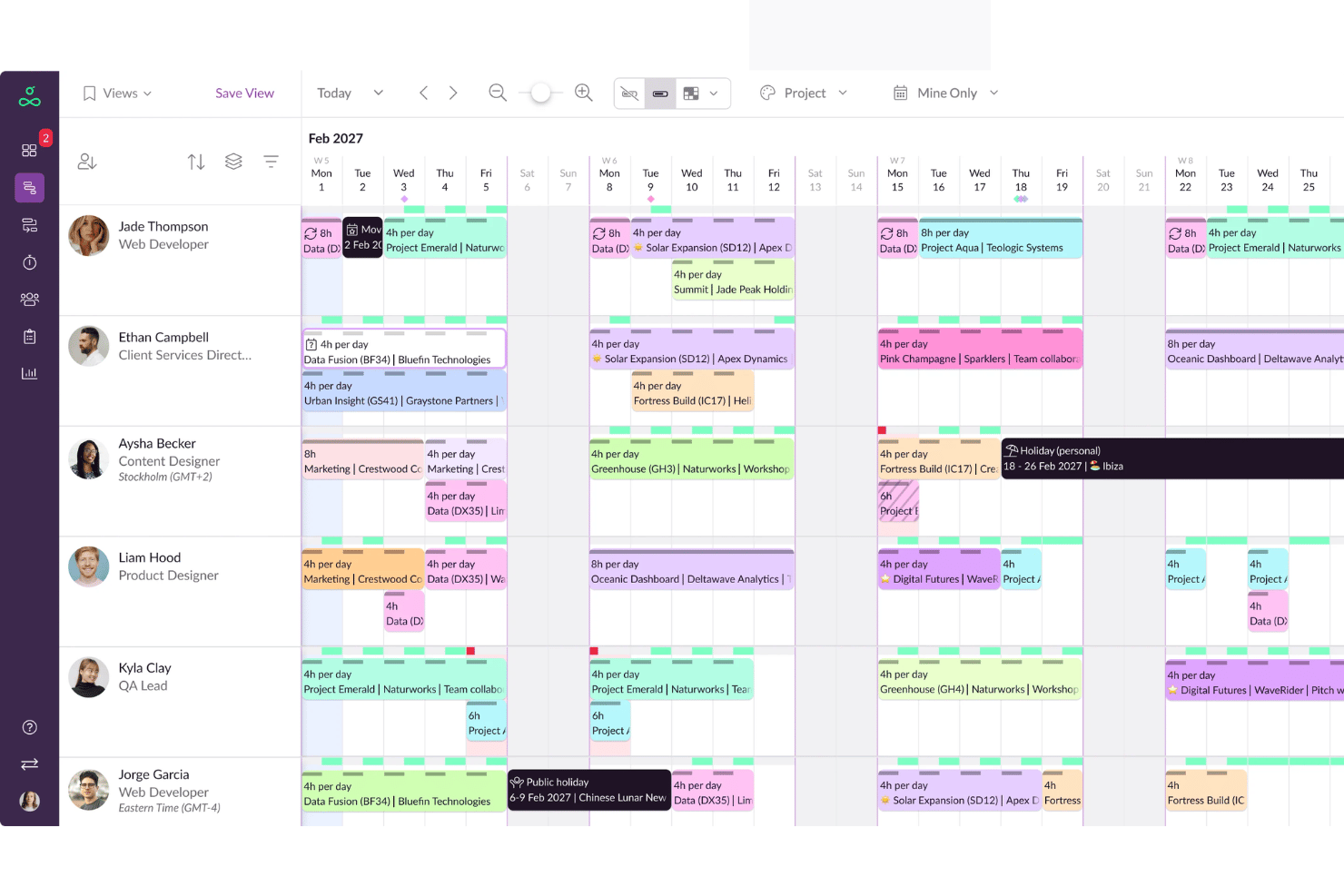
Quickly assign, move, or modify shifts on a visual calendar. This setup makes it easy to spot conflicts and handle last-minute changes.
Leave Management
Track holidays, sick leave, and time off alongside work bookings. Requests go through built-in approval workflows, so you never double-book.
Resource Availability Tracking
See who’s free, partially booked, or unavailable in real-time. Color-coded cues make it simple to balance workloads across teams.
Custom Fields and Filters
Tag resources with skills or attributes and filter schedules instantly. This helps HR teams match the right people to the right projects.
Utilization and Capacity Reporting
Monitor workload distribution, booking trends, and resource utilization at a glance. Clear charts help managers plan staffing and avoid burnout.
Clash Management
Automatic conflict detection flags double-bookings right away. You get warnings before a booking is confirmed, ensuring schedules stay accurate.
Ease of Use
I find Resource Guru especially user-friendly thanks to its clean, drag-and-drop scheduler and instantly clear color-coding. Most users say onboarding takes minutes, not days, and the dashboard’s simplicity means less confusion—no endless menus or hidden actions.
Even with bigger teams or fast-changing schedules, the interface stays fast and responsive, which helps everyone get their shifts right the first time.
Integrations
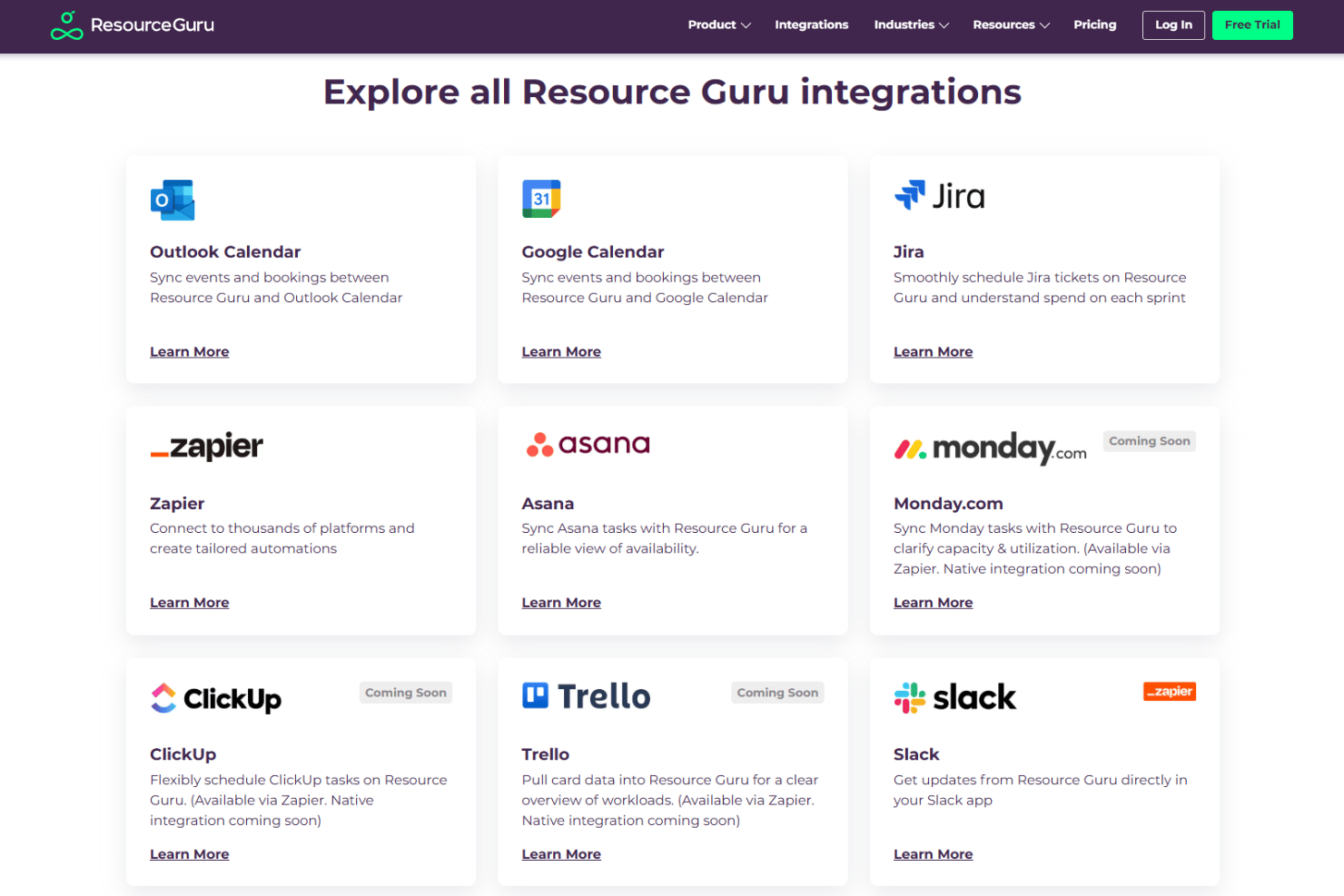
Resource Guru integrates with Outlook Calendar, Google Calendar, Jira, Slack, Microsoft Teams, Google Sheets, Salesforce, Workday, Basecamp, and QuickBooks.
Resource Guru also offers an open API and connects with third-party tools via Zapier for additional integrations.
New Product Updates from Resource Guru

Resource Guru Adds More Control Over Calendar Sync
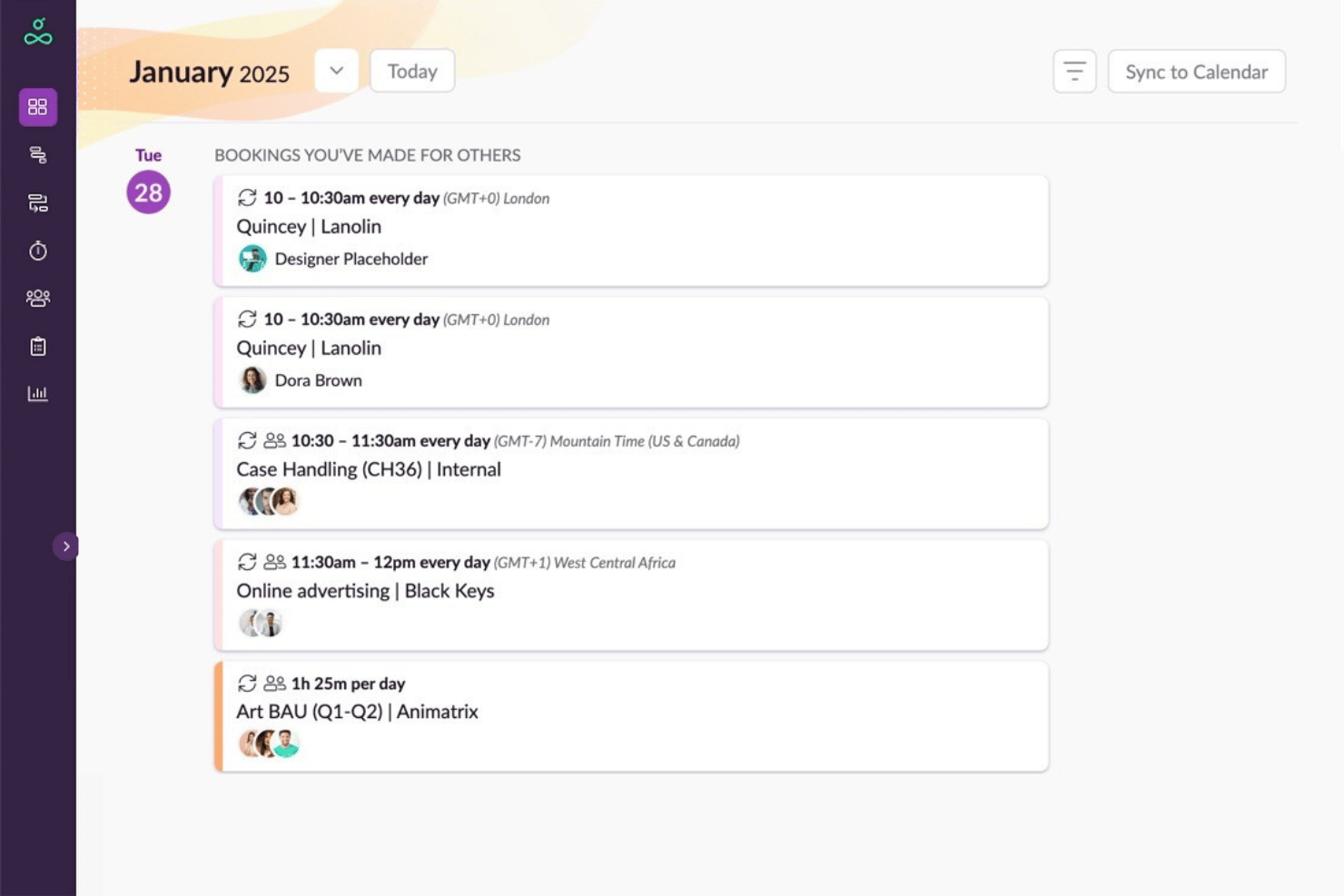
Resource Guru adds options to choose which Google or Outlook calendars sync events into Resource Guru and whether Resource Guru bookings appear on a main or separate external calendar. These controls give users more flexibility over calendar visibility and scheduling. Highlights include:
- Source Calendar Selection: Choose which Google or Outlook calendars send events into Resource Guru.
- Main Calendar Sync: Send Resource Guru bookings to the primary external calendar for a unified schedule.
- Separate Calendar Sync: Keep Resource Guru bookings on a dedicated calendar that can be shown or hidden independently.
- Calendar Visibility Controls: Reduce clutter by deciding where external and Resource Guru events appear.
- Two-Way Sync Options: Configure how bookings move between Resource Guru and connected calendars.
Visit Resource Guru’s official site for more details.
 for more details.
Resource Guru Adds Flexible Total Hours Bookings
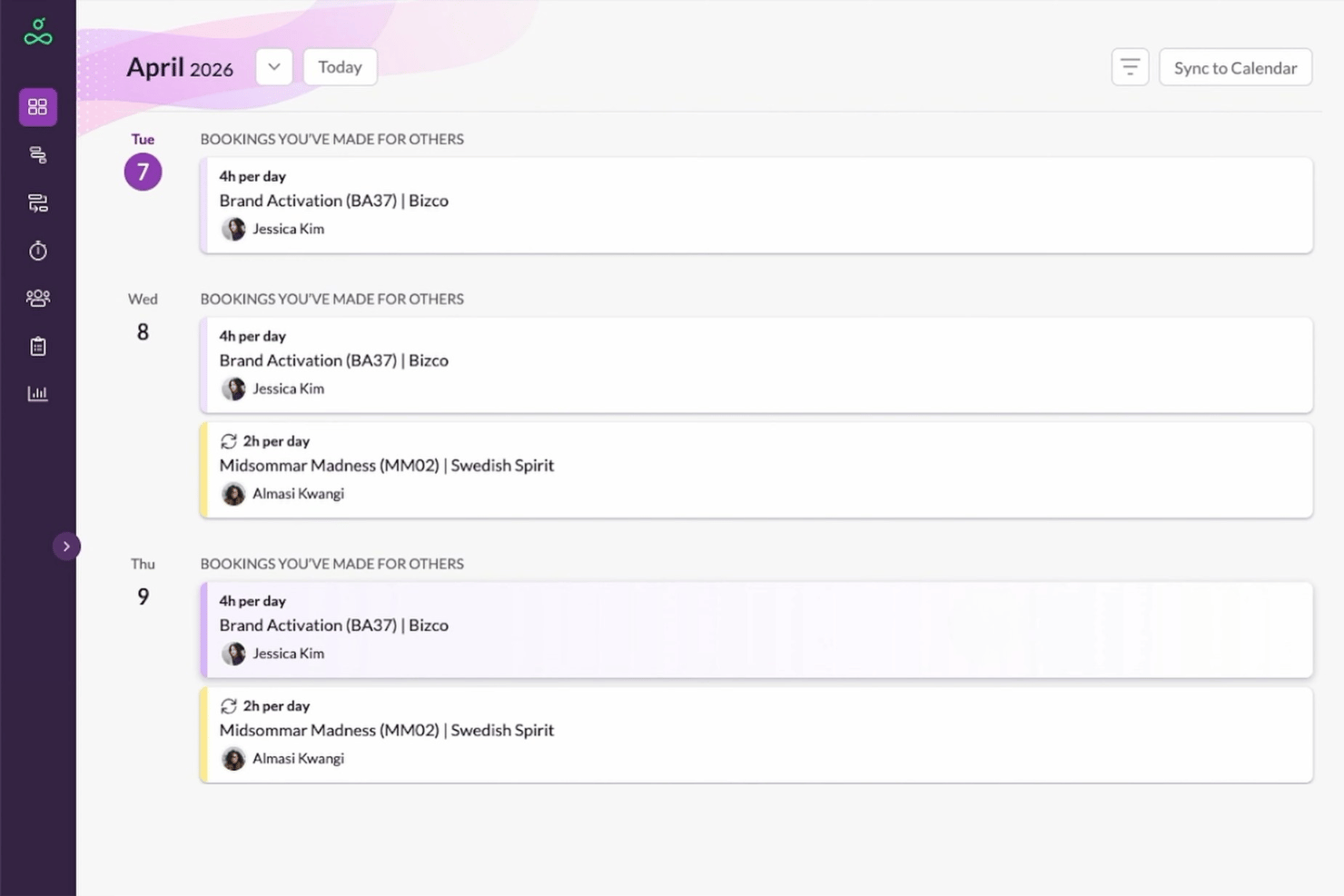
Resource Guru Total Hours bookings distribute a set amount of work across available time within a selected date range and recalculate when schedules change. Teams can also choose Rigid, Limited, or Fluid flexibility depending on how much the booking is allowed to move. Highlights include:
- Total Hours Bookings: Allocates a fixed number of hours across a selected date range.
- Automatic Reallocation: Redistributes flexible time when bookings, leave, or availability change.
- Flexibility Controls: Adds Rigid, Limited, and Fluid options for how hours can move.
- Placeholder Support: Lets teams reserve effort before assigning a specific person.
- Schedule Recalculation: Recalculates work around a resource’s real availability when assignments change.
Visit Resource Guru’s official site for more details.
Resource Guru Adds Booking Digests and Project View Controls
Resource Guru adds a daily placeholder booking digest and customizable Projects view columns, including custom fields and column reordering. These updates make unassigned work easier to monitor and project data easier to organize. Highlights include:
- Placeholder Booking Digest: Sends a daily summary of bookings tied to managed placeholders.
- Projects View Columns: Lets users choose and reorder columns based on the information they need.
- Custom Fields: Adds custom fields to the Projects view for more relevant project tracking.
Visit Resource Guru’s official site for more details.
Resource Guru Specs
- API
- Appointment Scheduling
- Attendance Tracking
- Calendar Management
- Contact Management
- Contact Sharing
- Dashboards
- Email Integration
- External Integrations
- Google Apps Integration
- Mobile App
- Multi-User
- Notifications
- Project Management
- Reports
- Resource Management
- Scheduling
- Task Scheduling/Tracking
- Time Management
- Vacation & Absence Calendar